Office Furniture
Habada E3 Ergonomic Chair Review: Adjustability at Every Contact Point
A deep look at Habada's E3 ergonomic chair, with winged lumbar support, a three-axis headrest, and armrests that adjust in nearly every direction.
Introduction
Habada’s E3 is an ergonomic office chair built around one idea: every point where your body meets the chair should adjust to fit you, not the other way around. With people spending long hours behind desks, pressure on the back, lumbar area, neck, wrists, and elbows adds up fast, and a chair that addresses those stress points can make a real difference in daily comfort.
The E3 is part of Habada’s broader focus on ergonomics across its furniture lineup. The company works with onboard physicians and medical consultants on its designs, and it holds IGR, TUV, SGS, and BIFMA certifications. It has also picked up design recognition, including awards in the London Design Awards and a gold prize in the French Design Awards. In short, this is a company with a clear point of view, and the E3 is its flagship expression of it.

First Walkaround: Adjustability Everywhere
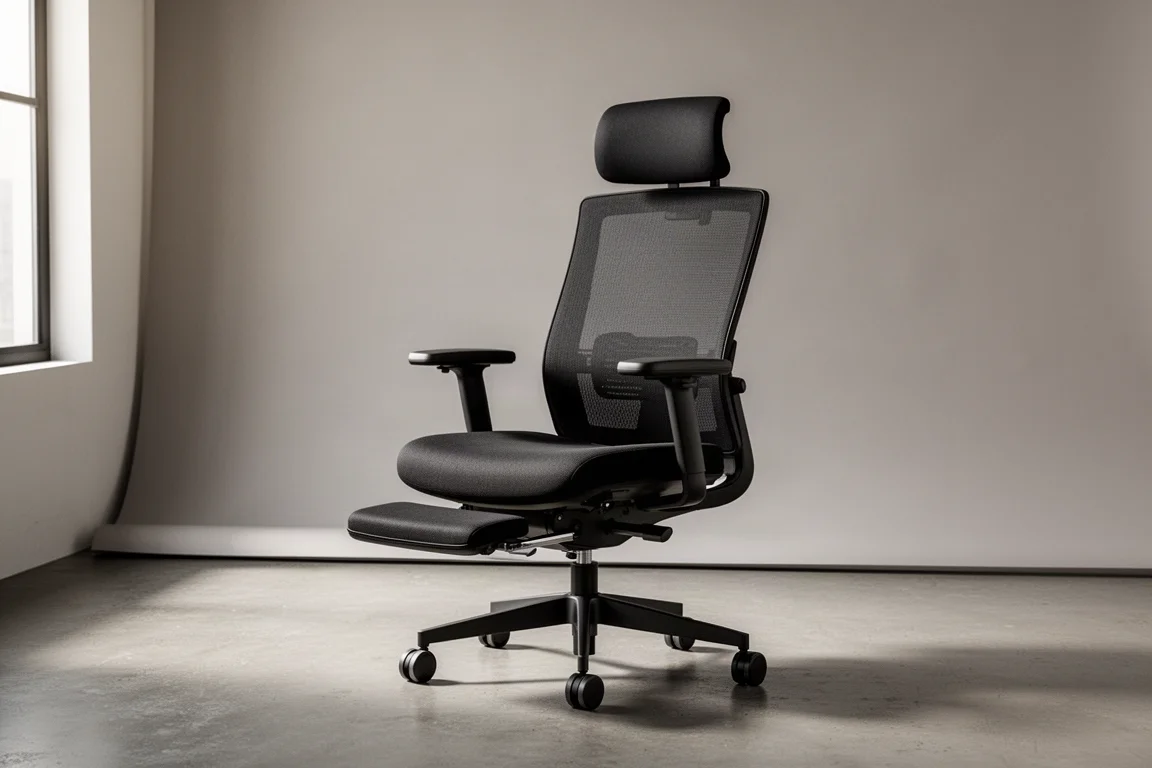
A quick walkaround of the E3 reveals an unusually long list of touchpoints. Buttons on the side control the seat height and recline. The headrest pulls toward you and tips up, adjusted with two hands on either side, so you can dial in both angle and depth. The lumbar wings turn toward the user, and there is an integrated footrest that folds out from under the seat for reclined sessions.
Everything about the chair invites fiddling, and that is the point. Nearly every panel, pad, and armrest is designed to move somewhere, which means the chair can be tuned to a specific body rather than accepting a one-size-fits-all shape.
Lumbar Support: The Showpiece Feature
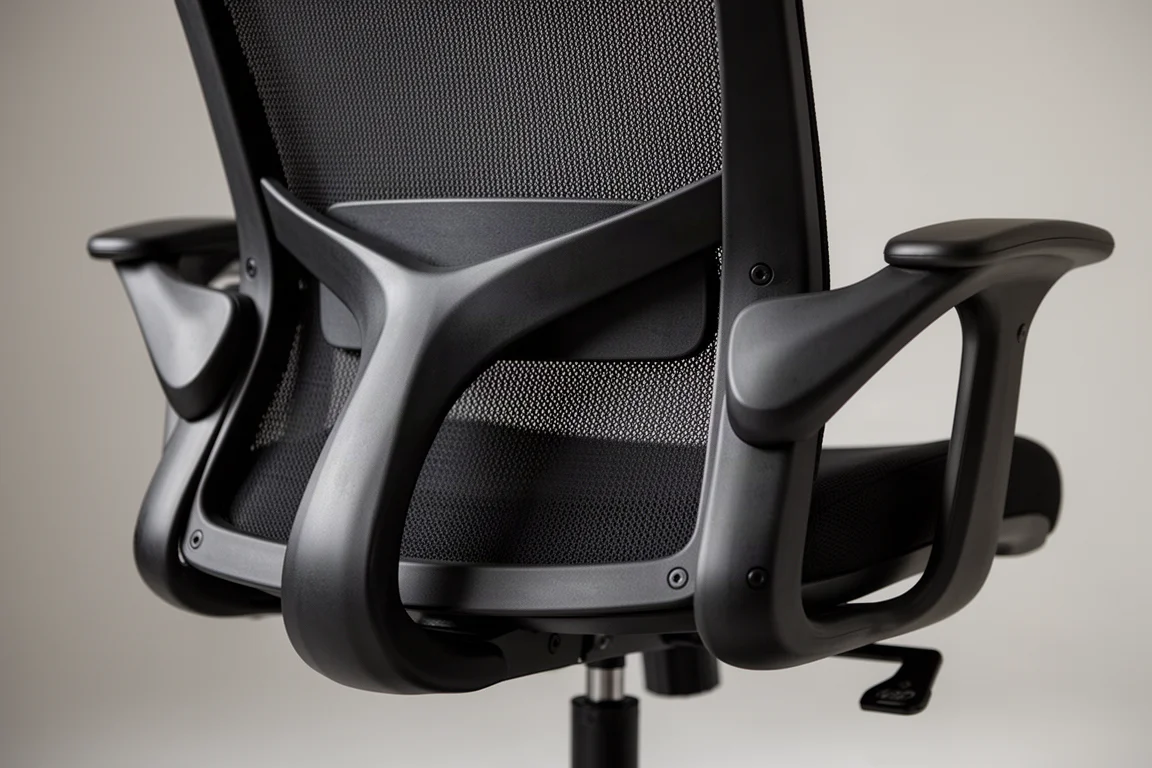
The standout element of the E3 is its winged waist lumbar support. The wings do not simply press in to support your back; they move up and down and wrap around your sides, delivering full spring-loaded lumbar support. Because lower-back strain is probably the biggest pain point people develop from daily office chair use, this system is the core of what the E3 is selling.
Compared with a basic office chair’s pump-style lumbar, which works eventually but feels crude, the wing design is a genuine step up. It adjusts height, depth, and wrap with small, deliberate movements rather than a single inflation bladder.
Neck and Head Support
The second major pain point the E3 targets is the neck. Its three-axis neck and head support system lets the headrest move up and down, tilt, and pull forward, so the support sits where your head actually rests rather than where the manufacturer guessed it would.
In a side-by-side comparison with a traditional basic office chair, the difference is stark: the basic chair’s padded back might look adjustable, but it is not, and its headrest is not adjustable at all. The E3’s three-point head adjustability makes it a different category of product.
Arm and Wrist Support for Long Sessions
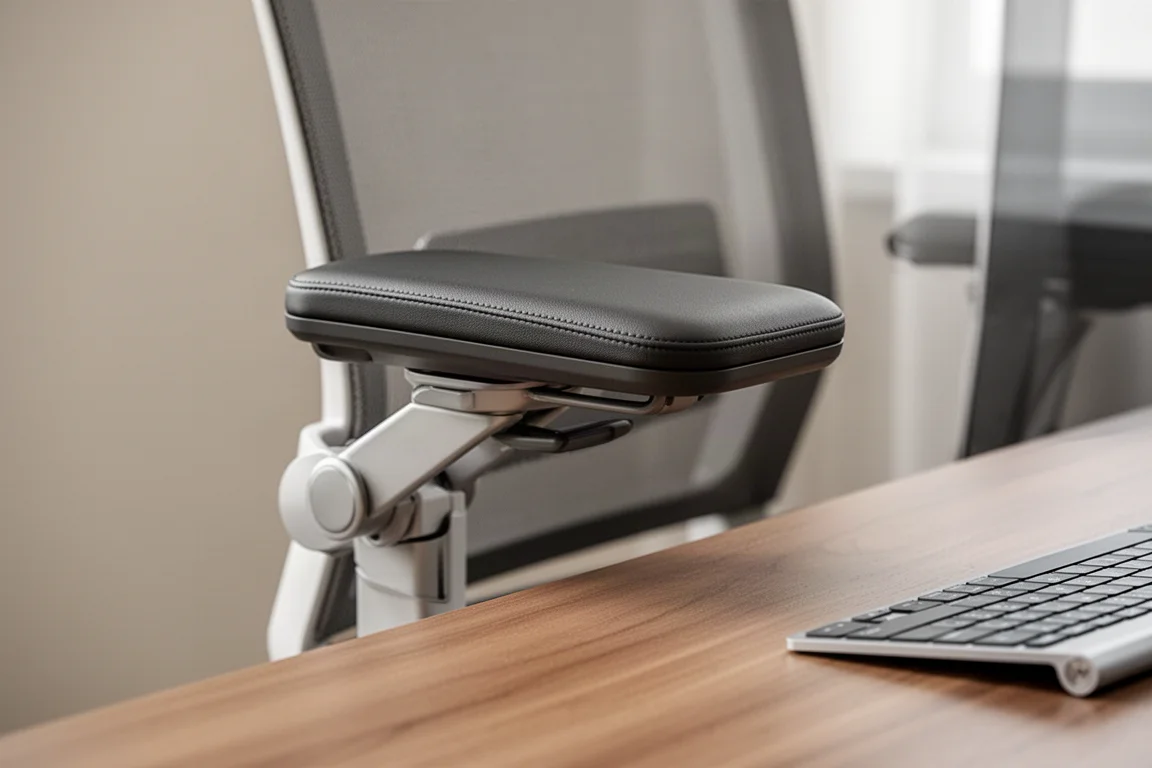
The third big pain point is elbows and wrists, where repetitive stress and conditions like carpal tunnel syndrome are common. The E3’s multi-adjust armrest system offers roughly six axes of adjustment: up, down, front tilt, swivel in, swivel out, and side to side. The pads are firm yet comfortable, which matters when you spend long stretches working on a laptop or mobile device.
The armrests also fold up and out of the way, a small touch that makes the chair easier to live with in a mixed workspace where you sometimes need to slide in close to a workbench or desk.
E3 Versus a Basic Office Chair
Setting the E3 next to a traditional basic office chair makes the contrast obvious, though it is worth noting the comparison is apples to oranges, since the two chairs are not even in the same price category.
The E3 brings a breathable mesh seat that stays cooler and more comfortable, a fully adjustable mesh back, the wraparound wing lumbar, the three-axis headrest, folding arms, and a built-in footrest that the reviewer called a kind of cheat code. The basic chair has a standard pleather-style seat, a pump lumbar that works but feels dated, fixed arms, and a padded back that only looks adjustable.
Heat is not an issue for everyone with pleather seats, but the comfort difference of mesh is something you have to sit in to understand. Once you step up to the E3, going back is hard.
Who the E3 Is Actually For
Habada markets the E3 as a big and tall chair, and it does skew larger and taller than average, with a 300-pound weight capacity. That is a meaningful limit: it is a great fit for taller users, but not big enough for everyone. As one honest assessment put it, it is “bigger and taller” than typical, and it will not suit every body type.
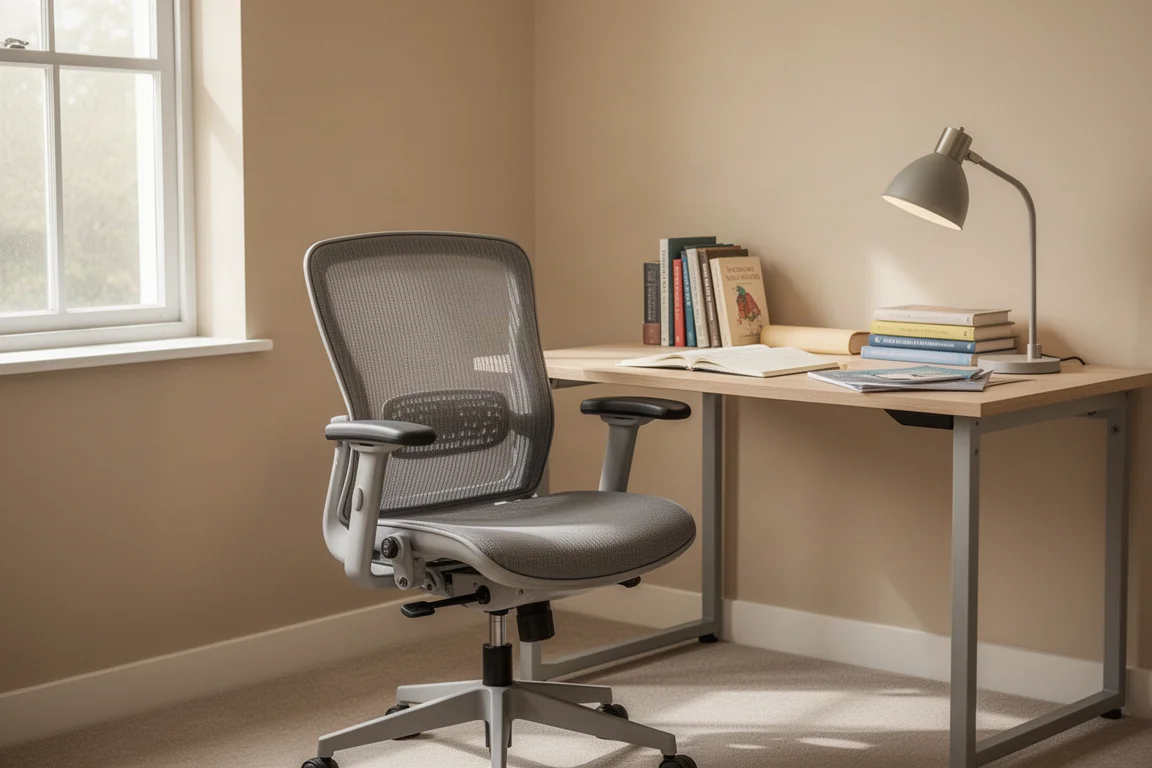
One practical example: a 6-foot-3, roughly 200-pound user fits comfortably, which makes the E3 a strong pick for tall students or professionals who need proper lumbar and neck support for long study or work sessions. It is not the right chair for everyone, and buyers should check the weight capacity and seat dimensions against their own needs before committing.
Pricing and Where to Buy
This is not an inexpensive chair. At this level of form and function, there are hurdles that cannot be overcome, and the price reflects it. At the time of writing, Habada’s website runs a sale bringing the E3 to $545.50. Color options are gray, black, or pink, and the chair can be ordered with or without the footrest.
Amazon carries it at a listed price of $700, with a $150 coupon that brings it to effectively the same price as the website sale once applied at checkout. Either route lands you in the same place, so the choice comes down to preferred retailer.
Conclusion
The Habada E3 is a serious ergonomic chair with genuinely useful engineering: spring-loaded wraparound lumbar wings, a three-axis headrest, six-way adjustable armrests, a breathable mesh back and seat, and an integrated footrest. Its certifications and design awards back up the company’s claims, and the current sale pricing softens the premium a little.
It is not a chair for everyone. The 300-pound weight capacity and taller-than-average fit mean smaller or heavier users should look carefully before buying. But for taller users who spend long hours at a desk and suffer from back, neck, or wrist strain, the E3 is one of the more thoughtfully adjustable options available today.
Product link
View more details for Habada E3
This product is mentioned in the review. Check the specifications, options, and compatibility before buying.
View more details for Habada E3Further reading
Related Reviews
Office Furniture
Best Standing Desks 2026: Five Options for Every Budget and Space
A practical roundup of five standing desks ranging from compact converters to full electric models, each with clear strengths and trade-offs to consider before buying.
Office Furniture
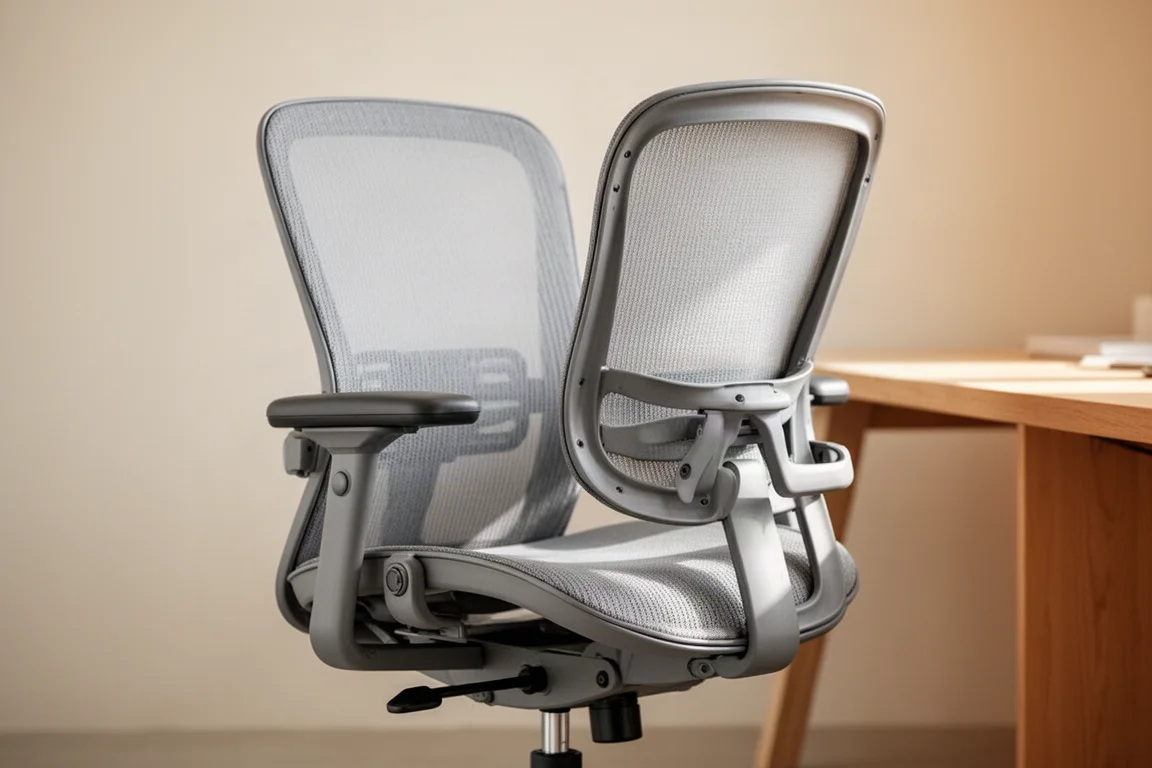
Office Chair Buying Guide: Seven Levels From Budget to Premium
A practical guide to office chair levels, from budget models to flagship ergonomic chairs, with picks at each tier.
Office Furniture
Seville Classics AIRLIFT Standing Electric Desk Review: Affordable Height Adjustment for Home Offices
The Seville Classics AIRLIFT brings electric height adjustment to standing desks at a fraction of premium brand prices. Here's what works and what to consider before buying.