Mountain Bike Components
Eight Great Value Mountain Bike Components Worth Buying
Eight mountain bike components and accessories that deliver most of the performance of premium kit for a fraction of the price.
Introduction
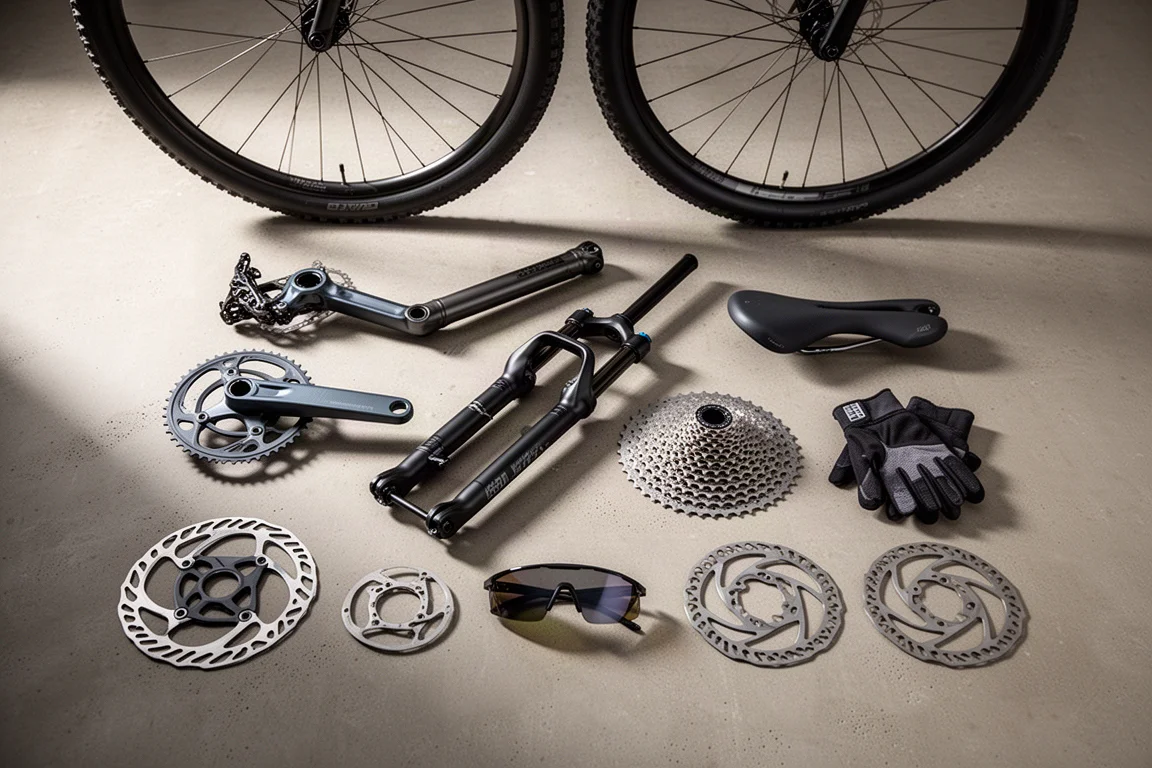
Mountain bike components do not have to be shiny, exotic or expensive to rank among the best you can buy. There is a huge amount of genuinely excellent, great value kit out there that rarely gets the recognition it deserves, and this roundup collects eight of the strongest examples.
Some of these picks are drivetrain and suspension parts that carry most of the performance of far pricier options. Others are accessories that quietly solve a specific problem, from cold, wet hands to braking power on long descents. What they share is a sensible price and a very high level of real-world performance.
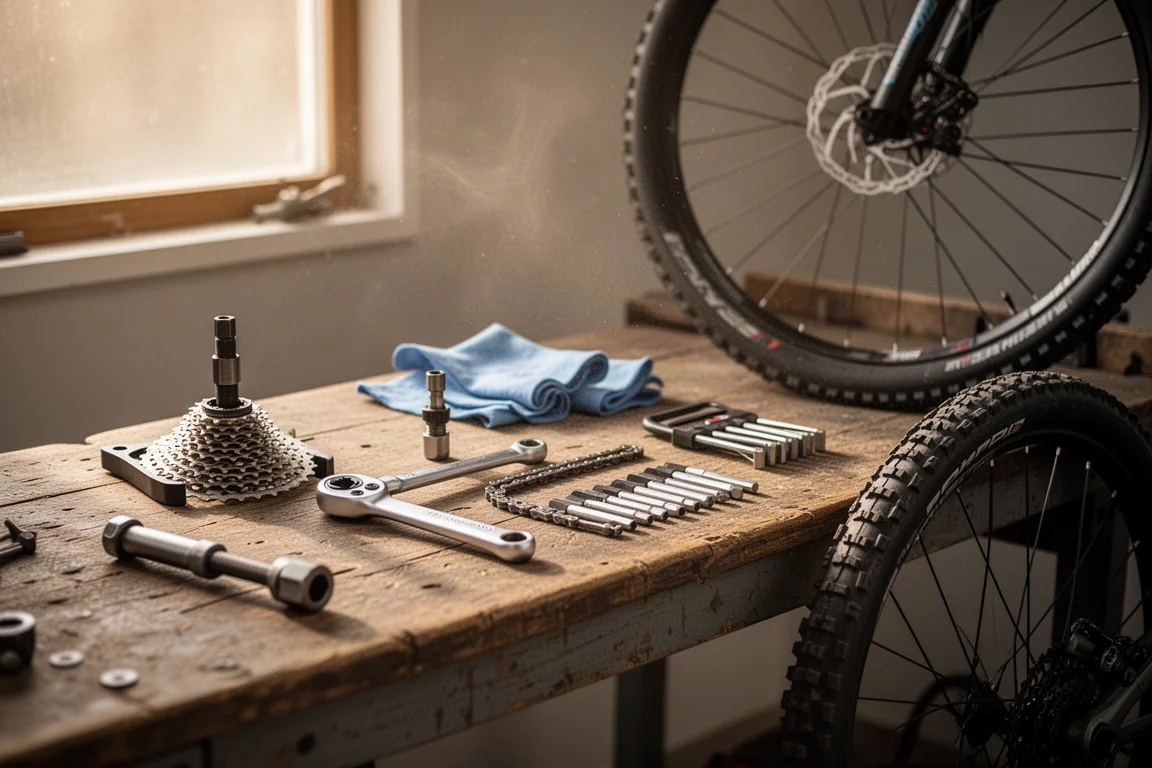
Each one earns its place on the trail rather than in a catalogue, and together they show how far a carefully chosen build can go without stretching to the top tier.
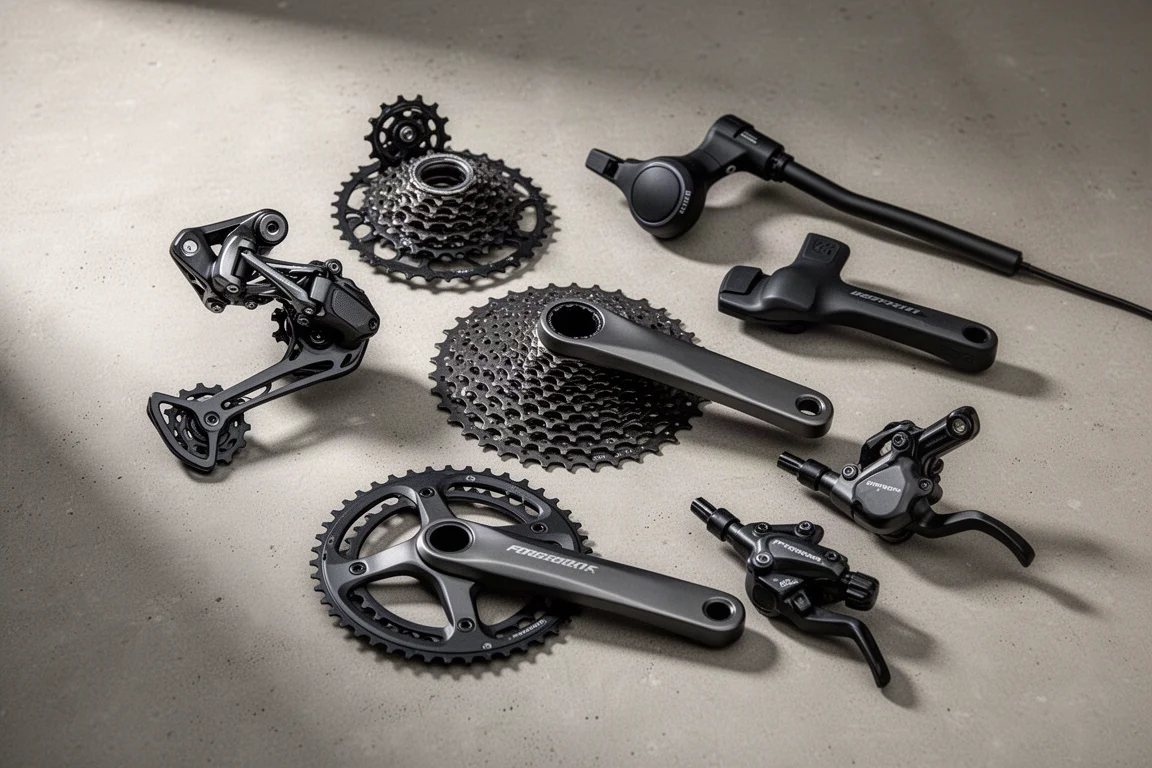
Shimano Deore M6100: The Value Groupset
Deore sits below XTR and XT, and it is heavier than XTR, less refined than XT and missing a few features. For the vast majority of mountain bikers, though, it is all they will ever need, and the M6100 generation is the best version yet.
It brings 12-speed Hyperglide+ shifting, a wide-range 10 to 51 tooth cassette, and Shimano’s Hollowtech 2 crankset and bottom bracket. The finish uses a holographic foil effect that many riders find more attractive than the plainer grey of the tier above.
The brakes deserve their own mention. They are available with a choice of two or four pistons and avoid the wandering bite points that can affect higher-end models. If there is one place worth spending more, it is the shifter: an XT unit brings smoother internals and multi-shift functionality that makes a noticeable difference.
Fox 34 Rhythm: Trail Suspension Without the Premium
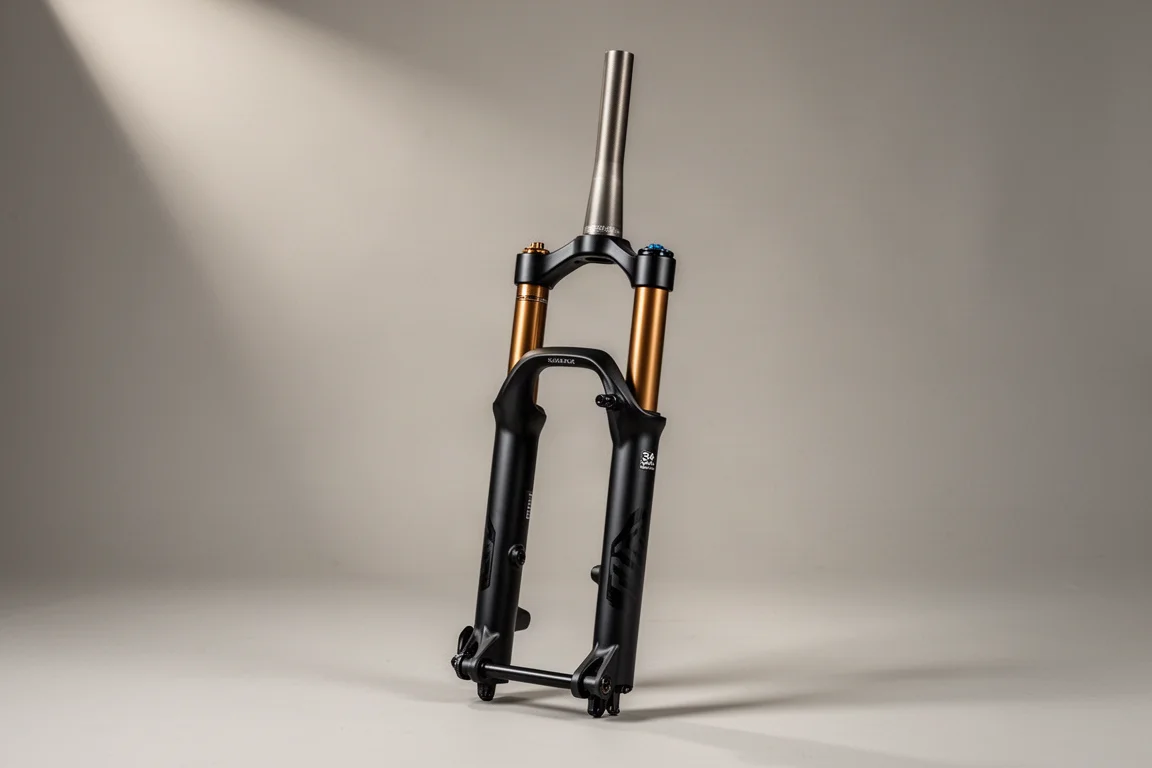
A fork that can cost more than an entry level bike sounds like an odd inclusion in a value roundup, but the damper is the reason the Rhythm belongs here. Simpler damping means fewer adjustments, and fewer adjustments mean a setup most riders can actually get right.
The GRIP damper offers less adjustment than the GRIP2 found on more expensive models, yet on the trail it is just as capable, controlled and comfortable. A well set up Rhythm will outperform a badly set up premium fork from the same family.
Because it is simpler and cheaper to produce, it appears on more bikes at lower price points. The 34 Rhythm is bolted to complete trail bikes such as the Canyon Neuron 6, which means access to that performance at a much lower cost of entry than buying a premium fork on its own. Pair one with a Deore groupset and you get a large share of the performance of a top-tier bike for a fraction of the money.
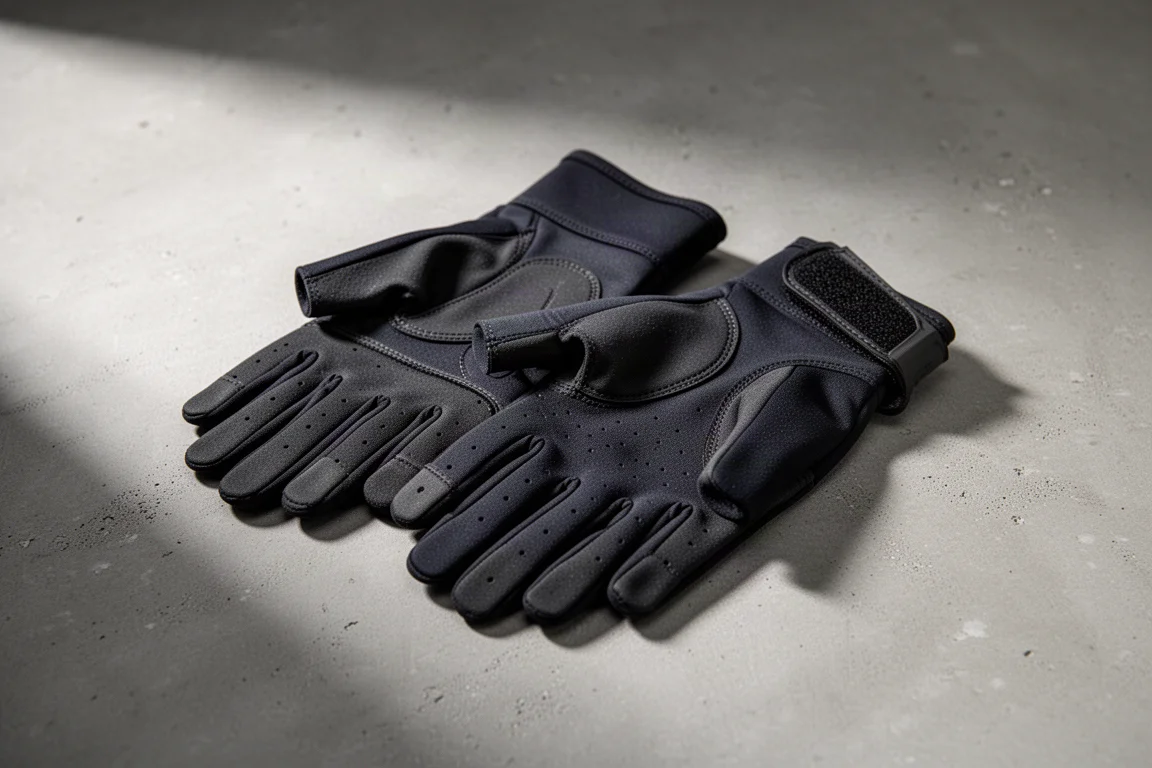
100% Brisker Gloves: Winter Grip Without Bulk
At first glance the Brisker looks like a strange pick. It is not waterproof, not the warmest glove available and certainly not the most feature-packed. On the trail, though, it delivers.
The single-piece synthetic leather Clarino palm gives superb feel through the bars, closer to a summer glove than the bulky feel of many winter options. The softshell back adds insulation and protection from wind and rain, and the glove stays reasonably warm even when it gets soaked through.
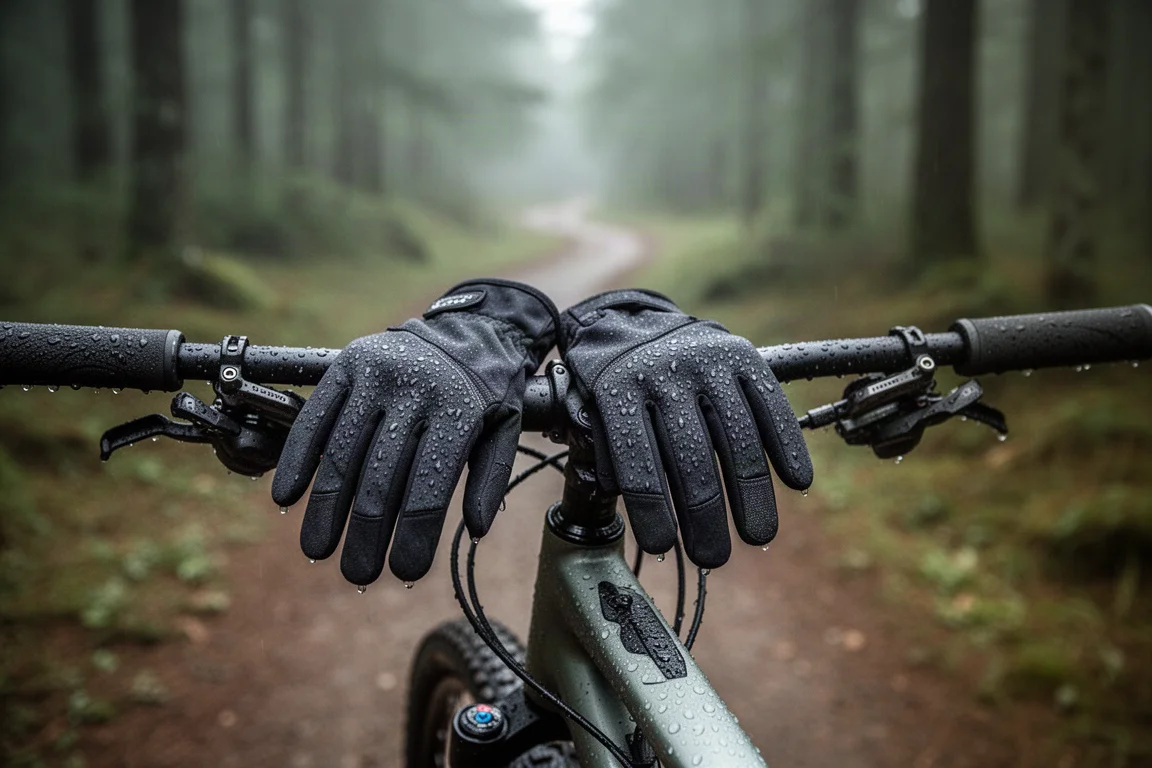
That combination makes it work in all but the coldest and wettest conditions, and it has earned repeat gear-of-the-year recognition. For riders who want control and bar feel in cool, damp weather rather than maximum insulation, it is a very easy recommendation.
OneUp Components V3 Dropper Post: Travel Without the Price Tag
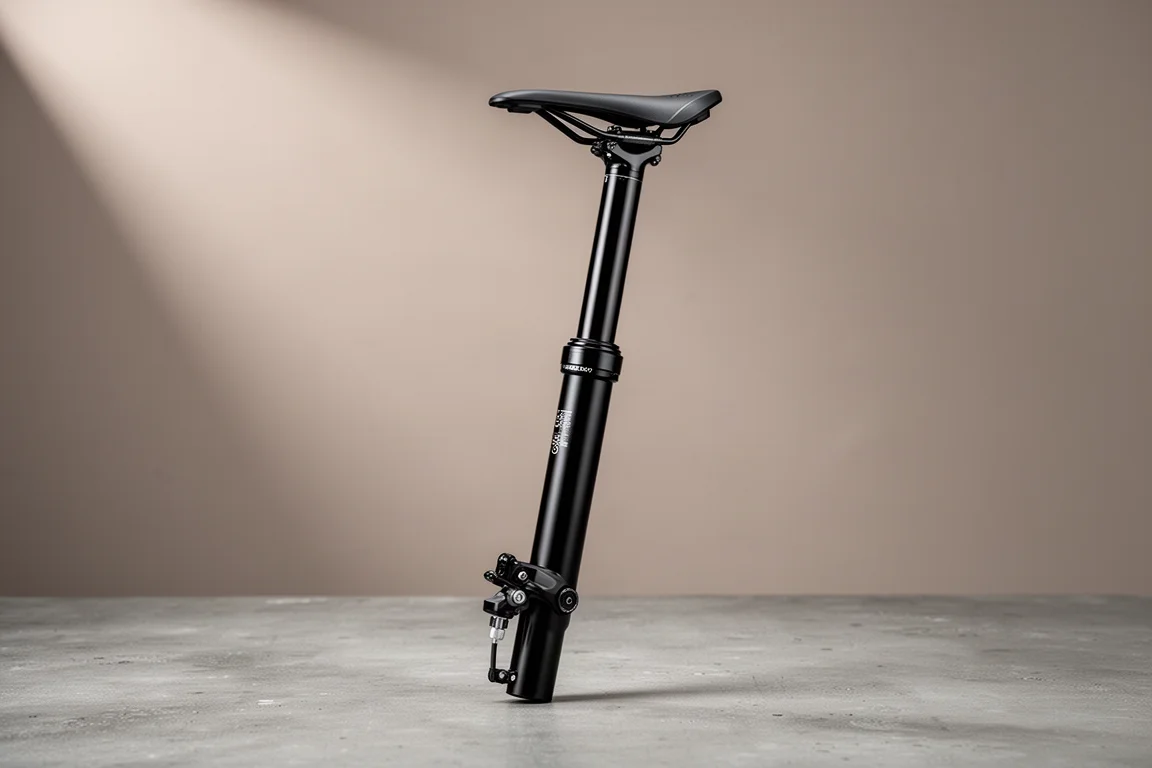
Dropper posts are not inexpensive investments, with flagship models approaching four-figure sums. The V3 is the post to pick if you are spending your own money.
The previous V2 earned a strong following as a versatile package with a tempting starting price, and the V3 pushes that further. It is available in a wide range of drops and diameters, from 27.2mm with 90mm or 120mm of travel for older frames and gravel bikes, all the way to 240mm of drop in a chunky 34.9mm diameter. Travel can also be adjusted by up to 20mm in 10mm increments.
The V3 is 10mm shorter overall than the V2 and lighter than before. OneUp claims it is now the lightest infinitely adjustable dropper post on the market, and lighter than many two-position droppers. A saddle rail clamp with a dropped cradle provides the most drop and the shortest stack height, and the brand claims the shortest total length of any dropper currently available.
There is also a new OneUp seal cartridge that needs no adjusting or air top-ups and can go for up to 350 hours of riding between full rebuilds.
Madison Crypto Sunglasses: Budget Optics Done Well
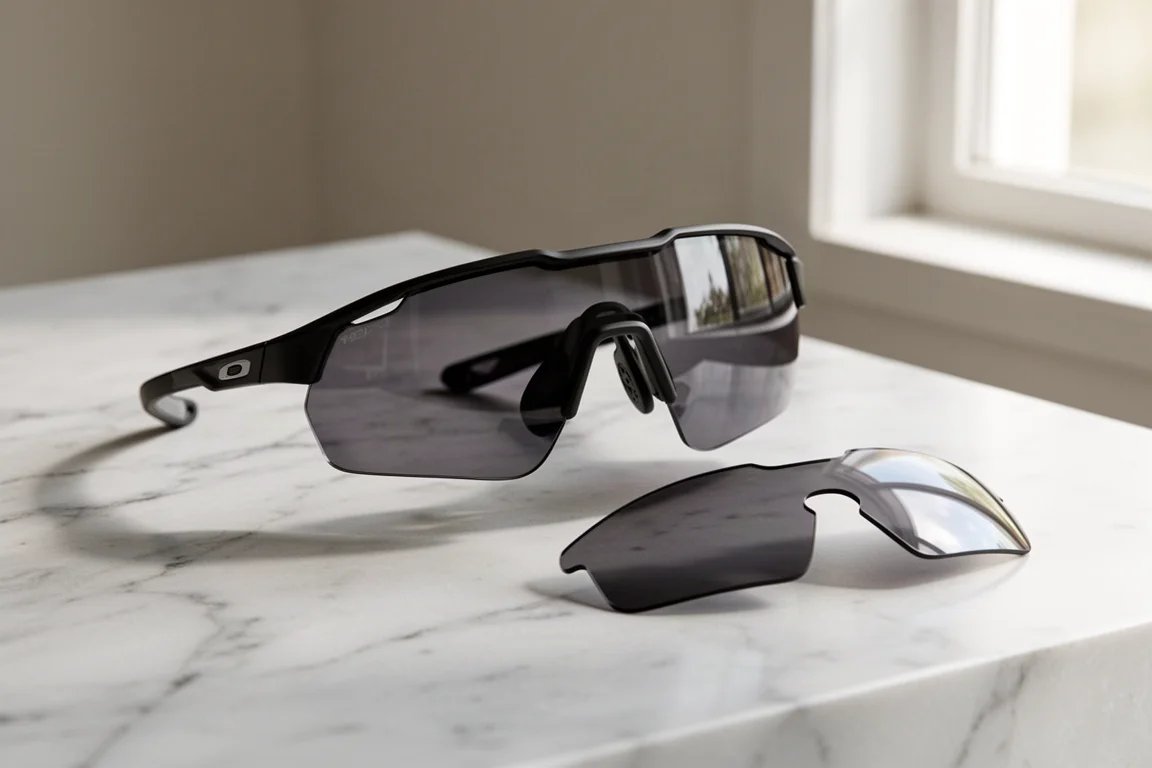
Good riding glasses are a necessity, but they do not have to cost a fortune. The Crypto is impressive value, with a single lens version at $34.99 and a versatile three-lens pack at $59.99. Lenses are also available separately, and there is an optional prescription Rx insert.
Optical clarity is excellent, the lenses swap easily, and the frames provide a secure fit. The trade-offs are minor: the lenses pick up fingerprints readily, and the glasses can be fiddly to put on and take off while wearing a helmet. Availability is currently limited to the UK, which is worth checking before planning a purchase.
SDG Bel-Air V3 Saddle: Comfort That Lasts
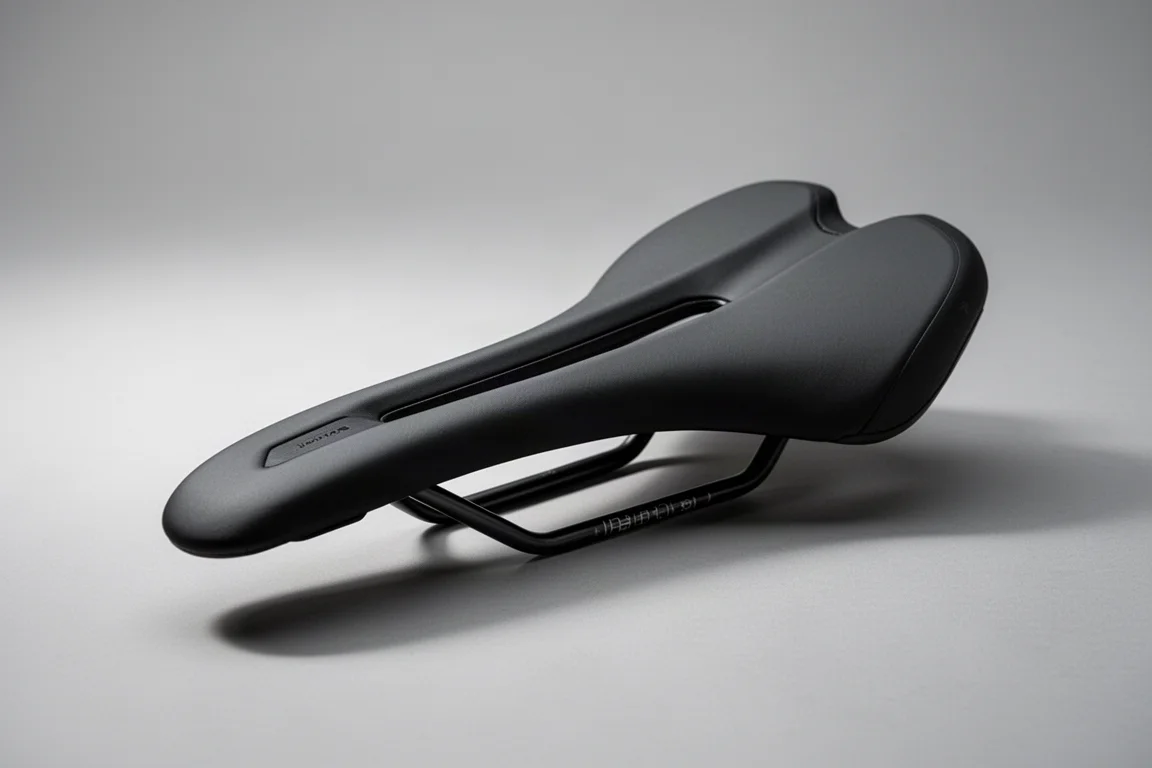
Saddle choice is deeply personal, but the Bel-Air has suited more riders than most across nearly three decades of production. Numerous iterations have come and gone, including some wild cover designs and the brand’s I-Beam seat post system, and the latest V3 is arguably the best yet.
It follows the shorter-is-better trend at just 260mm long, while keeping the classic Bel-Air shape: a dropped nose, a continuous deep perineal channel for relief, and a slight rise at the rear to improve support and power delivery when seated. Some versions also use SDG’s Atmos seal construction for a clean, staple-free finish.
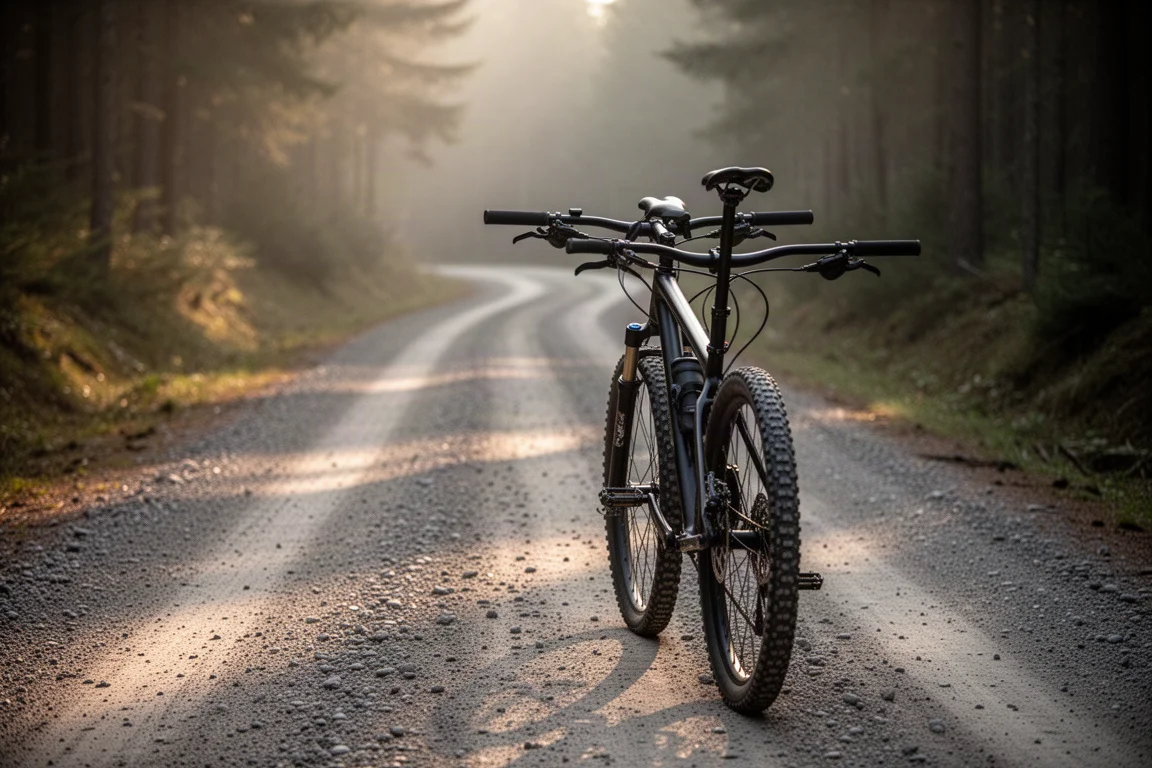
The V3 can also be specified with oil slick rails, which pairs a distinctive look with the comfort the shape is known for. If you are unsure where to start with saddles, this is a sensible place to begin.
SRAM HS2 Rotors: Braking Performance Per Pound
Rotors are a relatively inexpensive way to add performance and a bit of visual character to a bike. The HS2 is a strong example of both.
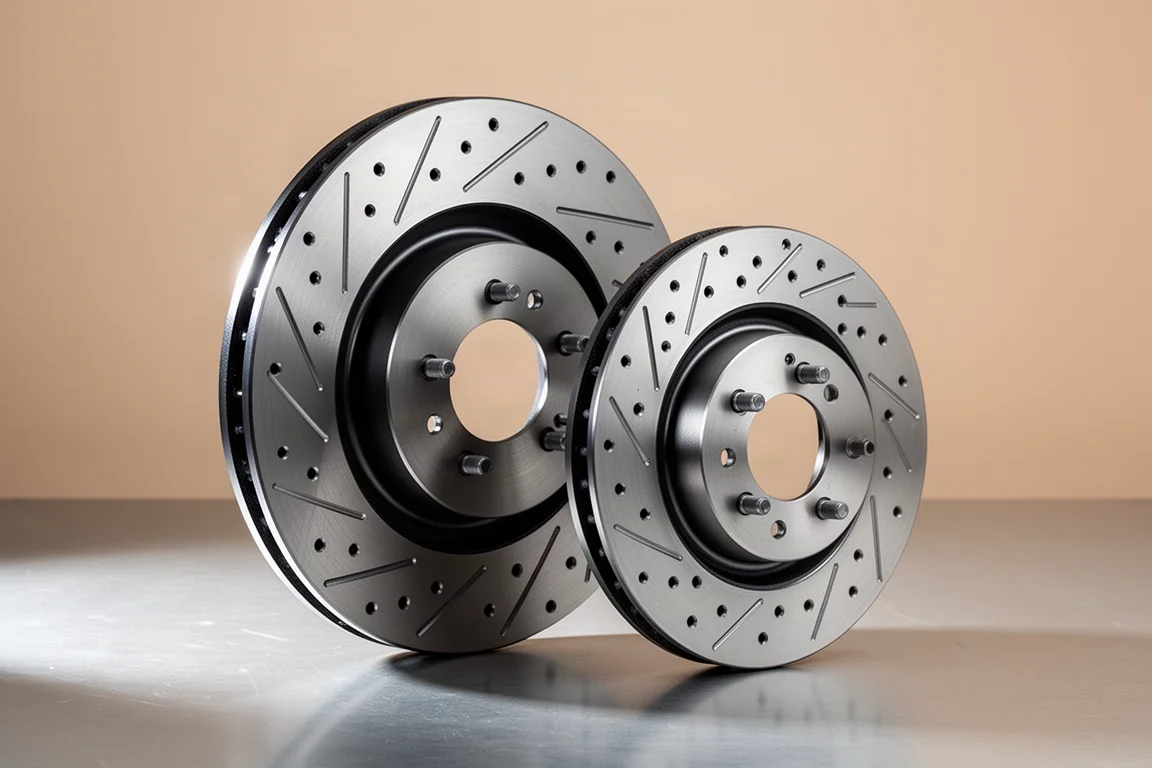
SRAM increased rotor thickness to 2mm, up from 1.85mm on its Centerline rotors, and changed the braking surface pattern. Recessed spokes are coated in a special paint intended to improve thermal dissipation. SRAM claims the result is 7% more braking power and up to 40% cooler running than Centerline.
Those figures are hard to quantify on the trail, but the HS2 does deliver noticeably more bite and reduced lever throw than thinner rotors, and the extra width makes it more robust. It is available in 6-bolt or Center Lock and in sizes from 160mm up to a massive 220mm, so there is an option for most bikes and riding styles.
DT Swiss 1700 and 1900 Series: Alloy Wheels Worth Considering
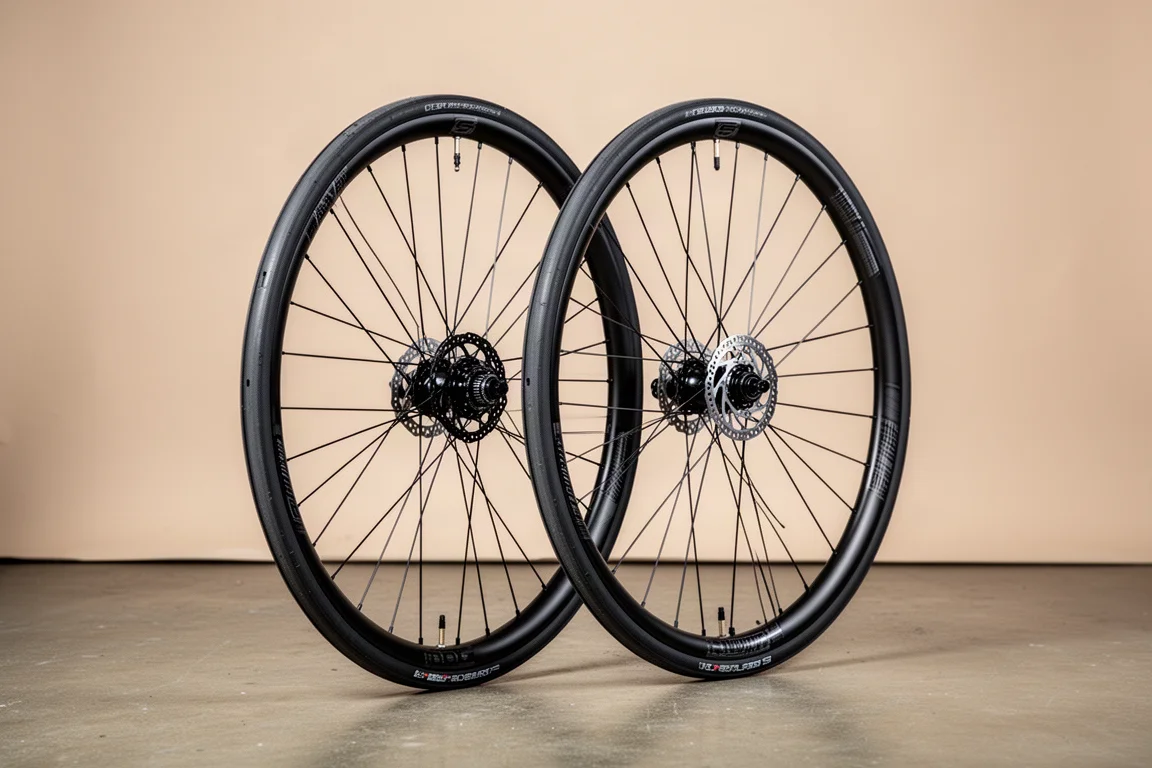
Carbon wheels tend to dominate the conversation, but high quality aluminium still has plenty to offer. The 1700 Series sits mid-range and the 1900 Series is entry level, and both are proof that alloy wheels remain a smart choice.
The foundation is not the rim but the Ratchet hub, in its various forms. It is easily serviceable and upgradeable, and it is the epitome of reliability and ease of use. That is why so many other brands either use the internals in their own hubs or simply build their wheels around DT Swiss components.
The rims have proven themselves incredibly tough as well. One of them famously survived a no-tyre descent at Leogang in 2014. Add an easy tubeless setup with tape and valves already installed, competitive weights and a composed ride feel across the range, and these alloy hoops deserve attention rather than a longing glance at carbon.
Overall Buying Advice
The thread running through these eight picks is that price and performance are not as tightly linked as a spec sheet suggests. Simpler suspension dampers, mid-tier drivetrains, aluminium wheels and modestly priced gloves and eyewear all give away far less on the trail than their price tags imply.
When deciding where to spend, start with the parts you touch and rely on most. A groupset and a fork define how a bike rides, a dropper post changes how you handle steep terrain, and rotors are one of the cheapest ways to change how a bike stops.
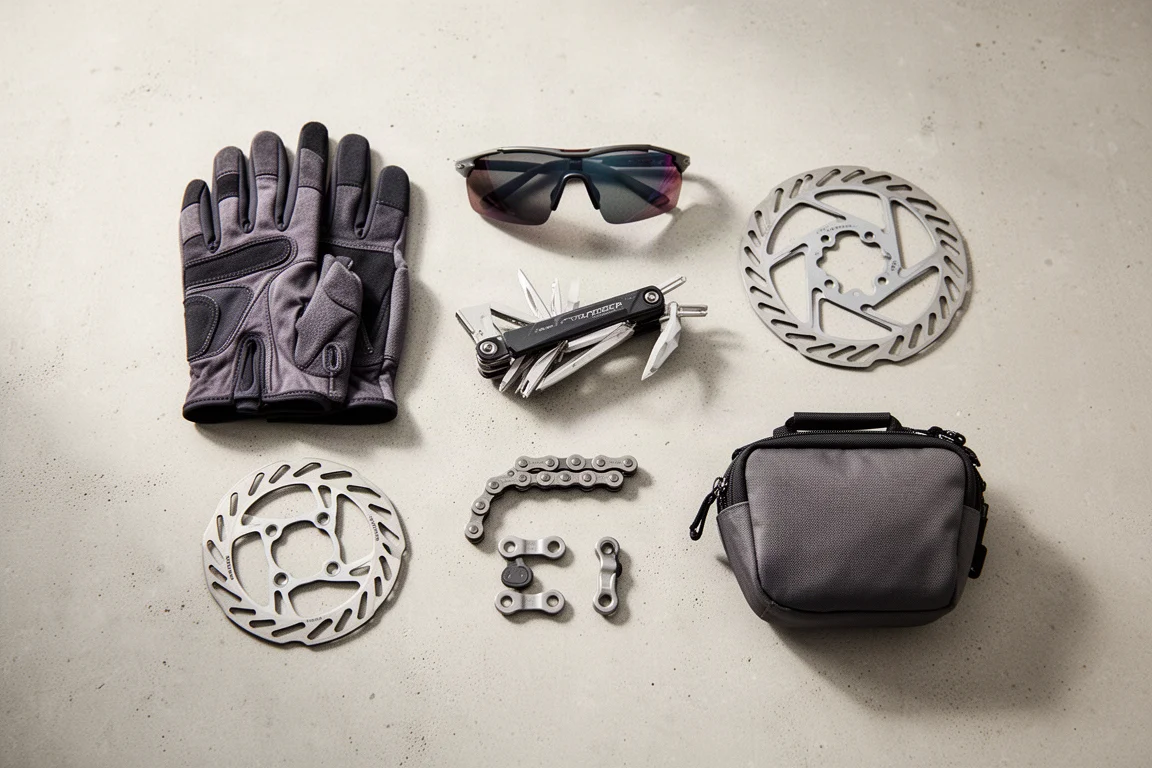
Accessories deserve the same mindset. Gloves and sunglasses cost very little by comparison, yet they affect comfort and confidence on every single ride. When a component solves a problem you actually have, the value case makes itself.
Conclusion
Not every upgrade needs to be the most expensive option available. The Deore M6100 groupset, the Fox 34 Rhythm fork, the OneUp V3 dropper post, the DT Swiss alloy wheelsets and the rest of this list share the same trait: they deliver the performance most riders genuinely need, at a price that leaves room for riding.
Buy what matches your terrain and your budget, and do not assume the top tier is the only tier worth having.
Further reading
Related Reviews
Mountain Bike Components
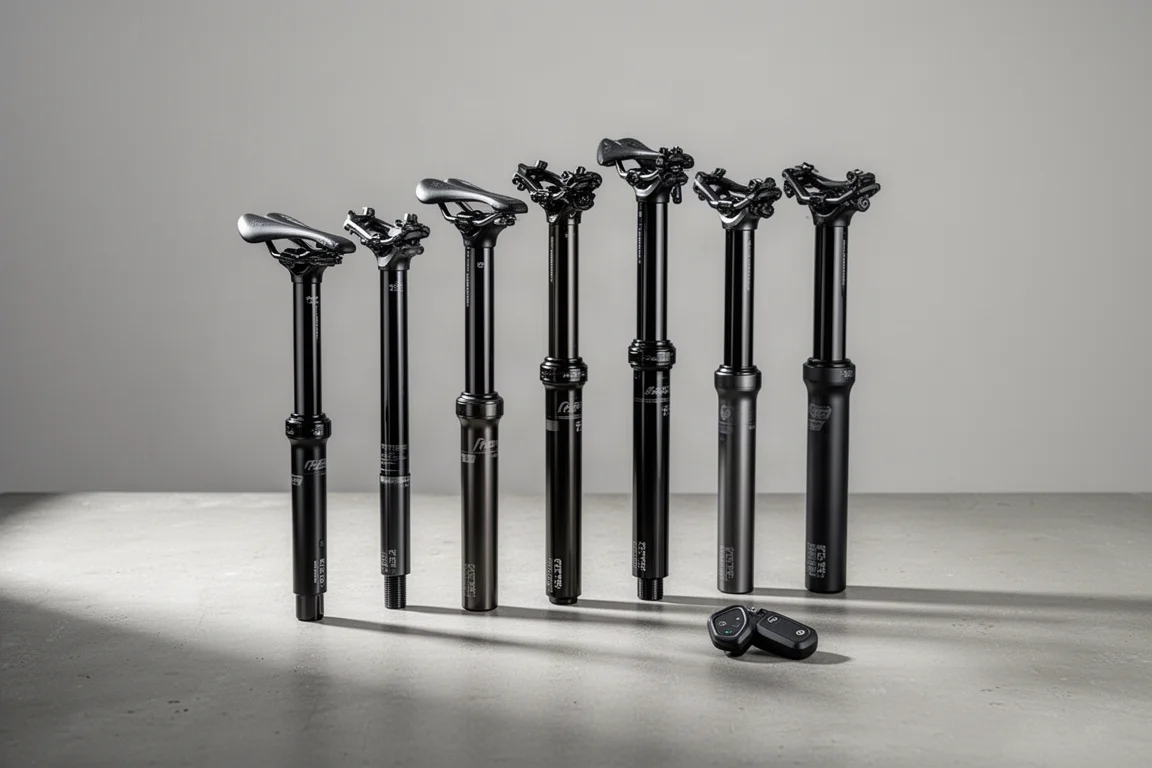
Best Dropper Posts: Nine Options for Every Budget and Riding Style
A practical roundup of cable and wireless dropper posts, from the value-focused OneUp V3 to the wireless RockShox Reverb AXS, with the details that matter before you buy.
Mountain Bike Components
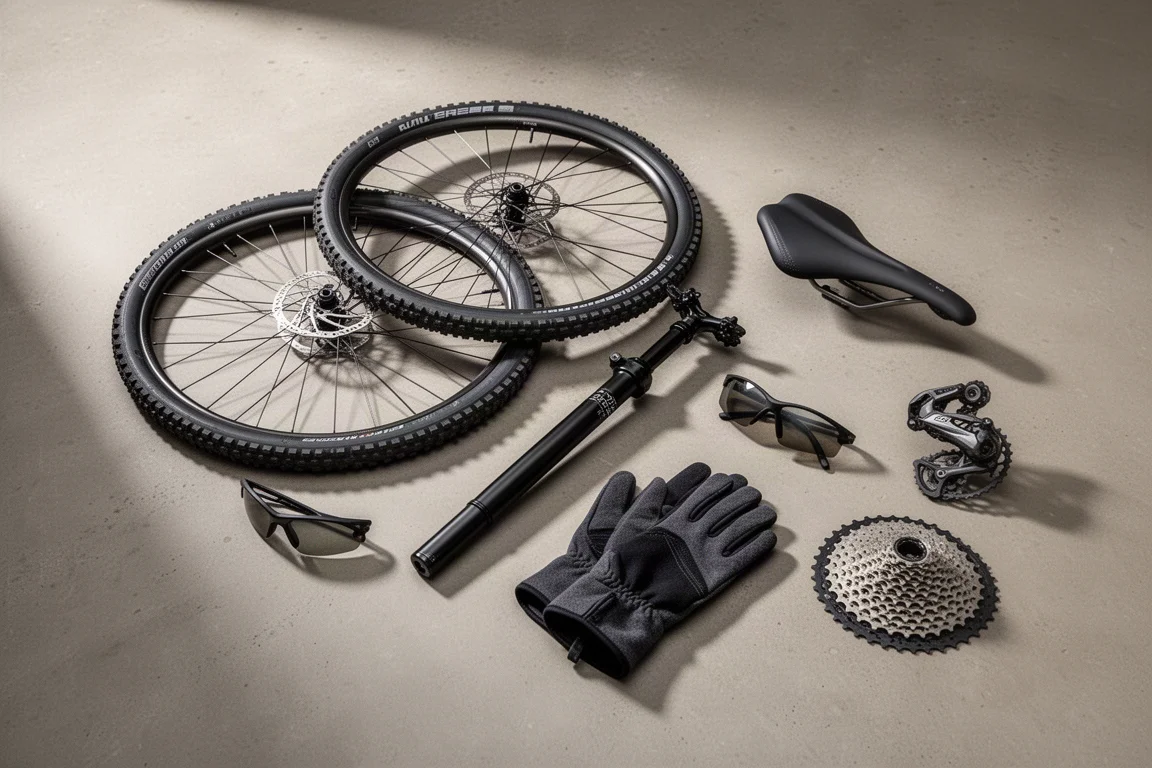
Best Value Mountain Bike Components: 8 Underrated Picks Worth Buying
Eight mountain bike components and accessories that deliver most of the performance of premium kit for a fraction of the price, plus the trade-offs worth knowing before you buy.
Mountain Bike Components
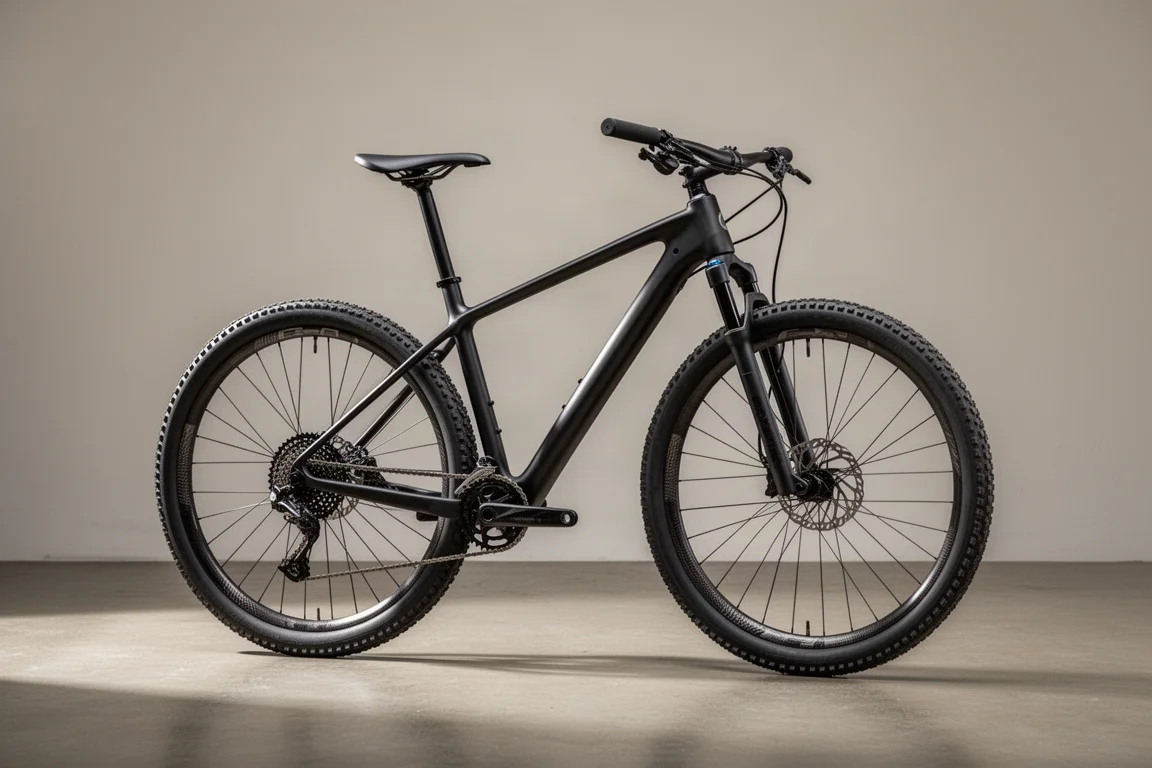
Lightweight XC Hardtail Build: 8 Weight-Saving Upgrades Worth Considering
A carbon cross-country hardtail build that dropped from 9.29 kg to 8.02 kg, with the real savings behind each upgrade and the grip and comfort trade-offs to know about.