Fountain Pens
Graf von Faber-Castell Pen of the Year 2023 Ancient Egypt: A Limited Edition Fountain Pen Review
A close look at the 2023 Pen of the Year, a piston-filled fountain pen layered with ancient Egyptian symbolism, from the lapis lazuli scarab to the Eye of Horus.
Introduction
The Graf von Faber-Castell Pen of the Year series marks its 20th anniversary with a theme that pays tribute to ancient Egypt, and the 2023 edition is one of the most thoughtfully detailed releases in the line. Previous editions have explored Sparta, the Knights, and the Aztecs, and this year’s pen draws on the culture, symbolism, and traditions of a civilization spanning roughly 3000 BC to 400 AD.
This is a metal pen with a matte DLC (diamond-like carbon) coating, a piston filling mechanism, an 18 karat gold nib, and engraving and inlay work that references a long list of Egyptian motifs. It is a limited edition of 375 fountain pens plus 125 rollerballs, and it has been so popular that it has been difficult for retailers to keep in stock. At $6,500 it is firmly a luxury pen, priced in line with earlier Pen of the Year editions.
Packaging and Presentation
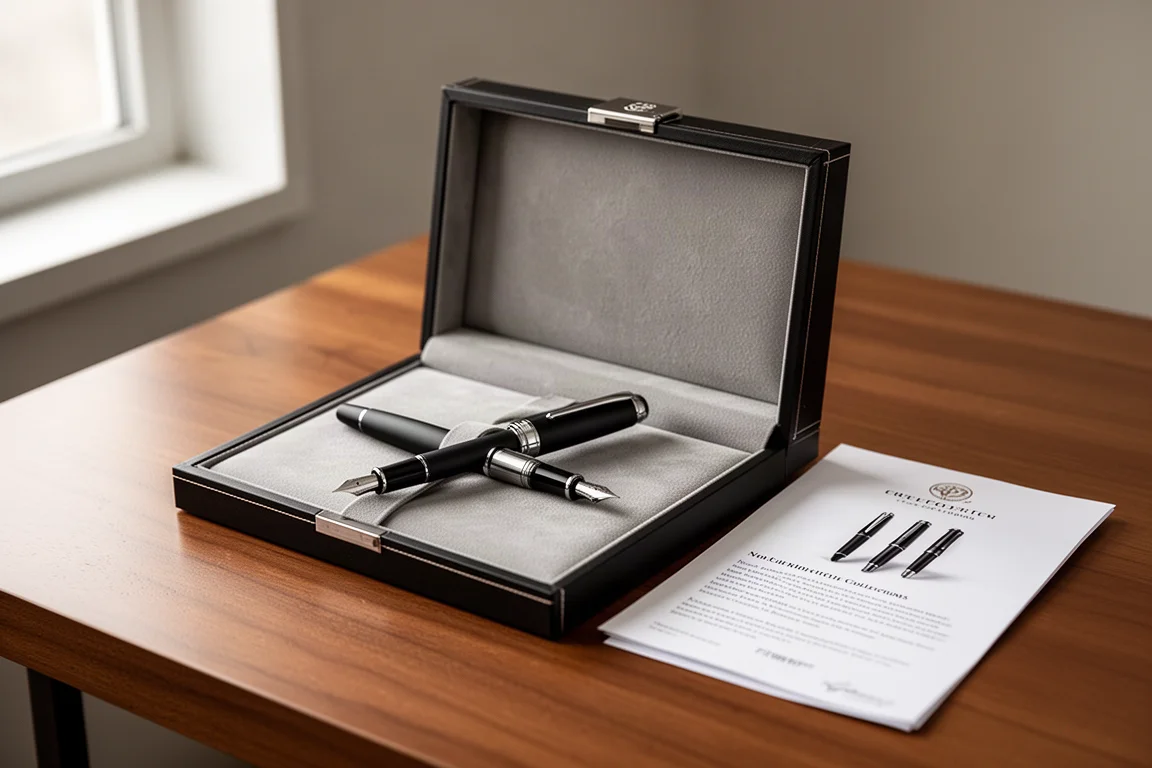
The pen arrives in substantial packaging with a top-notch presentation that matches the price point. A nicely produced pamphlet explains the thinking behind the design, and the front features what appears to be Horus, a protector god of the Egyptians, alongside the words “Ancient Egypt” in both English and Arabic.
One change did disappoint this year. In previous editions, the large case included an additional tray so you could store multiple pens, or an entire Pen of the Year collection. For 2023 that feature was omitted, and the case now only fits a single pen. It is a small drawback in an otherwise excellent unboxing experience, but collectors who display these pens together may miss it.
Design Themes and Symbolism
The black finish is not arbitrary. The ancient Egyptians called their home Kemet, meaning black land, a reference to the dark silt deposited by the annual Nile floods that fertilized the soil. That yearly cycle is said to have inspired the creation of a calendar system of roughly 365 days. Fittingly, the pen is a deep, smooth black with a very light matte finish rather than a granular texture.
Throughout the pen, nearly every element carries a story, from the sacred beetle on the cap to the plant motifs at the back. The engraving throughout is crisp and clean, and applying the DLC coating after engraving seems to help the details look especially precise.
Cap, Clip and Engraving Details
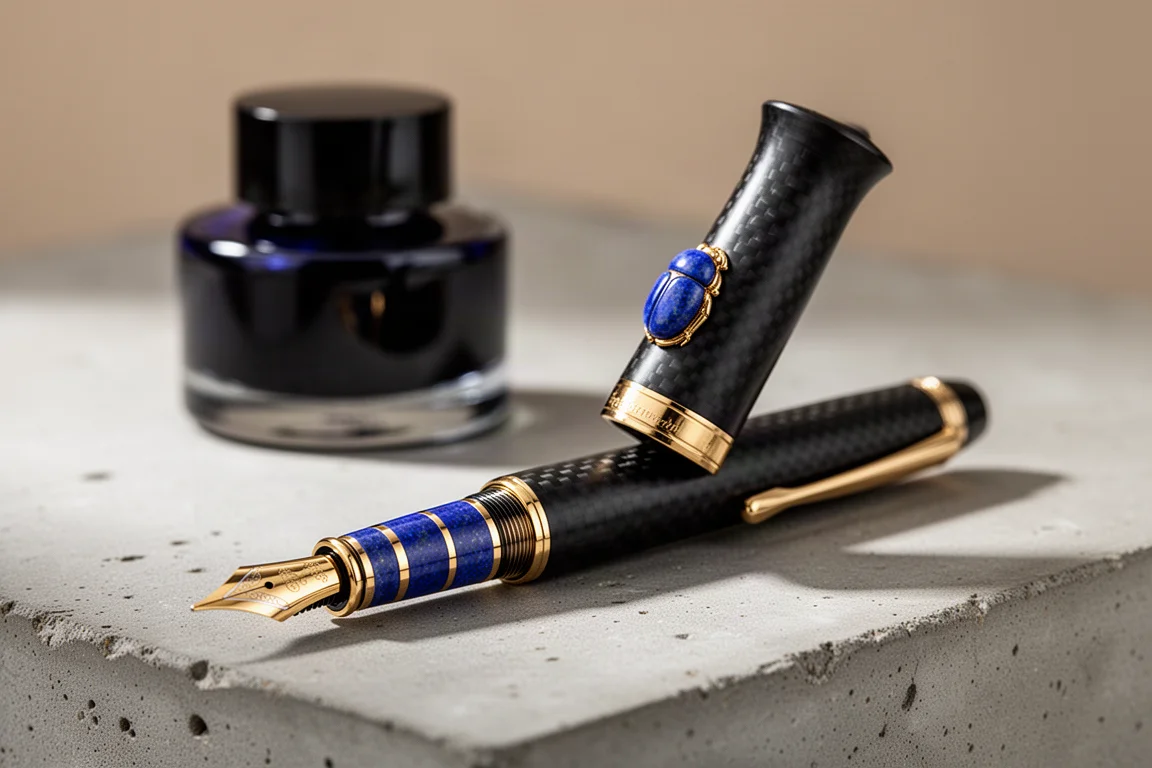
At the top of the cap sits a scarab engraved in an inlaid piece of blue lapis lazuli. The beetle was sacred in ancient Egypt and appeared on amulets, seals, and coffins as a lucky symbol. When the Nile began to flood, the beetles would move away from the water, serving as an early signal of the coming flood. The deep blue of the lapis lazuli was a new color in that era and became associated with water. Up close, silver lacquer has been applied over the stone, which adds a subtle sheen.
The flared cap design is modeled after the crown worn by Queen Nefertiti, whose iconic bust was discovered in 1912. The tall crown shape was rare for its time and symbolized a position of power said to be equal to or greater than that of the Pharaoh Akhenaten. The flare also ties the pen visually to other Graf von Faber-Castell models, such as the Anello in rose gold.
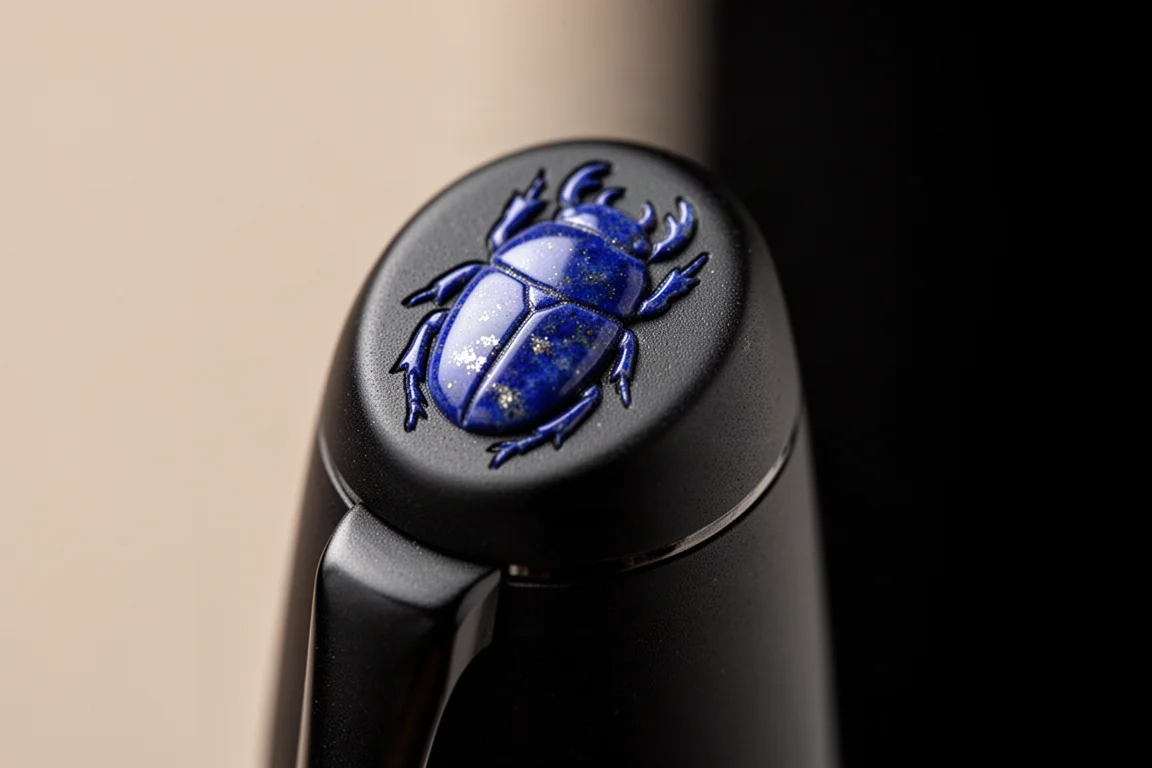
The traditional hinged clip operates nicely on materials of varying thicknesses. The end of the cap is engraved with the company name on one side and “Handmade in Germany” on the other, with all engraving looking very crisp and very clean.
Barrel, Blind Cap and the Eye of Horus
The barrel is straight and adorned with ornate hieroglyphics representing twelve ancient Egyptian gods and goddesses. Hieroglyphs are considered the oldest form of Egyptian writing, and around 7,000 symbols are known today thanks to the Rosetta Stone, which archaeologists used to translate them. At the end of the barrel, the pen is engraved with Pen of the Year 2023, plus the number 2023 written in hieroglyphics.
A small step down leads to the blind cap, adorned with blue lotus petals. The blue lotus was one of the most sacred and revered plants in ancient Egypt, used in medicine, rituals, celebration, and even as a powerful psychoactive. At the very end sits the Eye of Horus, engraved in 24 karat gold-plated metal. In ancient Egypt, gold symbolized power and wealth, and only the Pharaohs were permitted to adorn themselves with it.
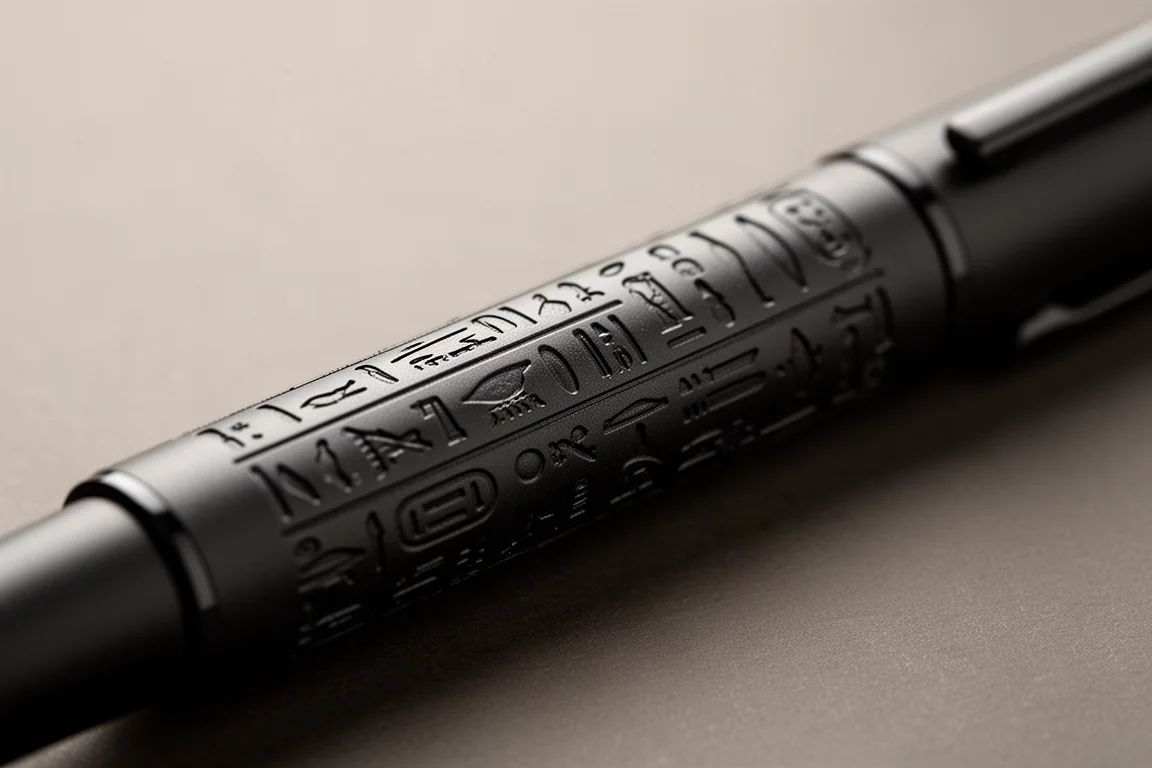
The blind cap covers the piston mechanism. It is a consistent design element across Pen of the Year models, though it is fair to wonder whether a pull-back piston knob would have been more practical. The piston knob itself has very slight grooves near the back but carries no symbolic elements, which feels like a missed opportunity for a hidden detail.
Nib, Section and Filling System
Twist the cap off with one full rotation and you reach two real highlights. The nib is 18 karat gold and beautifully stamped with the company name, crest, and Pen of the Year marking. The section is inspired by the gold and lapis lazuli stripes of the mask of Tutankhamun: it begins with a small flare, then alternates rings of 24 karat gold-plated metal with rings painted in lapis lazuli blue. The plated gold has a slightly matte texture while the blue rings are smooth, creating a subtle tactile contrast that actually improves grip without feeling disruptive. The contrast of gold against deep blue against the stark black body is striking.
A small ink window sits at the back of the section. Interestingly, that window does not appear in any of the promotional photos in the manual or online; it was added late in development after the photos were taken. Included with the pen is a bottle of lapis lazuli ink, a royal blue that complements the design nicely and holds its own against other royal blues from major ink brands.
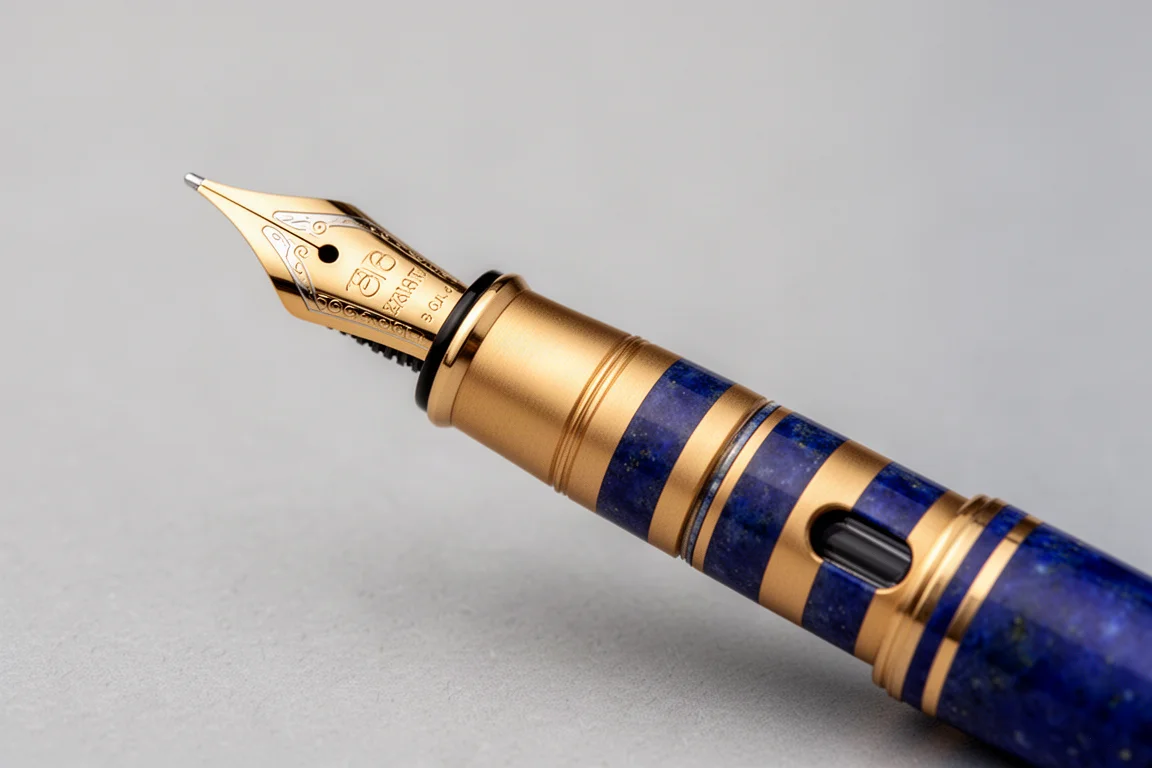
This is a piston filler, and the mechanism operates smoothly. The pen is rather hefty and feels substantive in the hand, but it is usable and not overly heavy. The cap can be posted and looks fine that way, but it is not very secure and the heavy cap back-weights the pen, so unposted use is the better choice. The nib, tested dry, felt very smooth and very soft, consistent with the brand’s reputation for outstanding nibs.
Sizing and Everyday Handling
The pen feels very well-made and solid, with extremely high attention to detail, which is what you would expect from this annual series. There is no visible limited edition number on the pen itself, though the edition is 375 fountain pens and 125 rollerballs. Next to classics such as a Classic Pens LB5 or a Pilot Custom Urushi, it holds its own as a substantial flagship-size pen, and its flared top echoes the Anello rose gold from the same brand.
Things to Consider Before Buying
The obvious consideration is price. At $6,500, this is an unapologetic luxury purchase, and it is priced consistently with previous Pen of the Year editions. Popularity has also made availability tricky, with stock challenges reported at launch. The single-pen case is a step back from previous years if you like storing your collection together, and the blind cap design adds a bit of fiddle compared with a standard piston knob. Finally, the small ink window missing from all promotional imagery is worth knowing about if you are buying from photos.
Buying Advice
If you are in the market for a pen in this price range and you enjoy the art, symbolism, and culture of ancient Egypt, this pen would be a perfect fit. It suits collectors who follow the Pen of the Year series as well as enthusiasts who want a statement piston filler with genuinely meaningful design details rather than decoration for its own sake. The included lapis lazuli ink is a nice touch that lets you start writing in theme immediately.
Conclusion
The Ancient Egypt edition is a solid offering and a fitting 20th anniversary entry for the Pen of the Year series. The combination of DLC-coated metal, lapis lazuli inlay, gold-plated engraving, an 18 karat gold nib, and a smooth piston filler results in a pen that feels as substantive as its story. For admirers of Egyptian history, it will genuinely speak to you.
Product link
View more details for Graf von Faber-Castell Pen of the Year 2023 Ancient Egypt
This product is mentioned in the review. Check the specifications, options, and compatibility before buying.
View more details for Graf von Faber-Castell Pen of the Year 2023 Ancient EgyptFurther reading
Related Reviews
Fountain Pens
Best Budget Fountain Pens Tested: 9 Pens, One Clear Winner
A hands-on comparison of nine affordable fountain pens for everyday writing, calligraphy, and sketching, with a clear standout for flexible nib fans.
Fountain Pens
Aurora Optima Review: An Italian Piston Filler That Punches Above Its Price
A 14k gold nib, ebonite feed, and a beautifully deep oraloid body make the Aurora Optima one of the most rewarding piston fillers around.
Fountain Pens
Cross Bailey Light Review: The Entry-Level Fountain Pen Worth Keeping at the Office
A plastic-bodied Cross with a metal clip, snap cap, and famously smooth extra fine steel nib. Around $15, available almost everywhere, and easy to recommend.