Snowboards
GNU Money Review: A Predictable Park Snowboard for Price-Conscious Riders
A close look at the GNU Money, its C2E camber profile, playful flex, buttering and jibbing strengths, and the chatter you should expect before buying.
Introduction
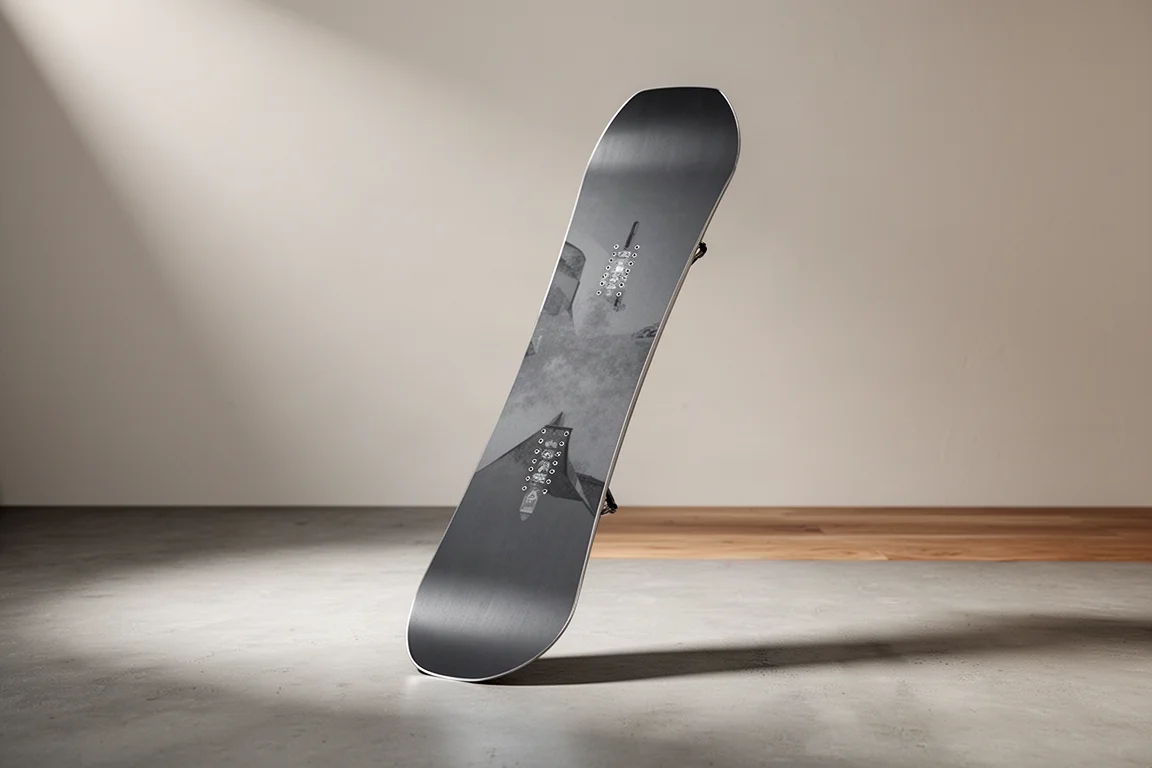
The GNU Money is a park snowboard built around GNU’s C2E camber profile: a shorter reverse camber section between the feet, paired with elliptical camber under each foot that is both higher and longer. The result is a set of independent camber zones you can load for pop and drive, with noticeably more play between the feet. That layout helps the board enter and exit turns with ease, and it also gives more optimal float if you take it into powder. Sizing runs across 144, 148, 152, 156, 159, 150 wide, 154 wide, and 158 wide.
Across a mix of slush, chop, chunder, and perfect hero snow on the groomers, the Money behaves like what it is: a playful park deck that stays predictable once you understand where its softer zones sit and how they respond.
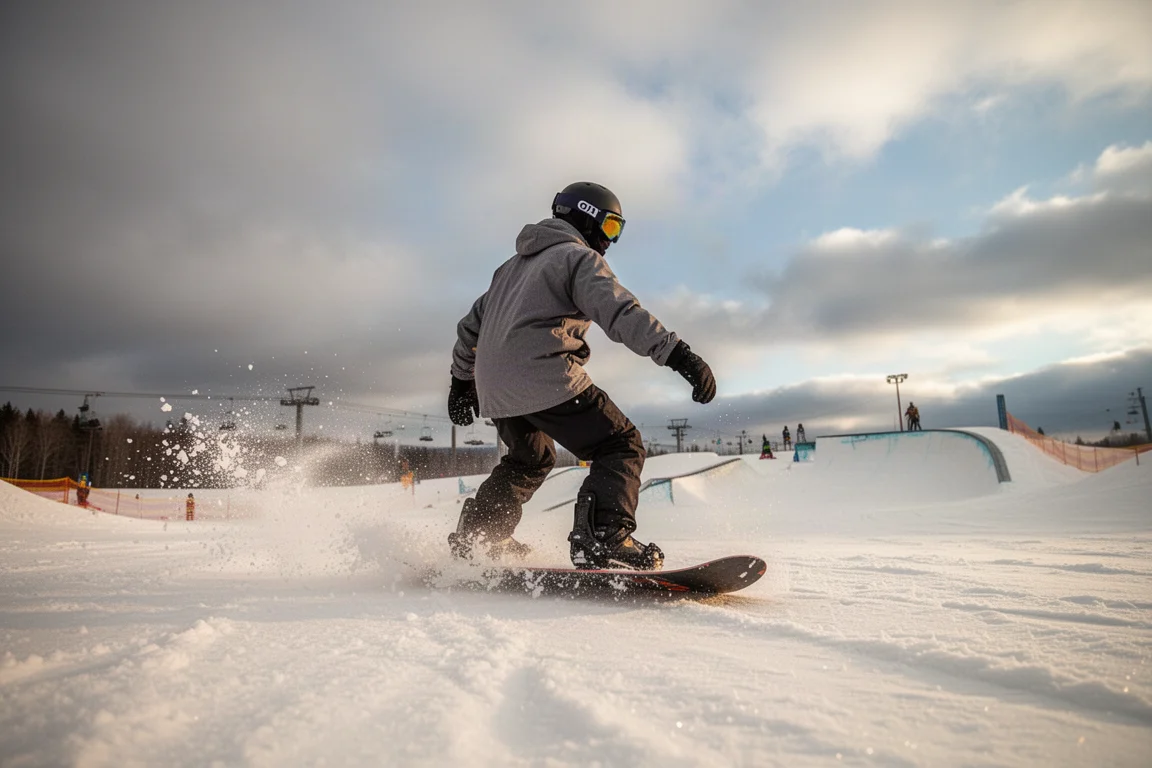
This review breaks down how the camber profile rides, where the board excels, and what to weigh up before you commit to one.
Who the GNU Money Is For
This board is aimed at the price-conscious park rider. It is not something you have to be cold and calculated with while you are still figuring out how to ride park. You can be lazy and it will compensate for you, which makes it a comfortable place to build confidence on rails, boxes, and small features.
The current version has moved away from the previous BTX profile, and that change alters how the board can be driven. There is a little more snap and a little more power out of a turn, while the ride stays predictable. You know what you are going to get, and you get three distinct flex points: one in the nose, one in the centre, and one in the tail. Those three points are what make buttering, jibbing, and general playfulness easier to engage.
Camber Profile and Flex: How the C2E Shape Rides
The overall flex sits just a hair below the middle of the road. The tips are softer, then the board stiffens where the camber section starts and carries that through to the middle, where the reverse camber begins. There is a flex point in that zone with noticeably more give, and that give shows up clearly in the torsional flex. The Money can genuinely be twisted.
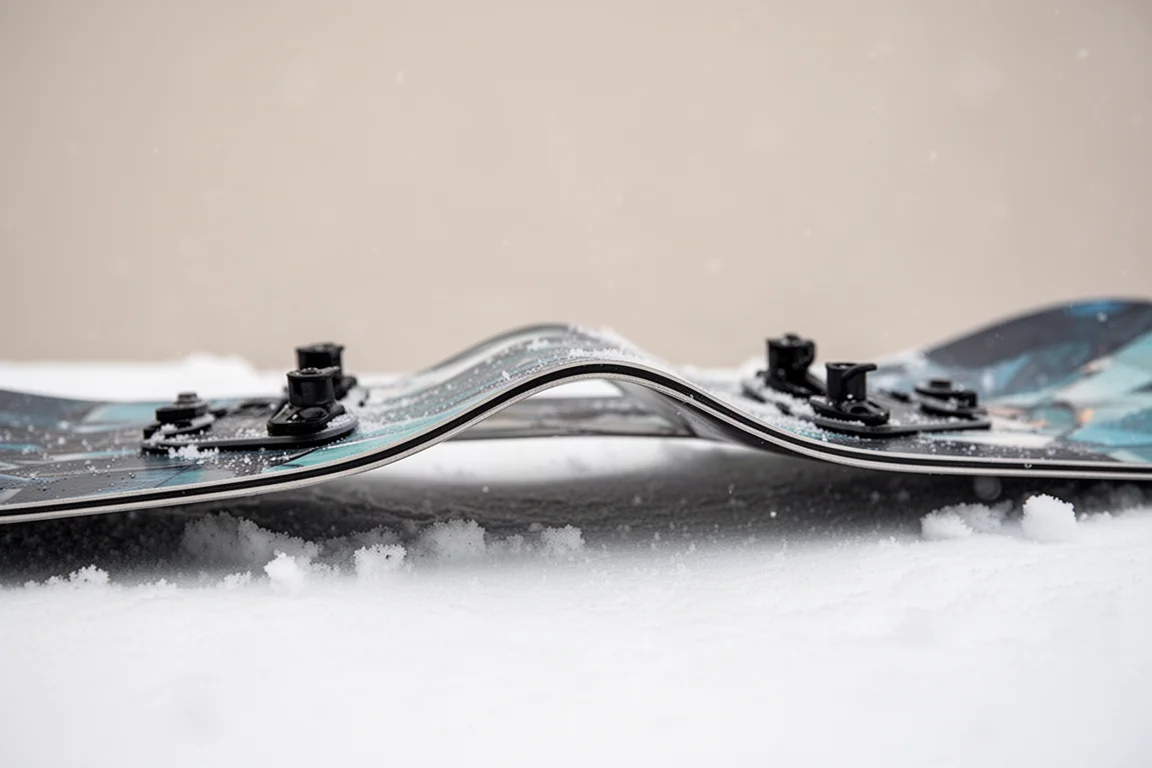
Because the elliptical camber zones are longer, you still have to load the board to get anything out of it. When you do, there is a flex point in the tail that engages a little slowly before you roll back onto it and it springboards you into an actual pop. The snap is solid, which matters when you are launching rollers and cat track gaps.
Buttering, Jibbing, and Pressing
The sweet spots for buttering sit in the tips, outside the front or rear camber zone. When you engage one, it locks in and holds, and when you want to disengage, the camber section takes over and gives you a snap. If you want to get sideways and spring out of everything, this board is highly butterable and will not fight you.
Jibbing follows the same logic. Those sweet spots lock into presses, and it is relatively easy to sit on a tail press outside the rear camber zone or a nose press outside the front camber zone, feel the engagement, hold it, and then get a clean snap off the end of the feature. When you go sideways, line the board up under your front foot or your rear foot rather than between the feet, because that reverse camber makes the lock-in easier when you are offset. Pressing between the feet still works, it just takes more commitment.
Stability, Carving, and Pop
Stability is better than the board’s flex would suggest, but there is a real limit. Chatter builds in the tips and resonates back under foot. Keep your knees bent and you will pop and skip over lumpy terrain, but if you are not prepared for it, that chatter lands as a body-jarring hit. On a groomer the Money is stable for the most part. It is the lumpy, chundery snow where it gets bucked around, and you need to ride with that in mind.
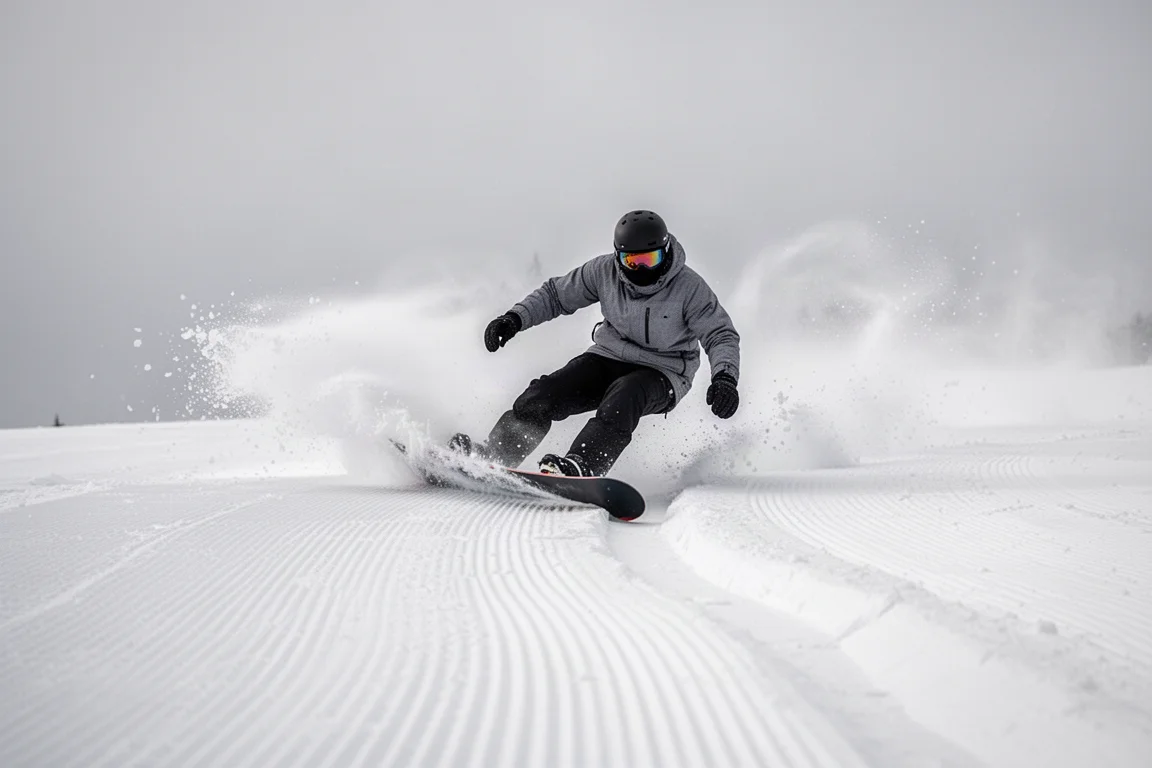
Pop is where the board surprises people. Small to medium jumps are its home, and it snaps exceptionally well off the lip without you having to think about it. The pop is close to a skate-like snap, though not quite fully there. A confident park rider can send a jump deeper than expected, but the board is too soft to take comfortably beyond small and medium features. It is a park board through and through, so it is not the most carvable option out there, though it does work. Steering under foot is optimal thanks to the camber profile, and you can lay it over and lay a trench when you need to. Ankle steering handles the medium to mellow carves and the setup before a feature. If you want to drive a carve harder, load the rear camber zone, push it into the centre, and slingshot out of the turn.
Things to Consider Before Buying
The main trade-offs are all connected to the soft, playful build. Tip chatter shows up in choppy or chundery snow and travels back under foot, so it rewards an active, knees-bent riding style rather than a relaxed one on rough terrain. The flex also caps how far you can push it in the jump line, with small to medium features being the sensible ceiling. And while the board can be laid over into a carve, it is not the most carvable deck available, so riders who want a hard-charging all-mountain carver should look elsewhere.
None of these are faults so much as the honest cost of a forgiving, buttery park board. If you want something that locks in easily on presses and does not demand precision, these are reasonable concessions.
Buying Advice
The Money makes the most sense for riders who spend their days in the park working on butters, presses, and jibs, and who want a board that stays predictable and forgiving while they do it. Its three flex points and its snappy tail suit that kind of riding directly, and the price-conscious positioning keeps it accessible as a dedicated park deck.
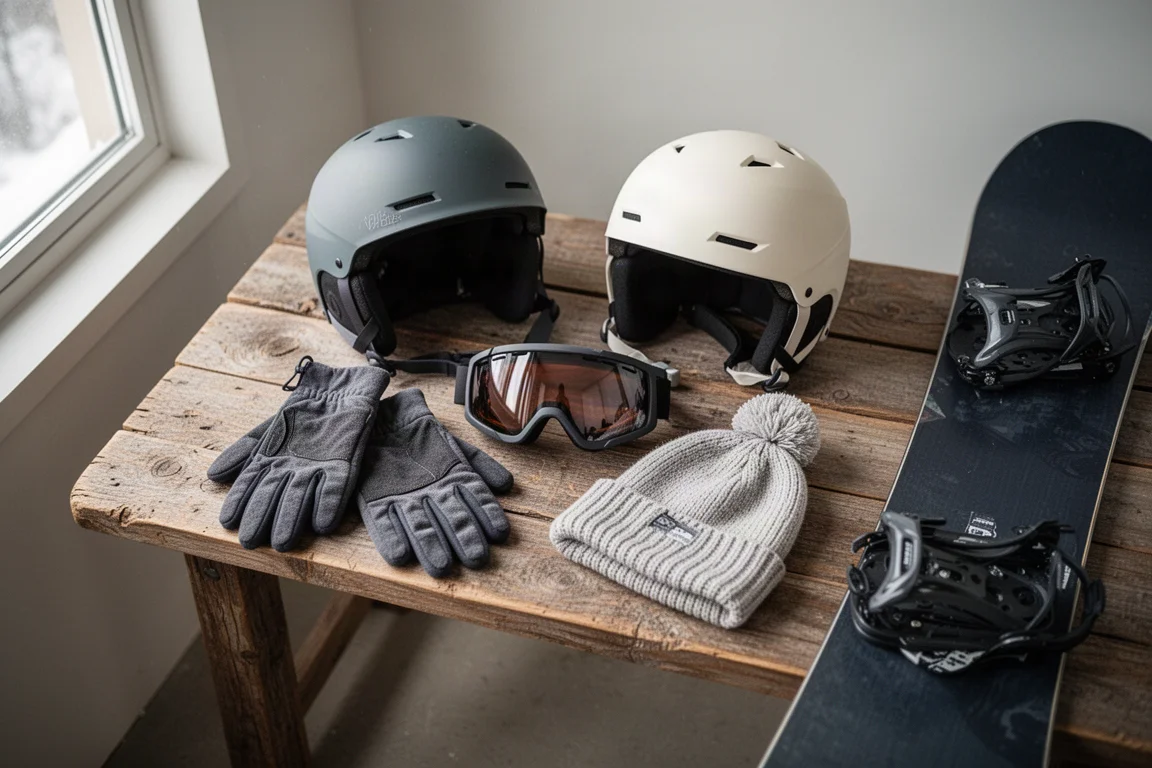
For bindings, the board pairs naturally with options in a similar playful, mid-soft range, and the Bent Metal Logic, the Now Brigade, and the K2 Lineup are all worth considering. If you are shopping around more broadly, the Telos Adit, the Yes Dicey, and the K2 Raygun Pop occupy comparable territory. On sizing, the range covers 144, 148, 152, 156, 159, 150 wide, 154 wide, and 158 wide, so riders who need a wider platform have options without moving up into a different board.
Conclusion
The GNU Money is a predictable, highly butterable park snowboard with a camber profile that rewards loading and gives back a solid snap. It handles presses and jibs with ease, stays stable enough on groomers, and asks very little of you while you ride. Expect tip chatter in rough snow and keep your ambitions to small and medium jumps, and it delivers exactly what a price-conscious park rider is looking for.
Product link
View more details for GNU Money
This product is mentioned in the review. Check the specifications, options, and compatibility before buying.
View more details for GNU MoneyFurther reading
Related Reviews
Snowboards
32 Middle Earth Scott Stevens Pro Model Snowboard Review: A Park Board With a Reversed Flex
A medium traditional camber park board with carbon V reinforcement that is stiffer in the tips and more playful between the feet. Here is how it rides and who it suits.
Snowboards
32 Snafu Review: A Directional All-Mountain Freestyle Board with Serious Pop
The 32 Snafu pairs a directional camber-rocker profile with a stiffening tail for powerful carves, big ollies, and a surprisingly damp ride.
Snowboards
32 XXX Pat Fava Pro Snowboard Review: A Stiff Camber Beast for Hard-Charging Riders
A full-width traditional camber deck that rewards aggression with stability and edge power, but demands effort everywhere else.