Multi-Tools
Gerber Stakeout Drive Review: One Great Idea in a Tough Price Bracket
Gerber's new Stakeout Drive fixes nearly everything wrong with the original Stakeout, led by an excellent locking bit driver, but a closer look at the pliers, file, and price tells a more complicated story.
Introduction
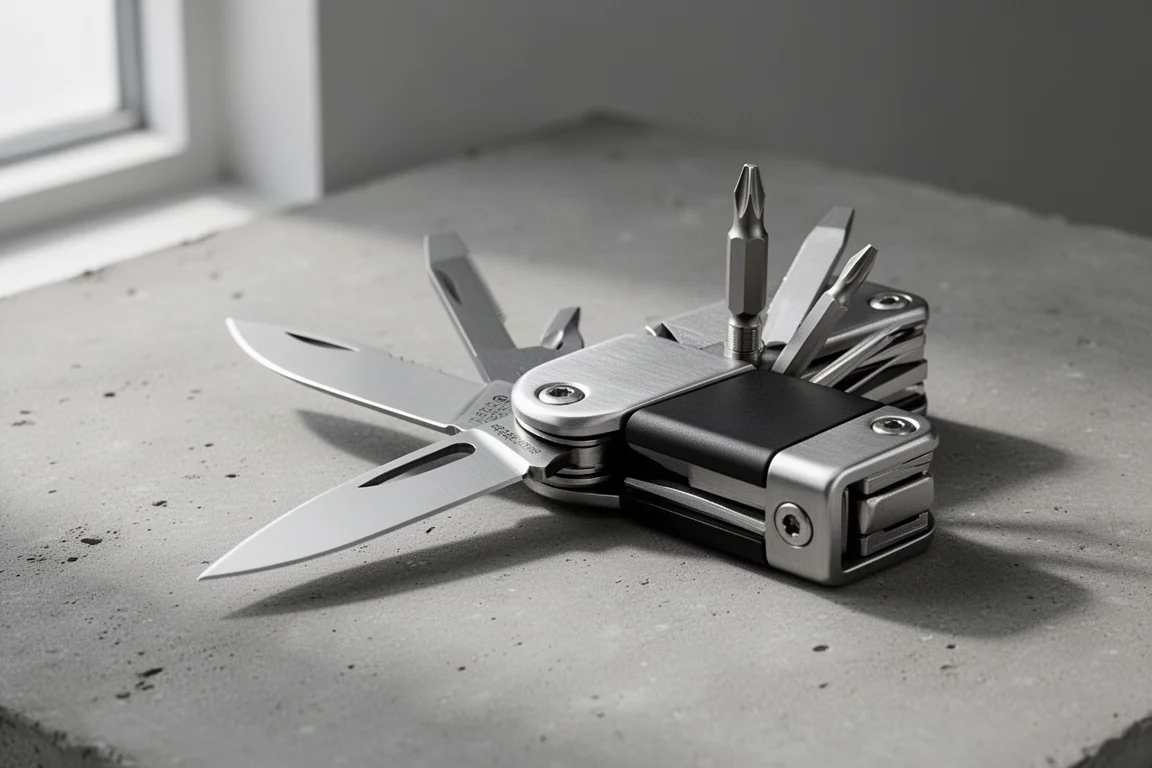
Gerber’s Stakeout Drive is a full redesign of one of the weakest multi-tools the company has released in recent memory. The good news: this is a dramatic step up. The tool selection is better thought out, the construction feels noticeably improved, and the headline feature is genuinely excellent. The bad news: at its current $70 price point, it sits in one of the most competitive segments of the multi-tool market, and several of its components do not hold up against what that money can buy elsewhere. Here is the full picture to help you decide whether to consider it or skip it.
Who This Tool Is For
The Stakeout Drive makes the most sense for someone who wants a compact, light everyday carry multi-tool built around a proper screwdriver, not around pliers. If your daily tasks skew toward driving screws, cutting cord, and occasional light blade work, the core of this tool is well matched to that use case.
If you are buying it specifically for the pliers, or you expect a versatile file, this is probably not the right pick, as those are the two weakest parts of the package.
Main Strengths
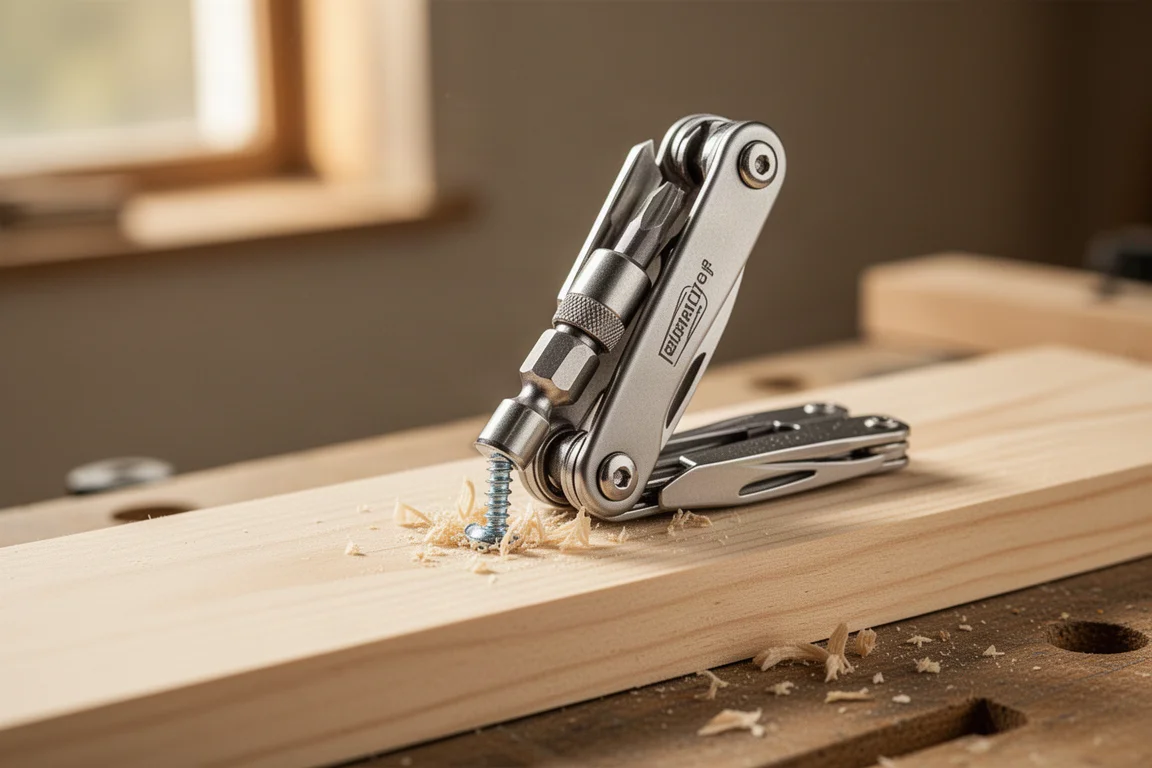
The bit driver is the star of the tool, and it is not close. It uses the same double-sided bit design found in some of Gerber’s pocket knives, but this version adds a liner lock, which makes it far more secure and pleasant to use. The driver sits nearly center line with the tool body, so driving screws feels comfortable rather than awkward. A Phillips and flathead bit come stored in it, with a second bit on the back.
Even better, it is not locked into proprietary bits. Higher quality bits from brands like Wiha store and function well in the driver, and it also works with Leatherman bits. That flexibility is rare at this size and is easily the single best reason to consider this tool.
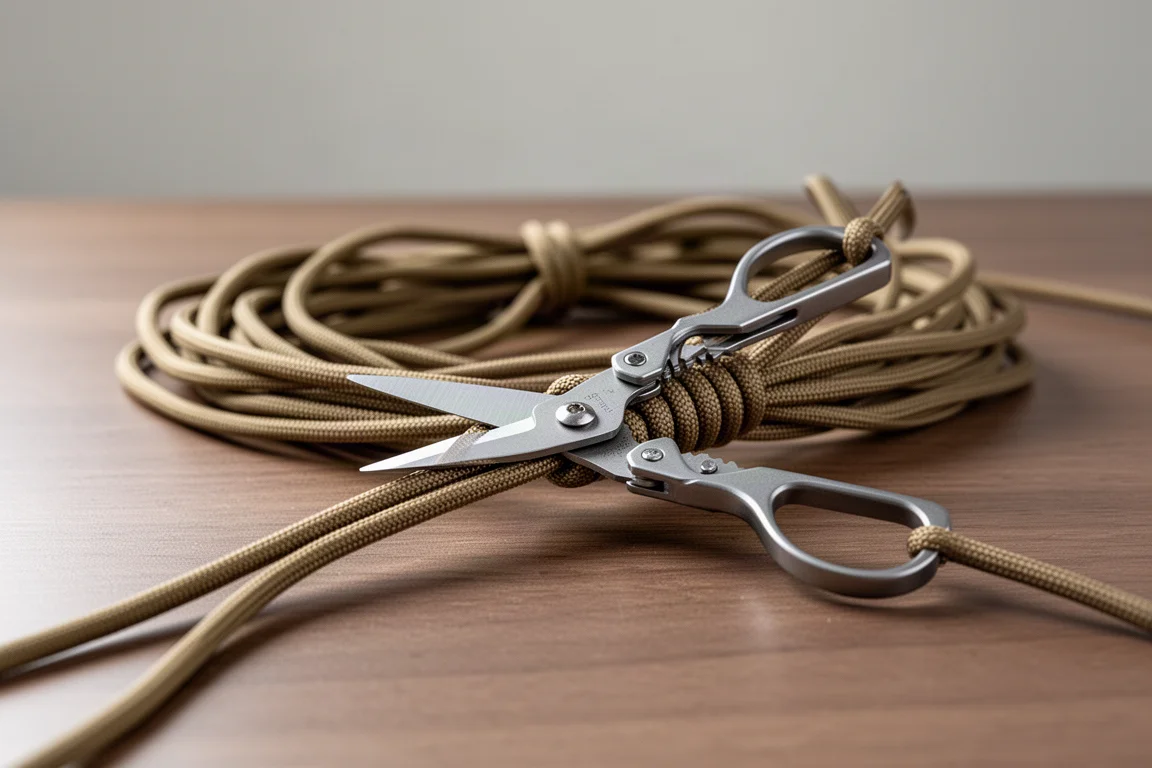
The scissors are another pleasant surprise. The cutting geometry is genuinely solid and handled paracord well in testing, even without a large cutting pad. One important detail: they are left-handed scissors. To make the blades meet correctly you need to hold the tool inverted and squeeze with your right hand, so right-handed users should be aware of the correct grip or cutting performance will suffer.
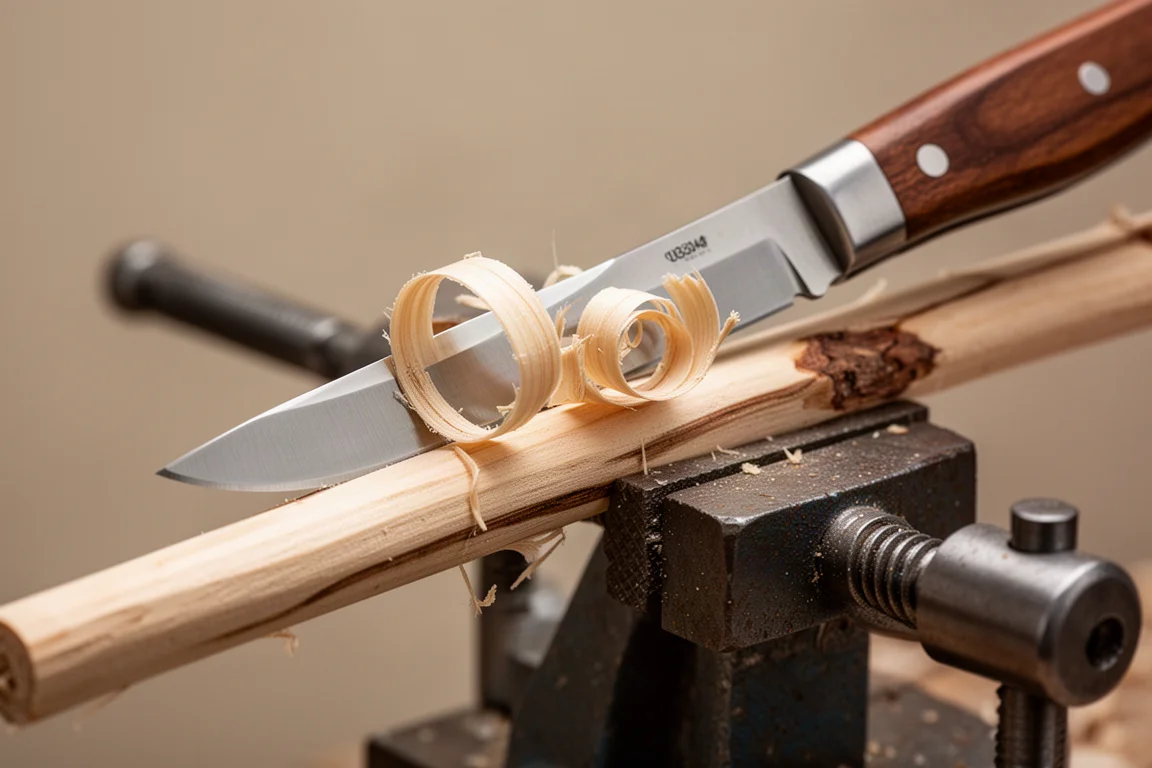
The blade is a 0° scandi grind, a specialized geometry that excels at wood carving. It came sharp from the factory and performs well on wood.
Other well-executed details include a nicely designed removable pocket clip that does not require disassembling the tool, a strong wire-gate carabiner with a retention feature, an integrated bottle opener built with solid metal rather than a flimsy tab, a small ruler section, and a symmetric design that uses the available space sensibly.
Things to Consider Before Buying
The pliers are the biggest letdown. They are built around the Gerber Crucial platform, which was mediocre even at its release. The jaws are very thin compared to similarly weighted multi-tools, and decorative cutouts further weaken them. For a plier-based multi-tool, this is a serious compromise, and the gap in thickness and capability is significant when compared with spring-loaded competitors like the Leatherman Rev, Sidekick, or Wingman.
The file and chisel combination is the other major weakness. The surface texture is barely aggressive, the cross cut side has almost no grit, and a large cutout robs the file of roughly an inch and a half of usable length compared to Gerber’s own Dual-Force. The chisel fares no better: it is angled, which causes it to walk away from the cut, it is not fully finished, and it is unsuitable for prying. A simple nail nick cutout would have preserved most of the file’s function, and a T-shank holder would have been far more useful.
The blade steel is also worth noting. It is basic 420 stainless, not the harder 420HC used in Leatherman’s USA-assembled tools, so the edge deforms and dulls faster. A 0° scandi edge is already delicate, so a practical recommendation is to add a small micro bevel on a honing rod for better edge durability.
Buying Advice
Price is the make-or-break factor here. At $70, the Stakeout Drive competes directly with tools that offer significantly better pliers, spring-loaded action, higher quality steel, better warranties, and in some cases US assembly. The Leatherman Wingman sits around $50 on sale and $70 normally, the Sidekick is $70, and the Rev and Wingman class alternatives run $40 to $50, all with substantially more capable pliers.
Alternative combinations are equally compelling. A small Knipex Cobra pliers at around $30 paired with a budget fixed or folding knife gets you to roughly the same total spend with far more capability. And in the budget no-name segment, roughly $30 to $35 buys tools with better blade steel, a proper saw, a real diamond file, a locking quarter-inch bit driver, scissors, spare cutters, a sheath, and often a bit kit.
Realistically, this tool justifies closer to $50 than $70. You would have to be deeply sold on the bit driver alone for the price to make sense, and that is a high bar given the competition. Weight is the one consolation: it comes in at 6.6 oz, noticeably lighter than the heavier spring-loaded alternatives.
Conclusion
The Stakeout Drive is a genuine step in the right direction for Gerber and a massive improvement over the original Stakeout. The locking bit driver and surprisingly good scissors show real design effort. But thin pliers carried over from an underwhelming platform, a nearly useless file and chisel, basic blade steel, and a $70 price in a brutally competitive market hold it back. Buy it only if the bit driver alone sells you; otherwise, the alternatives at this price deliver more tool for the money.
Product link
View more details for Gerber Stakeout Drive
This product is mentioned in the review. Check the specifications, options, and compatibility before buying.
View more details for Gerber Stakeout DriveFurther reading
Related Reviews
Multi-Tools
Leatherman Wave Plus Review: A Pliers-First Multitool for Bike Trips
Why a pliers-first multitool earns permanent space in a touring kit, and what to weigh before paying for the Leatherman Wave Plus.
Multi-Tools
Best Budget Multi-Tools Under $50: Four Picks Worth Considering
A compact SOG original and three value-focused clones, with honest notes on which ones deliver real value and where to draw the price line.
Multi-Tools
Best Multitools for Hard Wire Cutting: Which Pliers Actually Survive the Test
We put a lineup of classic and modern multitools up against a simple challenge: cutting coat hanger wire cleanly without damaging the cutters.