Studio Monitors
Genelec 8361A Review: A Three-Way Active Monitor for Nearfield and Farfield Listening
A close look at the Genelec 8361A, a large three-way active studio monitor with roughly 1,000 watts of amplification, wide and vertically symmetric directivity, and low measured distortion.
Introduction
The Genelec 8361A is the largest model in the brand’s One series, a line of active loudspeakers with a strong reputation in professional studio work. Most studio monitors are built for nearfield use, meaning a listening distance of roughly a metre. The 8361A is designed to cover that role and also to hold up as a higher output farfield speaker for listening positions beyond a couple of metres. That combination makes it an unusual proposition: a precision monitoring tool that can also carry a large room.
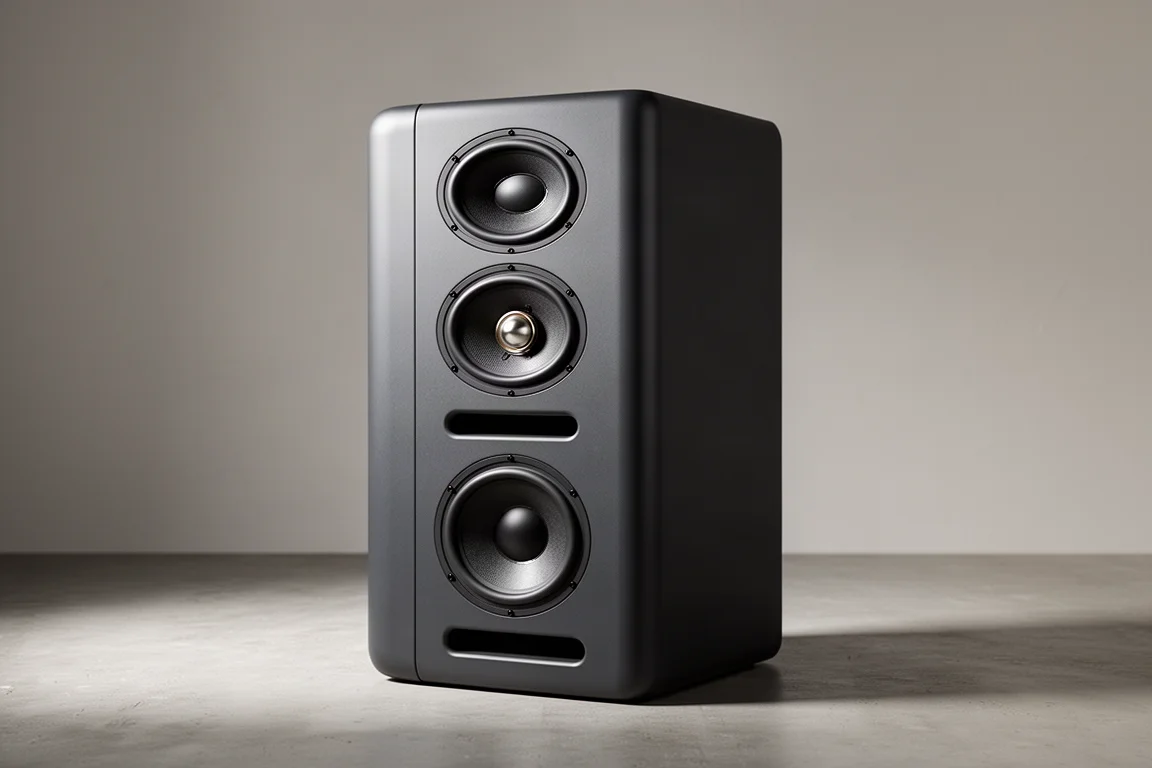
The hardware is substantial. The 8361A is a three-way active design with two 10 inch drivers loaded at the front of the enclosure, one above the coaxial assembly and one below, plus a notch in the cabinet that lets the woofers breathe. Between them sits a 5 inch coaxial midrange with an inset 1 inch metal dome tweeter. Amplification totals roughly 1,000 watts, split into 700 watts for the low frequency drivers, 150 watts for the midrange, and 150 watts for the tweeter. Price is approximately $11,000 per pair.
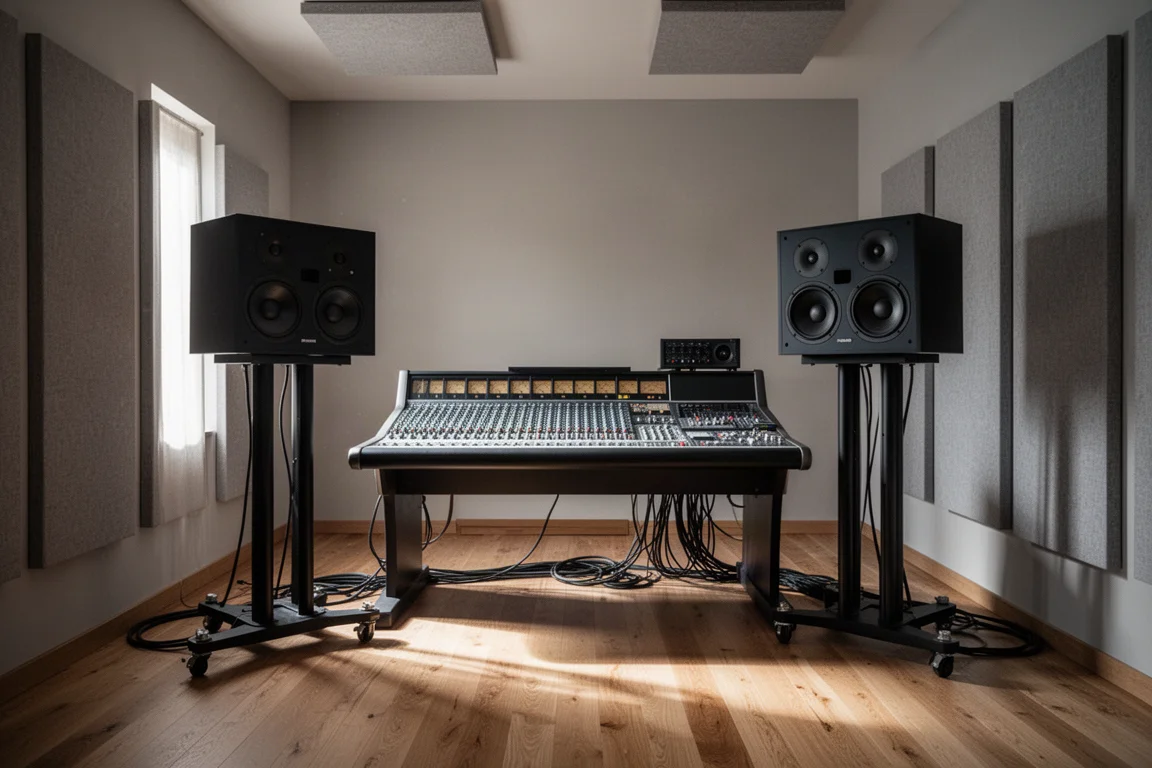
The rear panel carries a set of dip switches for bass rolloff, bass profile, and treble profile, along with desk or console compensation. That last switch is genuinely useful when the speaker sits on top of a console, where the surface reinforces the midrange and can make the result sound overly chesty; the compensation reduces that reinforcement so the balance stays natural. One important note on method: the optional GLM software and microphone kit, sold separately for about $450, was not used here. It would have acted primarily as room correction, and the speaker was instead assessed on its own in both nearfield and farfield setups.
Who This Product Is For
Three types of buyer make the most sense for this speaker. The first is a studio user who wants a nearfield monitor at around a metre that stays neutral and does not editorialise. The second is a listener with a larger room who needs farfield output beyond a couple of metres without the compression and strain that smaller monitors show. The third is a home theater owner with multiple seats, and potentially multiple rows, where high output and consistent off-axis behaviour matter more than a single narrow sweet spot.
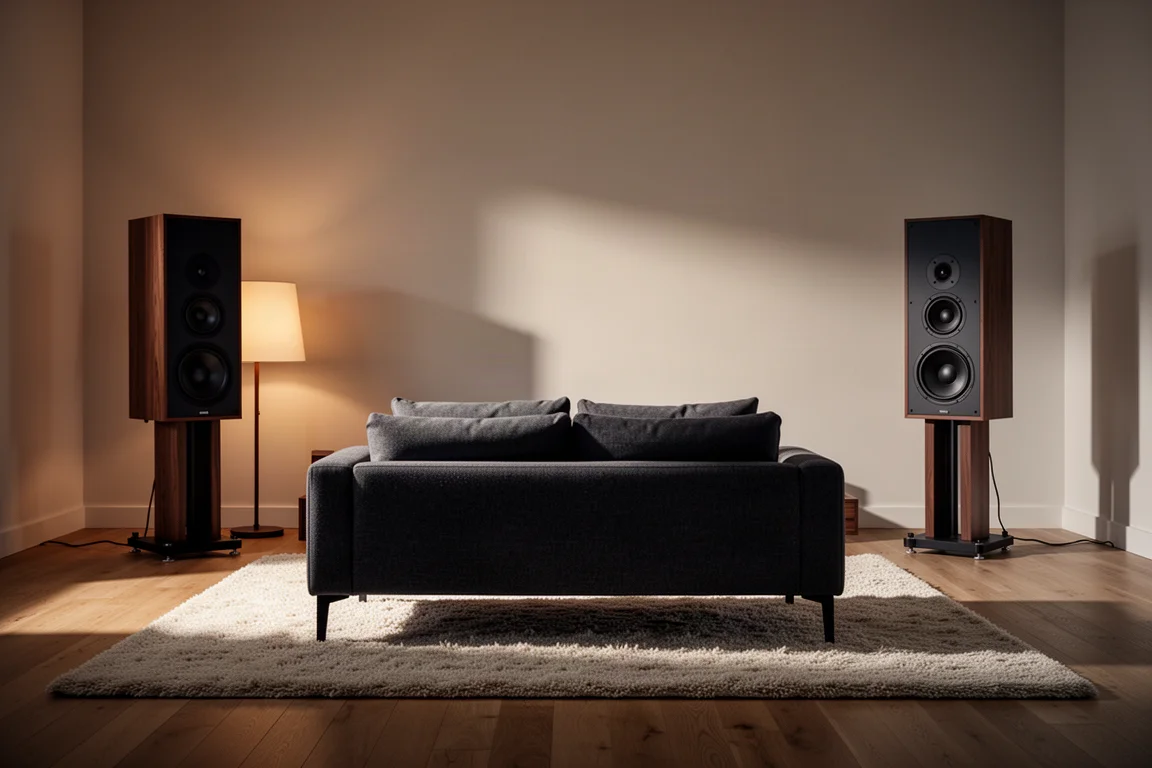
It is also a plausible choice for straightforward stereo hi-fi listening, provided the room can accommodate a cabinet of this size and the buyer is comfortable with a self-powered active system rather than a separate amplifier and passive speakers. Anyone shopping at this level should also weigh the newer Genelec 8380 SAM, a larger model that retails for about $10,000 each and uses what appears to be the same 5 inch coaxial driver, with a single 15 inch midbass driver in place of the two 10 inch units.
Main Strengths
In farfield use, placement made a real difference. The speaker was positioned between about 1 foot and 3 feet off the front wall, settling at roughly 2 feet, and was ultimately aimed 5 to 10 degrees off-axis with a slight toe-out. That angle smoothed the upper midrange and lower treble and expanded the width of the soundstage. Buyers should expect to experiment with both distance from the wall and toe-in, because the room shapes the result as much as the speaker does.
Three-Way Active Design and Power
The driver layout is the core of the design. Two front-loaded 10 inch woofers sit above and below a coaxial midrange and tweeter, and the cabinet notch between them allows the woofers to move air freely rather than fighting the enclosure. With 700 watts behind the low frequency section and 150 watts each for the midrange and tweeter, the speaker carries headroom that most passive designs at this size cannot match without serious external amplification.
Directivity and Vertical Symmetry
Radiation width measures at roughly plus or minus 60 degrees, which is a sensible target for a room with sidewalls: wide enough for a real sense of envelopment, not so wide that reflections overwhelm the direct sound. The coaxial midrange and tweeter, flanked by identical drivers above and below, also produce almost perfect vertical symmetry. Response above the tweeter axis mirrors response below it.
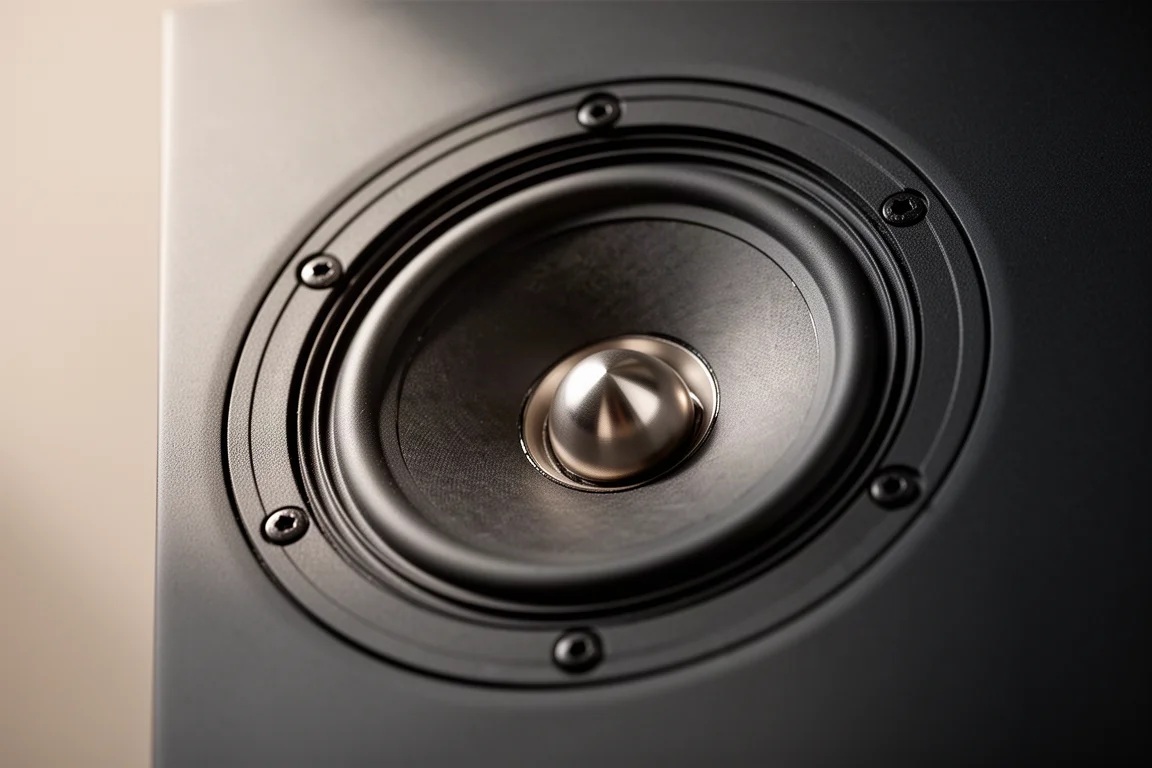
That symmetry matters more than it first appears. In a single-seat setup with the listener’s head fixed, it is a minor benefit. In a room where people walk around, where seats sit at different heights, or where home theater seating runs to multiple rows, consistency above and below the tweeter axis creates a much larger usable area. The speaker sounds recognisably similar standing up, sitting down, or listening from an adjacent seat.
Measured Linearity and Low Distortion
The frequency response is smooth, with on-axis linearity within about plus or minus 1 dB outside a dip centred near 200 Hz. That dip behaves like a resonance, and one plausible explanation is extra radiation toward the rear of the cabinet, though the cause was not fully pinned down. Directivity stays very smooth throughout. Sound power rises relatively quickly through the bass and lower midrange before flattening above roughly 300 Hz, which lines up with the specified crossover point of about 320 Hz.
Distortion is low. At both 86 dB and 96 dB, overall distortion stays below about 1 percent for the majority of the range, and multitone distortion, which is closer to how real music loads a speaker, also stays below about 1 percent. Long-term compression is practically non-existent. Short-term compression does show some limiting of the tweeter, which is common in active designs with built-in protection and does not reflect real-world music playback the way the long-term measurement does. Estimated in-room extension reaches down to about 35 Hz, so a subwoofer is not strictly required, although Genelec does build a large subwoofer intended to pair with this model.
High Output Without Strain
At very high levels, roughly 90 dB and above at about 10 feet away, the speaker showed no signs of the woofers bottoming out, no glare from intermodulation distortion, and none of the higher order distortion artefacts that tend to appear in the midrange, upper midrange, and lower treble of lesser designs. For a home theater setup that needs to play loudly and cleanly, that headroom is a meaningful advantage.
Things to Consider Before Buying
Weight is the first practical hurdle. At about 70 lbs each, these are not speakers you casually reposition, and getting one onto a tall stand is a two-person job.
The GLM software and microphone kit is optional and costs about $450. Without it, the speaker relies on its rear panel switches and on careful placement rather than automated room correction. Buyers who want correction built into the workflow should budget for the kit.
In farfield listening, a slight uptick in the upper midrange is audible, driven by additional radiation in the 2 to 3 kHz region. At nearfield distances of about a metre, the balance is more neutral. Deciding which listening distance will dominate your use is worth doing before committing.
The dip near 200 Hz is worth noting as well. It is measurable, the cause is not fully established, and it is the kind of detail that matters most to listeners who work analytically rather than casually.
Buying Advice
The 8361A rewards patience with setup. Give it space behind the cabinet, start around 2 feet from the front wall, and try a small toe-out of 5 to 10 degrees. If the priority is the most neutral balance, nearfield use at about a metre delivers it. If the priority is scale and output in a larger room, farfield placement works well, with the caveat of a mild upper midrange lift.
At approximately $11,000 per pair, this is a serious purchase, and the case for it rests on measured performance rather than on features. Distortion below about 1 percent, directivity of roughly plus or minus 60 degrees, symmetric vertical response, in-room extension to about 35 Hz, and roughly 1,000 watts of amplification together describe a speaker that is difficult to fault on the engineering. Add the GLM kit if automated room correction matters to you, and consider a subwoofer only if you want more low end than 35 Hz provides.
Buyers comparing options in this range should also look at the 8380 SAM, which sits above this model at about $10,000 each and swaps the twin 10 inch drivers for a single 15 inch midbass unit while keeping the same coaxial midrange and tweeter arrangement. It is a bigger, more output-focused design for rooms that can take it.
Conclusion
The Genelec 8361A is one of the better loudspeakers available at this level. It pairs a genuinely neutral nearfield presentation with enough output and thermal headroom to serve a farfield or home theater role, and it does so with wide, vertically symmetric directivity that keeps the sound consistent well beyond a single sweet spot. The trade-offs are real but manageable: significant weight, a room correction kit that is not included, a mild upper midrange lift in farfield use, and a measurable dip near 200 Hz. For studio owners, home theater users, and stereo listeners who want an active three-way monitor with this level of measured performance, it belongs on the shortlist.
Product link
View more details for Genelec 8361A
This product is mentioned in the review. Check the specifications, options, and compatibility before buying.
View more details for Genelec 8361AFurther reading
Related Reviews
Studio Monitors
ADAM Audio A8H Review: A Three-Way Studio Monitor That Also Knows How to Have Fun
A three-way active studio monitor with an 8-inch woofer, a handmade AMT tweeter, and two distinct tunings, the ADAM Audio A8H aims to satisfy both critical work and everyday listening.

Studio Monitors
Best Studio Monitors 2026: Six High-End Options Compared
We tested six premium studio monitors in a real studio space to see which ones deliver the best mix of accuracy, musicality, and value.
Studio Monitors
Focal Alpha 65 Evo Review: An Honest Studio Monitor With Real Bass
A bi-amplified active studio monitor with deep bass, useful tone controls and a truthful, uncoloured voicing, assessed for small studios and home setups.