Studio Monitors
Genelec 8331A Review: A Compact Coaxial Monitor for Serious Rooms
A practical look at the Genelec 8331A, the smallest monitor in the SAM line: coaxial driver design, measured performance, real output limits, and who should buy it.
Introduction
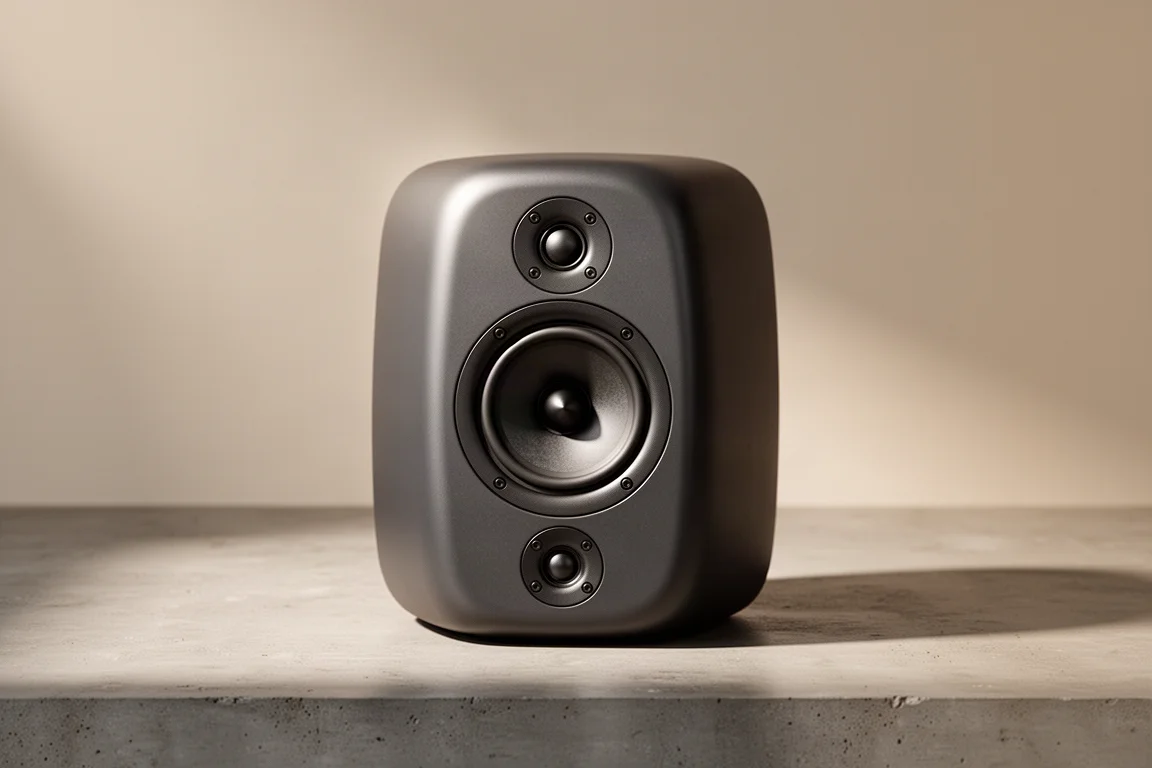
The Genelec 8331A is the smallest model in Genelec’s SAM lineup and sits within The Ones series of coaxial monitors. It is a powered studio monitor built around a coaxial assembly that places the tweeter inside the midrange, supported by two additional mid-bass drivers. The cabinet is compact and weighs roughly 15 lbs, with a rear-firing port and a rear panel that carries the connections.
Pricing sits at around $2,500 per speaker at MSRP, with units often available for around $2,250 each on sale. That places it firmly in professional territory, and the design intent is clear: a small monitor that can be trusted in a room where space is limited but accuracy is not negotiable.
Who This Product Is For
This monitor makes the most sense for people who mix or master for a living, or for anyone who has outgrown entry-level monitors and wants a clear step up in linearity and consistency. It is designed for nearfield to midfield listening, which covers most small and mid-sized studio rooms. It is not intended for farfield use or for very high playback levels. If your listening position is several metres back and you like to work loud, a larger model in the same lineup is the more sensible path.
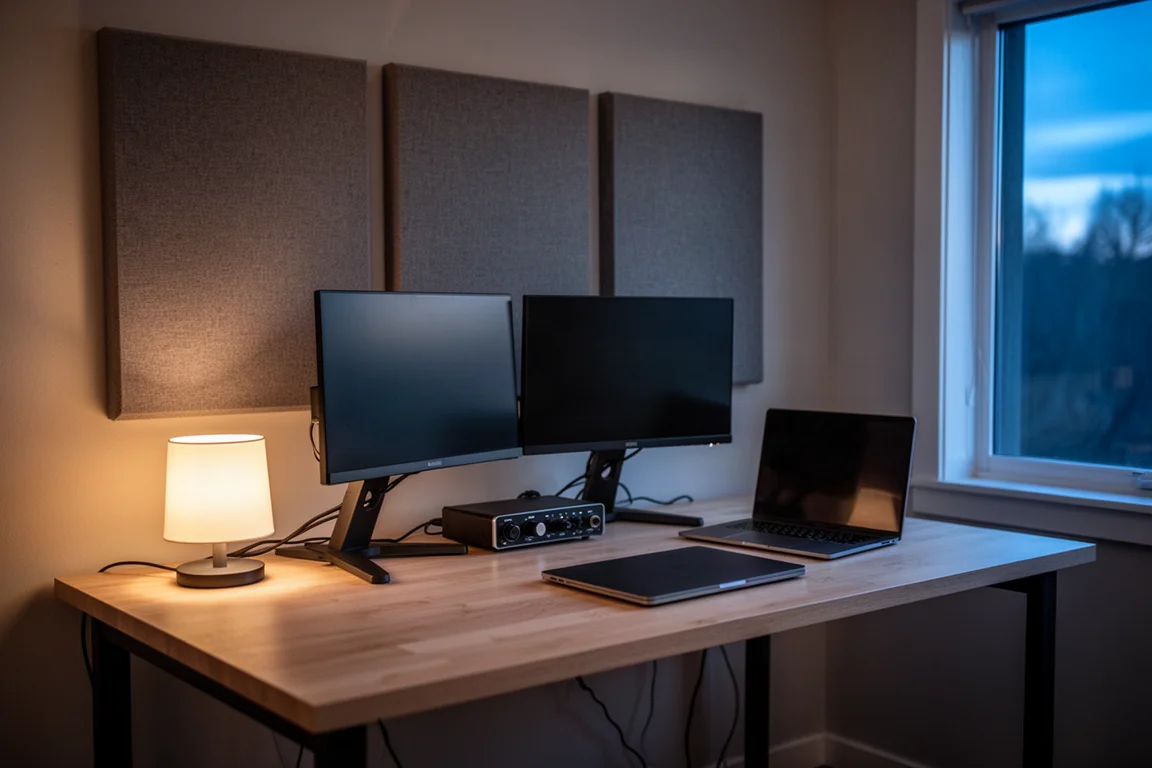
The compact footprint also suits desks where a larger monitor would crowd the working area. The supplied Iso-Pod stands let you angle the cabinet up or down to aim it at your ears, and the monitor can also be laid on its side if a room demands it.
Main Strengths
Genelec’s The Ones series carries a reputation for measurement-driven design, and the 8331A holds that line. Its strengths come down to three areas: driver integration, measured behaviour, and predictable output limits.
A Coaxial Driver That Gets Imaging Right
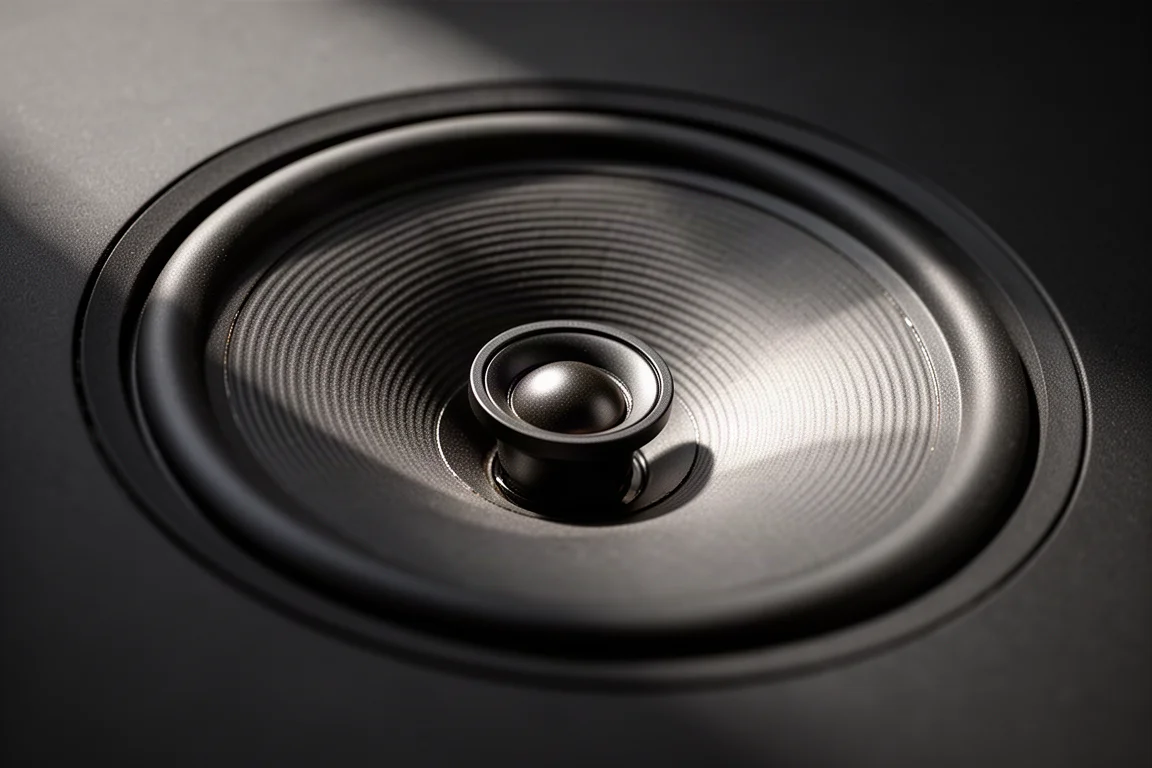
The front baffle carries a coaxial assembly with the tweeter set inside the midrange, while two mid-bass drivers handle the lower registers. Concentric designs are difficult to execute well, because the midrange cone acts as a waveguide for the tweeter and small peaks and dips often appear in the high frequencies as a result. Genelec and KEF are the two brands most often credited with solving this properly, and the 8331A shows why. Tonality is excellent and flat out of the box, and the soundstage and imaging behaviour is the kind of thing very few conventional designs can match. If you have never spent time with a well-executed coaxial monitor, this is the sort of speaker that changes how you hear a mix.
Measured Performance and Directivity
The on-axis response stays within roughly plus or minus 1.5 dB across the working range, in line with Genelec’s own specification, with an F3 of 49 Hz and an F10 of 39 Hz. In a typical room, a stereo pair stays flat down to around 40 Hz, so kick drum weight arrives without strain.
The listening window tracks the on-axis response closely, which is a good sign of driver integration rather than a crossover problem. The early reflections and directivity index are smooth overall, with a small amount of interference in the region around 800 Hz that is mild enough not to be a practical concern. Above about 1.5 kHz the radiation pattern stays consistent, which helps the speaker behave predictably in a real room.
There are small troughs around 4 kHz and around 1.5 kHz, each roughly 1 to 1.5 dB down. Because directivity is smooth through those regions, corrective EQ works well there. Off axis, the treble runs about 1 dB hotter than on axis between roughly 6 and 7 kHz, which is another argument for aiming the monitors directly at the listening position rather than toeing them out. The horizontal pattern holds to about plus or minus 90 degrees out to roughly 800 Hz before narrowing, and the vertical behaviour is similar, so there is a usable window in both axes. Ears at tweeter level remains the best seat.
Output, Protection, and Realistic Levels
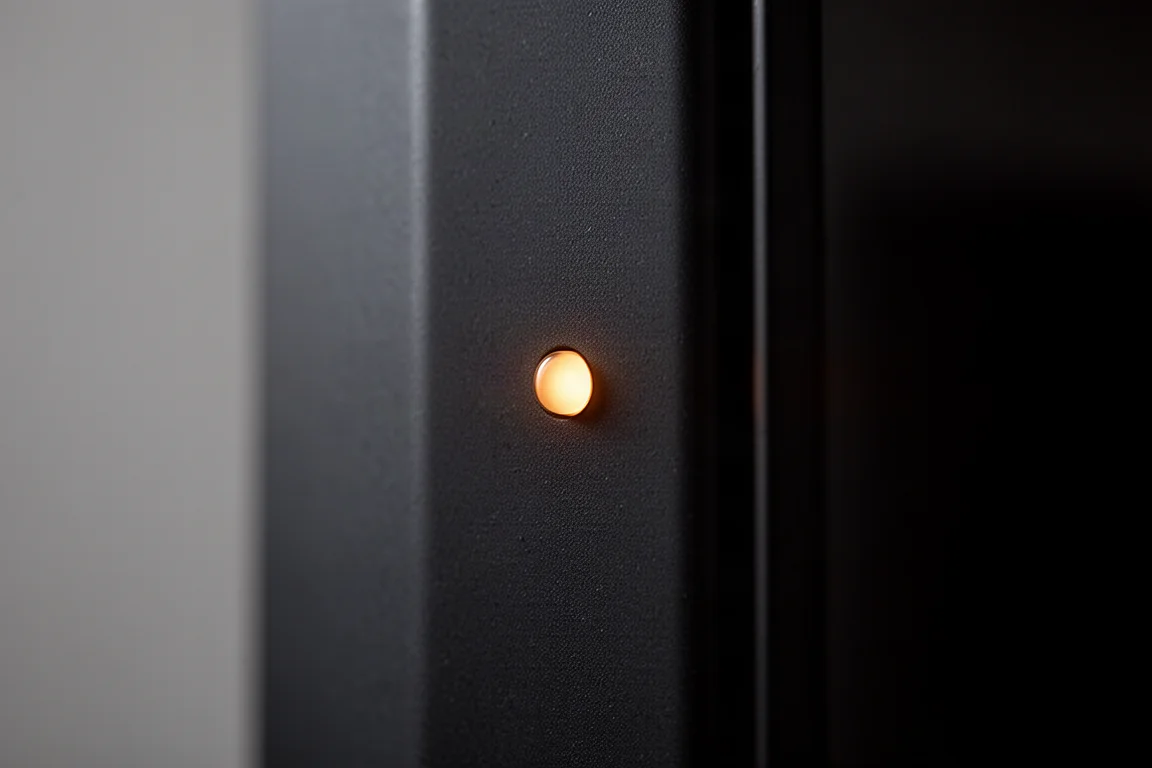
Distortion is low at 86 dB at one metre and rises at 96 dB. Push the monitor past its intended limits and the front LED turns red, at which point the speaker mutes almost instantly to protect itself. Genelec treats that behaviour as expected rather than a fault. In practice, a stereo pair reached roughly 103 dB at about three metres before the indicator held solid red, which is close to the point of deliberately trying to break the speaker. Something in the region of 100 to 102 dB for a stereo pair is realistic in a room, though that is louder than most listening should be. In nearfield use, where you sit much closer, output is not a concern at all.
Things to Consider Before Buying
The main limitation is distance. This is a nearfield to midfield monitor, and it is not the right choice for a large room or a farfield position where high levels are required. Step up within the lineup if that describes your setup.
The rear panel includes DIP switches that adjust bass and treble and can defeat the front LED entirely. Genelec publishes frequency response graphs showing what each setting does, and leaving them flat is a reasonable starting point. Rooms with strong boundary reinforcement can end up with more bass than intended, so it is worth experimenting if the monitor sits close to a wall.
Budget is the other consideration. At around $2,500 per speaker, this is a serious purchase, and it is priced per unit rather than per pair. The Iso-Pod stand allows tilt adjustment, which helps with placement in awkward rooms, and the front LED can be switched off for dark working environments.
Buying Advice
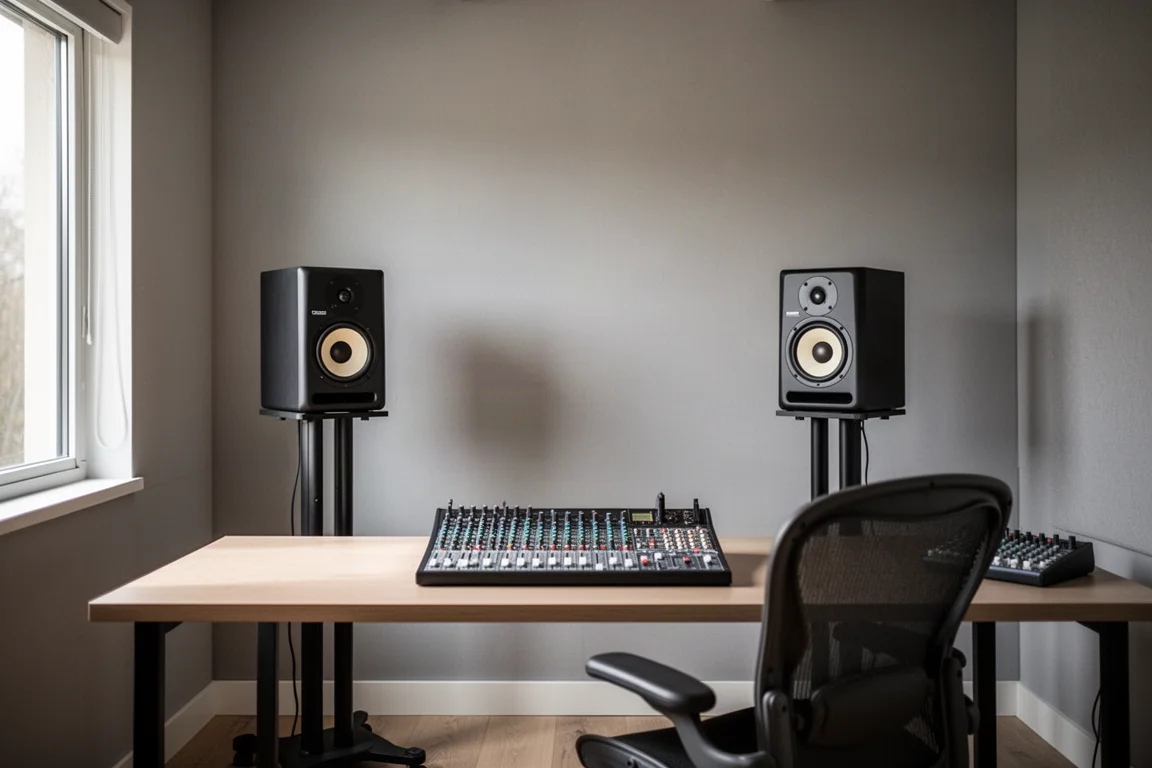
If you are a mastering or mixing engineer looking for a clear step up from budget monitors, the 8331A is an easy recommendation. The combination of flat tonality, smooth directivity, and a compact cabinet is difficult to find at this size, and the protection behaviour means the monitor looks after itself when pushed.
If you are simply curious about what a well-designed coaxial monitor does to imaging, this is one of the better ways to find out, ideally through a seller with a generous return policy. Just be honest about your room. If your listening distance is long or your levels are high, put the money toward a larger model in the same series instead.
Conclusion
The Genelec 8331A does what a professional compact monitor should do. It measures cleanly, it images in a way most conventional designs cannot, and it stays composed in the nearfield and midfield positions where it is meant to work. Its limits are real but clearly defined: it is not a loud farfield speaker, and it is not inexpensive. For engineers who work close and value accuracy over volume, it is a compelling, well-resolved choice.
Product link
View more details for Genelec 8331A
This product is mentioned in the review. Check the specifications, options, and compatibility before buying.
View more details for Genelec 8331AFurther reading
Related Reviews
Studio Monitors
ADAM Audio A8H Review: A Three-Way Studio Monitor That Also Knows How to Have Fun
A three-way active studio monitor with an 8-inch woofer, a handmade AMT tweeter, and two distinct tunings, the ADAM Audio A8H aims to satisfy both critical work and everyday listening.

Studio Monitors
Best Studio Monitors 2026: Six High-End Options Compared
We tested six premium studio monitors in a real studio space to see which ones deliver the best mix of accuracy, musicality, and value.
Studio Monitors
Focal Alpha 65 Evo Review: An Honest Studio Monitor With Real Bass
A bi-amplified active studio monitor with deep bass, useful tone controls and a truthful, uncoloured voicing, assessed for small studios and home setups.