GPS Watches
Garmin Instinct 2 Review: A Rugged Running Watch That Finally Gets the Full Feature Set
The Garmin Instinct 2 brings the training analysis once reserved for Forerunner watches to a rugged, long-battery outdoor design. Here is how it performs for running, navigation, and battery life.
Introduction
The original Instinct was easy to like but hard to take fully seriously as a running watch. It had the rugged look and the battery, but Garmin held back much of the training analysis found on the Forerunner line. The Garmin Instinct 2 changes that. It keeps the no-nonsense outdoor design while adding the training tools, safety features, and software refinements that were previously reserved for more expensive watches.
The question for runners is simple: is this now a proper running watch, or still an adventure watch that happens to track runs? After extended testing, the answer leans firmly toward the former.
Design and Comfort
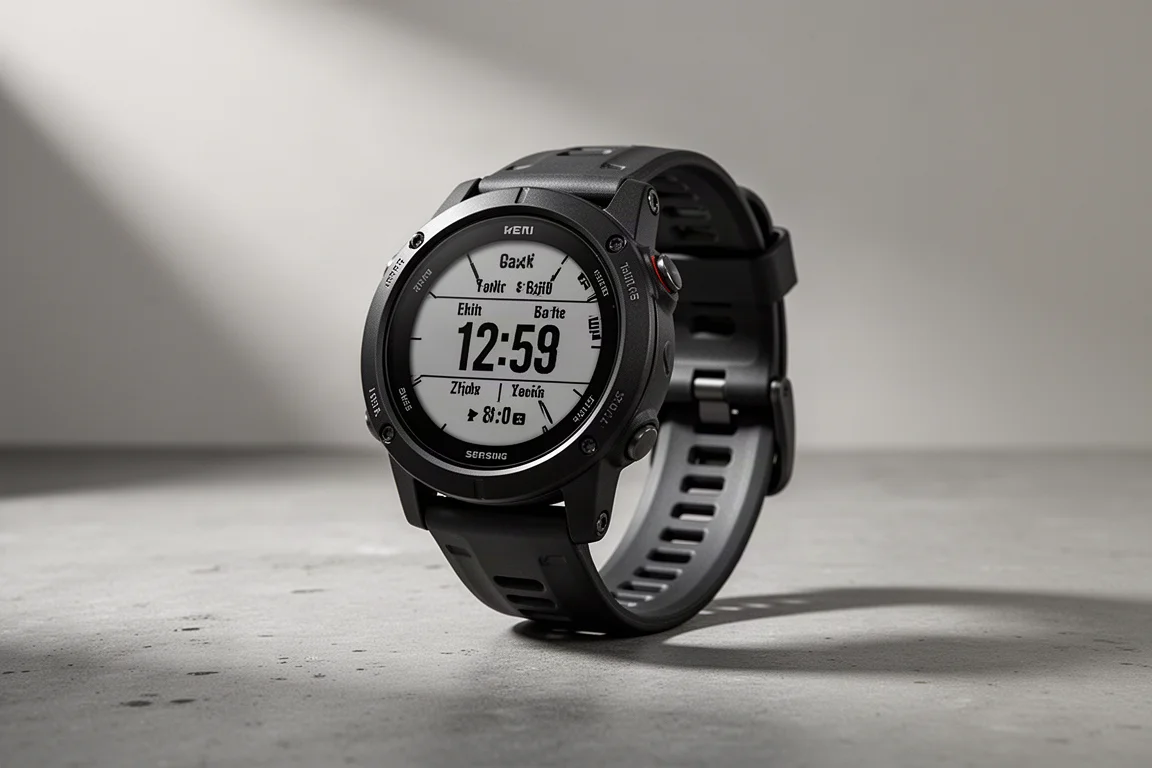
The Instinct 2 comes in two sizes. The larger model has a 45 mm case that is now 14.5 mm thick, slightly slimmer than the original Instinct at 15.3 mm. The smaller Instinct 2S has a 40 mm case at 13.3 mm thick. Both use polymer cases, with the standard versions carrying chemically strengthened glass lenses and the Solar editions using Garmin’s Power Glass.
The display is a monochrome transreflective screen: 0.9 inches at 176x176 resolution on the larger model, and 0.79 inches at 56x156 on the 2S. It is not a color screen, and it will not impress anyone coming from an AMOLED smartwatch. But it is easy to read outdoors, and the top-right corner arrow is a genuinely smart use of the small display, pointing toward your route even when the main navigation view is cramped.
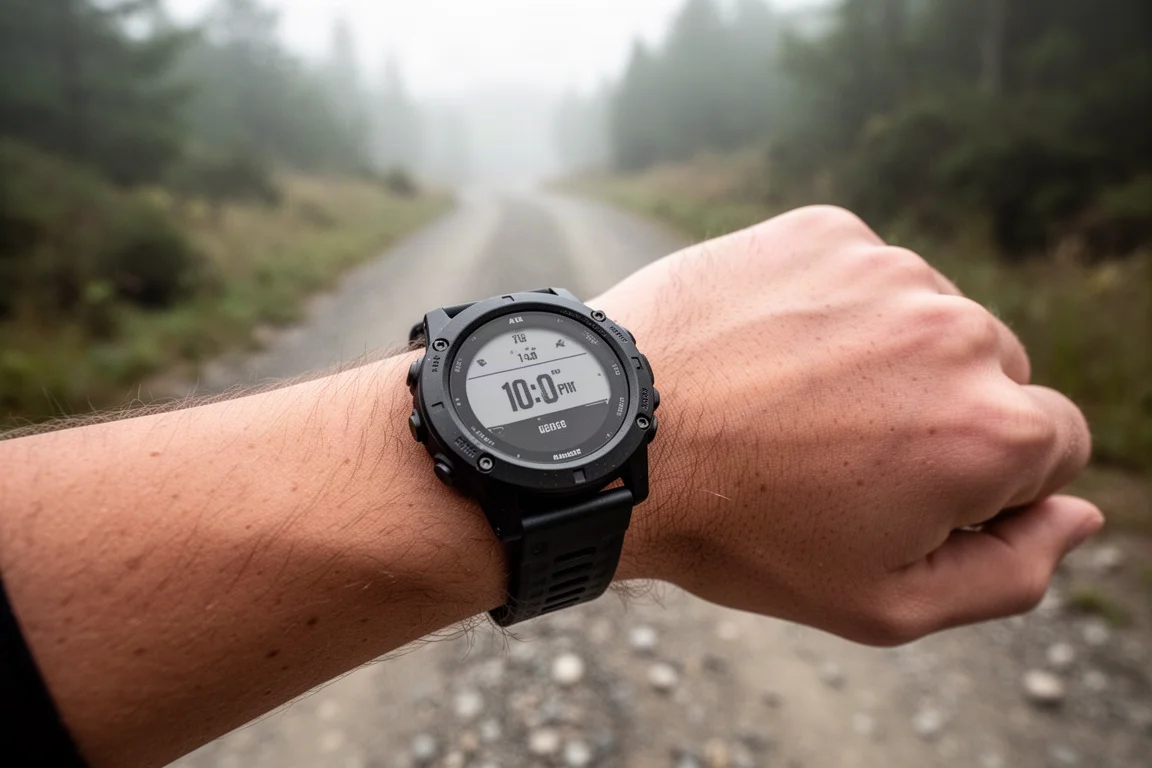
Reaction to the design is split. Some testers prefer the sleeker look of a Forerunner and find the Instinct aesthetic chunky; others love the simple, no-frills styling and the fact that it is a light, comfortable watch to wear for long periods. One thing nearly everyone agreed on: it feels like a minor refinement of the original rather than a redesign, and the slimmer case and improved resolution are subtle rather than transformative.
Software-wise, Garmin has moved the watch to its newer Glances interface, and the Instinct 2 and 2S Solar editions gain access to the Connect IQ store and Garmin Pay for contactless payments.
Running Performance
Setting up a run is straightforward and follows the same pattern as most Garmin watches. At a general level it does the job perfectly. The more advanced features, though, take some finding. New menus and deeper feature sets mean you will spend some time learning where everything lives, especially if you are coming from the original Instinct, which had far less to offer.
On the run itself, the monochrome screen changes the experience. Compared to a Fenix, where pace and key metrics are easy to pick out at a glance, the Instinct 2 takes some getting your eye in. It can be hard to immediately parse the data you want, and you may need to adjust how fields are arranged before it feels natural.

Once you learn the layout, though, everything is there. The Instinct 2 now carries the training analysis, daily suggested workouts, and performance metrics you would find on something like a Forerunner 245, all delivered in a less colorful but perfectly workable way. It is effectively a very full-featured running watch, and testers found it roughly equivalent to Forerunners at the same price.
It is also a full multisport watch, which is rare among Garmin watches at this price. One note for early adopters: Track Run mode was not present during testing, though it was slated to arrive in a firmware update.
GPS and Heart Rate Accuracy
The Instinct 2 uses Garmin’s current Elevate heart rate sensor, the same generation found in the Fenix and Epics. At steady paces it proved reliably good. For interval work on a track, it caught up with heart rate quickly and held steady, which is better than many watches manage without help.
For higher-intensity sessions, occasional spikes did throw off some training data. If you plan to lean on the new training analysis features, pairing a chest strap is the sensible route, and the watch has no problem accepting one.
GPS performance follows a similar pattern. For most point-to-point runs it was accurate and dependable. In challenging conditions such as tall buildings or dense tree cover, several testers noticed wobbles, and one loop run went noticeably wrong. The Instinct 2 also lacks the multi-GNSS and multi-band tracking that Garmin reserves for its more expensive watches, which likely explains those rough patches.
The other consistent observation: GPS acquisition takes longer than on an Epics, particularly at the start of races. Planning ahead for a signal lock was sometimes necessary, though performance improved over time as the watch learned frequently used routes.
Battery Life
This is the headline feature. Garmin’s claims show meaningful increases across smartwatch, GPS, and Expedition modes, and real-world testing backed that up. Under heavy use with daily running and lots of fiddling with settings, the Instinct 2 comfortably lasted more than two weeks, and it could easily stretch to three. Lighter use pushes battery life toward months.
A three-hour marathon training run starting at 100 percent used roughly 10 percent of the battery, which lines up with Garmin’s claimed GPS figure of around 30 hours. At this price, there is really nothing else matching this kind of endurance.
What about the Solar version? For testers in a sun-starved climate, the solar lens barely made a difference. To genuinely benefit from solar charging you would need to spend several hours outdoors in the sun every day. Unless you are hiking in the mountains for weeks at a time, the standard Instinct 2’s battery is already so strong that the solar premium is hard to justify.
Navigation
The Instinct 2 supports breadcrumb navigation from uploaded courses. It is not the easiest breadcrumb trail to follow: the screen is small, monochrome, and lacks the real estate to show buildings or fine detail. In cities with frequent turns, following it was a genuine challenge, with testers occasionally missing turns because there is no contextual information beyond the trail itself.
Out on trails, though, it is surprisingly good. It serves as a general direction guide rather than a turn-by-turn navigation system, it catches up quickly with no lag, and it stands comparison with breadcrumb navigation on watches with more advanced displays. The corner arrow display makes a real difference here.
You also get TrackBack, which retraces your steps to guide you home, plus ClimbPro for climb analysis and an elevation plot. If you are coming from full-color maps on an Epics or Fenix, this will feel limited, but adding maps to this watch would push it toward Fenix territory and erode the battery life that is its biggest selling point. The Instinct 2 is built for a bit of guidance over a very long time, not full navigation.
Training Features: The Big Upgrade
The most significant addition to the Instinct 2 is the suite of training and performance features previously kept off the line. You get VO2 Max estimates, Fitness Age, recovery time advice, training status, load, and effect insights, daily suggested workouts, and race predictions.

All of it works, even if it does not look as polished here as it does on the color-coded screens of Forerunner and Fenix watches. Treat the metrics as trends rather than gospel: race predictions may not match your actual performances, but seeing them trend up or down is genuinely useful. For a runner following a coach’s plan, the training status data aligned well with what the plan was trying to achieve.
Daily suggested workouts proved sensible too. After a hard, long run, the watch would recommend an easier effort, which is exactly the guidance a less experienced runner needs.
For experienced runners who already know how to build a training plan, these features are nice to have rather than essential. For an adventure-minded runner who is newer to structured training, they make the Instinct 2 a dramatically better running watch than its predecessor. Nothing from Garmin’s more expensive watches felt missing after extended use.
Buying Advice
The Instinct 2 starts at 299.99 UK pounds, rising to 389.99 for the Solar version, with Surf and Tactical editions at 429.99. At that starting price, it is strong value, packing more running features than anything else in Garmin’s rugged outdoor range nearby.
A few practical pointers:
- Choose the standard version over Solar unless you genuinely spend hours outdoors in sun every day. The standard battery is already excellent, and the solar premium buys you little.
- Be realistic about the screen. If you want a beautiful display or instant access to advanced data, look elsewhere. If you want a watch that lasts weeks and goes outdoors, this is it.
- Pair a chest strap if you want the training analysis features fed with the most reliable heart rate data.
- Keep an eye on pricing. The original Instinct dropped considerably over its lifespan, and at a lower price this would be close to a no-brainer. Comparable alternatives to consider include the Polar Grit X and Coros Apex, though several testers would still pick the Instinct 2 from that group.
Conclusion
The Garmin Instinct 2 is a big upgrade over the original, and the biggest change is not the slimmer case or higher resolution screen. It is the arrival of a full training feature set that makes this a legitimate running watch rather than just an outdoor one. Battery life is exceptional, heart rate is solid at steady paces, and GPS is dependable in most conditions, with occasional wobbles in dense environments and slower signal acquisition at the start of runs.
The design is polarizing, the monochrome display demands some adjustment, and the solar edition is hard to recommend for most people. But if you want a rugged, long-lasting watch with nearly every running feature Garmin makes, the Instinct 2 earns its place in the middle of the lineup.
Product link
View more details for Garmin Instinct 2
This product is mentioned in the review. Check the specifications, options, and compatibility before buying.
View more details for Garmin Instinct 2Further reading
Related Reviews
GPS Watches
Garmin Fenix 6S Pro Review: A Compact Multi-Sport GPS Watch
A long-term look at the 42mm Garmin Fenix 6S Pro, covering mapping, training metrics, battery life, and what to weigh before buying.
GPS Watches
Garmin Instinct 2 Solar Review: Weeks of Battery for Runners, Riders, and Hikers
A practical look at the Garmin Instinct 2 Solar, covering solar charging, multi-week battery life, training metrics, and GPS performance across running, cycling, and hiking.
GPS Watches
Suunto 9 Peak Pro Review: A Light, Long-Lasting GPS Watch After 12 Months
A compact multisport GPS watch with exceptional battery life, accurate breadcrumb navigation, and a deliberately simple interface. Here is where it shines and where it falls short.