GPS Watches
Garmin Forerunner 970 vs Venu X1 vs Fenix 8: Which Flagship GPS Watch Should You Buy?
Three very similar Garmin flagships with very different personalities. We compare displays, battery life, buttons, sports modes, and navigation to help you pick the right one.
Introduction
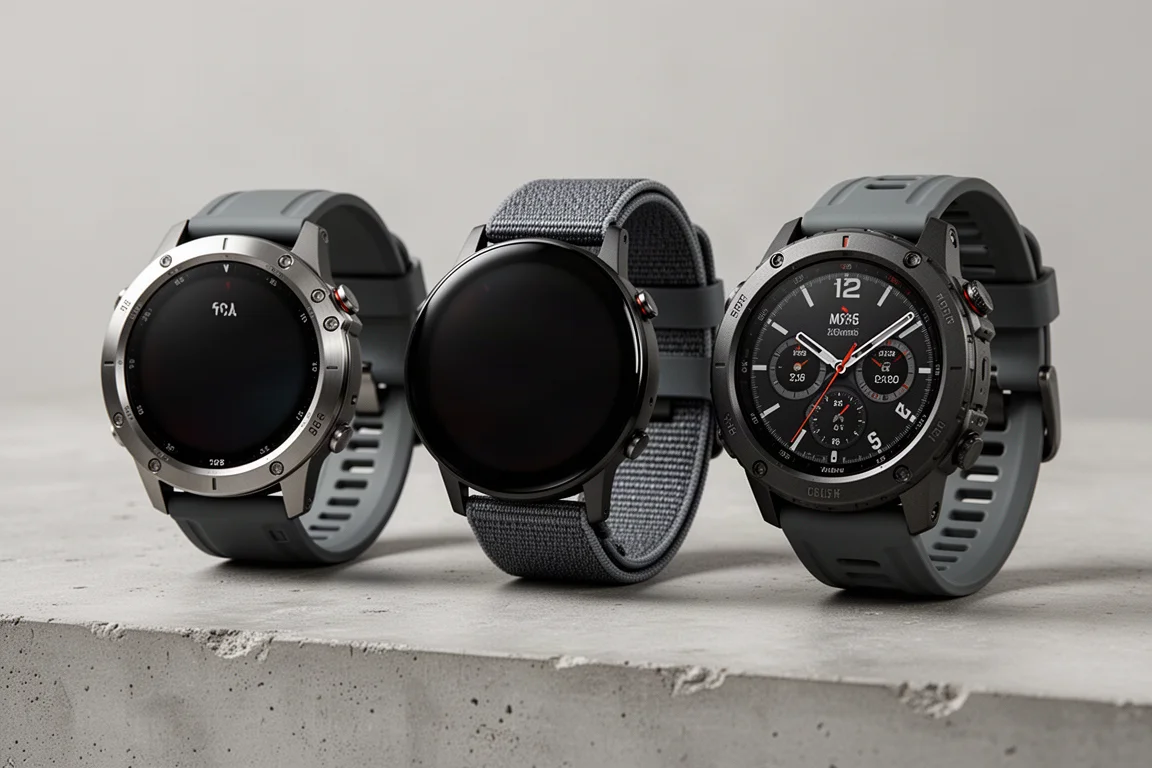
The Garmin Forerunner 970, Garmin Venu X1, and Garmin Fenix 8 are incredibly similar watches that end up being very different in daily use. All three share Garmin’s latest sports platform, free global maps, and the same core health features, yet they diverge sharply on size, brightness, buttons, battery life, and price. After using all three through hikes in the Alps, mountain rides, and open water swimming, the deciding factors come down to a short list: display, battery, and button layout.
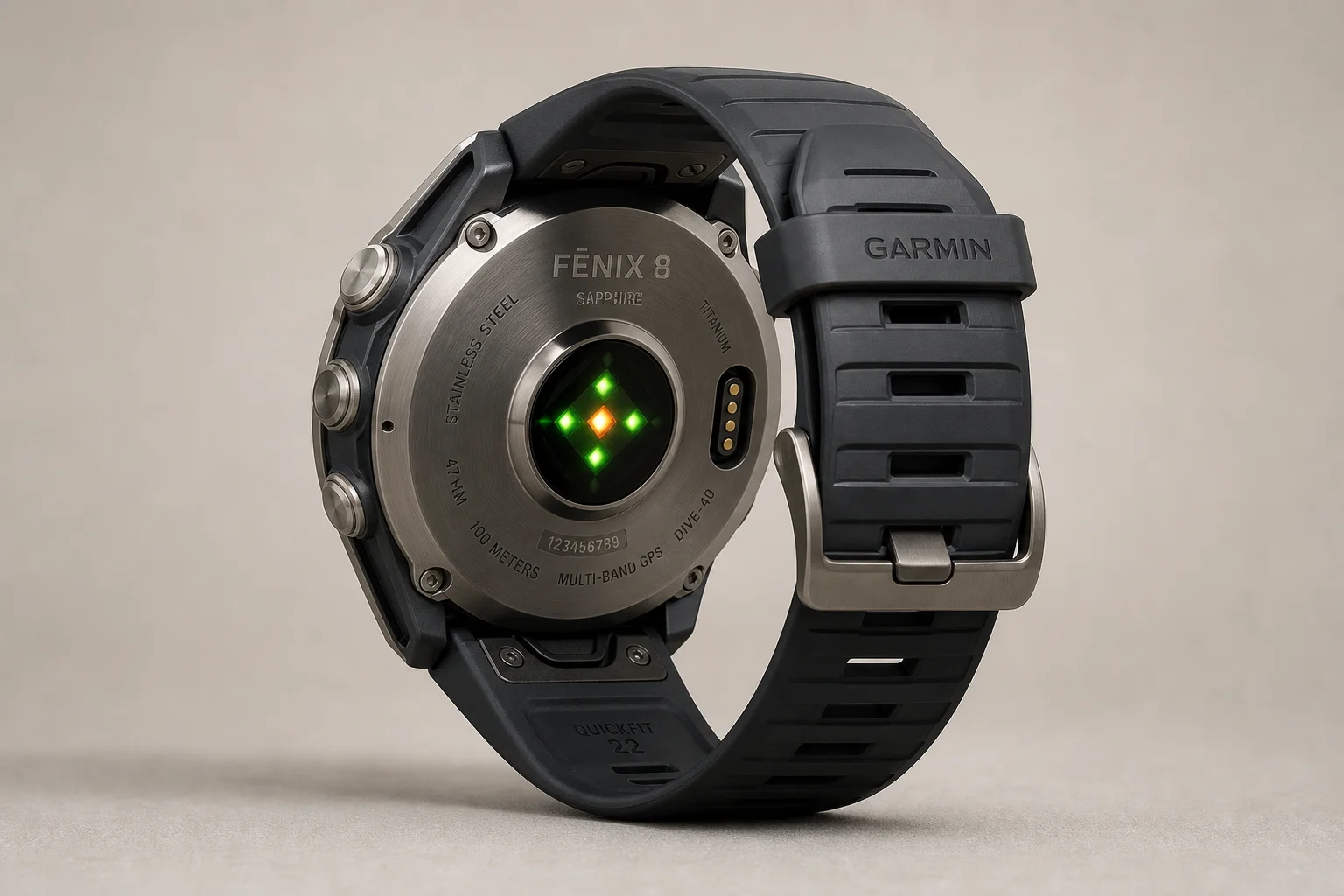
All three watches also share Garmin’s newest optical heart rate sensor, which supports skin temperature readings and handles interval workouts better. That shared foundation means your choice is mostly about hardware character rather than features.
Pricing at a Glance
The Forerunner 970 sits at $749, the Venu X1 at $799, and the Fenix 8 starts at $999. These prices refer to the AMOLED models compared here; the Fenix 8 is also offered with solar-enabled MIP displays at a higher cost, which are not covered in depth here. The Fenix 8’s price range can climb quickly given the many bezel, band, and size options.
Case Sizes and Displays
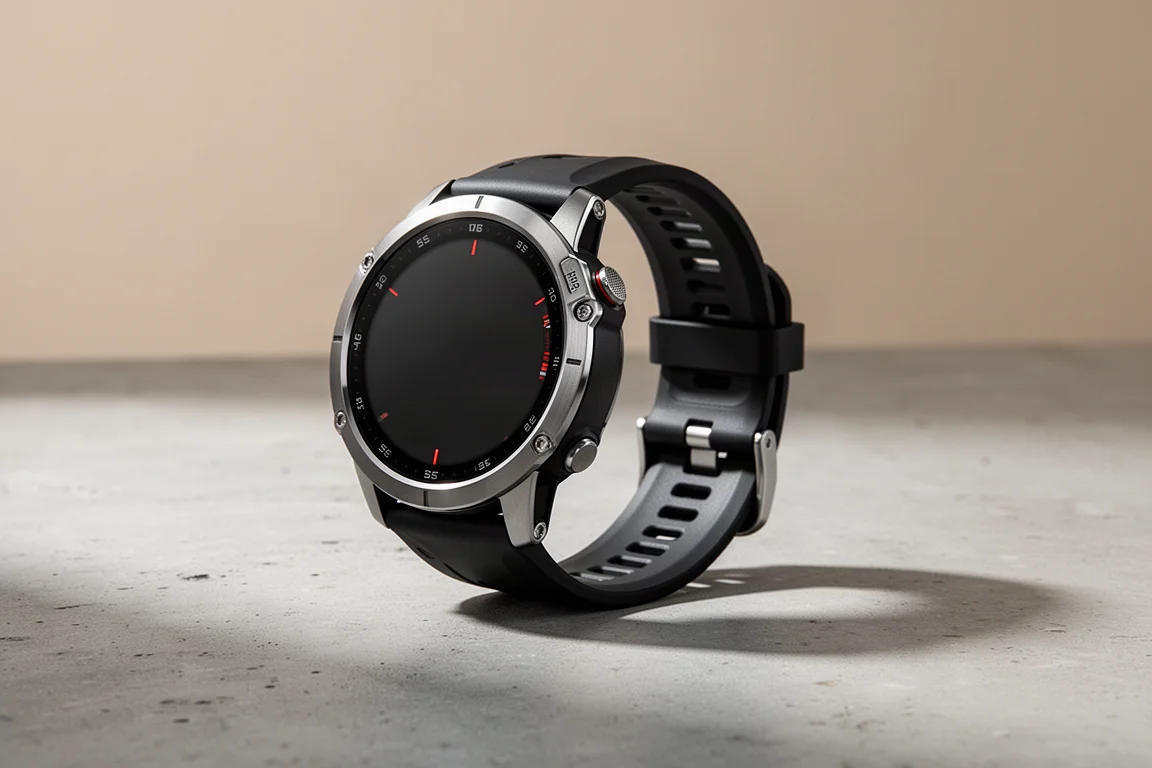
The Forerunner 970 is 47mm, the Venu X1 is 46mm, and the Fenix 8 comes in three sizes: 43mm, 47mm, and a larger 51mm. The 47mm Fenix 8 and the Forerunner 970 share the same 1.4-inch AMOLED display, while the Venu X1 stretches a gigantic 2-inch AMOLED display across its thin case. The Venu X1’s screen looks overwhelming on day one, but it quickly starts to feel normal.
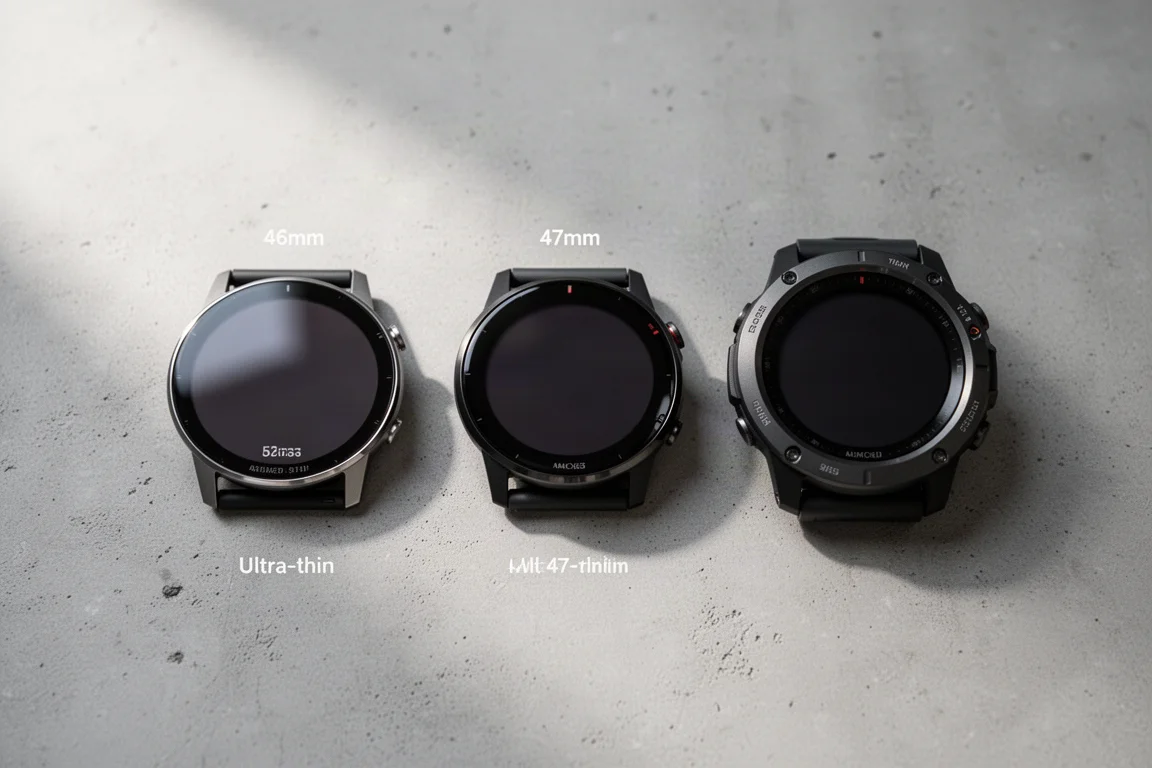
The bigger display difference is brightness. The Fenix 8 uses Garmin’s previous-generation AMOLED panel, generally understood to be around 1,000 nits. That is plenty: a 1,000-nit display is readable in any conditions, even strong Mediterranean sun. The Forerunner 970 and Venu X1 are far brighter, likely in the 1,500 to 2,000 nit range or beyond. Brighter sounds strictly better, but as configured today these brighter panels burn dramatically more battery, which matters more than it sounds.
Straps and Buttons
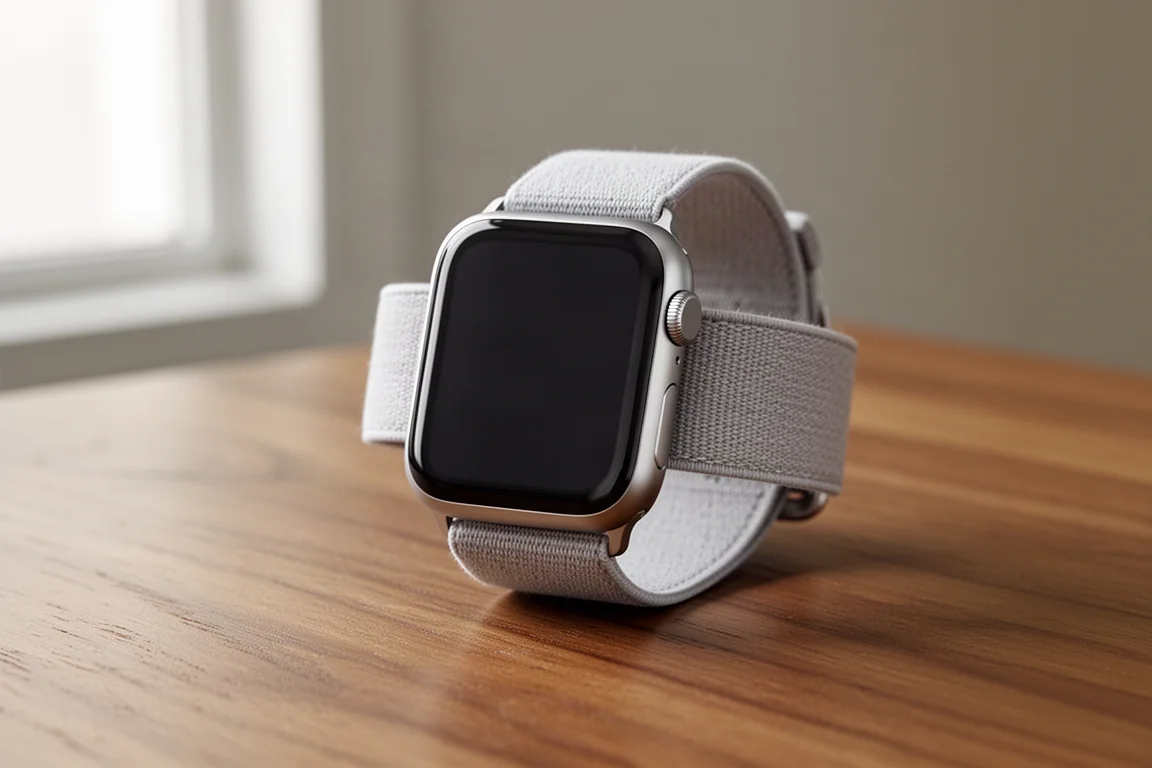
The Venu X1 ships with a comfortable fabric-style strap on a standard attachment, so swapping bands is easy. The Fenix 8 uses Garmin’s QuickFit system, letting you pop bands off and back on in seconds. The Forerunner 970 uses an older-style band system; QuickFit bands can be purchased separately for it, but that is an extra cost.
Buttons are a genuine dividing line. The Forerunner 970 and Fenix 8 use Garmin’s five-button layout plus a touchscreen, so you can scroll widgets, start activities, and take laps without touching the screen. The Venu X1 has only two buttons, so some things like paging through widgets require the touchscreen. If you like working the buttons while moving, this is a real difference.
All three watches include built-in flashlights. The Forerunner 970 and Fenix 8 have two white LEDs plus a red LED, while the Venu X1 has one of each. In practice the difference is a non-event.
Speakers and Microphones
Speaker volume differs noticeably. The Fenix 8 carries what appears to be a first-generation speaker, the Forerunner 970 is louder, and the Venu X1 is substantially louder still. If voice output matters to you, the Venu X1 is the strongest of the three.
Heart Rate Sensor and ECG
All three watches use Garmin’s Gen 5 optical heart rate sensor. However, the Venu X1 does not support ECG. There is no metal bezel on the front of the watch to complete the circuit during an ECG reading, and adding a button-based workaround would require a thicker case. The Venu X1 is Garmin’s thinnest GPS watch to date, and skipping ECG was part of that trade-off. The Forerunner 970 and Fenix 8 both support ECG.
Daily Software
All three watches now run on the exact same codebase, which is the biggest shift in this product lineup in years. Every daily feature, including the new evening report that mirrors the morning report, is identical across all three, with only UI styling differences: the Venu X1 has a more bubbly look, the Fenix 8 leans industrial, and the Forerunner 970 sits somewhere between with larger icons.

The styling is just a skin, so features carry over, but interaction differs because of the button layouts described above. On the Forerunner 970 and Fenix 8 you can scroll through widgets entirely by button; on the Venu X1 you will need the touchscreen for parts of the interface.
Sport Modes and Diving
All three watches share the same base set of sport modes, plus a long list of additional activities you can pin and customize. Differences appear at the edges. The Fenix 8 has a 100-meter water rating versus 50 meters for the other two, so it gains a few higher-speed water sports. The Forerunner 970 includes a sail race mode the Venu X1 oddly lacks. The Venu X1 lacks a gaming sport mode that the other two include.
The Fenix 8 also has a depth sensor rated to 45 meters, supporting scuba and freediving modes that track scuba metrics. If recreational scuba matters, the Fenix 8 is the only one of the three that covers it.
Golf is another split. The Forerunner 970 lacks the full vector maps the other two offer, showing only the hole rather than the surroundings, and it is also missing features like the virtual caddy, plays-alike, and wind speed. If golf maps matter, look at the Venu X1 or Fenix 8.
Mapping and Navigation
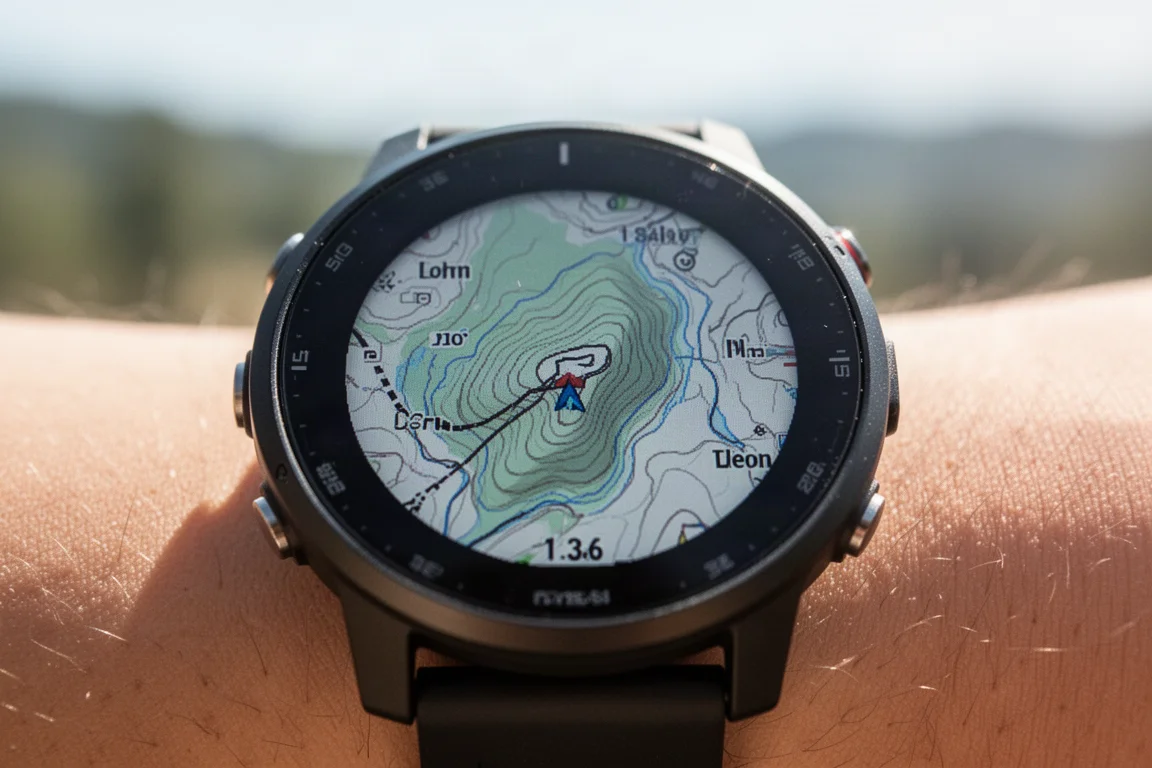
For the first time, the mapping and navigation experience is identical across all three product lines. Every setting, map, and navigation feature matches, thanks to the shared codebase, including new sport features that arrived on the Forerunner 970 and Venu X1. All three watches offer free downloadable global topoactive maps and 32GB of storage, which is roughly enough for two continents’ worth of maps.
Battery Life
This is where the three watches genuinely separate. The Fenix 8 supports both battery saver and fully customizable activity power modes. The Venu X1 only offers a basic battery saver aimed at smartwatch use.
In real-world smartwatch use with the always-on display and roughly one to three hours of GPS activity per day, the Fenix 8 lasts around 4.5 to 6 days per charge at default brightness. The Forerunner 970 manages about 2.5 to 3.5 days, even with brightness settings turned below defaults. The Venu X1 is worse: officially claimed at two days, which is optimistic at best.
The cause is largely the brighter displays. Garmin offers three brightness levels, and the newer watches at their lowest setting still burn far more power than the Fenix 8 at default brightness. Reducing brightness on the Forerunner 970 does bring GPS activity battery burn closer to Fenix 8 levels in some scenarios, but a lower intermediate brightness level would fix much of this.
During a roughly 7-hour hike, the Venu X1 ended at about 6% remaining while the Fenix 8 and Forerunner 970 floated between 70% and 80%. In a 4-hour trail run the gap was similar, though keeping the map page off helps, since the map display causes steep battery drops. On an all-day hike with all three watches worn on the wrist, the Fenix 8 and Forerunner 970 lasted roughly 30 hours while the Venu X1 managed about 10 to 11 hours.
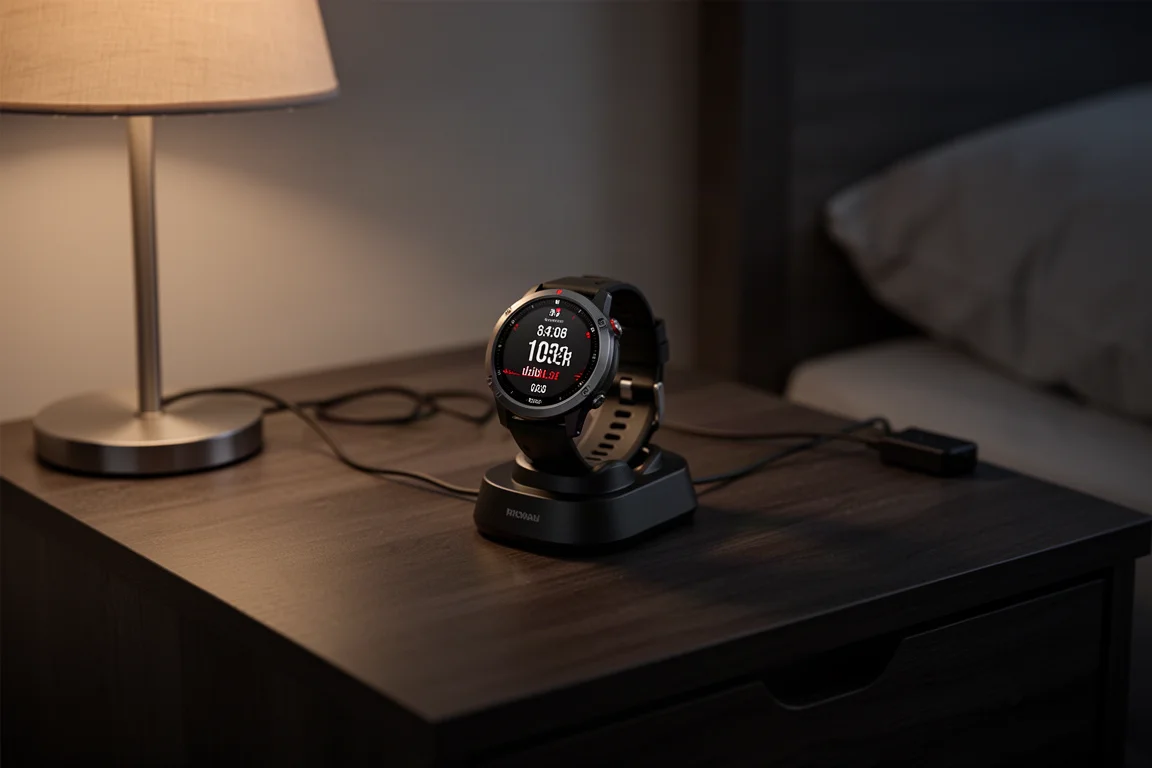
If battery life drives your decision, and it probably should, the Fenix 8 is the clear winner, with the Forerunner 970 a distant second and the Venu X1 last.
GPS Accuracy and Heart Rate
The Forerunner 970 and Fenix 8 have multiband dual-frequency GPS; the Venu X1 does not. In practice, though, there is almost no difference. Even on tight Alpine switchbacks, tracks from all three watches are virtually identical. Heart rate accuracy also looks the same across workouts. The only weaker spot observed was the Forerunner 970 in open water swimming, where tracks were slightly less polished than the other two, though not dramatically so.
Which One Should You Buy?
Size and style, battery life, and buttons are the core deciding factors. If you want maximum battery, five buttons, and diving depth sensing, the Fenix 8 is the pick. If you prefer a lighter watch and can live with shorter battery life, the Forerunner 970 is close behind. If you want the thinnest case, the biggest and brightest display, and the loudest speaker, and you do not mind charging frequently, the Venu X1 delivers a striking package.
Conclusion
All three are excellent watches, and the shared software means you are choosing hardware character, not features. Battery life is the biggest differentiator, with the Fenix 8 clearly ahead and the Venu X1 clearly behind. Buttons come second, with the five-button layout on the Forerunner 970 and Fenix 8 offering more control on the move. If you prioritize a lighter watch, the Forerunner 970 is the most tempting, but the Fenix 8 remains the safest all-round flagship for serious training and adventures.
Further reading
Related Reviews
GPS Watches
Garmin Fenix 6S Pro Review: A Compact Multi-Sport GPS Watch
A long-term look at the 42mm Garmin Fenix 6S Pro, covering mapping, training metrics, battery life, and what to weigh before buying.
GPS Watches
Garmin Instinct 2 Solar Review: Weeks of Battery for Runners, Riders, and Hikers
A practical look at the Garmin Instinct 2 Solar, covering solar charging, multi-week battery life, training metrics, and GPS performance across running, cycling, and hiking.
GPS Watches
Suunto 9 Peak Pro Review: A Light, Long-Lasting GPS Watch After 12 Months
A compact multisport GPS watch with exceptional battery life, accurate breadcrumb navigation, and a deliberately simple interface. Here is where it shines and where it falls short.