Running Watches
Garmin Forerunner 235 Review: Is This Decade-Old Running Watch Still Worth Buying?
A month of running with the nearly ten-year-old Garmin Forerunner 235, covering what still holds up, what feels dated, and who should still consider it.
Introduction
Nearly a decade after launch, the Garmin Forerunner 235 is still one of the watches runners reach for most often. Strava’s annual trend report has listed it among the top three devices used to upload runs, an impressive result for hardware that has been through several generations of successors.
That raises a fair question for anyone shopping on a budget: does a watch this old still make sense today? The Forerunner 235 was worn for a full month of training, taken through a race, and used as an everyday smartwatch, with newer Forerunner models kept close for comparison. A month is long enough for the gaps to show, and also for a few genuine surprises.
This review covers what still works, where the hardware feels its age, what you give up compared with a modern Forerunner, and who should still put the 235 on their shortlist.
Who the Garmin Forerunner 235 Is For
The Forerunner 235 is a running-first watch. It records GPS pace and distance, measures heart rate from the wrist with Garmin’s Elevate optical sensor, and displays everything on a transflective screen that stays on permanently. Interaction is entirely through physical buttons.

It fits runners who want reliable tracking without a complicated setup, and people who would rather keep a watch simple than manage a second smart device. Because the watch can pair with an external heart rate strap, it remains a reasonable choice for runners who care about training data quality but not about the extras found on newer models. Riders who want to log the occasional bike session will find a cycling profile available, though the list of supported activities is short.
Main Strengths: What Still Works Well Today
The features that hold up best are the plain ones. Notifications arrive on the watch and can be read, even though they cannot be answered. Music playing on a paired phone can be controlled from the wrist. Weather is not available on the device, and richer smartwatch features are absent, but the essentials that matter during a run are all present.
The stripped-back approach is a big part of the appeal. Fewer screens and fewer prompts mean less to manage, and the data the watch produces is generally dependable, which is what most runners actually need.
Physical buttons deserve credit too. They work with cold hands, gloves or rain, and they never demand a second look at the screen. One detail worth highlighting: when the battery runs low mid-run, the watch warns and still saves the activity, something not every newer watch manages.
Battery Life and the Transflective Display
In smartwatch mode the 235 offers several days less battery life than the Forerunner 265, and its GPS battery life is lower as well. In practice, that mattered less than expected. Across a normal training week the watch was never the limiting factor, and the older clip-style charging cable is the bigger daily annoyance, since Garmin has since moved to a simpler connection.
The screen is the other area where the watch defies its age. It is transflective and monochrome, which means it stays visible in bright outdoor light without waking or swiping. Colour displays are a welcome addition to newer Garmin watches, and Garmin has managed that change without a serious battery penalty, but a monochrome screen never felt like a downgrade when reading live pace, distance and heart rate.
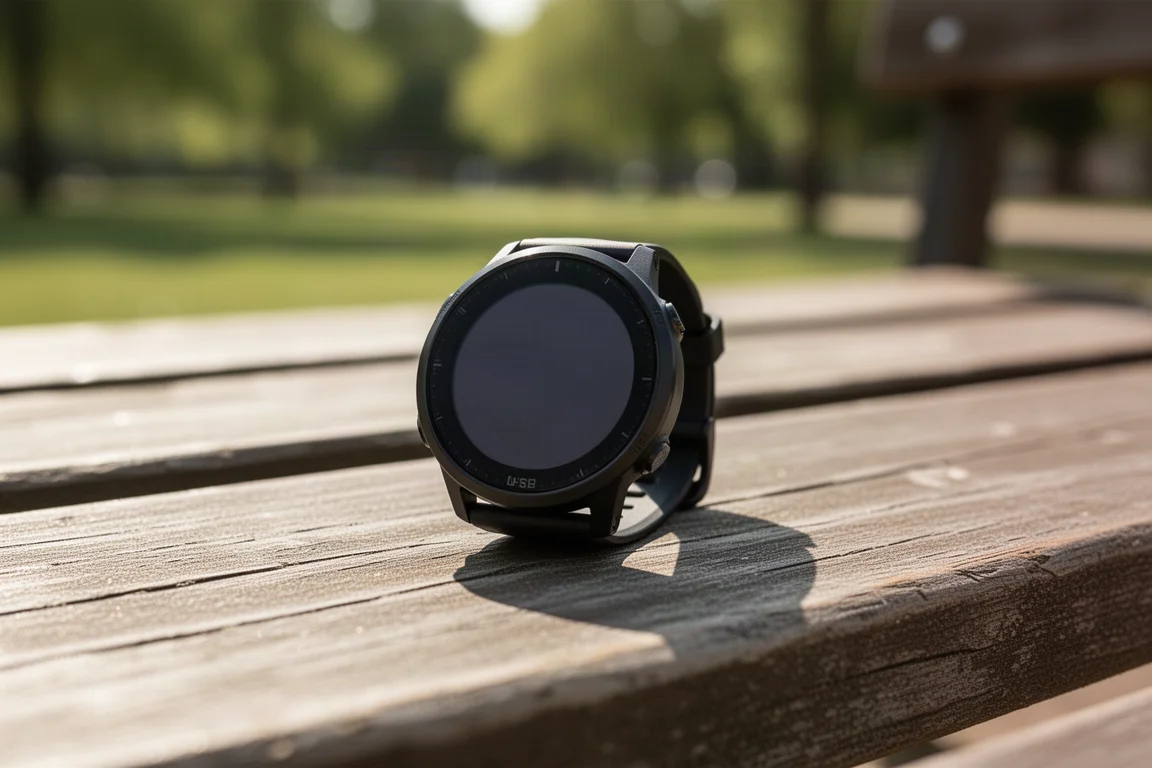
What the display lacks in polish it makes up for in legibility. There is more bezel around it than on current models, and it is not a touchscreen, but for glancing at metrics mid-run or during a race it does the job.
What You Give Up Compared With a Newer Forerunner
The clearest gap between the 235 and a current Forerunner is the morning report. Newer Garmin watches gather sleep data, training readiness and weather into a single glanceable summary at the start of the day. It sounds like a gimmick at first, but it becomes genuinely useful, and waking up without it was one of the more noticeable absences during the month.
Touch is the second. The 235 has no touchscreen, and while physical buttons remain the better way to control a running watch, current Forerunners combine both. On several occasions the instinct to swipe through a screen or dismiss a notification came up against a screen that simply does not respond.
Sport profiles and training analysis are the third. The 235 covers running and cycling well but little beyond that, while newer models carry a much wider activity list and deeper analysis of the data they collect. The Forerunner 265, the latest model in the 200 series, and the Forerunner 965 both sit clearly above the 235 on those fronts.
Heart Rate and GPS Accuracy in Practice
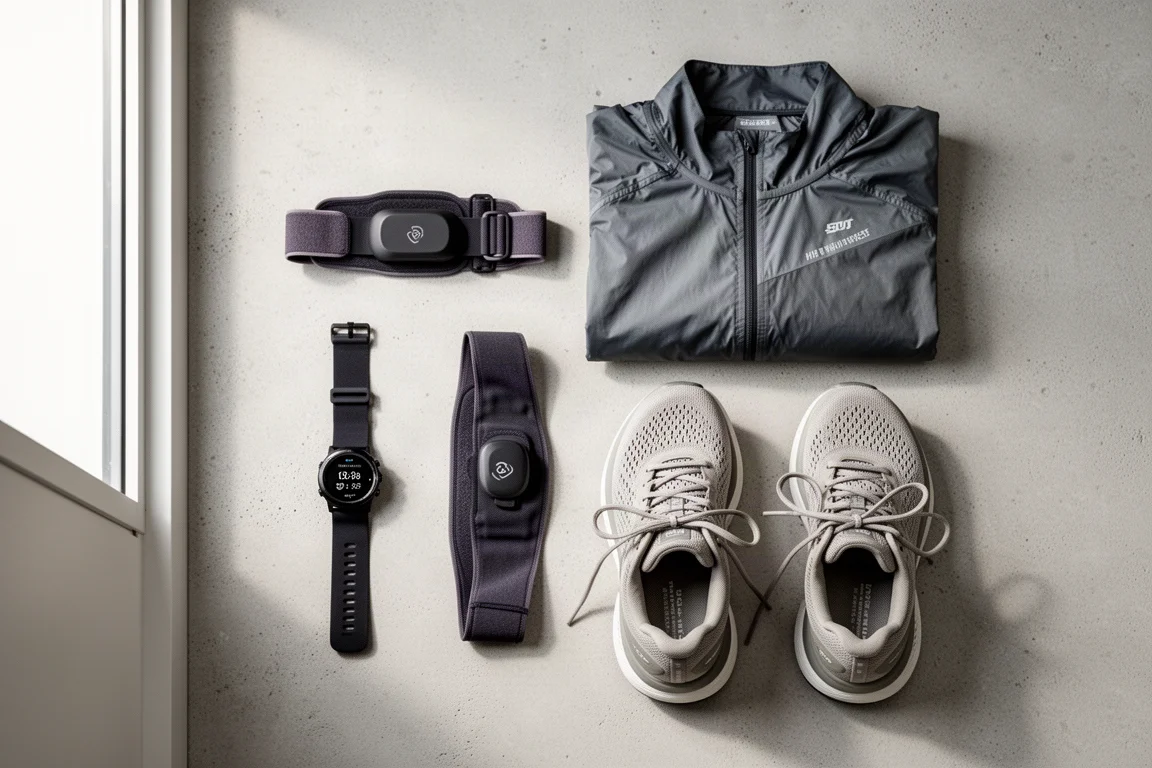
The Forerunner 235 was the first Garmin watch to use the company’s Elevate optical heart rate sensor, and a decade of development shows. Wrist-based heart rate readings were not fantastic, and current Garmin sensors are a clear step up, even if the newest generation is still not flawless. Pairing an external chest strap solves most of the problem, and the 235 supports that, which is worth remembering before judging the watch on wrist readings alone.
GPS tells a similar story. There is no multiband or dual-band positioning here, and while most runs tracked accurately, the difference appears when conditions get difficult. Near tall buildings or under dense tree cover, track quality drops away from what a modern watch can hold. On a looped race course, the recorded track visibly diverged from the one captured by a Forerunner 965 running alongside it.

For everyday running on open roads and in parks, the positioning is good enough. It is the challenging environments that reveal the age of the hardware.
Things to Consider Before Buying
Expect the experience of an older device, because that is exactly what this is. There is no touchscreen, no colour display, a limited set of sport profiles, and software that looks dated next to a current Forerunner. The clip-style charging cable is a small but constant reminder of the watch’s generation.
Heart rate accuracy from the wrist is the other limitation to weigh. Runners who train by heart rate zones should plan on a chest strap, which the watch supports and which remains the more reliable option on any wrist-based sensor.
Buying Advice: Is the Forerunner 235 Still Worth It?
For runners who want a simple, dependable watch that tracks runs well and asks very little of them, the Forerunner 235 remains a sensible choice. It is happiest as a running tool rather than a smartwatch replacement, and it never felt like a poor experience to wear for a month of training.
The decision changes if accuracy and analysis are priorities. Runners who train in difficult GPS environments, who want richer training insight, or who value a touchscreen and a wider activity list will get clear benefits from a newer model in the 200 series or the 965. The 235 is best understood as a stripped-back running watch that still does the basics properly, rather than a substitute for current hardware.
Conclusion
A month with the Garmin Forerunner 235 turned out better than expected. Battery life was not the problem it looked on paper, the transflective display stayed readable in every outdoor condition, and the data was generally solid. What was missed, and gladly welcomed back afterwards, were the morning report, touchscreen interaction and the accuracy improvements of newer hardware.
For a watch approaching its tenth birthday, that is a strong result. It is not the right pick for runners who want the sharpest GPS tracks or the deepest training analysis, but as a straightforward, durable running watch it still holds up.
Product link
View more details for Garmin Forerunner 235
This product is mentioned in the review. Check the specifications, options, and compatibility before buying.
View more details for Garmin Forerunner 235Further reading
Related Reviews
Running Watches
Coros Pace 3 Running Watch Review: Why Software Matters More Than Specs
The Coros Pace 3 prioritizes runner-focused design and intelligent software over expensive hardware. Here's why it outperforms watches that cost twice as much.
Running Watches
GPS Running Watch Accuracy Test: Seven Watches Compared Across Urban, Trail, and Race Conditions
We tested seven popular running watches from major brands in three different environments to find out which delivers the most accurate GPS tracking for distance and pace.
Running Watches
Garmin Forerunner 70 Review: Garmin's Cheapest Forerunner Is More Capable Than You'd Expect
The new entry-level Forerunner 70 brings an AMOLED screen, a fresh interface, and real training analysis for £219/$249, with a few trade-offs to weigh before buying.