Running Watches
Garmin Forerunner 165 vs Suunto Run: Which Affordable Running Watch Should You Buy?
Two of the best value running watches on the market, compared on design, GPS and heart rate accuracy, battery life, training tools, and smart features.
Introduction
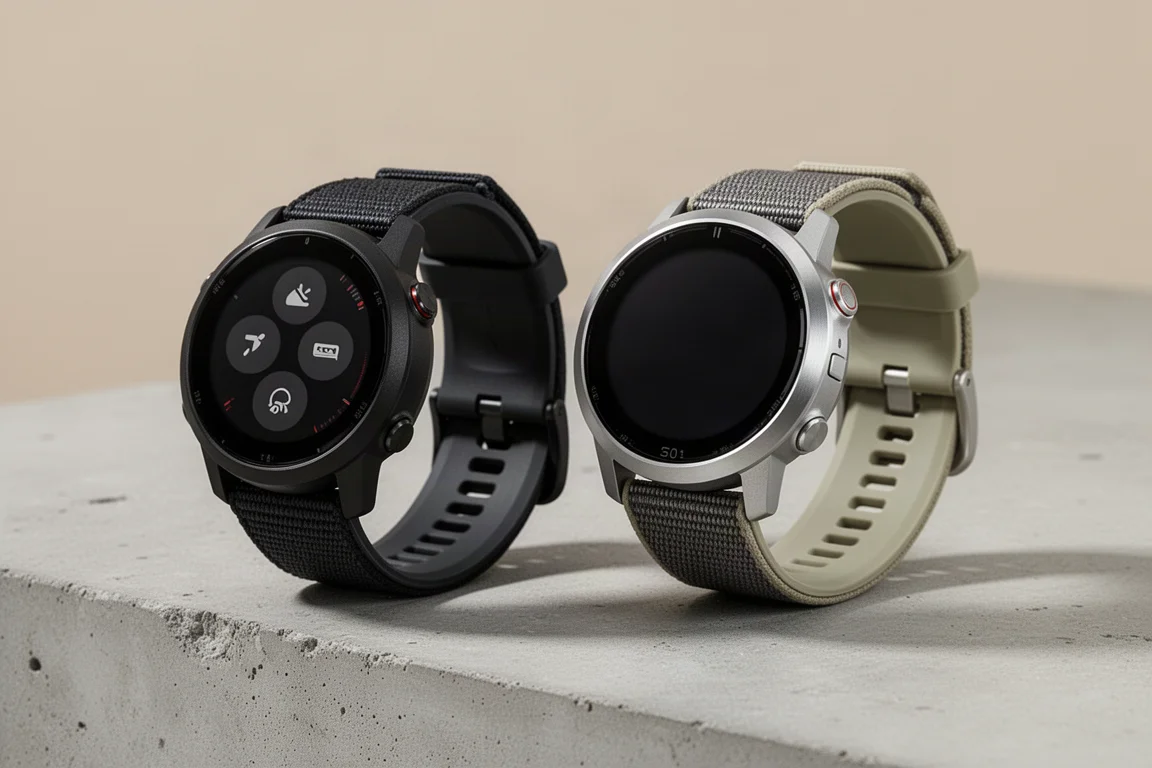
The Garmin Forerunner 165 and Suunto Run are two entry-level running watches pitched at newer runners, but both pack in enough features to satisfy experienced athletes as well. They sit at the affordable end of their respective ranges: the Suunto Run slots beneath Suunto’s Race and Race S watches, while the Forerunner 165 comes in below models like the Forerunner 265, 965, and 570.
Pricing is close. The Suunto Run costs £199 or $249, while the Forerunner 165 comes in two versions: the standard model at £250 / $250 and the Music version at £290 / $300. That said, the Garmin is the older watch and is more likely to appear in sales at prices nearer the Suunto’s current price.
After extended testing of both watches side by side, including racing a marathon with the Suunto Run, the two turn out to be surprisingly evenly matched on core performance. Where they genuinely differ is in smart features versus training depth.
Design and Build: A Close Call
Both watches are lightweight, mostly plastic, and built around full AMOLED screens. The Suunto Run has a slightly larger 1.32-inch display versus the 1.2-inch screen on the Forerunner 165, and it pairs that with an aluminium bezel and tougher Gorilla Glass for a touch of extra premium edge and durability.
The Suunto is also a fraction lighter, partly because it ships with a nylon strap as standard, while the Garmin comes with a silicone band. Both use quick-change straps, though: 20mm on the Garmin and 22mm on the Suunto. The Suunto uses a three-button layout including a digital dial, while Garmin sticks with its classic five-button design, which many runners will find easier to operate mid-run.
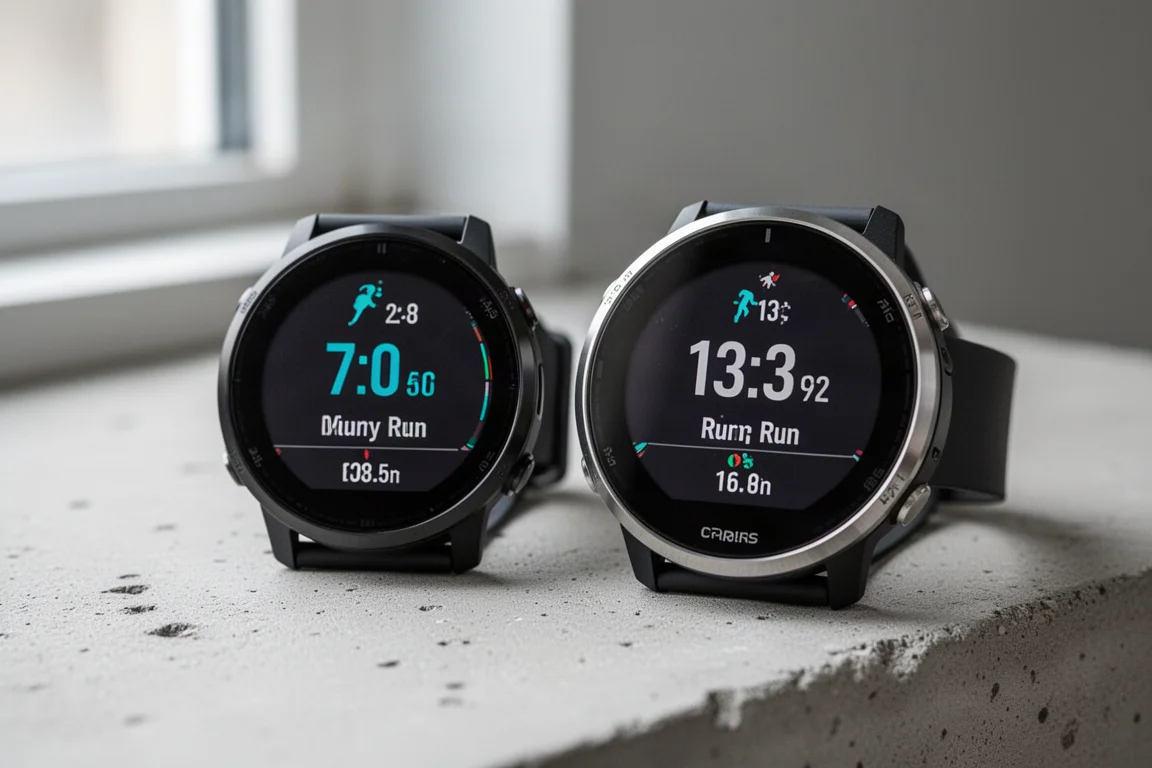
Under the hood, both carry a fairly standard sensor array, including an altimeter and pulse oximeter. One connectivity difference matters for accessory owners: the Garmin offers both Bluetooth and ANT+, while the Suunto is Bluetooth only. Neither supports cycling power meters natively, which underlines just how running-focused both watches are.
GPS and Heart Rate Accuracy
On paper, the Suunto Run has the GPS advantage. Its chipset supports dual-band tracking, the most accurate form of GPS currently available, whereas the most accurate mode on the Forerunner 165 is all-systems tracking. In practical testing, though, the difference was small: in max accuracy modes, both watches came within range of each other on total distances most of the time, and both showed occasional track wobbles when scrutinised closely.

That said, dual-band GPS is genuinely useful if you regularly run in city centres with tall buildings, or on tricky trails with canyons or heavy tree cover, and getting it at this price is a real point in Suunto’s favour.
Heart rate accuracy was similar but not identical. Both deliver fairly standard optical performance that can be good against a chest strap at times and struggle at others, including mid-run. Overall, the Garmin was a little more consistently accurate, particularly on runs with stop-start sections, and it generally tracked more reliably against a chest strap. The Suunto’s step counts also ran a bit low in testing, while Garmin’s step counts felt more accurate.
Battery Life
On paper the Suunto edges it: up to 12 days in watch mode versus 11 days on the Garmin, both with the screen set to raise-to-wake. You get 20 hours of dual-band GPS tracking on the Suunto and 19 hours of all-systems tracking on the Garmin. In real use, the difference was negligible. Both lasted roughly five to eight days depending on usage with around five to six hours of GPS training per week.
Marathon-level testing told a similar story: the Suunto burned 18% of its battery and the Garmin 21%. On an average hour-long run in max accuracy modes, the Suunto drains about 6% per hour versus 5% on the Garmin. With always-on displays and notifications enabled, both watches needed charging after three to four days.
One honest limitation for both: unless you are a very fast ultrarunner, there is not enough battery life here for 100-mile ultra efforts. For everything up to marathon training, though, both are comfortably sufficient.
Training Tools and Insights
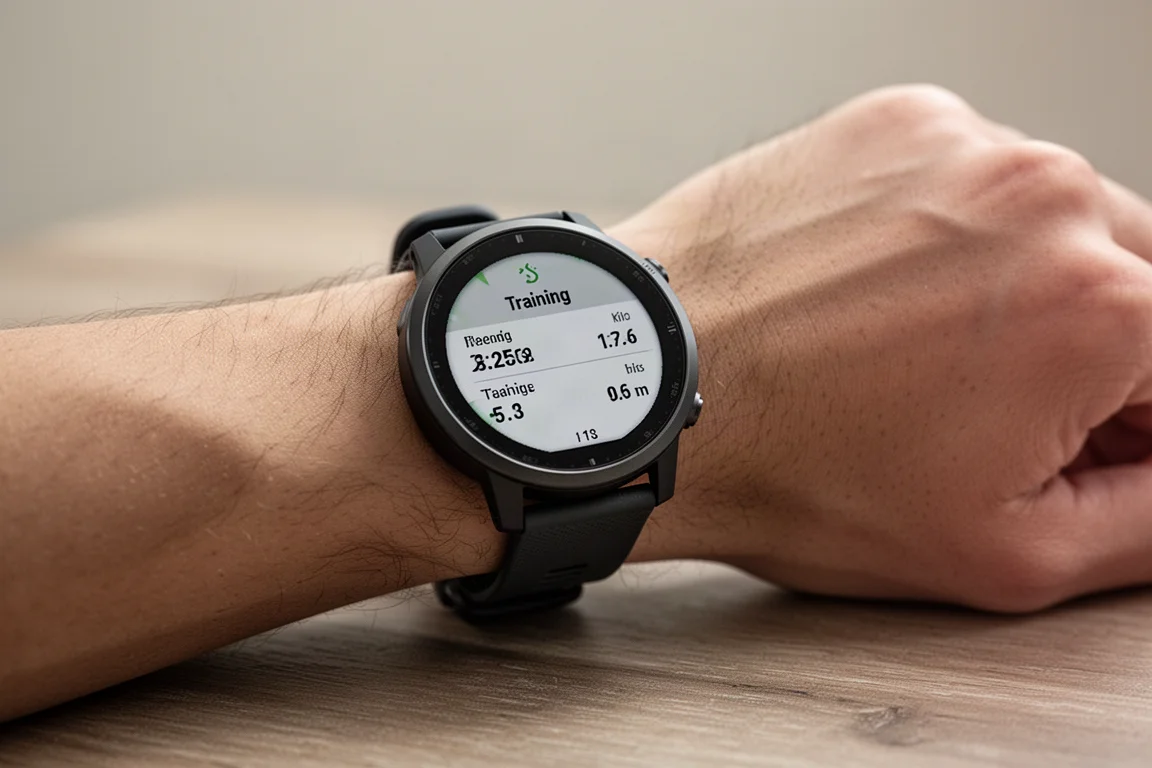
This is where the Suunto Run fights back. It offers considerably more training analysis than the Forerunner 165, which misses some of Garmin’s key insights such as training status, training load, and training readiness. The Garmin instead focuses on beginners with suggested workouts and basic analysis.
The catch is language. Suunto leans heavily on training-peaks terminology and acronyms like TSS and CTL, which can feel impenetrable at first. Garmin does a better job of humanising its feedback and making it understandable, which matters for an entry-level audience. Once you get past the jargon, though, the Suunto delivers genuinely full-featured training analysis at a low price, which experienced runners on a budget will appreciate.
Customisation is another Garmin strength. Watch faces, screen brightness for workouts versus outside workouts, and editing data fields on the watch itself are all handled better on the Garmin. The Suunto limits the number of widgets you can show, and tweaking sport data fields has to be done in the smartphone app, which is a hassle if you want to adjust things near a race start line without your phone.
Smart Features: Garmin Pulls Ahead
The Forerunner 165 is clearly the smarter watch. Music support is far more developed, with offline sync from streaming services including Spotify for premium account holders. The Suunto Run only offers MP3 storage, requiring you to drag and drop files onto the watch, which is a real chore if you no longer own MP3s. If offline streaming music matters to you, this is close to a deal-breaker in the Garmin’s favour.
The Garmin also has NFC payments via Garmin Pay in the UK and US, plus the Connect IQ app store with genuinely useful extras. The Suunto only offers payments in China through Alipay. If contactless payments or an app ecosystem matter, the Garmin is the pick.
Which Should You Buy?
Both watches are excellent value and very evenly matched on core performance: bright AMOLED displays, similar GPS and heart rate accuracy, and comparable battery life. The decision largely comes down to the balance of sports versus smarts.

Head says Garmin: its platform is more intuitive and stable, the UI feels more polished, and the smart features are better rounded. Heart and wallet say Suunto: it looks great, is lighter and better built for the money, offers dual-band GPS, richer training analysis, and costs less at RRP.
If you want streaming music, NFC payments, or a more customisable experience, get the Forerunner 165. If you are on a tighter budget and value training depth, dual-band GPS, and a bigger screen, the Suunto Run crams in a huge amount without many sacrifices. And if you are already invested in either ecosystem, sticking with the brand you know is a sensible call, since both are this evenly matched.
Conclusion
The Garmin Forerunner 165 and Suunto Run both deliver far more than their prices suggest, with more than enough firepower for casual runners logging three fitness-building runs a week right up to marathon trainees. The Garmin is the more competent all-rounder thanks to superior smart features and usability, while the Suunto Run counters with better value, stronger build aesthetics, and deeper training analysis. Choose based on which set of trade-offs fits your running and your budget.
Product link
View more details for Garmin Forerunner 165
This product is mentioned in the review. Check the specifications, options, and compatibility before buying.
View more details for Garmin Forerunner 165Further reading
Related Reviews
Running Watches
Coros Pace 3 Running Watch Review: Why Software Matters More Than Specs
The Coros Pace 3 prioritizes runner-focused design and intelligent software over expensive hardware. Here's why it outperforms watches that cost twice as much.
Running Watches
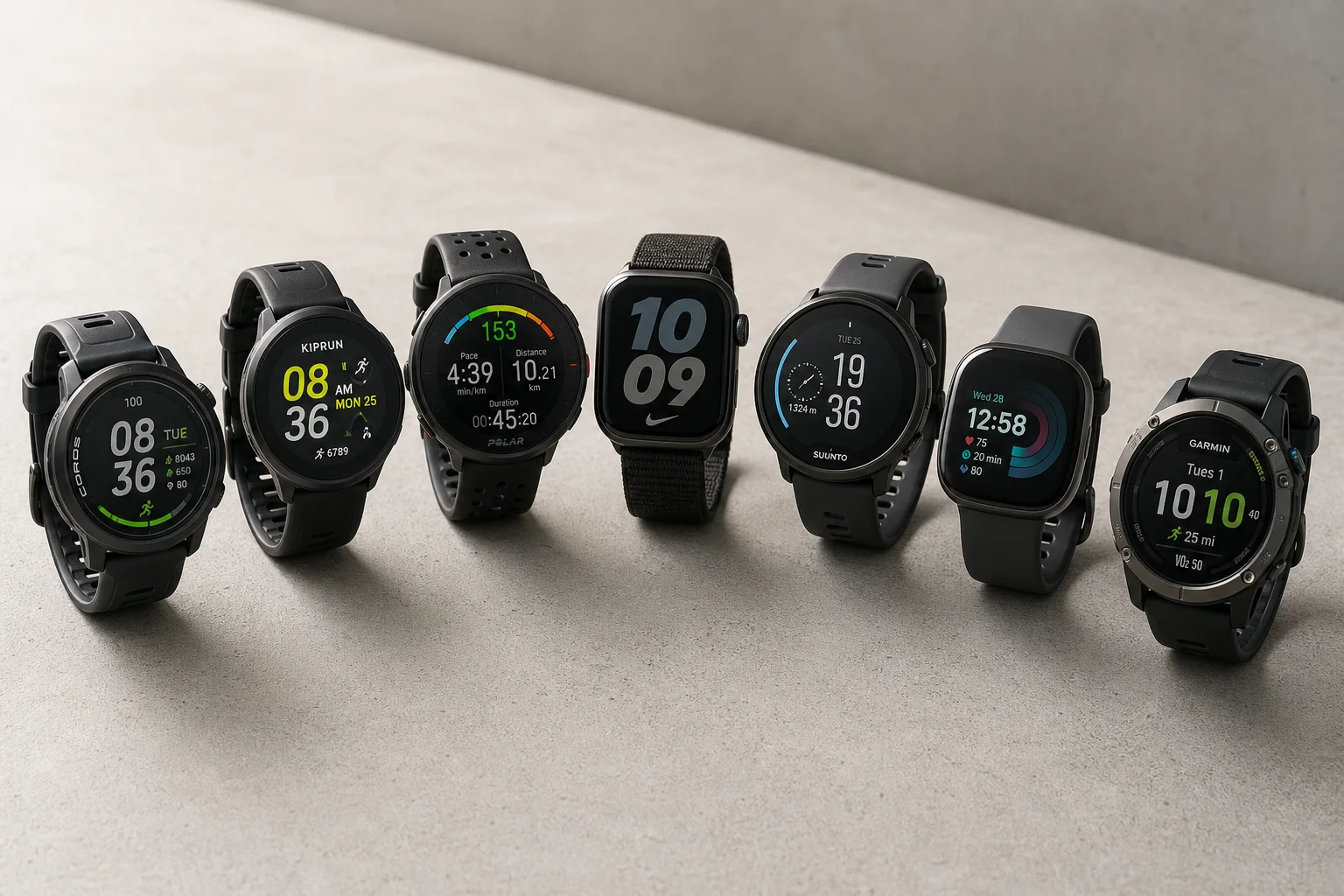
GPS Running Watch Accuracy Test: Seven Watches Compared Across Urban, Trail, and Race Conditions
We tested seven popular running watches from major brands in three different environments to find out which delivers the most accurate GPS tracking for distance and pace.
Running Watches
Garmin Forerunner 70 Review: Garmin's Cheapest Forerunner Is More Capable Than You'd Expect
The new entry-level Forerunner 70 brings an AMOLED screen, a fresh interface, and real training analysis for £219/$249, with a few trade-offs to weigh before buying.