GPS Watches
Garmin Forerunner 165 vs Forerunner 265: Which Running Watch Makes More Sense?
A close look at what separates Garmin's newer Forerunner 165 from the 265, including price, training features, GPS accuracy, and sport support.
Introduction
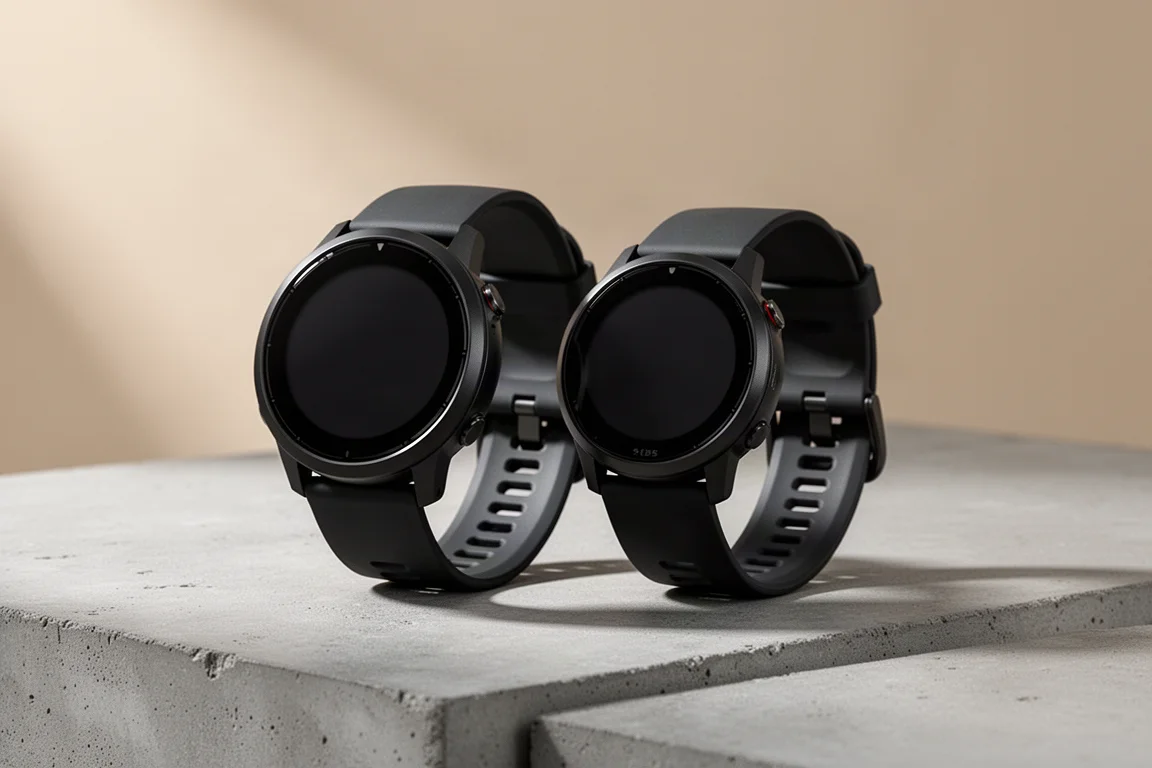
Garmin’s Forerunner 165 arrives with a feature set that borrows heavily from the more expensive Forerunner 265, typically at a price 150 to 200 dollars below it. That gap raises an obvious question: what exactly do you give up by choosing the 165, and is it worth stepping up to the 265? This comparison focuses mainly on the differences between the two watches, touching on shared core features only where they help set the context.
The short version: both are very capable watches, and the 165 covers most of what most runners actually need. The 265 earns its higher price with training depth, extra sport profiles, and a handful of usability and connectivity extras.
Price, Sizes, and Build
The Forerunner 165 comes in two versions: a non-music model at 249 dollars and a music edition at 299 dollars. The Forerunner 265 includes music on every model and runs 449 dollars. On sizing, the 165 offers a single 43mm case, while the 265 comes in two sizes: a 42mm 265S and a 46mm 265.
The 265 and 265S are a touch thicker than the 165 but carry slightly better battery life. All three are lightweight and comfortable: roughly 39 grams for the 165 and 265S, and 47 grams for the larger 265. All have resin cases with 5 ATM water resistance. The glass differs, though: the 165 uses chemically strengthened glass with a flat lens, while the 265 models get Corning Gorilla Glass 3 with a slightly domed lens. The flat lens on the 165 also makes screen protectors easier to fit.
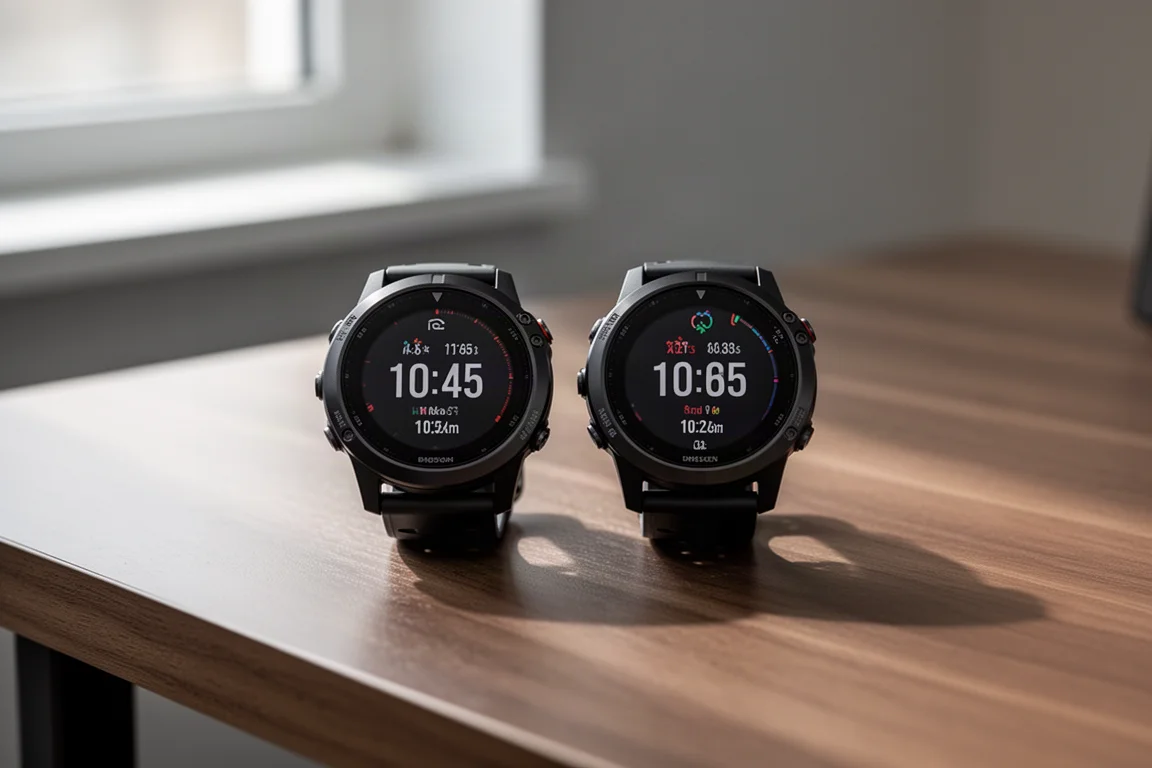
All of these use bright, crisp AMOLED touchscreens, sized 1.1 inches on the 265S, 1.2 inches on the 165, and 1.3 inches on the larger 265. Each has five physical buttons alongside the touchscreen, and you can toggle the touchscreen globally or per activity, which is handy during sports. Watch faces are essentially identical between the two, with additional custom options available from the Connect IQ store.
Usability Differences Worth Knowing
The 265 picks up a couple of subtle usability advantages. It supports hot keys, letting you assign custom long-press behaviors to button combinations for quick access to things like the alarm, brightness settings, and other functions. It also has an auto scroll feature that automatically cycles through your data pages during activities at your preferred speed, useful with heavy gloves on or when you can’t scroll manually.
Data pages differ more meaningfully: the 165 supports up to 10 pages with up to four data fields each, while the 265 supports up to 17 pages with up to eight fields per page. The 265 also gets Red Shift mode, which turns the entire display red, orange, or green during sleep or whenever you enable it, easier on the eyes at night. Garmin has indicated the 165 won’t be receiving Red Shift mode due to a hardware limitation.
Battery Life
The 265 edges out the 165 here. With gesture mode (no always-on display), the 165 reaches up to 11 days while the 265 or 265S manages 13 to 15 days. With the always-on display, expect around four days on the 165 and roughly five to seven days on the 265. Battery life during outdoor activities also favors the 265 in comparable modes, though its dual-frequency satellite chipset consumes more power.
Smartwatch and Health Features
Smartwatch features are identical across the range: text and notifications, text replies and image viewing on Android phones, calendar events, weather, and Garmin Pay contactless payments. Offline music storage and playback comes with the 265 and the 165 Music; if you don’t need music, the non-music 165 saves you 50 dollars. One difference: the 265 has 8 GB of storage versus 4 GB on the 165.
Health features are essentially the same on both: the fourth-generation Elevate heart rate sensor with 24/7 monitoring, blood oxygen saturation tracking, stress tracking, advanced sleep tracking with sleep score and sleep stages, nap detection, women’s health tracking, Body Battery with its newer factors, Morning Report, and the daily summary feature. The 265 additionally gets the Sleep Coach feature at launch, which offers sleep suggestions based on your previous night and the day’s activity; the 165 is expected to receive it via a software update, though timing hasn’t been announced.
Activity tracking is likewise very similar: calories, steps, floors climbed (both have an altimeter), and intensity minutes. One minor difference is that the 265 includes a gyroscope, which Garmin says improves accuracy in some accelerometer-based algorithms such as indoor running distance and gym rep counting.
GPS Accuracy: Single-Band vs Multi-Band
Both watches have built-in GPS with access to multiple satellite systems, including GPS, Galileo, and BeiDou. The difference is frequency: the 165 uses a single-band chipset, while the 265 has a multi-band chipset that can access multiple frequencies at once. Multi-band helps in environments where signals get unreliable, such as around tall buildings, canyon walls, or heavy tree cover.
In practice, though, the 165 has delivered impressively accurate tracks, often matching multi-band devices closely. For most riding and running, the 165 will be just as good. The multi-band advantage mainly matters if you regularly train in deep canyons, dense forest, or urban high-rise environments.
Swimming and Sport Profiles
The 165 comes with a solid selection of sport profiles: plenty of running options, cycling profiles, gym workouts, pool swimming, and surprisingly, open water swimming. But the 265 goes further. It adds triathlon support, making it the better pick if you race triathlons, plus additional outdoor recreation profiles like skiing and snowboarding, stand-up paddleboarding, mixed martial arts and boxing, and team sports like basketball, baseball, and soccer.
For swimming specifically, both offer pool and open water profiles and can record heart rate from the wrist. The 265, however, can use the heart rate storage feature on the HRM Pro and HRM Pro Plus straps, letting you record chest-based heart rate while swimming and download it afterward, since Bluetooth and ANT+ signals don’t travel well through water. The 265 also adds pool swimming pacing alerts, pool swim workouts, and critical swim speed calculation.

Running and Cycling Features
Both watches collect pace, distance, cadence, stride length, and heart rate for running, and both record advanced running dynamics like ground contact time, vertical oscillation, and running power from the wrist without an accessory. With an HRM Pro strap, though, the 265 uses strap-based dynamics data and can additionally record ground contact time balance and respiration rate, metrics only an external accessory can provide. The 165 pairs with the strap but always collects running dynamics from the watch itself. Both watches can benefit from the strap’s indoor running pace and distance feature.
For cycling, both pair with speed and cadence sensors, but the 265 also supports cycling power meters, smart bike trainers, and the extended display function with compatible Garmin Edge bike computers.
The 265 also carries a set of pace and training extras: grade adjusted pace for hilly terrain, auto climb, vertical speed, a virtual partner, race an activity against a previous effort, custom alerts, performance condition, and a guided lactate threshold test with an accessory. Both watches offer Pace Pro pacing strategies, structured intervals, targeted training, and standard heart rate, pace, time, and distance alerts. For gym workouts downloaded from Garmin Connect, the 265 adds on-screen animations and muscle maps.
Training and Performance Feedback
Both watches provide training effect for each workout, running VO2 max, and a race predictor for common distances. The 265 extends this significantly: it adds cycling VO2 max via power meters, lactate threshold measurement, and, most importantly, training load and training status.
Training load quantifies the strain of each workout based on heart rate, which is useful for understanding longer-term training trends. Training status combines load and other factors to indicate whether your training is productive, peaking, strained, or unproductive. It factors in acute load over the last 7 days, a zone-based breakdown of that load, load ratio comparing short-term to chronic load (useful when ramping volume up or down), a four-week load focus breakdown, and VO2 max history.
The 165 does include recovery time advisor and HRV status, both genuinely useful recovery tools, but the 265 builds on them with the full training status picture. On top of that, the 265 offers training readiness, a score combining sleep, recovery time, HRV status, training load, and sleep and stress history to estimate how prepared you are for your next session. In short: the 165 gives shorter-term training and recovery insight, while the 265 delivers a bigger-picture view of your training history and readiness.
Navigation
Both watches offer breadcrumb-style navigation with a trail of your activity, navigation back to start, and route loading from Garmin Connect. Neither has full onboard maps like the Forerunner 965. The 265 adds the Up Ahead feature, which lets you mark waypoints such as rest stops or aid stations on a route and shows projected distances with alerts as you approach them.
Which Should You Buy?
If your focus is running and general training on a budget, the 165 covers the essentials extremely well: bright AMOLED display, accurate GPS tracks in most conditions, a full health feature set, and solid running metrics. The music-free version at 249 dollars is especially good value if offline playback isn’t important.
The 265 justifies its higher price if you want triathlon and broader sport support, deeper training analytics with training load, status, and readiness, cycling power meter support, full HRM Pro strap compatibility, multi-band GPS, longer battery life, and the Red Shift night display. For most users, those training features matter more day to day than the GPS accuracy difference.
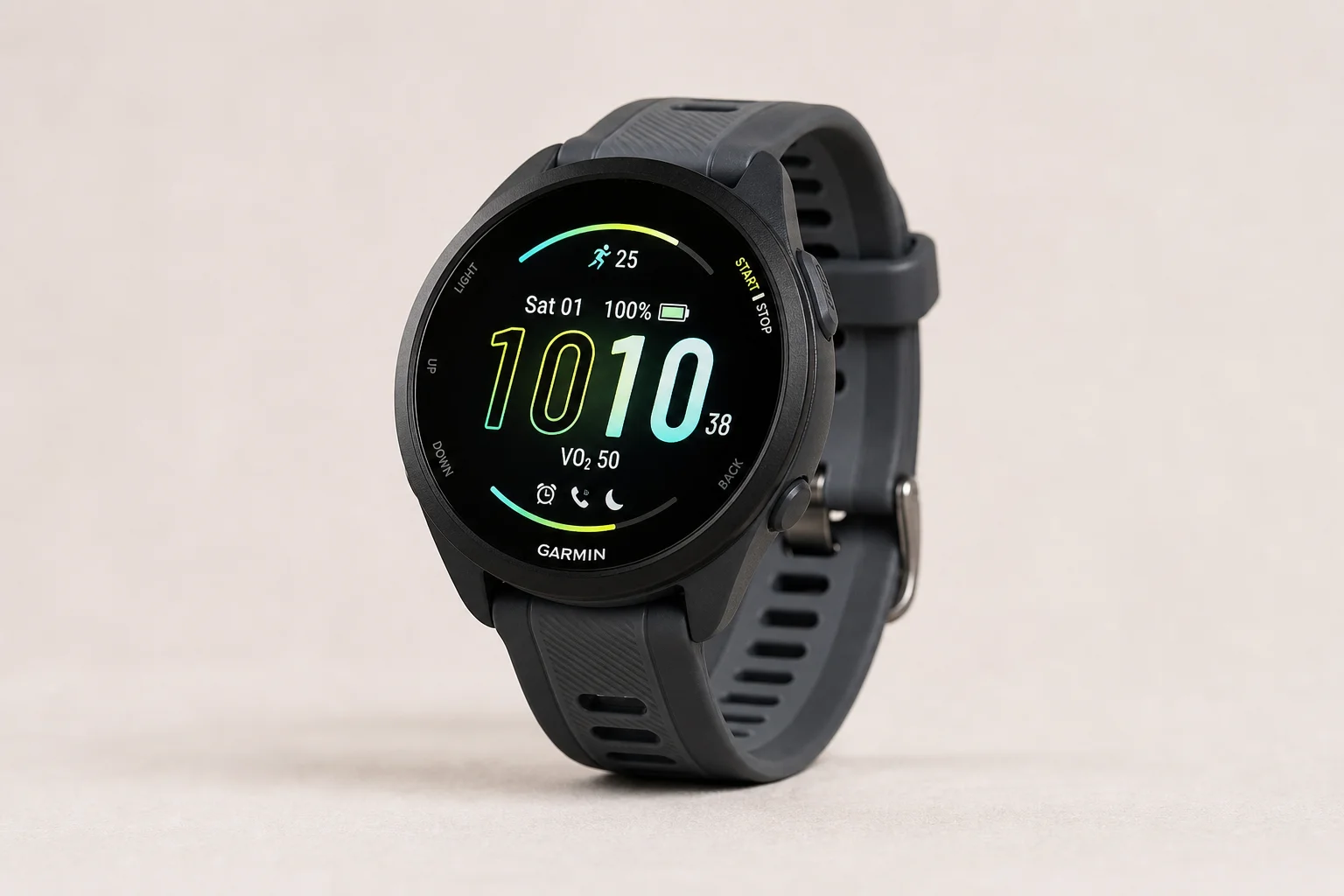
View more details for Garmin Forerunner 265
Conclusion
Both watches are capable, comfortable, and share the same strong health and smartwatch foundation. The 165 is the sensible pick for most runners, while the 265 rewards serious trainers and multi-sport athletes with deeper feedback, more sport profiles, and better accessory integration. Choose the one that matches how you actually train rather than the one with the longer feature list.
Further reading
Related Reviews
GPS Watches
Garmin Fenix 6S Pro Review: A Compact Multi-Sport GPS Watch
A long-term look at the 42mm Garmin Fenix 6S Pro, covering mapping, training metrics, battery life, and what to weigh before buying.
GPS Watches
Garmin Instinct 2 Solar Review: Weeks of Battery for Runners, Riders, and Hikers
A practical look at the Garmin Instinct 2 Solar, covering solar charging, multi-week battery life, training metrics, and GPS performance across running, cycling, and hiking.
GPS Watches
Suunto 9 Peak Pro Review: A Light, Long-Lasting GPS Watch After 12 Months
A compact multisport GPS watch with exceptional battery life, accurate breadcrumb navigation, and a deliberately simple interface. Here is where it shines and where it falls short.