Fitness Watches
Garmin Forerunner 165 Review: Garmin's Budget Smartwatch Finally Gets AMOLED
The Forerunner 165 brings an AMOLED display, strong GPS accuracy, and running-focused training tools down to a friendlier price point.
Introduction
The Garmin Forerunner 165 is Garmin’s newest budget-friendly sports watch, and it arrives at a compelling moment. For years, the Forerunner line has focused squarely on runners, and the 165 doubles down on that identity while quietly becoming a solid option for just about any athletic person. We put it through running, cycling, and everyday wear to see where it earns its price and where it falls short of the higher-end Forerunner 265 and 965.
The headline story is simple: this is the cheapest Forerunner to get an AMOLED display, and it inherits many of the most popular features from the 265 at a lower price. Here is how it holds up in real use.
Price and What You Get
The Forerunner 165 is priced at $249 for the base edition, or $299 for the Music edition. The Music edition adds offline music support, including Spotify, Amazon Music, Deezer, your own MP3 files, and podcasts. Both editions include Garmin Pay, Garmin’s contactless payment system.
Pricing places it right alongside the Garmin Vivoactive 5, which launched in the fall, though that watch targets a more mainstream audience. In the Forerunner hierarchy, the 165 sits below the 265 and the flagship 965, and its name reflects that positioning.
Design and Display
The biggest thing you notice immediately is the color AMOLED touchscreen. Swipe down and you get widgets; tap into any widget glance and you crack it open for more detail. Garmin first brought AMOLED to the Forerunner series with the 265 and 965, and this is the first time it has trickled down to the entry tier.
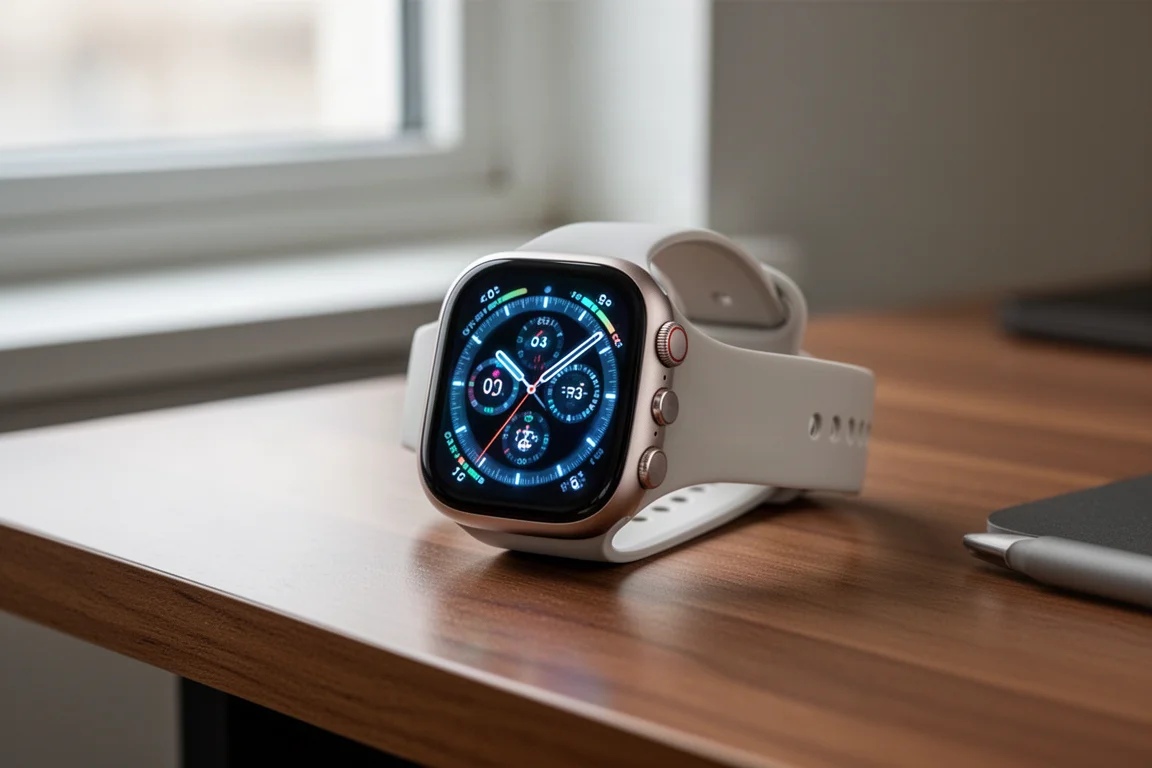
Compared with the Vivoactive 5, the 165 has more physical buttons, which matters far more than it sounds. Buttons make it far easier to start, lap, and control a workout with gloves on, mid-sprint, or in the rain. Watch faces are customizable from a solid stock selection plus Connect IQ downloads, and nearly every data field on the face can be changed.
Battery Life and Everyday Use
Garmin claims around four days of battery life with the always-on display, and in testing that figure proved spot on. With one to two hours of outdoor GPS workouts per day, the watch reliably delivered exactly four days. There are two display modes: always-on, where the screen dims when your wrist is down, and gesture-based, where the display stays off until you raise your wrist to full brightness.

Battery life stayed consistent with essentially every feature enabled at full settings, which is genuinely impressive at this price.
GPS and Heart Rate Accuracy
The 165 skips the multiband dual-frequency GPS found on the Forerunner 265, using Garmin’s all-systems GPS instead. In practice, the difference is small. On runs through farm fields with patchy tree cover and tunnels, the track was solid, with turns essentially spot on compared with reference units. City testing against multiband devices showed only minor offsets, and mountain biking through trees held impressively close to much more expensive hardware.

On the heart rate side, the 165 uses Garmin’s Gen 4 optical sensor rather than the newer Gen 5 found on some higher-end models. Hard one-minute intervals were mostly tracked correctly with a few misses, and cold-weather starts caused the usual warm-up lag. On mountain biking, one of the hardest scenarios for optical heart rate, it struggled until warm, then performed impressively for the rest of the ride. Overall, accuracy was very solid on both fronts.
Training Features and Daily Suggested Workouts
This is where the Forerunner identity shows. The 165 offers daily suggested workouts that adapt to whether you have a goal race loaded on the Garmin Connect calendar, building an entire program including long runs, rest days, and threshold work. It even factors in sleep and fatigue, scrapping a run if you have had several poor nights and adjusting the schedule automatically. Long run days can be shifted in settings to match your calendar.
You also get race calendar countdowns with pace estimates, average temperature pulled from a database for the start time, and real forecasted weather as the event approaches. Multiple events can be designated as A or B priority. The watch supports wrist-based running power and running dynamics with no extra accessories, plus alert types covering heart rate, run/walk, pace, time, distance, power, calories, elevation, and cadence, with customizable auto-lap.

It connects to external sensors over ANT+ and Bluetooth Smart, including heart rate straps, cycling radar, cadence and speed sensors, cycling lights, foot pods, and the Tempe temperature sensor. Running power meters are supported natively, but cycling power meters are not.
Data screens are fully customizable with up to six-plus fields per page and effectively unlimited pages, far beyond what the Vivoactive 5 allows. Sleep tracking nailed bed and wake times in testing, and nap tracking works well too. HRV status and Body Battery round out the wellness picture.
What the 165 Leaves Out
The single biggest difference from the Forerunner 265 is the lack of Training Readiness and its related training load and training status tools. The 165 sticks to recovery time, race predictions, and VO2 max instead. It also lacks multisport or triathlon mode, so while you can do all the same individual sports, you cannot chain them into one activity. Sleep Coach is also absent today, though Garmin has said it is coming in a future update.
Should You Buy It
Overall, this is a great watch with no real complaints about the unit itself. If you are comparing it with the similarly priced Vivoactive 5, the buttons alone are the biggest argument in favor of the 165, alongside deeper running features and more data-field customization. If Training Readiness matters to you, step up to the 265. The only genuine criticism is Garmin’s crowded lineup, with seven or eight models clustered around the $300 mark making the choice harder than it should be.
Conclusion
The Forerunner 165 takes the most popular features from the Forerunner 265 and brings them to a lower price, backed by an AMOLED display, dependable four-day battery, and GPS accuracy that barely gives anything up. For runners, and honestly for most athletes, it is an easy recommendation.
Product link
View more details for Garmin Forerunner 165
This product is mentioned in the review. Check the specifications, options, and compatibility before buying.
View more details for Garmin Forerunner 165Further reading
Related Reviews
Fitness Watches
Garmin Epix Pro Review: 30 Days of Daily Suggested Workouts
A 30 day test of the Garmin Epix Pro and its daily suggested workouts: what the plan prescribed, how it adapted to daily life, and the FTP gains it produced.
Fitness Watches
Garmin Watch Buying Guide: Finding the Right Model for Your Fitness Goals
Navigate Garmin's extensive watch lineup with a practical guide covering classic designs, smartwatch features, rugged options, and serious running watches.
Fitness Watches
Coros Apex 4 Review: A Lightweight Mountain Sports Watch Built for Accuracy
The Coros Apex 4 pairs best-in-class weight and battery life with dual-frequency GPS, an always-on MIP display, and a durable fiber-reinforced polymer case.