GPS Watches
Garmin Fenix 7 vs Instinct 2 vs Fenix 6: Which Outdoor Watch Should You Buy?
A practical comparison of three Garmin outdoor watches, covering maps, battery life, sport features, and where the Fenix 6 remains a smart value pick.
Introduction
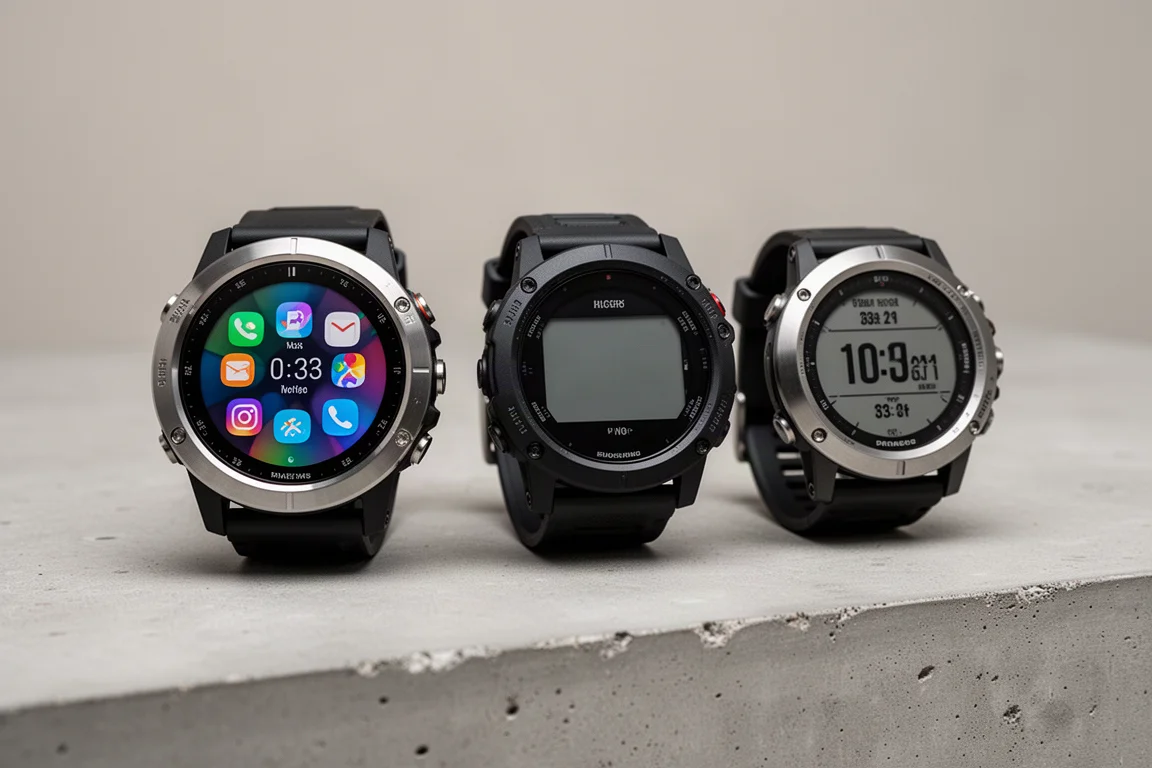
Garmin’s outdoor lineup can feel confusing, because the differences between watches are rarely obvious from a spec sheet. The Fenix 7 series and the Instinct 2 series look similar on paper, but they behave very differently once you take them on a long hike or a multi-day trip. And sitting quietly beneath both is the older Fenix 6, which keeps showing up at a price that makes the whole comparison harder.
This guide walks through the differences that only become clear with real use: displays, maps, navigation, battery life, sport features, sensors, and safety tools.
Display: Color Touchscreen vs Monochrome Buttons
The most visible difference is the screen itself. The Fenix 7 uses a color display, while the Instinct 2 uses a monochrome screen. The data is the same on both, from widget glances to training metrics, but the Fenix 7 simply presents it with more color in watch faces and glance views.
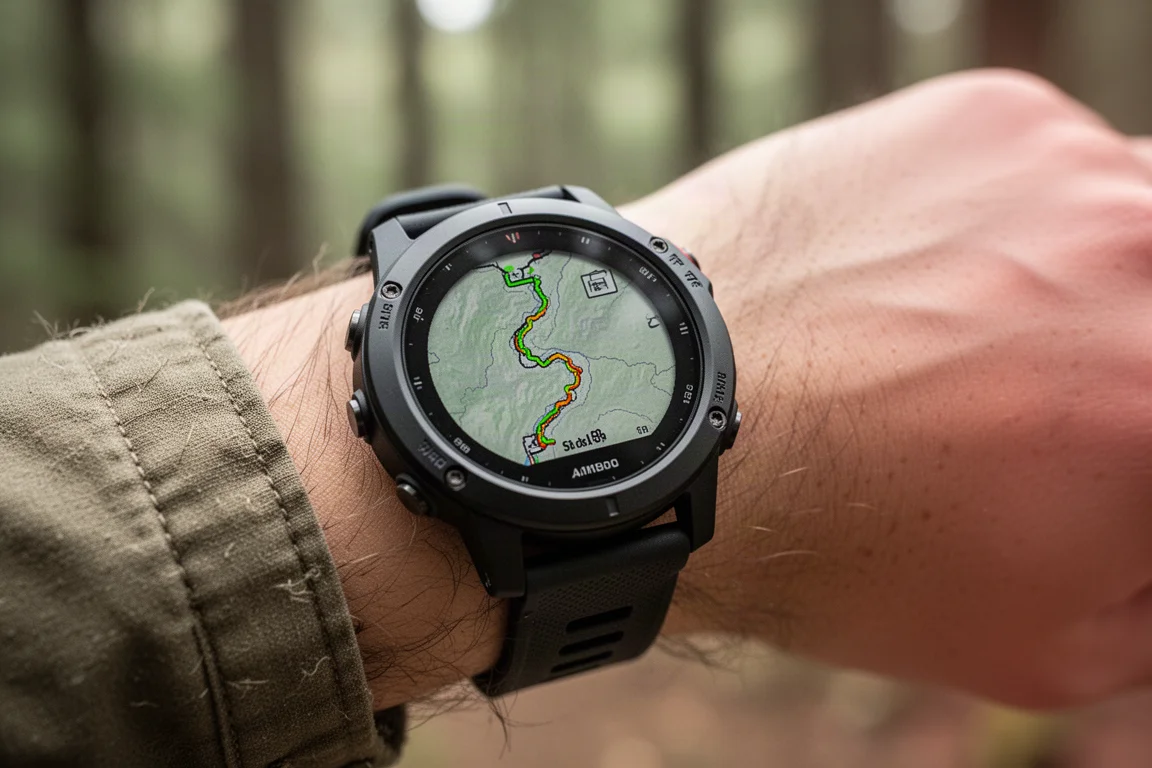
The Fenix 7 also adds a touchscreen. You can swipe up and down through menus, and importantly, you can disable the touchscreen entirely or per sport profile if you prefer button-only operation. Both watches use the same five-button layout, with two buttons on one side and three on the other, and they behave identically for navigation.
Screen resolution also differs: the Instinct 2 sits at 156 x 156 pixels, while the Fenix 7 is 260 x 260 (with slightly lower resolution on the smaller Fenix 7S and slightly higher on the Fenix 7X).
Mapping and Navigation
This is the biggest practical gap between the two families. The Fenix 7 includes full maps, either pre-installed or downloadable, with topographic data, points of interest such as cafes and monuments, trail networks, and heat map data. The Instinct 2 has no maps at all; navigation is a breadcrumb trail, the same approach Garmin has used for over a decade.
Out on the trail, the difference matters most when you go off course. The Instinct 2 simply points you back to your route with an arrow. The Fenix 7 will reroute you along nearby streets, roads, or trails, and then update its elevation profile and ClimbPro data automatically.
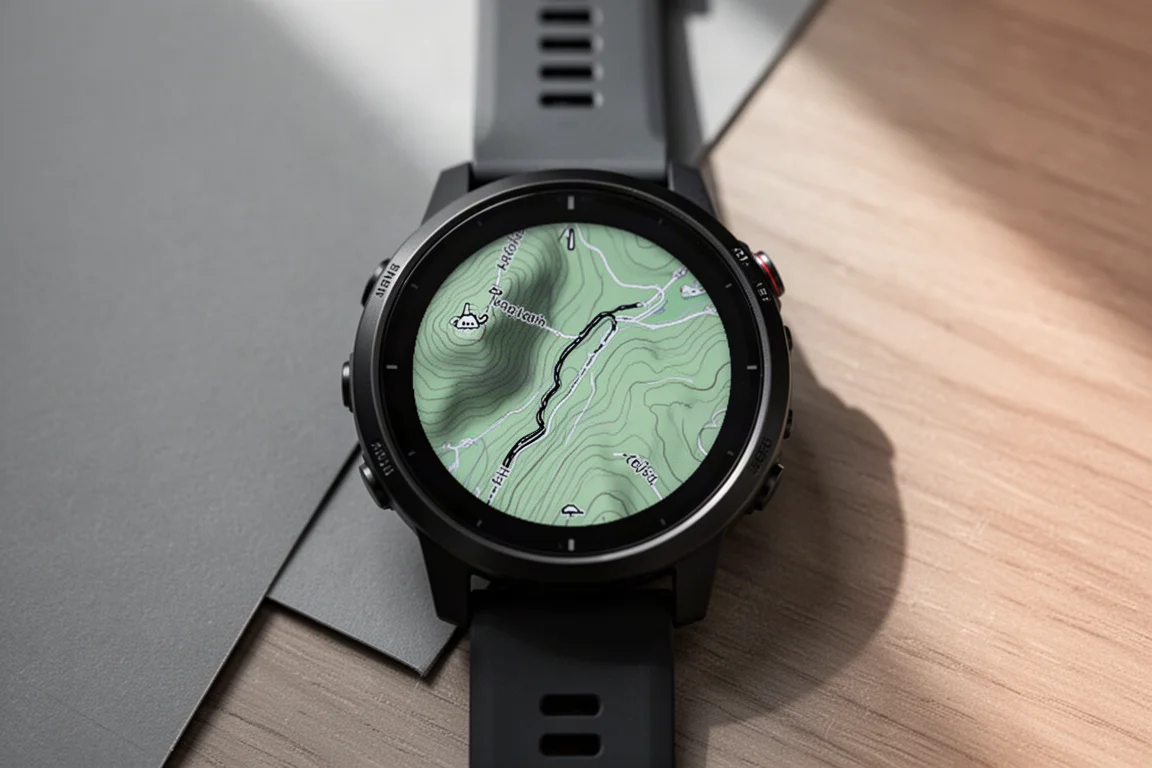
ClimbPro itself deserves special mention. It takes your planned route and splits it into each climb along the way, showing remaining elevation, gradient, and distance to the top. It is arguably one of Garmin’s best features, and it is not available on the Instinct 2, which instead offers an overall elevation graph of your planned route with your progress shaded along it.
The Fenix 7 also uses its maps to correct elevation. On a hike from the mountains down to the ocean, it showed an accurate zero meters at the water’s edge, while the Instinct 2 drifted slightly because the weather changed over the course of the day. The Fenix 7 can lock its altimeter to known map elevation data; the Instinct 2 cannot, though manual altimeter calibration is available on both.
Both watches can route to coordinates, but only the Fenix 7 can give you a real route along trails or roads to get there. The Fenix 7 also adds an Up Ahead feature, showing upcoming waypoints from your course file with icons in a simple dashboard, something the Fenix 6 does not have.
Battery Life and Solar Power
Here the Instinct 2 fights back. Its solar editions are the only Garmin products in this class advertised with unlimited power in certain modes, meaning that with enough sun you could theoretically never need to charge the watch. The Fenix 7 solar edition can also reach effectively unlimited runtime in some modes, but Garmin does not advertise that capability.
The unlimited claim is based on roughly three hours per day of exposure at 50,000 lux, which is not extreme sunshine. Lightly overcast winter conditions can measure around 36,000 lux, and a bright summer day at the beach easily exceeds 100,000 lux. In other words, the solar expectation is realistic for anyone who spends significant time outdoors.
Sport Features and Training Tools
The Instinct 2 received the biggest functional upgrade here: its sport profiles are now nearly identical to the Fenix 7 and Fenix 6. Both families support the same core activity list, so you are not losing much on the Instinct.
A few meaningful differences remain. The Fenix 7 shows animated step-by-step exercise visuals for strength workouts, which is especially useful for core routines with specific movements; the Instinct 2 lacks this. The Instinct 2 does gain full training status, including training load, training effect, and VO2 max, matching the Fenix watches, though oddly it cannot display training status on the watch face while the Fenix 7 can.
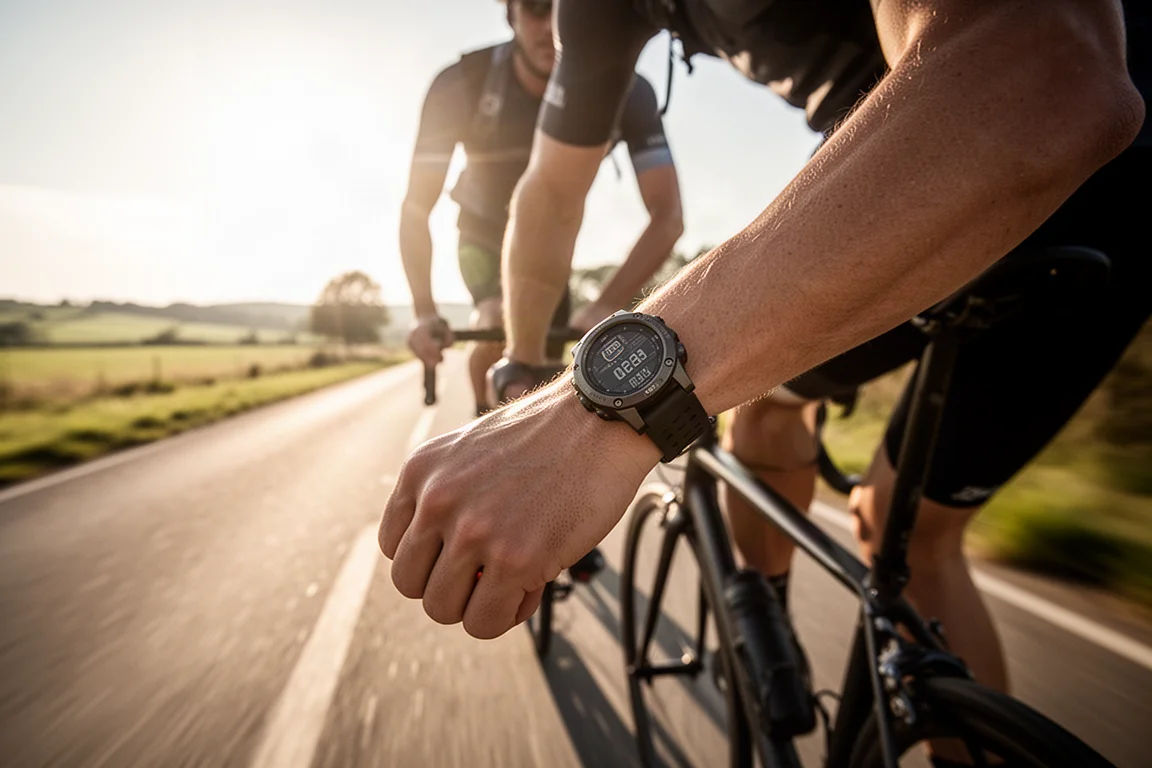
For cycling, the Instinct 2 supports power meters and smart trainers, and gains cycling dynamics and running dynamics. But it does not support cycling radar, lights, or electronic shifting systems like Di2, eTap, or Campagnolo. Both support PacePro pacing plans for races with varied terrain, but Strava live segments work on the Fenix 7 only (the Instinct still syncs segments after the ride). Finally, the Stamina feature, which estimates how much remaining energy you have in both time and distance, is a Fenix 7 exclusive.
GPS and Altimeter Accuracy
Depending on the model, the Fenix 7 can offer multi-band dual-frequency GPS on its sapphire editions, which cost significantly more. The Instinct 2 uses an older chipset supporting GLONASS and Galileo. In real-world testing, the two track very similarly, even in dense jungle and on steep mountain switchbacks. The clearest advantage for multi-band shows up when tracing tight turns around tall buildings, where the Instinct tends to meander slightly.
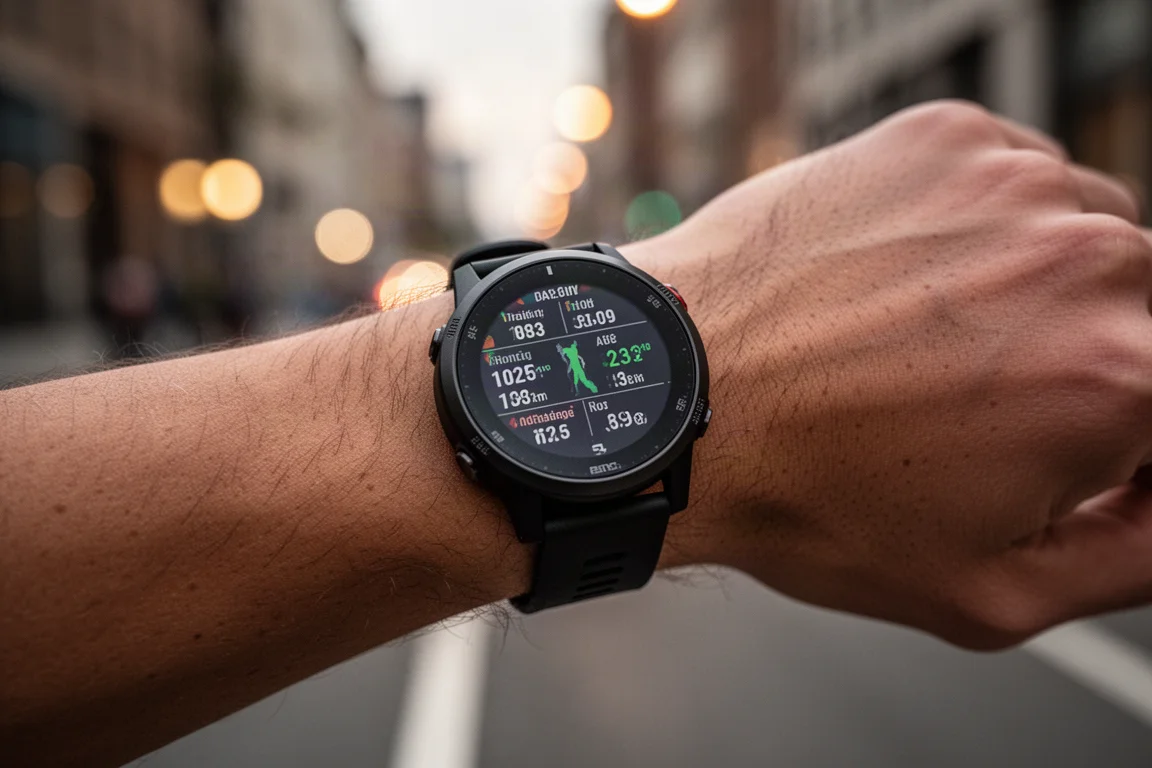
The Instinct 2 received altimeter improvements in sensor placement, software, and internal components, and side by side the two are virtually identical. The one remaining difference is the Fenix 7’s ability to lock its altimeter to map elevation data for better long-term accuracy.
Music, Wi-Fi, and Payments
All Fenix 7 models store music: MP3 files plus Spotify, Deezer, and Amazon Music downloads, played back over Bluetooth headphones. The Instinct 2 only controls music on your phone. All Fenix 7 editions include Wi-Fi, while no Instinct 2 does, though that matters mainly for map and music downloads. Garmin Pay contactless payments are on every Fenix 7, but only on solar editions of the Instinct 2.
Sensors, Safety, and Connect IQ
Both watches use Garmin’s same generation 4 optical heart rate sensor, with identical features: pulse ox, 24/7 heart rate, stress, breathing rate, workout modes, and heart rate broadcasting over both ANT+ and Bluetooth. Real-world accuracy is effectively the same, though larger watches like the Fenix 7X can bounce more on smaller wrists and reduce optical accuracy.
Safety features match closely: incident detection sends a live tracking link to friends and family, and holding the top-left button silently triggers assistance. Both support live tracking and Garmin’s inReach satellite communicators for messaging outside cell coverage. The Fenix 7 additionally offers group tracking of friends during workouts.
The Instinct 2 gained Connect IQ support, including watch faces, data fields, apps, and widgets. However, expect some differences: apps that rely on color may not work on the monochrome display, and some features such as photo-based watch faces are unavailable. The Fenix 7 was also among the first watches with an on-watch Connect IQ store, though browsing is currently very limited.
Which One Should You Buy?
If you do lots of long backcountry trekking, the Fenix 7’s maps are genuinely valuable as a safety net and for orientation, and nothing on the Instinct 2 replaces them. If maps are not important to you, the Instinct 2 covers most sport features well, and its solar battery life is a genuine advantage for anyone spending summers outdoors.
The wildcard is the Fenix 6. It has been frequently available around the same price as the Instinct 2, and it offers nearly everything the Fenix 7 does, missing only the Stamina feature, multi-band GPS, and Up Ahead waypoints. For many buyers, that makes it the strongest value in this entire comparison.
Conclusion
Choose the Fenix 7 if you want maps, a touchscreen, onboard music, and the fullest feature set. Choose the Instinct 2 if you prioritize rugged simplicity, potentially unlimited solar battery life, and a lower price. And do not overlook the Fenix 6, which delivers most Fenix 7 capabilities at Instinct 2 money.
Further reading
Related Reviews
GPS Watches
Garmin Fenix 6S Pro Review: A Compact Multi-Sport GPS Watch
A long-term look at the 42mm Garmin Fenix 6S Pro, covering mapping, training metrics, battery life, and what to weigh before buying.
GPS Watches
Garmin Instinct 2 Solar Review: Weeks of Battery for Runners, Riders, and Hikers
A practical look at the Garmin Instinct 2 Solar, covering solar charging, multi-week battery life, training metrics, and GPS performance across running, cycling, and hiking.
GPS Watches
Suunto 9 Peak Pro Review: A Light, Long-Lasting GPS Watch After 12 Months
A compact multisport GPS watch with exceptional battery life, accurate breadcrumb navigation, and a deliberately simple interface. Here is where it shines and where it falls short.