GPS Watches
Garmin Fenix 7 vs Garmin Epix: 13 Differences That Actually Matter
A side-by-side look at the Fenix 7 and Epix, covering displays, battery life, maps, weight, and real-world endurance testing to help you pick the right multisport watch.
Introduction
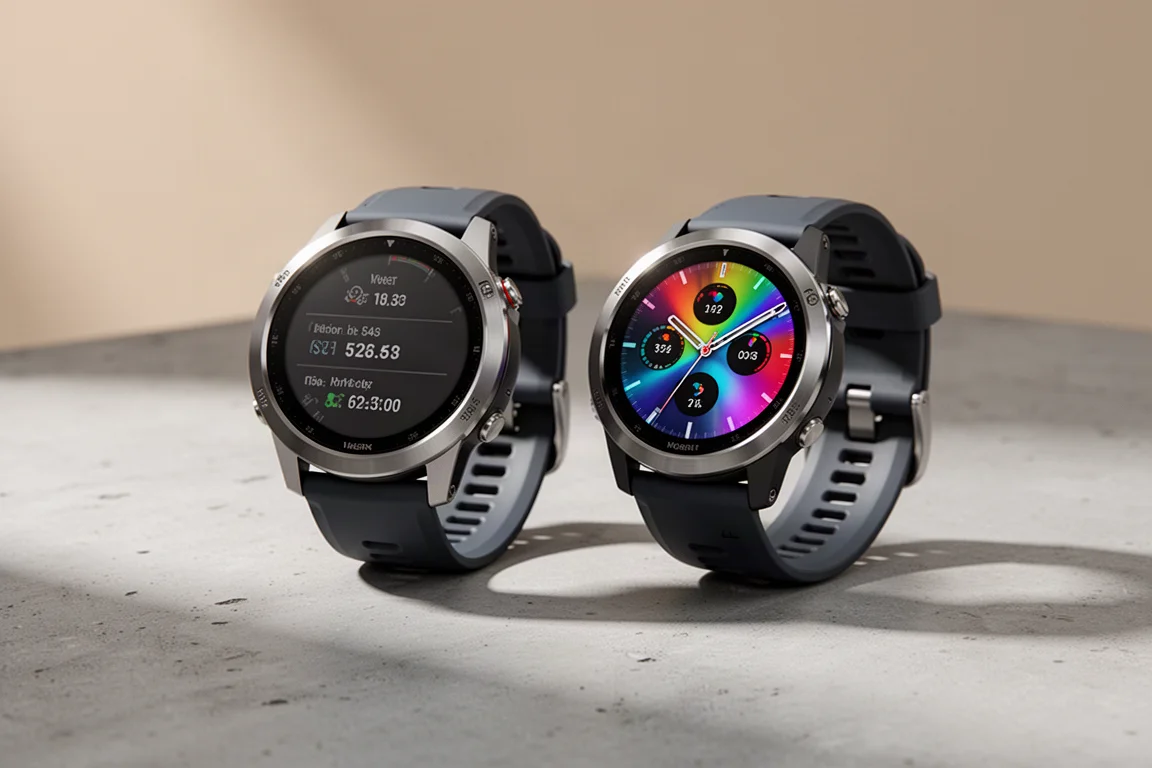
The Garmin Fenix 7 series and the Garmin Epix share a lot of DNA, but they differ in a handful of ways that genuinely shape the ownership experience. The Fenix 7 comes in three sizes (S, standard, and X), while the Epix matches the standard Fenix 7 in both case size and viewable screen area. Solar is only offered on the Fenix 7 series; the Epix has no solar option. Sapphire glass is available on both, adding a nicer bezel, 32GB of storage instead of 16GB, and multi-band GPS for more accurate tracks in tricky situations like cliffs.
The core question is whether you want the Epix or the Fenix 7, and the differences below should make that decision much easier.
Price
The Fenix 7 base unit starts at $699 and goes well over a thousand dollars across the lineup. The Epix starts at $899 and goes to $999. Since the Epix only exists in one size, the fairest comparison is between the Fenix 7 Sapphire and the Epix Sapphire, which are the same case and screen size. If you want a smaller or larger watch, the Fenix 7 lineup is the only option.
Display: Always-On Behavior and Screen Technology
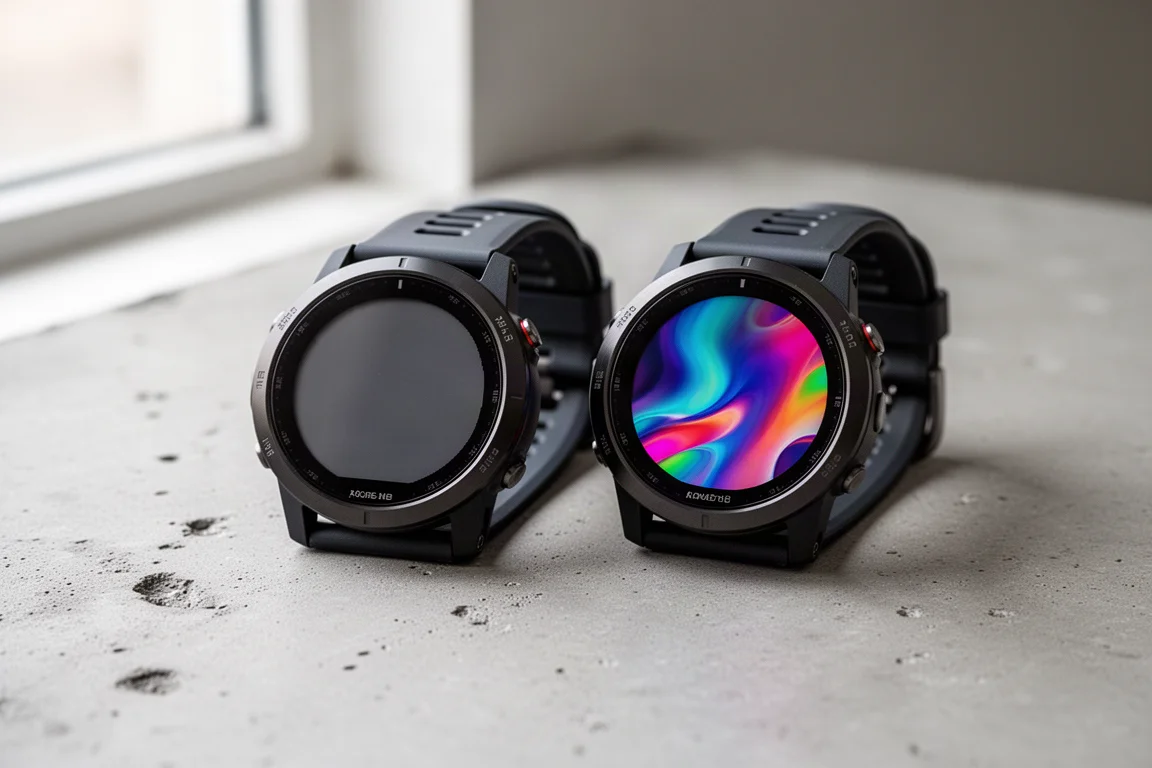
The Fenix 7 uses a transflective MIPs display, the same technology Garmin has used for years. It stays always on, 24 hours a day, showing the same screen regardless of lighting. The Epix uses an AMOLED display with two core options: always-on mode, where the screen is always visible at different brightness levels depending on what you are doing, and gesture-based mode, where the screen toggles off and on with wrist movement, which can introduce a slight delay.
The resolution difference is dramatic. The Epix screen is 416x416 at 326 pixels per inch, while the Fenix 7 series runs at 260x260 at 260 pixels per inch. Both screens are 1.3 inches with an identical viewable area, but the Epix has 65,000 colors versus just 64 on the Fenix 7.
Map Visibility
With identical map data under the hood and both watches on default settings, the Epix renders noticeably more detail. Trails that appear on the Epix at a given zoom level may not show up on the Fenix 7 until you zoom in further, simply because the Fenix does not have the pixels to render them earlier. The same applies to golf courses and ski runs, where the Epix shows more detail at higher zoom levels. The brighter screen also makes maps easier to read at a glance.

Brightness and Sleep Mode
The Epix is brighter, full stop. In side-by-side testing in harsh sun on open terrain and down in trees, the Epix outperformed the Fenix 7 Sapphire in every scenario, with the backlight states matched on both units.
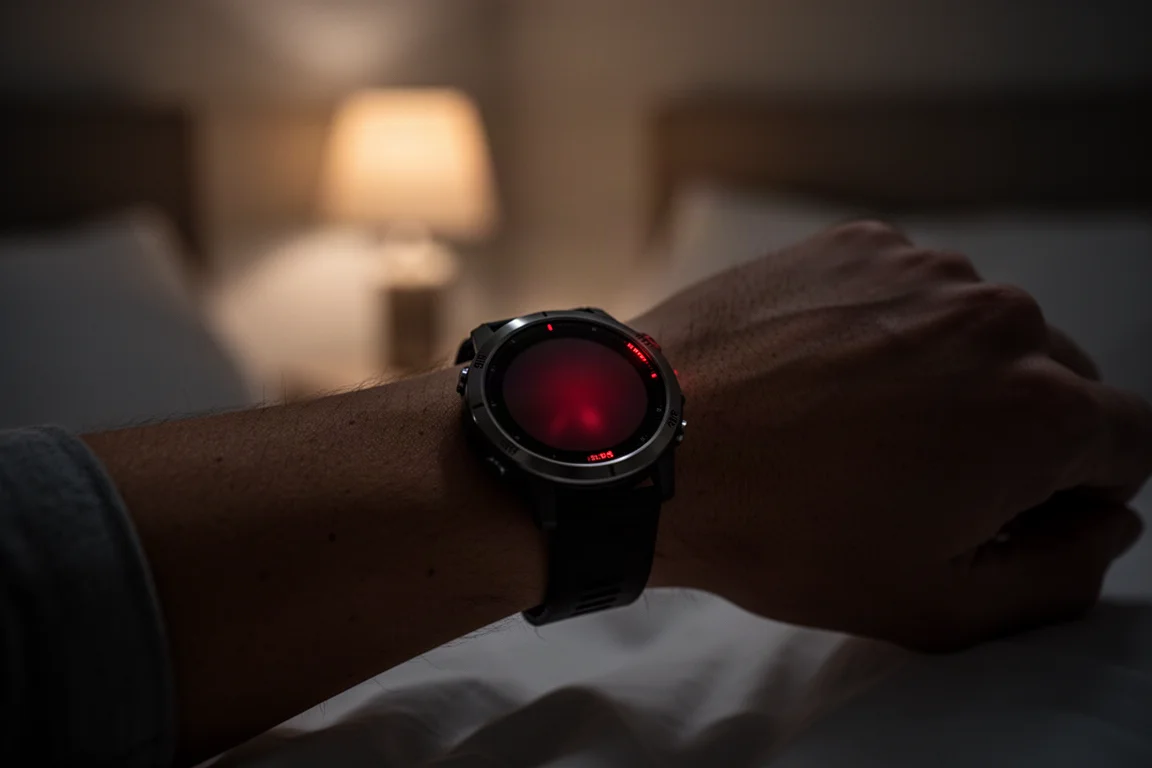
For nighttime use, the Epix supports a sleep mode that turns the screen off or dims it further during your do-not-disturb window, showing a clean black watch face with thin white lettering. Sleep mode is also available on the Fenix 7, dropping the backlight from the default 20 to 5 percent so a dark room does not get blinded. The Epix backlight has four configurable levels in normal use, with fine control over timing, timeout, and touch behavior.
Real-World Battery: Endurance Rides and Long Hikes
In smartwatch mode, the Epix delivers six days with an always-on display and up to 16 days in gesture-based mode. In testing, it hit the six-day figure almost precisely with one hour of workouts per day. The Fenix 7 trends many days to many weeks depending on the model, and day-to-day battery life is rarely a limiting factor.
On a seven-hour ride with everything turned on (mapping, ClimbPro, multi-band GPS, optical heart rate, a power meter, live tracking, and smartphone notifications), the Epix dropped 33 percent while the Fenix 7 Sapphire Solar dropped 21 percent, helped by very sunny conditions. Projected capacities came out at roughly 22 hours for the Epix and 34 hours for the Fenix 7, both beyond Garmin’s official estimates. On a five-hour hike mostly under jungle cover with overcast skies, the Epix projected around 19 hours and the Fenix 7 around 21 hours, with everything running in the most battery-hungry configurations.
The practical takeaway: both units can handle a 20-hour activity with everything maxed out, and you can extend battery considerably by dropping multi-band GPS, switching the always-on display to gesture mode, or using a chest strap instead of the optical sensor.
Flashlight
The Fenix 7X has the well-known LED flashlight with double-tap activation, which can genuinely illuminate a trail ahead of you. The Epix also has a flashlight feature (as does the standard Fenix 7 series), activated with a tap, with adjustable brightness and a red mode. The difference is that the Epix version is a screen-based light, better suited to confined spaces around the house than lighting up a trail at night.
Accuracy and Heart Rate
This one is simple: they are effectively identical. Both use the same optical heart rate sensor chip and the same GPS chipset, and side-by-side results were virtually identical on trails, indoors, and everywhere else. The only variation observed came from which wrist a watch was worn on, such as running next to a large building.
Pixel Burn-In
AMOLED screens carry a theoretical pixel burn-in risk that the MIPs display simply does not have. Garmin mitigates this on the Epix with pixel shifting, which subtly cycles pixels to prevent any single one from staying lit, plus overnight sleep mode that turns the display off entirely. The screen is the same panel used in the Venu 2, which has not shown notable issues, though it had only been out about nine months at the time. The original Venu did show some burn-in, so it may be a longer-term concern, but it does not seem like a realistic problem for most users.
Weight and Small Details
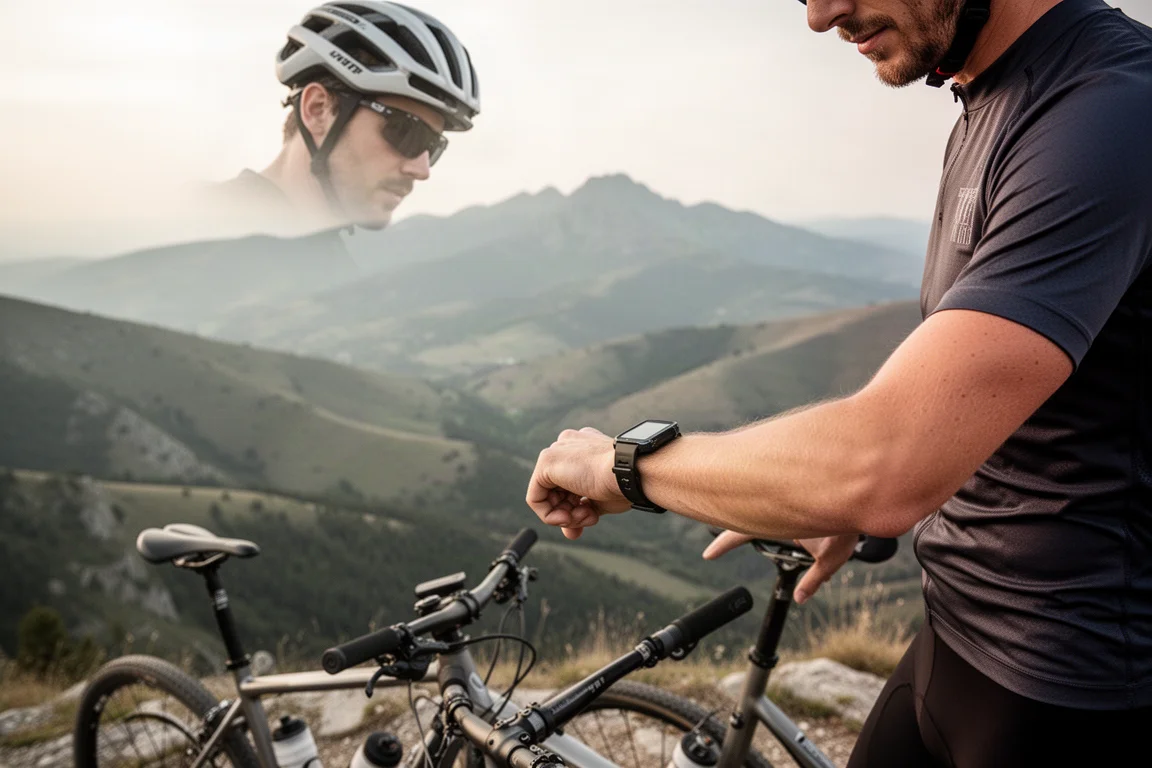
Comparing sapphire to sapphire, the Epix weighs 71 grams and the Fenix 7 Sapphire weighs 74 grams, a mere 3-gram difference you are unlikely to notice. Bands can change that either way. One last nuance: the Epix runs a slightly extended Connect IQ implementation, with additional features that take advantage of its higher resolution and richer colors, features the Fenix 7 display simply cannot support.
Which One Should You Buy?
If you regularly do very long activities, especially multi-day efforts where you do not want to carry a charging cable, the Fenix 7 makes more sense. Its battery is simply not a limiter in normal use, and the solar option can stretch it further in sunny conditions.
If you mostly do activities under 20 to 30 hours, charge your watch weekly without complaint, and value a brighter, sharper, more colorful display for maps and everyday use, the Epix is the more appealing pick. Just note that it only comes in the standard 47mm-ish size, so if you prefer something smaller or larger, the Fenix 7 lineup is your path.
Conclusion
The Fenix 7 and Epix are nearly identical where it counts: accuracy, sensors, maps, and feature set. The choice comes down to display preference versus battery endurance. Pick the Epix for the superior screen and modern look, pick the Fenix 7 for weeks of battery life, solar, and more size options.
Product link
View more details for Garmin Fenix 7
This product is mentioned in the review. Check the specifications, options, and compatibility before buying.
View more details for Garmin Fenix 7Further reading
Related Reviews
GPS Watches
Garmin Fenix 6S Pro Review: A Compact Multi-Sport GPS Watch
A long-term look at the 42mm Garmin Fenix 6S Pro, covering mapping, training metrics, battery life, and what to weigh before buying.
GPS Watches
Garmin Instinct 2 Solar Review: Weeks of Battery for Runners, Riders, and Hikers
A practical look at the Garmin Instinct 2 Solar, covering solar charging, multi-week battery life, training metrics, and GPS performance across running, cycling, and hiking.
GPS Watches
Suunto 9 Peak Pro Review: A Light, Long-Lasting GPS Watch After 12 Months
A compact multisport GPS watch with exceptional battery life, accurate breadcrumb navigation, and a deliberately simple interface. Here is where it shines and where it falls short.