GPS Watches
Garmin Fenix 7 Series Review: 17 Things Worth Knowing Before You Buy
A month and a half of swimming, running, cycling, and hiking with the Fenix 7 lineup, covering the touchscreen, flashlight, multiband GPS, stamina scores, and where the series still falls short.
Introduction
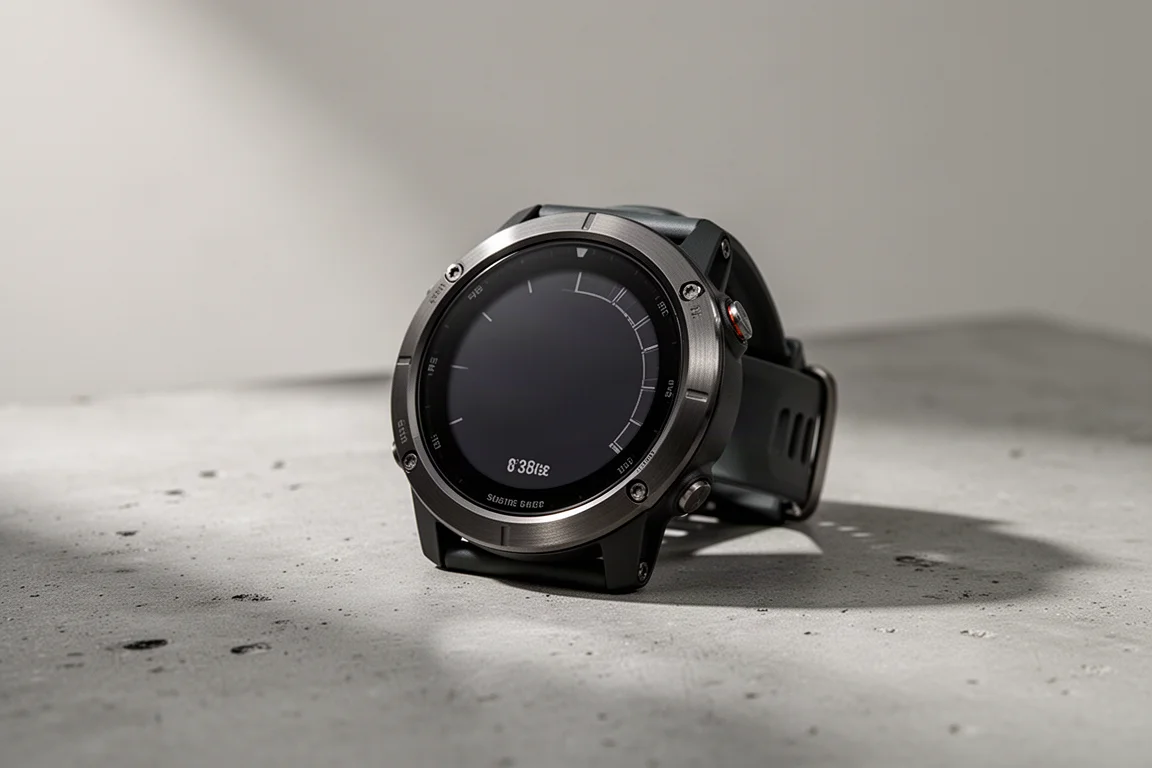
The Garmin Fenix 7 series is an iterative but meaningful update over the Fenix 6, adding a touchscreen, multiband GPS, maps on every model, a stamina metric, and a long list of smaller refinements. After roughly a month and a half of use across swimming, cycling, running, and hiking, the watch holds up extremely well as both a daily companion and a serious sport tracker. It still has a few rough edges worth knowing about before you spend your money.
First, Pick Your Size and Edition
The lineup follows the same formula as the Fenix 6: the Fenix 7S for smaller wrists, the Fenix 7 in the middle, and the Fenix 7X at the top end. Each comes in a base, Solar, or Solar Sapphire edition. Sapphire gets you tougher glass plus multiband GPS and larger storage, which in practice matters more than the glass alone.
Pricing runs from $699 up to $1,199, roughly a $100 increase over the previous generation, likely because every model now includes storage, maps, music, and contactless payments. That is a lot of choice, but it also means there is no “wrong” tier for maps or music.
A New Touchscreen That Plays Nice With Buttons
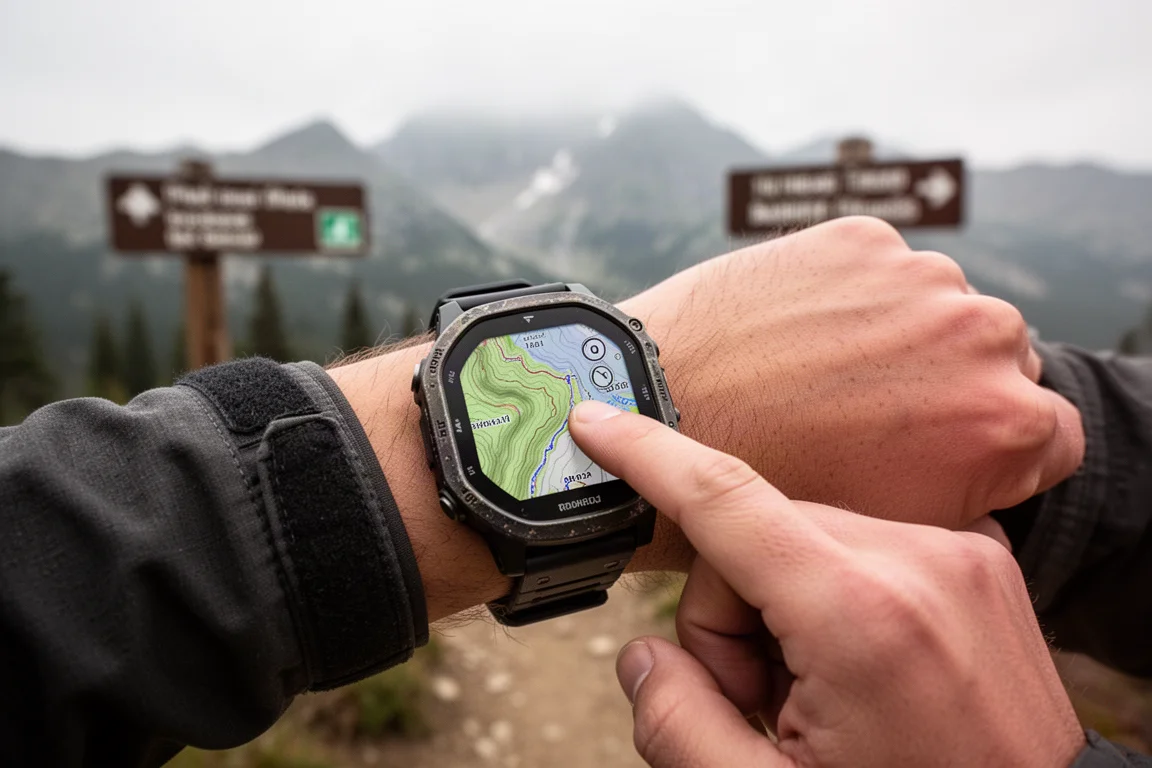
The display is still a color screen, but now it supports touch alongside the traditional five-button layout. The most practical use is panning around maps while hiking: you simply swipe to see where you are, much like other touch-based sports watches of recent years.
The responsiveness works well whether your fingers are dry or wet. What makes it smart is how customizable touch is: it is disabled by default in new workout profiles until you explicitly enable it, and you can turn it off while sleeping to avoid accidental presses. If you are not a touch person, you can simply ignore it. This writer still prefers buttons for open-water swimming or cold-weather glove use, since buttons work every single time, but the choice is now yours.
The Fenix 7X Flashlight Is Genuinely Useful
The flashlight is exclusive to the larger Fenix 7X, and while it sounds like a gimmick, it earns its place. Two white LEDs and one red LED put out brightness roughly in the same ballpark as a phone flashlight, with the obvious advantage that your hands stay free.

There are three core use cases. First, everyday utility: double-tap a button and light up whatever you are doing at home. Second, sports: a range of blink and strobe modes, including a running mode that attempts to match your cadence and switch between white light on the forward swing and red on the back swing. The execution is not perfect, but on trails, city streets, or bike paths, people notice you. Third, an SOS signal for emergencies.
Multiband GPS: The Catch Explained
Multiband, or dual-frequency, GPS is positioned as the accuracy holy grail, and it does increase the number of satellites the watch can use for a better position. The catch is that it is only available on Sapphire editions, and it burns meaningfully more battery when enabled via the “All Systems + Multi-Band” satellite setting.
In real-world testing across swim, bike, run, open water, and routes near cliffs, the accuracy gains are generally modest. It is pretty good, but rarely spectacular, and in some tests it simply matched standard GPS. For very short segments next to obstacles it can help; the rest of the time, expectations should be tempered.
Up Ahead: Glanceable Waypoints
Waypoints themselves are nothing new on GPS watches, but the new Up Ahead feature makes them far more usable. You build a route, assign icons from roughly 50 standardized types plus custom names, and the watch shows a simple glanceable page with distances to your next waypoints. Once you pass one, a chirp confirms it and the list rolls to the next.
Map Manager: Free Maps for the World, With Caveats
Every model now includes maps for all regions of the world for free, built on the TopoActive maps with popularity routing data. The difference is storage: base and Solar models have 16GB while Sapphire editions have 32GB, and the 16GB models do not come with maps preloaded. You cannot necessarily fit all of North America and all of Europe on a 16GB watch at the same time.
Two practical notes: downloads over Wi-Fi are slow, roughly one hour per two to two and a half gigabytes, so loading North America and Europe together can take over four hours. And the Map Manager cannot be operated from the phone app; it must be done on the watch itself.
The New Stamina Feature Tracks Your Tank
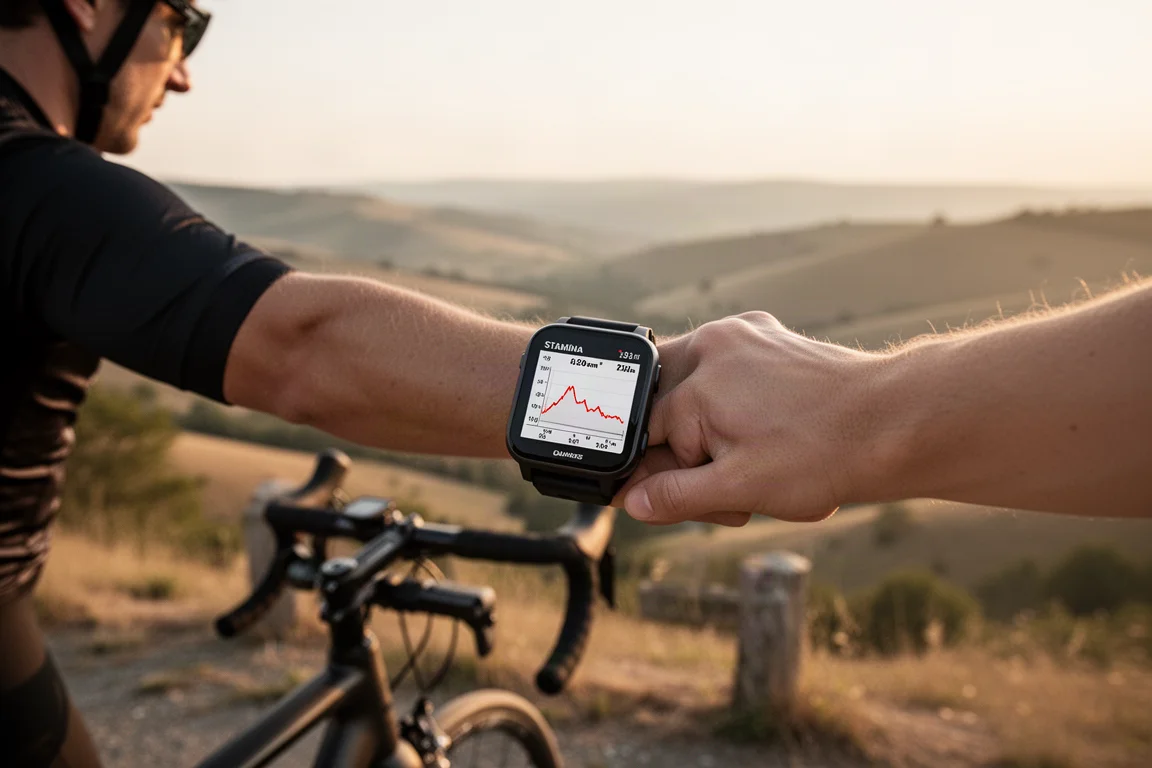
Stamina works like a body battery for a single workout or race, tracking both long-term potential energy and short-term potential energy. During intervals, short-term stamina fluctuates sharply as you surge and recover; on a long steady ride, both values decline almost in lockstep, showing how much time or intensity you have left.
In one seven-hour ride, the gauge ended at effectively zero, which matched reality closely: completely beat, though perhaps another five to ten kilometers were possible with the right motivation. It is close to where it needs to be, if not perfect.
Phone-Based Settings Finally Arrive
This is a long-overdue change: almost all watch settings, including data pages, data fields, GPS settings, workout settings, and sport profiles, can now be configured from your smartphone. A handful of features, like Map Manager, remain watch-only, and the interface is essentially one giant pile of settings rather than something elegantly organized. Still, it is a welcome start.
Ski View and the Gen 4 Heart Rate Sensor
Ski View is a rebrand of Garmin’s skiing features with meaningful additions: resort and run names are now shown, and cross-country ski trails appear on maps for the first time. The ski maps are preloaded on every model at roughly 250MB, so storage tier does not matter here.
The Gen 4 optical heart rate sensor, previously introduced on the Venu 2 series, handles 24/7 heart rate, workout heart rate, breathing rate, and pulse ox. Accuracy is generally solid across a wide variety of sports, including intervals in both running and cycling. Where it struggles is very tight-wrist scenarios such as downhill bike descending; an external heart rate strap remains the fallback.
Health Snapshot and Activity Additions
Health Snapshot is a two-minute seated test that measures resting heart rate, breathing rate, stress, pulse ox, and HRV, then produces a report on the watch and in Garmin Connect, exportable as a PDF. The main gap is that there is no way to trend these values over time, which undercuts the point of taking controlled, consistent snapshots.
On the activity side, Garmin added kiteboarding and kite surfing profiles, a Speed Pro feature, structured HIIT workouts, and chart and running modes that automatically plot your run, walk, and standing portions. The race predictor feature now also shows historical trends, though remember those predictions are driven largely by VO2 max, which is most accurate when you push hard with tempo runs or intervals rather than steady-state workouts.
Solar Charging: Bigger Panels, Better Numbers
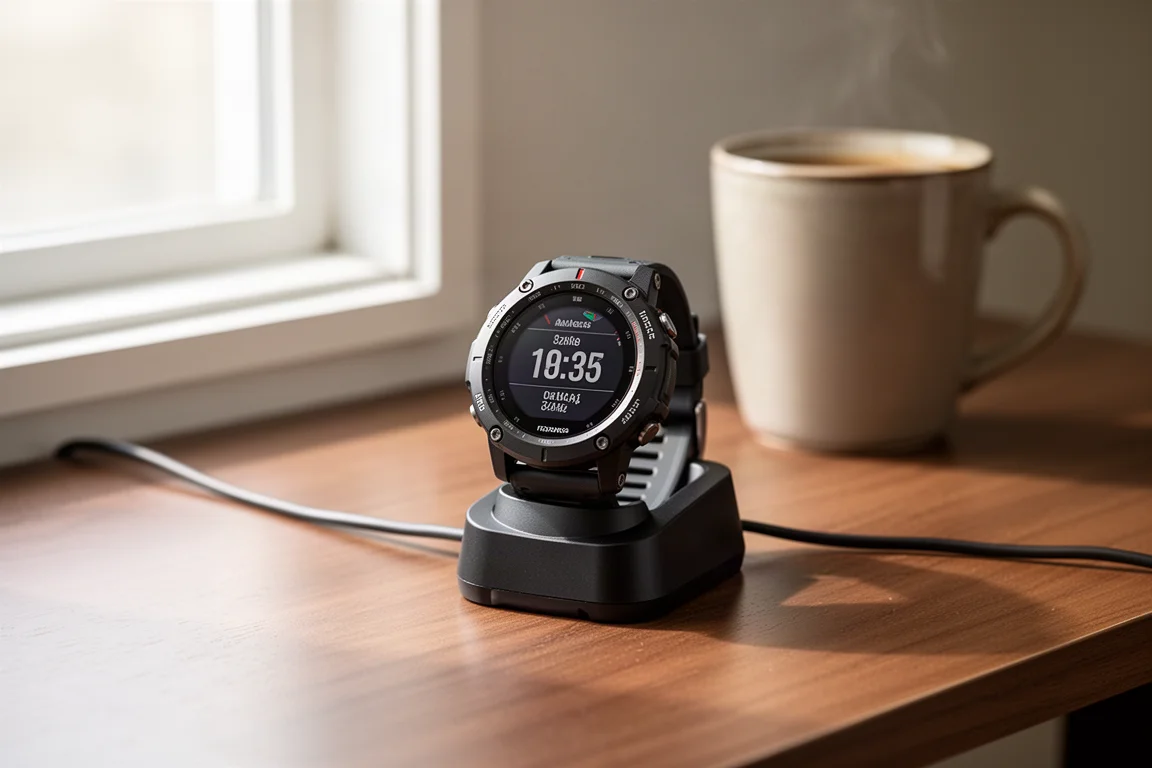
Garmin improved solar in three ways: the solar panel is 54% larger than the previous generation, the panel is more efficient, and the underlying chipset, hardware, and firmware are more battery efficient. The solar ring is consequently more visible on the watch face.
Garmin’s numbers assume three hours per day at 50,000 lux conditions. In bright, sunny environments, light GPS users may approach forever power. But if you spend a lot of time using GPS indoors, in winter, or in gloomy places, you will still be charging about as often as before.
Smaller Hardware Touches
The watch is slightly thinner than before. Button guards around the top-right start/stop button prevent jacket sleeves from accidentally pressing it during workouts, and the top strap holes gained an added protective layer. Not exciting, but genuinely functional for some users.
There are also graphical refinements throughout the interface: clearer workout summaries, new chart-style data fields that can display heart rate or elevation during activities, and long-press shortcuts from the watch face into relevant widgets. A basic first-generation Connect IQ store is now on the watch itself, letting you browse top app recommendations, though not the entire catalog.
Buying Advice
For most multisport athletes, the Fenix 7 series is easy to recommend: it is excellent at day-to-day use and sport tracking alike. The main challenge is the alternative in Garmin’s own lineup. The Epix series pairs essentially identical internals with a much better AMOLED display and consistently delivers around six days of battery life even with always-on mode and workouts. If your longest workouts are far below the Fenix’s extreme endurance ceiling and you care about display quality more than solar and the 7X flashlight, the AMOLED route deserves a hard look. Otherwise, choose your size first, then decide whether Sapphire’s multiband GPS and 32GB of storage justify the upgrade for you.
Conclusion
The Fenix 7 series is very good at nearly everything it does, with smart touches like the touchscreen’s granular controls, the 7X flashlight, free worldwide maps, and phone-based settings. Its weak points are the modest real-world gains of multiband GPS, slow map downloads, and a stamina metric that is close but not exact. As an overall package for serious training and everyday life, it remains one of the most complete sports watches available.
Product link
View more details for Garmin Fenix 7 Series
This product is mentioned in the review. Check the specifications, options, and compatibility before buying.
View more details for Garmin Fenix 7 SeriesFurther reading
Related Reviews
GPS Watches
Garmin Fenix 6S Pro Review: A Compact Multi-Sport GPS Watch
A long-term look at the 42mm Garmin Fenix 6S Pro, covering mapping, training metrics, battery life, and what to weigh before buying.
GPS Watches
Garmin Instinct 2 Solar Review: Weeks of Battery for Runners, Riders, and Hikers
A practical look at the Garmin Instinct 2 Solar, covering solar charging, multi-week battery life, training metrics, and GPS performance across running, cycling, and hiking.
GPS Watches
Suunto 9 Peak Pro Review: A Light, Long-Lasting GPS Watch After 12 Months
A compact multisport GPS watch with exceptional battery life, accurate breadcrumb navigation, and a deliberately simple interface. Here is where it shines and where it falls short.