Outdoor Watches
Garmin Epix Pro 51mm Review: Fenix-Class Battery Life With an AMOLED Screen
A practical look at the Garmin Epix Pro 51mm, from its roughly 30-day battery life and 35-hour multiband tracking to the flashlight, sensors, and upgrade advice.
Introduction
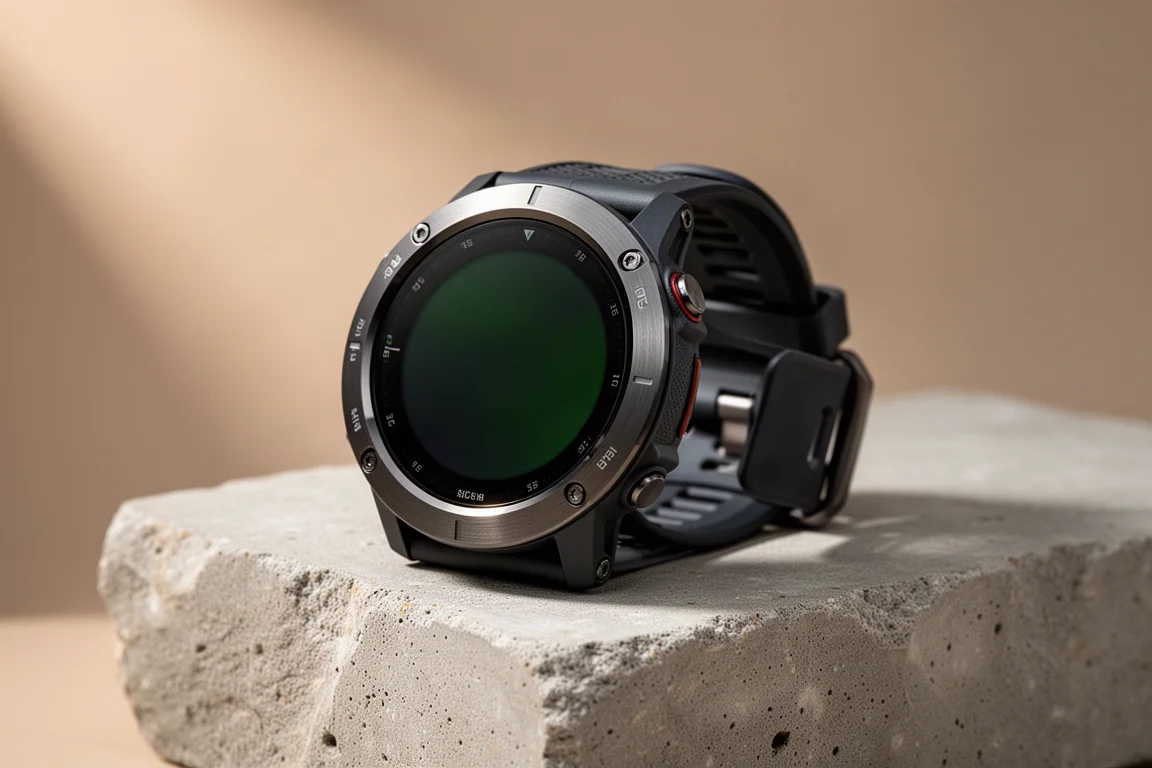
The Garmin Epix Pro 51mm answers a question a lot of outdoor athletes have been asking: can you get Fenix-style battery life without giving up a bright AMOLED display? In the largest of the three Epix Pro sizes, the answer appears to be yes. The 51mm model nearly doubles the battery life of the 47mm version while adding only a modest amount of case size, and in daily use it has delivered around 30 days in normal watch mode.
That matters most for hikers, backpackers, and anyone who tracks long days outside. This review covers what the Epix Pro 51mm does well, where it asks for a compromise, and whether it is worth the upgrade if you already own an Epix or a Fenix.
Who the Epix Pro 51mm Is For
This is a watch for people who spend long, uninterrupted hours outdoors and want their navigation on their wrist. Maps with trails loaded, full navigation tools, and the ability to plan a course ahead of time and sync it to the watch make it a practical tool rather than a fitness accessory. Routes can also be sent across from AllTrails, and course points let you mark the turns and junctions that matter. If a junction is unclear, a glance at the watch shows which way the course runs, and emergency navigation to a hospital is available on the wrist when it is needed.
It is also the natural choice for anyone who has wanted a Garmin AMOLED screen for map readability but was not willing to trade away multi-week battery life to get it.

The 51mm size suits users who prefer a larger case and are happy to accept a slightly bigger watch in exchange for the extra runtime. If a smaller footprint matters more, the 47mm version keeps the same core feature set and adds the flashlight, but it holds the same 16 days of regular use and 20 hours of multiband tracking as the earlier 47mm Epix.
Main Strengths
Battery life and screen quality are the two areas where the 51mm separates itself, and both feed directly into how the watch feels on a long trip.
Battery Life: The Headline Feature
Battery is the star here. In everyday use the 51mm has returned roughly 30 days in normal watch mode, and about 35 hours of activity tracking with multi-GNSS and multi-band enabled, which is the most precise tracking configuration available. In practice that means charging around once a week, even with a long hike every week, daily workouts, and multiple activity sessions in a single day.
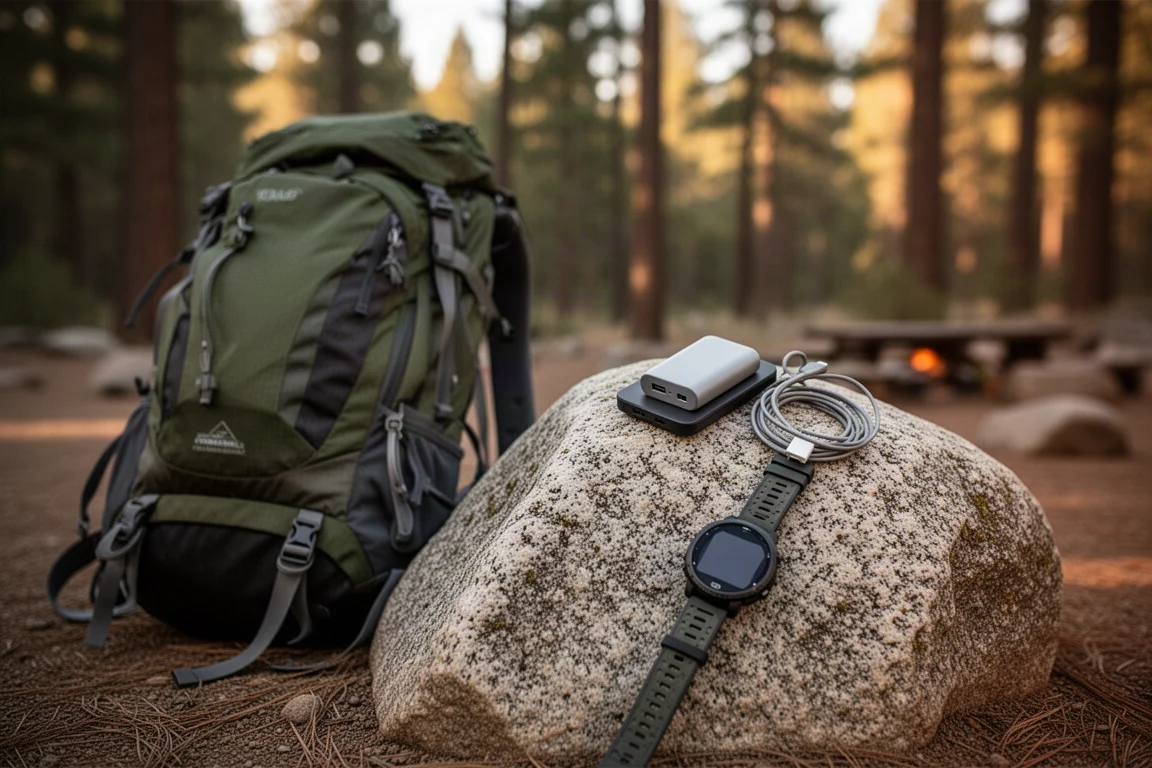
That combination is what makes the 51mm interesting. You get the precision of multiband tracking without planning your week around a charging cable, and compared with the 47mm Epix the runtime is close to double in a case that is only slightly larger.
Charging Speed and Trail Practicality
The 51mm also charges noticeably faster than the smaller Epix. About an hour on the charger brings it to roughly 75 percent, which is enough for weeks of use, and a short 10-minute top-up adds around 10 percent. That last figure matters on the trail: if the watch runs flat, a power bank and 10 minutes is enough to finish the hike with tracking and navigation intact.
Flashlight and Everyday Convenience
The built-in flashlight is genuinely useful, though it is a convenience rather than a reason to buy. It is not a replacement for a headlamp on a night hike, but it earns its place for small tasks around camp, inside a tent, or finding your way around a hotel room without waking anyone. It is better to have it than not.
Heart Rate and Sensors
The Epix Pro uses a newer heart rate sensor and adds ECG, but in side-by-side use the readings have matched the earlier Epix closely, and no meaningful difference in heart rate performance has shown up. For hikers, ECG in particular adds little to the day-to-day experience.
The rest of the experience is familiar: the same mapping and navigation toolset, the same outdoor focus, and the same reliability in the field. If you liked the Epix before, this is the same watch with a bigger battery.
Things to Consider Before Buying
The main consideration is cost. The Epix Pro sits around the $1,000 mark, and if you already own an Epix Gen 2 and are content with its battery life, there is little in the Pro that changes the everyday experience beyond the flashlight and the larger battery.
Size and Battery Trade-Offs Across the Range
The Epix Pro comes in three sizes, each with its own battery figures, which is how the Fenix line has worked for years. The 47mm version matches the earlier 47mm Epix exactly at 16 days of regular use and 20 hours of multiband tracking, with the flashlight as the addition. Step up to 51mm and the runtime nearly doubles in a case that is only marginally bigger.
Buying Advice: Upgrading From an Epix or a Fenix
If you are happy with the battery life of your current Epix, there is no strong reason to move to the Epix Pro 51mm. If battery life is the thing you want more of, the 51mm is the version that delivers it, and that alone is a sensible reason to upgrade. Selling an older Epix to offset part of the cost is a practical way to make the switch.
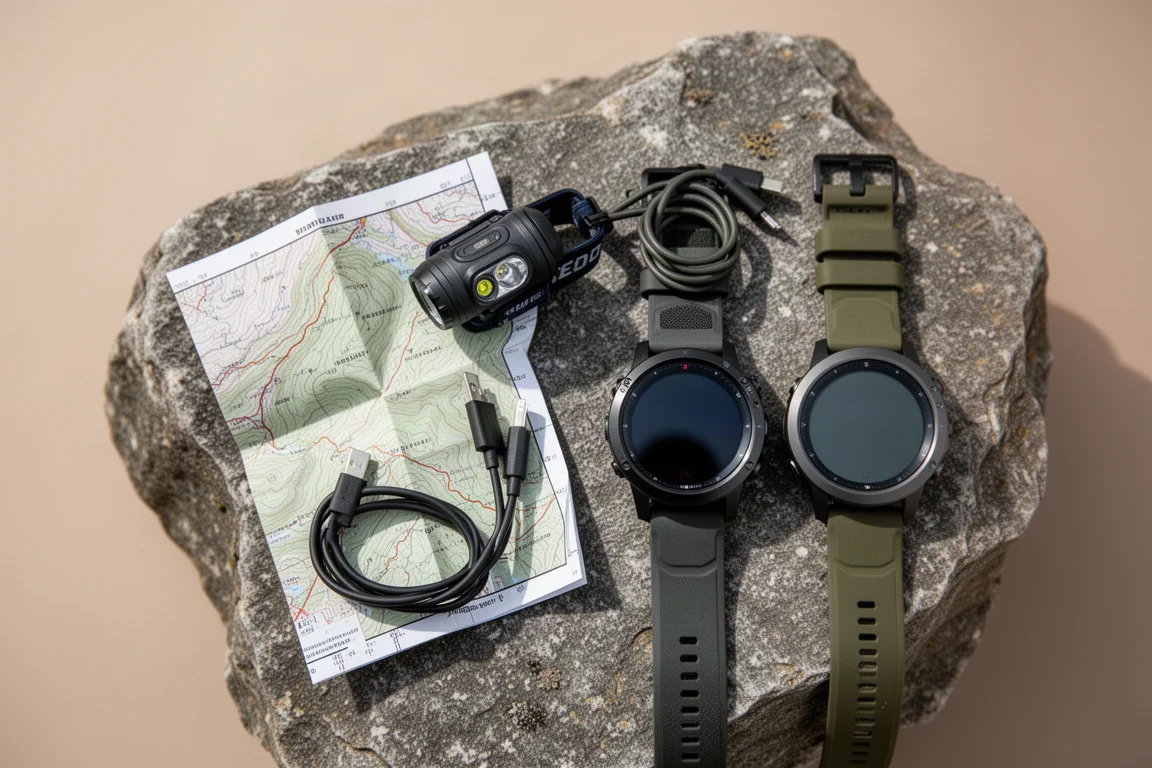
The more compelling case is for Fenix owners. On the large Fenix 7X, and with solar charging set aside, battery life is broadly comparable to the Epix Pro 51mm. What you gain with the Epix Pro is the screen: a higher pixel count and a wider color range make maps noticeably easier to read at the same screen size and zoom level, which is a real benefit when you are navigating. Against the Fenix 7 Pro Solar and Sapphire Solar editions, the 51mm Epix Pro outlasts them once solar charging is taken out of the comparison, while offering the better display. For anyone who wants a stronger navigation experience without charging every few days, that combination is worth the move.
Conclusion
The Garmin Epix Pro 51mm is at its best when battery life is the priority. Around 30 days in normal watch mode, about 35 hours of multiband tracking, and fast top-ups make it a watch that disappears from your charging routine, and the AMOLED display makes maps easier to read than the transflective screen on the Fenix. The flashlight is a nice extra rather than a headline feature, and the newer heart rate sensor and ECG are unlikely to change anything for hikers.
If you already own an Epix and are satisfied with its runtime, there is little reason to switch. If you want Fenix-class endurance with a better screen, or you are moving up from a large Fenix and want clearer maps without charging every few days, the 51mm is the version to choose.
Product link
View more details for Garmin Epix Pro 51 mm
This product is mentioned in the review. Check the specifications, options, and compatibility before buying.
View more details for Garmin Epix Pro 51 mmFurther reading
Related Reviews
Outdoor Watches
Garmin Fenix 7 Solar vs Garmin Epix: Which Outdoor Watch Fits Your Adventures?
Two top-end Garmin watches share the same build and feature set. The screen technology decides battery life, daylight readability, and how much detail you can pull from a map.
Outdoor Watches
Apple Watch Ultra for Hiking: How It Compares to the Garmin Epix and Fenix
Six months of trail use show what the Apple Watch Ultra does well on hikes, where navigation falls short, and when a Garmin Epix or Fenix is the better fit.
Outdoor Watches
Apple Watch vs Garmin: Which Outdoor Watch Should You Buy?
A practical comparison of Apple Watch Ultra, Apple Watch SE, the Garmin Fenix and Epix lines, and the two apps that add offline trail maps to an Apple Watch.