E-Cargo Bikes
Front Loader vs Rear Loader E-Cargo Bikes: Riese & Müller Load 75, Load 60 and Tern GSD Compared
How front-loading and rear-loading electric cargo bikes differ in everyday use, using the Riese & Müller Load 75 and Load 60 and the Tern GSD as examples.
Introduction
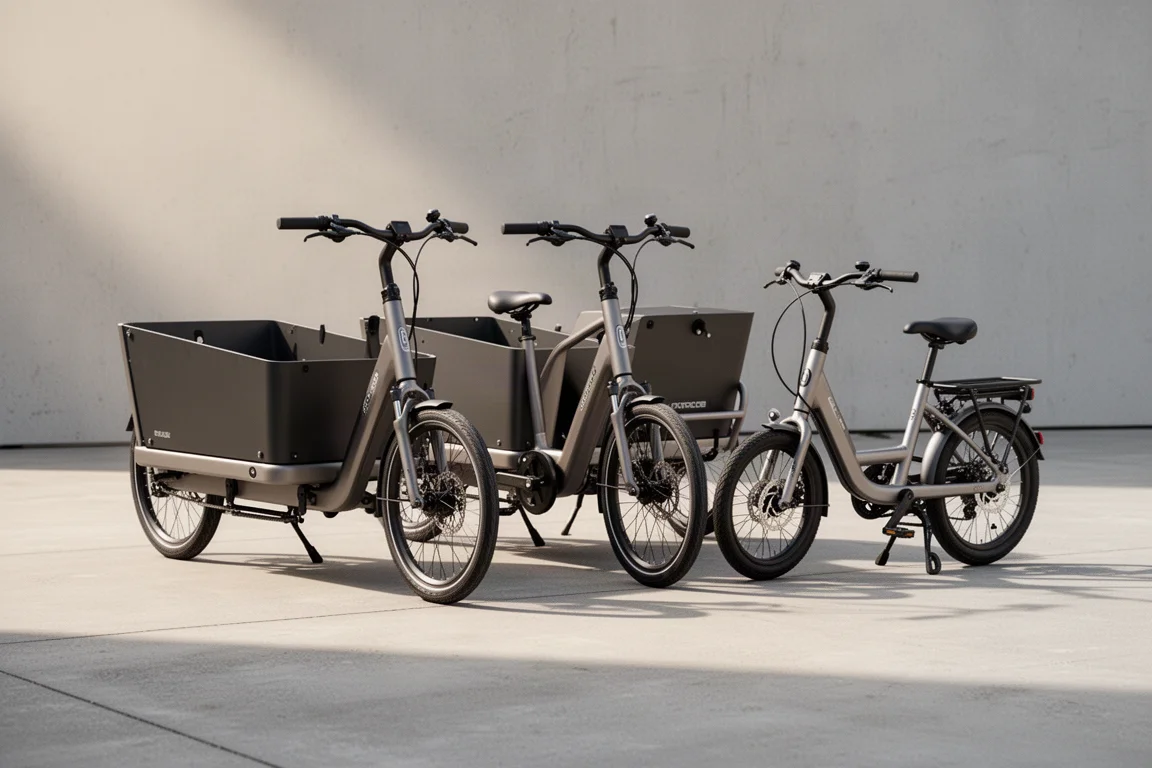
Electric cargo bikes have become one of the most interesting corners of cycling, and the interest is easy to understand. These are bikes designed from the ground up to move real loads, whether that is a weekly shop, several children, or work equipment such as tools or camera gear. The appeal is straightforward: they let you replace a lot of car journeys with something far more enjoyable.
Cargo bikes broadly split into two families. On a front loader, the main load-carrying capacity sits ahead of the rider. On a rear loader, it sits behind. The three bikes in this comparison cover both approaches: the Riese & Müller Load 75 and the slightly smaller Load 60 represent the front-loading design, while the Tern GSD is a rear loader.
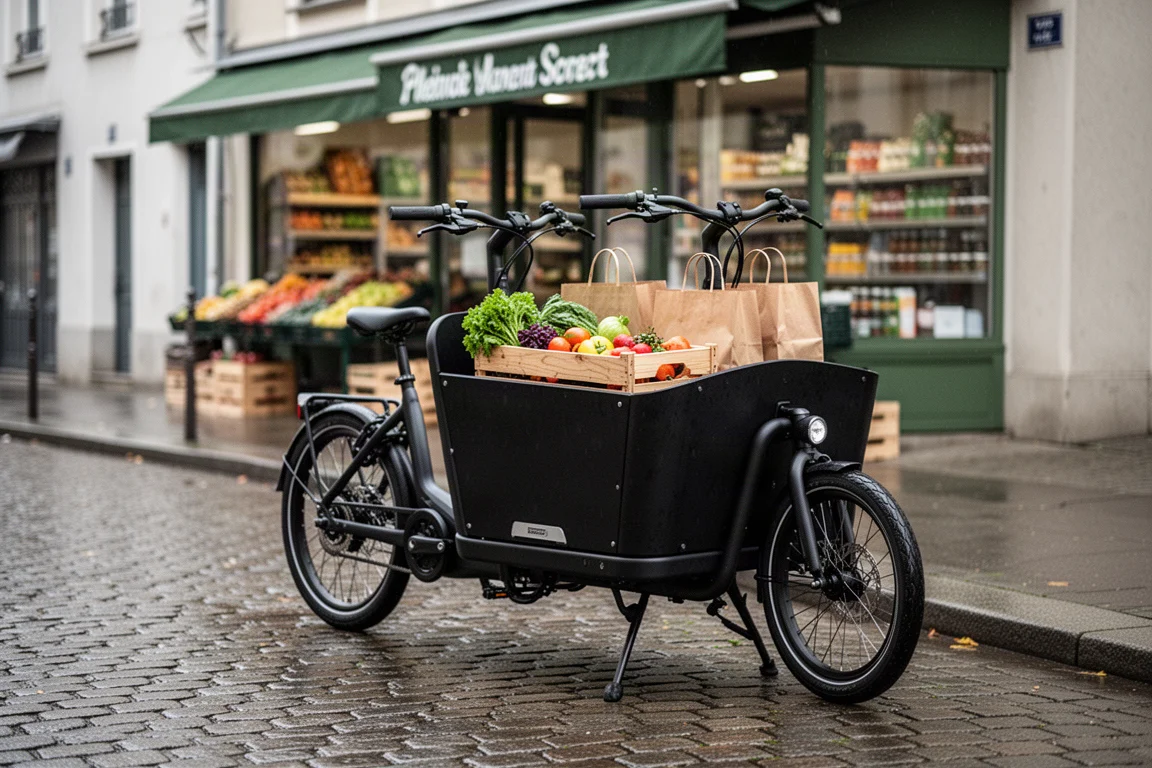
This guide is a comparison rather than a verdict. The two designs are different enough that each has its own strengths, and the aim here is to make it easier to work out which one suits the way you ride, carry and store a bike.
What Every E-Cargo Bike Here Has in Common
Before the differences, it is worth noting how much these bikes share. All three use Bosch Cargo Line motors, which in turbo mode amplify the rider’s own power by 400 percent, so climbing with a full load is realistic rather than a test of willpower. Large batteries are part of the package, which means plenty of kilometres between charges.
Practicality is built in rather than optional. Integrated lights run off the main battery, full mudguards are fitted, and security features are included, though a good lock is still worth carrying. Both designs are rated for the same maximum gross weight of 200 kg, a figure that includes the rider, the bike itself and the cargo.
If a genuinely oversized load comes along, either type of bike can take a trailer, which bolts straight on.
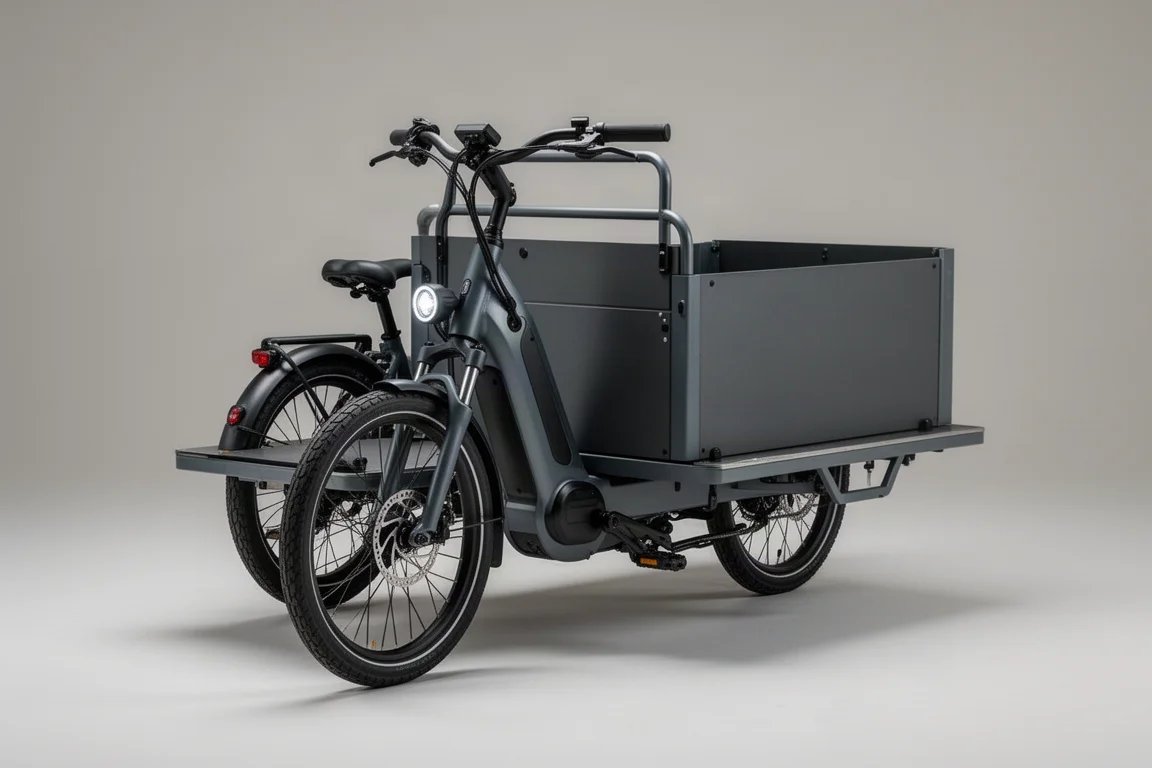
Riese & Müller Load 75: The Full-Size Front Loader
Riese & Müller is a German brand with a broad catalogue of electric bikes, most of them urban, and two of them front-loading cargo bikes: the Load 75 and the slightly smaller Load 60. The Load 75 is the larger of the two and the clearest illustration of what the front-loading layout does well.
The strength of a front loader is not draping oversized objects over the top. It is having a large, solid place to put things, much like the boot of a car. Boxes with higher sides are available, and lockable lids are worth looking out for if cargo will sometimes be left on the bike.
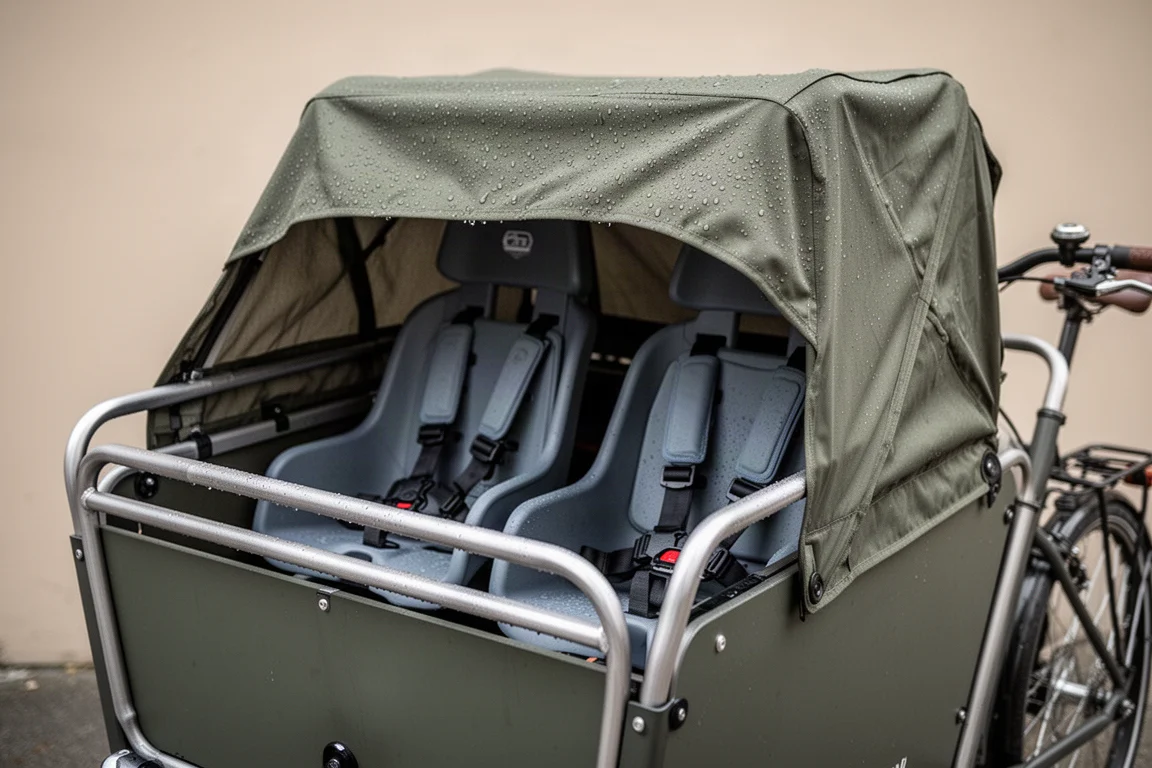
The front compartment is also a genuinely good place to carry children. The setup here takes two belted child seats with harnesses, and a front loader can accommodate up to three children depending on how many you are carrying. In practice, around 125 to 130 cm tall appears to be the realistic upper limit. A canopy can be fitted over the top to keep children out of rain, wind and snow.
There are trade-offs to weigh. A front loader is a long bike: this one measures roughly 253.4 cm, against about 1.8 m for a typical city bike. It is not harder to ride for that reason, although it does feel different from a standard bike at first and the turning circle is larger. The load sits low, which keeps the centre of gravity down and the bike stable. On poor cycling infrastructure you may occasionally meet a section designed to stop mopeds, though those seem to be increasingly rare.
Riese & Müller Load 60: The Smaller Front Loader
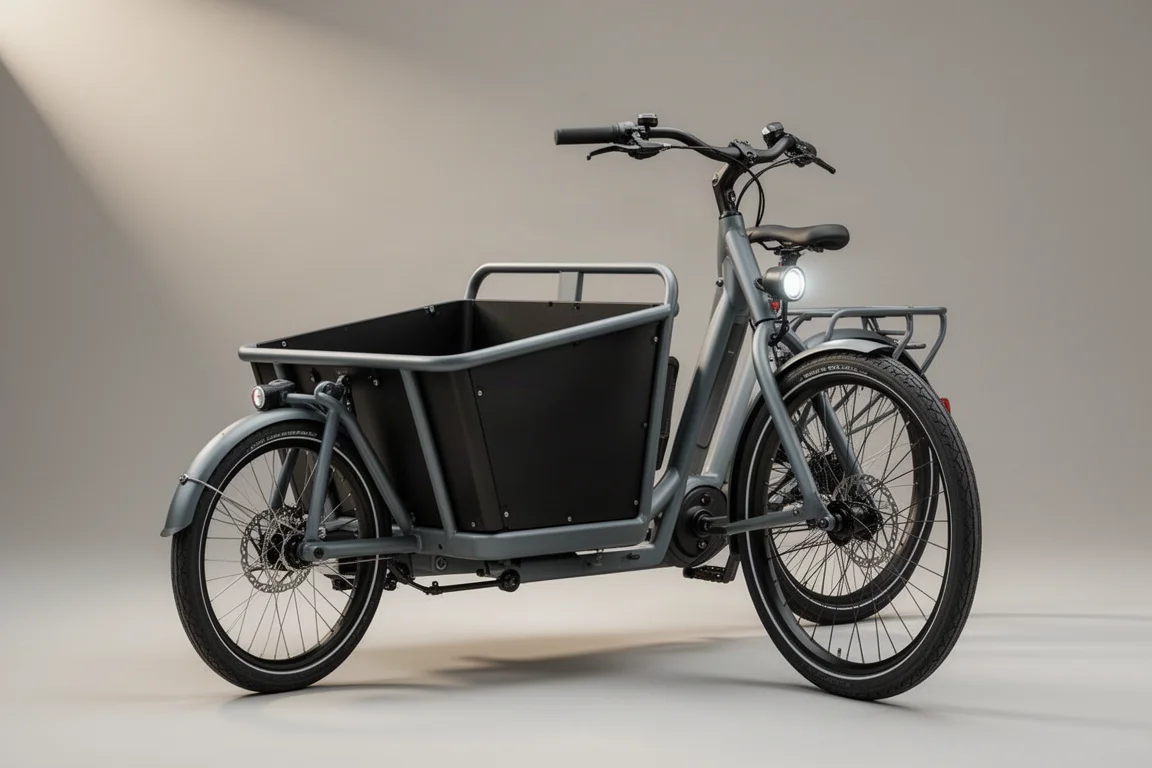
The Load 60 is the second front-loading model in the same range and the slightly smaller of the two. It shares the defining feature of the design: a solid load platform ahead of the rider rather than a rack behind them.
For anyone drawn to the front-loading idea but who does not need the full-size platform of the Load 75, the Load 60 is the more compact route into the same format. It comes from the same brand, runs on the same Bosch Cargo Line assistance, and works within the same 200 kg gross weight limit as the rest of the group.
Tern GSD: The Rear Loader Built Around Small Wheels
The Tern GSD has become something of an icon among rear loaders, and it is not a typical one. It is built around 20-inch wheels, which keeps the whole bike compact, and it is relatively light for a cargo bike, which matters if access to your storage is awkward.
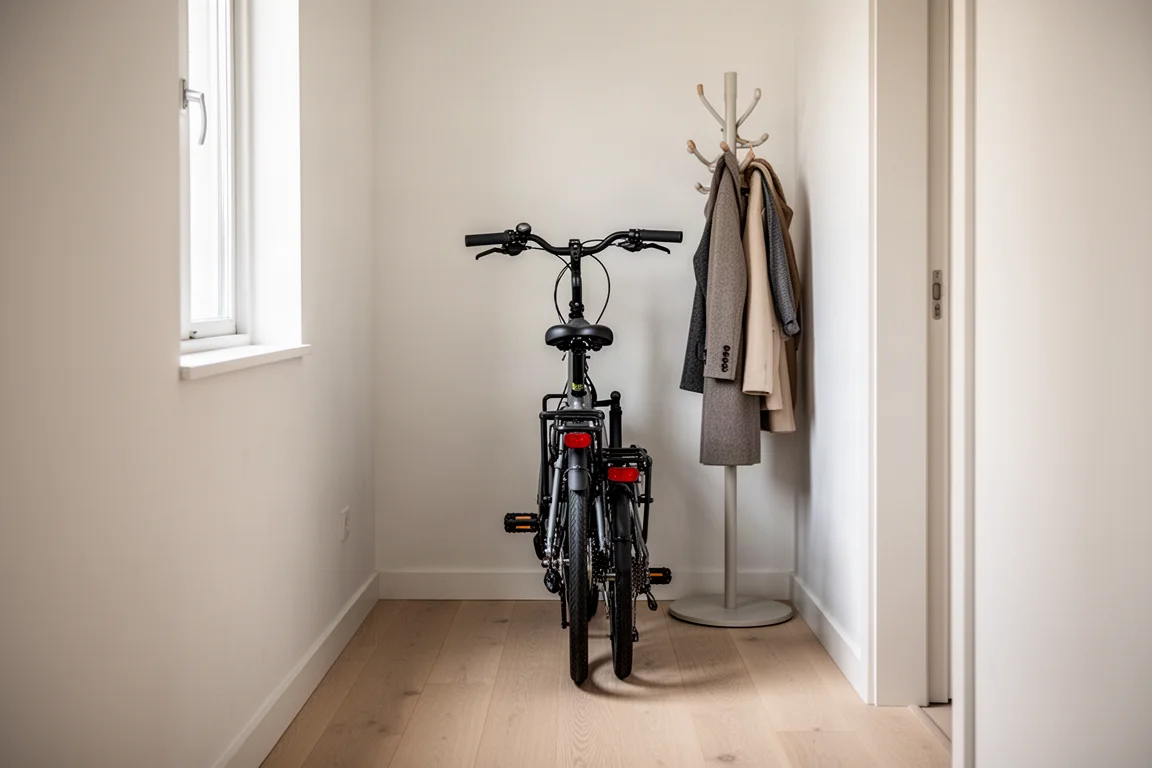
Storage is where the GSD makes its strongest case. The handlebars fold down, the saddle drops, and the bike can be stood on its end, a real advantage in an apartment where floor space is scarce.
What it does not offer is one big solid compartment. Instead, capacity is assembled from several parts. The Clubhouse on the rear is designed to carry two older children safely, and a crate can be fitted there to create some solid space, with panniers still fitting underneath at 52 litres per side. A Storm Box accessory sits on top of the panniers and brings the total in one place to 160 litres, while the front rack takes another 20 kg.
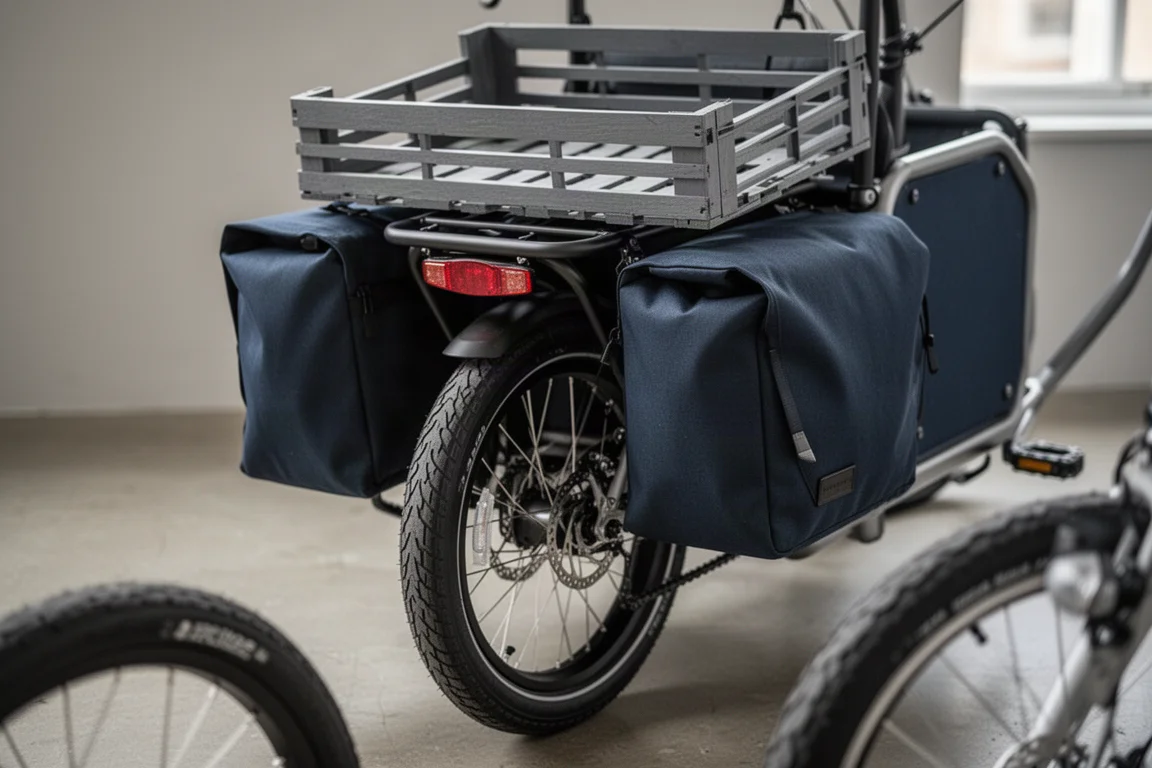
For younger children, or for children who cannot be trusted to sit still, two dedicated child seats can be fitted and strapped securely. The riding position can be a little taller than on a standard bike, and because the dimensions match a normal bike, the GSD feels more familiar to ride than a long front loader. The trade-off is capacity: this rear loader carries two children where a front loader can take three, and the front compartment remains better suited to large, bulky items.
Front Loader or Rear Loader: Questions to Ask Before You Buy
Neither design is inherently better than the other, and that is a good thing. Choice and variety matter because everyone’s needs differ, and the honest answer is that the right bike depends on your circumstances rather than on the layout itself.
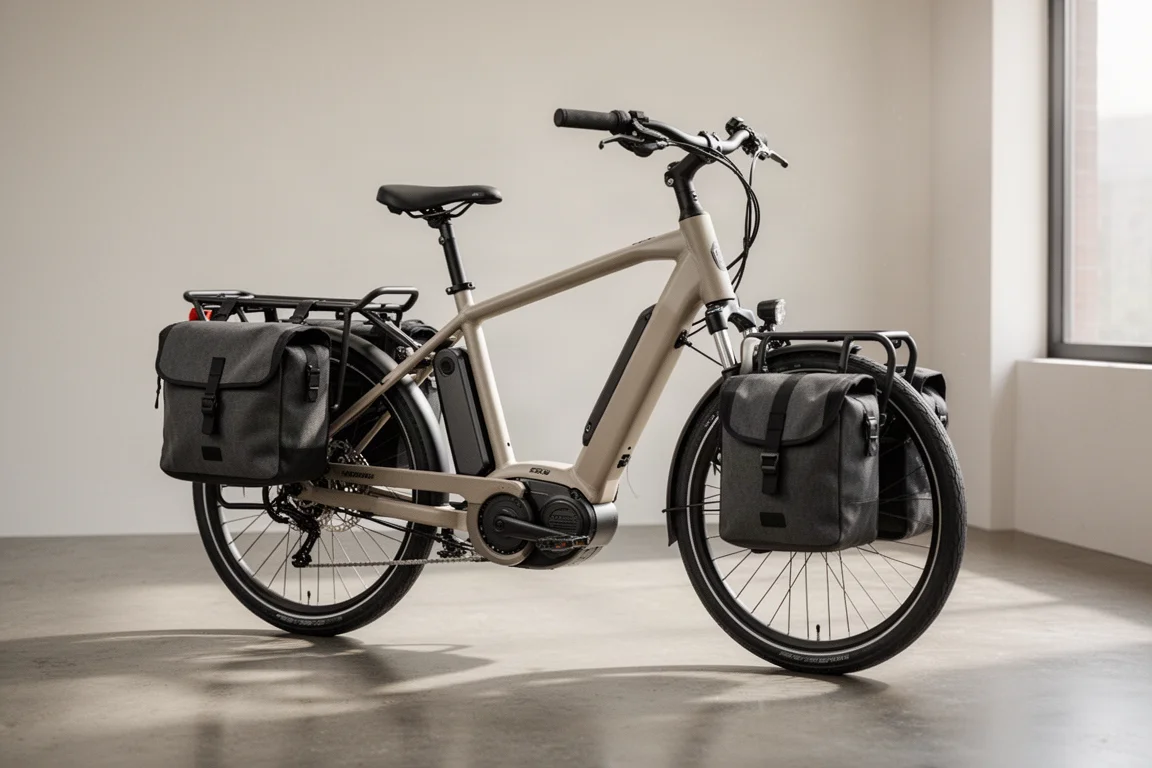
Start with storage. Do you have a garage or a dedicated space that can take a longer bike, or do you live in an apartment where every centimetre counts? Then think about the load: how much do you actually want to carry, and what shape is it? Flat, bulky items suit a front compartment, while a modular rear setup handles a mix of children, panniers and crates. If children are part of the picture, how many are there and how old are they?
Buying Advice: Storage, Cargo, and Daily Use
The practical details deserve as much attention as the layout. If you go for a front loader, look for boxes with higher sides and lockable lids, and consider a canopy if children will be riding up front. If you go for a rear loader, think through the accessory combinations, because that is where the usable capacity comes from.
Whichever design you choose, mudguards, integrated lighting and a motor strong enough for a loaded climb are the features that make a cargo bike workable day to day, and all three of these bikes cover those points. A trailer remains an option on either layout when a genuinely oversized load comes along.
Conclusion
There is no single answer to the front loader versus rear loader question. The Load 75 and Load 60 make the case for a low, solid compartment ahead of the rider, while the Tern GSD shows how much a compact rear-loading bike can do with the right accessories. Match the bike to your storage, your cargo and your family, and the rest tends to look after itself. Cargo bikes of every kind are genuinely fun to ride around town, and that is arguably the most important quality of all.
Further reading
Related Reviews
E-Cargo Bikes
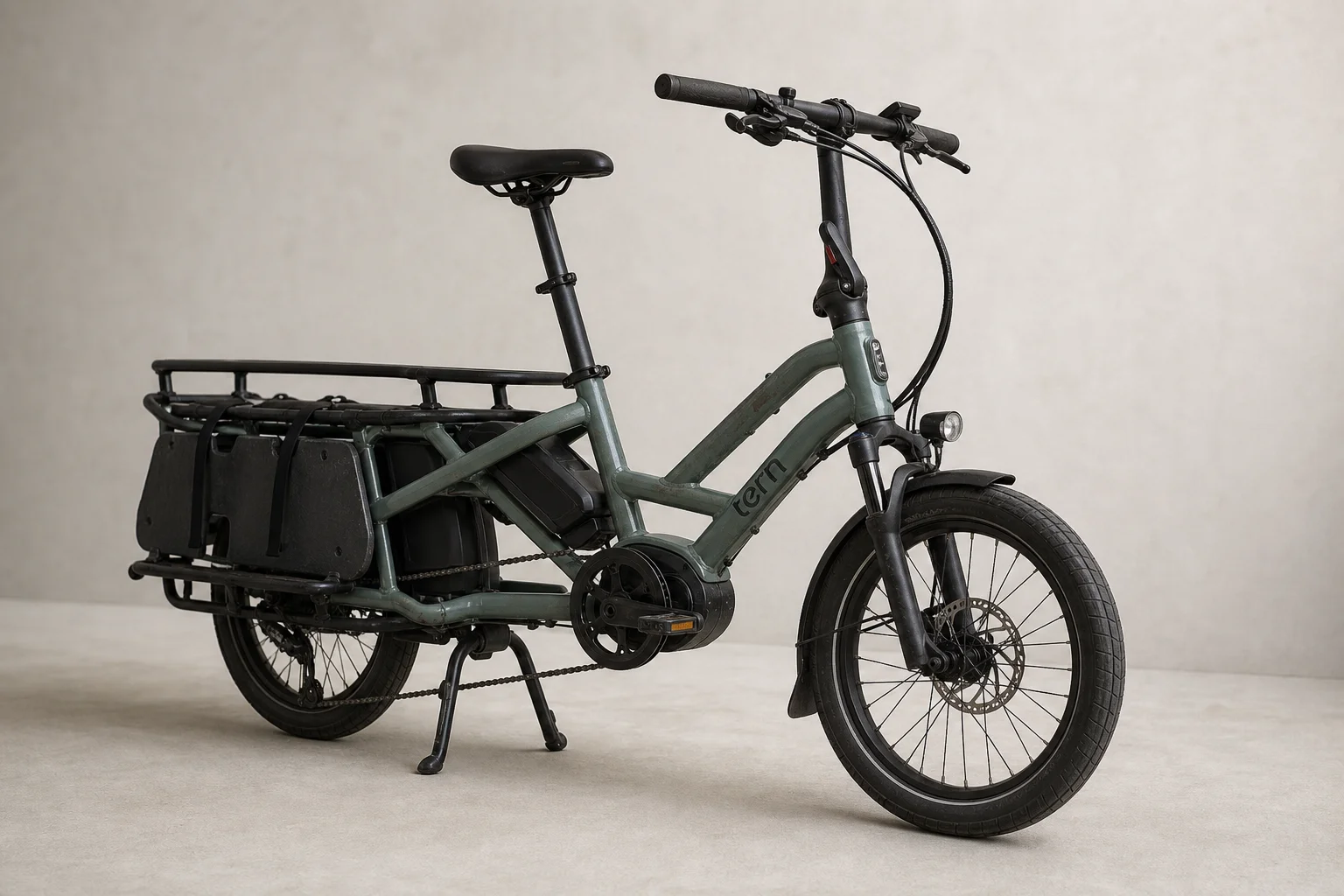
Living with an E-Cargo Bike: A 5-Year Review of the Tern GSD
After five years and thousands of miles with a Tern GSD e-cargo bike, here's what it's really like to replace a second car with an electric cargo bike, including costs, practicality, and whether the savings justify the investment.
E-Cargo Bikes
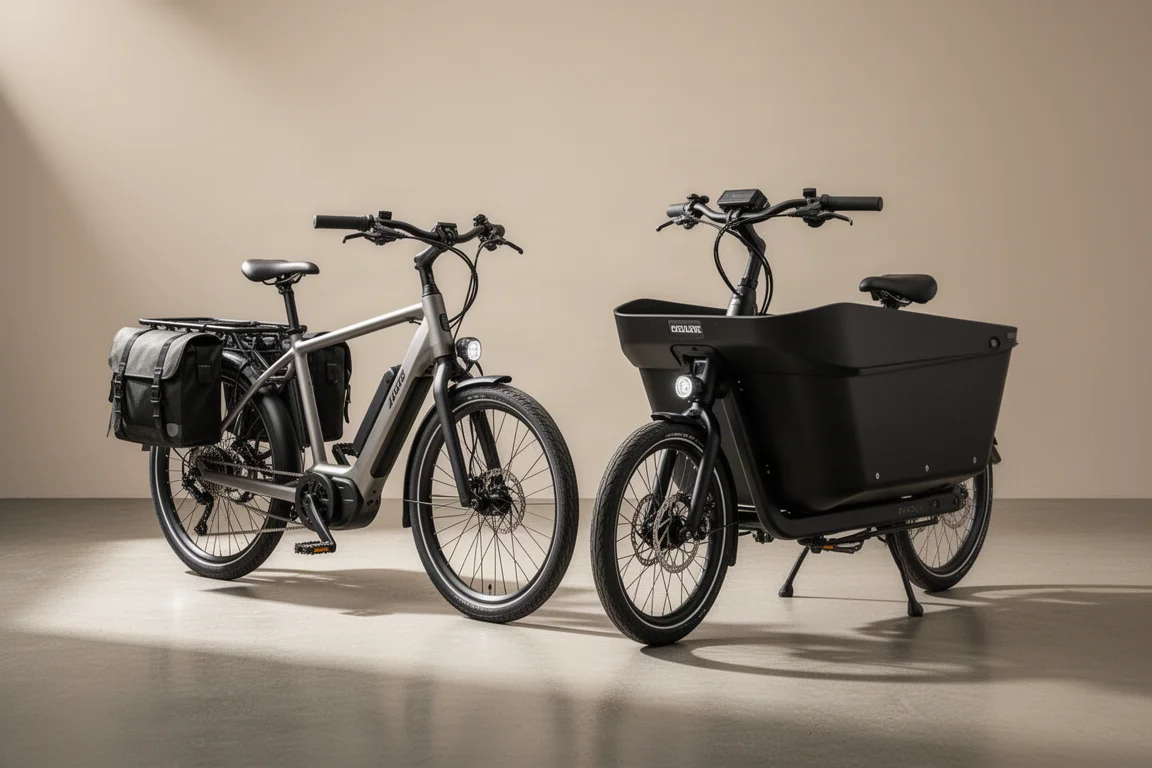
Longtail vs Front Loader E-Cargo Bikes: Tern GSD and Riese & Müller Load 5 Compared
A practical comparison of two electric cargo bike types: the longtail Tern GSD and the front-loader Riese & Müller Load 5, with insights on learning curve, capacity, and real-world riding.

Backpacking Gear
Building a 10 lb Base Weight: An Ultralight Backpacking Gear List
A practical walkthrough of the ultralight pieces behind a 10 lb base weight, from a 765 g pack and a roomy one-person tent to a full camp chair and a dependable water filter.