Studio Monitors
Four 8-Inch Studio Monitors Compared: What Accuracy Actually Looks Like
A close look at four 8-inch powered studio monitors, from a well-engineered pair that measures flat to a flawed design that cannot do the job it is sold to do.
Introduction
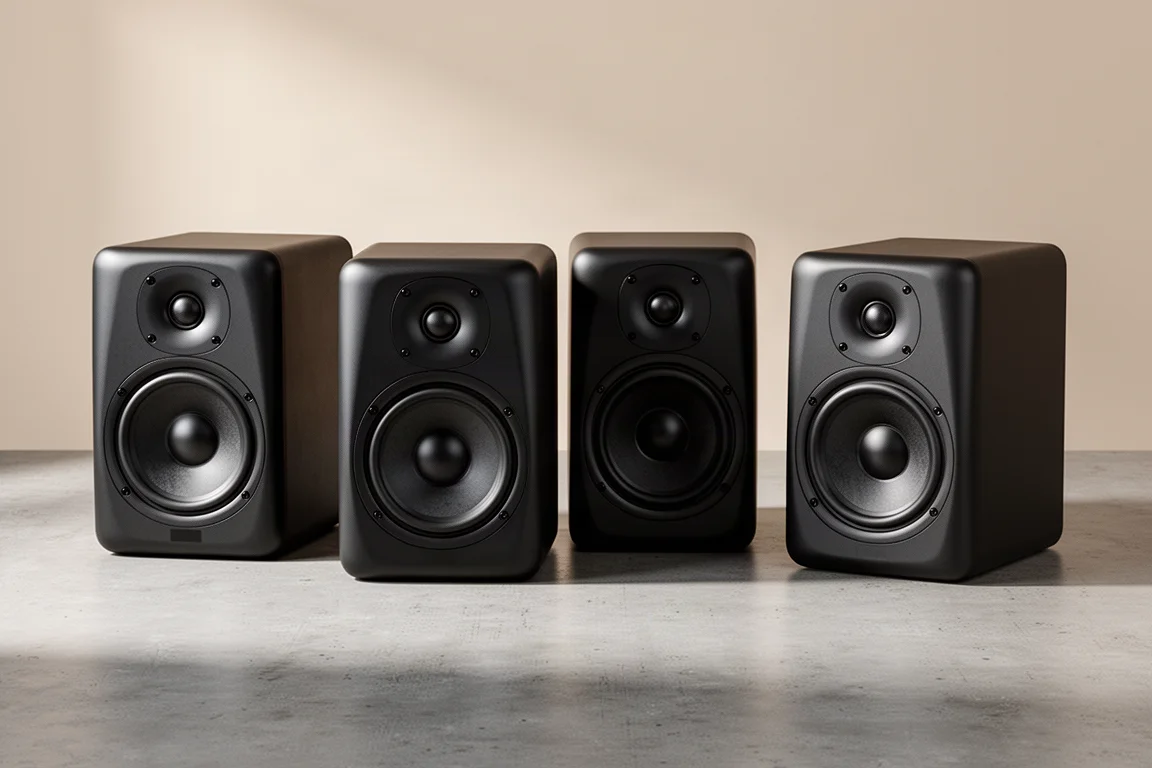
Powered studio monitors are not interchangeable, and the gap between a well-engineered pair and a flawed one is wider than most buyers expect. Four 8-inch two-way powered monitors illustrate that gap clearly. The PreSonus Eris E8 XT and the Kali Audio LP-8 V1 deliver unusually flat, well-behaved measured performance, the Monoprice SV28 gets close on a very small budget, and the Behringer NEKKST K8 shows what happens when a design goes wrong.
This guide is not about brand loyalty. It is about what measurements and listening reveal about each model, what that means for anyone producing music or spoken content, and which of these speakers still make sense to buy today.
Only one of the four, the Behringer NEKKST K8, remains in production. The others have been discontinued or replaced, which is why this comparison works best as a lesson in what to look for rather than a simple shopping list. Where a current successor exists, it is worth knowing that too.
What Separates an Accurate Monitor from a Flawed One
Home audio speakers are allowed to be coloured. A gentle tilt, a little extra warmth, or a soft treble roll-off can make music enjoyable even when the response is not strictly accurate. A studio monitor does not get that latitude. Its job is to reproduce what goes in as faithfully as possible, because the person mixing has to hear the problems in a recording before anyone else does.
If a monitor colours the sound, the mix gets corrected in the wrong direction. A mix balanced on a speaker with a broad boost in the upper midrange will end up sounding recessed and dull on a neutral system, and the opposite is true of a speaker with a scoop in the same region. The flaws travel with the recording.
The measurable traits that matter most are straightforward. A flat on-axis response and a flat listening window come first. Just as important is that the off-axis response tracks the on-axis response closely, because that consistency is what makes a speaker EQ-able and gives it a stable tonality at different listening positions. Drivers should hand over to one another with a smooth slope rather than overlapping, since overlap creates phase conflicts right where human hearing is most sensitive. Low self-noise matters in nearfield use, and useful bass management makes a monitor easier to integrate with a room. As a control, all four monitors were compared against a custom passive reference speaker with a very flat measured response and orderly directivity.
PreSonus Eris E8 XT: Accuracy and Build Quality
The Eris E8 XT is the strongest all-round performer of the four. Measured performance is very accurate without being perfect: the listening window and on-axis response are both very flat, the directivity index is well controlled, and the small deviations that do appear are minor. Put simply, what goes in is close to what comes out.
That level of engineering is uncommon at this price. Build quality is solid, self-noise is mild enough to stay unobtrusive in a nearfield setup, and bass management allows a highpass around 80 or 100 Hz, which helps when the monitor is paired with a subwoofer or used in a small room.
Left and right units also measure consistently with one another, and that matched amplitude response translates into more stable stereo imaging. It is the kind of speaker that stays easy to trust across long sessions.
The Eris E8 XT has been discontinued in favour of a newer version of the same model, so buyers should expect the successor rather than the original at retail.
Kali Audio LP-8 V1: Flat Response, Sensible Price
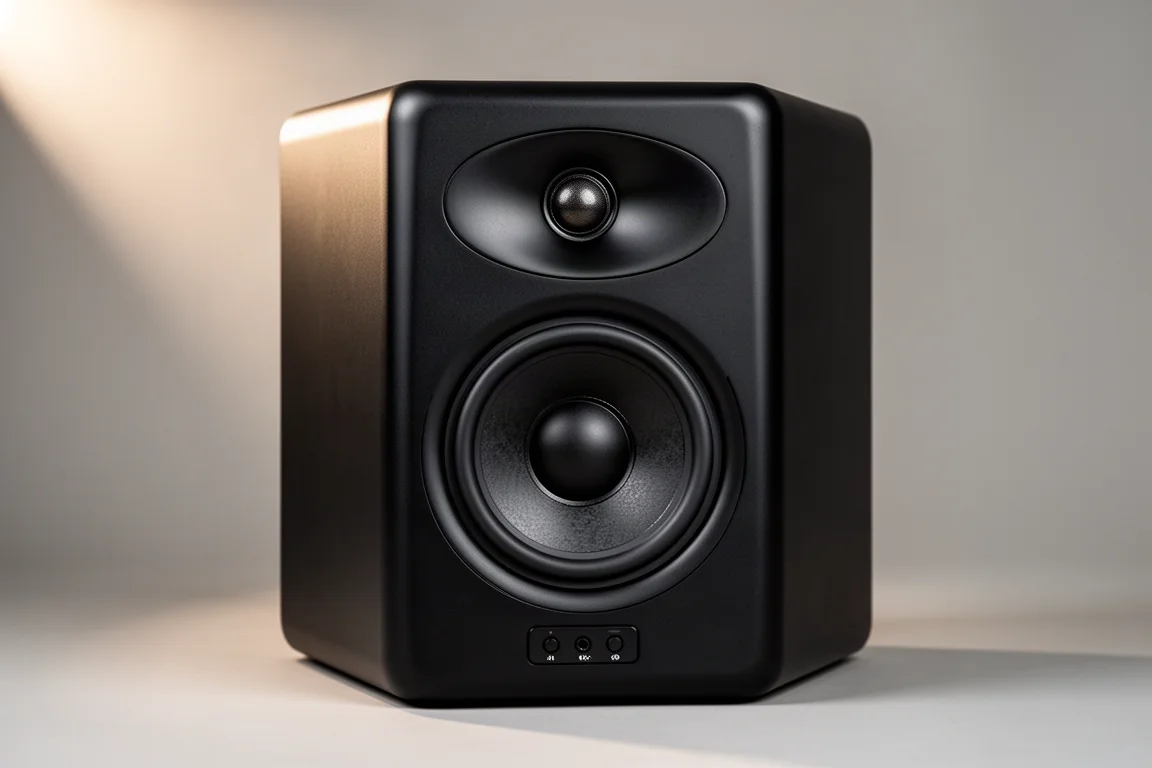
The LP-8 V1 is the other genuinely neutral monitor here. Its response is beautifully flat, with a small dip near 900 Hz that is most likely a port resonance and a modest rise around 15 kHz that appears to be a deliberate tuning choice. That last detail is largely academic, since content at 15 kHz sits beyond the range most listeners can hear.
Off-axis behaviour is orderly, which means the speaker responds well to correction if a room demands it. It is also a sensibly priced monitor for the performance on offer, and its measurements hold up against models costing considerably more.
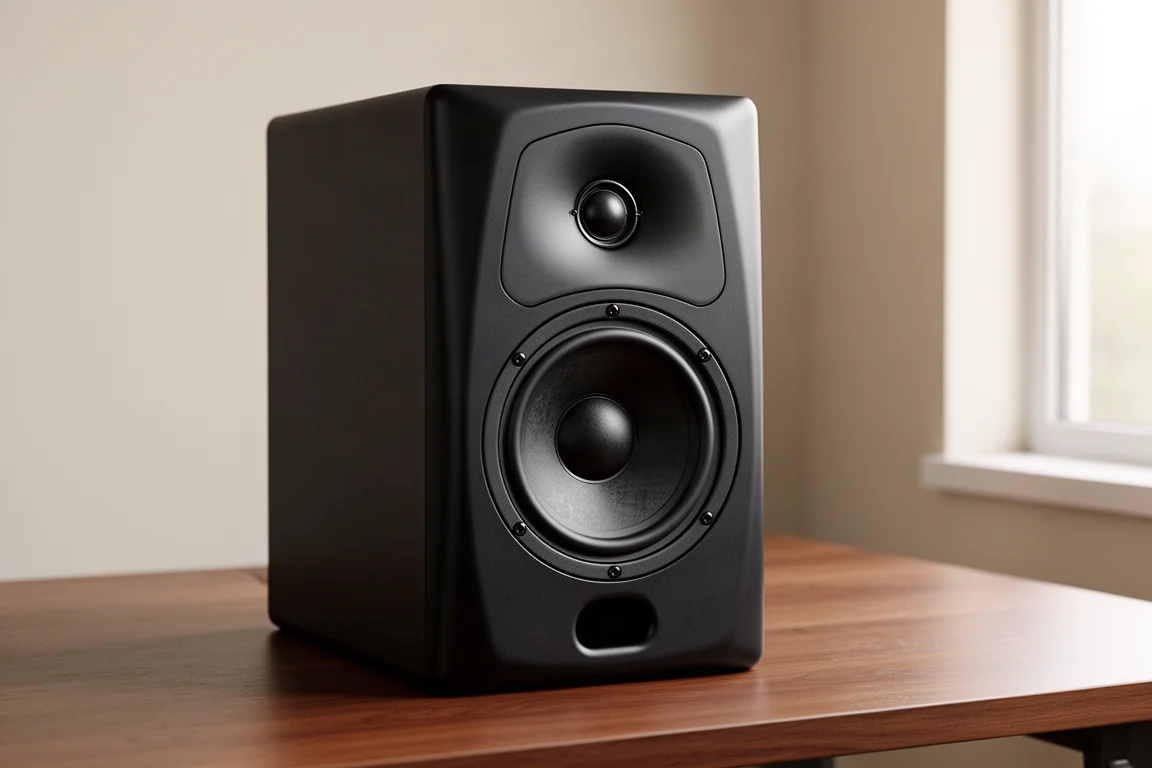
Kali Audio has since moved on to the LP-8 V2, a revision that brings the noise floor down further. Buyers shopping today will find the newer version, and the V1 remains relevant mainly as a reference point.
Monoprice SV28: Affordable but Coloured
The SV28 is the budget option and, for a pair costing roughly $250 to $300, its measurements are better than the price suggests. Off-axis response correlates well with on-axis response across most of the range, the speaker plays loud, and the tonality stays reasonably consistent as you move around the room. With corrective EQ it can be made to behave.
The problem is a broad, high-Q peak centred around 1 kHz. It is audible, and it sits in the range where speech and vocal presence live. Mixed on the SV28 without correction, a recording that sounds natural on the speaker will sound recessed in that region on a neutral system.
High frequencies are also a little recessed compared with the rest of the response, which adds to the sense that something is missing at the top end.
For casual content, hobby projects, or streaming where nothing critical rides on the result, the SV28 is workable. For commercial work it is not accurate enough, and a low-Q filter to tame that 1 kHz peak is close to essential if the speaker is used at all. The model has also been off the market for some time, so availability is limited.
Behringer NEKKST K8: Where the Design Goes Wrong
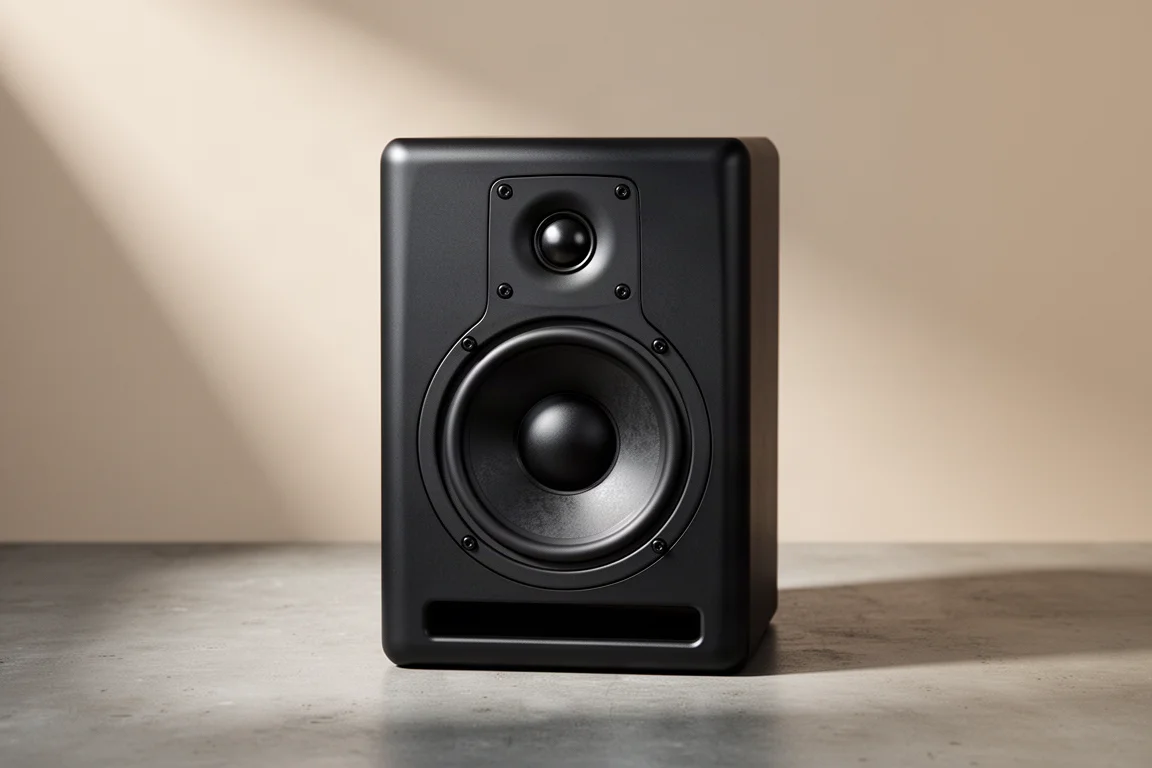
The NEKKST K8 is the cautionary example, and it is the only one of the four still on sale, at around $400. Its measured performance shows problems in every curve: on-axis response, listening window, early reflections, and directivity index all deviate substantially from neutral.
The clearest cause is driver integration. The woofer extends well into the tweeter’s band, and the two overlap heavily between roughly 2 and 3 kHz instead of crossing over with a gentle slope. That overlap produces phase conflicts and a cluster of peaks and dips in the most sensitive part of the audible range. Both left and right units measured similarly, so this is not a single defective sample.
The consequences are easy to hear. Vertical response is inconsistent, with no listening axis that sums cleanly, so there is no height at which the speaker sounds correct. Horizontal response is similarly uneven, and because the off-axis curves do not track the on-axis curve, no amount of EQ can fix the tonality.
In listening, the K8 has a cupped, horn-like colouration, pronounced sibilance on the “sh” and “ch” sounds, a narrower soundstage than a neutral reference, and overemphasised snares, claps, and percussion. Clarity suffers overall.
None of that makes the speaker unlistenable. Music can still be enjoyed on it, and it is a more pleasant listen than most soundbars. But as a tool for producing or mixing content, it cannot do the job it is sold to do, and mixes made on it will not translate to other systems.
Buying Advice
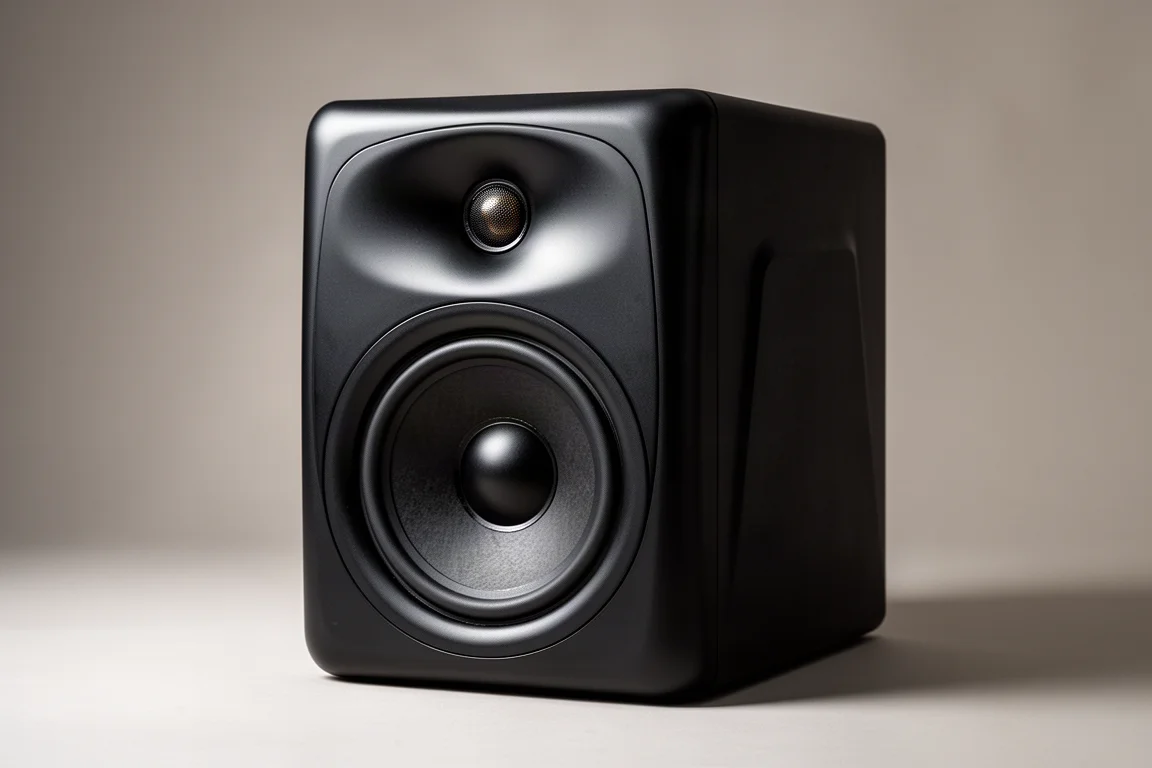
The lesson from this group is that studio monitors vary enormously, and that buying blind is a real risk. Measurements are the most reliable indicator of tonal accuracy available, because an initial listening session can easily miss problems that only appear with particular material or at particular listening positions. Third-party measurements are worth seeking out before committing to any monitor, and a return window is worth as much as a spec sheet.
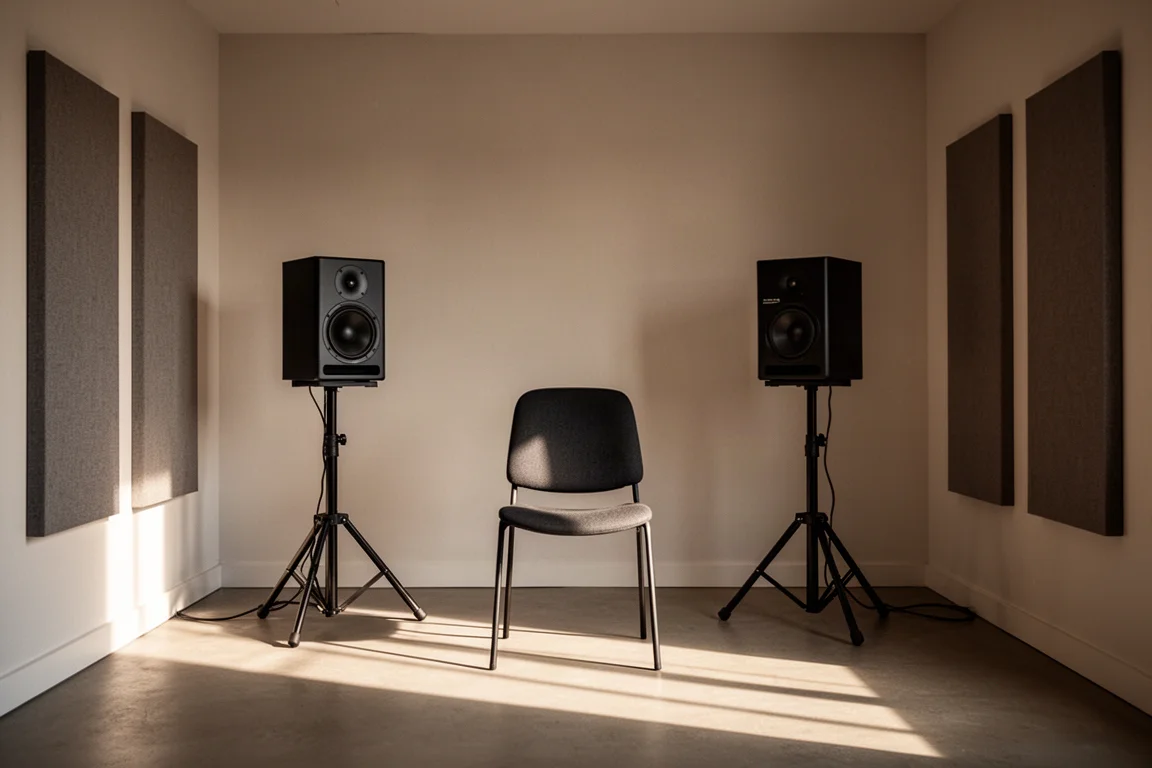
Among these four, only the NEKKST K8 is still in production, and its measured performance makes it hard to recommend for anything beyond casual listening. The Eris E8 XT and the LP-8 V1 remain the models worth emulating when shopping, and both lines have current successors that carry the same engineering philosophy forward. Buyers on a very tight budget should weigh the Monoprice SV28’s low price against the correction it requires.
It also helps to be honest about the work being done. Casual content tolerates a coloured monitor far better than commercial release material does, and a speaker that flatters a casual mix is not necessarily a speaker that will flatter a serious one.
Conclusion
Four 8-inch powered monitors, four very different levels of accuracy. The PreSonus Eris E8 XT and the Kali Audio LP-8 V1 show what careful engineering can achieve at a sensible price, the Monoprice SV28 shows how close a budget speaker can get before a single broad peak lets it down, and the Behringer NEKKST K8 shows how much goes wrong when drivers are allowed to fight each other. For anyone building a room to mix in, that distinction is the whole point.
Further reading
Related Reviews
Studio Monitors
ADAM Audio A8H Review: A Three-Way Studio Monitor That Also Knows How to Have Fun
A three-way active studio monitor with an 8-inch woofer, a handmade AMT tweeter, and two distinct tunings, the ADAM Audio A8H aims to satisfy both critical work and everyday listening.

Studio Monitors
Best Studio Monitors 2026: Six High-End Options Compared
We tested six premium studio monitors in a real studio space to see which ones deliver the best mix of accuracy, musicality, and value.
Studio Monitors
Focal Alpha 65 Evo Review: An Honest Studio Monitor With Real Bass
A bi-amplified active studio monitor with deep bass, useful tone controls and a truthful, uncoloured voicing, assessed for small studios and home setups.