Fountain Pens
Four Fountain Pen and Ink Pairings Worth Copying: A Currently Inked Roundup
A workhorse Vanishing Point, two Lamy 2000s, and a Kaweco AL Sport Piston, each paired with an ink that makes the most of it.
Introduction
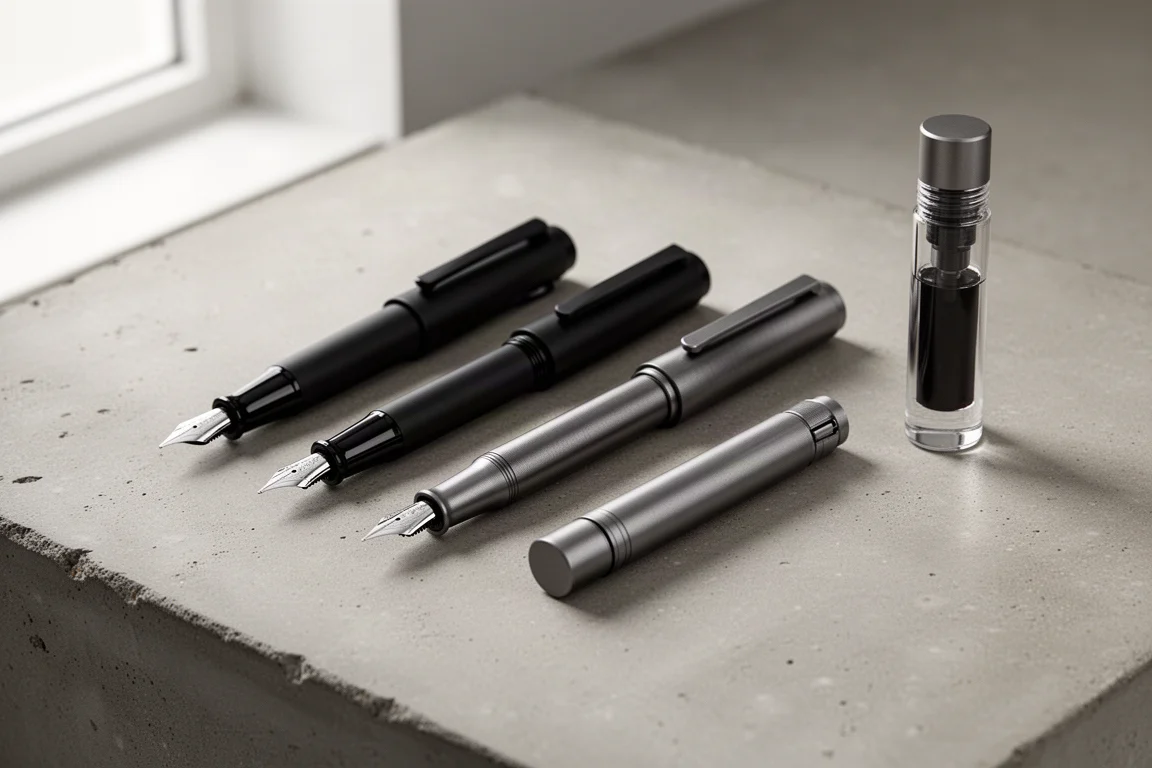
There is something satisfying about a rotation that just works. Four pens are currently inked here, each paired with an ink chosen to suit the nib, and the combination of two new pens, two new inks, and two long-standing favorites makes this a good snapshot of what a practical, everyday fountain pen rotation can look like. All of it was tested on Tomoe River paper in a slim 68 gsm notebook, which is a forgiving but revealing surface for both nib feel and ink behavior.
Pilot Vanishing Point with Platinum Chou Kuro
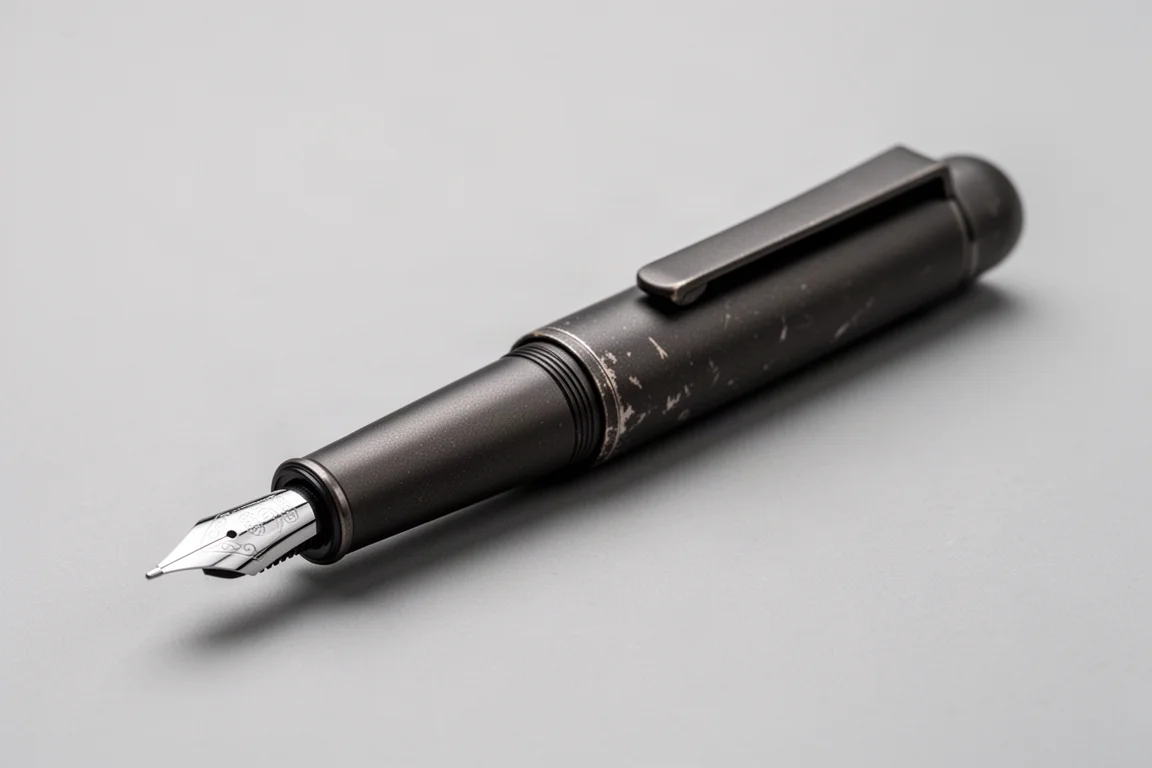
The Pilot Vanishing Point is the trusty workhorse of this rotation. It is a daily carry that gets thrown into a backpack, used hard, and has picked up dents and finish wear along the way, and it keeps performing. The retractable nib design means it is always ready at a click, which is exactly what you want from a pen meant to be at the ready at all times.
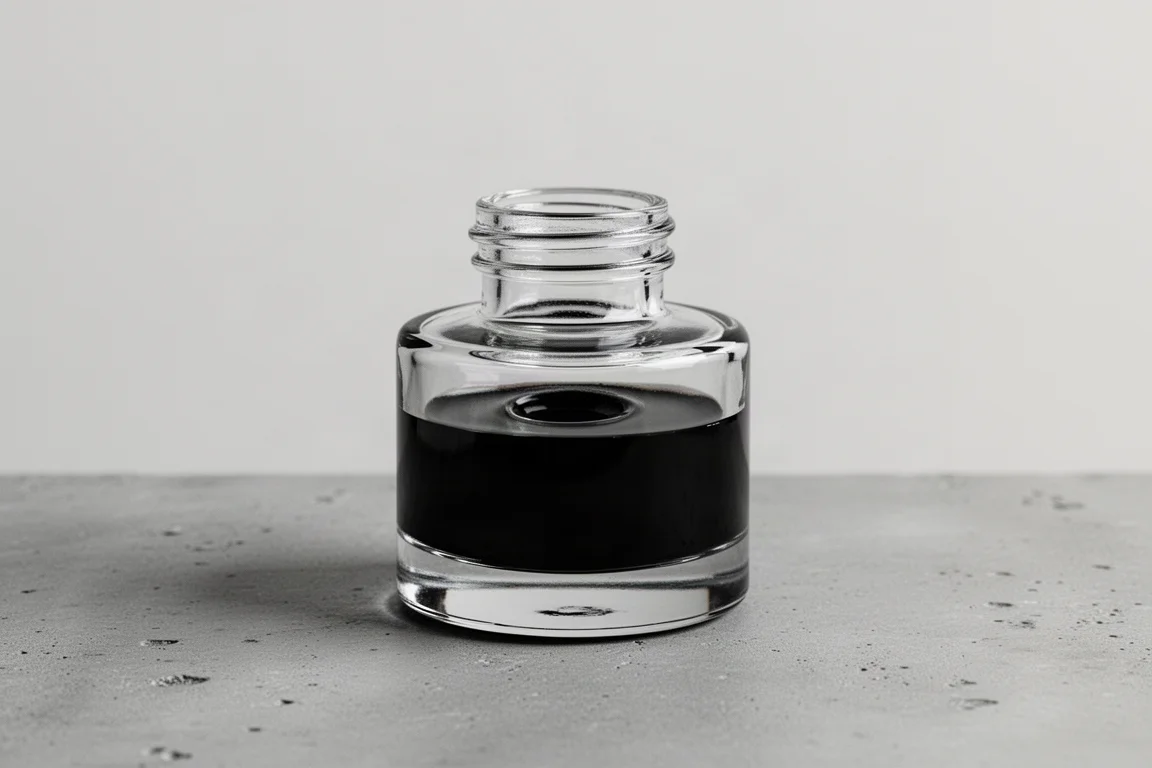
This one runs a fine 18 karat gold nib with treatment to match the black finish. Paired with it is Platinum Chou Kuro, a premium ink that aims to be one of the blackest of blacks. In side-by-side comparisons with gel pen blacks and rollerball blacks, it wins every time, drying to a pitch-black, almost velvety matte finish. It retails for around $60, though deals closer to $46 can be found.
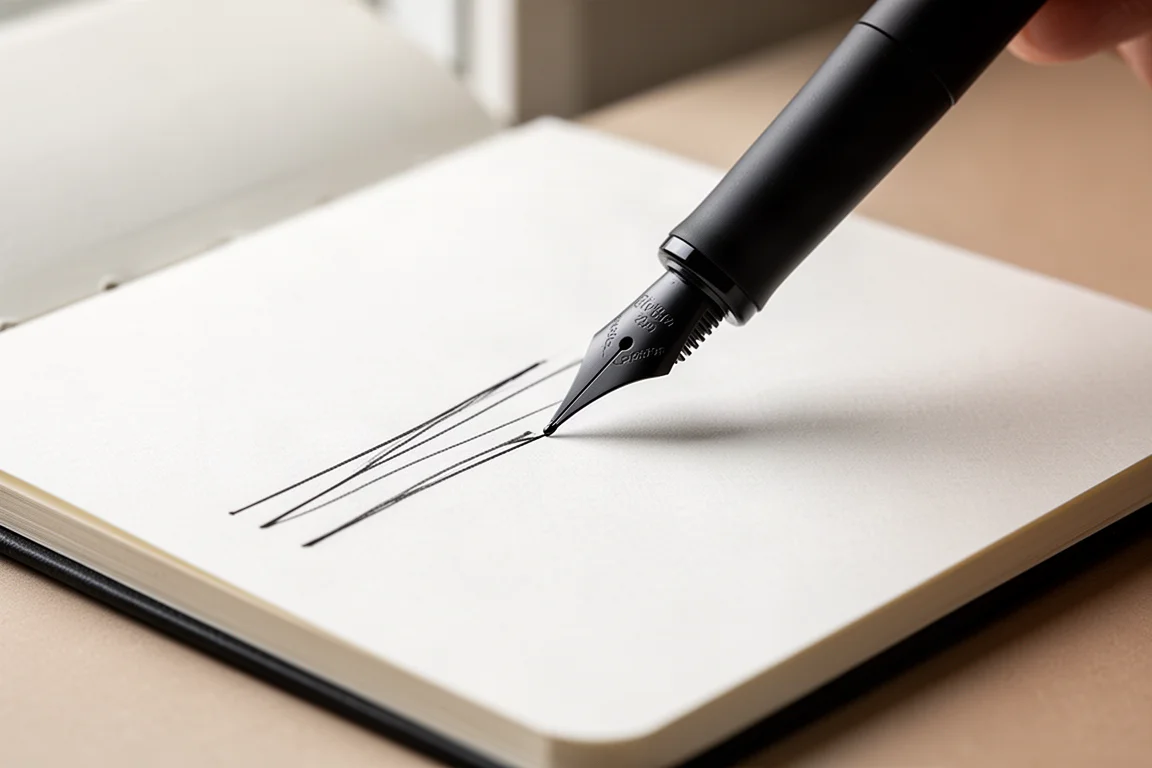
Behavior-wise it is wet, smooth, and well behaved. It has not bled through anything tested, including cheap office notepads, even when laid on thick. It behaves similarly to Platinum Carbon ink, so it is worth cleaning the pen out reasonably regularly and not letting it sit unused. Note that the bottle includes a small ink well, which helps when levels run low but is a mild annoyance if you prefer your ink bottles without one.
Lamy 2000 with Pelikan Edelstein Golden Lapis
The Lamy 2000 appears twice in this rotation, and the first one is the original: a medium nib, very broad for a medium, juicy and glassy smooth. The 14 karat gold nib lays down a generous line that suits shimmer inks and shaded inks particularly well.
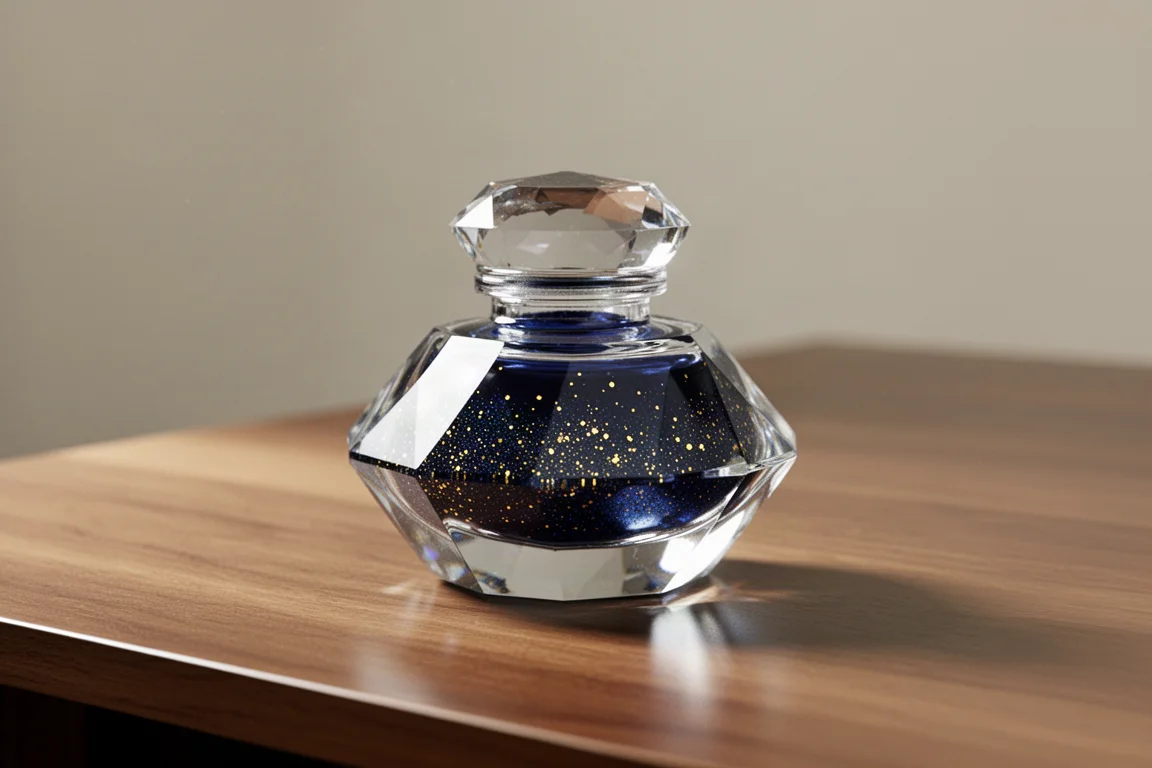
The ink here is Pelikan Edelstein Golden Lapis, the brand’s Ink of the Year for 2024 and a first taste of the Edelstein line. It is a medium, brighter-leaning blue loaded with gold shimmer, and the gemstone-themed Edelstein bottles suit the collection nicely. When freshly applied, the letters look laced with gold leaf, and the effect only gets better as it settles.
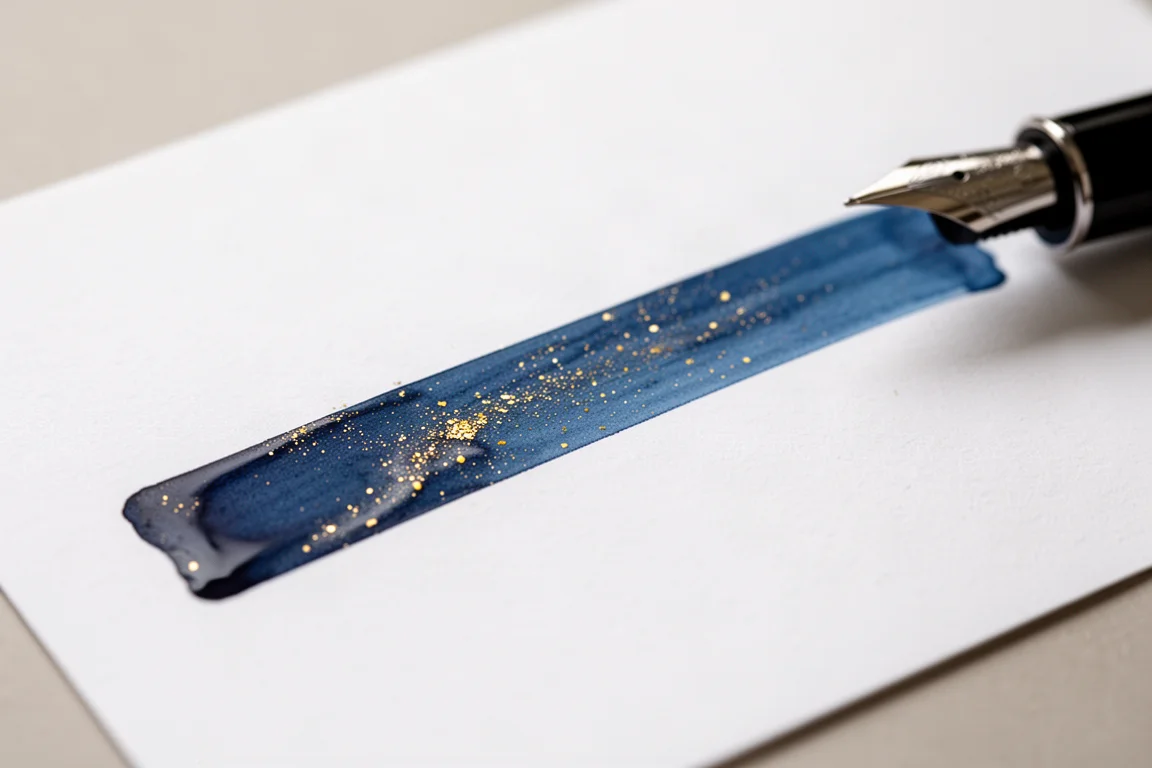
There is one caveat. The ink is very free flowing, and in a wet, broad nib it can spot and bleed slightly through even Rhodia paper, though it behaved fine on Tomoe River. It is less of an issue as the ink settles with use, but if you write on thinner paper, a drier or finer nib pairing would be the safer choice.
A Second Lamy 2000 in Extra Fine
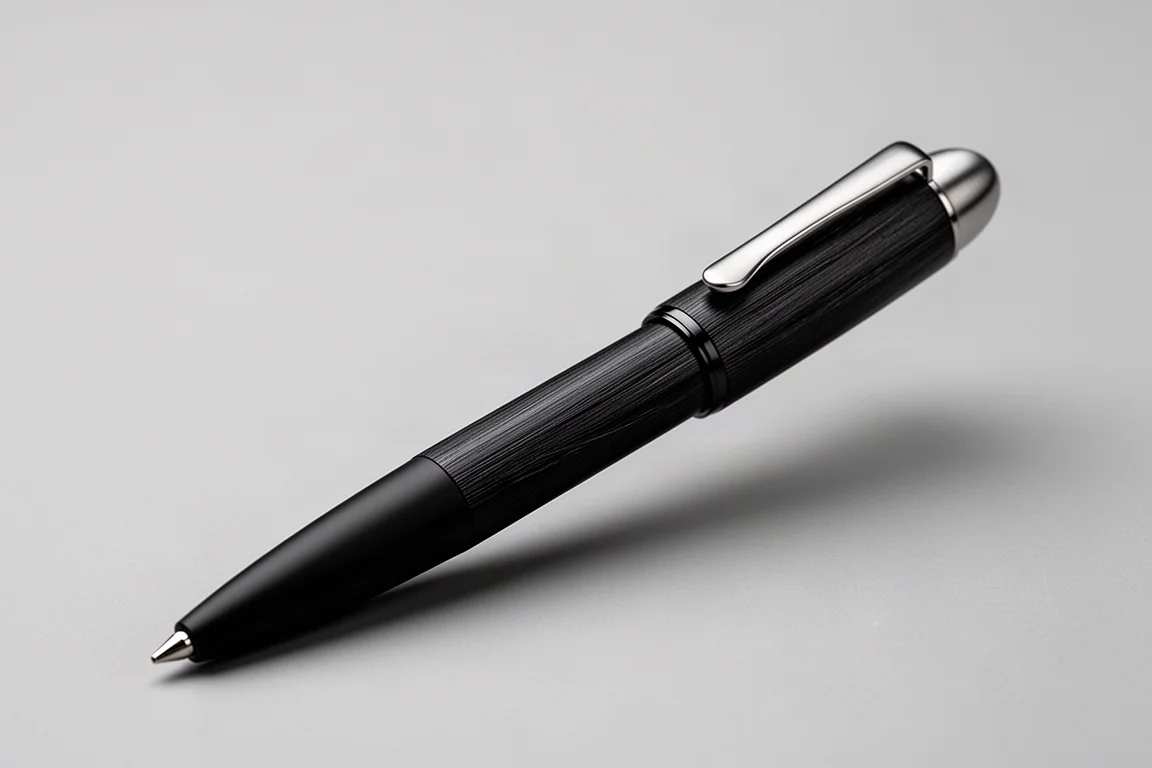
The second Lamy 2000 addresses the main criticism of the first: the medium is too broad for smaller handwriting. The extra fine is not as fine as some would prefer, but it does the job, and it carries a distinct architect-style grind typical of how Lamy finishes these nibs: thinner on downstrokes, wider on cross strokes, giving lines a subtle vertical-rectangle character that adds a bit of flair.
It is super wet and very smooth, with just a touch of feedback as any extra fine tends to have. This pairing also carries a bittersweet note, because the ink is Montblanc Lavender Purple, which has been discontinued.
Montblanc Lavender Purple
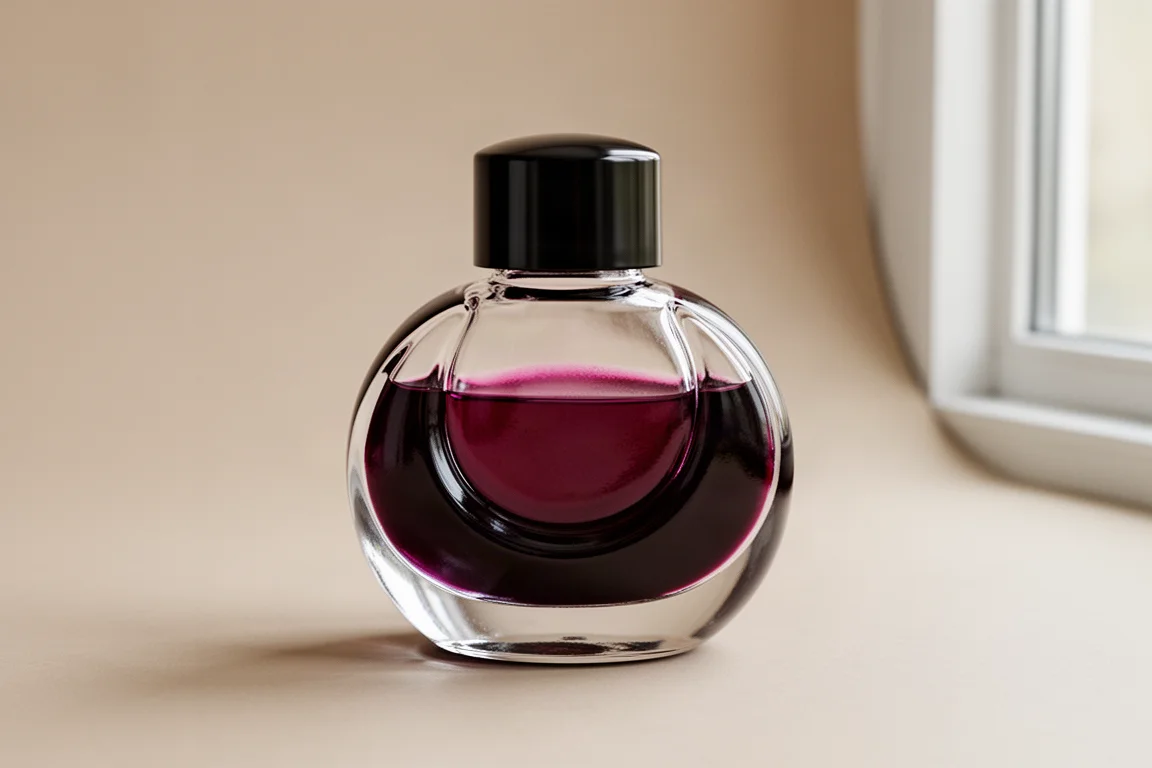
Lavender Purple is a nice reddish purple, dark enough to stay fully readable and office appropriate. Montblanc has since replaced it with Amethyst Purple, but the two are not quite the same ink, and the redder tone here is the standout for anyone who prefers purples that lean red rather than blue.
It is a solid, restrained ink: a little shading on broader nibs, not much sheen, and just a hint of gold sheen on the most saturated edges. Montblanc’s horseshoe bottles are well designed too, with surprisingly hefty caps and a shape that lets you use the last bits of ink at the bottom. The catch is availability. Lavender Purple is gone from regular production, so a bottle has to be hunted down before stock disappears entirely. Montblanc has also retired other well-regarded shades, including Corn Poppy Red, which makes this a good reminder to buy favorites when you can.
Kaweco AL Sport Piston with Colorverse Dark Energy
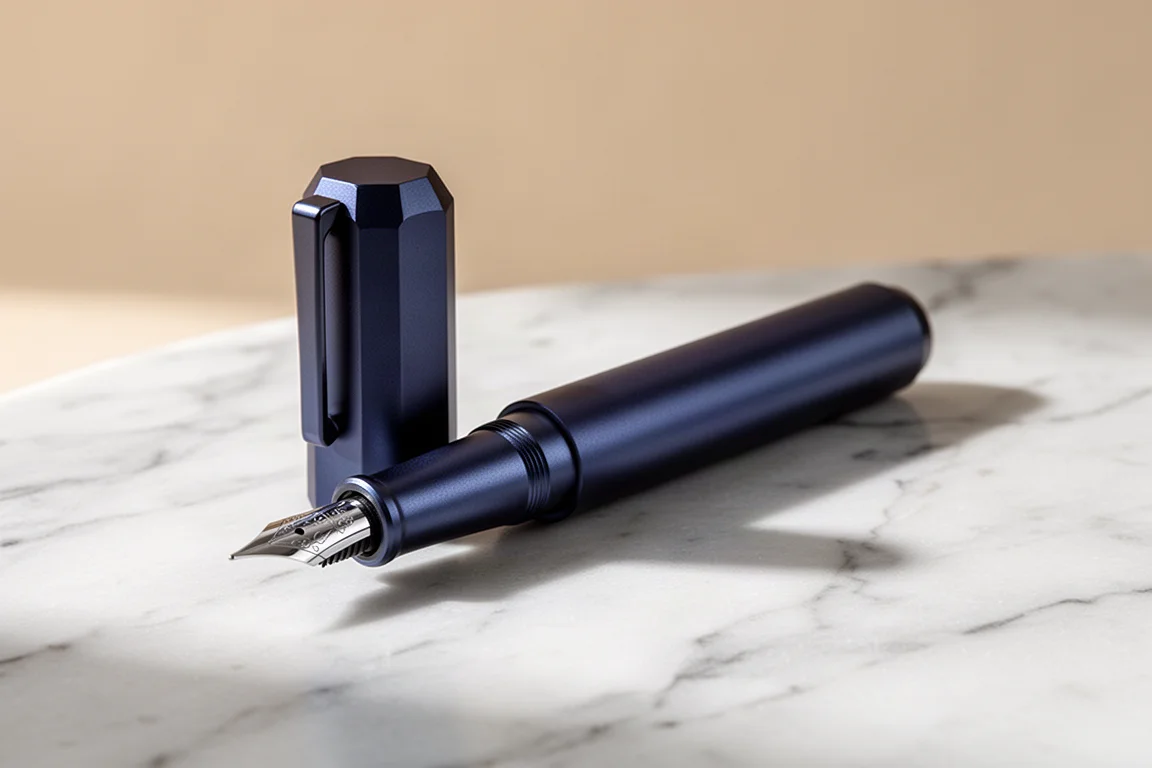
The Kaweco AL Sport Piston is a newer addition and a classier take on the usual Sport, and its revival matters. The original Kaweco Sport was a piston filler with a gold nib, but when the Sport brand was relaunched in the 1990s it returned as a cartridge converter design and stayed that way. This new piston version brings back the original filling mechanism, this time with a steel extra fine nib that writes finer and truer to size than some other extra fines.
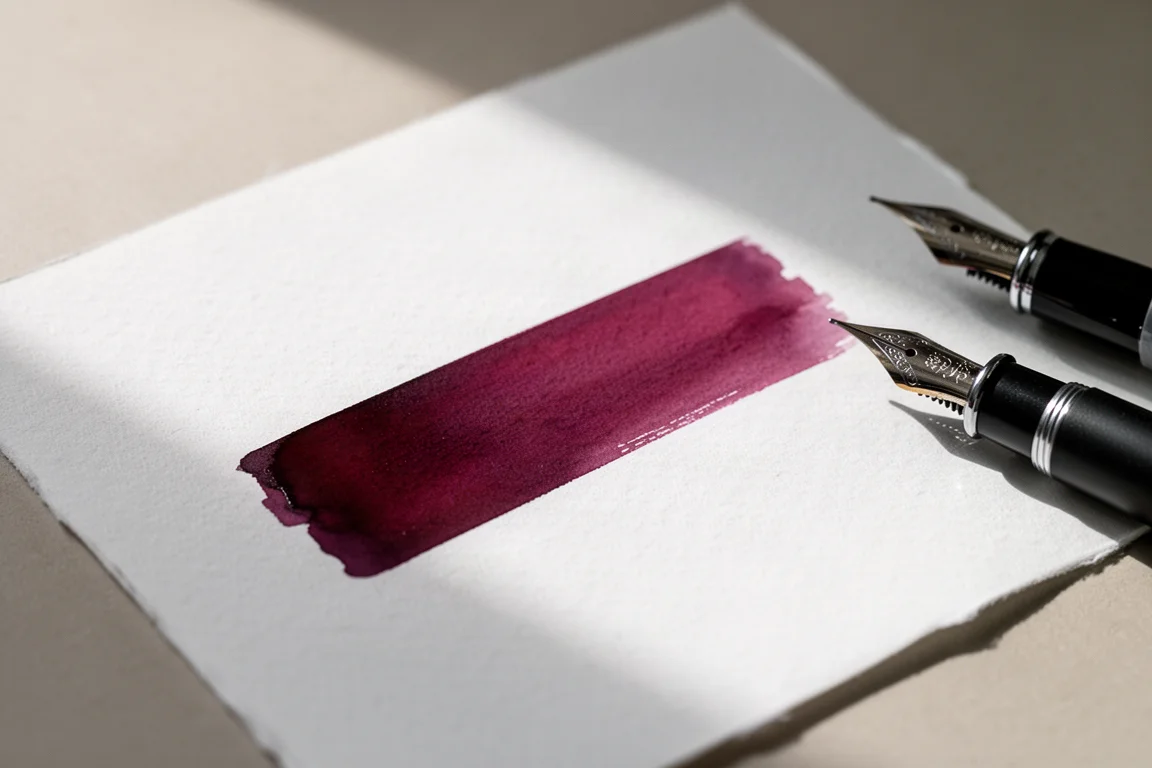
The ink is Colorverse Dark Energy, one of the most-used inks in the collection and one of only two bottles ever fully written dry. It was originally picked up as a stand-in for a harder-to-find shade, and it turned into a genuine go-to. It is medium in wetness, which is ideal in a true extra fine, and works in any pen in any situation: not too wet, not too dry, not too light, not too dark.
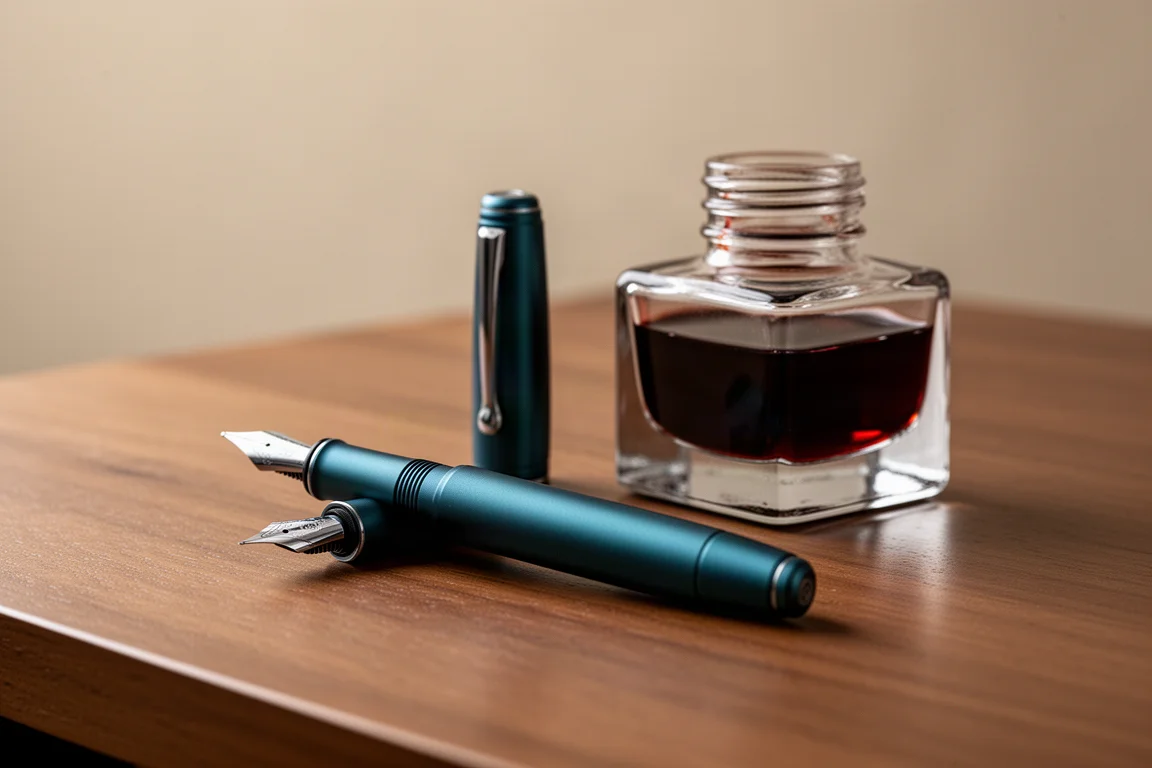
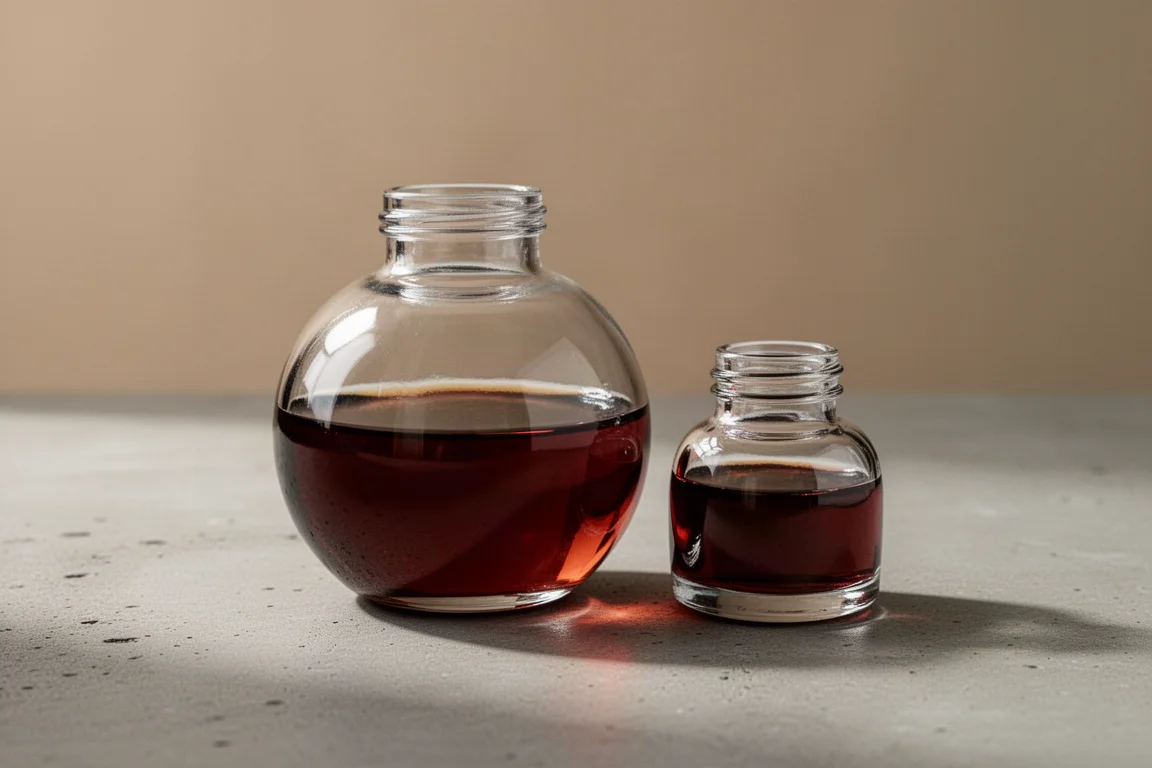
What makes it special is the color shift. It goes down red, then dries toward a reddish brown, and depending on the pen and paper combination you can catch a faint greenish, goldish, blackish sheen settling on top, even on Tomoe River. The 65 ml bottle also comes with a smaller companion bottle, and Colorverse as a brand deserves more attention than it gets.
Overall Buying Advice
All four inks in this rotation are well behaved, with only minor spotting from the Edelstein on Rhodia paper, and nothing bled through the Tomoe River pages. If you want one takeaway: match ink behavior to nib wetness. Shimmer inks like Golden Lapis shine in wet, broad nibs, while a medium-wet, well-behaved ink like Dark Energy is the perfect partner for a fine or extra fine point. And if an ink you love is discontinued, do not wait to secure a bottle.
Conclusion
This rotation hits the classic mix: a durable daily carry in the Vanishing Point, two Lamy 2000s covering broad and extra fine needs, and a pocketable Kaweco piston filler, each paired with an ink that plays to the nib’s strengths. Whether you copy a pairing outright or just take the ink-behavior lesson from it, there is plenty here to build a smarter rotation of your own.
Further reading
Related Reviews
Fountain Pens
Best Budget Fountain Pens Tested: 9 Pens, One Clear Winner
A hands-on comparison of nine affordable fountain pens for everyday writing, calligraphy, and sketching, with a clear standout for flexible nib fans.
Fountain Pens
Aurora Optima Review: An Italian Piston Filler That Punches Above Its Price
A 14k gold nib, ebonite feed, and a beautifully deep oraloid body make the Aurora Optima one of the most rewarding piston fillers around.
Fountain Pens
Cross Bailey Light Review: The Entry-Level Fountain Pen Worth Keeping at the Office
A plastic-bodied Cross with a metal clip, snap cap, and famously smooth extra fine steel nib. Around $15, available almost everywhere, and easy to recommend.