Outdoor Gear
Force Protector Gear Therma Shield Tarp Review: Military Field Blanket and Adapter Shade Panel
A multi-layer tarp system that blocks radiant heat, with strong build quality and quick rigging, plus a size and price equation worth checking before you buy.
Introduction
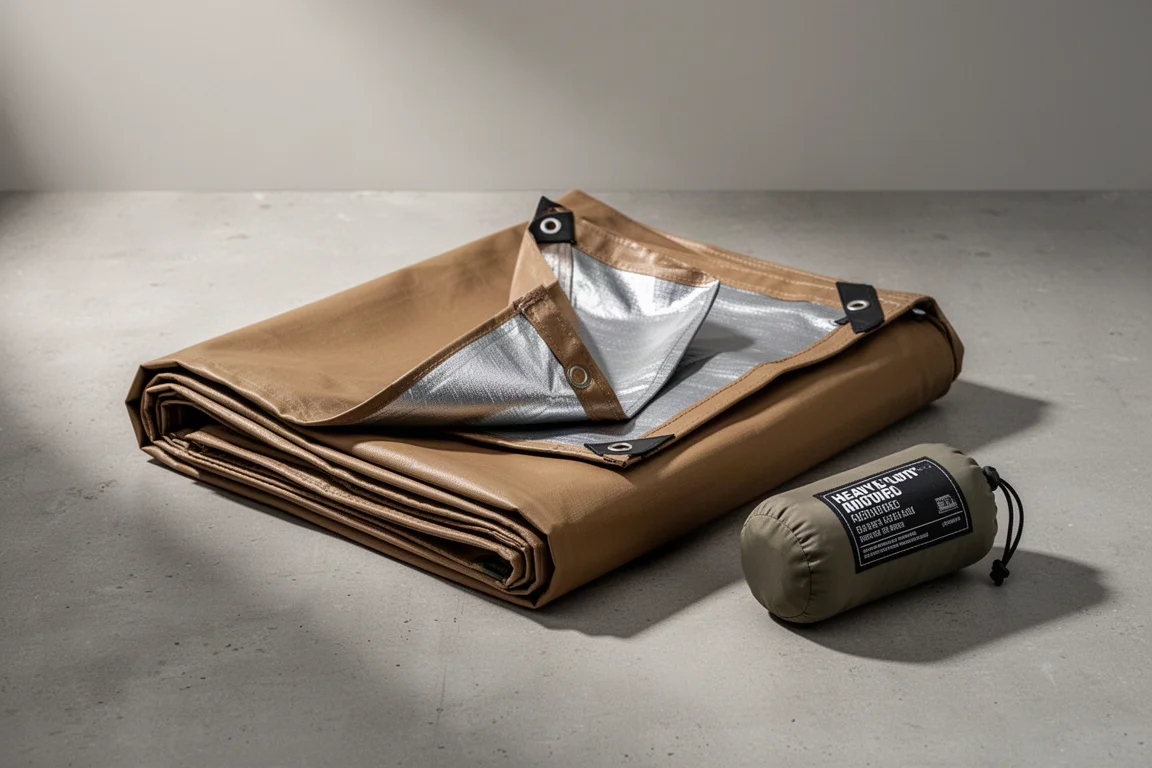
Force Protector Gear builds the Military Field Blanket and Tarp System as a multi-layer shelter with a reflective core the company calls Therma Shield. The same idea appears in a civilian form called the Adapter Shade Panel, aimed more directly at vehicle mounting. Both versions are designed to do two jobs at once: give you a temporary cover and cut the radiant heat that passes through an ordinary tarp.
The performance side of that promise holds up well. The practical side is where buyers should slow down, because the panel is smaller than the name suggests and the retail pricing is steep for the coverage it provides.
How the Therma Shield Layer Works
Therma Shield is the middle layer inside the tarp. Think of it as a Mylar-style aluminum material, close in principle to an emergency blanket, and it works by reflecting the sun’s heat rather than letting it pass through. Force Protector Gear claims a 20 to 40 degree difference underneath compared to standing outside in direct sun.
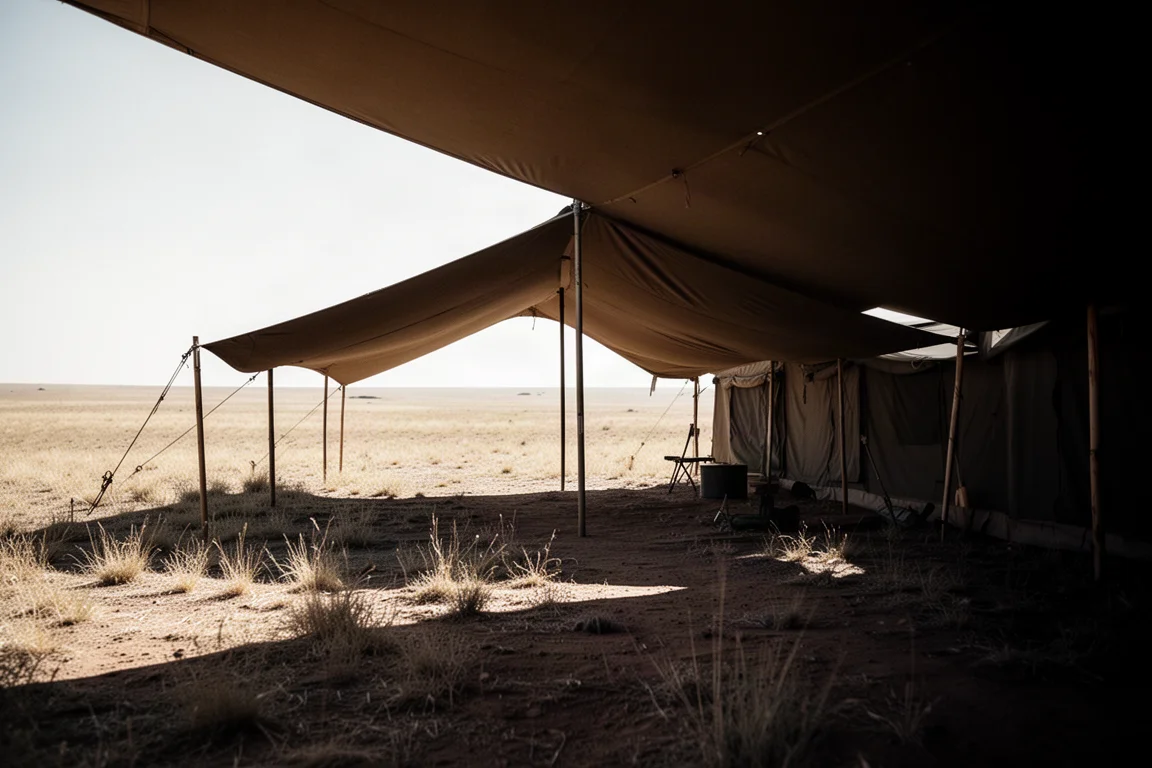
That claim matches how the panel behaves in use. Radiant heat that normally pushes through a standard tarp is noticeably absent, and the effect is easy to feel on a bright day.
It helps to be precise about the limits. Blocking radiant heat is not the same as cooling the air, and the layer does nothing about ambient temperature. If the surrounding environment is hot, it will still be hot underneath. The gain is in removing the radiant load, not in creating cool air.
The material is also meant to be used more than one way. It can be rigged as a tarp, wrapped around as a blanket for warmth, or angled as a reflector for shade. Force Protector Gear lists vehicle mounting, hide construction, fire-side warmth, and sun blocking among the intended applications.
Force Protector Gear Military Field Blanket and Tarp System
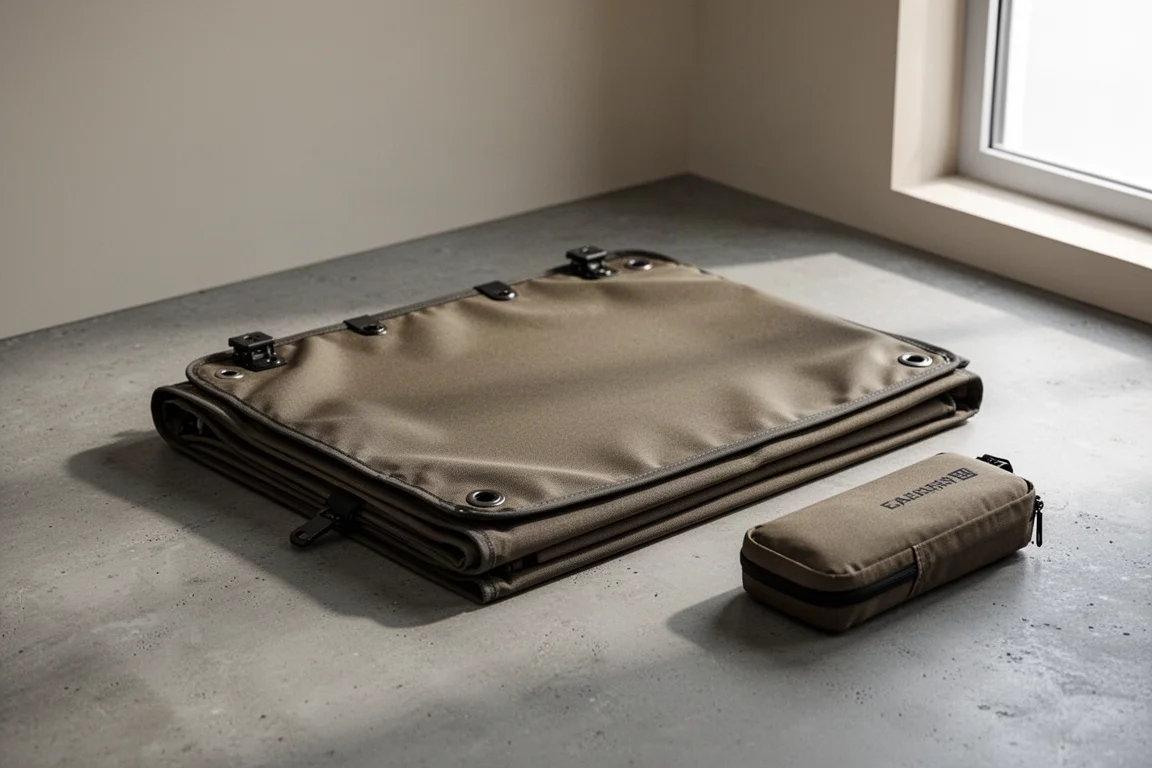
This is the military version. Measured out, it runs 112 inches long by 72 inches wide, or roughly 9 feet 4 inches by 6 feet. Total weight is 3 pounds 10 ounces including the storage pouch, and the pouch itself measures 10.5 by 7 by 2.5 inches.
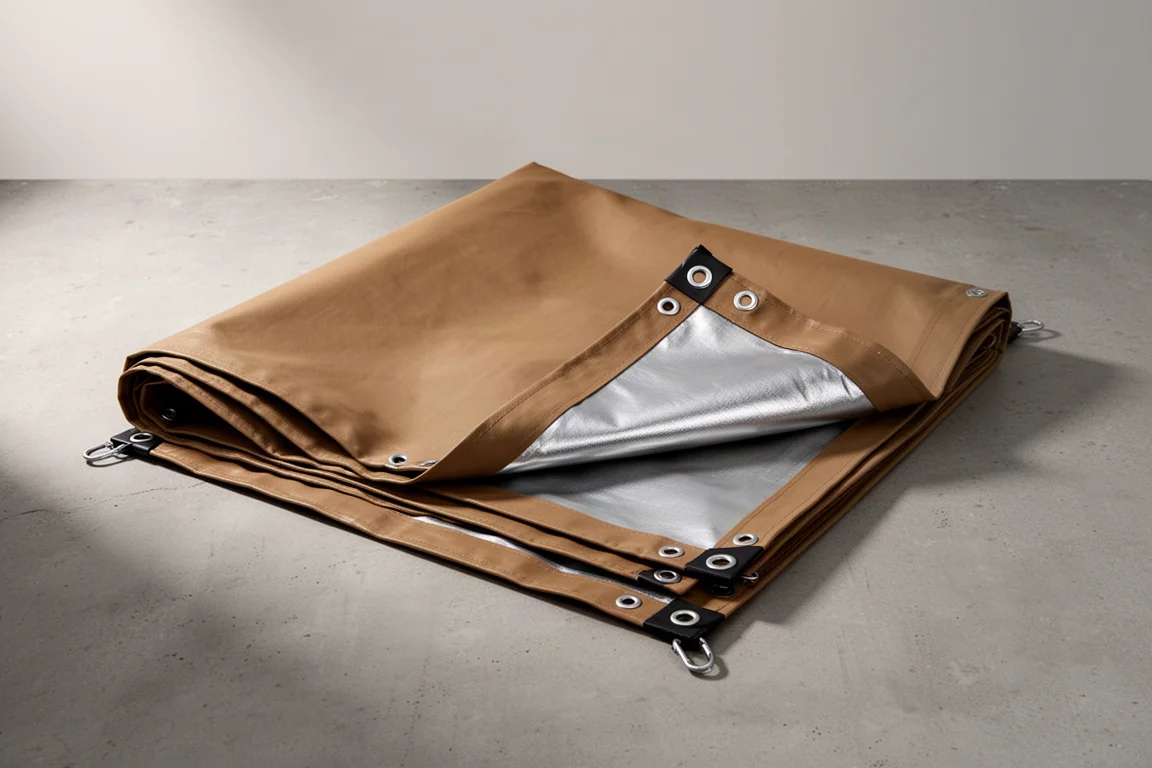
The hardware is generous. There are 24 snaps around the body, and every other snap has a small hole beside it, which adds up to 12 openings that can take poles. Those snaps also allow additional panels to be joined, so the shelter can be extended wider or longer. Six quick fasteners, described by the company as Smart Clips, sit at the corners and at the center of the sides, each held in place by a strap.
Materials named by the company include desert cloth, Reflect Tech, and Smart Clips. The storage case uses 1000 denier fabric with a YKK zipper, and the system relies on military grade snaps, hooks, and hook-and-loop. MultiCam and coyote brown are the two finishes.
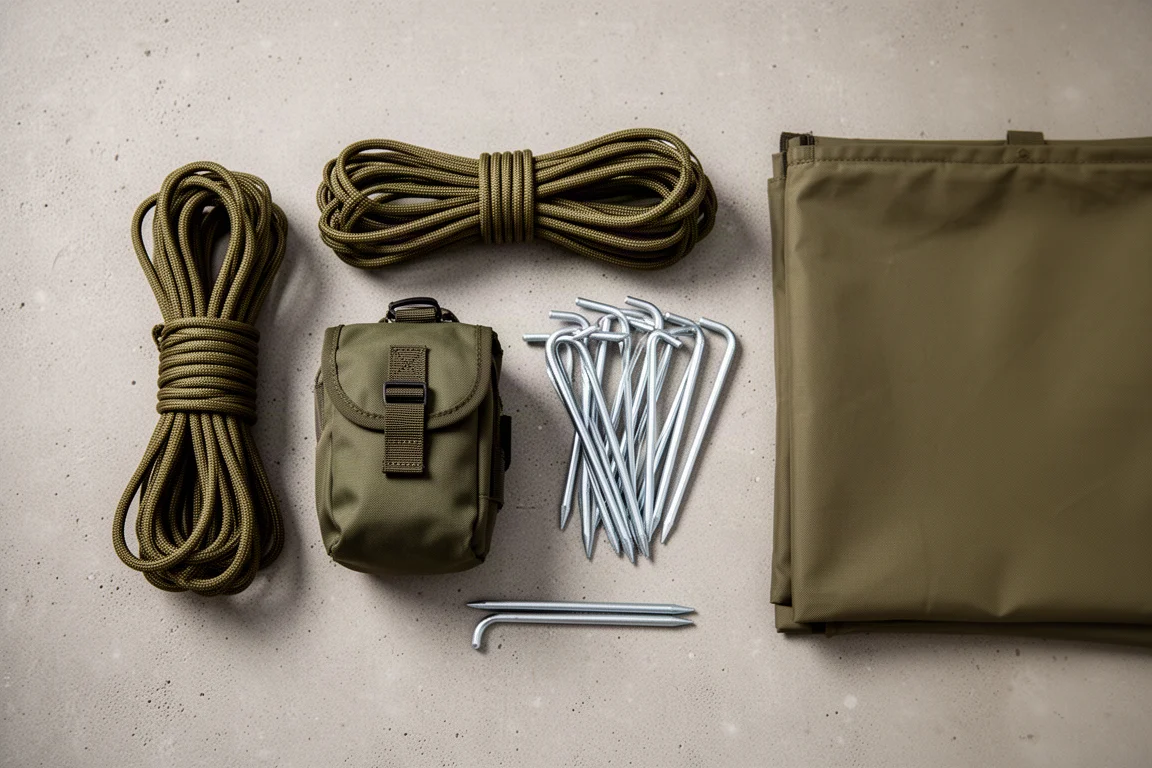
Rigging is simple once the corners are understood. Each corner carries a quick fastener that accepts cordage without knots: wrap the line around, route it through the notches in sequence, and it locks off. Nine-foot sections of 550 cord with a slip knot at one end cover most tie-out needs.
Build quality is very good, setup is easy, and it packs down fairly compact, though it is slightly heavy for its size. One handling quirk is worth knowing. Because the tarp has multiple layers, air gets trapped between them during breakdown and the panel behaves a little like a balloon until it is pressed flat.
Setup and Vehicle Mounting
Vehicle mounting is where this system gets interesting, and the method is straightforward. Start by cleaning the body panel where the suction cup anchors will sit, since a cleaner surface gives noticeably better adhesion. Once the cups are placed, cordage goes onto each anchor and out to the tarp corners.
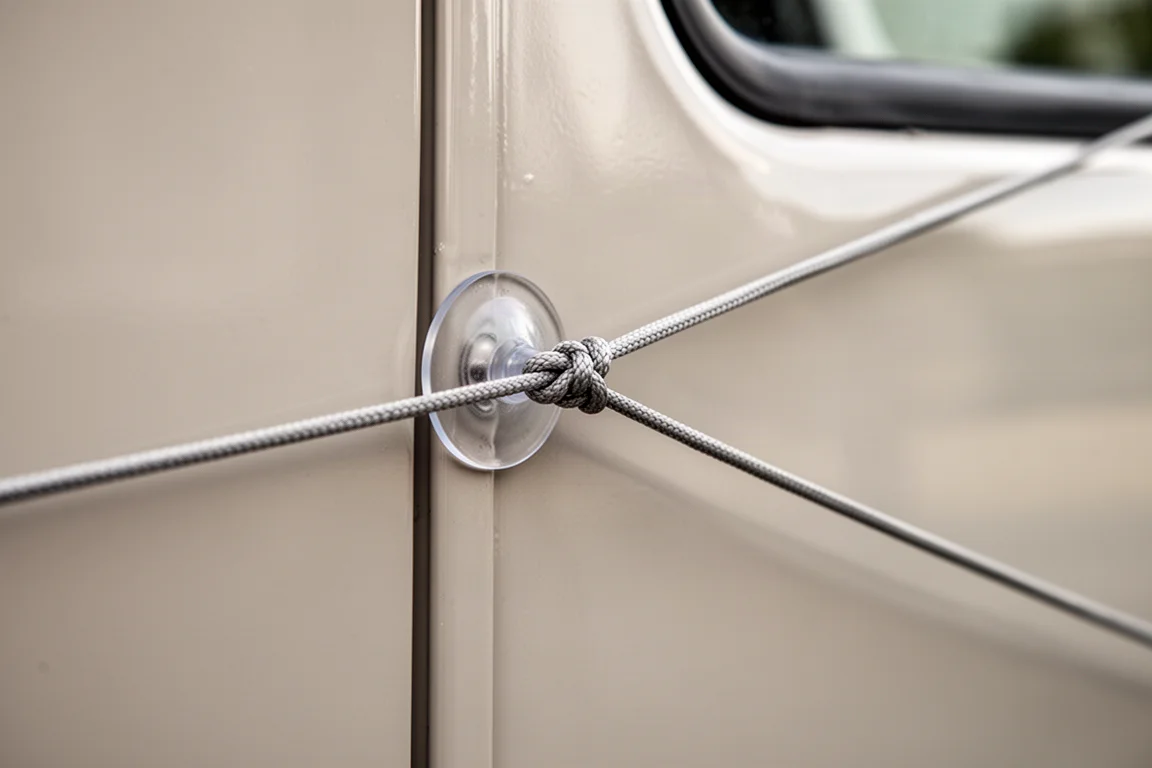
A nine-foot length of 550 cord with a slip knot at the end covers most attachment points, and that knot is worth learning because it is simple and adaptable. From there the corner fasteners take over: the line wraps around, drops through the notches in sequence, and ties off without any knot at the tarp itself. The result holds firmly and does not slip.
The 12 pole openings around the perimeter give a second rigging option when there is no vehicle to anchor to, and the snap array means panels can be joined whenever you want a longer or wider shelter.
It is not as fast as a purpose-built vehicle awning, and there is a real setup process involved. Compared with rigging a plain tarp, though, it is clearly quicker.
Force Protector Gear Adapter Shade Panel
The civilian counterpart is the Adapter Shade Panel, positioned more specifically around vehicle use. The most thoughtful detail is that the hardware is covered, so attachment points do not come into contact with vehicle paint. It is a small addition that makes a practical difference on a vehicle you care about.
Pricing for the civilian panel is $344. That is lower than the military version at full retail, but it is still a serious outlay for a single panel.
Selection is harder than it should be. The civilian section of the company’s catalogue lists the Adapter Shade Panel, the Adapter Shade Panel Light, the Sweet Spot Vehicle Kit, and the Therma Shield, with very little explanation of how they differ from one another. Therma Shield links under those listings do not work, which makes it difficult to confirm exactly what you are buying before you commit.
Size and Coverage Limits
Coverage is the real constraint. At 9 feet 4 inches by 6 feet, the panel is small for a tarp and small for a sun shade. One panel gives a modest patch of shade. Two panels make a far more usable shelter, and three would open up configurations that genuinely feel spacious.
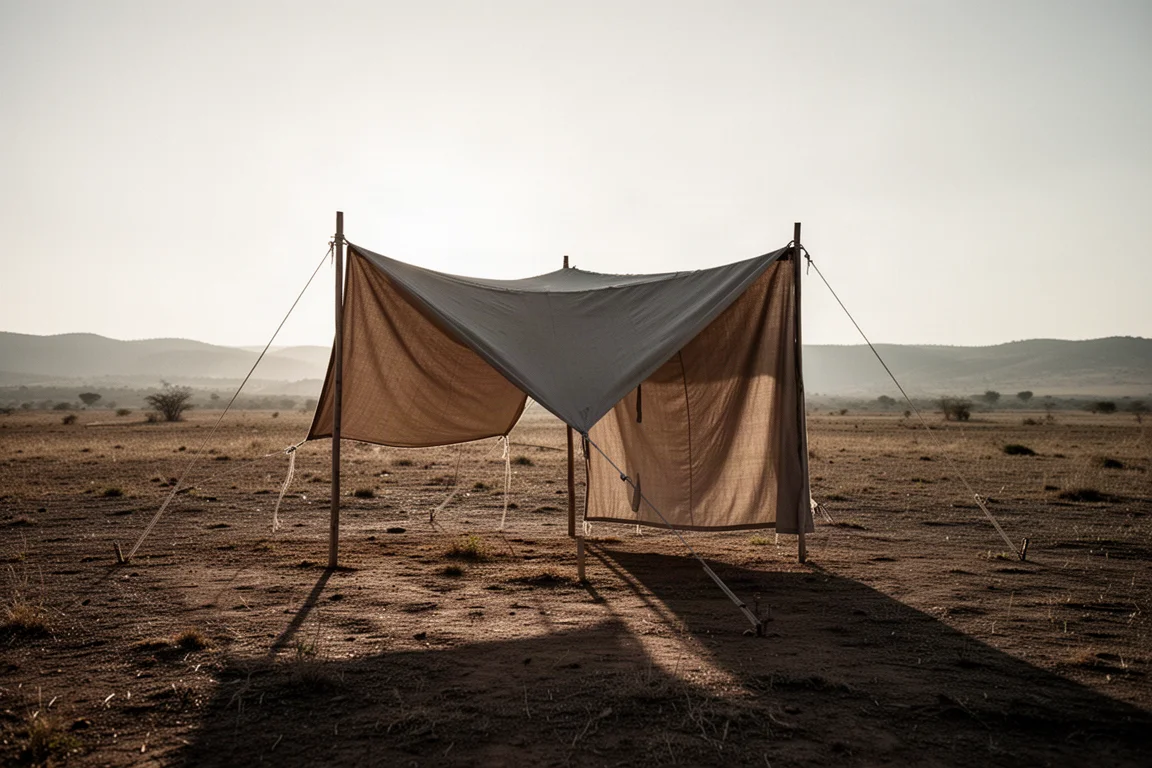
That matters for the value calculation. A 10 by 10 or a 12 by 10 footprint would make much more sense for a single purchase, and the current dimensions push most buyers toward buying multiples.
Durability, Care, and the Therma Shield Disclaimer
The panel carries a printed disclaimer for the Therma Shield construction: not intended to be used as a permanent cover, designed as an expedient and temporary shelter from the elements, and long-term exposure to sun and other environmental conditions will eventually degrade the materials. Proper use and care will extend the lifetime of the materials.
Read plainly, that language frames the product as temporary by design. It also raises a fair question about warranty support, because degradation from ordinary sun exposure could be treated as grounds to decline a repair even when the panel was used as intended. It is not a reason to avoid the system, but it is worth knowing before paying full retail.
Buying Advice
Full retail for the military version sits around $400, and the civilian Adapter Shade Panel is $344. Against that, military surplus examples have been found for roughly $80, and at surplus pricing the equation changes completely: the radiant heat blocking, the build quality, and the quick rigging all become easy to justify.
At full price the math is harder. The coverage is limited enough that most buyers would want at least two panels, and possibly three, which multiplies the cost well beyond what a single well-sized tarp would run. The Therma Shield effect is genuinely impressive and hard to find elsewhere in a tarp, so the question is not whether it works but whether the coverage per dollar works for your setup.
A sensible approach is to decide on the shelter size you actually need first, then work out how many panels that requires, and only then compare that total against the alternatives.
Conclusion
The Force Protector Gear system does what it claims. Radiant heat stays outside, setup is quick once the corner fasteners are understood, and the build quality is strong. The Adapter Shade Panel adds a genuinely useful paint-safe detail for vehicle use.
The reservations are size and price. One panel covers less ground than most people expect, and full retail pricing is high for that footprint. At surplus pricing this is an easy recommendation. At full retail it is a considered purchase for buyers who specifically want the radiant heat blocking and are prepared to buy more than one panel.
Further reading
Related Reviews
Outdoor Gear
Backpacking Gear Evolution: 100 Years of Technology Compared
We tested backpacking gear from 1925, 1975, and 2025 across a three-day hike in Yosemite. Here's how technology has transformed comfort, weight, and the outdoor experience.
Outdoor Gear
Best Affordable Hiking Watches: Five Rugged Options for Outdoor Adventures
Five durable hiking watches that balance ruggedness, functionality, and value for outdoor enthusiasts who need reliable GPS tracking and weather resistance.
Outdoor Gear
Best Backpack Coolers 2026: Five Practical Options for Outdoor Adventures
Five backpack coolers with distinct cooling capabilities, storage features, and design trade-offs to help you choose the right one for your outdoor needs.