Snowboard Bindings
Flux EM Snowboard Binding Review: A Straightforward All-Mountain Freestyle Pick
The Flux EM keeps things simple with easy adjustments, a forgiving highback, and a more middle-of-the-road chassis. Here is how it rides and who it suits.
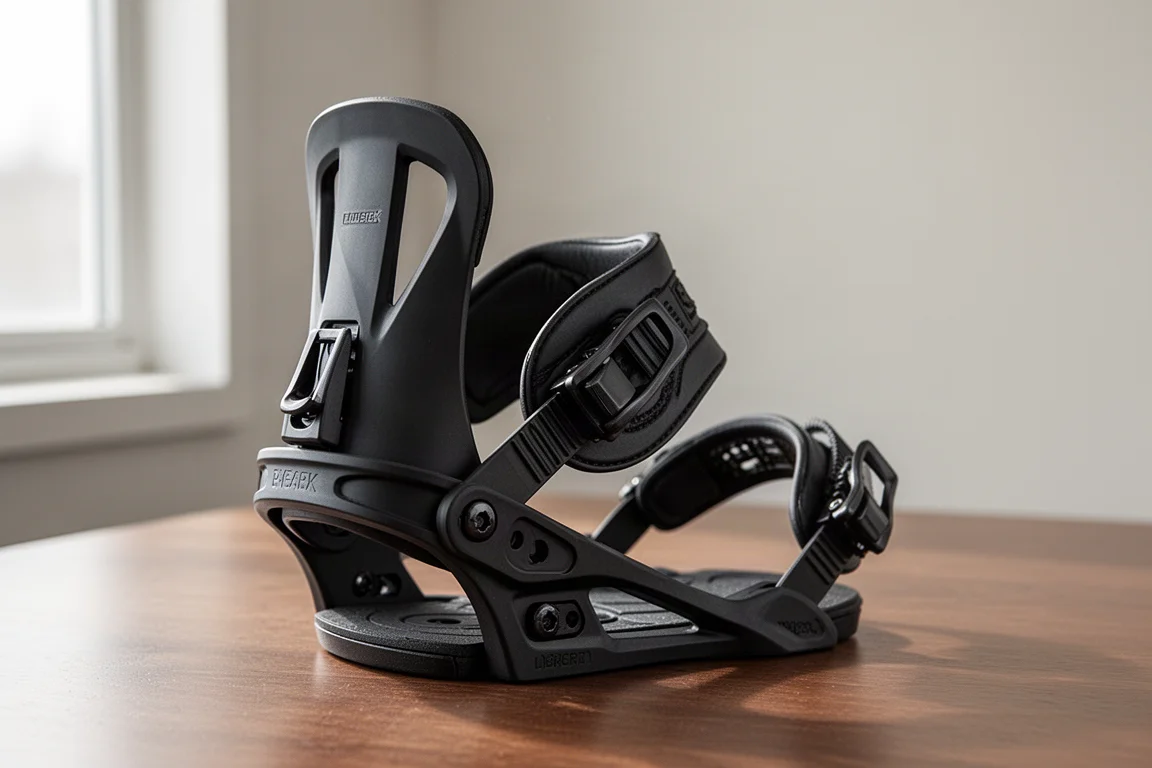
Introduction
The Flux EM positions itself as a do-everything binding for riders who are still progressing and do not want to outgrow their gear. On paper it leans toward the softer, freestyle-friendly end of the spectrum, and the ride confirms that picture: a very soft highback, a moderately damp footbed, and a chassis that sits somewhere in the middle of the road. It is a meat-and-potatoes binding with simple, obvious adjustments and no real gimmicks.
Riding Conditions and Test Setup
Testing took place on a day at Copper Mountain that started under blue skies before snow squalls rolled in, alternating between perfect groomers and brief spells of low visibility. A wrong turn turned up an icy mogul field, which added some unwanted but useful chop testing to the day.
The EM was ridden on a Ride Shadowban snowboard paired with K2 Thrice boots, a setup that matches the all-mountain freestyle character of the binding well.
Adjustments and Fit
Everything about the EM is self-explanatory. Twist tabs on the heel and toe straps let you lengthen or shorten them, and the toe strap adds a push-pin system: push down, slide back, pull up to lock it into place. The heel strap can also be moved to a lower position with a screw, depending on where your instep pressure sits.
Other options round out the package. The highback rotates across three positions via a side screw, and the forward lean tab works exactly as you would expect: flip it up, slide the block down, flip it back, and lock it in. The toe ramp can also slide forward a bit to center it under the boot.
The heel strap is a one-piece molded design, so the padding essentially comes from your boot rather than the strap. It is durable, contours well over the instep, and locks down securely. The toe strap simply wraps over the toe cap, and thanks to the give built into it, it should fit just about any boot shape. Once locked down, you barely notice it is there.
One Flux quirk is the two-piece ratchet design, with a front section and a back section where the release tab lives. That affects how the binding releases: when cranked in, you need a bit more torque to get the tab to engage. The buckles were a little sticky right out of the box, though they started to break in around midday. There is also a small amount of buckle play, so you may notice some rattle while riding. It is not a major issue, but it is worth knowing about.
Flex and Response
The highback is very soft. Almost all the response comes from the forward lean adjuster down into the heel cup, while the top of the highback has a lot of give. Push back into it and you will not feel much rebound; it may cradle the back of the boot, but you can push through it if you get too aggressive.
That said, it is not a bad highback. It grew on the tester over the course of the day, delivering power at the bottom where you want it while offering forgiveness up top for buttering and tweaking. Flux rates the overall flex on the softer side, and the straps agree with that claim. The chassis, however, is more middle of the road: there is a large disc that creates a big dead spot underfoot, and plenty of material in the chassis itself makes it noticeably more rigid. Overall, this feels like an all-mountain freestyle binding with a bigger emphasis on freestyle.
Dampening and Ride Feel
The EM is moderately damp, and more so than expected. The foot pad has foam on top, which compresses slightly when you crank the bindings down tight, and the big dead spot underfoot adds to the dampening. There is still a lot of plastic touching the board, so the binding stays lively rather than muting everything from the board interface. On the icy mogul field, that liveliness was definitely felt.
Compared with past Flux bindings, which were notoriously not damp at all, the EM is a step up. It still is not as damp as the XF line, but for the price point, that trade-off is reasonable.
Who This Binding Is For
The EM is a good fit for a progressing rider who needs something reliable that will not hold them back or get outgrown quickly. The adjustments are straightforward enough that you look at the binding and instantly know what to do, which makes it easy to just ride and not think about. If you want a single binding to cover everything while you improve, this is a solid candidate at its price.
Comparable options worth cross-shopping include the Union Strata, the Bent Metal Action, and the K2 Bond.
Buying Advice
If your priorities are freestyle-leaning flexibility, easy setup, and a forgiving ride that will not punish you on softer terrain, the Flux EM makes a lot of sense. If maximum dampening is your top priority, the XF line remains the stronger choice in the Flux range. Otherwise, the EM does exactly what it needs to do and does not pretend to be anything else.
Conclusion
The Flux EM is a straightforward, capable all-mountain freestyle binding with a soft highback, a more rigid middle-of-the-road chassis, and moderate dampening. Sticky buckles out of the box and some buckle rattle are minor complaints on an otherwise well-rounded package for progressing riders.
Product link
View more details for Flux EM
This product is mentioned in the review. Check the specifications, options, and compatibility before buying.
View more details for Flux EMFurther reading
Related Reviews
Snowboard Bindings
2024 Union Ultra Snowboard Bindings Review: A Cushy, Freestyle-Focused Favorite
Two seasons on the 2024 Union Ultra: a lightweight, tweakable freestyle binding with standout comfort, a damp molecular bushing, and thoughtful hardware fixes.
Snowboard Bindings
32 Team Phase Binding Review: A Fast Entry Binding Built for Freestyle Laps
The first binding from 32 uses the Phase chassis for quick step-in entry with a softer, freestyle-leaning flex. Here's how it performed on the snow.
Snowboard Bindings
Arbor Cypress Snowboard Binding Review: A Laid-Back Cruiser That Can Charge
A closer look at the Arbor Cypress binding's adjustability, strap feel, and that oddly tall highback before you decide to buy.