Snowboard Bindings
Flow NX2-TM Review: A Comfort-First Rear-Entry Snowboard Binding
The Flow NX2-TM trades tuning range for fast rear entry and a genuinely damp ride. Here is who it suits, and the trade-offs to weigh first.
Introduction
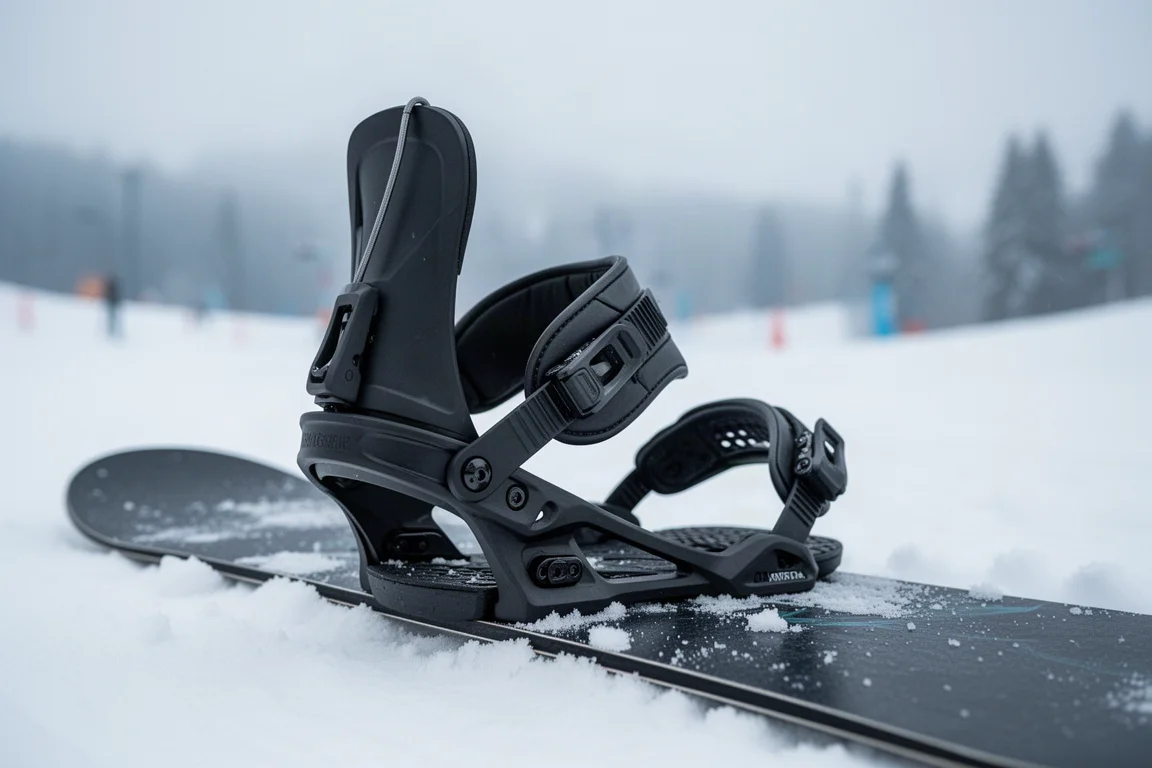
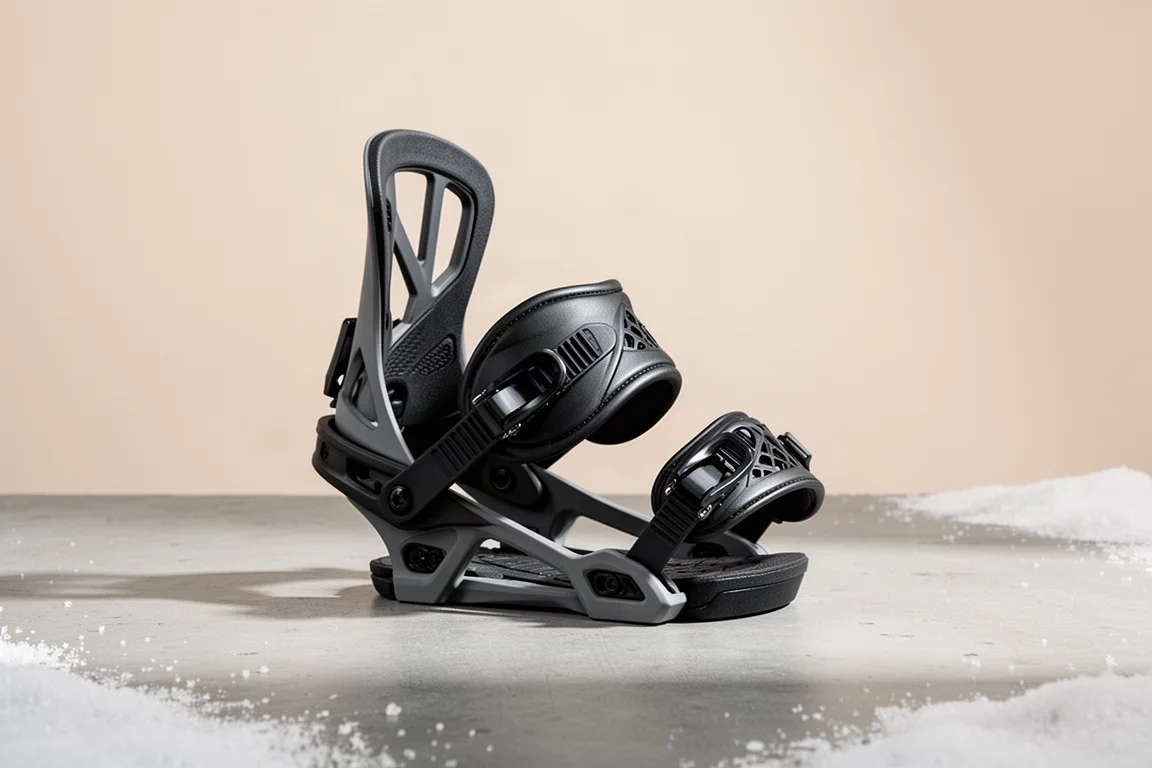
Rear-entry bindings make a simple promise: step in from the back, lock the strap down, ride away. The Flow NX2-TM is a pared-back version of that idea, and it is worth being precise about what pared back actually means here. Two flip tabs sit on the strap, one over the toe and one over the heel, and the strap itself is a single unibody piece. Flip the tabs up, slide the strap up or down, flip them back down, and the binding locks. A small twist tab on the highback sets the cable tension. That is the whole adjustability story on this model.
Everything else follows from that decision, from the way the strap spreads pressure across the top of the foot to the adjustments you give up in exchange for a faster entry.
Who This Product Is For
The NX2-TM is aimed at riders who value getting in and out quickly over squeezing out every last tuning option. It suits someone who cannot, or would rather not, strap in while standing. It suits riders managing knee or back issues, and riders who spend the day with skiers and do not want to be the one everyone waits on at the top of every lift. It is also a sensible look for anyone who wants rear entry without moving up to a premium model such as the Nidecker Supermatic.
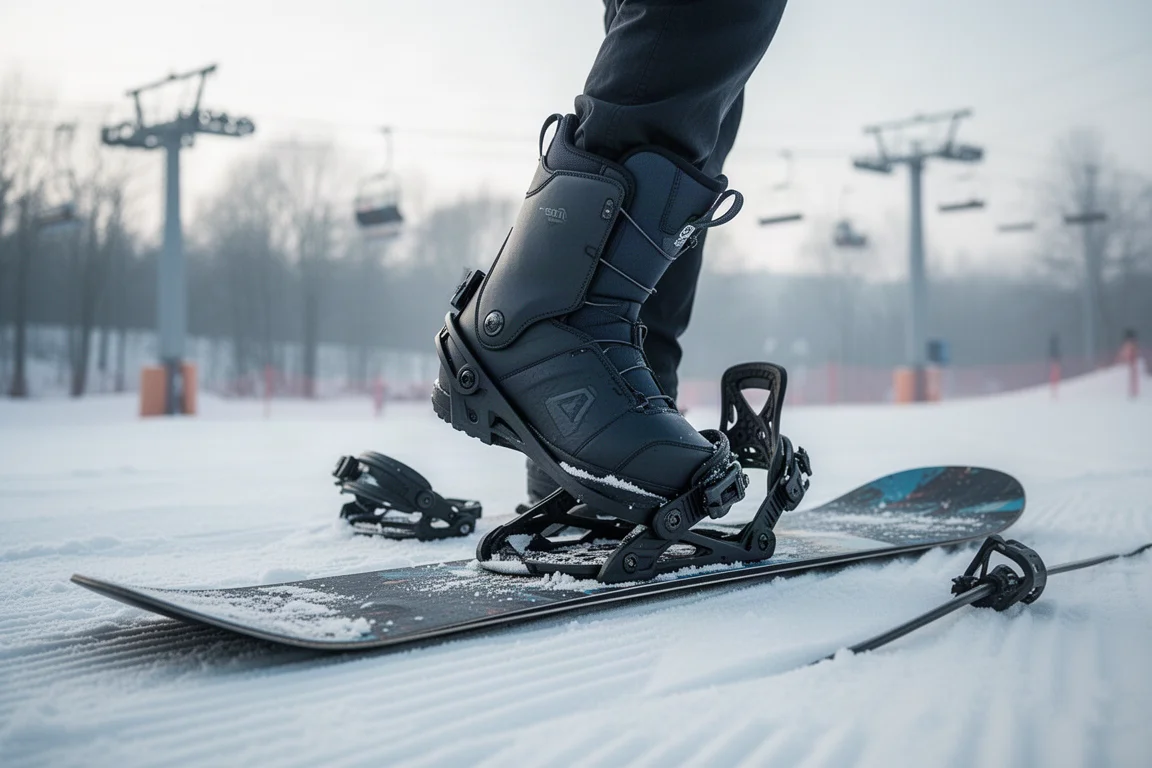
It is a less obvious fit for riders chasing a lively, high-performance feel with an extensive highback adjustment range. This is a comfort-oriented binding, and the design choices lean that way throughout.
Main Strengths
Rear Entry and On-the-Fly Adjustability
The core mechanic is quick and, once understood, hard to fumble. Flip both tabs up, slide the unibody strap into position, flip them back down and the binding locks. Cable tension on the highback is handled by the twist tab, and getting it dialed in takes well under a minute.
The ratchets run two positions. Locked, they hold firm and cannot be adjusted. Flipped open, they behave like a conventional ratchet. They engage smoothly, and the locking mechanism is neither hard to release nor hard to set. In practice that means small corrections in the lift line, a click or two released on the chair when a hot spot develops, and clicking back down at the top before riding away.
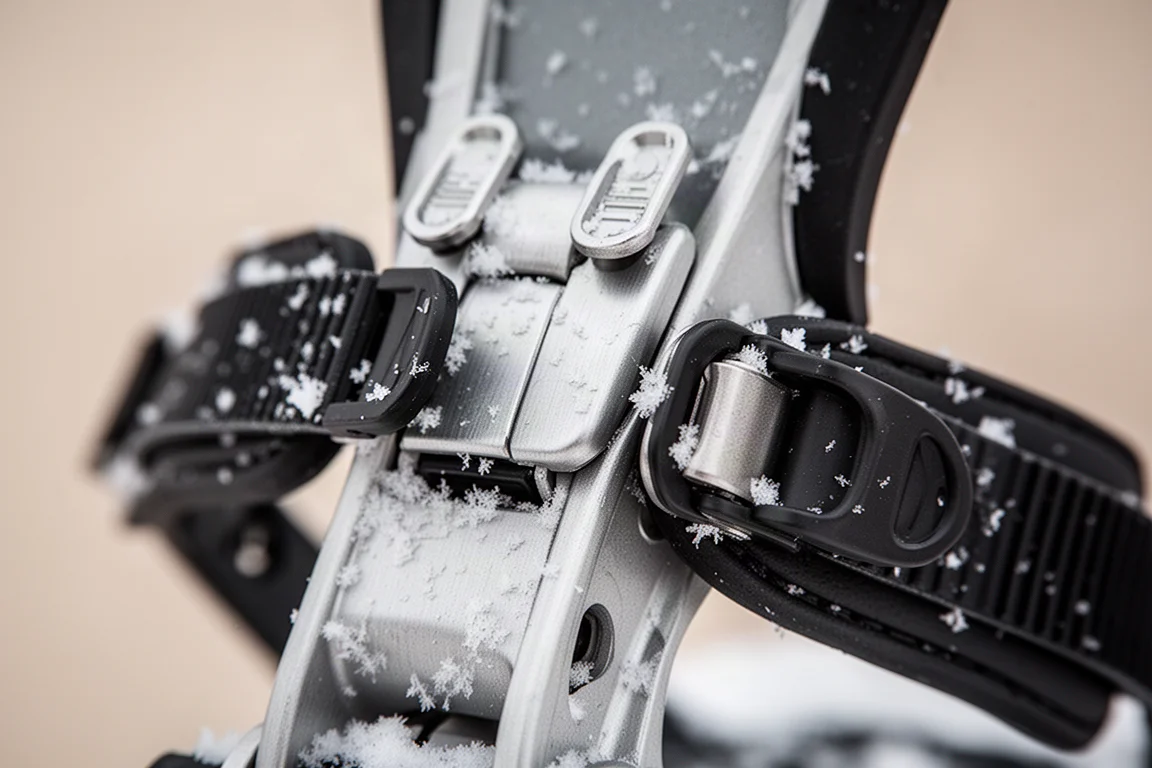
That on-the-fly flexibility is a real step forward from older rear-entry designs, which generally had to be dialed in properly before leaving the parking lot. Here the lever stays shut through a full day and does not pop open on its own.
Strap Comfort and Pressure Distribution
The Fusion strap is the other headline feature. Its large surface area spreads pressure across the instep instead of concentrating it in one spot, and riders who normally feel pressure on the top of the foot may notice the difference immediately. The flex is well judged: firm enough that you are not driving into a wall when you push, soft enough that it does not crumple under load.
Damping and Ride Feel
Despite an aluminum base plate, the ride is notably damp. A pad over the footbed and a rubber gasket work together to absorb vibration coming up through the board, so there is no chatter or resonance underfoot even on hard, unforgiving surfaces. That is unusual for a more rigid aluminum chassis.
Overall flex sits in the middle of the road. You get reasonable power transmission into the toe and heel, a bit of lateral rigidity from the aluminum base plate, and some give through the strap that lets the binding roll slightly underfoot. It feels predictable rather than dramatic: nothing startling, but nothing loose or sloppy either.

Things to Consider Before Buying
The highback is where the compromises show up. Because this is a rear-entry design, there is no highback rotation on this model, and forward lean is governed by cable tension rather than a separate adjuster. Other bindings in the same family offer more tuning for riders who want it.
The highback also protrudes when it is not folded forward, so it is worth building the habit of folding it down when skating, or you may catch it.
Canting is set at 2.5 degrees, which felt like a lot over the course of a long day and made itself known in the knees by the end of it. Riders who are sensitive to canting should factor that in.
Finally, be honest about the category. This is a comfort binding rather than a performance binding. If you want maximum power transfer and a wide adjustment window, other options will serve you better.
Buying Advice
Buy the NX2-TM if the entry mechanism is the thing you care about most. It rewards riders who want to click in and go, who ride with skiers, or who find conventional strapping in uncomfortable. The simplified setup is a deliberate trade: fewer adjustments, less fuss, and a very short learning curve once you have the tab sequence in your hands.
It is also worth thinking about where this sits relative to the rest of the rear-entry market. If you have been curious about premium rear-entry models but the price has held you back, this is a reasonable place to start. If you already know you want a broader adjustment range or a more energetic ride, save your money and look higher up the range.

Riders who have used conventional bindings for years should expect an adjustment period of a run or two. The foot sits differently in a rear-entry binding, pressure points shift, and the power path from the highback through the base plate and back across the strap takes a little time to read. Once that clicks, the routine is genuinely quick.
Conclusion
The Flow NX2-TM does its job well, and it is honest about what it is. Entry is fast, the Fusion strap is comfortable across the instep, the ratchets are smooth and easy to work with cold hands, and the ride stays damp and chatter-free even on an aluminum chassis. Against that, you give up highback rotation, independent forward lean adjustment, and some of the liveliness that performance-focused riders look for. The 2.5 degrees of canting will not suit everyone either.
For the right rider, a comfortable, quick-entry binding that simply gets out of the way is exactly the point. If that describes how you ride, this one deserves a serious look.
Product link
View more details for Flow NX2 TM Bindings
This product is mentioned in the review. Check the specifications, options, and compatibility before buying.
View more details for Flow NX2 TM BindingsFurther reading
Related Reviews
Snowboard Bindings
2024 Union Ultra Snowboard Bindings Review: A Cushy, Freestyle-Focused Favorite
Two seasons on the 2024 Union Ultra: a lightweight, tweakable freestyle binding with standout comfort, a damp molecular bushing, and thoughtful hardware fixes.
Snowboard Bindings
32 Team Phase Binding Review: A Fast Entry Binding Built for Freestyle Laps
The first binding from 32 uses the Phase chassis for quick step-in entry with a softer, freestyle-leaning flex. Here's how it performed on the snow.
Snowboard Bindings
Arbor Cypress Snowboard Binding Review: A Laid-Back Cruiser That Can Charge
A closer look at the Arbor Cypress binding's adjustability, strap feel, and that oddly tall highback before you decide to buy.