Snowboard Bindings
Flow Fuse Hybrid Binding Review: A Freestyle-Friendly Rear-Entry Binding Worth Dialing In
The Flow Fuse Hybrid blends rear-entry convenience with a distinctive cable-driven flex. Here's how it rides, who it suits, and what to check before buying.
Introduction
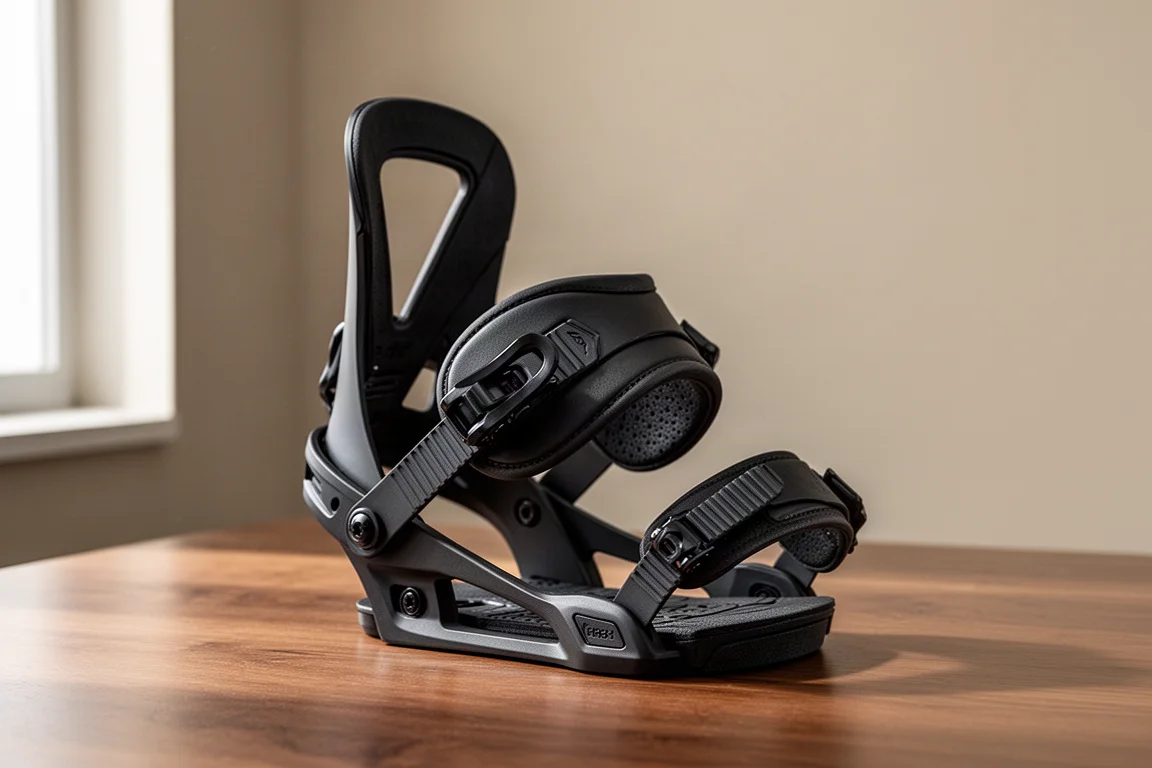
The Flow Fuse Hybrid is a rear-entry snowboard binding aimed at riders who want to slip in, flip the highback up, and ride, without giving up too much performance. Tested on a sunny bluebird day with everything from soft, creamy snow to slush at the bottom, it came across as a damp, freestyle-leaning all-mountain binding with a noticeably different power delivery than traditional strap bindings.
That different feel is the whole story here. The Fuse Hybrid drives through what Flow calls the power triangle: force travels down the highback, across the chassis, and up through the straps, with a cable engaged when the binding is locked in. In practice it delivers a slightly more responsive feel than older Flow models, but it will not suit everyone, especially riders set on how conventional straps flex.
Who This Binding Is For
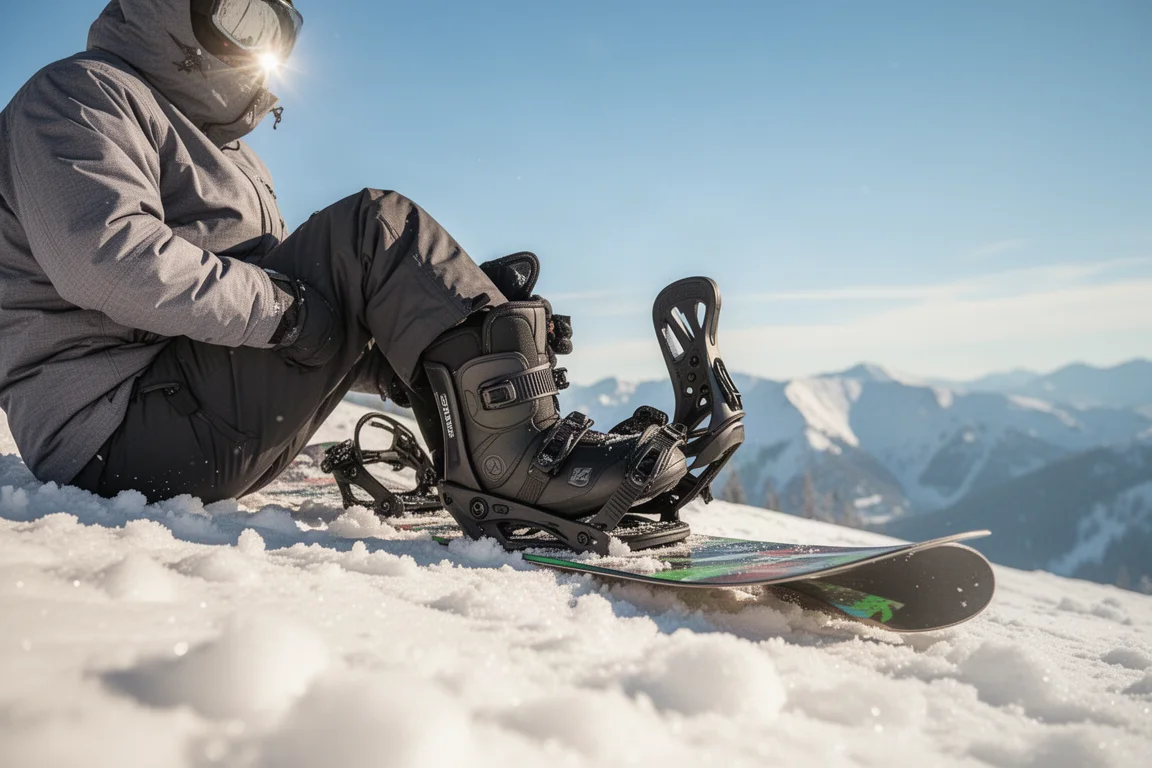
This is a binding for the all-mountain freestyle rider who has no problem going in through the back door. If your priority is sliding your foot in, pulling the highback up, locking the latch, and getting on your way, that convenience is exactly what the Fuse Hybrid is built around. The highback folds all the way down, the foot slides in, and you flip it back up. No separate heel cup to deal with, because it is all one piece.
It also rewards riders willing to change their routine slightly. With Flow, you enter toe to heel rather than heel to toe as with a normal strap binding. Once the muscle memory shifts, it becomes second nature. If that adjustment sounds appealing rather than annoying, this is a strong candidate.
Adjustability: More Hidden Settings Than You Expect
There is more adjustability packed into this binding than most people will notice at first glance. At the top, a small dial on the back of the highback adjusts forward lean. Behind the straps, with the highback folded down, a screw adjusts the heel cup and highback conjunction position. Below that, the heel cup itself slides out or forward to center it, which also moves the cable and changes the binding’s dynamics.
On the straps, three flip tabs lengthen or shorten each strap to center it over the boot. The toe strap has a pin system underneath: push down, slide forward, pull back to center it. The foot pad can also shift forward or backward slightly underfoot.
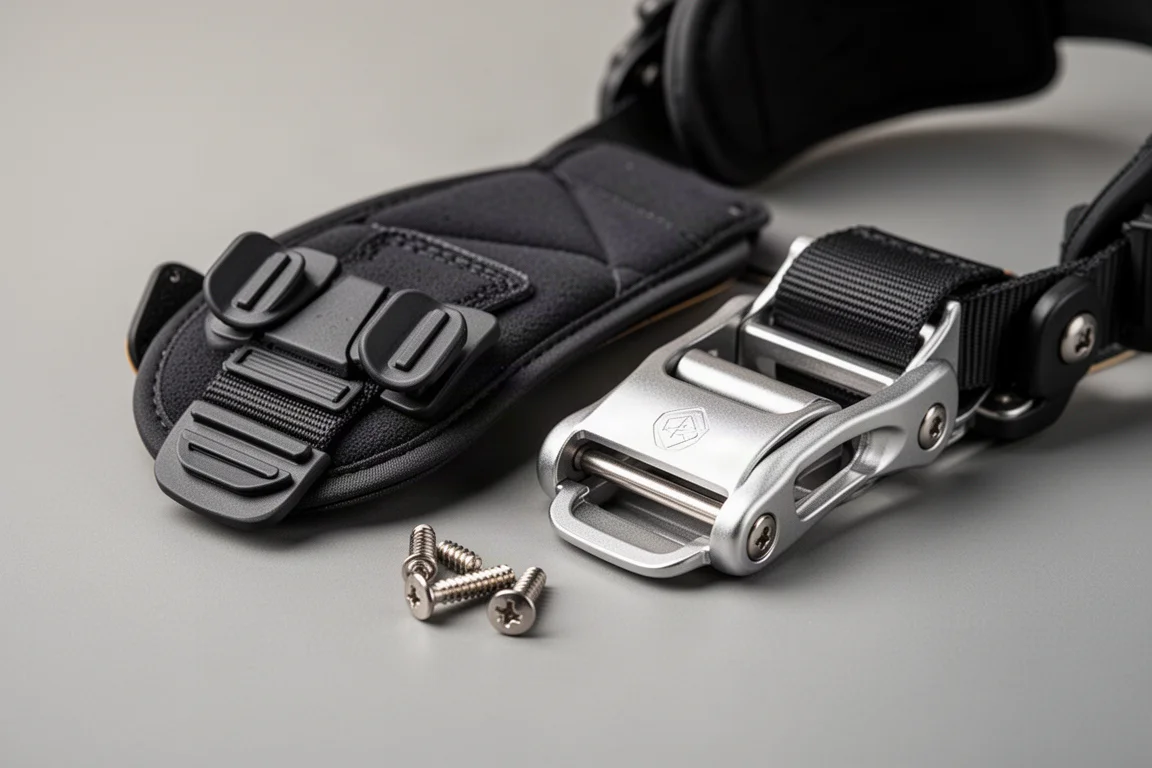
One critical setup detail: keep the middle strap a bit looser. That way, when you slide into the binding, it does not catch and force you to push your foot in. Getting this dialed properly is essential to the rear-entry experience working as intended. Which leads to the other big point: you cannot just bolt these on and head straight to the chairlift. Spend the time dialing in the straps and setup, and it performs the way you want. Skip that step and you are in for a frustrating day.
Straps, Ratchets, and Everyday Convenience
The hybrid strap design was a genuine surprise, with more forward flex than expected. You can drive into it and really feel it move forward. It is a multi-piece design with a bit of rubber padding, and internally it works almost like a two-strap system. The toe strap is generous, grips any boot shape, and stretches around it to lock things down.
The ratchets climb well, and the one-finger quick release works exactly as you would hope. Once you have found your settings, there is no fiddling: slip in through the back, flip the highback up, lock the latch, and go. If you want to crank it down a touch on the fly, a click or two is all it takes. No premature releases were encountered during testing, and the binding did everything asked of it.
On-Snow Feel and Flex
The overall flex sits in the middle of the road. You can ride all-mountain with it, but it leans toward the freestyle side. Driving into the binding, there is some give in the strap and the whole chassis moves in conjunction with it, which produces a different flex character than a conventional strap binding.
Underfoot, there is a bigger dead spot thanks to the larger disc, though it did not impede lateral flex from side to side. What the larger disc and foam pad do contribute is damping: this is a fairly damp binding, and that foam pad does a great job of dissipating kinetic energy. Through choppy, cut-up terrain, foot fatigue was never a concern.
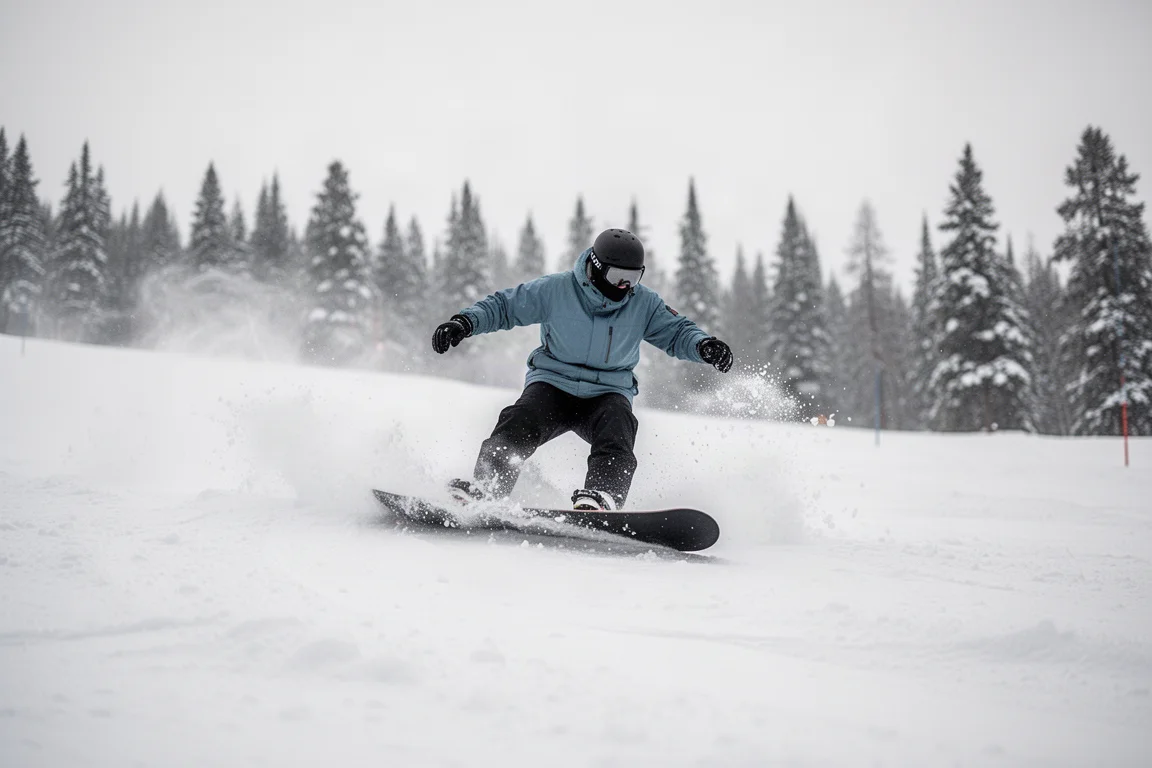
Compared to older Flow models, this is a step forward. Riders happily rocking older Flows would likely find the newer generation even better. It also helps that the Fuse model is a bit more freestyle friendly, and the locked-in cable engagement changes how power drives through the binding. Some people will like that, some will not, and it is entirely personal preference.
One compatibility note worth checking: with a Thraxis boot, part of the heel cup caught on the back of the boot because it sticks out slightly, producing rubbing when folding the highback down. Some boots may have this problem, some may not, so it is something to look at when considering Flow bindings.
Things to Consider Before Buying
The power dynamic is the deciding factor. This binding flexes differently, engages differently, and asks you to enter differently. If you have never ridden Flow, you need to be open to it, and it might take a couple of days to adjust to how it flexes with the cable, highback, and power triangle. Riders who are dead set on how traditional straps flex may not get along with it.
The setup time is the second consideration. These are not set-and-forget on day one, and a poorly dialed setup will color your entire impression. If comparable options interest you, the Bent Metal Lightning Supermatic, the thirtytwo TM Phase, and the Nitro step-on are worth a look.
Buying Advice
Buy the Fuse Hybrid if you are an all-mountain freestyle rider who values quick rear-entry convenience and is willing to spend an evening dialing in the straps and hidden adjustments. The payoff is a damp, moderately flexible binding that handles chop comfortably and never leaves you fiddling once set.

Check your boot shape against the heel cup before committing, since some boots may catch when the highback folds down. And go in with an open mind about the power triangle feel, because that different flex character is either the reason you will love it or the reason you will pass.
Conclusion
The Flow Fuse Hybrid delivers on the rear-entry promise without feeling like a compromise. It is damp, freestyle-leaning, more responsive than older Flow models, and packed with useful adjustments. It demands setup time and an openness to a different flex dynamic, but for riders who embrace the back-door entry style, it performs exactly as it should.
Product link
View more details for Flow Fuse Hybrid
This product is mentioned in the review. Check the specifications, options, and compatibility before buying.
View more details for Flow Fuse HybridFurther reading
Related Reviews
Snowboard Bindings
2024 Union Ultra Snowboard Bindings Review: A Cushy, Freestyle-Focused Favorite
Two seasons on the 2024 Union Ultra: a lightweight, tweakable freestyle binding with standout comfort, a damp molecular bushing, and thoughtful hardware fixes.
Snowboard Bindings
32 Team Phase Binding Review: A Fast Entry Binding Built for Freestyle Laps
The first binding from 32 uses the Phase chassis for quick step-in entry with a softer, freestyle-leaning flex. Here's how it performed on the snow.
Snowboard Bindings
Arbor Cypress Snowboard Binding Review: A Laid-Back Cruiser That Can Charge
A closer look at the Arbor Cypress binding's adjustability, strap feel, and that oddly tall highback before you decide to buy.