Camping Gear
Five Camping Gear Picks Worth a Closer Look
A modular sleep system, a three-season pad, a lightweight synthetic jacket, a wide-burner stove, and a portable propane fire pit, with the strengths and trade-offs that matter.
Introduction
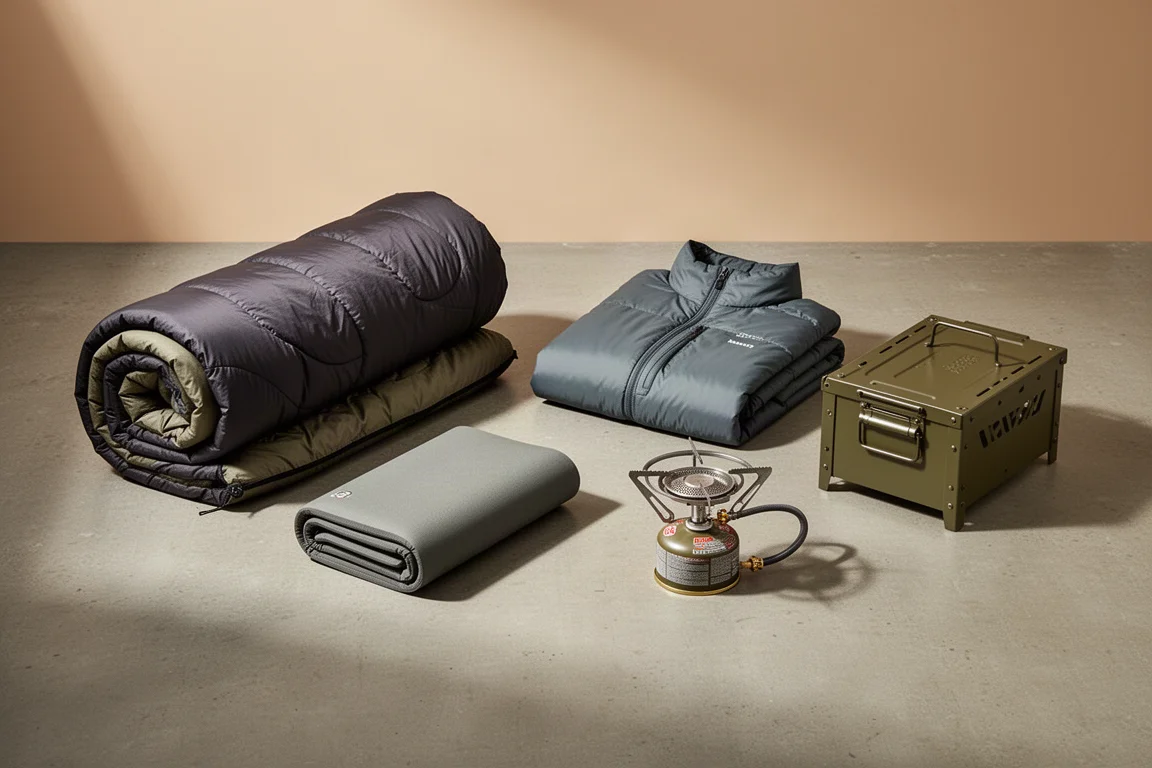
Not every piece of camping gear needs to be revolutionary. Most of the time you want equipment that does one job properly and does not ask for much in return. The five items in this roundup each take a slightly different angle on a familiar category: a sleeping system that changes shape with the season, a pad that balances warmth against weight, a jacket that stays warm without much bulk, a stove built around a wide burner, and a fire pit you can run when open wood fires are not allowed.
Below you will find what each piece does well, what it asks you to accept, and which kind of camper it fits best.
How to Judge This Kind of Gear
Four things separate gear that gets used from gear that stays in the closet. The first is warmth-to-weight, because every ounce you carry has to earn its place. The second is modularity, since a piece that can be split into smaller parts covers more of the year with less equipment. The third is ease of use, especially in cold, dark, tired conditions, when fiddly buckles and awkward zippers become real problems. The fourth is price, and here it helps to compare each item against the specific job you need it to do rather than against the cheapest option in the same category.
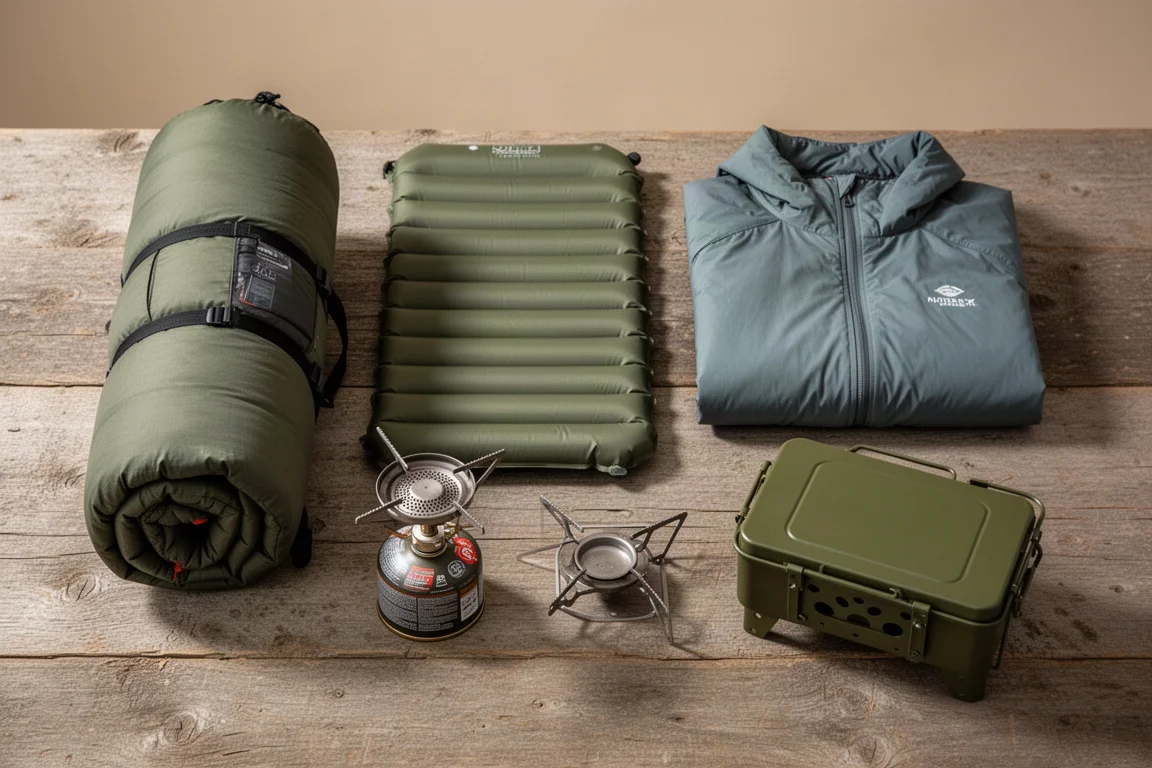
It also helps to be honest about how you camp. A backpacker who walks ten miles a day has different priorities than someone who loads a small SUV and drives to a site, and a piece that is perfect for one is often the wrong choice for the other. Keep that in mind as you read through the picks below.
Big Agnes Lost Ranger 20 Sleeping Bag System
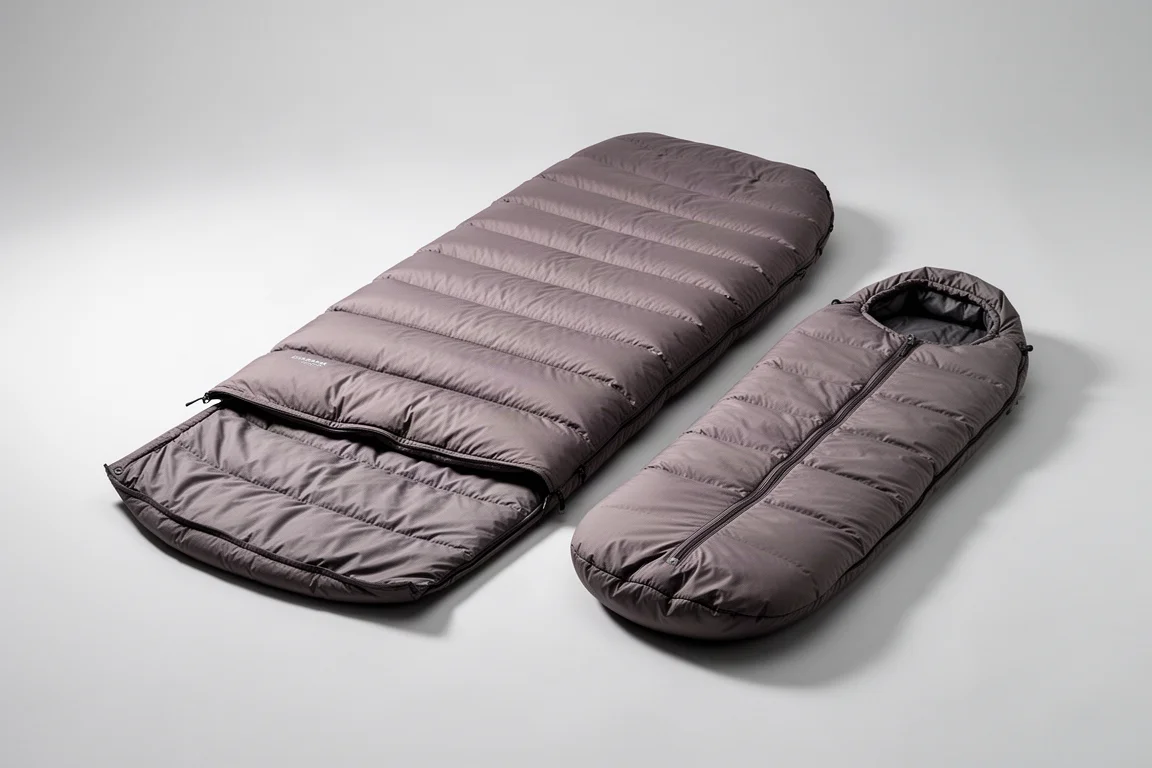
The Lost Ranger is a three-in-one sleep system, and the design is genuinely different from a standard bag. The base is a pad sleeve with a 50°F rated down top quilt sewn directly to one side of it. The other side runs a full-length zipper, which makes it much easier to get in and out than a closed bag. On top of that sits a separate mummy-shaped liner rated at 35°F. Used together, the system carries a 20°F rating. Use the liner alone and you are looking at roughly a 40°F to 45°F comfort range, which covers warm summer nights without hauling the whole kit.
Both the top quilt and the liner use sewn-through construction, and the quilt’s baffles run horizontally. That is a reasonable choice for lightweight pieces at these temperature ratings, and because the quilt is sewn to the pad sleeve there is not much room for down to migrate. Whether two sewn-through layers stacked together create enough of a barrier to avoid cold spots is the main open question, and it is the thing to watch on a first cold night out.
The details are thoughtful. The liner follows a side-sleeper-focused design with a center zip that stops around knee height, plus a fitted mummy hood that closes in around the head without a drawstring. There is an insulated foot box, and a dedicated pocket on top of the pad holds a pillow in place. The pad sleeve is sized to take a range of pad widths rather than locking you into one specific size. The whole system, liner, quilt, and sleeve together, weighs a little over two pounds.
One thing worth setting expectations around: the 20°F figure is a survival rating, not a comfort rating. Realistically, plan on comfortable use down to freezing, perhaps the mid-30s, and treat anything below that as a system you would want to supplement.
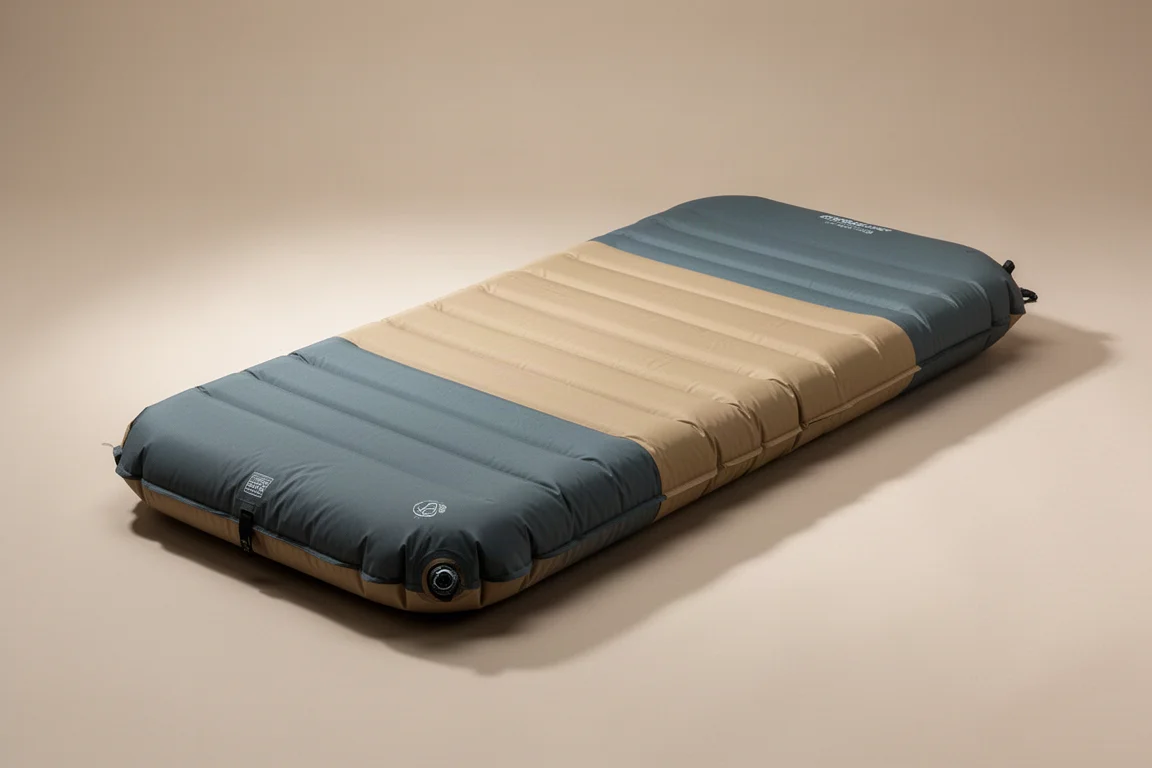
Big Agnes Rapide SL Sleeping Pad
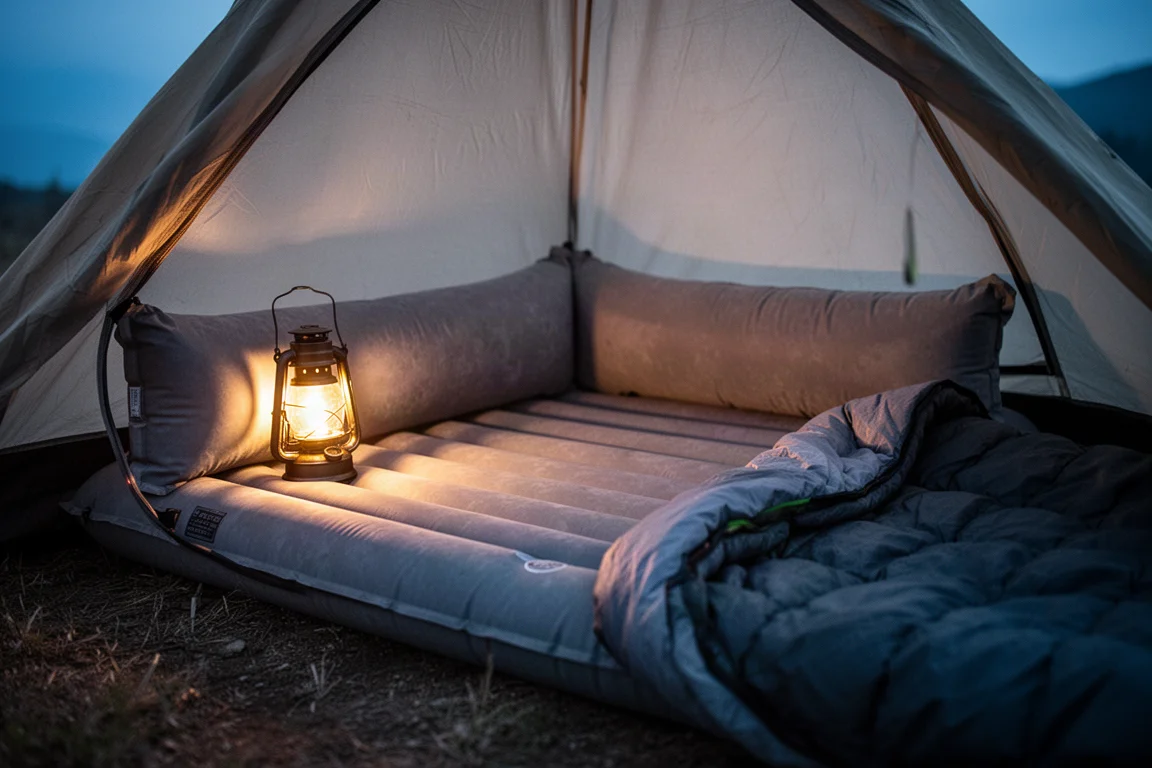
The Rapide SL pairs naturally with the Lost Ranger sleeve, but it stands on its own as a three-season pad. It carries an R-value of 4.2, which is the range most backpackers want for genuine three-season use. The shape is built on a proven platform: 3.5 inches of height through the center and 4.25 inches along the side baffles, so the edges sit slightly higher and cradle you instead of letting you roll off.
Weight is where it makes its case. In the 20 by 72 inch size it comes in at 19 ounces, which is light for the warmth it provides. The valve system is the least appealing part of the design and the one detail worth getting hands-on with before you commit, since you will use it every single night.
For anyone building a three-season kit around a single pad, this is a straightforward option to weigh against other pads in the same R-value band. It is lighter than several of its direct competitors, and the baffle layout is comfortable for both back and side sleepers.
Outdoor Research SuperStrand LT Jacket
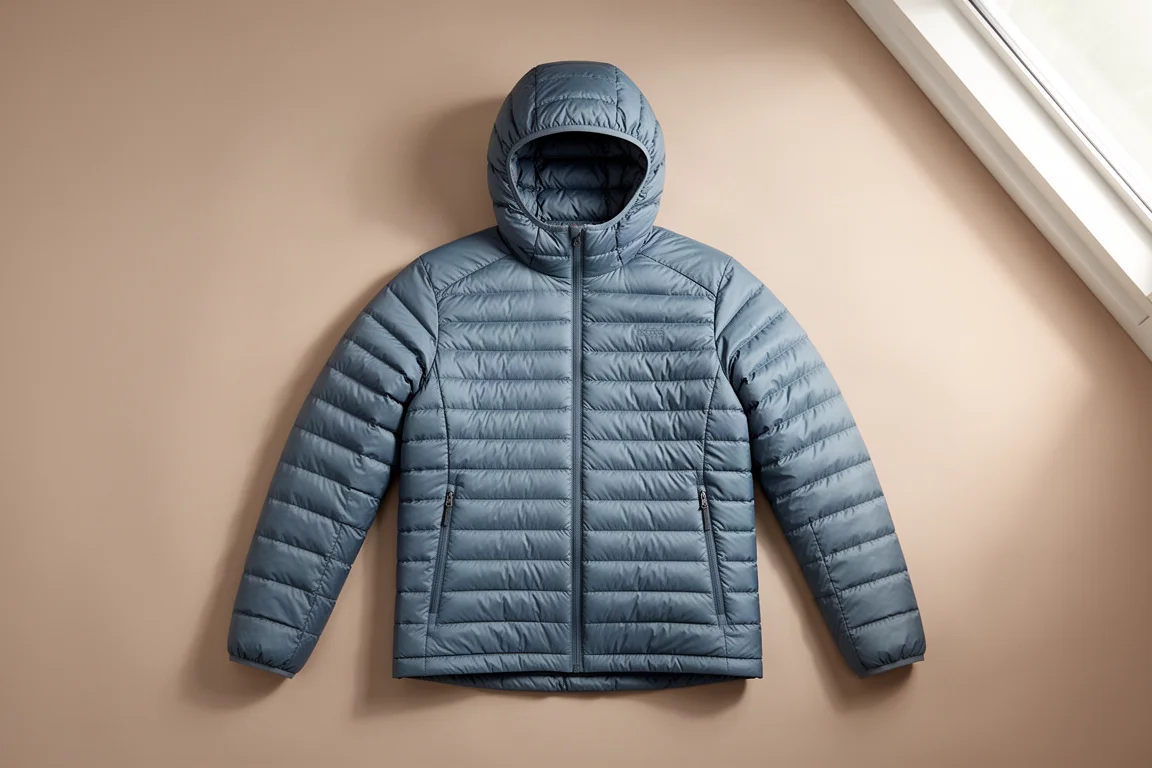
Out of the box, the SuperStrand LT does not look like a warm jacket. It is thin, and it does not have the loft of a heavier synthetic puffy. That first impression is misleading. The insulation is a down-like synthetic fill rather than a sheet material, and the quilted pattern across the jacket uses fewer seams and less stitching than a traditional baffle layout, which is part of how the weight stays low.
In practice it has proven surprisingly warm and comfortable for everyday wear through the winter months. It is supple, easy to move in, and it weighs just under 11 ounces in a size medium. For a synthetic jacket at around $200, that combination of light weight and real warmth is the reason it belongs in this roundup.
The trade-off is the fit. It runs boxier than other jackets from the same brand, with less of an athletic cut. That may have been intentional to leave room for layering underneath, but if you prefer a trim silhouette, try it on with the layers you actually plan to wear.
Soto Fusion Trek Stove
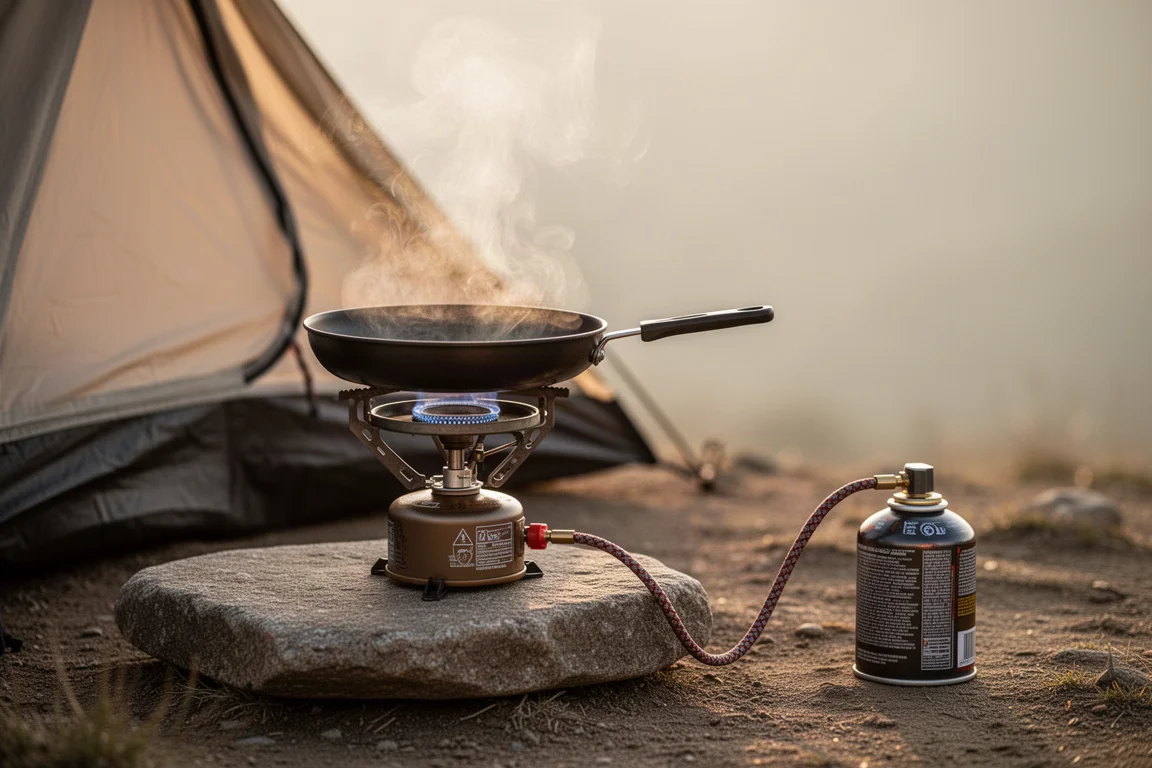
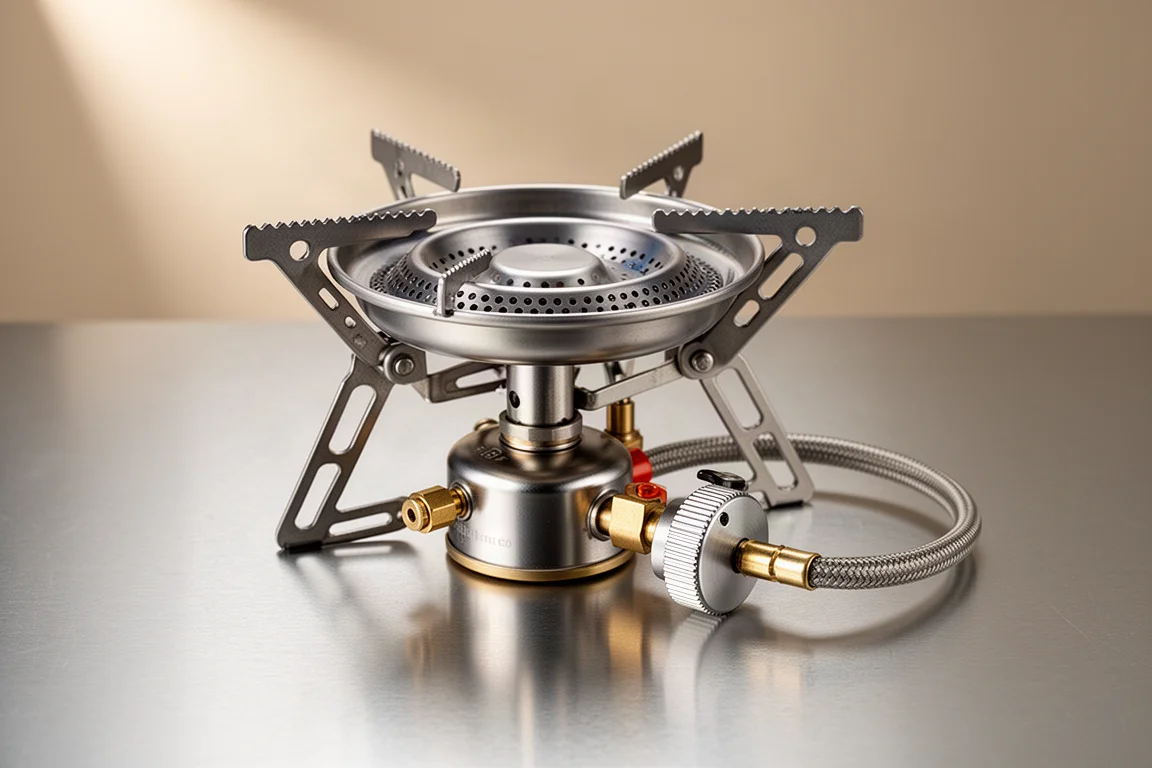
The Fusion Trek is a remote-canister stove, which means the burner sits on its own legs and connects to the canister through a hose. In theory that layout is what you want for cold-weather use, since you can run the canister inverted. In practice, getting a canister stove to perform reliably across all four seasons takes a fair amount of management, so it is better to treat that as a possibility than a promise.
Where it clearly delivers is the burner. It is large, and that makes it a good match for a frying pan or a bigger pot where you want heat spread across a wide surface rather than concentrated in the middle. Simmer control comes from a micro regulator built into the valve system, similar to the regulator used on other stoves from the same brand. The whole stove weighs just shy of 7 ounces.
The catch is price. At roughly $100 it sits at the top of what most people expect to pay for a canister stove, and there are capable alternatives well below that. The wide burner and the regulated valve are what you are paying for, so the question is whether those two things matter for the cooking you actually do.
Ignik Propane Fire Pit
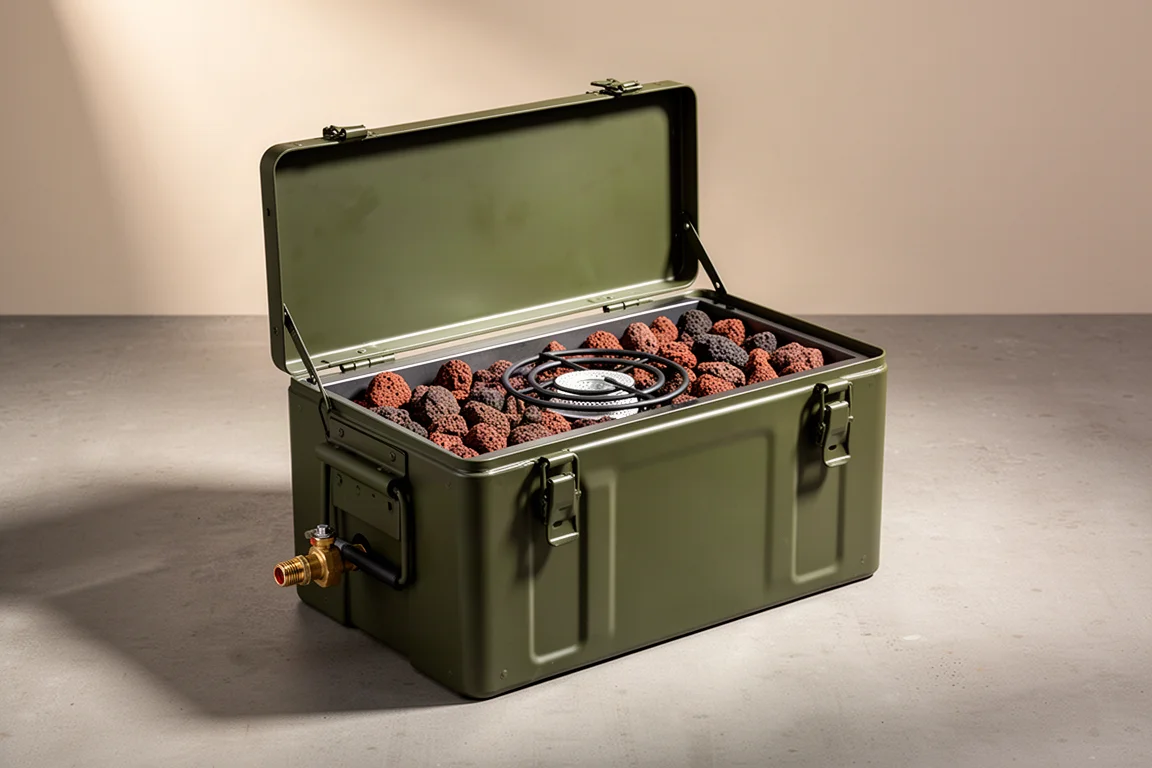
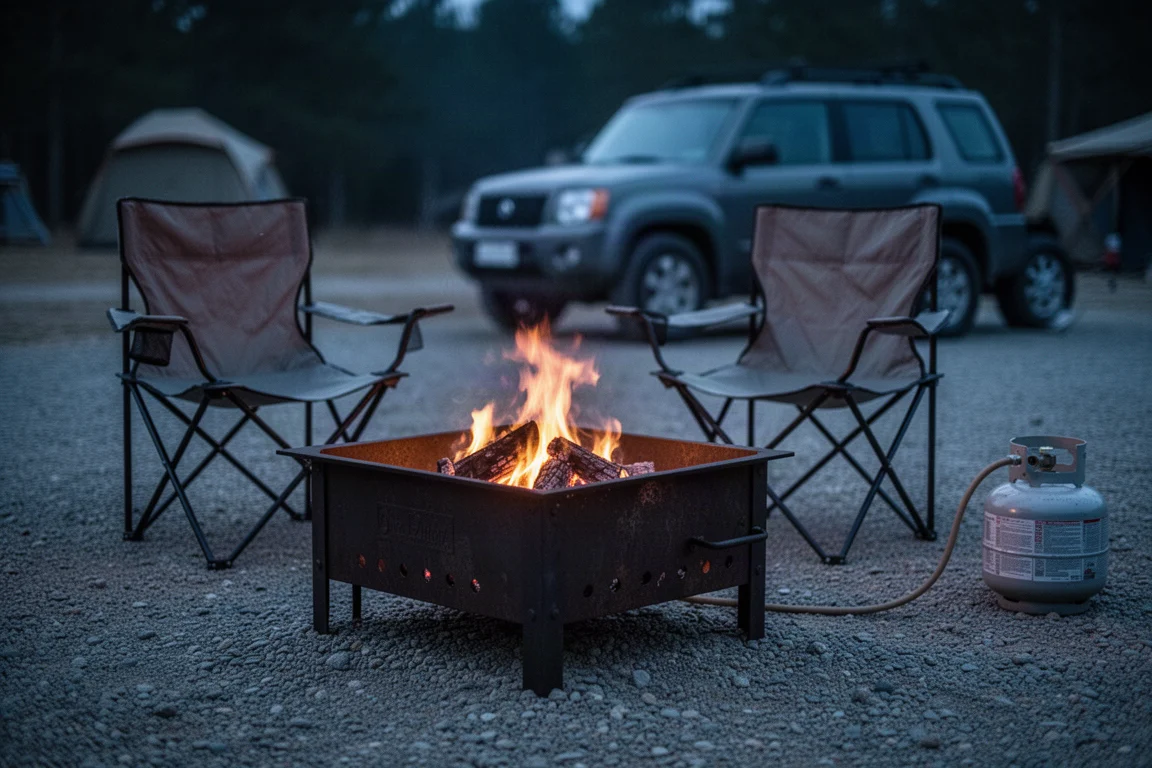
The Ignik propane fire pit takes the size and shape of an ammo can and puts a propane burner inside it. The result is a fire you can carry in one hand, set on a picnic table or the ground, and switch on and off in seconds. For car camping in a small SUV, that portability is the whole point, and it is a genuinely useful thing to have when fire restrictions rule out a wood fire.
It runs off a hose connection to a propane tank, and it pairs well with a five pound tank that you may already be carrying for a two-burner camp stove. Heat is immediate, and shutting it down is just as quick, which makes it easy to manage at the end of an evening.
The one design change worth flagging is the hose inlet position. It sits on the side of the unit, and after a full weekend of use it is clear that a connection at the end would be more convenient for routing the hose away from where people sit and walk.
Buying Advice: Matching Your Gear to Your Trips
The right way to read a roundup like this is to start from the trips you actually take rather than from the gear. If you backpack through three seasons, the pad and the sleep system are the two items that will change your nights the most, and both are worth the money because you use them on every trip. If your camping happens out of a vehicle, the fire pit and the stove deliver more day-to-day value, since they are the pieces you will set up and use every evening at camp.
A useful exercise is to sort these five items into two piles: the ones that solve a problem you have had on a real trip, and the ones that solve a problem you have only imagined. Buy from the first pile. The second pile can wait until a specific trip makes the case for it.
Conclusion
Each of these five pieces is built around a clear idea. The Lost Ranger turns one sleep system into three configurations. The Rapide SL keeps weight low at an R-value that covers three seasons. The SuperStrand LT shows that a thin synthetic jacket can still be warm. The Fusion Trek trades price for a wide, well-regulated burner. The Ignik fire pit makes a campfire possible when wood fires are not. Match the idea to the way you camp, and any of them will earn its place in the car or the pack.
Further reading
Related Reviews
Camping Gear
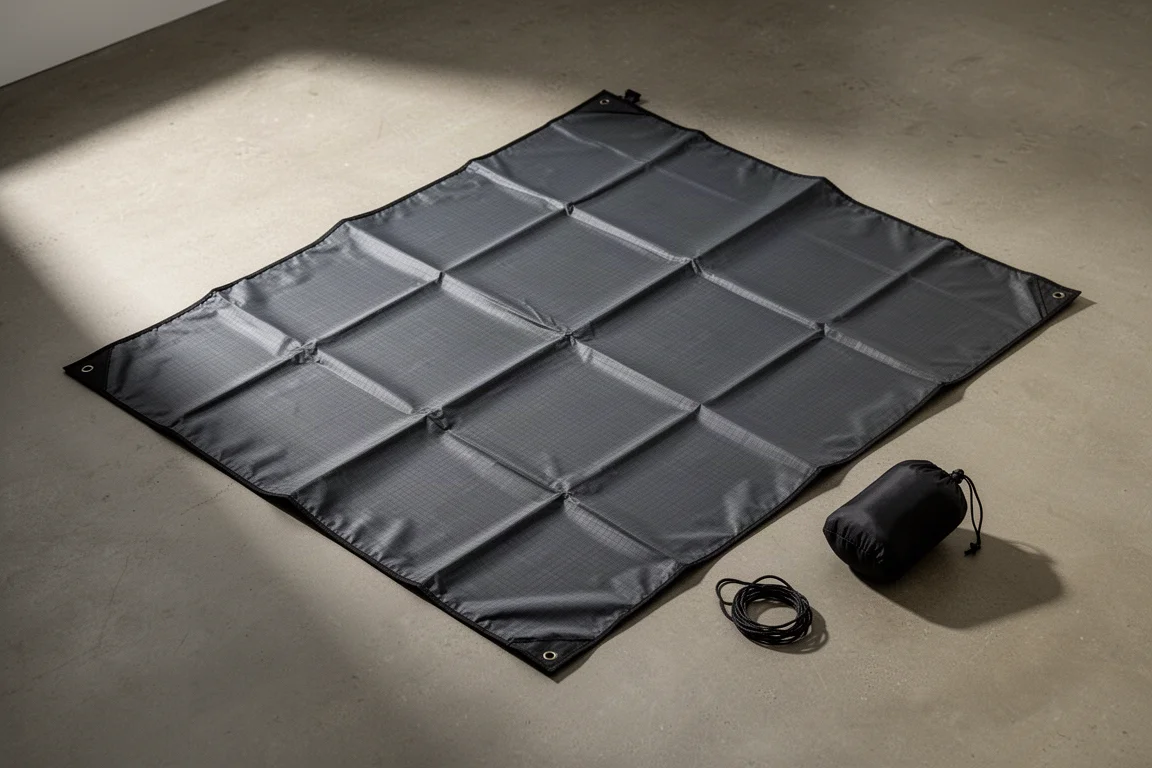
3FUL Ultralight Ground Sheet Review: A Two-Person Footprint Worth Packing
A 6.7 oz two-person ground sheet in ripstop silnylon, priced around $30. Here is what it protects, what it does not do, and who should pack it.
Camping Gear
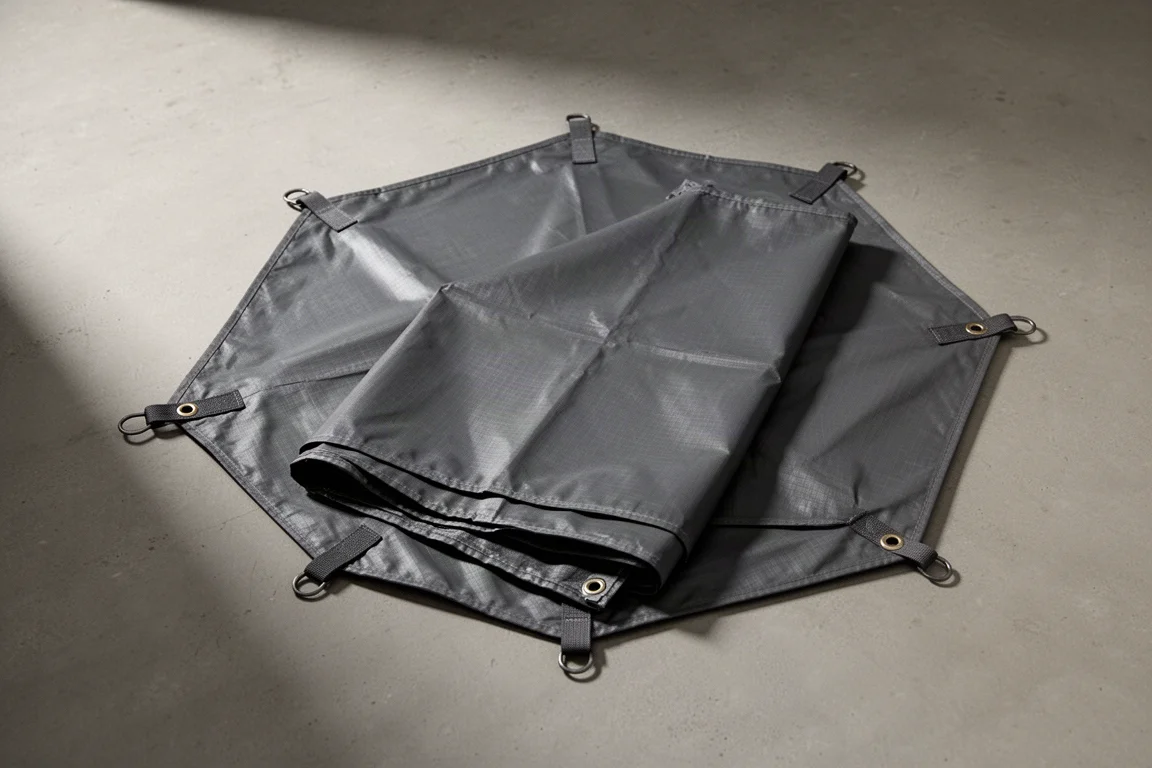
Backcountry Light Dual-Function Tarp and Floor Review: A Footprint First
A dual-purpose tent floor and tarp that keeps falling rain off you, but cannot block wind. Here is where it works and where it does not.
Camping Gear
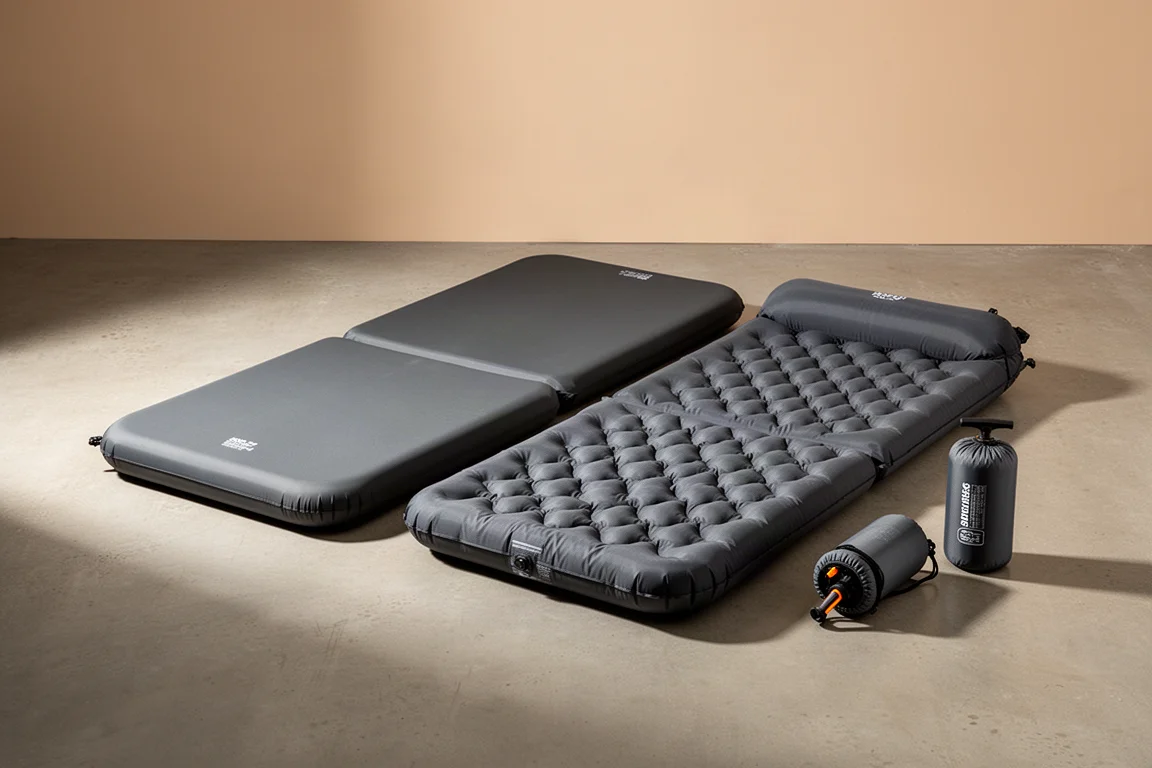
Best 2-Person Camping Mattresses for Couples: 10 Options Compared
A practical comparison of ten two-person camping mattresses, covering self-inflating pads, air pads and air mattresses for couples.