All-Mountain Skis
Fischer Ranger 96 Review: A Well-Rounded All-Mountain Ski
A practical look at the Fischer Ranger 96, a 96 mm all-mountain ski that pairs a poplar and beech core with a shaped metal laminate for an easy, smooth ride.
Introduction
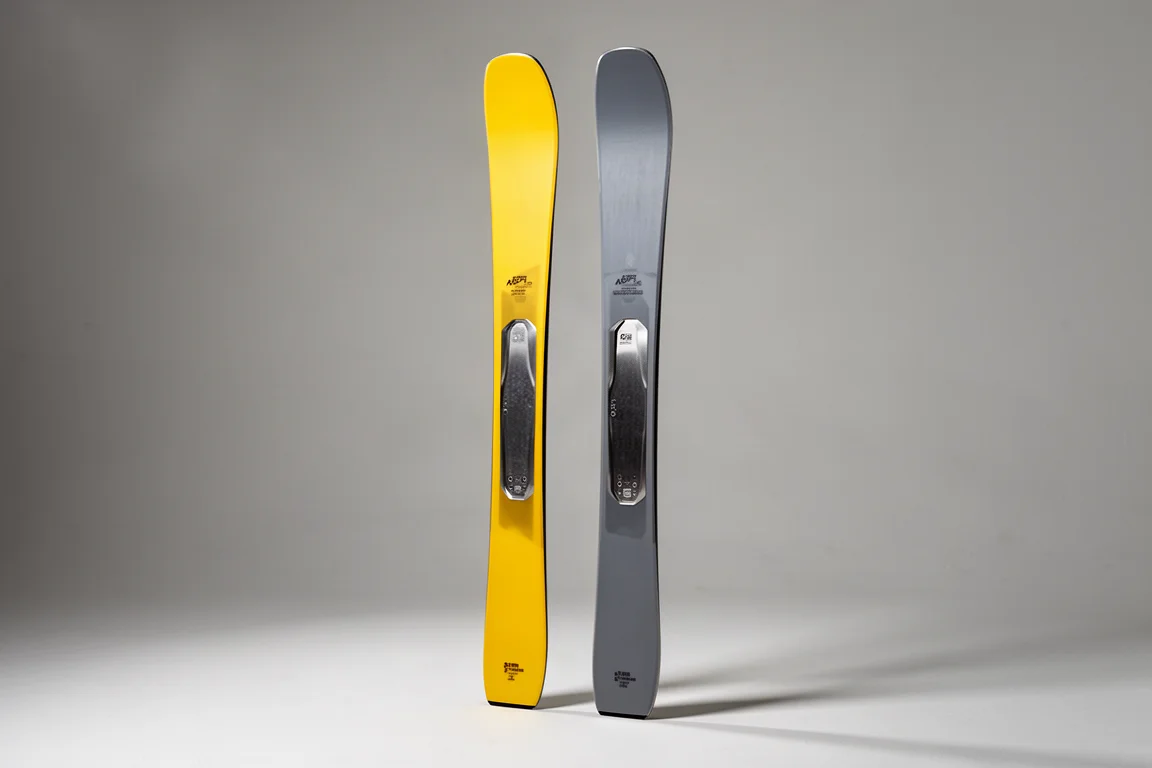
The Fischer Ranger 96 fills the middle of the Ranger line, and it did not arrive as a simple refresh. When it was introduced, it replaced both the Ranger 94 FR and the Ranger 99 Ti, two skis that occupied different ends of the same all-mountain conversation. The new 96 mm model takes shaping cues from the 94 FR and construction ideas from the 99 Ti, which makes it a genuinely new ski rather than a renamed one.
That mix is the reason the Ranger 96 feels different depending on who is standing on it. It is easier to ski than the metal-heavy models it succeeds, and it trades some top-end power for a smoother, more accessible ride. For a lot of skiers, that is the right trade.
Who This Ski Is For
The Ranger 96 suits skiers who want one pair to cover groomed runs and soft snow without fighting the ski. The shovel is soft and playful, the tail is stiffer from mid-foot back, and the overall flex pattern is friendly rather than punishing. Lighter and average-weight skiers will find it pulls into a turn with little effort, and its smooth, damp character keeps long days on the hill comfortable.
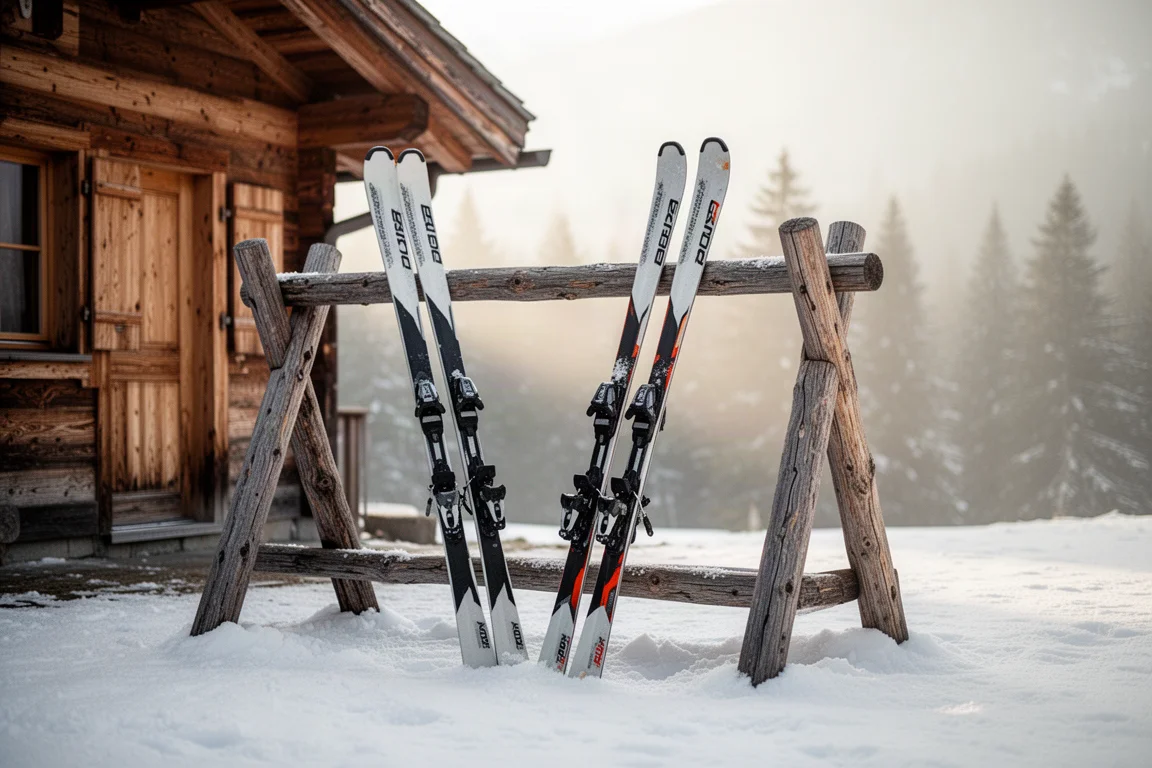
Heavier or very aggressive skiers are the group that should think hardest about sizing. In the 180 cm length, stronger skiers may find it harder to engage the tip in long, drawn-out turns, and the ski gives less support under a bigger frame than a full-metal all-mountain model. Moving to the 187 cm adds mass and material, which helps, but the Ranger 96 is still built around accessibility rather than maximum power.
Construction and Flex Pattern
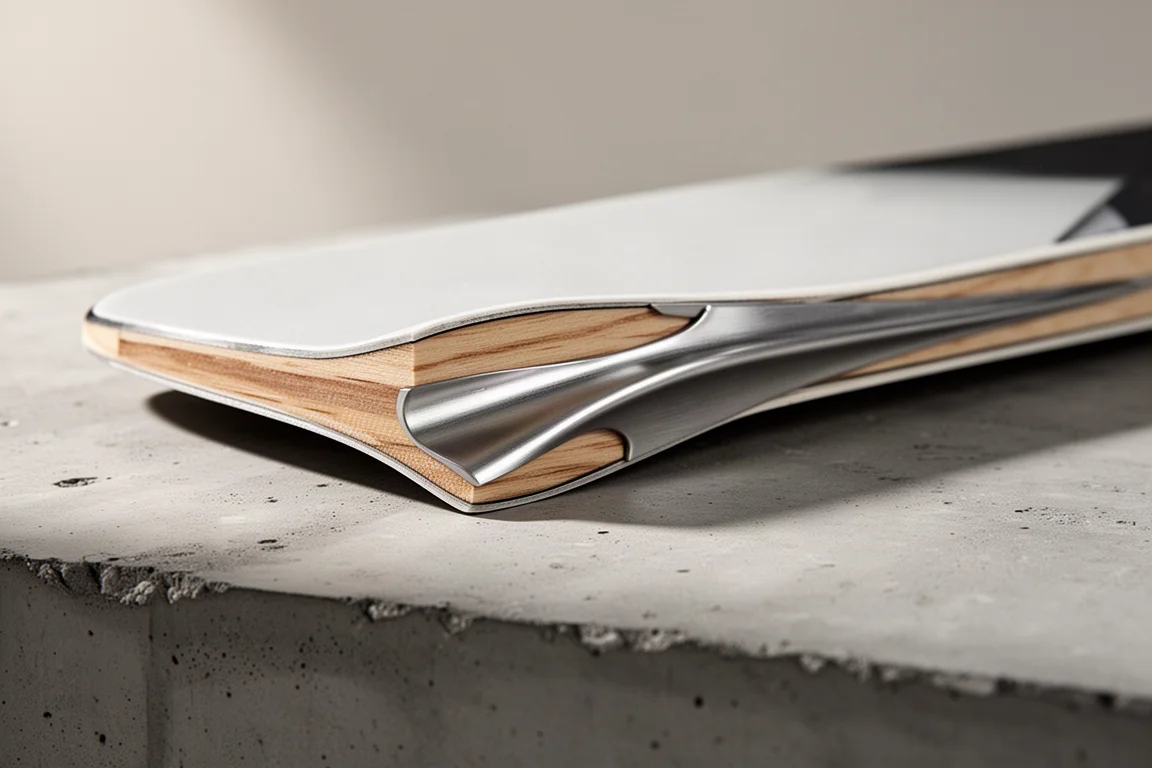
The construction is more traditional than the ski it partly replaces. There is no carbon nose and no rounded, beveled top section. Instead the Ranger 96 uses a full sidewall wood core made from poplar and beech, which gives it a flat sandwich build with vertical sidewalls and a comparatively thin profile.
The metal is the interesting part. Rather than two full sheets, the ski uses a shaped titanium laminate in roughly an H shape that runs from around the mid-shovel to the mid-tail, with a flex cut at the mount point. That cut lets the ski flex more freely through the middle while the metal still provides support underfoot and toward the back of the ski. The result is a flex pattern that is not uniform: the shovel bends easily and feels playful, while the tail feels stiffer from mid-foot back. That combination is what gives the ski its easy turn entry and its reasonably strong finish.
On-Piste Carving Performance
On groomers, the Ranger 96 is not as powerful as the Ranger 99 Ti, and it is not trying to be. What it gives up in outright strength it gains back in ease. The softer shovel makes turn initiation intuitive, and the ski feels smooth and damp, with less of the snap and pop that gave the older model its energetic character.
For lighter skiers, that translates into a very natural carve. The ski bends through the whole length, holds an arc, and feels stable without demanding a lot of input. Against the wider Ranger 102, the 96 is the better carving tool: it is narrower underfoot, quicker edge to edge, and carries its metal further along the length of the ski, which shows up in cleaner turns on firm snow.
The trade-off shows up for heavier skiers and in long, high-speed turns. Getting the tip to engage in a big radius turn takes more effort in the 180 cm, and the ski does not deliver the same planted, locked-in feeling as the stiffer models in this width class. Short and medium radius turns remain easy and fun at almost any weight.
Off-Piste and Mixed Conditions
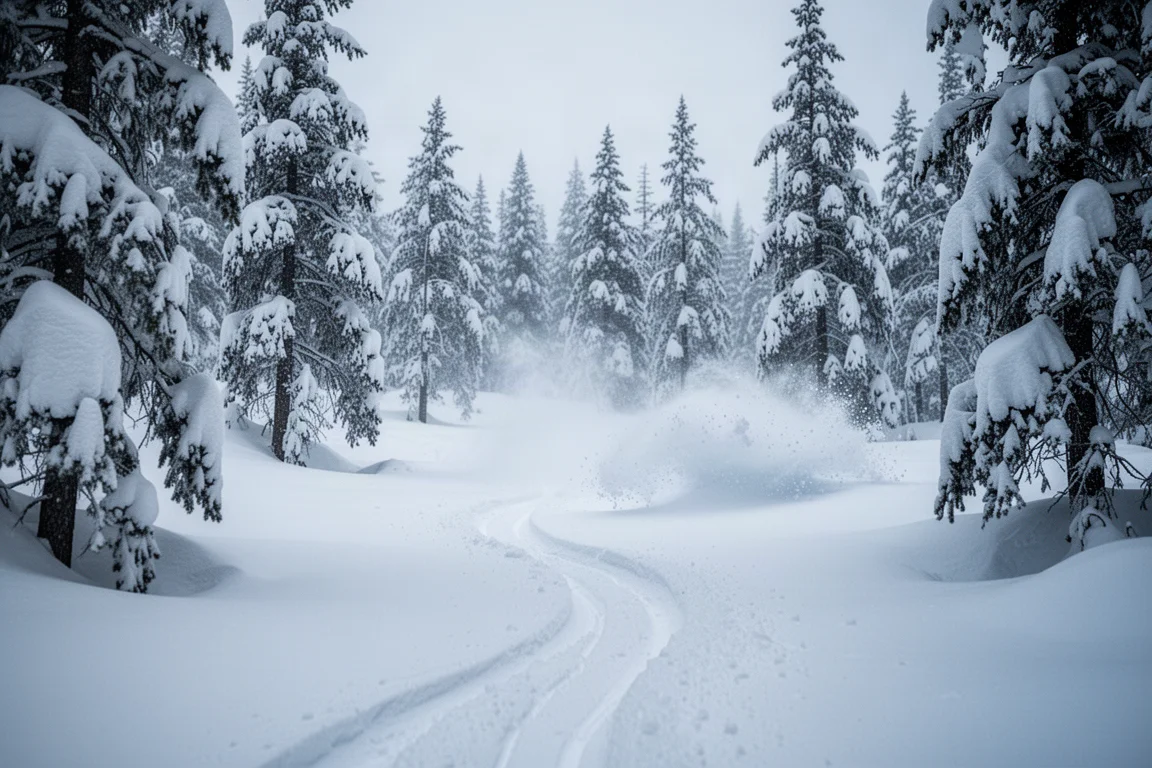
Off-piste is where the Ranger 96 becomes genuinely easy to recommend. It is agile in bumps and trees, releases its edges predictably, and pivots in a very tight space, which makes it comfortable in steep, narrow terrain where quick direction changes matter more than power. The damp, smooth feel carries over from groomers, so choppy snow and variable conditions do not translate into a jarring ride.
It is not as quick or as energetic as the narrower freeride models it replaced, and skiers who want a lively, poppy feel may notice the difference. It can also be skied switch, and it handles park laps competently, but the Ranger line is not built around park skiing, and a dedicated park ski will be more fun in that setting. It also works well for telemark turns, where the smooth flex and easy edge release make it a natural fit.
How It Compares to Other Skis
The Ranger 96 sits in a different group than the Ranger 99 Ti did. Instead of competing with stiff, metal-heavy all-mountain skis, it belongs in the conversation with models such as the Ripstick 96, the Maverick 95 Ti, and the Rustler 9. Against the Rustler 9, the Ranger 96 finishes a carved turn more cleanly, while the Rustler 9 feels more surfy and smeary in soft snow.
Compared with the Black Crows Serpo, the key difference is metal length: the Serpo runs its metal further along the ski, which changes how much support you feel toward the tail. Against the Nordica Enforcer 94, the Ranger 96 reads as a lighter, less aggressive, less fatiguing version of the same idea, and it is a closer comparison to the Enforcer 94 than to the K2 Mindbender 99, which uses a much longer metal layout. The Bent 100 has a snappier, more energetic flex pattern, and it lands closer to the Ranger 102 than to the 96.
Things to Consider Before Buying
Sizing matters more here than on many all-mountain skis. The 180 cm works well for lighter and average-weight skiers, while the 187 cm is the better choice for heavier or more powerful skiers who want more mass and support underfoot. Buyers who are used to a stiff, full-metal ski should expect less top-end power and a calmer, less energetic feel.
Park skiers should look elsewhere for a dedicated setup, even though the ski can be ridden switch. Skiers who prioritize a lively, poppy personality may also prefer the wider Ranger 102, which has more rocker in the tail and a more playful profile.
Buying Advice
The Ranger 96 makes the most sense as a single-ski solution. For most skiers looking for one pair to handle groomers, bumps, trees, and soft snow, a mid-90s waist is the default answer, and this ski delivers that versatility with an easy, smooth ride that suits a wide range of ability levels.
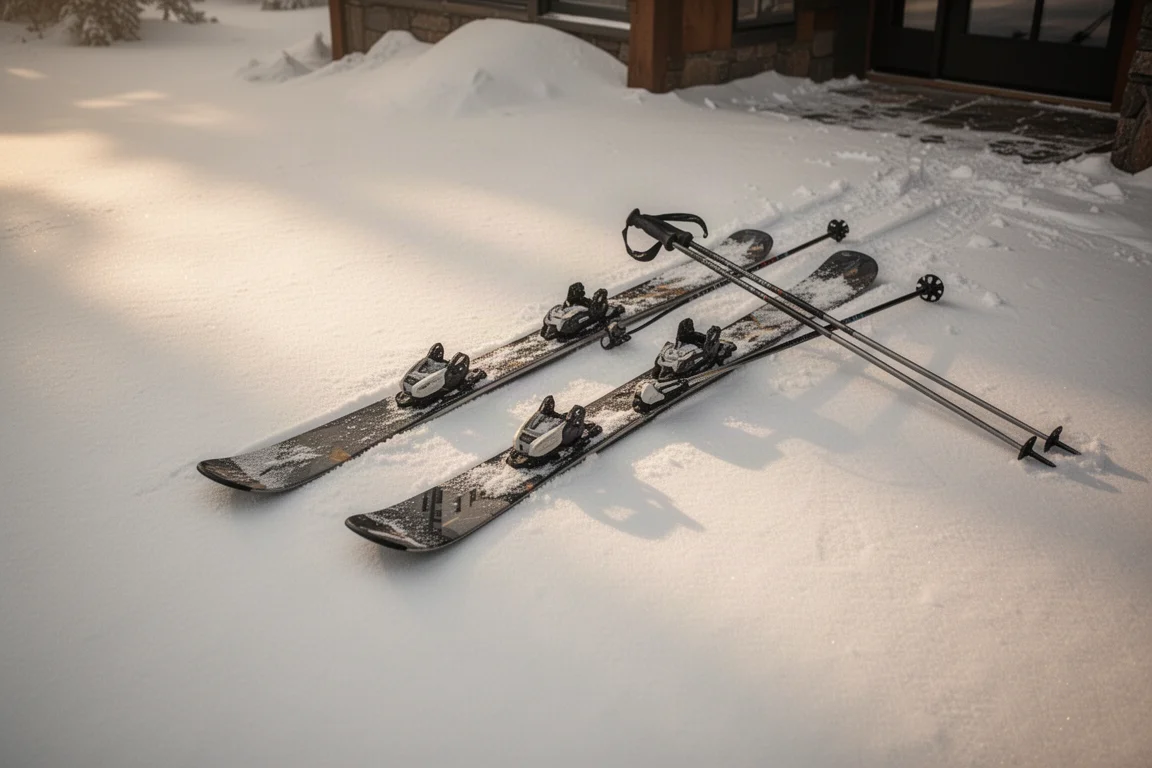
If you already own a narrower carving ski and a wider powder ski, the Ranger 96 fits neatly between them as the everyday option, and that three-ski setup covers almost everything a resort season can throw at you. Skiers who spend their time spinning off jumps, skiing switch, and chasing maximum playfulness will get more out of the Ranger 102, but that is a preference rather than a shortcoming of the 96.
Conclusion
The Fischer Ranger 96 is a well-rounded all-mountain ski that trades peak power for accessibility, and it succeeds at that goal. A poplar and beech core with a shaped metal laminate gives it a soft, playful shovel and a supportive tail, which translates into easy turn initiation, smooth edge release, and confident handling in tight terrain. Heavier skiers should size up to the 187 cm and accept that this is not the most powerful carver in its class, but for the majority of skiers who want one ski to do a lot of things well, the Ranger 96 is a sensible, low-stress choice.
Product link
View more details for Fischer Ranger 96
This product is mentioned in the review. Check the specifications, options, and compatibility before buying.
View more details for Fischer Ranger 96Further reading
Related Reviews
All-Mountain Skis
100mm All-Mountain Skis Compared: 23 Versatile Models Worth Knowing
A practical walkthrough of 23 all-mountain skis around 100mm underfoot, covering weight, rocker, metal construction, and the rider each model suits best.
All-Mountain Skis
2026 Black Crows Camox Review: A More Stable, More Versatile All-Mountain Twin Tip
The 2026 Black Crows Camox adds an ash layer underfoot, wider tips and tails, and a revised rocker profile. Here is what those changes mean on snow.
All-Mountain Skis
Armada Antimatter 88 Review: A Light, Lively All-Mountain Ski That Rewards Any Style
The Antimatter 88 pairs a poplar core with carbon stringers for a surprisingly energetic ride that suits intermediates and experts alike.