Backpacking Stoves
Fire Maple Petrol Titanium Stove and G2 Pot Review: An Ultralight Backpacking Cook Kit
A titanium remote canister stove and a 750 ml aluminum pot that pack into one compact kit, with real boil times, honest limitations, and a clear verdict on value.
Introduction
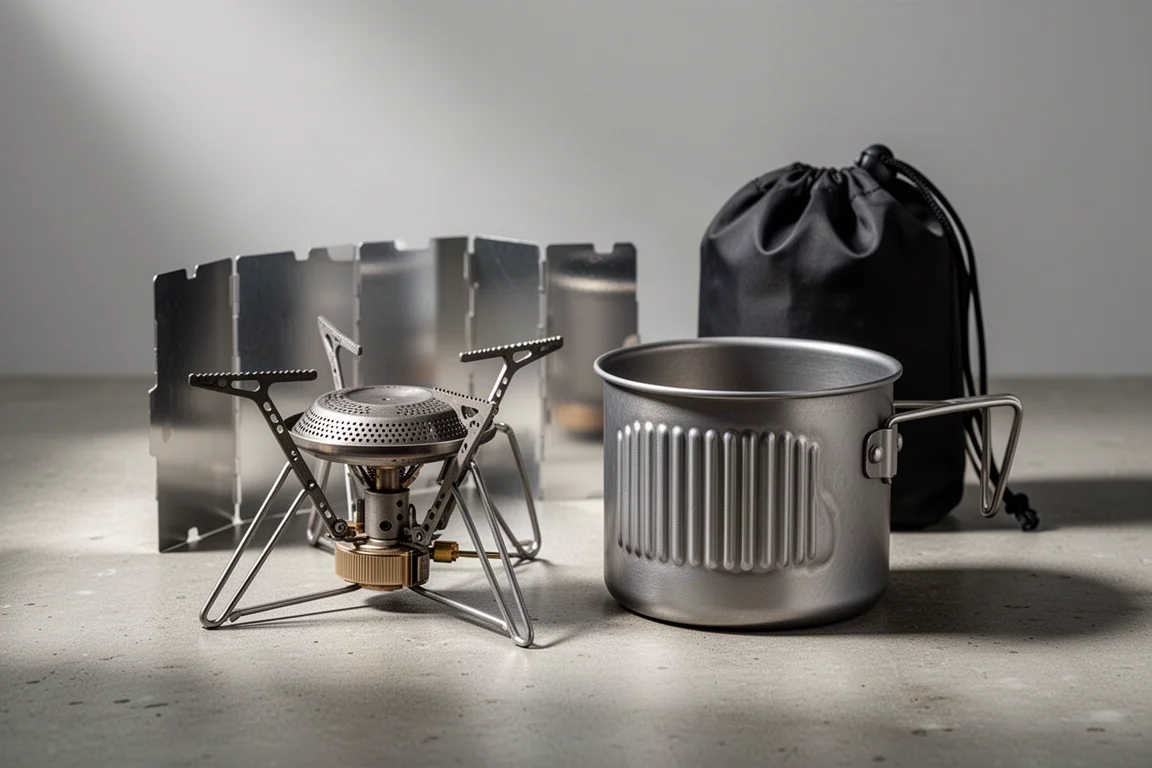
A backpacking cook kit succeeds or fails on how its parts behave together. The Fire Maple Petrol Titanium Ultralight Backpacking Stove and the Fire Maple G2 Pot were clearly designed as partners: the stove nests inside the pot, the pot seats onto the stove’s folding legs, and the complete assembly packs down small enough to disappear into a side pocket of a pack.
Both pieces also work on their own, which matters if you already own one half of the pairing or want to combine them with gear you already trust.
Fire Maple describes the Petrol as the lightest remote canister stove ever made. That is a bold claim and a difficult one to verify. What is easy to verify is the number on the scale. The stove weighs 3.6 oz, and the included aluminum windscreen adds roughly half an ounce on top of that.
The Fire Maple Petrol Titanium Ultralight Backpacking Stove
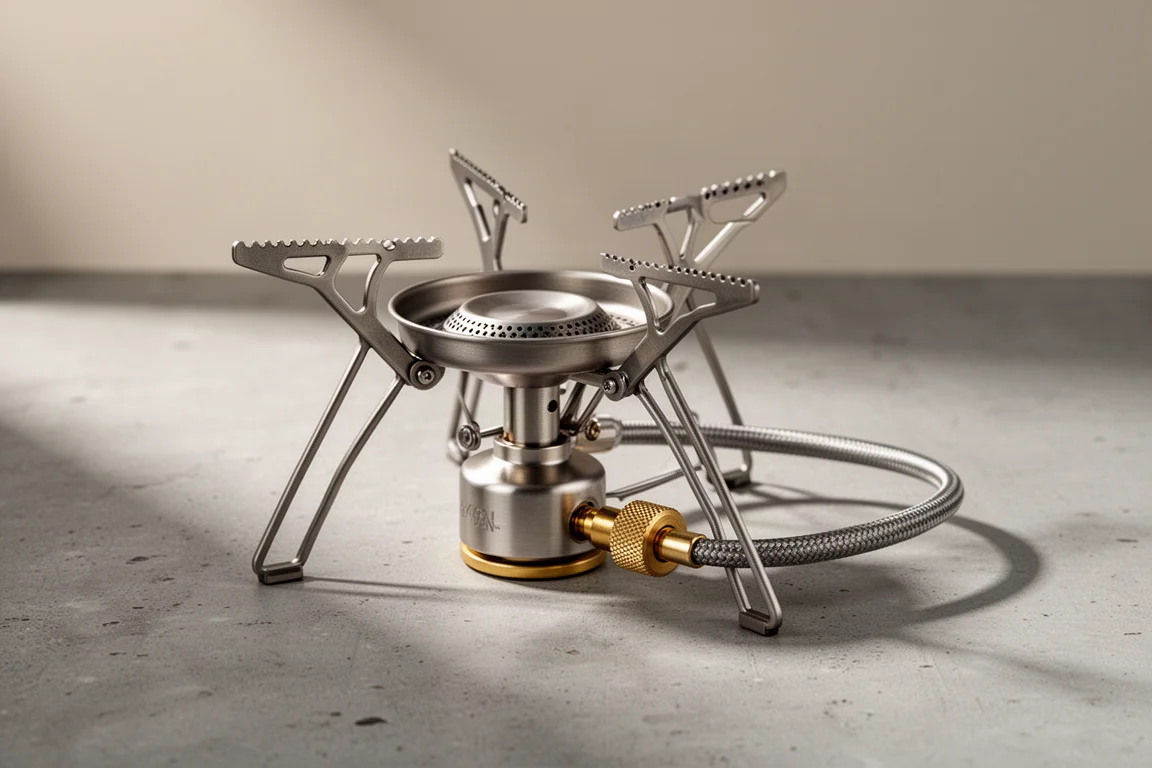
The Petrol is a remote canister stove, meaning the fuel canister sits away from the burner and connects through a hose about 14 in long. That layout keeps the burner low and stable, and it also lets you position the canister away from the heat of the flame. The stove runs on isobutane only.
Build quality is the standout. The machining is clean, the edges are sanded smooth, and the folding pot supports lock firmly into place once deployed. The tips of those supports are lightly textured, enough to grip cookware without being aggressive. Materials combine titanium, stainless steel, aluminum, copper, and silicone, and the folded stove measures roughly 3.7 in long, 3.4 in wide, and 1.3 in deep.
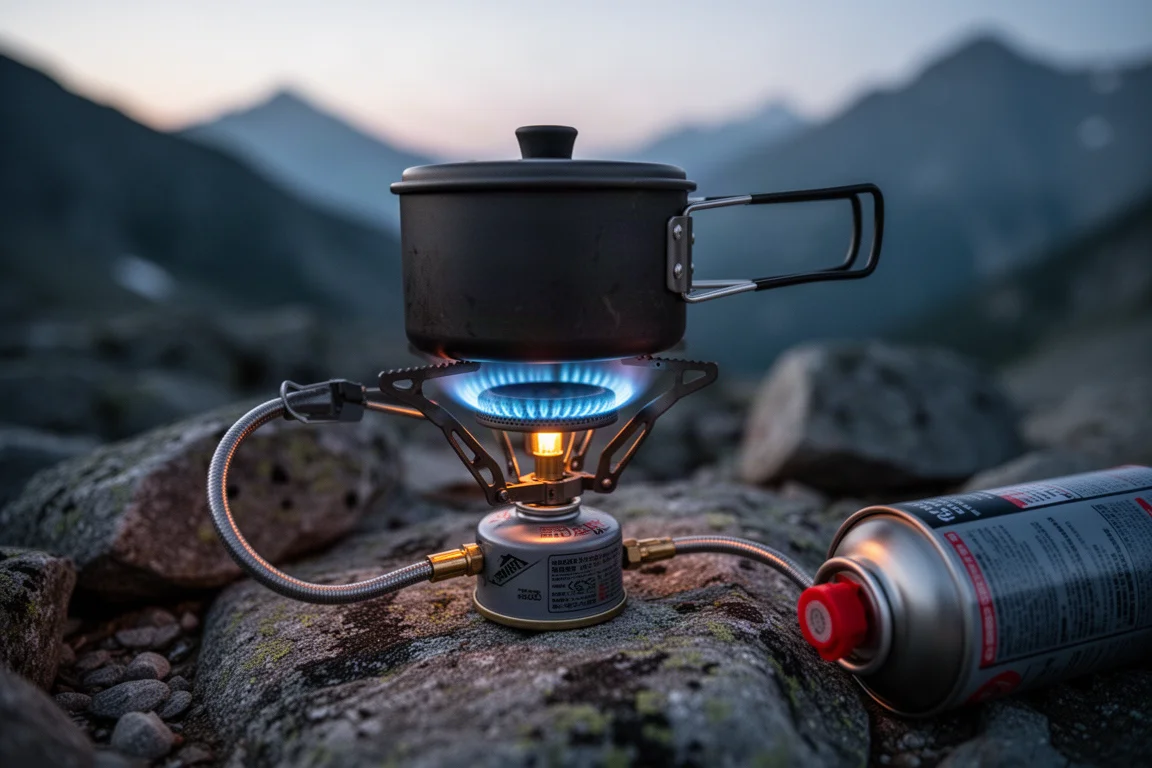
The burner is rated at 9,213 BTU, which is a lot of output for a stove this small, and the small burner head still delivers strong performance. The adjuster carries just the right amount of tension: spin it open for a fast boil, or dial it down for a controlled simmer without fighting the valve. There is no built-in igniter and no regulator, so an external ignition source is essential.
Two cups of cold water reached a boil in 2 minutes 58 seconds in cool, breezy conditions with the windscreen in place. The fastest boil recorded for the same volume of water was 1 minute 50 seconds. The pot supports sit close enough together and span wide enough that the stove accepts larger pots, cups, kettles, and pans without complaint.
The Fire Maple G2 Pot
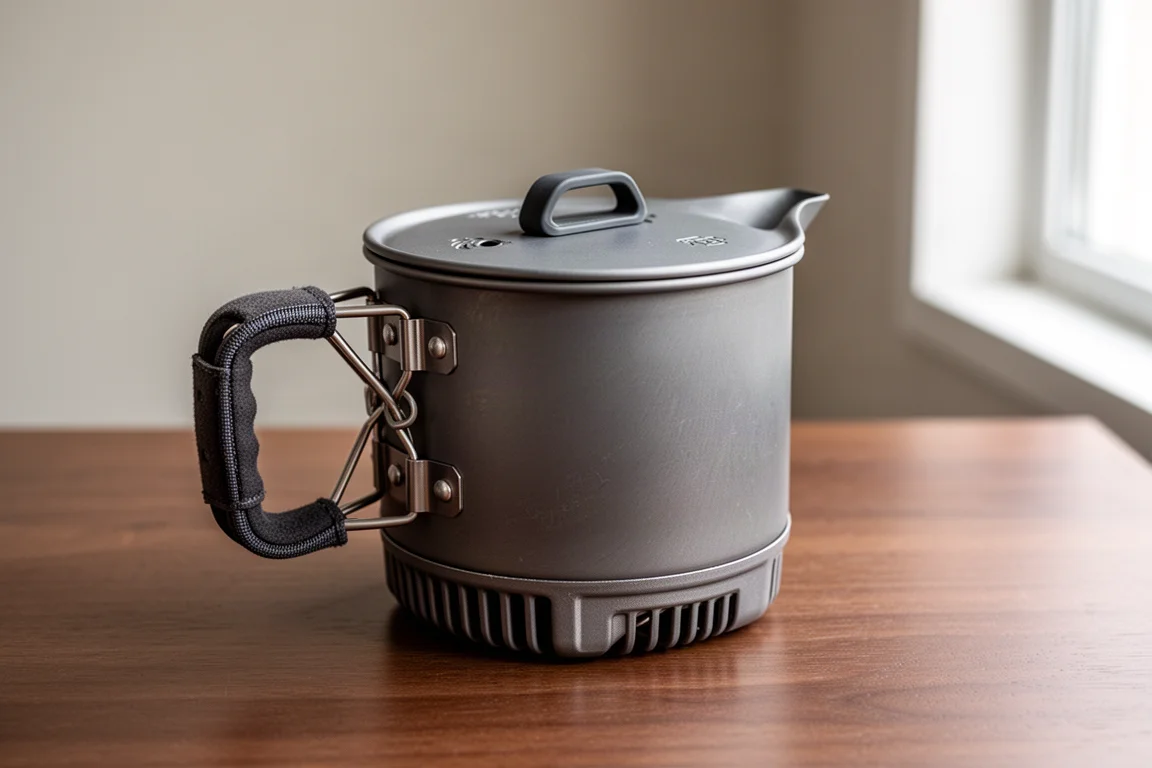
The G2 is a 750 ml pot measuring about 5.5 in by 5 in by 5.8 in and weighing around 6 oz. Its mesh storage bag adds roughly half an ounce. Construction uses aluminum along with silicone, neoprene, and plastic components.
A folding handle locks into place and is wrapped in an insulated cover, so a hot pot can be lifted without reaching for a cloth. The lid includes a pour spout, a vent, and a silicone grab tab. On the underside, a set of heat spreader fins catches the heat hitting the base, transfers it outward, and returns it to the pot, which shortens boil times and reduces fuel consumption. Three slots in the base line up with the stove’s legs.
The one genuine miss is the measurement markings inside the pot. They are too sparse to be useful when measuring water or portions, which is a small frustration on an otherwise well-executed design. At $24, the pot is an inexpensive addition to a pack.
How the Stove and Pot Fit Together
Assembly is simple once you know the trick. The three legs of the stove slot into the three recesses in the base of the pot, and the pot settles on top. Joined together, the system stands about 8.5 in high and measures roughly 5 in across without the handle, or 9 in with the handle extended. The stove and windscreen store inside the pot, and each piece ships with its own drawstring bag.
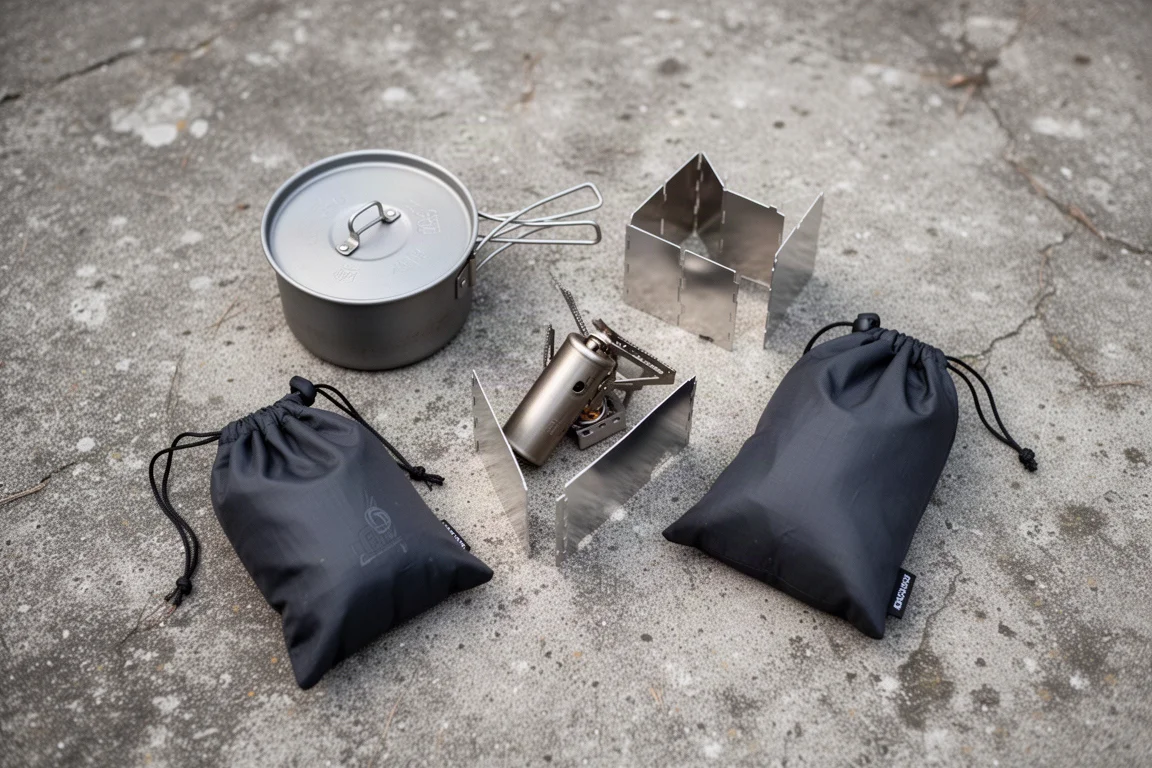
Packed this way, the kit takes up very little room and keeps loose components contained. The pairing is not compulsory either. Because the pot supports are broad and closely spaced, the stove works with cookware you already own, and the pot works on any compatible canister stove you happen to carry.
Real-World Performance and Field Notes
Performance is where the kit earns its place. The stove stayed planted on uneven soil, and the pot supports held a loaded pot without wobbling. The adjuster made it easy to move from a hard boil to a gentle simmer, which is useful for anything beyond reheating water.
The included windscreen is not optional in practice. The burner has no shielding of its own, so wind strips heat away quickly and the windscreen is what keeps boil times consistent. With the windscreen in place and a slight breeze moving through camp, the kit still boiled two cups of water in under three minutes, and it has managed 1 minute 50 seconds at its best.
The kit has been used for backpacking trips and for overlanding, cooking full meals rather than just hot drinks. It performs noticeably better in a backpacking role, where a compact pot and a light fuel load suit the design. For heavier camp cooking, the stove can be pushed to its limits.
Limitations Worth Knowing
There is no regulator, which is the most significant trade-off. In cold conditions this stove will not be the strongest performer, and fuel delivery will not stay as consistent as a regulated design.
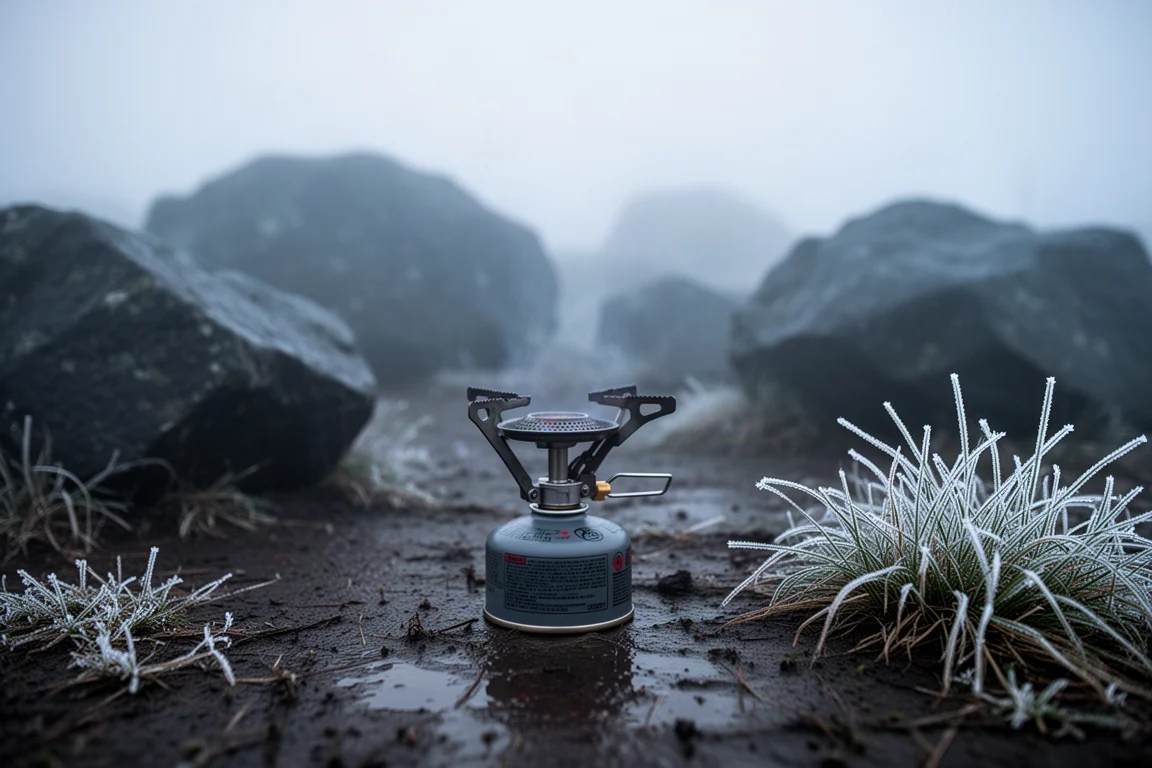
There is also no built-in igniter, so a lighter or ferro rod has to travel with the stove every time. Getting the pot to line up with the legs takes a little fiddling, which is not a real problem but is not as simple as setting the pot down on a flat grate either.
Fire Maple rates the system to support 7.7 lb. That figure is achievable, but it is pushing the design. At 5 lb the setup stays solid and level. Above that, some flex begins to appear and the pot no longer sits completely flat on the supports, which is worth remembering if you plan to cook large meals in a single pot.
Who This Kit Suits
This pairing suits backpackers who count grams and want a compact, stable cooking setup that boils water quickly and simmers when needed. It also suits anyone building a modular kit, since most Fire Maple Petrol stoves and pots are compatible with one another, so components can be mixed and matched over time.
It is a less natural fit for cold-weather trips where a regulator matters, or for campers who regularly cook heavy, multi-person meals in a single large pot.
Overall Buying Advice
Value is a strong point on both halves of this kit. The pot is priced at $24, which is modest for a 750 ml pot with an insulated locking handle, a vented lid, and heat spreader fins. The stove’s value holds up as well, particularly given its 9,213 BTU output and 3.6 oz weight.
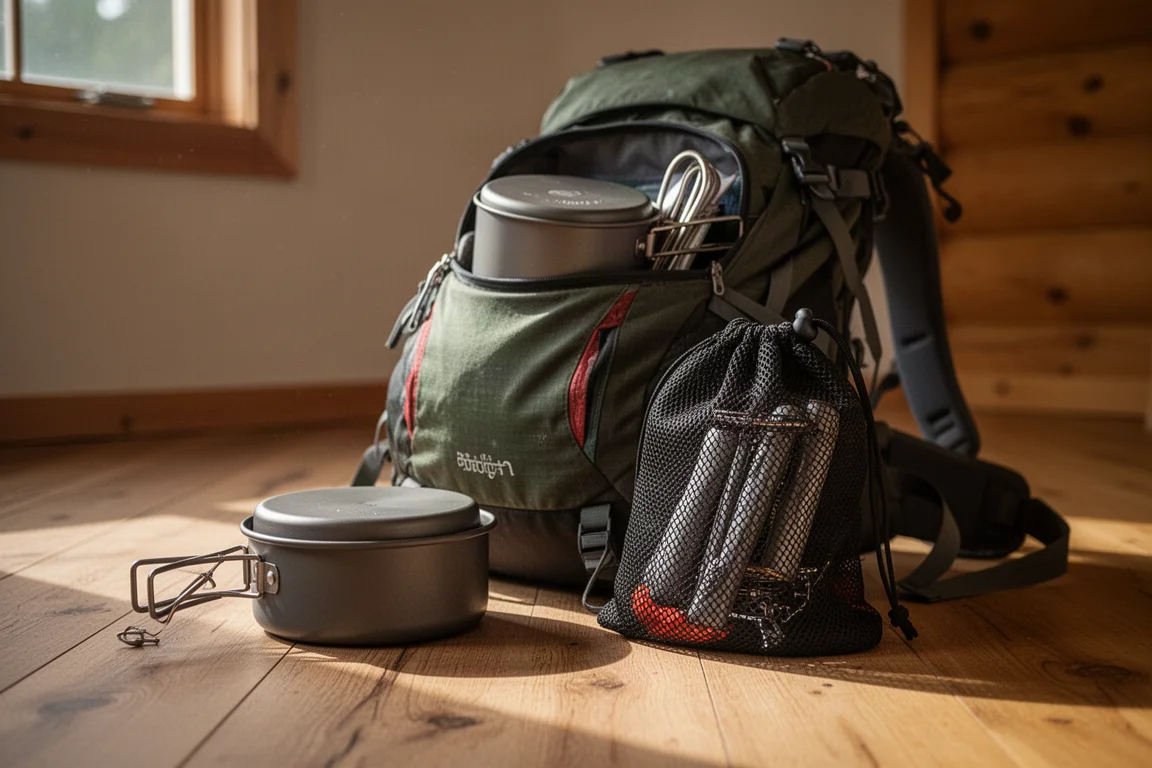
Bought together, the two pieces form a tidy, packable system that stores as one unit. Bought separately, each still works with gear you already own. If you want the lightest possible carry and mostly boil water, the stove and pot as a pair make the most sense. If you already own a compatible stove, the pot alone is an easy, low-cost upgrade. Just plan for an ignition source and a windscreen, and expect the stove to be at its best in mild conditions rather than deep cold.
Conclusion
The Fire Maple Petrol Titanium Ultralight Backpacking Stove and the Fire Maple G2 Pot are well made, genuinely light, and inexpensive for what they deliver. The stove is remarkably compact for its output, the pot’s heat spreader fins do real work, and the two pieces integrate cleanly.
The compromises are clear and worth knowing in advance: no regulator, no igniter, modest measurement markings, and a weight ceiling that is best respected rather than tested. Backpackers who accept those limits will find a kit that performs consistently, packs small, and costs far less than its titanium construction might suggest.
Further reading
Related Reviews
Backpacking Stoves
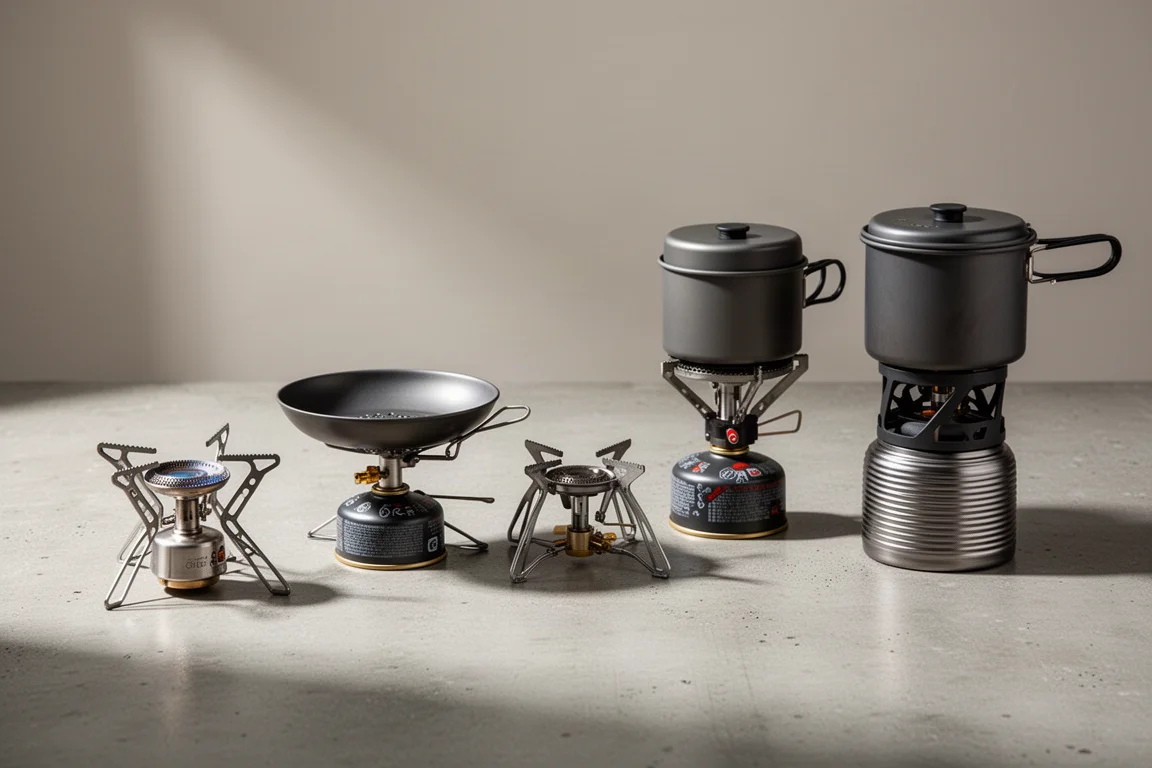
Best Backpacking Stove and Pot Combinations: Budget to Premium
A practical look at fourteen backpacking stoves and cook pots, from inexpensive starter pairings to windproof all-in-one systems that cost close to $200.
Backpacking Stoves
Best Backpacking Stove Systems: Five Canister Stoves Compared
Five canister stove and pot systems compared on wind resistance, boil speed, packed size, and cooking control, from a bare titanium burner to a fully integrated cook system.
Backpacking Stoves
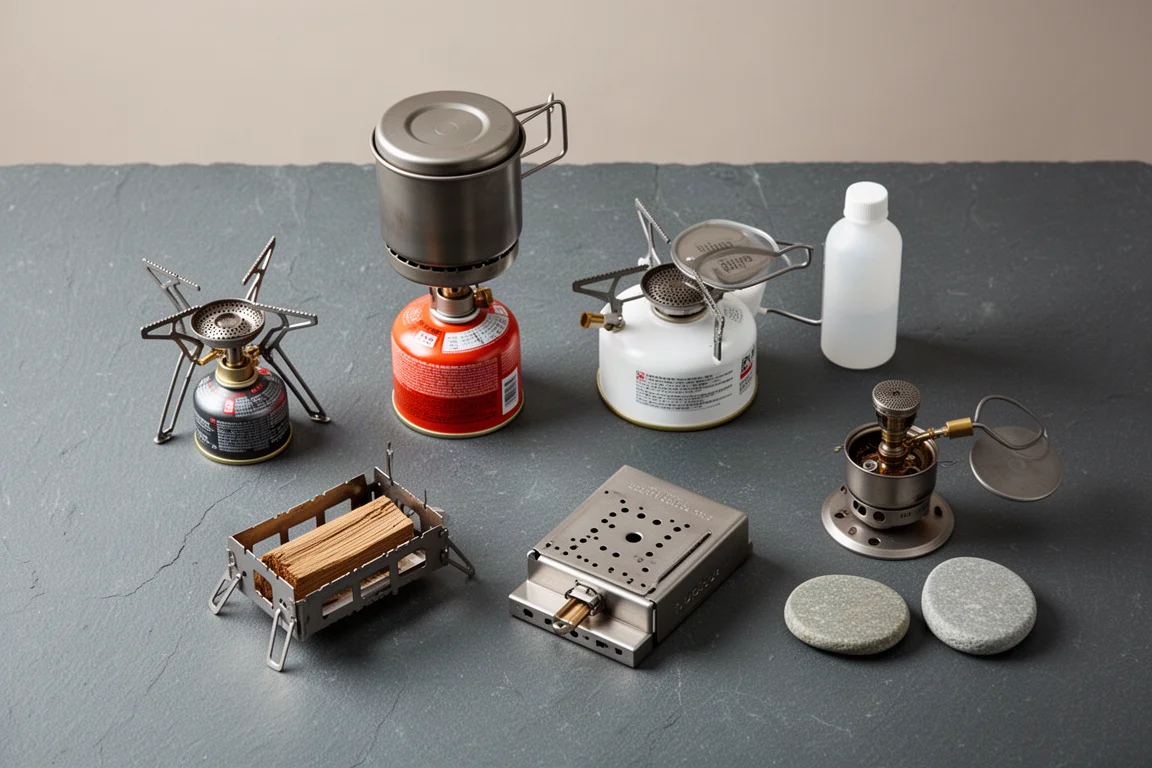
Best Backpacking Stoves 2026: Six Stove Types Compared and Ranked
A practical comparison of canister, white gas, wood burning, solid fuel, and alcohol backpacking stoves, ranked on speed, weight, fuel availability, and cost.