Fountain Pens
Fine Writing Wheel of Time Fountain Pens: Four Limited Editions Compared
A set of four limited edition fountain pens themed around the seasons, with JoWo nibs, eyedropper capability, and some trade-offs worth knowing about.
Introduction
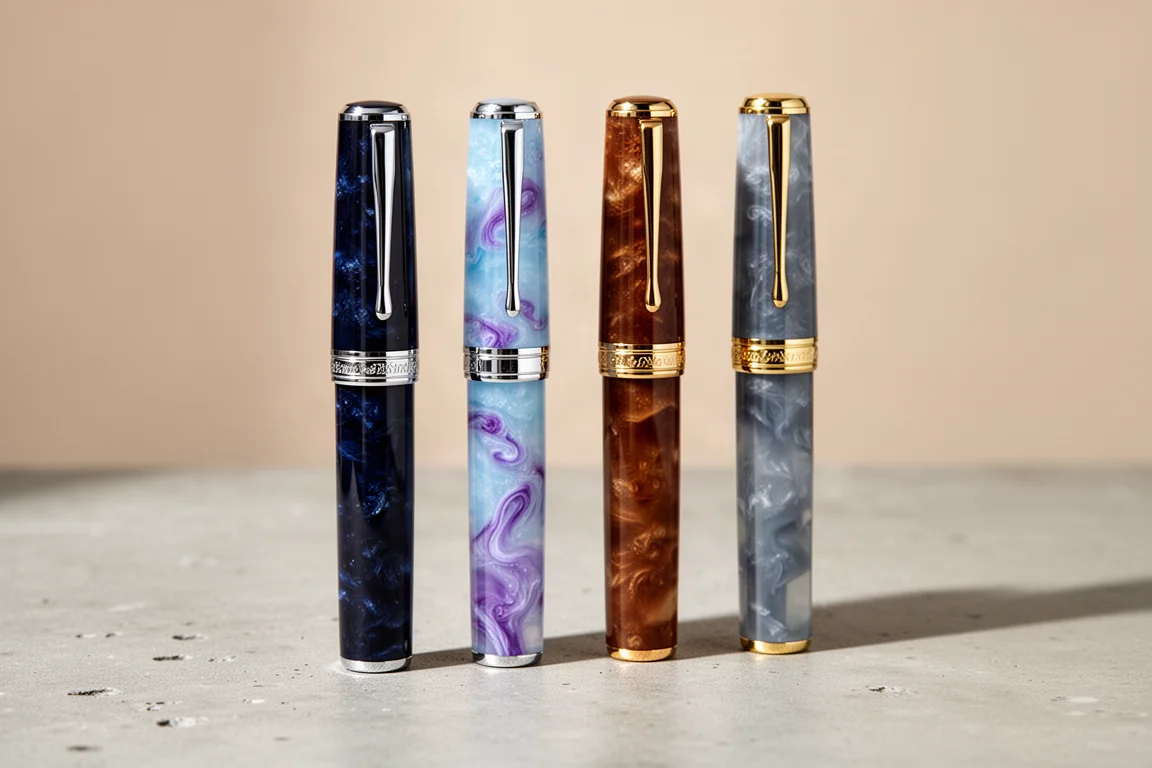
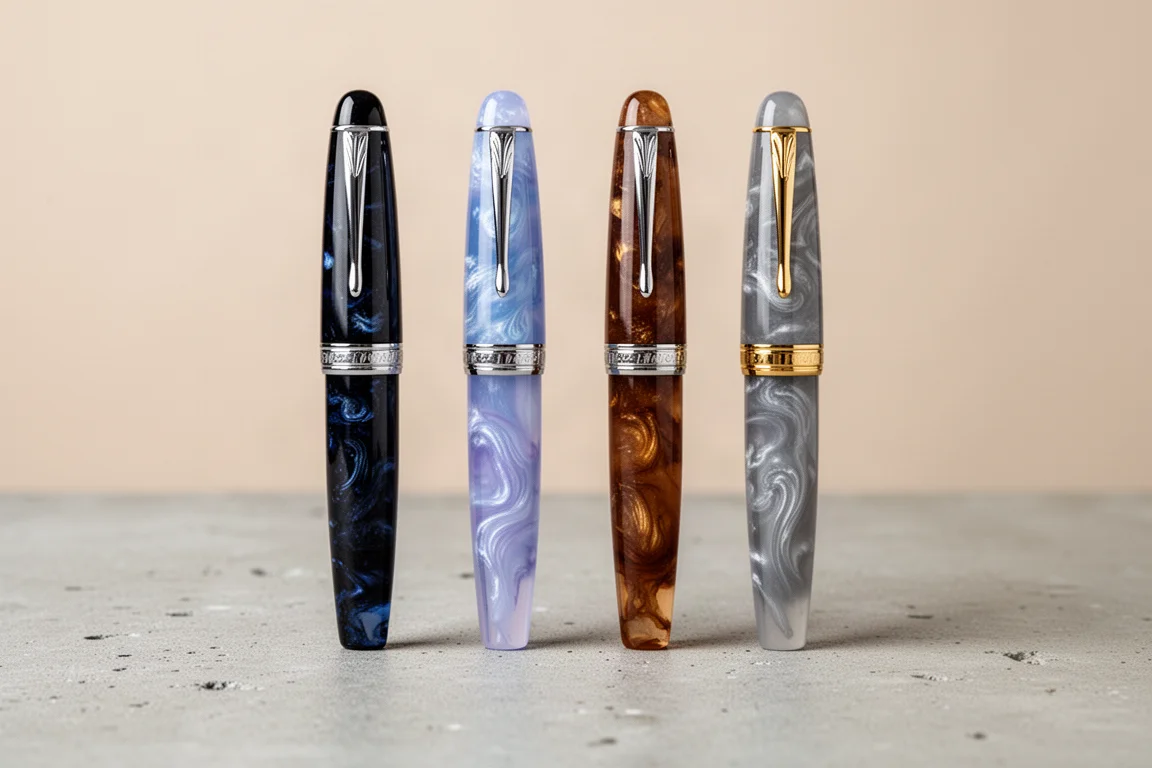
The Fine Writing Wheel of Time series is a collaboration of four limited edition fountain pens themed around the seasons: Winter Solstice, Spring Equinox, Autumn Equinox, and Summer Solstice. Each pen shares the same basic design, but each is made from a different acrylic material, giving the set four distinct personalities. They are available through Endless Pens and each edition is limited to just 48 pieces, which makes them genuinely rare in a market where limited editions sometimes run to thousands of units.
First Impressions and Packaging
All four pens arrive in the same simple box with a cardboard outer sleeve. The packaging is deliberately minimal, which is easy to appreciate: there is nothing superfluous to throw away, and the box can simply be recycled. Each pen comes with an eyedropper, which hints at one of the more interesting features of this series.
Each pen is individually numbered on the back of the cap. The sample reviewed here is number 46 of 48, and the engraving makes the limited nature of the series tangible rather than just a marketing line.
Design and Build
The pen itself is a fairly blocky cylinder in acrylic, sized somewhere next to a Pilot Metropolitan: not too big, not too small, and not too skinny. That makes it comfortable for a range of hand sizes. It posts comfortably as well, and because the pen is all acrylic, it stays light and balanced in the hand.
One of the nicest details is the ink window on the barrel. Because you can see the remaining ink level even with the pen capped, it is genuinely useful. If you run the pen as an eyedropper, a translucent material would give this away anyway, but darker materials like the Winter Solstice hide their contents almost completely, so the window earns its place.
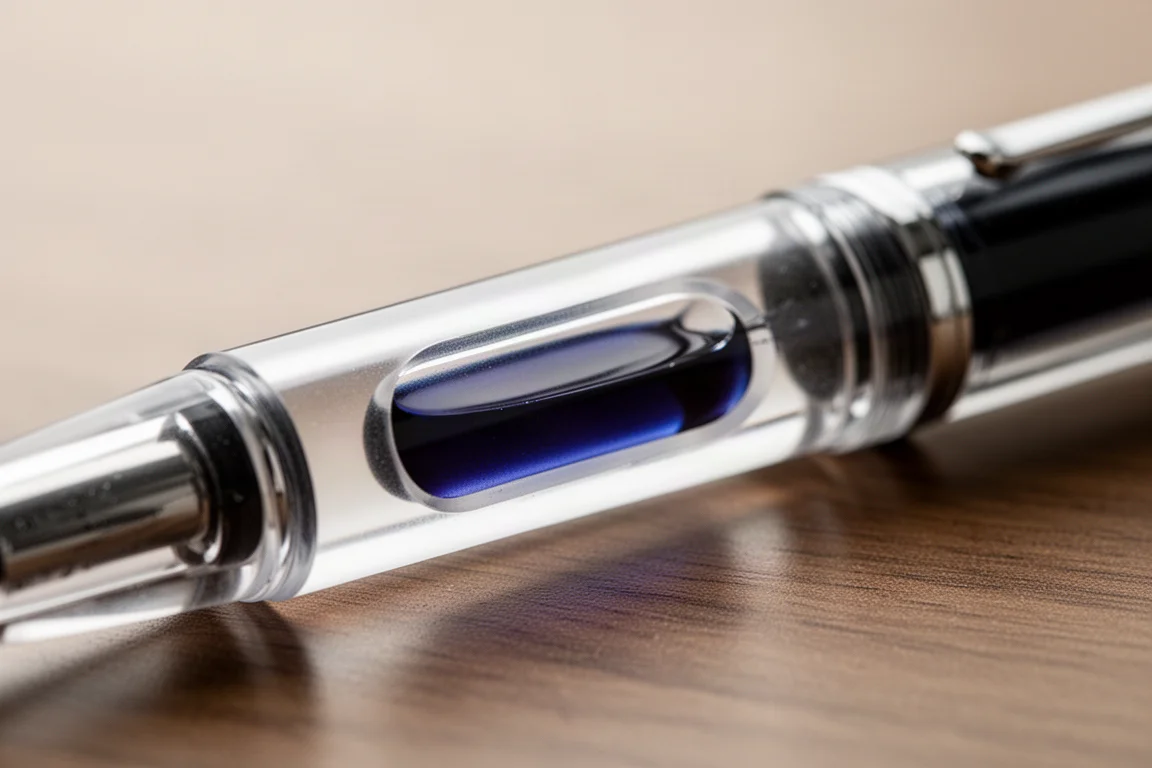
The cap includes a sealing mechanism that keeps the nib and feed primed. In practice this works well: after several days capped, the pen started up immediately on repeated tests. The cap finial and barrel end use the same material as the cap and barrel, which also makes eyedropper conversion straightforward. There is an o-ring on the barrel threads, and adding a bit of silicone grease is still recommended if you plan to fill it as an eyedropper.
The section tapers down and flares slightly, with a number 6 steel JoWo nib. Nib options are extra fine, fine, medium, broad, and a 1.5 millimeter stub, which is a solid range for a series like this. The acrylics are described as acid and alkali resistant, and the materials themselves are attractive across all four editions.
The Four Materials
Each edition has its own character. The Winter Solstice is a deep dark blue, close to black in places, and it is arguably the standout of the series for how well the near-black and dark blue tones work together.
The Spring Equinox uses a much lighter blue woven with purple and plenty of chatoyance, the shimmering depth effect that makes resin shift as it catches the light. It is a close second in the lineup.
The Autumn Equinox is a brown material with the least chatoyance of the four. There is some shimmer here and there, but it is far less pronounced than in the other editions.
The Summer Solstice sits somewhere in between, with a bit more shimmer than the Autumn but a softer, lighter overall look.
Trim differs by edition and matters if you care about hardware color: the Winter and Spring editions carry silver trim, while the Autumn and Summer use gold trim.
Writing Sample and Nib Experience
The writing sample was done with the Winter Solstice in the 1.5 millimeter stub configuration. The edges are fairly rounded, so it behaves more like a stub than a crisp italic. It is a smooth writer with a solid, fairly wet ink flow, and it just keeps going.
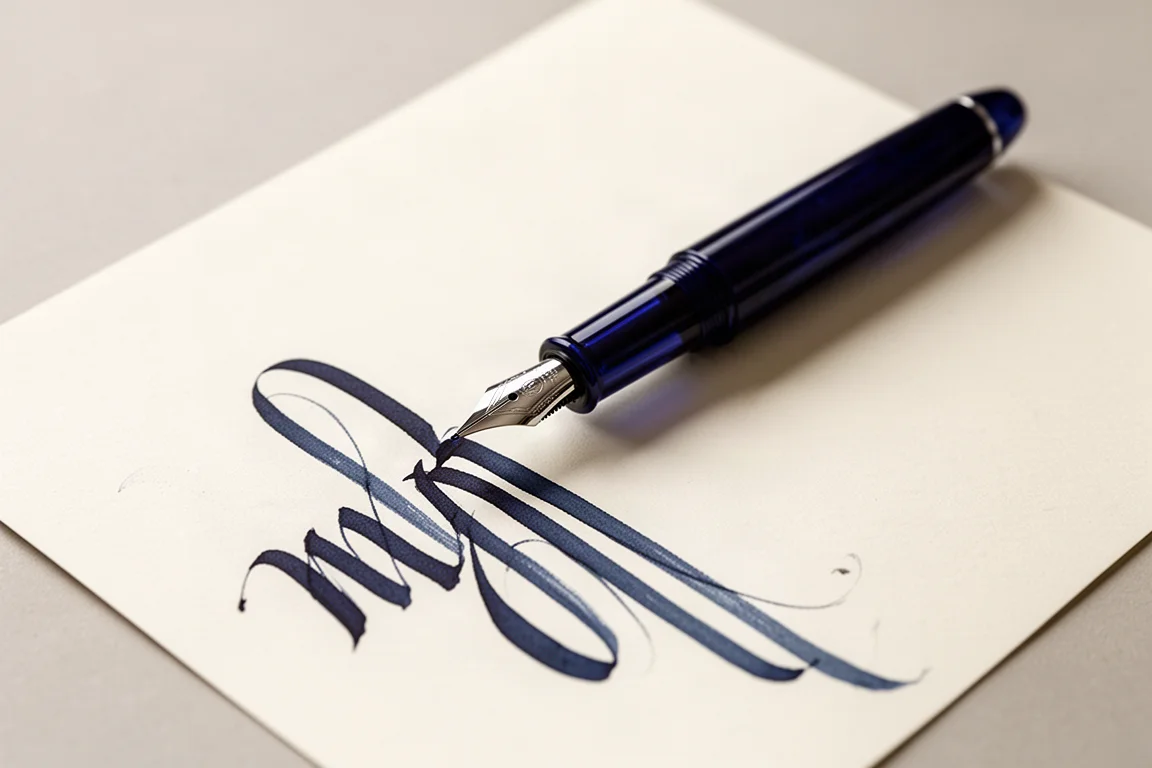
Because it is a steel JoWo nib, the writing experience is consistent and predictable, which is exactly what you want from a workhorse fountain pen. The 1.5 stub delivers natural line variation without any pressure. It is not a flex nib, though gentle pressure can coax a bit more width out of it. Reverse writing with an italic is rarely a highlight, and this nib is no exception: the reverse line is only slightly finer.
The real appeal of a stub like this is calligraphic flourish. It is not as crisp as a true italic, but it produces satisfying broad lines that make everyday writing feel a little more special.
What Works Well
There is a lot to like here. The size suits most hands, the nib range is generous, and JoWo steel nibs are known to be reliable. The multiple filling modes are a genuine strength: cartridge converter out of the box, or eyedropper conversion using the supplied eyedropper for maximum ink capacity.
That flexibility is practical for travel. If an eyedropper-filled pen runs dry on a trip, standard international cartridges are easy to find almost anywhere, so you can keep writing without carrying a bottle of ink.
The ink window is another highlight, especially in eyedropper mode where you would otherwise have no idea how much ink remains. And all four editions are pleasant writers; the 1.5 millimeter stub is probably the most fun of the available options.
What to Consider Before Buying
The small clip is a matter of taste. It has a vintage proportion and is too small to reach most shirt pockets reliably, so it works best clipped inside a pen case rather than on clothing. That is a minor point for anyone who uses a pen case, but worth knowing.
The bigger consideration is price. At 130 US dollars apiece for an acrylic pen with a steel nib, the value case rests heavily on the limited edition status and the materials. In a world where some limited editions run to nearly 10,000 pieces, a run of 48 genuinely qualifies as limited. Still, collecting all four editions means a four-figure total for four acrylic pens with steel nibs, which is a serious investment. Since the nibs are standard JoWo steel units, they could in principle be swapped for gold nibs later if that matters to you.
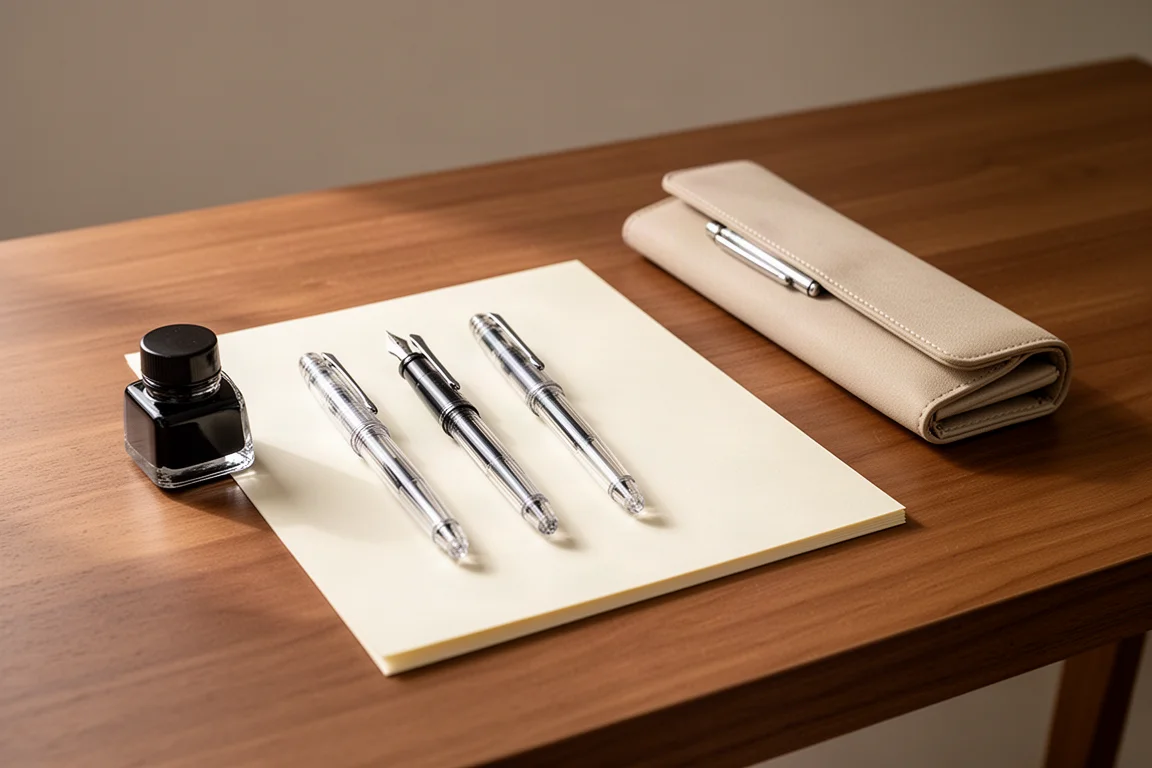
That said, these are attractive, well-made pens that have started more than a few conversations thanks to their materials, and all four are very pleasant writers. For many buyers, that is what matters most.
Should You Collect All Four?
If you love the seasonal concept and want a matched set, the materials give each edition a distinct identity, and the trim colors help you choose between warm and cool hardware. But for most buyers, picking the single material that appeals most is the sensible move. The Winter Solstice and Spring Equinox stand out for their depth and shimmer, while the Autumn Equinox offers the most understated look of the group. All four share the same solid pen design underneath, so you are choosing material and trim, not writing performance.
Conclusion
The Fine Writing Wheel of Time series delivers attractive materials, reliable JoWo nibs, flexible filling options, and a genuinely limited production run of 48 per edition. The 130 dollar price per pen is steep for what is underneath, but collectors and fans of pretty acrylics will find plenty to enjoy. Choose the edition whose material speaks to you, and consider the eyedropper option if you want maximum ink capacity.
Product link
View more details for Fine Writing Wheel of Time Winter Solstice
This product is mentioned in the review. Check the specifications, options, and compatibility before buying.
View more details for Fine Writing Wheel of Time Winter SolsticeFurther reading
Related Reviews
Fountain Pens
Best Budget Fountain Pens Tested: 9 Pens, One Clear Winner
A hands-on comparison of nine affordable fountain pens for everyday writing, calligraphy, and sketching, with a clear standout for flexible nib fans.
Fountain Pens
Aurora Optima Review: An Italian Piston Filler That Punches Above Its Price
A 14k gold nib, ebonite feed, and a beautifully deep oraloid body make the Aurora Optima one of the most rewarding piston fillers around.
Fountain Pens
Cross Bailey Light Review: The Entry-Level Fountain Pen Worth Keeping at the Office
A plastic-bodied Cross with a metal clip, snap cap, and famously smooth extra fine steel nib. Around $15, available almost everywhere, and easy to recommend.