Camping Gear
Field-Tested Camping Gear: Haven Tent, a Military Surplus Field Blanket, and a Trail Meal
Four pieces of camping gear put through one overnight field test, with practical notes on comfort, weight, setup, and flavor before you buy.
Introduction
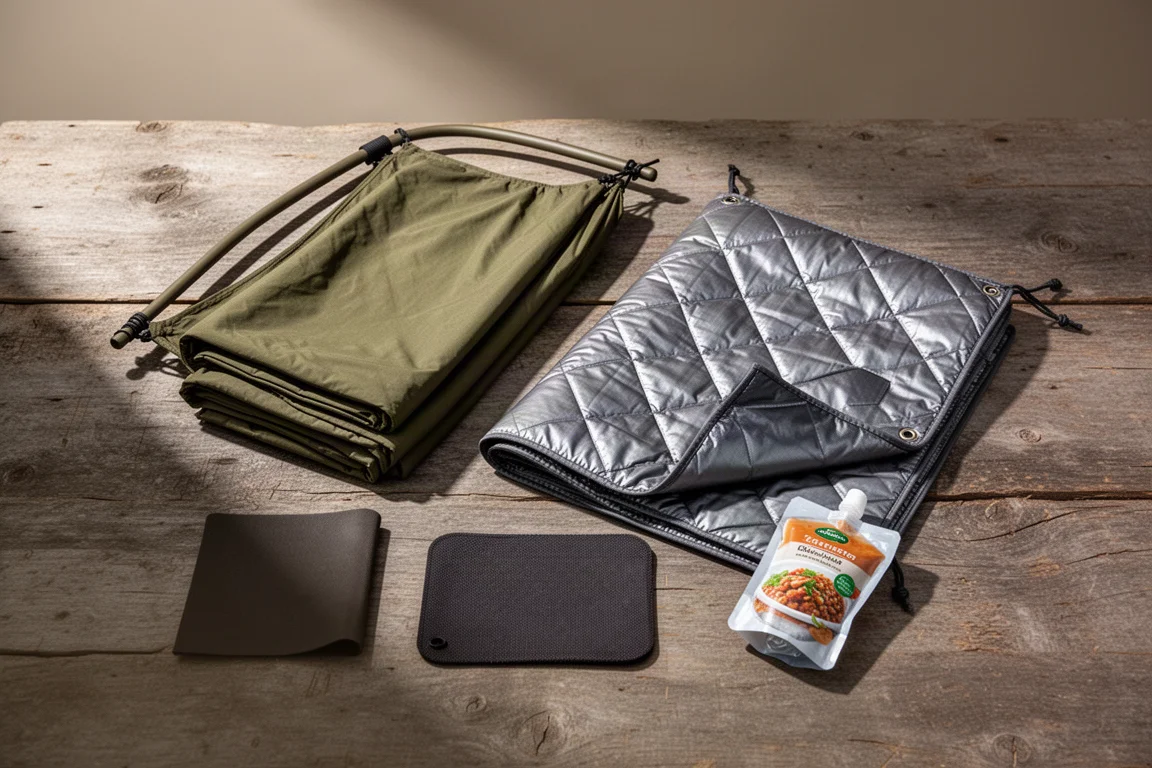
Not every piece of camping gear reveals itself in one night, but a single overnight trip is usually enough to show where the strengths sit and where the small annoyances hide. The four items in this roundup were packed, pitched, cooked, and slept in over one night in wooded hills, and each produced a clear first impression: a hammock tent that genuinely sleeps flatter than a hammock, a military surplus blanket that doubles as a sun shade, a simple ground mat, and a trail meal that is easy to make but modest on flavor.
Two of these are unusual enough to deserve an explanation before you spend money. The hybrid shelter exists to address the curved lay that pushes many campers away from hammocks entirely, and the surplus blanket is a multi-role piece of kit that can serve as a blanket, a tarp, a stretcher, or a shade depending on how you rig it. The other two are supporting players: a mat that keeps boots and small items out of the dirt, and a pouch meal that simmers in minutes.
How This Gear Was Tested
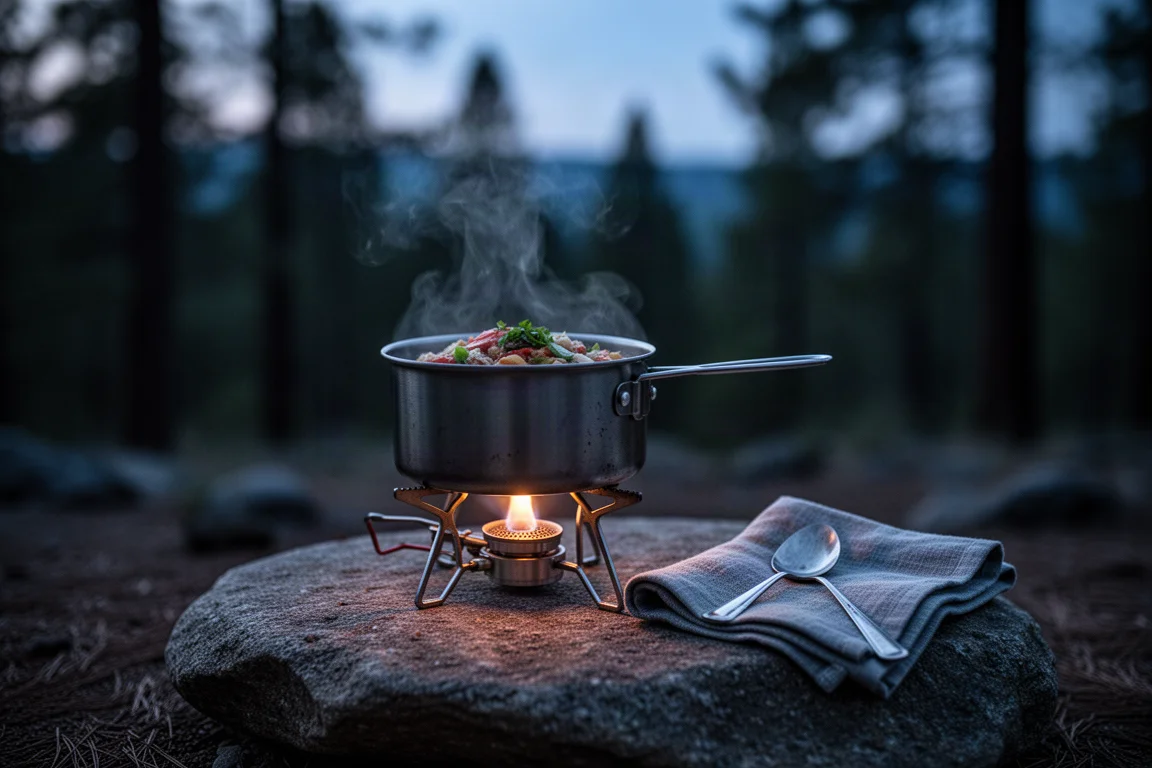
All four items were used on the same overnight trip in wooded, hilly terrain. The hammock tent was pitched between two trees and slept in for a full night, the blanket was deployed as a sun shade through a hot afternoon, and the meal was cooked on a small stove in the evening. Conditions ran warmer than usual for the season, which made for a fair test of a shelter built specifically to block radiant heat.
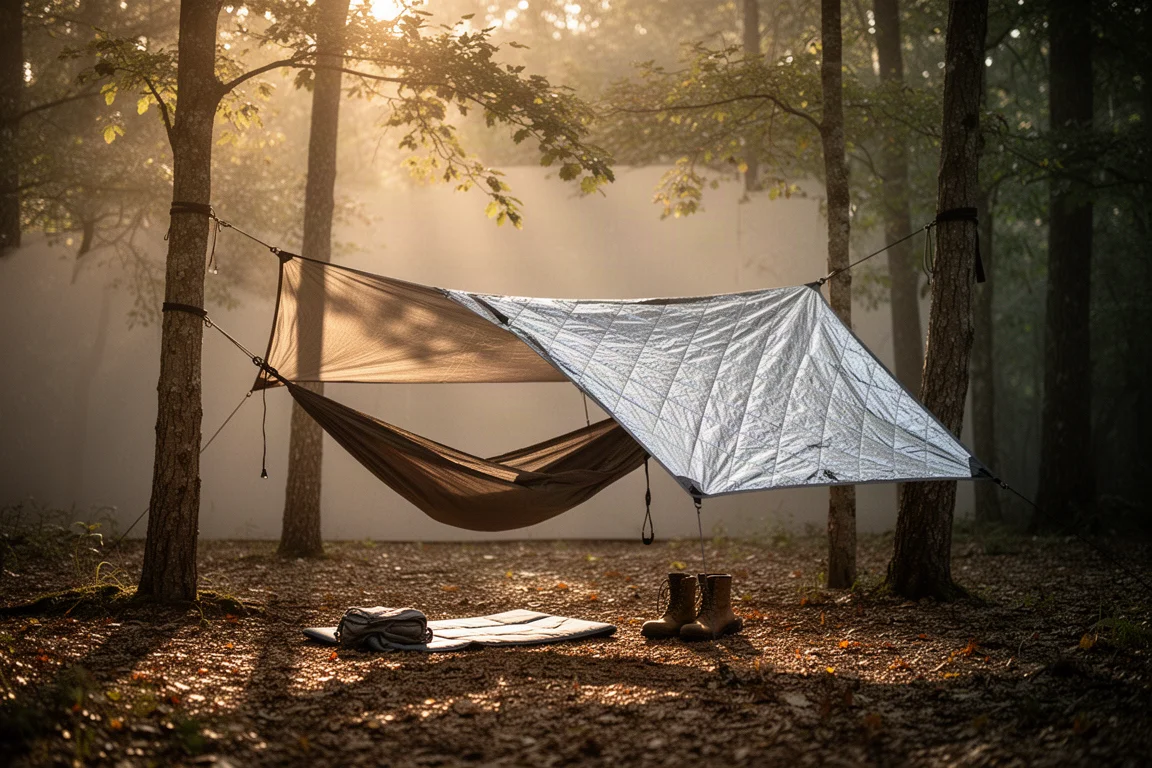
Notes were kept on setup time, comfort through the night, packed weight, and small design details such as zipper configuration and corner tie-off points. This is a first-night assessment rather than a long-term verdict, and a few of the observations below may soften with more time in the field. What follows is organized product by product, followed by guidance on which items are worth prioritizing for different kinds of trips.
Haven Tent: A Hammock Tent Hybrid That Sleeps Flatter
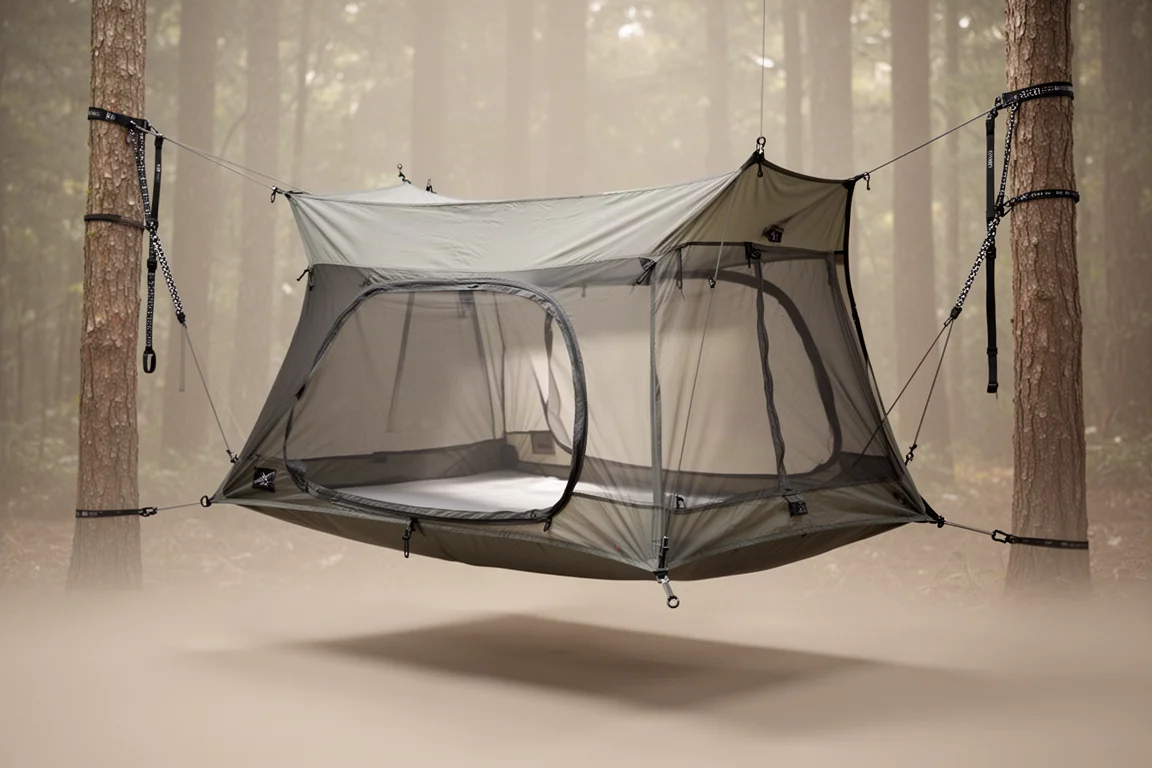
The Haven Tent borrows from both a hammock and a tent. A spreader bar at the top holds the head end open, while a sleeping pad sits in the base and clips into the corners to give the whole shelter its shape. Adjustable lines and tree straps handle the suspension, and the tension-based line adjustment keeps the setup straightforward for anyone who has pitched a hammock before.
The first night was a good one. Sleep quality was high, and the shelter is noticeably flatter than a traditional hammock, which makes side sleeping possible for most of the night. It is not perfectly flat, and a slight curve remains when you roll fully onto your side, but the improvement is real rather than marketing language. Campers who already enjoy hammock sleeping will read this as an upgrade. Campers who dislike hammocks are unlikely to be converted.
Two things are worth weighing before buying. The first is width: the sleeping area is roughly 24 inches across, which feels tight even for a smaller build. The second is weight: the complete system, including the fly, the hammock body, the pad, all lines, and the straps, comes in at around eight pounds. That is heavy for a shelter, and a conventional tent setup can usually be made lighter. The counterargument is packability, since the components separate cleanly and can be split across a small pack.
There are also two practical notes to remember. The sleeping pad is effectively proprietary, and other pads tend to fold at the corners and pitch poorly, so plan on using the pad supplied with the system. Because that pad defines the shape, a leak or a flat pad turns the shelter back into a conventional hammock, which makes a repair kit a sensible addition. The door zippers are also not two-way, so there is no zipper at both ends of the opening.
Force Protector Gear Field Blanket: Military Surplus Shelter
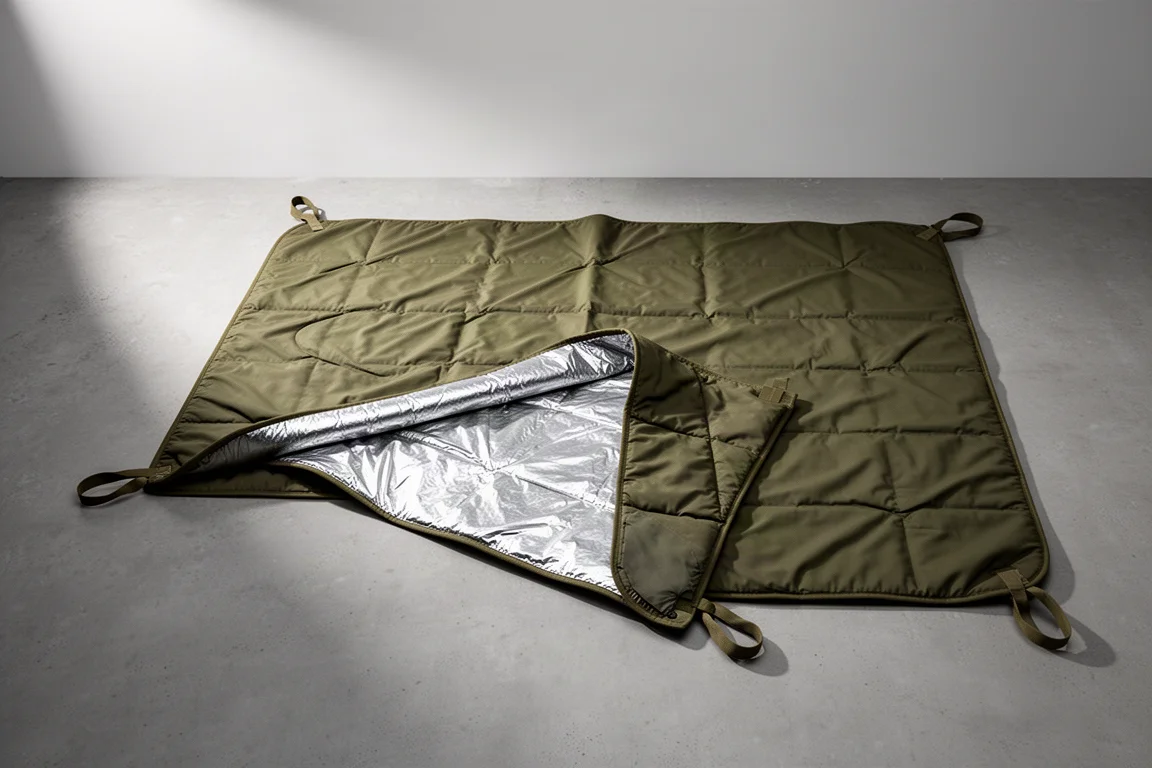
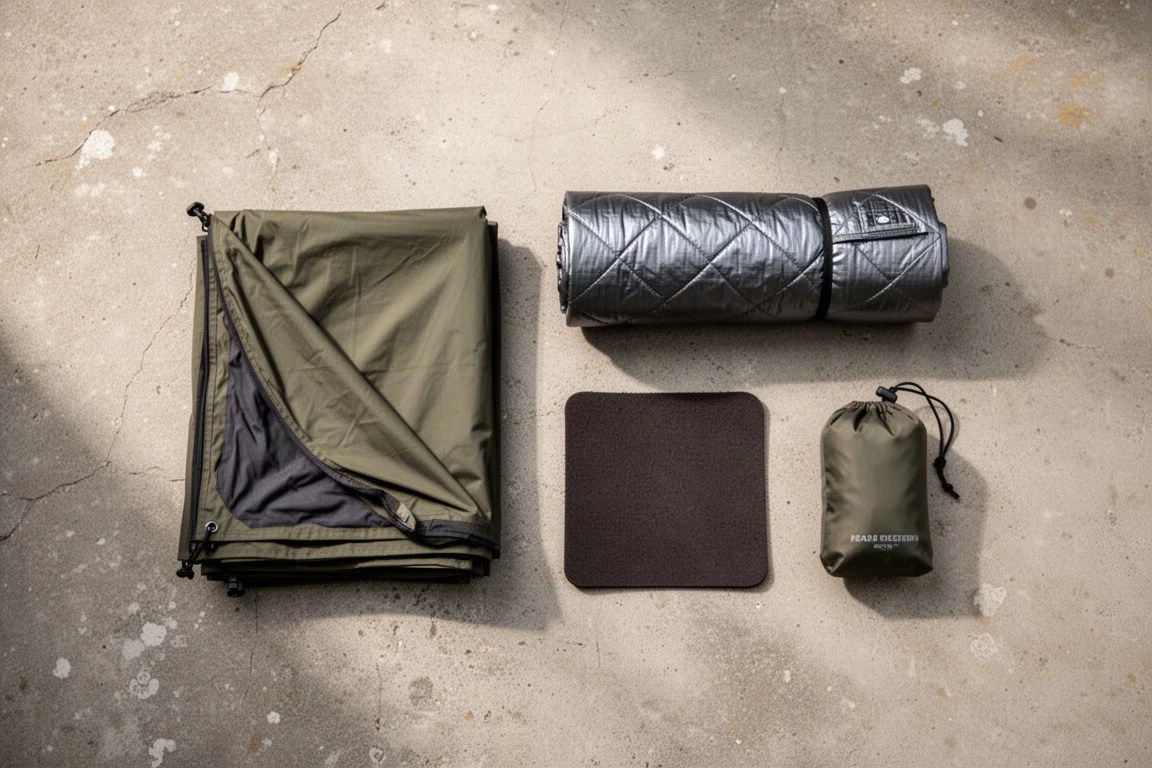
This is the oddity of the group. The Force Protector Gear Field Blanket is a military surplus item, and a civilian version exists with some differences, though the core design is largely the same. It works as a blanket, a tarp, a stretcher, and a sun shade, and it adapts to both woodland and vehicle use.
The standout feature is the layer sandwiched between the fabric faces. The company calls it Therma Shield, and it behaves like a sheet of reflective material. The practical effect is that radiant heat from the sun does not pass through, so sitting underneath it in the open feels like sitting in the ambient air temperature rather than under a hot surface. On a warm afternoon in direct sun, the difference was obvious compared with a conventional tarp.
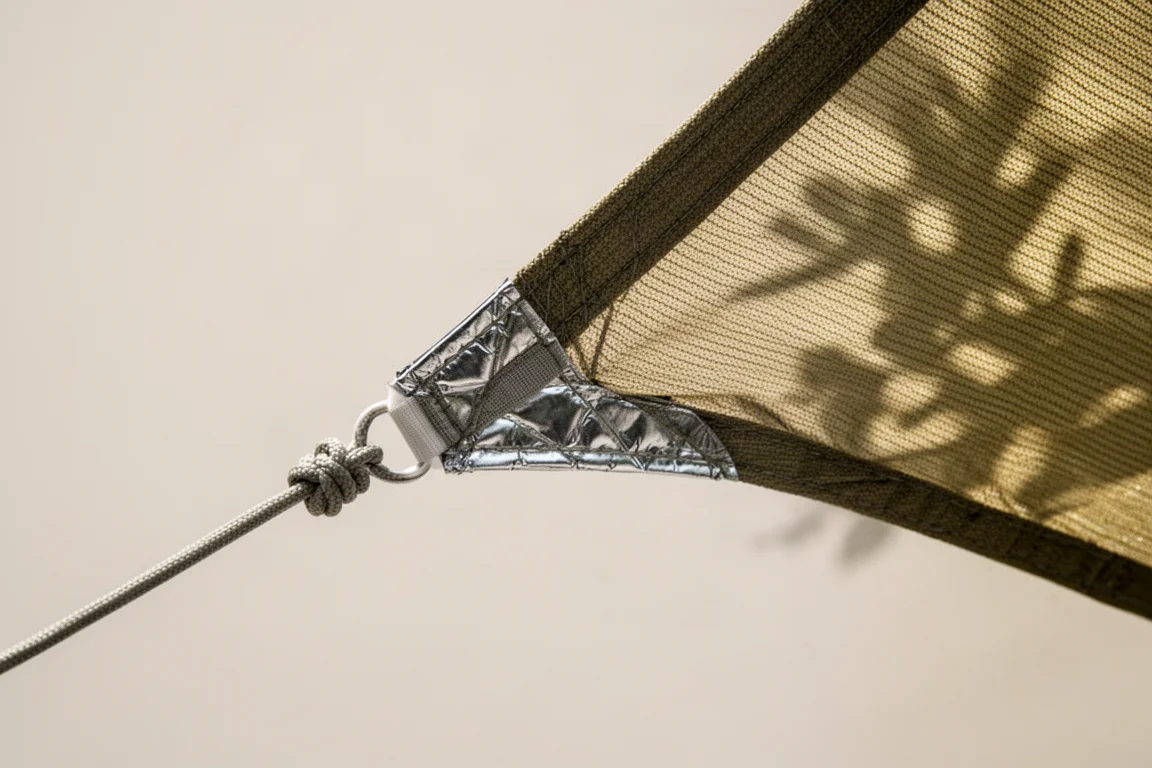
Deployment is quick thanks to the reinforced tie-off points in each corner. A line goes around a tree, and the cord wraps directly through the tie-off without knots, which keeps setup fast and tidy. For a shelter that has to be rigged and re-rigged in different configurations, that detail matters more than it sounds.
The trade-off is in the construction. The outer fabric is not bonded to the reflective middle layer, so an air gap forms between them. The result behaves a little like a parachute or a balloon, trapping air inside. That air has to be pushed out before the blanket will fold down small, which adds a step at pack-up. It is an annoyance rather than a deal breaker, and the rest of the design holds up well.
Pricing is where the surplus angle matters most. Surplus units have been available for around $80, while the retail price for a comparable new item is reported to be around $400. Buyers should also be prepared for a confusing catalog, since the company offers many products that look nearly identical and the differences between them are not well explained.
Go Outfitters Launch Pad: Somewhere to Put Your Boots
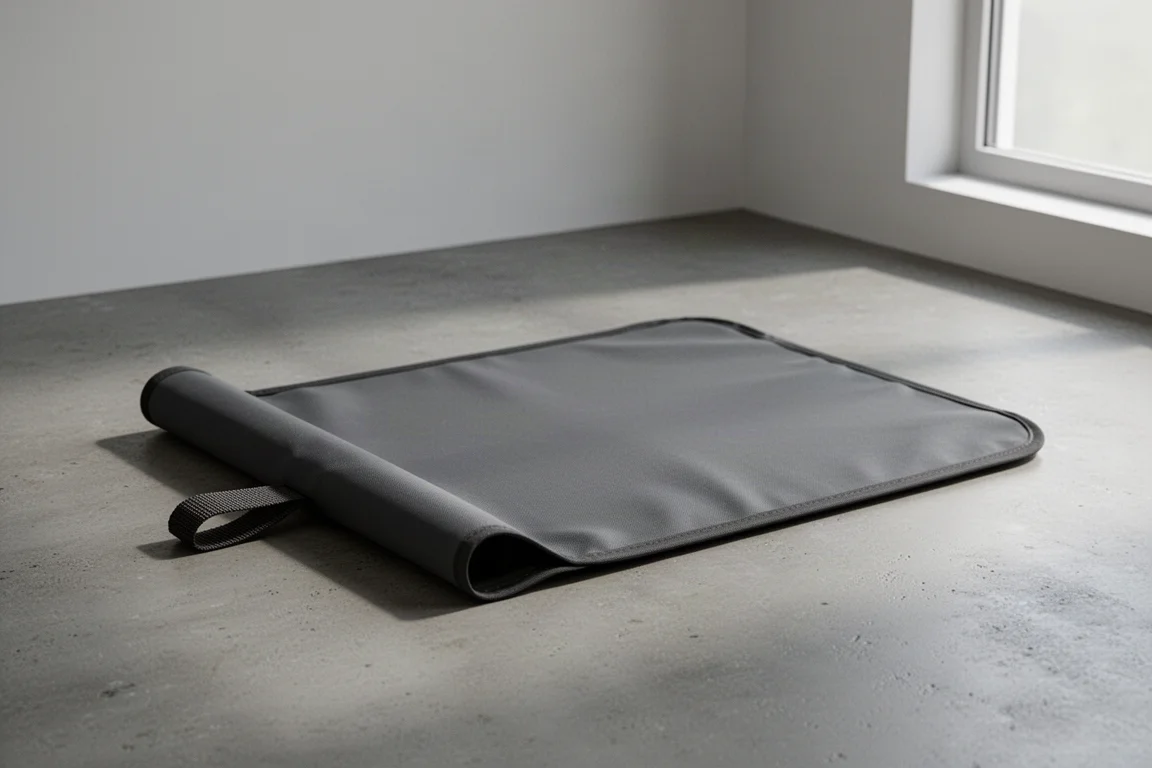
The Go Outfitters Launch Pad is the simplest item in the group and the easiest to justify. It is a ground mat that gives you a defined place to set boots, shoes, and small items while you get in and out of a hammock shelter. Instead of searching in the dark for gear that has slid into the leaf litter, everything stays where you left it.
It is not a dramatic piece of kit and it will not change how you camp. It simply removes a small, recurring annoyance, and it takes up almost no space in a pack. That combination is usually what separates an accessory you keep using from one you leave at home.
Happy Yak Express Mandarin Beef and Rice: A Light Trail Meal
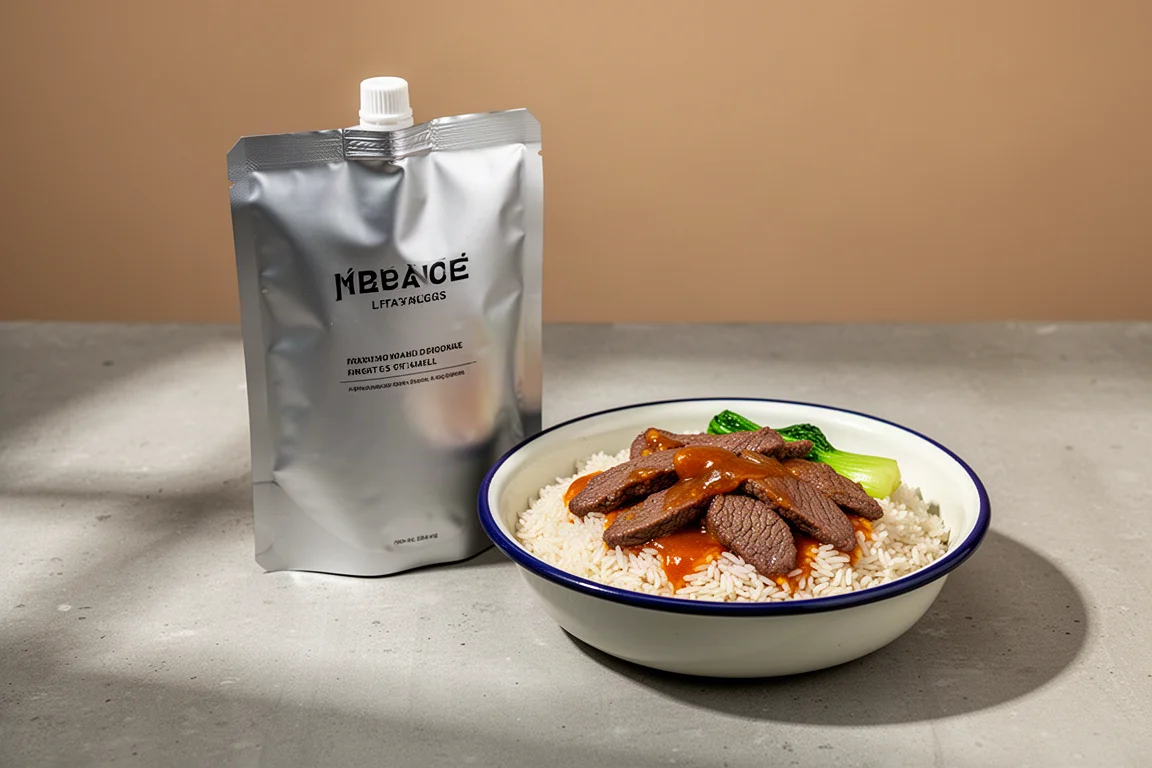
The Happy Yak Express Mandarin Beef and Rice is a pouch meal with a simple method: bring water to a boil, stir constantly, reduce the heat, and simmer for two minutes. The pouch smells genuinely appealing as it heats, and it comes out very hot, so it is worth waiting a moment before eating.
Flavor is the sticking point. It tastes like a meal built around being healthy rather than around being satisfying, which is a fair description of many lightweight trail meals. It is not unpleasant, and it is perfectly edible after a long day outdoors, but it does not deliver enough flavor to earn a repeat purchase.
Campers who prioritize nutrition and low pack weight over taste will get along with it better than those who treat dinner as the reward at the end of a hike. It is best approached as fuel with a decent texture rather than as a meal you look forward to.
Buying Advice: Matching the Gear to the Trip
If you already sleep in a hammock and the curved lay is the thing you dislike most, the Haven Tent addresses that problem directly, provided you accept the roughly eight-pound system weight and the narrow sleeping area. If you are new to hammocks, or you sleep best on a genuinely flat surface, the weight and width will likely outweigh the comfort gain.
The Force Protector Gear Field Blanket makes the most sense for campers who want one piece of kit to cover several roles and who do not mind a slightly fussy pack-down. The surplus price is the main draw, and it is worth reading the product line carefully, since several items look nearly identical and the differences are not clearly explained.
The Launch Pad is a low-cost convenience that suits almost any hammock or ground setup, and it is the easiest of the four to justify because it solves a problem every camper has. The Happy Yak meal is worth trying only if flavor ranks below weight and nutrition on your list.
A practical approach is to buy for the trip you take most often rather than the trip you imagine taking. A shelter that sleeps well but weighs eight pounds is a good match for short trips with a short approach, and a poor match for long distances. A multi-role blanket earns its place when you need shade and cover from one item. A ground mat and a pouch meal are the kind of small purchases that quietly improve a trip without changing its character.
Conclusion
Each of these four items does something specific, and each comes with a caveat that is worth knowing in advance. The Haven Tent delivers the flattest, most comfortable hammock-style sleep of the group at the cost of weight and width. The Force Protector Gear Field Blanket blocks radiant heat effectively and covers several roles, as long as you can live with pushing trapped air out at pack-up. The Launch Pad is a small, sensible convenience, and the Happy Yak meal is light, quick, and pleasant enough without being memorable.
Buy the shelter for the sleeping position you actually use, buy the blanket for the roles you actually need, and treat the accessory and the meal as inexpensive additions that make a night outside slightly easier. That is a reasonable way to end up with gear you keep reaching for.
Further reading
Related Reviews
Camping Gear
3FUL Ultralight Ground Sheet Review: A Two-Person Footprint Worth Packing
A 6.7 oz two-person ground sheet in ripstop silnylon, priced around $30. Here is what it protects, what it does not do, and who should pack it.
Camping Gear
Backcountry Light Dual-Function Tarp and Floor Review: A Footprint First
A dual-purpose tent floor and tarp that keeps falling rain off you, but cannot block wind. Here is where it works and where it does not.
Camping Gear
Best 2-Person Camping Mattresses for Couples: 10 Options Compared
A practical comparison of ten two-person camping mattresses, covering self-inflating pads, air pads and air mattresses for couples.