Stereo Amplifiers
Eversolo AMP-F2 Review: A Neutral Class D Stereo Amplifier That Rewards Careful Pairing
The Eversolo AMP-F2 delivers neutral, controlled sound and a flexible feature set, but it asks buyers to match it to the right room, speakers, and listening levels.
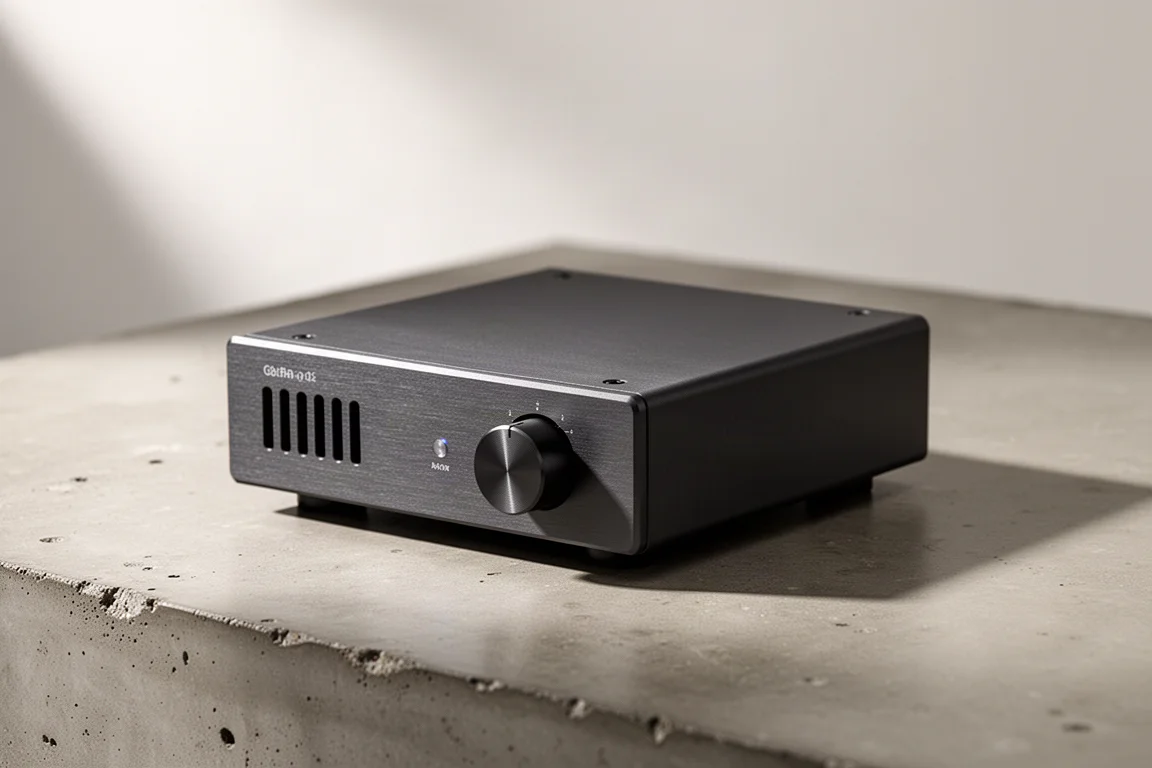
Introduction
Class D stereo amplifiers have become the default entry point for buyers who want plenty of power without a large footprint or a large bill. Eversolo, a brand best known for its DAC and streaming components, has now entered that category with the AMP-F2, a stereo amplifier developed in collaboration with audio manufacturer Stark Sound.
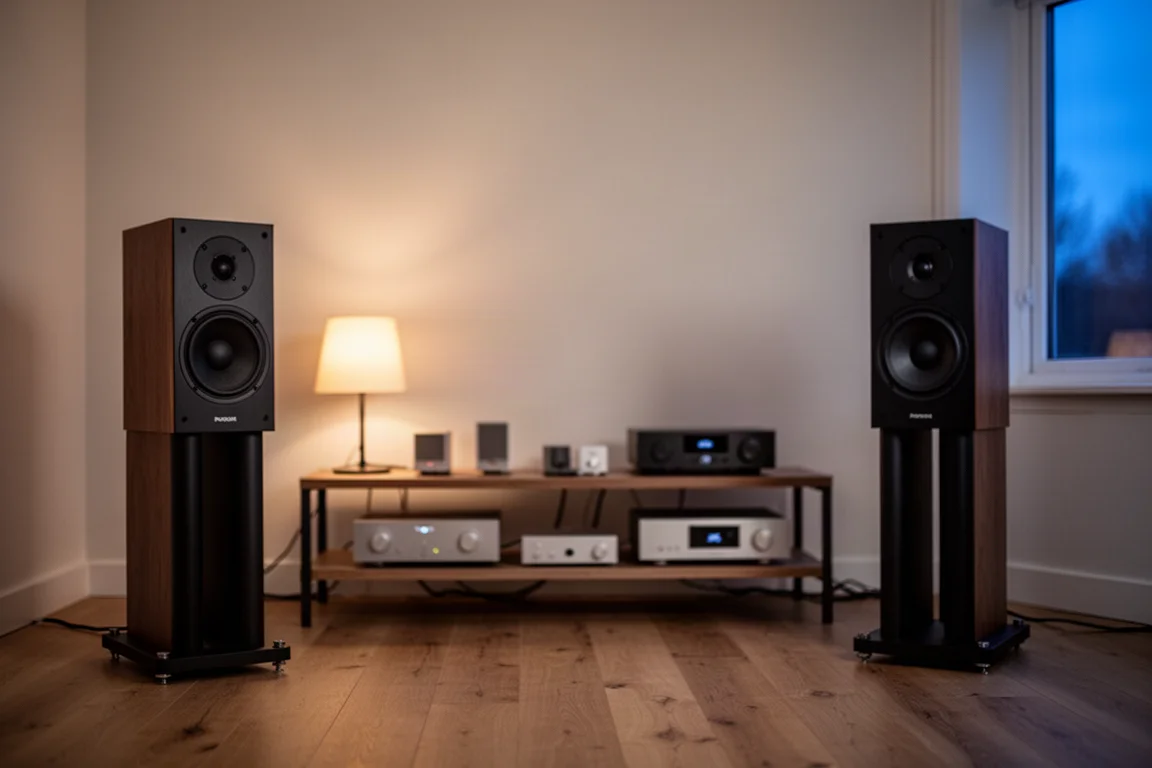
The AMP-F2 is built around Stark Sound’s NS600 amplifier module and is rated at a reported 145 watts per channel into 8 ohms and 250 watts into 4 ohms. Switch it into bridge mode and it becomes a mono amplifier rated at 280 watts into 4 ohms and 450 watts into 2 ohms. At $799, it sits above the budget end of the class D market, which makes the question of value more interesting than the raw numbers alone.
This review covers what the AMP-F2 does well, where it asks for compromises, and which listeners are likely to be happiest with it.
What the Eversolo AMP-F2 Offers
The amplifier is encased in an all-aluminum chassis, and its design language leans closer to Stark Sound than to the Eversolo components that usually sit alongside it, closely echoing a half-width Stark Sound design. Build quality is a clear strength at this price.
Around the back you get a pair of high-quality binding posts, plus RCA and XLR inputs that are selected with a small toggle switch. There is a detachable power cord and a few trigger ports. The layout is neat, clearly labeled, and quick to set up.
Bridge mode adds real flexibility. Switching the AMP-F2 into mono operation gives it a second role in systems that need more power from a single channel, which is unusual at this price and useful for buyers building around demanding speakers.
Sound Quality in Everyday Listening
Tonally, the AMP-F2 is neutral rather than warm. Despite expectations of a warmer, more analog-like presentation, there is very little character or coloration in its sound. For a power amplifier that is arguably the correct outcome, since an amplifier’s job is to amplify the incoming signal without adding a signature of its own.
Between roughly 50 and 75 dB, the AMP-F2 is at its best. In that window it can be difficult to distinguish from amplifiers costing several hundred more, including models from Emotiva’s XPA series. Midrange clarity and intelligibility are solid, bass texture and definition are strong, and control is good. The amplifier maintains separation and delineation between speakers, dispersion is not compromised, and the soundstage does not collapse the way some inexpensive class D designs do. It begins in relative alignment with the speaker front baffles and extends backward rather than projecting forward.
Driver control and dynamics become impressive once listening levels reach about 50 to 55 dB. Below that, the amplifier does not flex particularly hard, which is true of most amplifiers in this class.
How the Eversolo AMP-F2 Compares With Other Amplifiers
Against TI-based chip amplifiers from brands such as WiiM, Fosi, SMSL, and Aiyima, the AMP-F2 is the more versatile and more sonically reliable amplifier. It drove every reference speaker at louder levels without struggling and handled complex material across both music and film soundtracks.
The Emotiva BasX A2 costs less, and between 50 and 75 dB in room it is hard to tell apart from the AMP-F2, aside from an impression of slightly more weight in the mid-bass and bass that is likely psychoacoustic. Sweeps at 75 dB produce the same response up to about 10 kHz, where the AMP-F2 ramps up a little more. The Emotiva has the advantage of better dynamics and control sooner thanks to its higher gain, and it does not skew toward the treble when pushed. The AMP-F2 counters with better build quality and a more flexible feature set. For predictable performance at every volume, the Emotiva is the safer buy.
The Crown XLS 1002 DriveCore 2 also costs less, and at everyday volumes it sounds very close to the AMP-F2, though slightly softer and not quite as etched in the details. Pushed hard, the Crown stays more composed from top to bottom, but its noise floor becomes more audible. On value, the Crown is the stronger proposition.
The Primare A35.2 costs considerably more. At moderate volumes around 55 dB the gap is not dramatic, but with demanding speakers and levels of 75 dB and above, the AMP-F2 is outclassed by an amplifier that is better composed, more controlled, and more linear in its response.
The AMP-F2 also asks for a little more volume travel than these amplifiers because of its slightly lower gain. That is unlikely to bother most listeners.
Things to Consider Before Buying
As volume climbs, the AMP-F2 injects additional treble energy. The Q Acoustics Concept 50 remained unbothered even at higher volumes, but on the Klipsch Cornwall IV at concert-like levels of 90 dB and above, that lift becomes noticeable. It is not overwhelming, but listeners who are sensitive to high frequencies should take it seriously. It is the same treble issue that budget class D amplifiers have not solved.
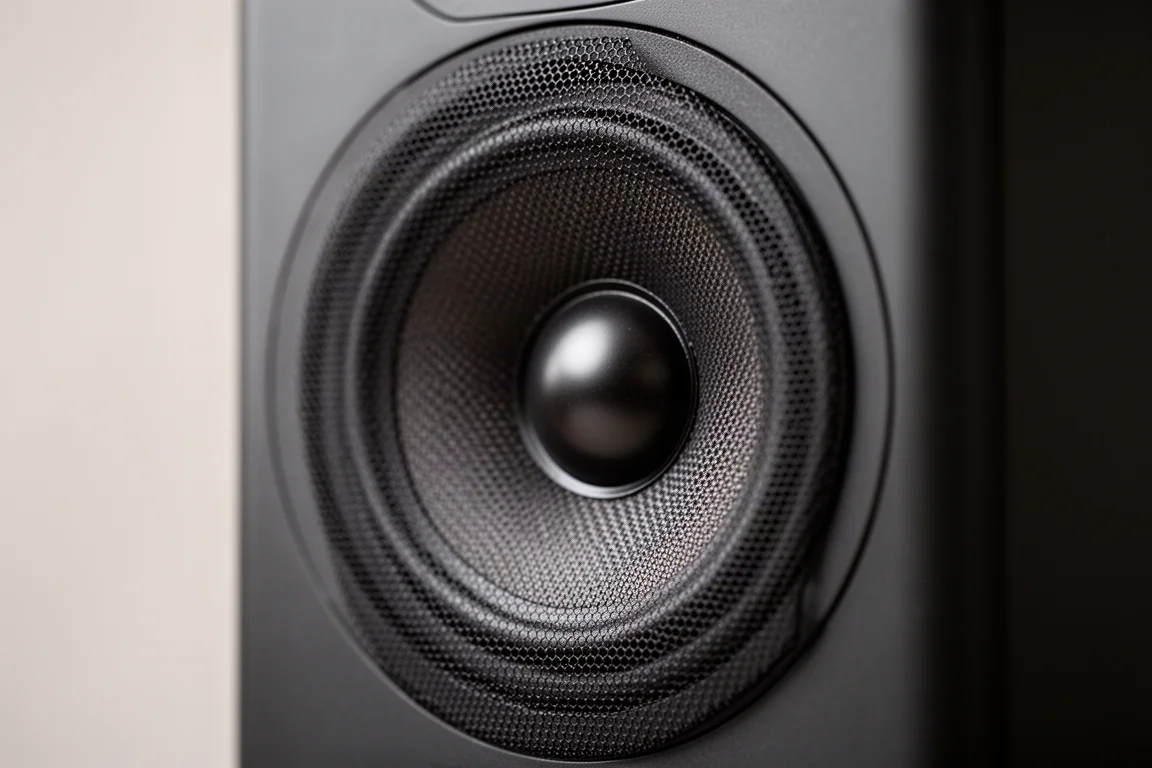
The amplifier is not completely silent. With highly sensitive speakers and nearfield listening, tweeter hiss can be audible from about three feet away; beyond that distance it is not audible. Know your listening position before committing.
Who This Amplifier Is For
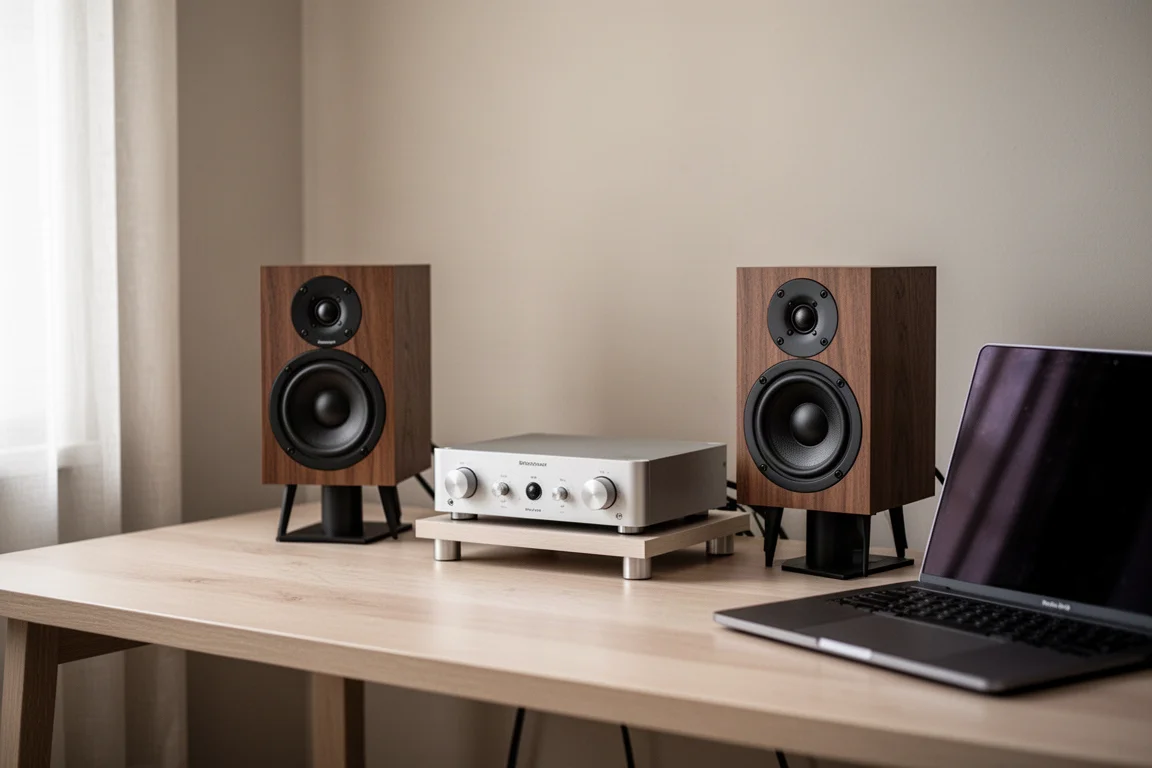
The AMP-F2 suits smaller rooms and desktop or nearfield systems, where its power reserves border on overkill. Pairing it with speakers that roll off in the highs, or with soft dome tweeters, sidesteps the treble concern almost entirely. Speaker sensitivity matters less than you might expect, because the amplifier has enough real-world drive to handle difficult loads comfortably.
Listeners who mostly sit between 50 and 75 dB and who value a colorless, well-controlled presentation will get the most from it. Those who regularly push speakers to very high levels in a large room, or who want an amplifier with a warm voicing, should look elsewhere.
Buying Advice
The AMP-F2 is a very good amplifier. It is superior to many of its lower-cost class D peers and comparable to several class AB designs that sit toward the budget end of the spectrum. What it is not is a giant killer that replaces traditional high-end amplification, and that is worth accepting before you buy.
Buy it if your listening happens at sensible levels, in a modest room, with speakers whose tweeters are not aggressive. If you need consistent results at every volume, with every speaker, in a large space, plan on budgeting for that level of performance.
Conclusion
The Eversolo AMP-F2 gets a great deal right. It is neutral, controlled, and well built, with a flexible feature set and enough power to drive difficult speakers. Its limits show up at high volumes with brighter speakers, and its slightly lower gain means a little more volume travel. Matched to the right room and the right speakers, it is an easy amplifier to live with, and a genuinely strong option for nearfield and small-room systems.
Product link
View more details for Eversolo AMP-F2
This product is mentioned in the review. Check the specifications, options, and compatibility before buying.
View more details for Eversolo AMP-F2Further reading
Related Reviews
Stereo Amplifiers
Aiyima A01 Pro Review: A Compact Bluetooth Amplifier With a Full Tone Stack
A practical look at the Aiyima A01 Pro, a budget Class D amplifier with bass, middle, and treble controls, LDAC Bluetooth, and a clear set of trade-offs.
Stereo Amplifiers
Audiolab 7000A Review: The Flexible Modern All-in-One Integrated Amplifier
A Class AB integrated amplifier with HDMI ARC, a built-in DAC and three operating modes, priced under $2,000. Here is what it does well and what to check first.
Stereo Amplifiers
Best Amplifiers at Every Price Level: 12 Picks From Budget to Audiophile
A practical roundup of twelve stereo amplifiers at increasing price points, from sub-$100 class D mini amps to integrated models with DACs, phono stages, and HDMI ARC.