Fountain Pens
Esterbrook SJ Review: A Vintage Fountain Pen That Still Earns Its Keep
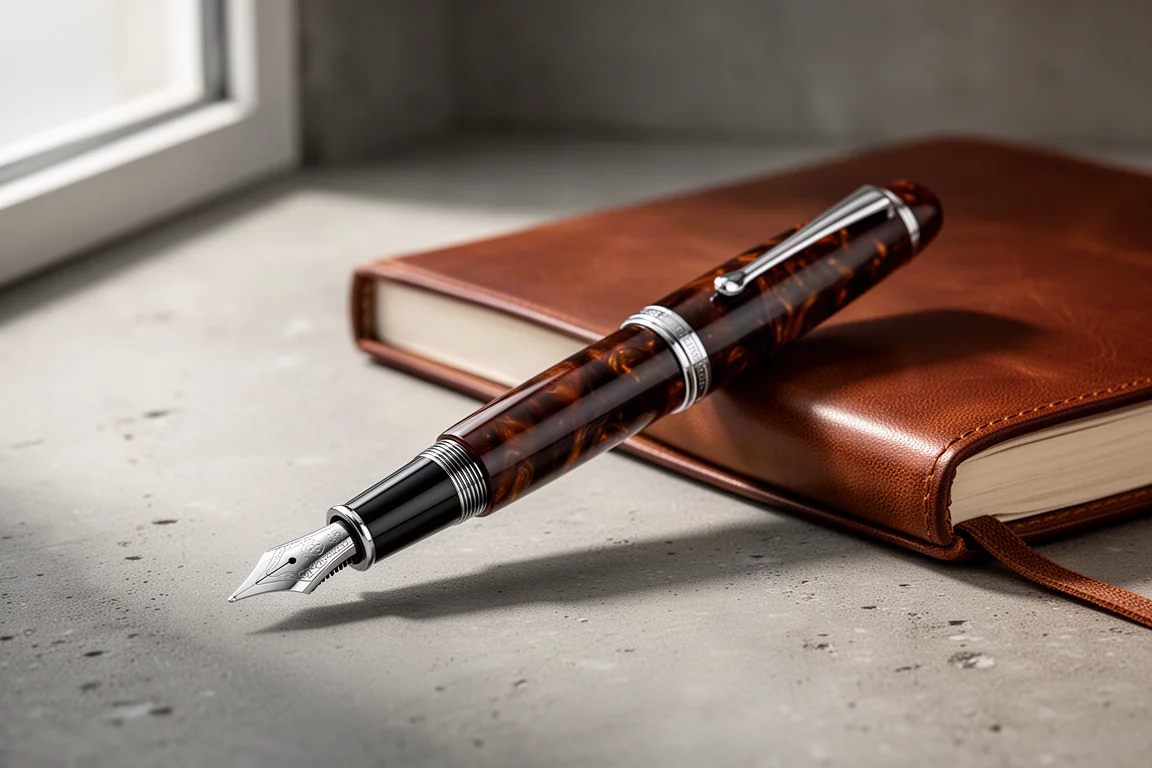
A restored 1940s Esterbrook SJ in the rare root beer copper color proves why these vintage pens remain one of the easiest ways into old-school fountain pens.
Introduction
The Esterbrook SJ is a vintage fountain pen from the late 1940s, and it makes a strong case for why first-time vintage buyers should start here. This particular example came from Anderson Pens, fully restored and in the rarer “root beer” variant of the copper colorway, priced at $70. Esterbrook J series pens were essentially the everyday pocket pens of their era, produced in huge numbers, which means they remain affordable, easy to find, and simple to service decades later.
Design and Condition
The SJ is the slimmer, shorter sibling of the standard Esterbrook J, and that slenderness is obvious the moment you pick it up. The marbled brown resin earns the root beer nickname: a fizzy, warm brown that brown-ink fans will find hard to resist. The clip is marked Esterbrook, some original imprinting survives on the barrel reading made in USA, and the cap wears a metal cap band with the small vent holes typical of vintage pens.
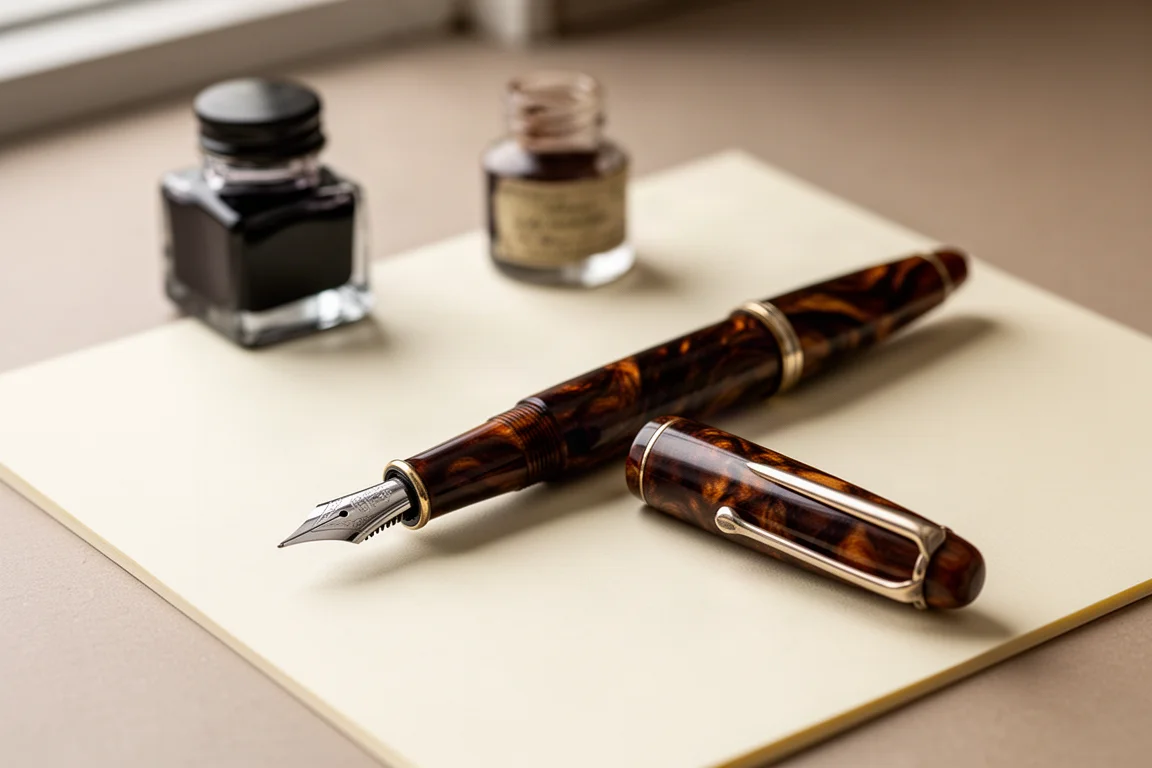
At 70 to 80 years old, this example is in remarkably good shape with a clean finish and smooth, still-functional threads. It is a twist-cap pen, coming off in about a turn and a half, and it fills via a lever mechanism. One practical note: the lever has a small catch that holds it in place when closed, so pocket carry is mostly safe, but you should still avoid catching the lever on anything.
Size and Handling
Compared with modern pens, the SJ is genuinely tiny. The gripping section is roughly the width of an index finger, and it sits comfortably alongside other compact modern pens like the Pilot Prera, Pelikan M200, Kaweco Sport, and Sailor Pro Gear Slim. Uncapped, it is similar in length to a Kaweco Sport, just a little longer and thinner.
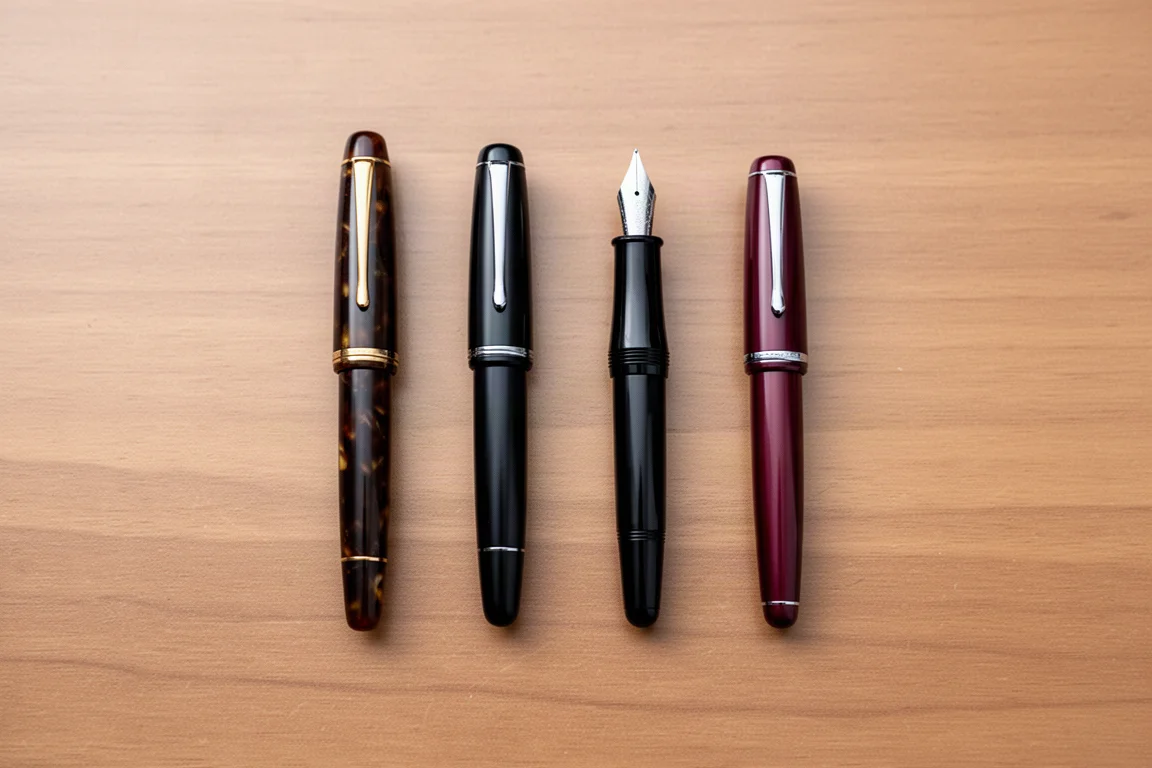
The nib is proportionally large for such a small pen, taking up perhaps a fifth of the pen’s total length. It can be posted for extra length, and posting is comfortable, but vintage finishes and caps can crack with age, so this reviewer prefers to use it unposted. For smaller hands that is no problem at all; larger hands may want to post or accept the shorter grip.
Writing Experience
The stainless steel 2556 nib is a firm fine, and it writes with generous flow even on a drier ink like Pelikan 4001 Royal Blue. There is a light, pencil-like feedback characteristic of fine steel nibs, but nothing scratchy or misaligned. It is smooth, precise, and easy to control at very small sizes.
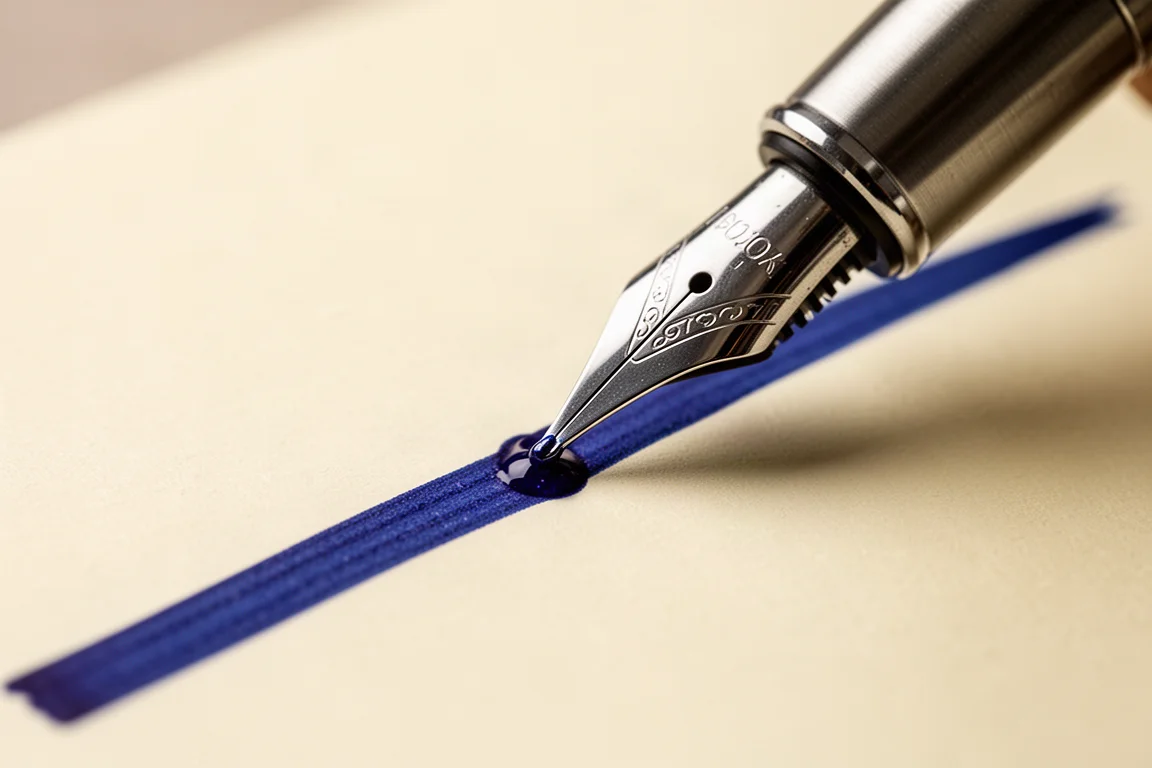
The whole pen is so light and thin that it practically disappears in the hand, leaving your attention on the nib. Expect a writing feel closer to a wet modern German extra-fine, broader than a Lamy extra-fine but with zero pressure required. It is not built for long-form sessions, but for quick notes, signatures, and everyday scribbles it is genuinely pleasant.
Filling and Maintenance
The lever filler works the classic way: lift the lever to press a bar against the internal sac, expel the air, release, and let the sac draw ink back in. It takes a couple of cycles to fill well, and the sac holds a decent amount for a pen this size. The main drawback is the lack of an ink window, so there is no way to gauge how much ink remains.
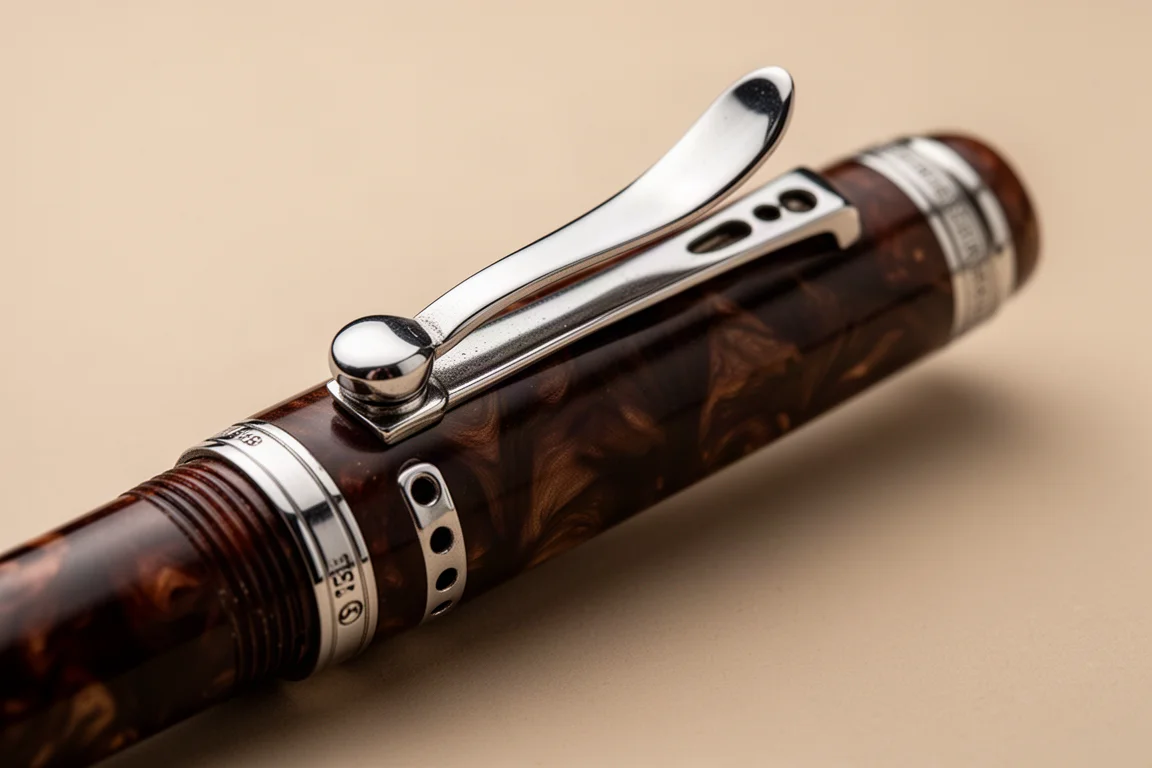
Maintenance is where these pens shine. Replacement parts are abundant and inexpensive, nibs are largely swappable, with sellers often offering boxes of variants in different grades, and the sacs are durable. Esterbrook J series pens are famously hard to break, and even a cheap fixer-upper can be restored at home with basic parts. If you would rather skip the project, restored examples regularly sell in the $40 to $70 range depending on condition and color rarity.
Buying Advice
If this is your first vintage fountain pen, the Esterbrook J series is one of the safest entry points available. They are abundant, durable, affordable, and easy to customize with different nibs and colors. Paying $70 for a rare colorway, fully restored by a trusted dealer, is fair; common restored examples in good working order can be found for $40 to $50, and user-grade or project pens cost even less. Buy from a reputable seller, expect a resilient pen, and do not be afraid to actually use it.
Conclusion
The Esterbrook SJ in root beer copper is an instant favorite: charming, compact, and surprisingly capable for an 80-year-old pen. With a firm fine nib, generous flow, and effortless lightness, it proves that vintage does not have to mean fragile or impractical. For anyone curious about vintage fountain pens, this is one of the easiest recommendations in the hobby.
Product link
View more details for Esterbrook SJ
This product is mentioned in the review. Check the specifications, options, and compatibility before buying.
View more details for Esterbrook SJFurther reading
Related Reviews
Fountain Pens
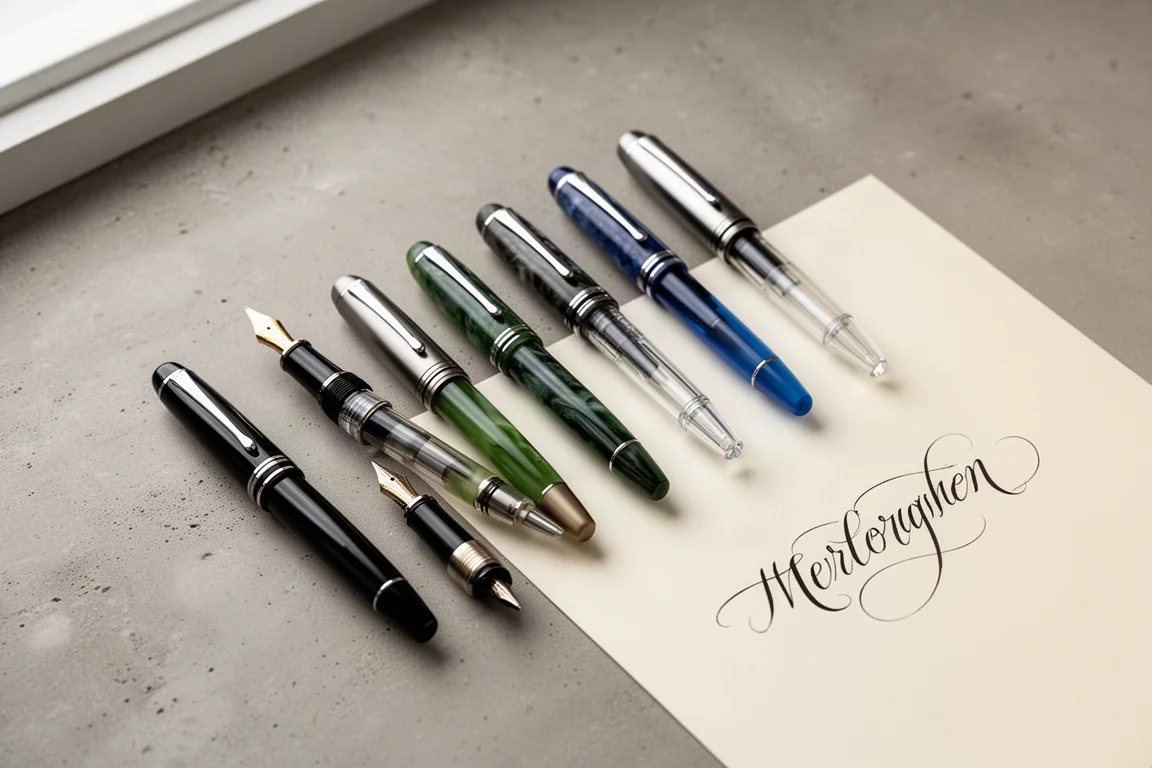
Best Budget Fountain Pens Tested: 9 Pens, One Clear Winner
A hands-on comparison of nine affordable fountain pens for everyday writing, calligraphy, and sketching, with a clear standout for flexible nib fans.
Fountain Pens
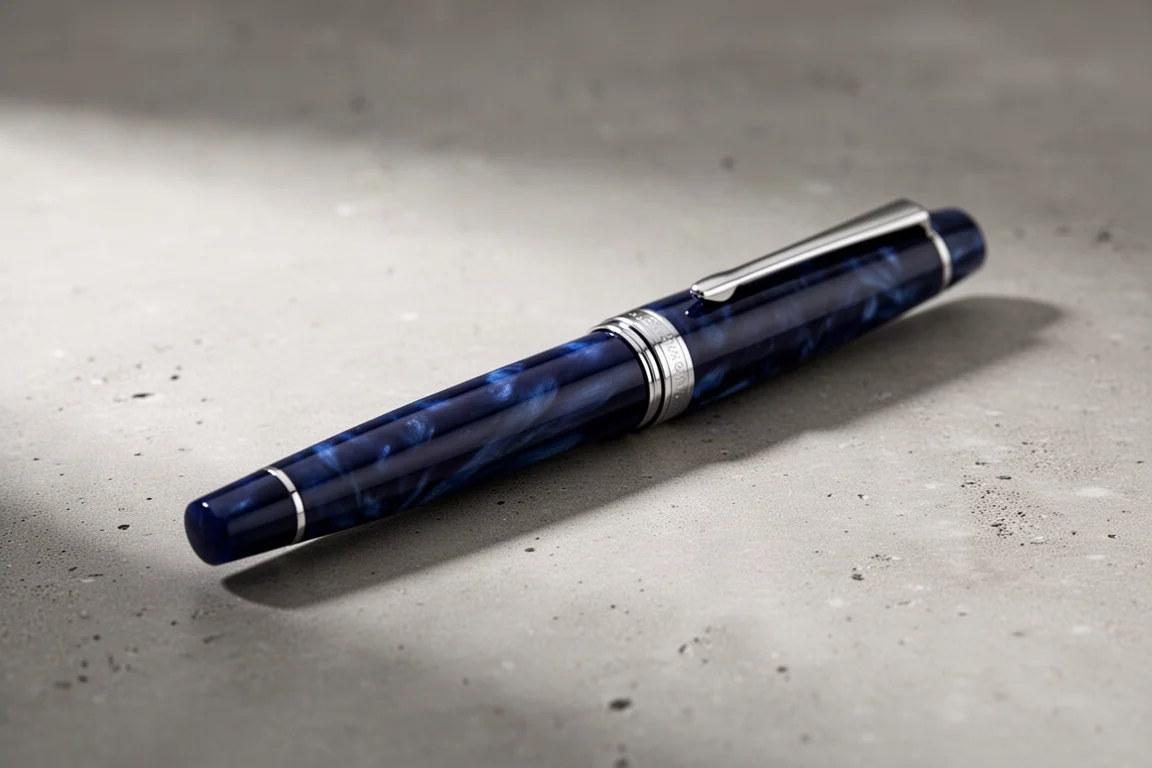
Aurora Optima Review: An Italian Piston Filler That Punches Above Its Price
A 14k gold nib, ebonite feed, and a beautifully deep oraloid body make the Aurora Optima one of the most rewarding piston fillers around.
Fountain Pens
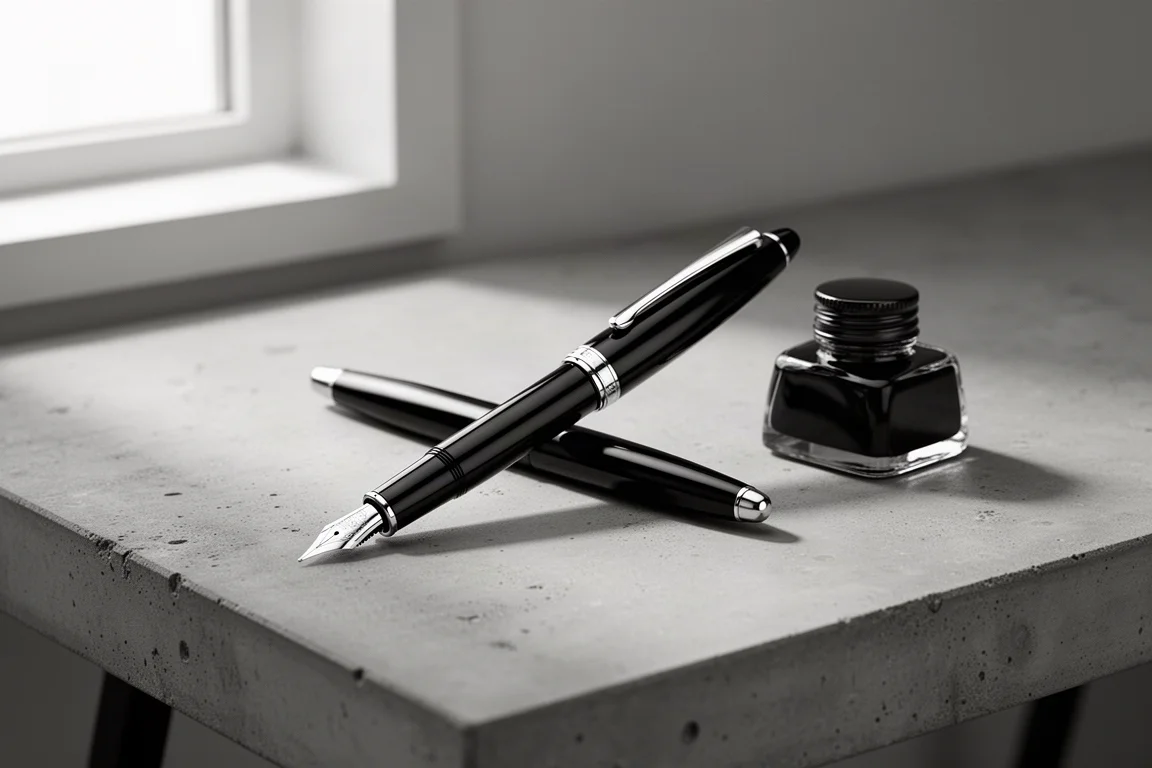
Cross Bailey Light Review: The Entry-Level Fountain Pen Worth Keeping at the Office
A plastic-bodied Cross with a metal clip, snap cap, and famously smooth extra fine steel nib. Around $15, available almost everywhere, and easy to recommend.