Cookware
Essential Pots and Pans Every Kitchen Needs: A Practical Starter Guide
From stainless steel skillets to Dutch ovens, here are the cookware pieces that truly earn their spot in your kitchen, plus a few nice-to-have extras.
Introduction
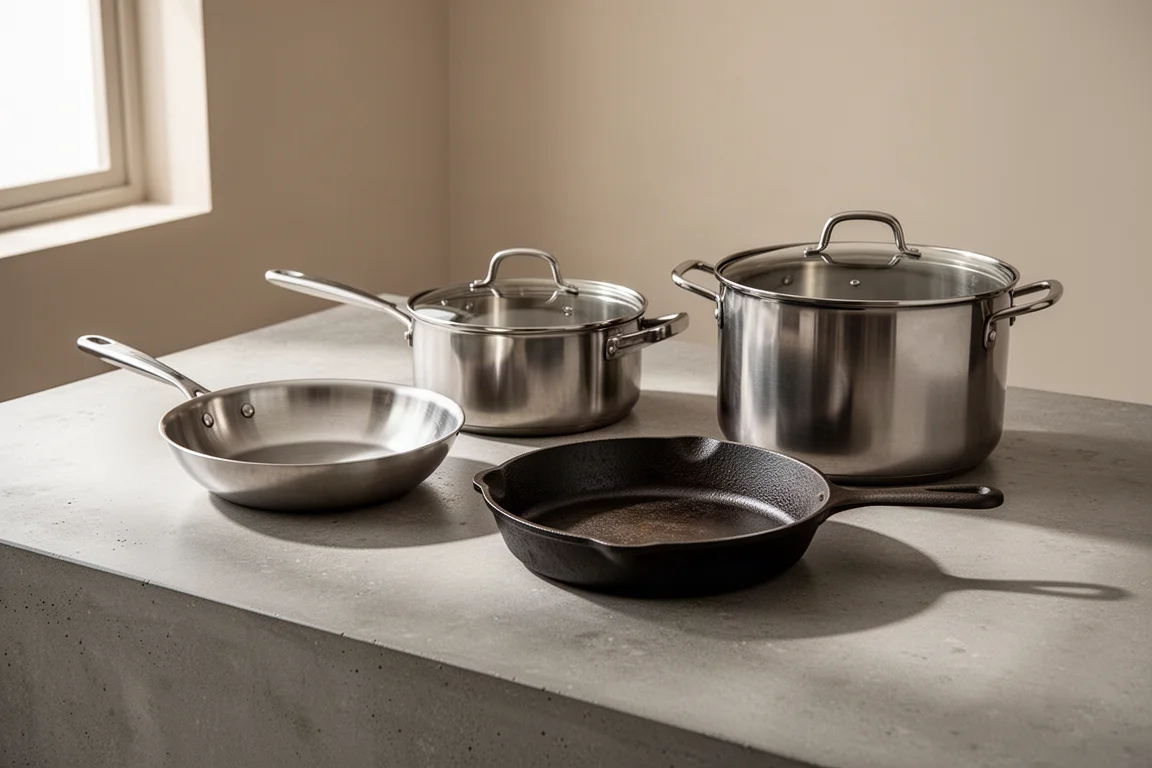
If you are starting a kitchen from scratch, or you are finally ready to replace old, underperforming pans with better-quality pieces, it helps to know which cookware actually matters. Not every pot and pan deserves a place in your cabinet. The essentials come down to a handful of well-chosen shapes and sizes that cover nearly everything you cook day to day: searing, sauteing, sauces, pasta, braising, roasting, and eggs.
This guide walks through the core pieces worth owning, what to look for in each one, and the sizes that make the most sense for most kitchens. It finishes with a few non-essential but genuinely nice-to-have pans if you have the space and budget to keep building your collection.
The Stainless Steel Frying Pan
A quality stainless steel frying pan, also called a skillet, is the workhorse of any kitchen. With sloped sides, a long handle, and a large cooking surface, it handles nearly any ingredient: searing meats, sauteing vegetables, shallow frying chicken, and much more. It will not react with acidic ingredients, and the fond and brown bits that stick to the surface can be deglazed and simmered down into a delicious pan sauce.
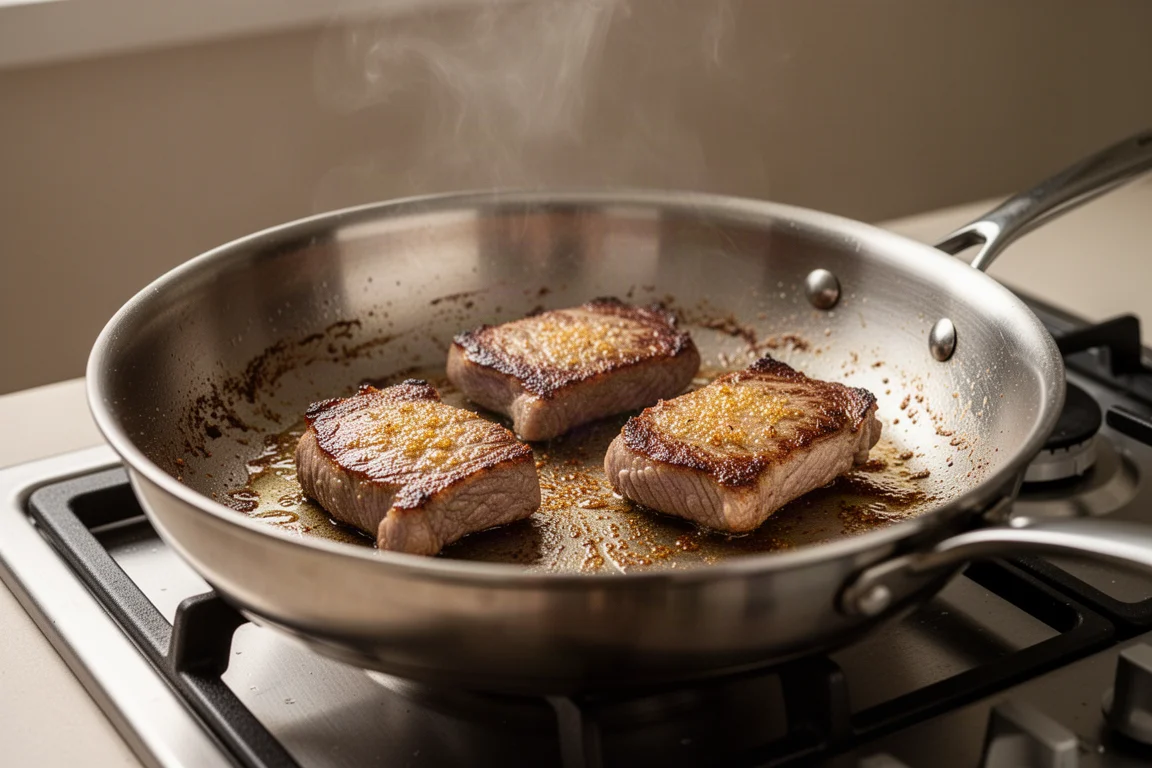
When shopping, look for a fully-clad pan around 3 mm thick. Fully clad means the pan has a conductive core layer of aluminum or copper throughout, including the sides, rather than only at the base as in disc-bottom pans. Fully clad pans are more durable and heat more evenly. Flared rims make pouring liquids and sliding food onto a plate easier, and straight handles are preferable since rounded handles can rotate in your hand.
A 12-inch pan handles large amounts of food without overcrowding, though a 10-inch pan is a good option if you live alone or have limited space. All-Clad, Made In, Heritage Steel, and Demeyere are excellent brands, while Goldilocks, Misen, and Legend are affordable options that perform well.
The Stainless Steel Saute Pan
The difference between a frying pan and a saute pan comes down to the sides. Frying pans slope outward; saute pans are straight and taller. Because of those L-shaped sides, a saute pan handles more volume and liquid-heavy meals and does a better job containing splatter. It is great for braising, shallow frying, and, of course, sauteing.
The trade-off is that liquid does not evaporate as quickly, and since meat needs a dry surface to develop a good crust, searing is less effective in a saute pan than in a frying pan. Most saute pans come with a lid, so you can stuff large amounts of greens like kale inside to steam and cook down, and they usually include a helper handle that makes them easy to move even when hot and full of food.
For most people, a 3 to 4 quart saute pan is the sweet spot: large but still maneuverable and easy to store.
The Saucepan or Saucier
Every kitchen should also have either a stainless steel saucepan or a saucier. Saucepans have a flat bottom, straight sides, a narrow opening, and a long handle. Sauciers have a curved bottom, sloped sides, and a wider opening. Both work well for sauces, pasta, grains, braises, and small batches of soup.
The saucier has a real advantage: the rounded bottom makes stirring, whisking, and cleaning easier. With saucepans, ingredients tend to stay in place, which increases the risk of burning and sticking, and the corners are difficult to clean.
As for size, a 2-, 3-, or 4-quart pan all work. The 4-quart gives extra room for foods like pasta, the 2-quart boils water faster for hard-boiled eggs and quick meals like mac and cheese, and the 3-quart is a nice balance between the two.
The Stock Pot
A stock pot is similar to a saucepan but larger, with taller sides, wider openings, and two small handles. It will be the largest pot you buy, and something between 6 and 8 quarts is the right range for most kitchens.
You will use it for soups, stocks, large quantities of rice, and pasta. It may not come out of the cabinet daily or even weekly, but it is still essential: sooner or later you will need to cook large quantities, and doing multiple batches in a smaller saucepan is not practical.
One useful note: while fully-clad stainless steel is worth prioritizing almost everywhere else, a stock pot is one exception. The circulating liquid distributes heat effectively, food rarely contacts the sides directly, and the risk of scorching or uneven heating is low even without clad walls.
The 12-Inch Cast Iron Skillet
Cast iron earns its place through sheer heat retention. It does not heat up as fast or as evenly as stainless steel, but its thick construction holds temperature far better, staying stable when a piece of cold meat hits the surface. That makes it the ultimate searing pan.
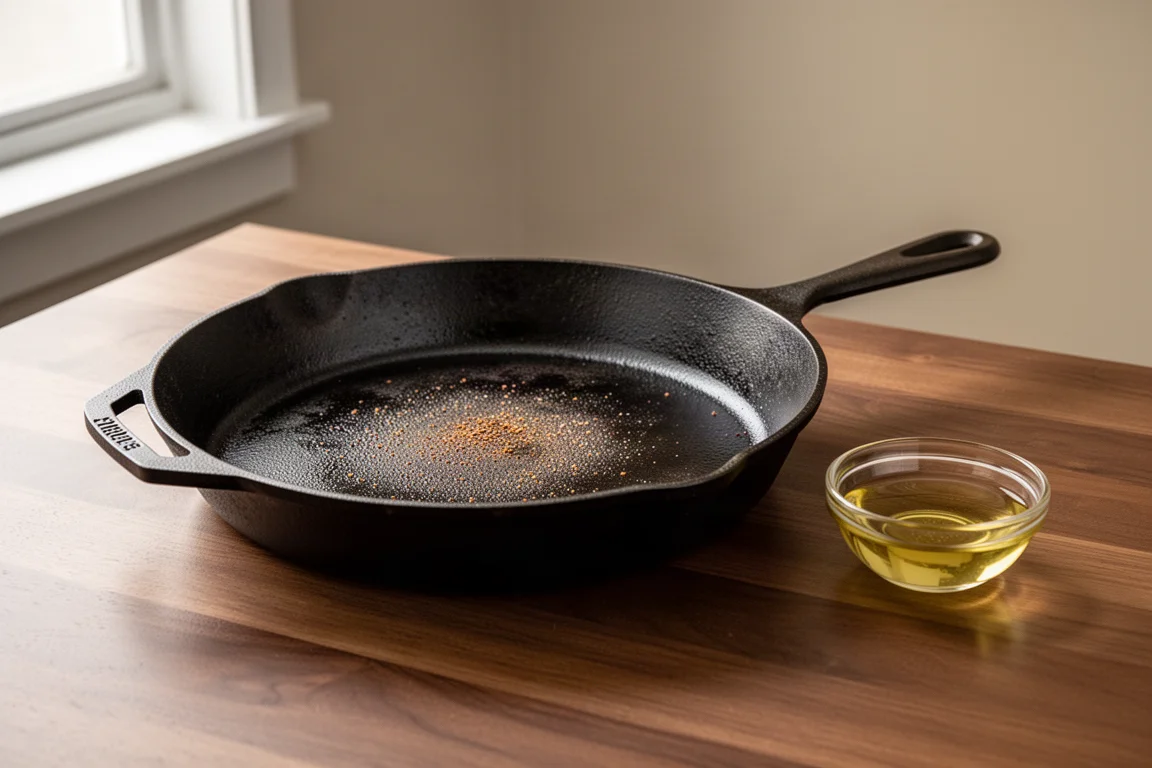
Its versatility extends well beyond searing: roasting, sauteing, frying, and even baking cornbread and pizza all work well in cast iron. The main maintenance task is seasoning, which means coating the surface in a thin layer of oil and baking it in the oven to prevent rust. As seasoning layers build up over time, the surface becomes slick enough to cook eggs without sticking.
The main limitation is acidity. Tomatoes, wine, vinegar, and citrus can strip the seasoning and react with the metal, leaving a metallic taste behind. Lodge and Calphalon make good quality, affordable skillets, while Stargazer is a worthwhile upgrade with a longer handle and a smoother cooking surface.
The Non-Stick Pan for Eggs
Every kitchen should have one 10- or 12-inch non-stick pan dedicated to eggs. Even though well-seasoned cast iron can handle them, non-stick is by far the easiest and most convenient way to cook eggs without sticking.
No matter the brand, the coating eventually wears out and the pan needs replacing. That is why it makes sense to use it exclusively for eggs and keep the heat low to medium. If you are concerned about chemicals in traditional non-stick coatings, brands like Caraway and GreenPan use a ceramic-like coating made from silicon dioxide, essentially sand.
Two money-saving rules apply here. First, do not waste money on non-stick saucepans, stockpots, or saute pans; liquid-based meals do not stick, so larger non-stick pots add nothing. Second, do not overspend on a non-stick frying pan since it will need replacement eventually. Misen, Tramontina, Calphalon, and All-Clad Essentials all make affordable aluminum non-stick pans that get the job done.
The Rimmed Baking Sheet
A rimmed baking sheet, or sheet pan, is another essential, and it is helpful to have two so you can roast multiple foods at once without mixing flavors or overcooking one of them.
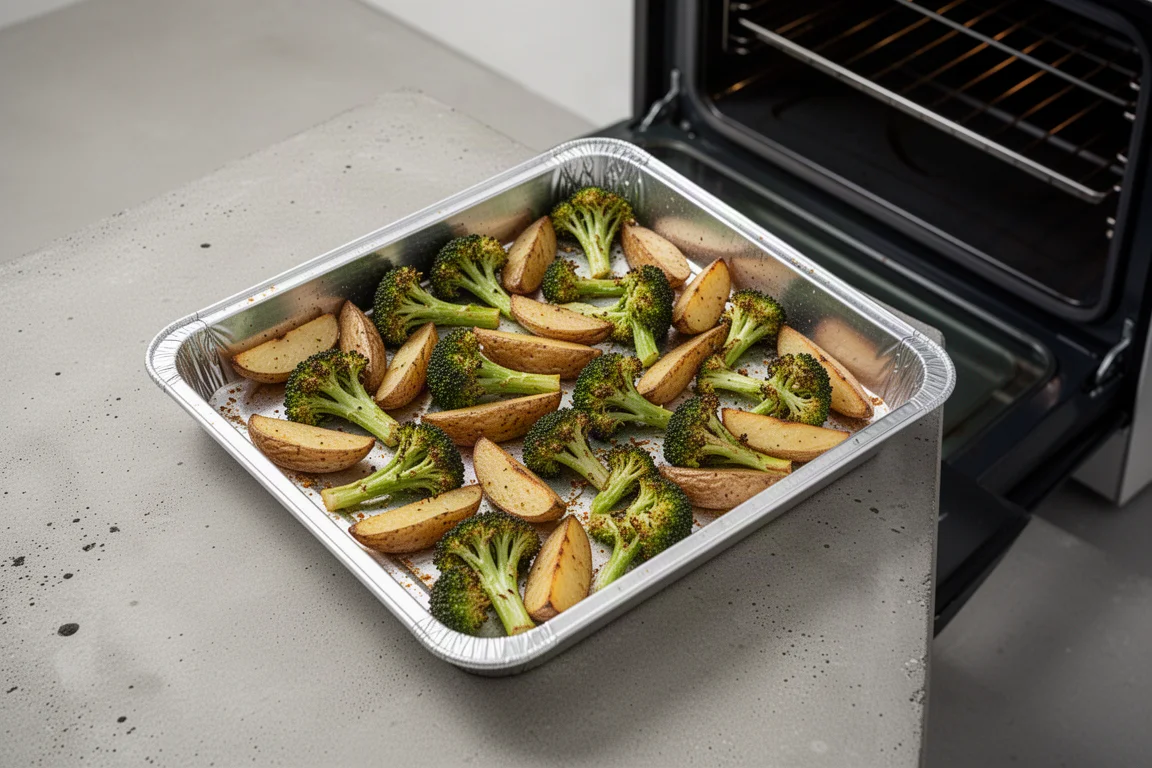
Sheet pans excel at cooking large quantities of ingredients that need to spread out flat and bake or roast: pizza, chicken wings, broccoli, potatoes, and squash. They also double as drip catchers under a cutting board or on the lower rack beneath a smaller pan.
Go for the half-sheet size, roughly 18 by 13 inches, with 1-inch rims that keep ingredients from sliding off as you move the pan. Material matters too: aluminum without a non-stick coating heats more evenly than steel, withstands higher temperatures than non-stick versions, and is safe under the broiler.
The Roasting Pan with a Rack
A roasting pan with a rack is only essential if you regularly cook chickens, turkeys, roast beef, ham, and other large meats. Otherwise, smaller roasts work fine in a cast iron skillet, stainless steel frying pan, or rimmed baking sheet.
If you do need one, look for 14 to 16 inches with 3- to 4-inch walls. Walls that are too shallow let juices splash over the sides, while walls that are too high block air circulation and lead to uneven cooking. Make sure the pan comes with a rack: it lets heat circulate so the meat cooks evenly instead of stewing in its own juices.
The Enameled Cast Iron Dutch Oven
Enameled cast iron Dutch ovens are among the most versatile pieces you can own. Soups, stews, sauces, braises, and even bread all come out of these heavy-walled pots. Their thick cast iron construction retains heat exceptionally well, so meatballs, short ribs, chicken thighs, and any meal requiring browning, braising, frying, or low-and-slow cooking perform beautifully.
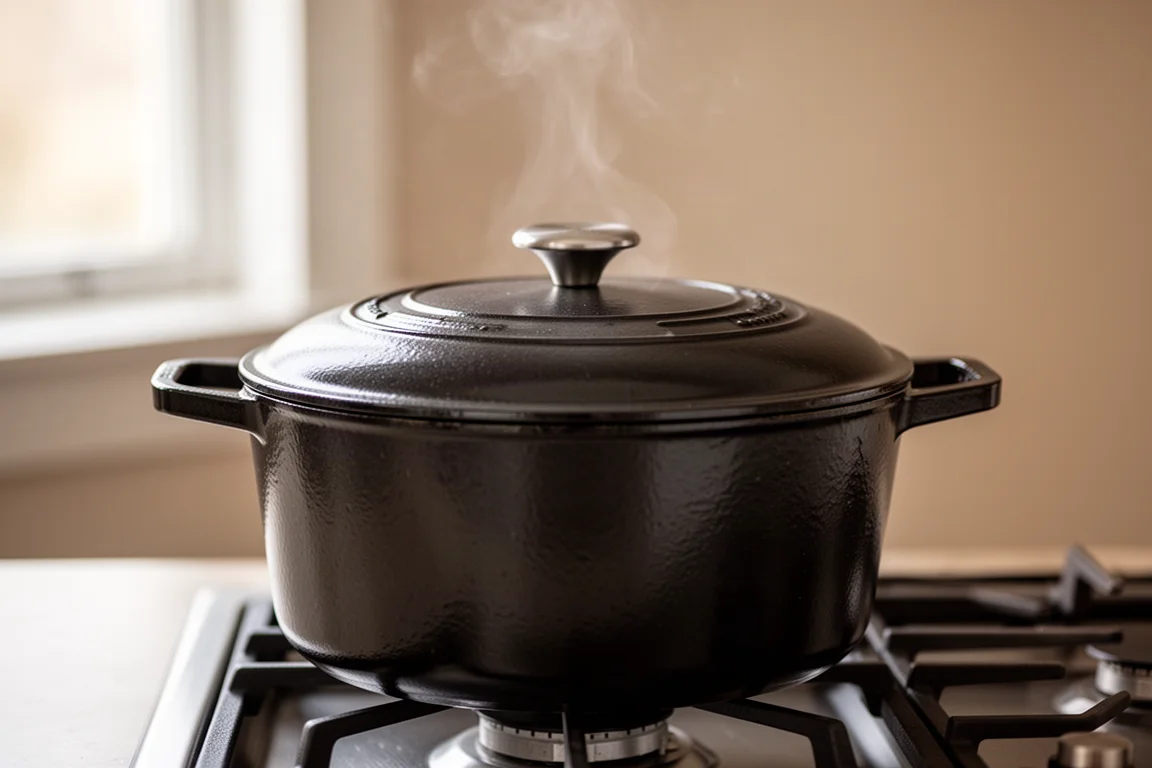
The enamel coating is non-reactive, which means tomato sauce, chili, and other acidic foods are not a problem the way they are in bare cast iron.
You could argue a Dutch oven is redundant if you own a stock pot, since both are large pots with tall walls, large openings, and lids. But owning both makes sense for the same reason you would own both stainless steel and cast iron skillets: Dutch ovens are heavier and retain heat better, making them superior for browning, searing, braising, slow cooking, and any dish that needs a steady temperature over a long period. The heavy lids also do a better job locking in moisture and keeping meals tender.
A 5 to 7-quart Dutch oven is ideal for most kitchens, and round shapes fit standard cooktop burners better than oval ones. Le Creuset, Staub, and Made In are the best brands in this category.
Nice-to-Have Extras
Once the essentials are covered, a few additional pans are worth considering if you have the space and budget, though none are strictly necessary. A carbon steel skillet is essentially a lightweight cast iron skillet, so owning both is not required. An enameled cast iron braiser is like a Dutch oven with shorter sides and a wider cooking surface.
A carbon steel wok has tall sloped sides that contain splatter and let you regulate heat by moving ingredients from the hot bottom up to the cooler sides. Finally, a copper skillet heats rapidly and responds quickly to temperature adjustments, but stainless steel pans deliver similar results at a much lower cost, which is why copper stays firmly in the nice-to-have column.
Buying Advice
Start with the pieces that cover the widest range of daily cooking: a stainless steel frying pan, a non-stick pan for eggs, and either a saucepan or saucier. Add a saute pan, stock pot, cast iron skillet, and sheet pans next, then a roasting pan and Dutch oven based on how you actually cook. Buy fully clad stainless steel where it matters, skip non-stick on anything larger than a frying pan, and remember that a modest, well-chosen set will outperform a cabinet full of mismatched pieces every time.
Conclusion
Equipping a kitchen does not require an overwhelming collection. A stainless steel skillet, saute pan, saucepan or saucier, stock pot, cast iron skillet, one dedicated non-stick pan, rimmed baking sheets, and a Dutch oven cover virtually every technique a home cook needs, with a roasting pan added only if you cook large cuts of meat. Choose quality where it counts, keep the budget-friendly swaps in mind, and your cookware will serve you for years.
Product link
View more details for All-Clad Essentials Non-Stick Frying Pan
This product is mentioned in the review. Check the specifications, options, and compatibility before buying.
View more details for All-Clad Essentials Non-Stick Frying PanFurther reading
Related Reviews
Cookware
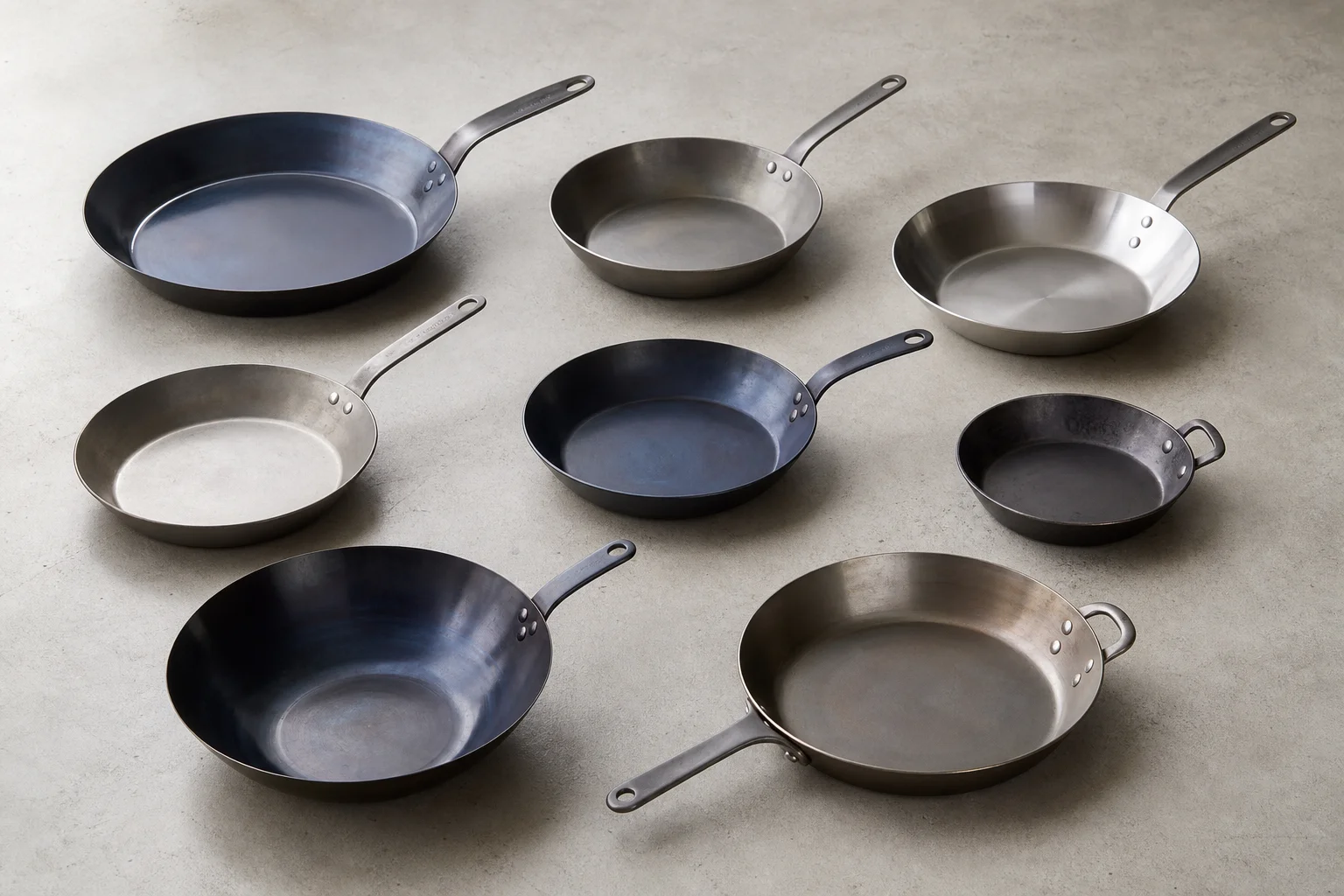
Best Carbon Steel Pans Tested: Which Brands Deliver Real Value
We tested eight popular carbon steel pans with controlled durability, heat, and cooking tests. Here's which ones perform best and which to avoid.
Cookware
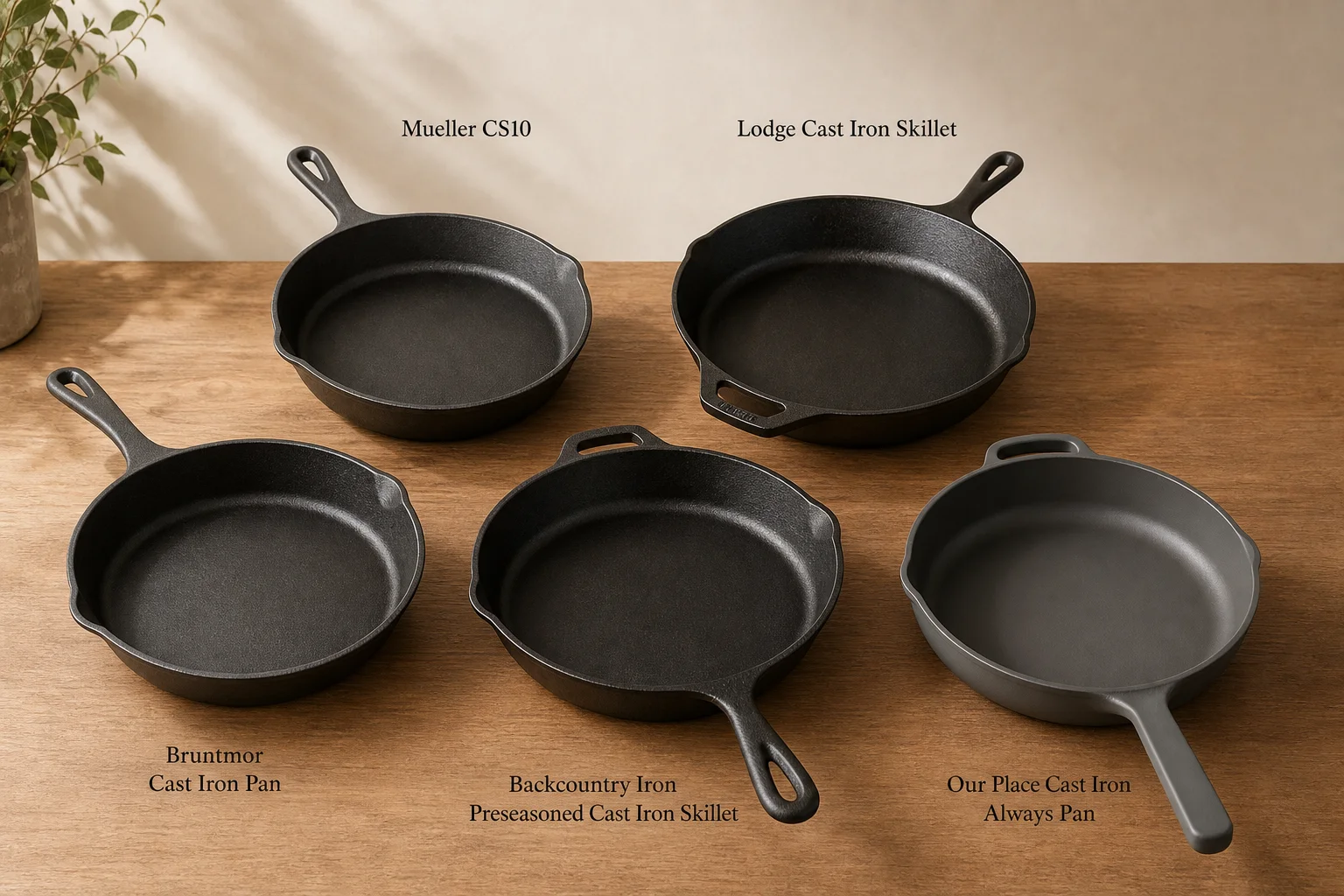
Best Cast Iron Pans 2026: Five Options from Budget to Premium
A practical breakdown of five cast iron skillets, from affordable Mueller to premium Our Place, with clear strengths and trade-offs for different cooking needs.
Cookware
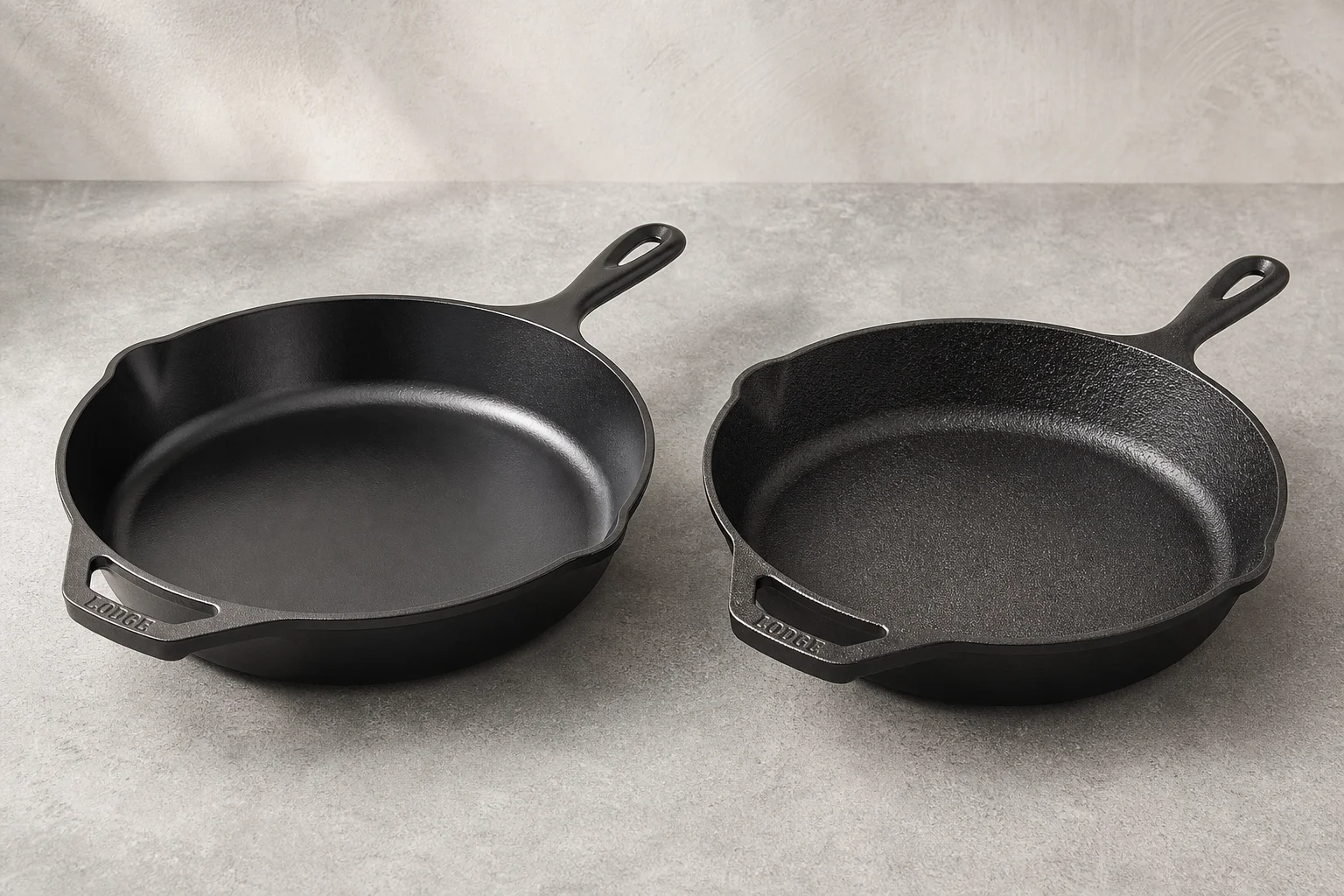
Best 12-Inch Cast Iron Skillets: Premium Craftsmanship vs. Reliable Budget Option
Two standout 12-inch cast iron skillets tested for heat retention, surface finish, and durability. One premium choice and one budget-friendly alternative that both deliver.