Fountain Pens
Erin Pens Beta Fountain Pen Review: A Flex Nib Built for Calligraphy
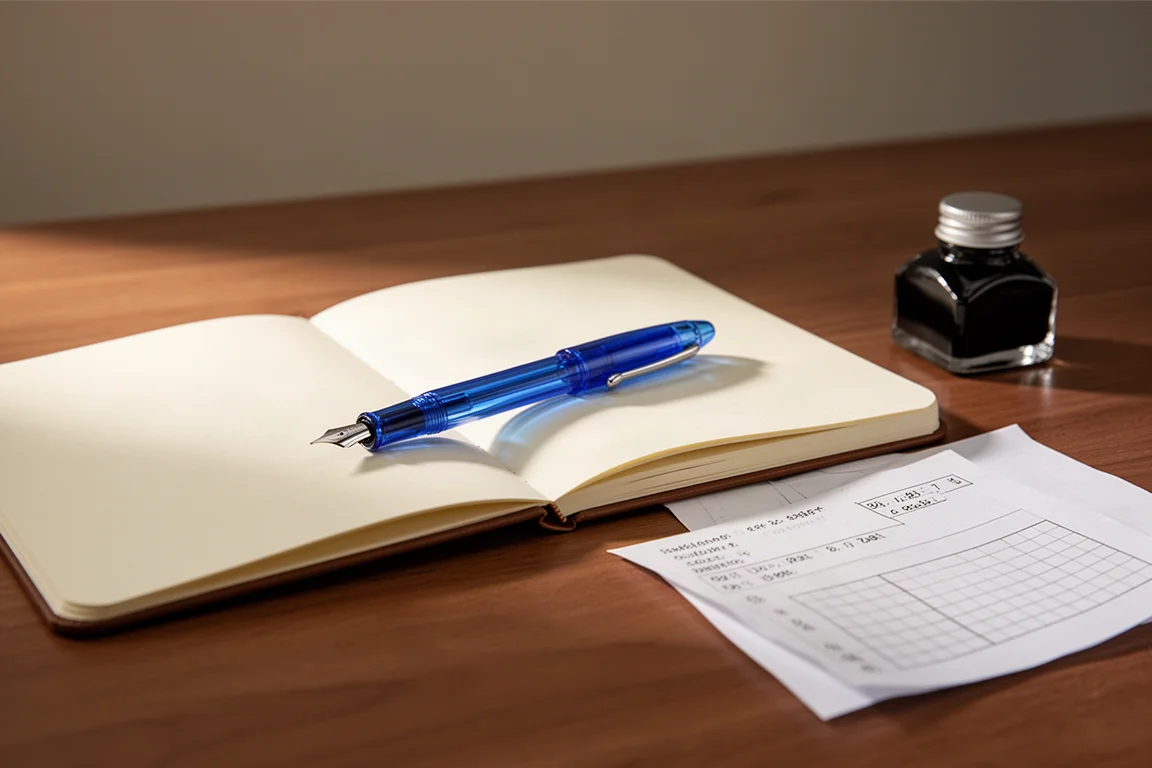
A translucent cobalt blue flex fountain pen with an untipped stainless steel nib that delivers dramatic line variation, but only for the right kind of writer.
Introduction
The Erin Pens Beta Fountain Pen is a flex fountain pen with a very specific personality. It is not an everyday writer and it makes no attempt to be one. This is a pen built around a single idea: a highly flexible, untipped stainless steel nib that can produce dramatic line variation for calligraphic writing.
At a list price of $125 (often on sale for around $99.95), it sits in an interesting spot alongside other pens that use similar nibs. This review covers the build, the writing experience, and what worked and what did not during extended use.
Design and Materials
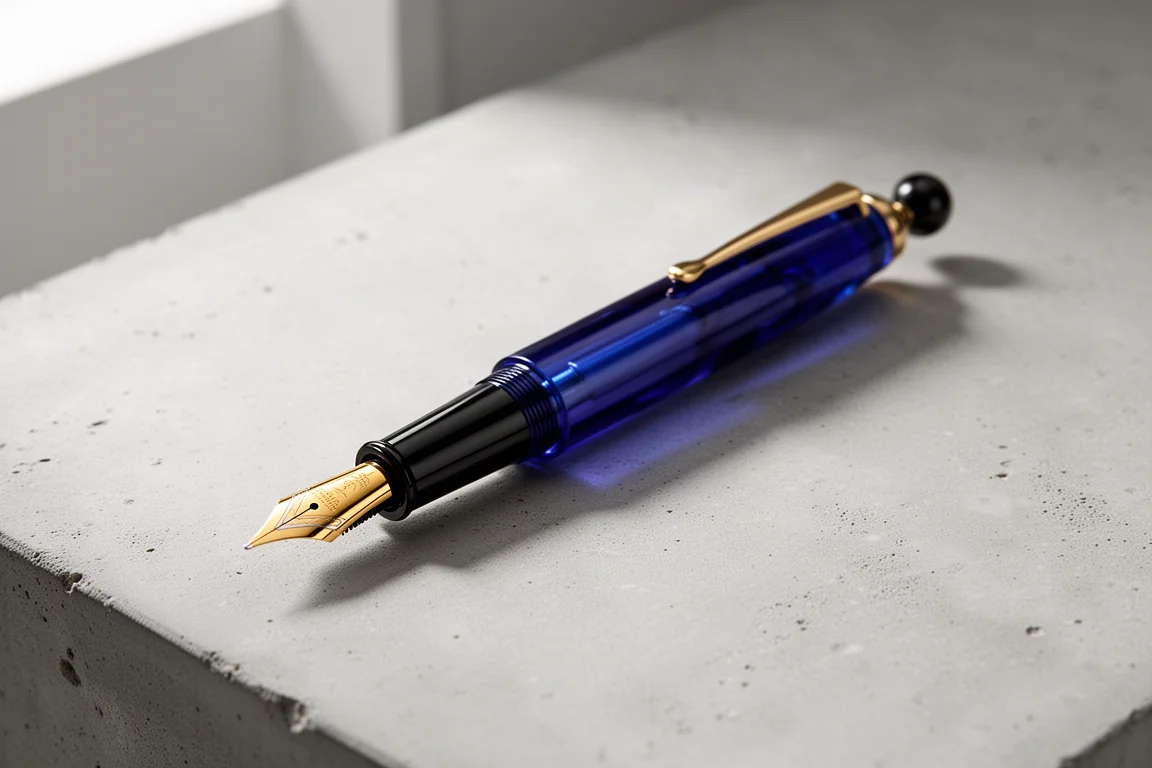
The Beta is a genuinely attractive pen. The barrel is made from translucent cobalt resin, a deep, dark blue that reads beautifully in the light, with subtle swirls visible through the body. The cap unscrews in about one and a half turns and features a black finial, a springy ball-end clip, and the Erin Pens branding on the cap band and barrel.
In terms of size, the pen is slightly longer and noticeably girthier than a Pilot Metropolitan. There is a good amount of metal hardware on the pen, which makes it feel solid without being heavy, while the resin keeps the overall balance comfortable in the hand.
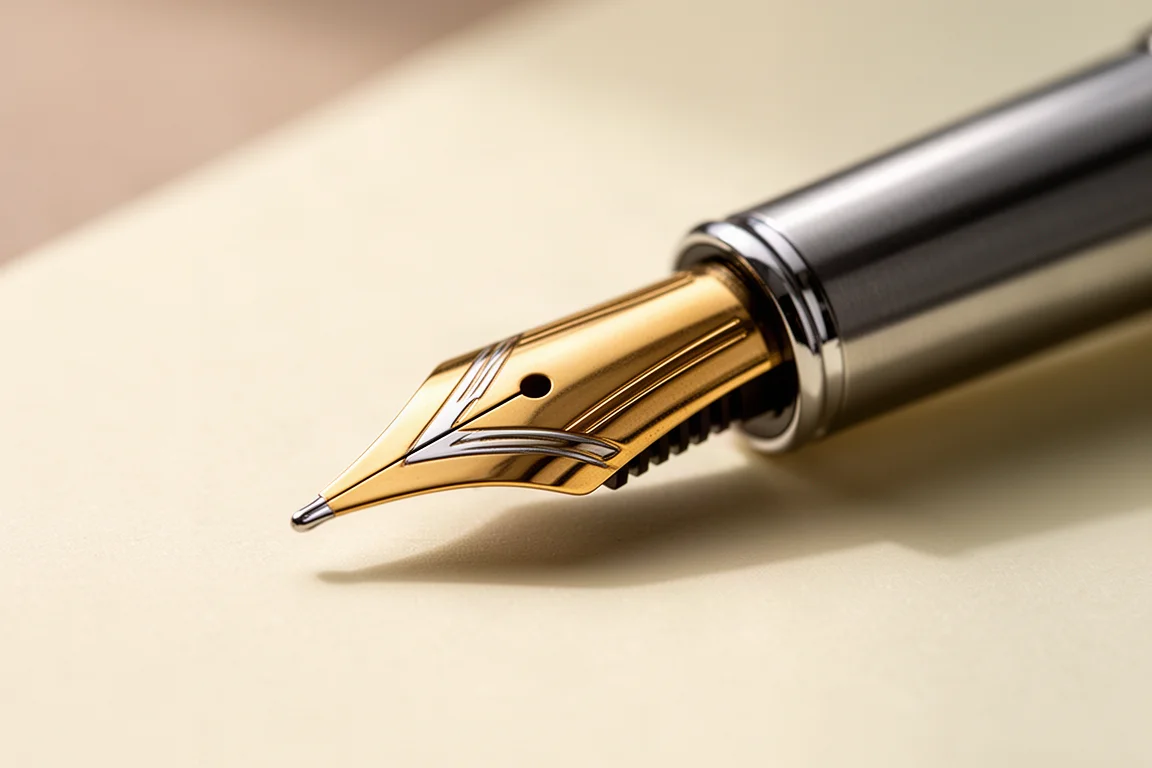
The nib is the headline feature. It is a rust-resistant stainless steel nib with a gold-colored coating and no tipping material, meaning it comes to a very sharp point. The feed is plastic rather than ebonite; the company’s position is that ebonite is not always good at controlling ink flow, and plastic keeps costs down and makes the pen more affordable.
Writing Performance
This is where the pen demands some context. The untipped nib is essentially a dip-style nib installed in a cartridge-converter pen, and that changes how it behaves on paper. On smooth, coated paper it feels fine, but on more absorbent paper you feel real feedback, and on copier paper the sharp point can catch noticeably. Make sharp turns while writing and you will feel it.
Out of the box, this particular pen wrote very dry. With normal, light fountain pen pressure the line was barely legible and the ink color came out far lighter than a deep blue should. That said, the story changes completely under pressure. Once you exert the kind of force flex writing requires, the flow opens up and the ink comes through.
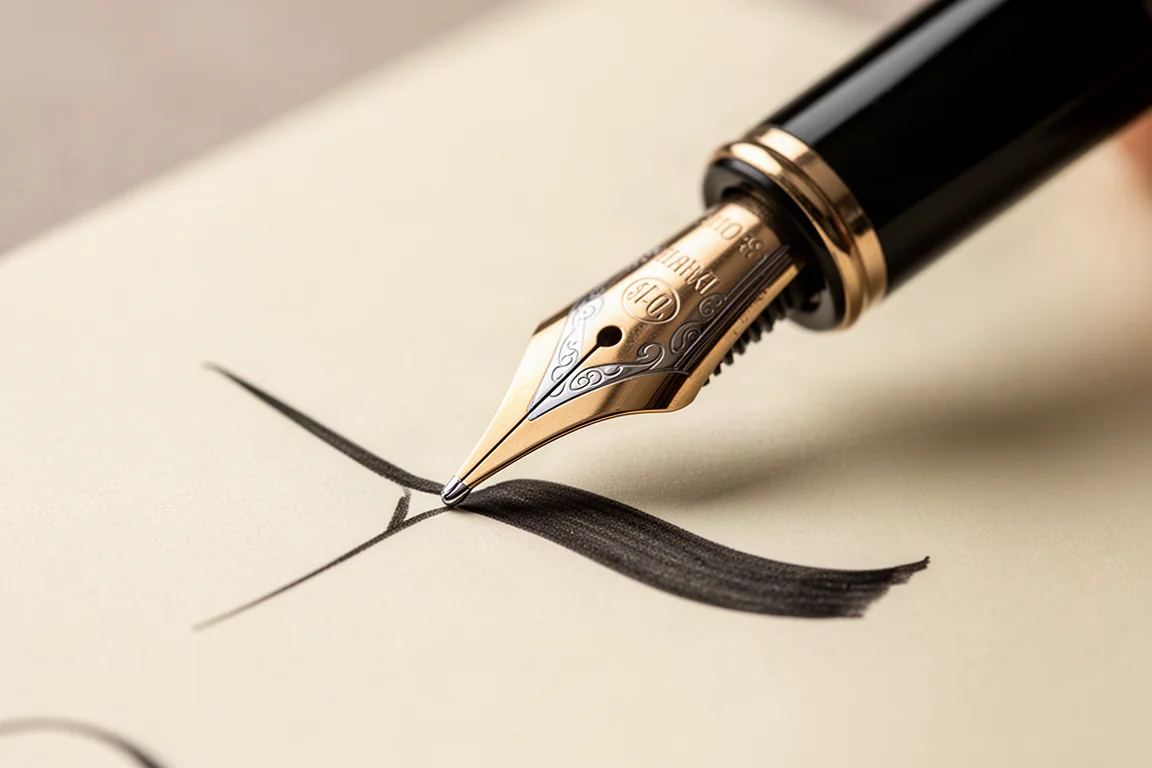
And that flex is the point. The company claims the nib can flex from 0.3 mm up to 1.5 mm, and that does not appear to be an exaggeration. When flexing properly, the contrast between razor-thin hairlines and thick downstrokes is genuinely pronounced. This is what you buy the pen for, and in that specific use case it delivers. The dryness may even be a feature for copperplate-style writing, where clean contrast between hairlines and swells matters most.
Just be aware: with normal everyday writing pressure, the writing is nearly unreadable. This is emphatically not a grocery list pen.
Likes and Dislikes
On the likes side, the looks are hard to fault. The translucent blue resin is striking, the metal-to-resin balance feels right, and the pen feels solid without being heavy. The springy clip is a nice touch.
On the dislikes side, the dryness is the main issue. Even after cleaning with diluted dishwashing detergent, flushing the pen thoroughly, and loading it with a well-lubricated ink, the flow stayed very light without pressure. It is worth noting this could be specific to the individual pen rather than the model as a whole, since it is impossible to verify with only one unit in hand.
Price positioning is also worth examining. Pens with similar nibs include the Bluedo at around $88 and the Lorelei 691, which has appeared for under $30. Of the three, the Beta is the most expensive, though it does have considerably more metal parts and a larger build than either alternative.
One final observation on the nibs themselves: multiple companies appear to sell pens with this same nib, and at least two of them claim to have designed it. Those claims cannot both be true. That does not necessarily reflect badly on any one product, but it is worth knowing when comparing options.
Buying Advice
If you want a dedicated flex pen for calligraphic writing, the Beta makes a strong case: gorgeous translucent resin, solid construction, and a nib capable of impressive line variation when properly flexed. If you want a pen for everyday notes, look elsewhere.
Also consider the alternatives. The Bluedo pen with a modified version of a similar nib costs less, and the Lorelei 691 with an unmodified version of the same nib can be found at a fraction of the price. Compare the three based on how much you value the Beta’s extra metal hardware and build quality.
Conclusion
The Erin Pens Beta Fountain Pen is a specialist tool: beautiful to look at, well balanced, and capable of dramatic flex writing for calligraphy. Its very dry flow under normal pressure and the sharpness of the untipped nib make it unsuitable for everyday use, and it is the priciest of the pens sharing this nib design. For calligraphers who specifically want pronounced hairline-to-swell contrast, it delivers exactly what it promises.
Product link
View more details for Erin Pens Beta Fountain Pen
This product is mentioned in the review. Check the specifications, options, and compatibility before buying.
View more details for Erin Pens Beta Fountain PenFurther reading
Related Reviews
Fountain Pens
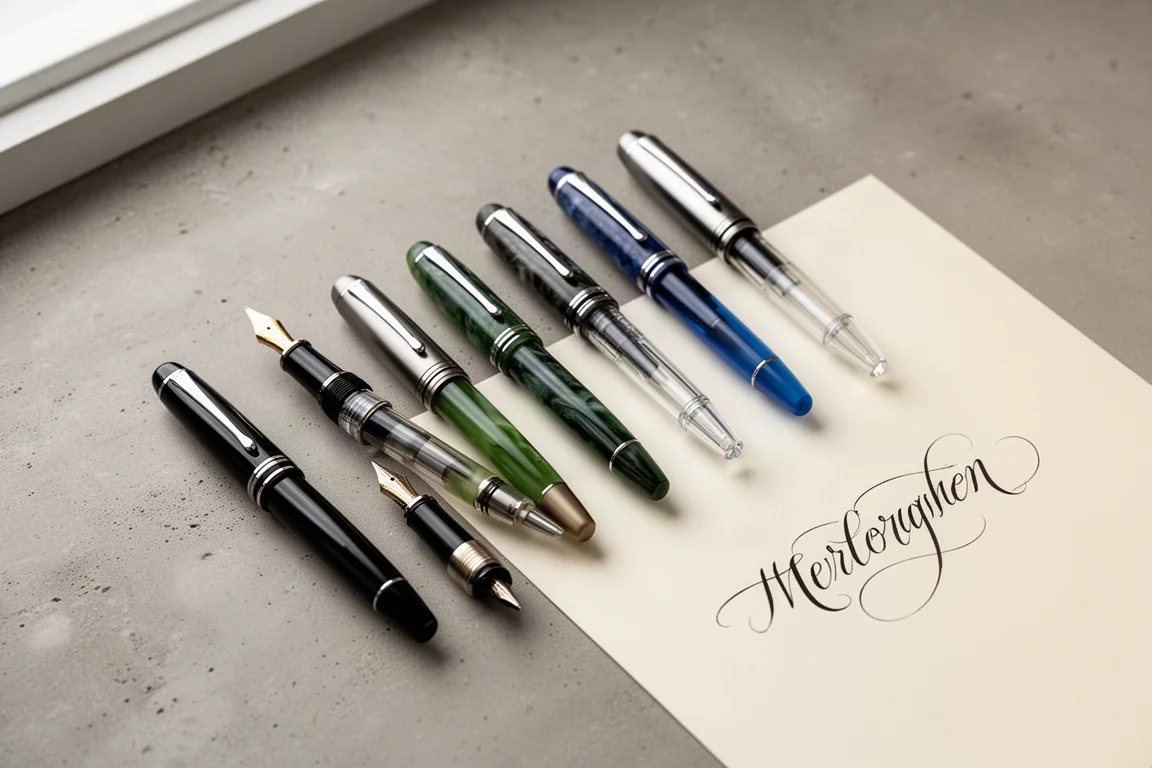
Best Budget Fountain Pens Tested: 9 Pens, One Clear Winner
A hands-on comparison of nine affordable fountain pens for everyday writing, calligraphy, and sketching, with a clear standout for flexible nib fans.
Fountain Pens
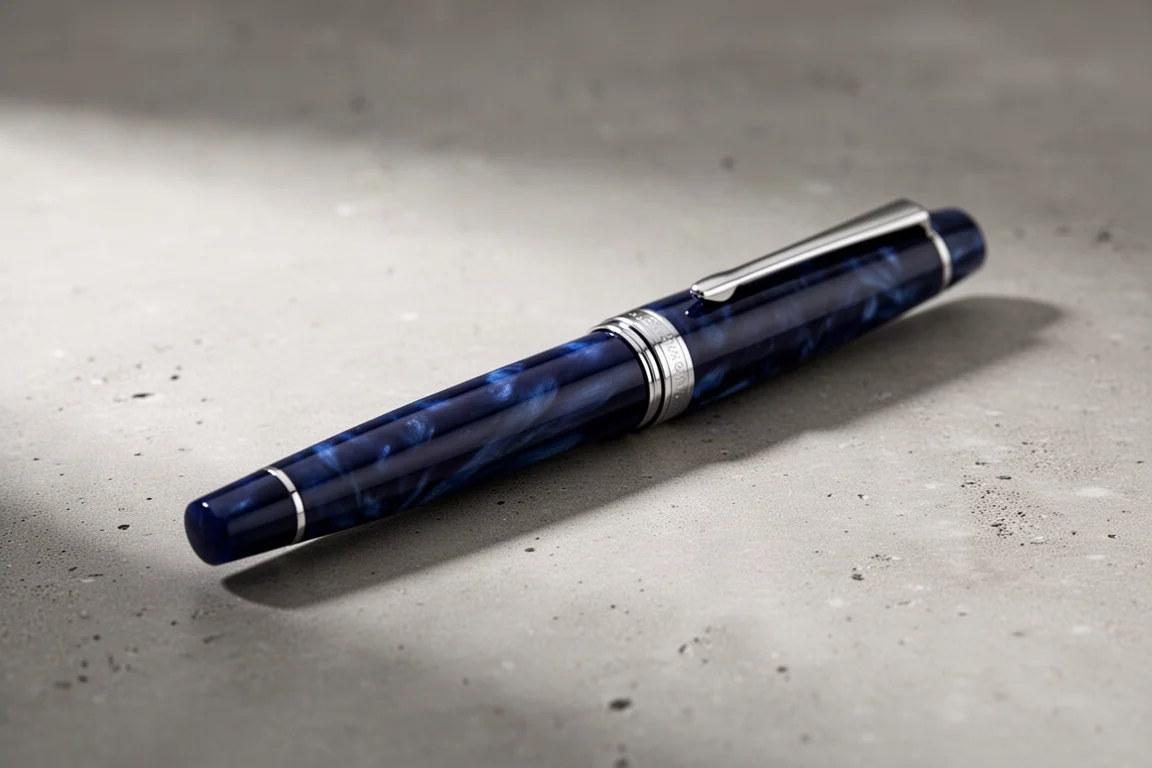
Aurora Optima Review: An Italian Piston Filler That Punches Above Its Price
A 14k gold nib, ebonite feed, and a beautifully deep oraloid body make the Aurora Optima one of the most rewarding piston fillers around.
Fountain Pens
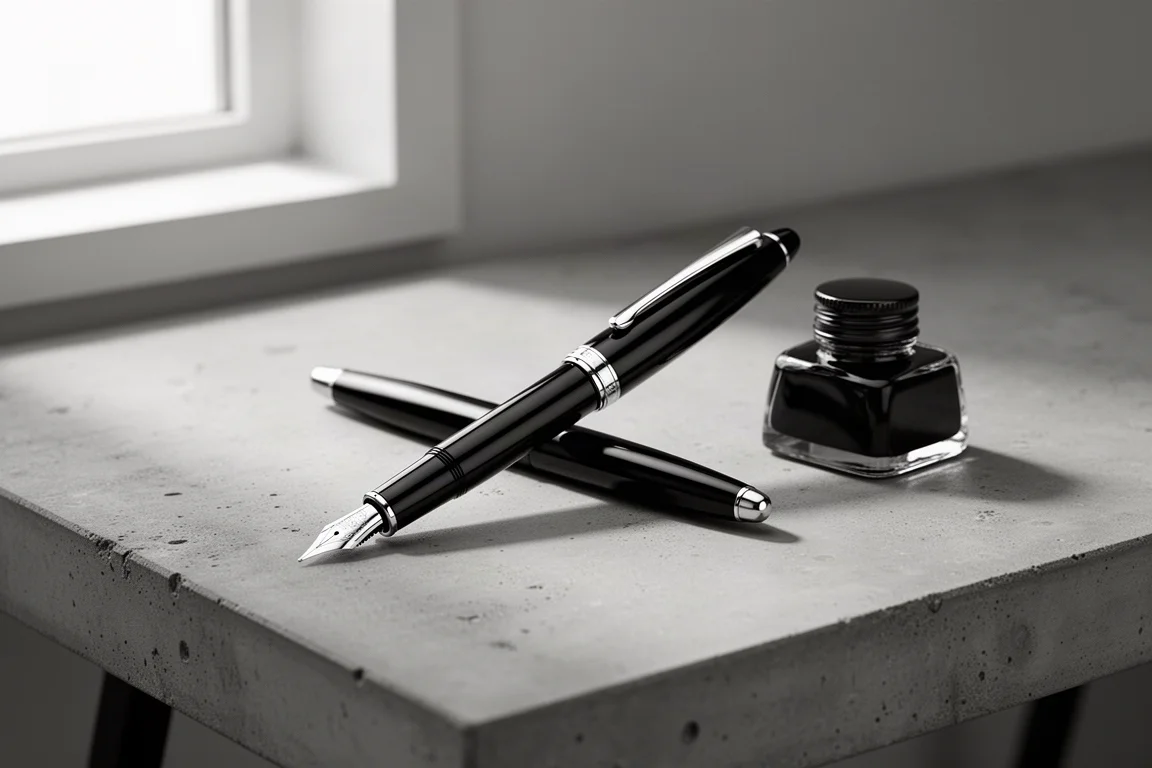
Cross Bailey Light Review: The Entry-Level Fountain Pen Worth Keeping at the Office
A plastic-bodied Cross with a metal clip, snap cap, and famously smooth extra fine steel nib. Around $15, available almost everywhere, and easy to recommend.