Projectors
Epson LS12000B Review: A 4K Laser Projector Built for Big Screens
A practical look at the Epson LS12000B 4K laser projector, covering light output, HDR behavior, setup, running costs, and who should buy one.
Introduction
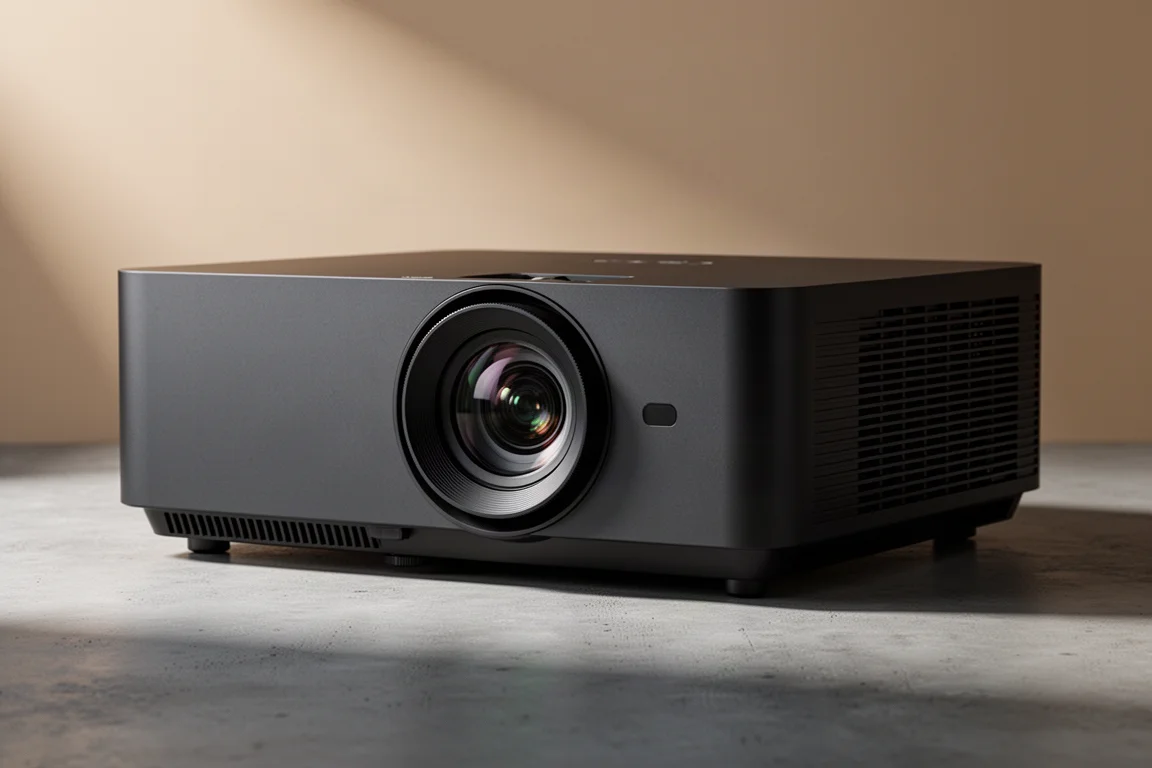
For anyone chasing a genuine cinema-scale image at home, front projection has long been the goal. The Epson LS12000B is a 4K three-chip 3LCD laser projector with a reported brightness of 2,700 lumens, a figure that puts it in comfortable territory for a dedicated, light-controlled room and workable for less critical viewing with some ambient light. It is built to fill screens up to 150 inches diagonally, and it sits near $5,000, which places it firmly in the upper tier of consumer projectors.
The appeal is easy to understand. A laser diode light array is rated for up to 20,000 hours of lamp life, a motorized lens makes alignment painless, and two HDMI 2.1 inputs keep current-generation sources happy. The open question is whether that package still makes sense next to the very large flat panels now competing for the same wall space.
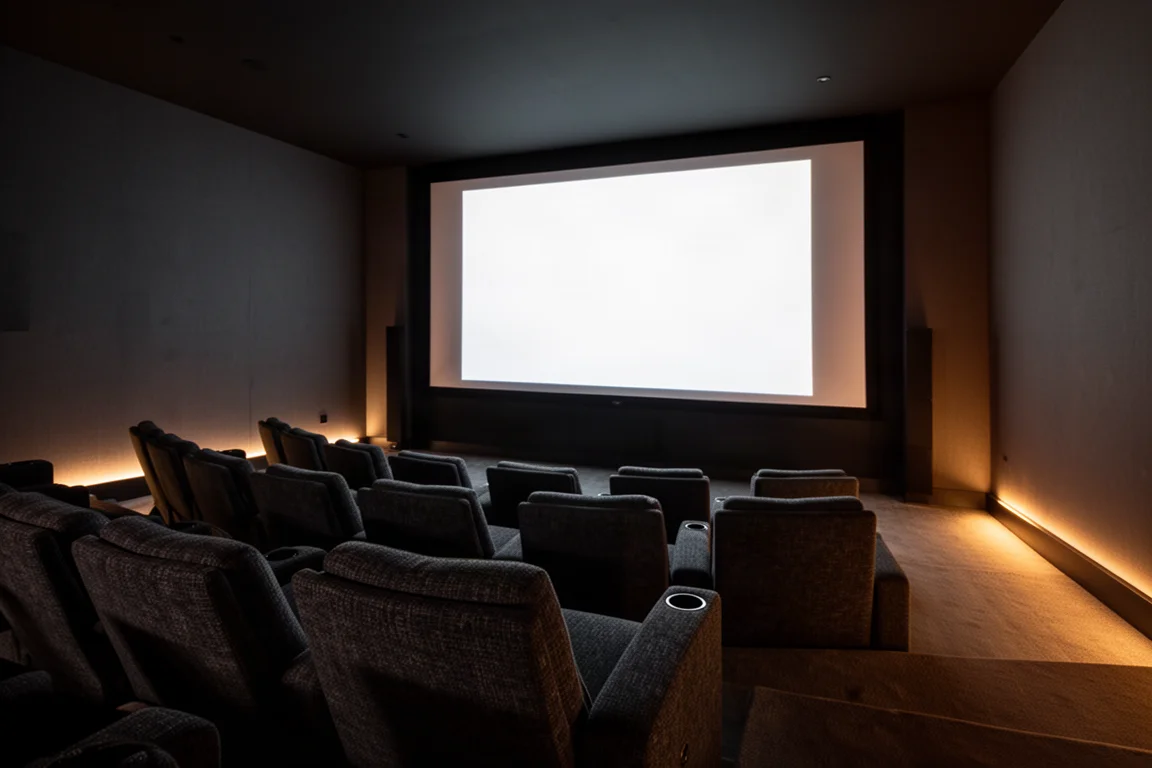
The short answer is that it depends entirely on the room. In a controlled environment, this projector delivers the scale, color, and contrast that a traditional front projection setup is known for. In a bright, multi-purpose living space, the trade-offs become much harder to ignore.
Who this product is for
The LS12000B is at its best in a dedicated, light-controlled theater room where a screen of 120 inches or more is the entire point of the build. Brightness varies with screen size, room lighting, and throw distance, but the projector’s light output should be more than sufficient for most users in that kind of space.
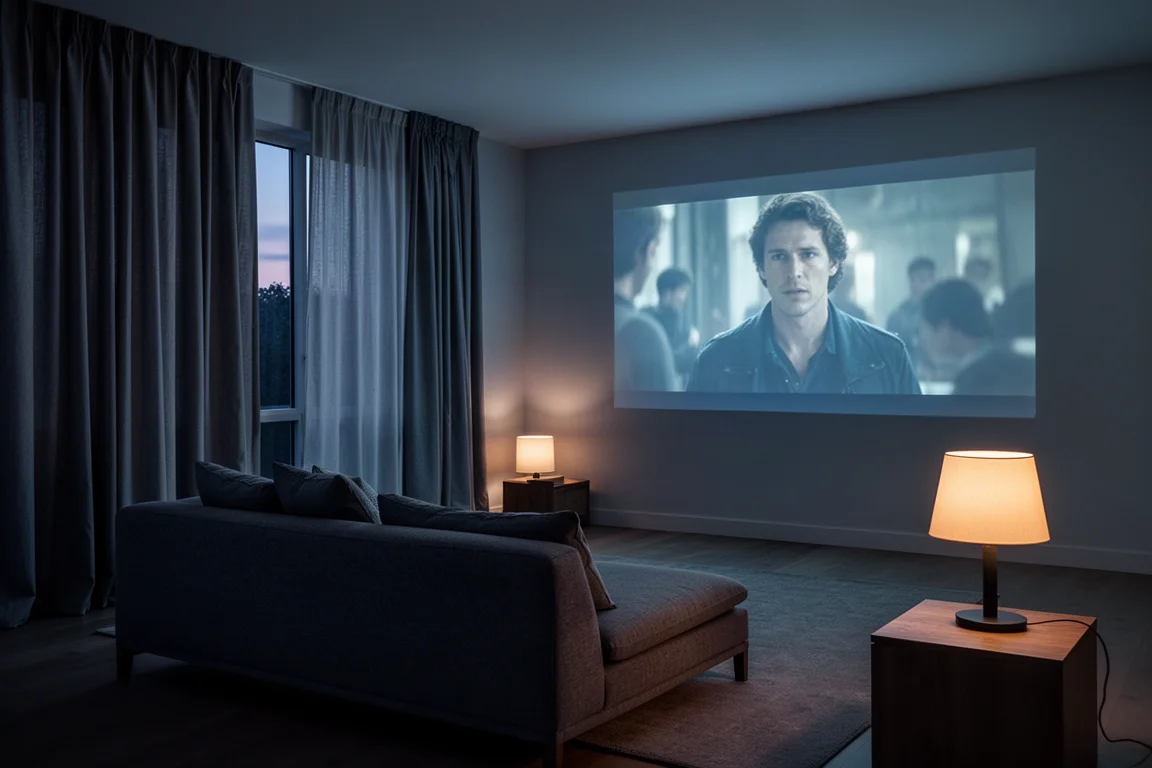
It also suits viewers whose libraries lean toward Blu-ray and pre-HDR material. Classic films and standard dynamic range content look genuinely cinematic at this scale, and that is where projection still feels special rather than compromised. Large collections of older discs make a strong case for this projector.
Gamers get a real benefit as well. Both HDMI inputs are HDMI 2.1, and one supports ARC and eARC, which means 4K 120Hz gaming from a current console is possible without a separate audio workaround.
This is not a projector for someone who wants a compact unit sitting against the wall. It is a traditional throw design, and a 120-inch image required roughly 16 feet of distance in practice. That placement requirement shapes the whole room layout.
Main strengths
Light output is the headline. The reported 2,700 lumens is a serious figure for a home projector, and the laser light source keeps that output stable without lamp replacements. Moving from a traditional projector’s roughly 2,000 to 3,000 hours of lamp life to a 20,000-hour laser array is one of the most meaningful quality-of-life improvements in this category.
The projector accepts a native 4K signal, though it is not a native 4K panel. It relies on pixel shift technology to produce a 4K-looking image at the screen. With front projection, viewers tend to be more impressed by light output, color fidelity, and contrast than by raw resolution, so the pixel shift approach is a reasonable trade rather than a drawback.
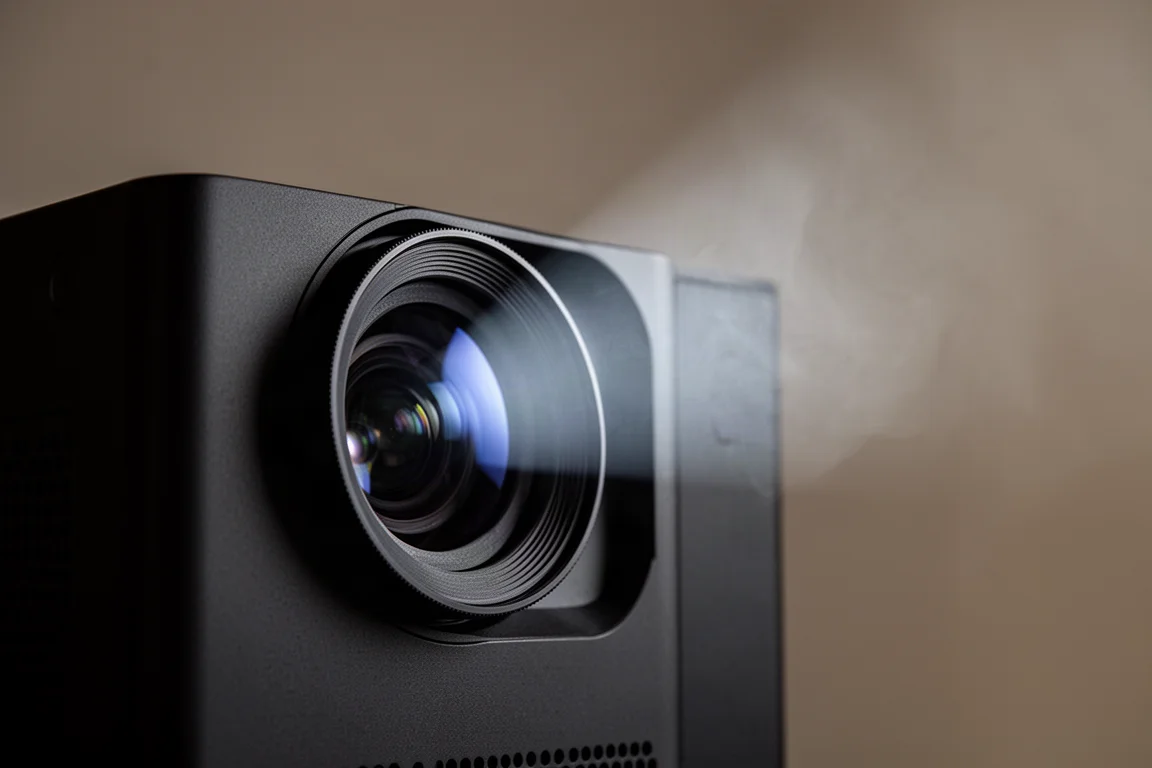
HDR support covers HDR10, HDR10+ and HLG, with real-time curve adjustment available from the remote. There is also a 120Hz refresh rate and a maximum dynamic contrast ratio of over 2,000,000 to 1. Colors come across as punchy and vivid while still looking natural and organic, and contrast is strong for a projector, with black levels good enough in a darkened room to follow action in most dark scenes.
Out of the box, the cinema and natural picture profiles were the most accurate, while dynamic and vivid proved the brightest. Bright cinema landed as a genuinely good middle ground between light output and color accuracy, and for many users it is a set-and-forget choice. After a full calibration, grayscale and color accuracy reached a delta E of around 1, where a margin of error of 3 or higher is where most viewers start to notice. The natural profile already bordered on calibrated at a delta E of around 3.
Setup is another strength. The motorized focus, zoom, and shift functions made aligning the image to the screen remarkably easy, far simpler than the ultra short throw projectors that demand precise placement against a wall. Physical connections are limited to two HDMI 2.1 inputs plus USB and ethernet, and those extra ports are intended for control and service rather than content. There are no built-in apps or operating system, so a streaming device is part of the plan.
Things to consider before buying
The pixel shift approach is the first thing to understand. The LS12000B is not a true native 4K projector, even though it accepts a native 4K signal and produces an image that reads as 4K. For most buyers this will not matter, but it is worth knowing before you compare it against native 4K models.
HDR is the bigger compromise. HDR depends on light output and contrast, and projectors fight an uphill battle there against even modest flat panel televisions. The projector will accept an HDR signal and HDR content can look enjoyable, but it will not deliver the brightest, most dramatic HDR presentation. Epson’s HDR adjustment tool works best when used sparingly: combining it with other image enhancement presets can produce a crunchy, artificially sharpened image where clothing and skin tones look almost plastic. Keeping enhancement presets off and HDR adjustments at 5 or lower gave the most natural results.
Dark scene performance deserves a caveat. In a darkened room, black levels are generally good enough for most content, but the most extreme low-light material can become difficult. Very dark episodes of modern series can render shadowed figures as near-black shapes, and that is a limitation of the projector rather than a setup error. Rooms with ambient light or a lower gain screen will make this more pronounced, though a light-controlled room and a white 1.0 gain screen give the most honest picture of what the projector can do.
Real-world light output readings landed closer to 1,800 lumens in a room that was not fully light controlled, which is still plenty bright for everyday HD and 4K SDR viewing. Expect results to shift with your own screen, throw distance, and room conditions, since projector performance is never determined by the projector alone.
There is also no built-in streaming platform. That keeps the projector focused and avoids a sluggish smart interface, but it means budgeting for a media player or streaming stick from the start.
Finally, think about total cost. A projector at this level paired with a quality screen can push a complete setup into the range of roughly $7,500 before source components, a receiver, and speakers are added. Less expensive screens exist, but fixed frame screens have a reputation for quality control issues that can send them to the bin. At that total, a large flat panel television becomes a legitimate alternative, particularly for buyers who value convenience and bright-room performance over maximum screen size.
Buying advice
If a traditional front projection setup is what you actually want, the LS12000B is an easy recommendation. It stands up well against comparably priced DLP projectors and against costlier models from other brands, and it avoids the color-fringing rainbow effect that some viewers notice with DLP designs. It also makes a much stronger case than an ultra short throw projector, which tends to be specialized and finicky despite the promise of simple placement against a wall.
Start with the bright cinema profile if you want a balanced picture without touching a calibration menu, or the natural profile if accuracy matters most out of the box. If you plan to calibrate, the projector responds well and can reach delta E values around 1 for both grayscale and color. For HDR viewing, keep enhancement presets off and limit HDR adjustment to 5 or lower for the most natural image.
Budget for the whole system, not just the projector. Screen, source components, receiver, and speakers all factor into the final experience, and a light-controlled room is what unlocks the projector’s best work. If your space cannot be darkened or your viewing leans heavily toward the brightest HDR releases, a large flat panel is the more sensible purchase.
For the buyer who wants a genuinely big image, has a room that can be darkened, and keeps a healthy library of Blu-ray and pre-HDR films, this projector delivers on the promise of front projection without the placement headaches of ultra short throw designs.
Conclusion
The Epson LS12000B is a strong 4K laser projector with real light output, a long-lived laser light source, excellent out-of-box accuracy, and a setup process that is genuinely easy thanks to its motorized lens. It is at its best with a large screen in a controlled room, and it handles standard dynamic range content beautifully.
Its limits are equally clear. It is not a native 4K projector, it cannot match a bright flat panel for HDR impact, and the most extreme dark scenes can be a struggle. Add the cost of a screen and supporting gear, and the decision becomes as much about your room and your library as about the projector itself.
For the right buyer, that trade is worth making. Fewer setups deliver this much scale for this kind of money, and if front projection is the goal, the LS12000B is a confident place to start.
Product link
View more details for Epson LS12000B
This product is mentioned in the review. Check the specifications, options, and compatibility before buying.
View more details for Epson LS12000BFurther reading
Related Reviews
Projectors
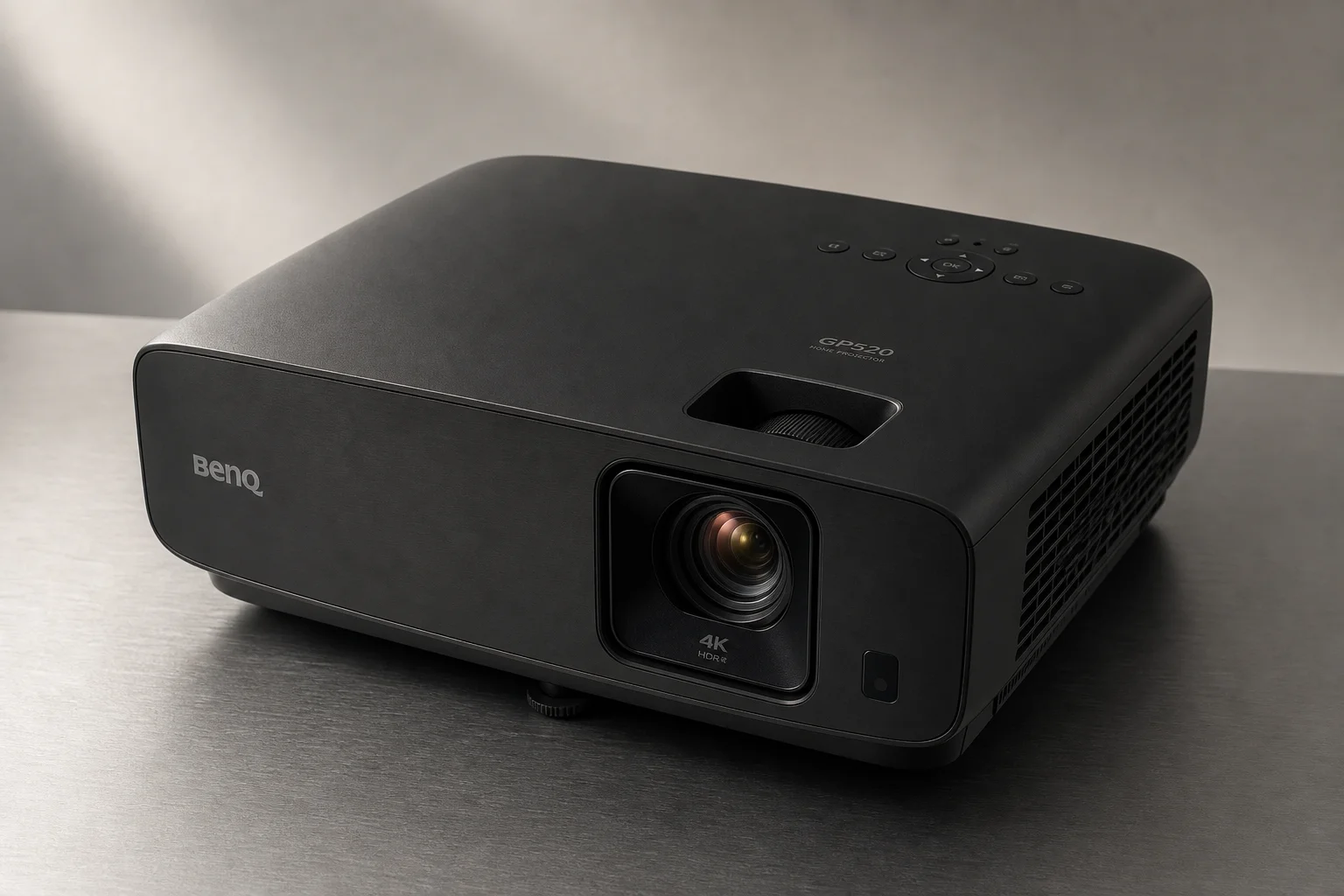
BenQ GP520 4K Projector Review: Premium Home Theater Performance
A comprehensive look at BenQ's flagship GP520 4K projector, covering its exceptional picture quality, smart features, 3D capability, and premium pricing.

Projectors
Best 4K Projectors 2026: Six Standard Throw Models Compared
Six highly anticipated standard throw 4K projectors compared across brightness, contrast, color accuracy, gaming performance, and value.

Projectors
Best Projector Deals 2026: Seven Picks for Every Room and Budget
A practical look at seven projectors currently on sale, from premium 4K laser models to portable and budget-friendly options.