Fountain Pens
Enso Japanese Ebonite Fountain Pens: Regular and Pocket Size Review
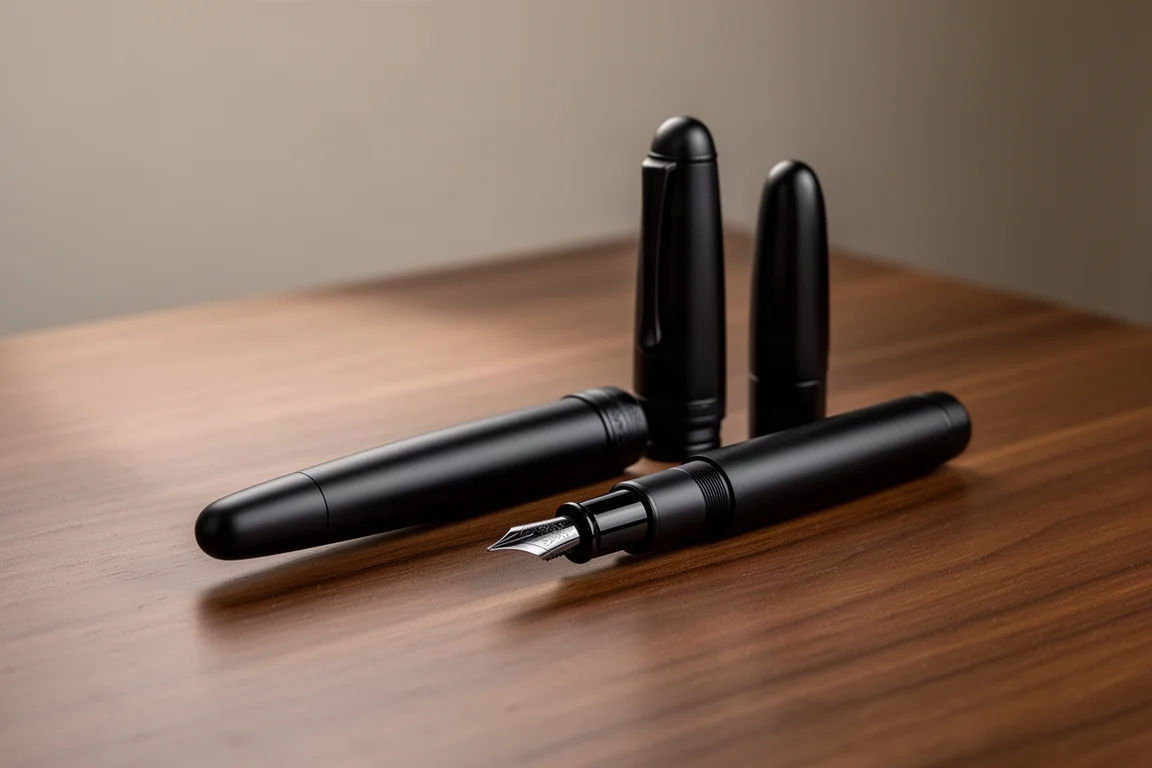
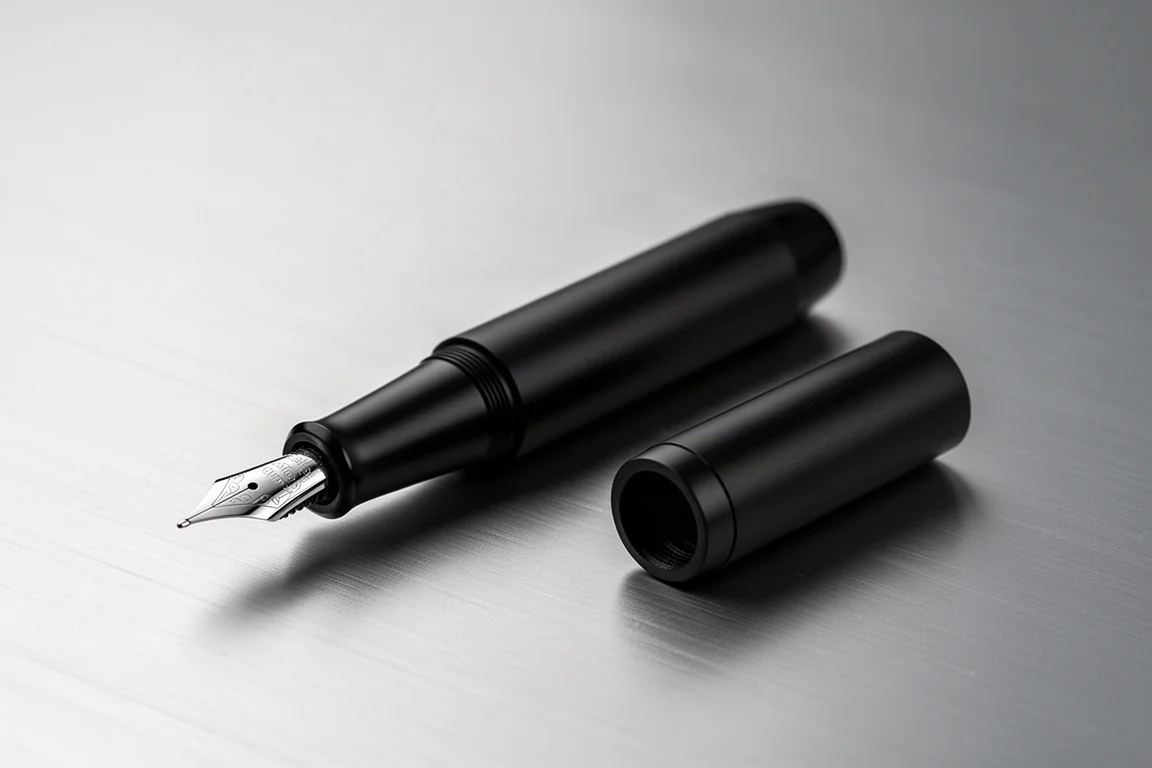
Two matte black Japanese ebonite fountain pens from Enso, available in regular and pocket sizes, with a black nib, cartridge-converter filling, and eydropper potential.
Introduction
Enso, a Los Angeles-based pen brand founded in 2014, has brought ebonite into its lineup for the first time. The result is a pair of pens, appropriately named the Japanese Ebonite fountain pens, offered in two formats: a regular size model and a pocket size. Both are turned from high-quality solid matte black Japanese ebonite, and both arrived in simple, well-sized presentation boxes.
At the time of release, both sizes were offered at $79 as part of a crowdfunding campaign, which was $40 off the planned future retail price. If you are considering either pen, that pricing gap makes backing early worth a second look.
What Is Enso?
The brand name is a play on words, combining the Italian name Enzo with the Japanese word “enso”, which means circle. In Japanese calligraphy, an enso is a hand-brushed circle drawn in a single stroke with a single breath, and it carries strong ties to Zen Buddhism. The spelling is all lowercase, with an accent over the first e.
The regular size model shares its overall design language with Enso’s Piuma, while the pocket size mirrors the Piuma Pocket fountain pen. If you have handled either of those pens, the family resemblance is immediate.
The Regular Size: Design and Build
The regular size model is a cigar-shaped pen with a rounded cap top, a smooth transition from cap to barrel, and a barrel that stays straight for a stretch before tapering to a rounded point at the end. Ebonite is not a heavy material, so the pen is very light in the hand, yet it still feels like a quality object. Lightness here feels intentional rather than cheap.
There is no exterior branding anywhere on the pen. That is the one design decision worth questioning: a nameless, unmarked pen is hard to identify years from now, and some discreet marking would have helped build the product’s identity without harming the sleek look.
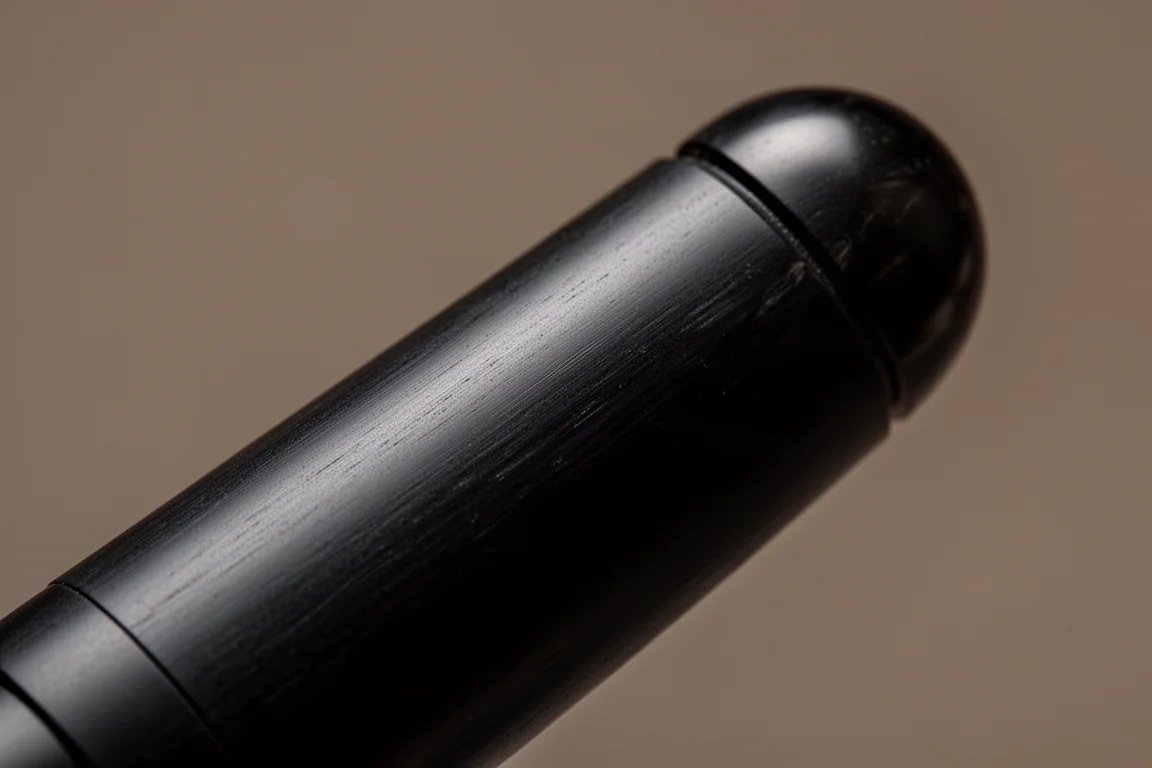
The cap twists off with a single rotation, revealing a number six size stainless steel nib with a black lacquered finish. The black nib was a smart aesthetic choice for this pen. It is available in extra fine, fine, medium, or broad, with an optional titanium nib upgrade at additional cost, though those titanium units forgo the black lacquering in favor of a more traditional stonewashed look.
Section, Posting, and Filling
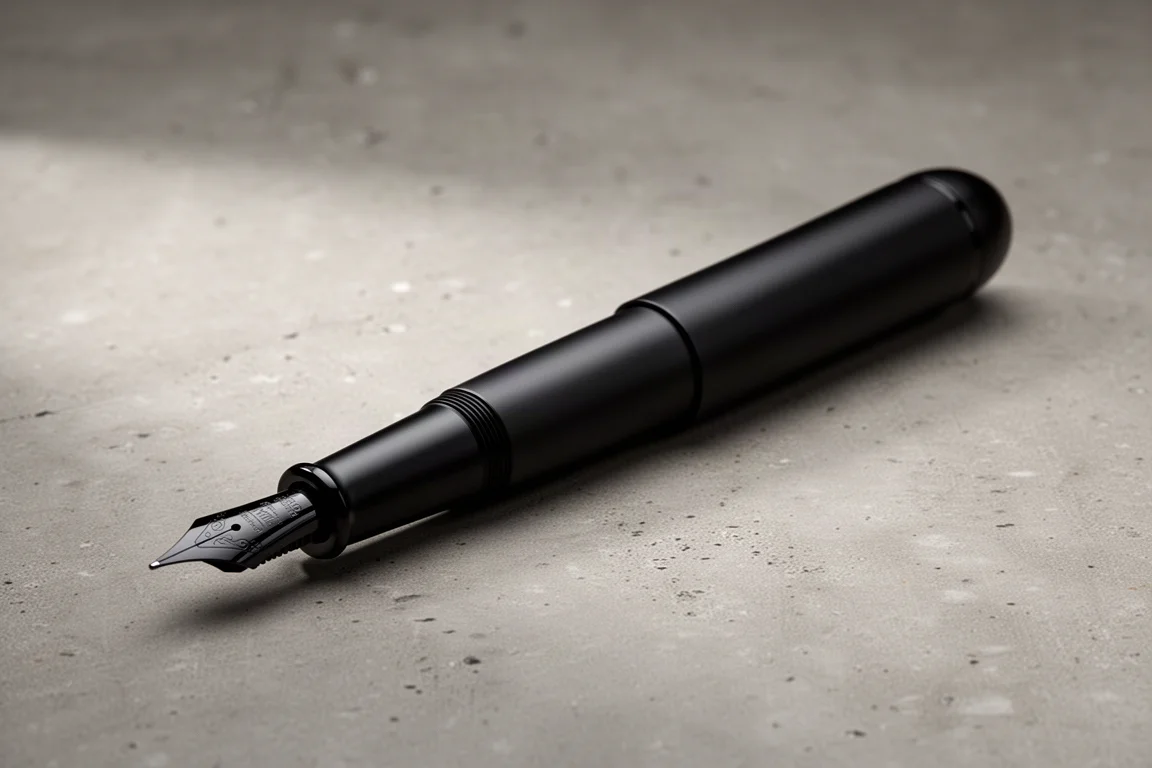
The section starts with a ridge, angles upward, and meets a minimal set of threads before a stair-step up to the barrel. The section thickness and length are genuinely good: the grip does not spill over onto the threads or the barrel transition, which makes the pen comfortable for longer writing sessions.
Posting is a mixed experience. The cap will stay on the barrel, but the contact point is minimal, so a tap can dislodge it, and it sits slightly off-center when posted. The cap seems to post more by accident of the design and material than by intent, so treat posting as optional rather than a core feature.
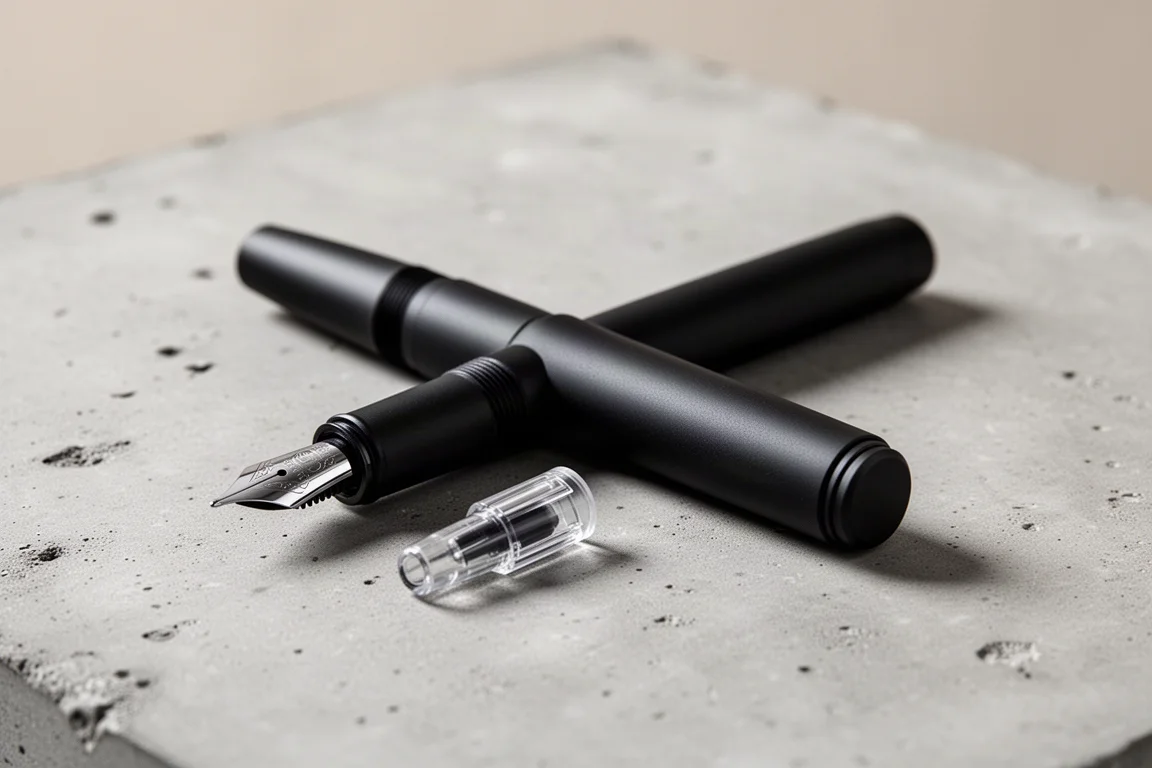
It is a cartridge-converter pen that accepts standard international cartridges, and a converter is included. With its seamless one-piece barrel and a bit of silicone grease, the regular model would make an excellent eyedropper conversion candidate. One small miss: the pocket version includes an o-ring on the section threads to support eyedropper use, and it would have been nice to see the same included here.
The Pocket Model: A Genuine Compact Option
The pocket size is the more interesting of the two. Capped, it looks a bit like a small tube of lipstick, short enough to disappear into a pocket or a small bag. Unscrew the back section and it screws onto the rear of the barrel, transforming into a pen that is actually larger in the hand than the regular model. That two-in-one trick gives you a genuinely pocketable carry format and a full-size writing experience at your desk.
Exposed threads at the back are a common annoyance with short pens, but the rounded edge here does a decent job of hiding them when the pen is assembled. On its own, it is short, but it accepts standard international short cartridges, so refills are easy to find.
The standout feature is the o-ring fitted on the section threads. Combined with the sealed barrel, that makes this pen perfect for eyedropper conversion right out of the box, no modification needed. Fill the barrel directly with ink, seal it up, and you have a large-ink-capacity pocket pen.
Writing Sample and Nib Performance
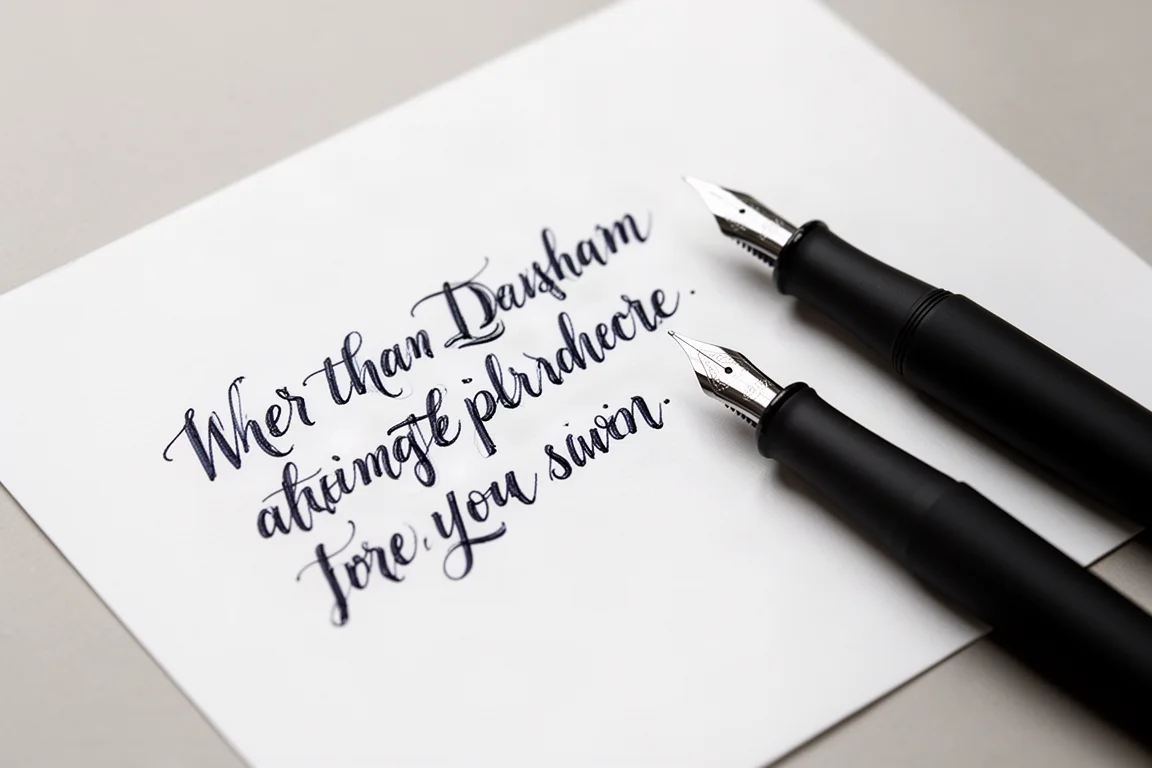
With a Diamine 1864 Blue Black ink loaded, the stainless steel nib flows really nicely. There is not much line variation, though a little can be coaxed out with light pressure. The nib has a decent amount of feedback, and the ink flow is consistent and pleasant.
Reverse writing is slightly scratchy but gets the job done, and at faster writing speeds the nib and feed keep up without issue. One caveat worth noting: the nib carries no size marking, and the packaging does not state it either, so you may need to judge the line width yourself. The nib on the reviewed unit felt like a fine or possibly a medium-fine, and the pocket model’s nib, which felt like a medium or medium-fine, also wrote very nicely.
Size Comparisons
Side by side, the regular model sits comfortably in the full-size category. Next to a Conklin All American and a Lamy Al-Star, it reads as a similar-class pen, while it is clearly larger than a Pilot Metropolitan. Beside Enso’s own Italia and Piuma, the shared design DNA is easy to spot.
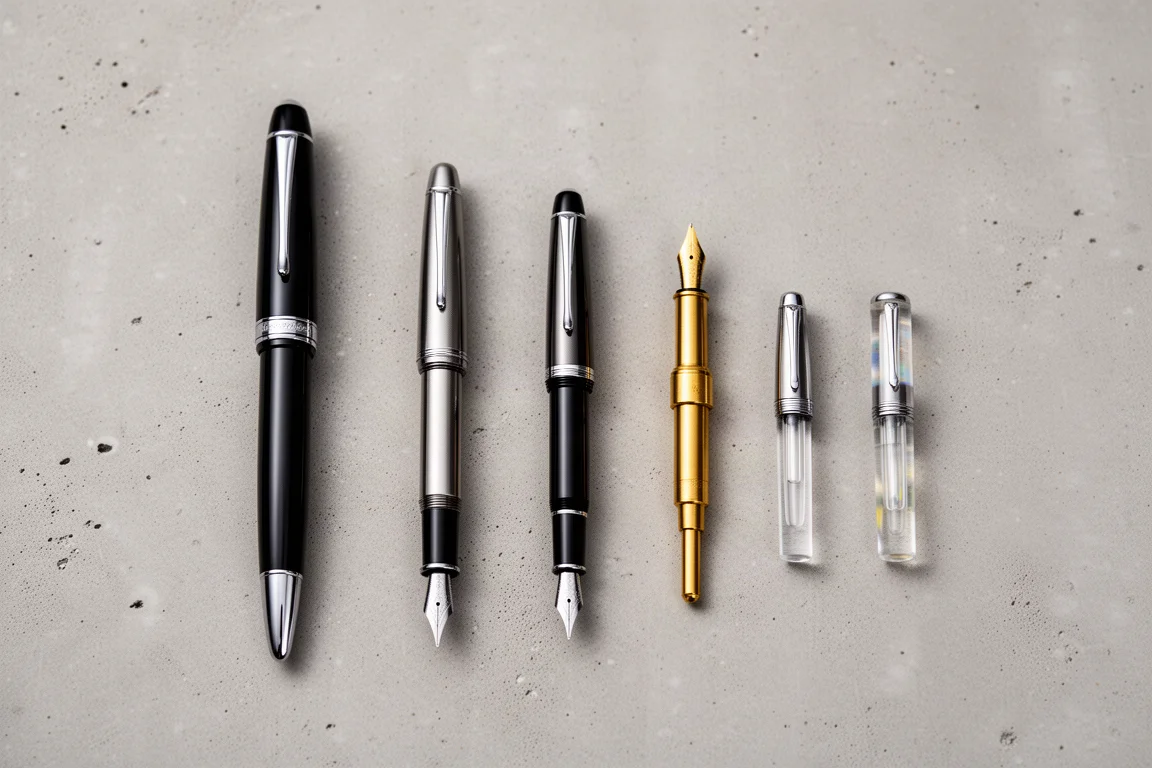
The pocket model, meanwhile, is truly tiny when capped and comparable in footprint to the Kaweco Skyline Sport, the TWSBI Mini, and Schon Design’s Small Ultem. Once its barrel is screwed onto the rear section, it becomes a longer pen than the regular model, which is a genuinely useful party trick.
Buying Advice
If you want one pen, the choice comes down to how you carry and write. The regular size is the more conventional pick: a light, comfortable full-size ebonite pen with a well-proportioned section and clean matte black looks. The pocket model is the better fit for commuters and anyone who loves compact pens with a surprise, especially given the included o-ring that makes eyedropper conversion simple.
At $79 during the campaign, both sizes are reasonably priced for what you get, particularly against the $119 future retail price. Buying before the campaign closes is the financially sensible move if either pen has caught your eye.
Conclusion
Enso’s first foray into ebonite is a success on the fundamentals: quality material, comfortable sections, pleasant nibs, and thoughtful touches like the pocket model’s o-ring. The lack of any branding is the main quibble, and posting the regular model’s cap is best avoided. Between the two, the pocket version is the one with the most character, and its eyedropper-ready design makes it a standout in the compact pen space.
Further reading
Related Reviews
Fountain Pens
Best Budget Fountain Pens Tested: 9 Pens, One Clear Winner
A hands-on comparison of nine affordable fountain pens for everyday writing, calligraphy, and sketching, with a clear standout for flexible nib fans.
Fountain Pens
Aurora Optima Review: An Italian Piston Filler That Punches Above Its Price
A 14k gold nib, ebonite feed, and a beautifully deep oraloid body make the Aurora Optima one of the most rewarding piston fillers around.
Fountain Pens
Cross Bailey Light Review: The Entry-Level Fountain Pen Worth Keeping at the Office
A plastic-bodied Cross with a metal clip, snap cap, and famously smooth extra fine steel nib. Around $15, available almost everywhere, and easy to recommend.