Outdoor Power Equipment
Electric Pressure Washer Reality Check: Rock and Rocker vs Greenworks
Why advertised specs on electric pressure washers rarely match real output, and how the Rock and Rocker and Greenworks units actually perform side by side.
Introduction
If you are shopping for an electric pressure washer, here is the uncomfortable truth up front: almost every advertised spec on the box is a best-case number. That includes the Rock and Rocker and the Greenworks units, and it applies across the industry. The reality is not that these machines are useless, but that you should buy one for what it actually does, not what the label promises.
The Reality of Electric Pressure Washer Specs
The Rock and Rocker is advertised as a 3,000 PSI unit with 2.5 gallons per minute of flow. Both figures are maximum ratings, meaning you might see them for a split second when the pump unloads. Its realistic working pressure is listed at 2,300 PSI, and that is measured with a zero-degree tip, the tip that produces the highest pressure but the least flow. Put a wider tip on and pressure drops further.
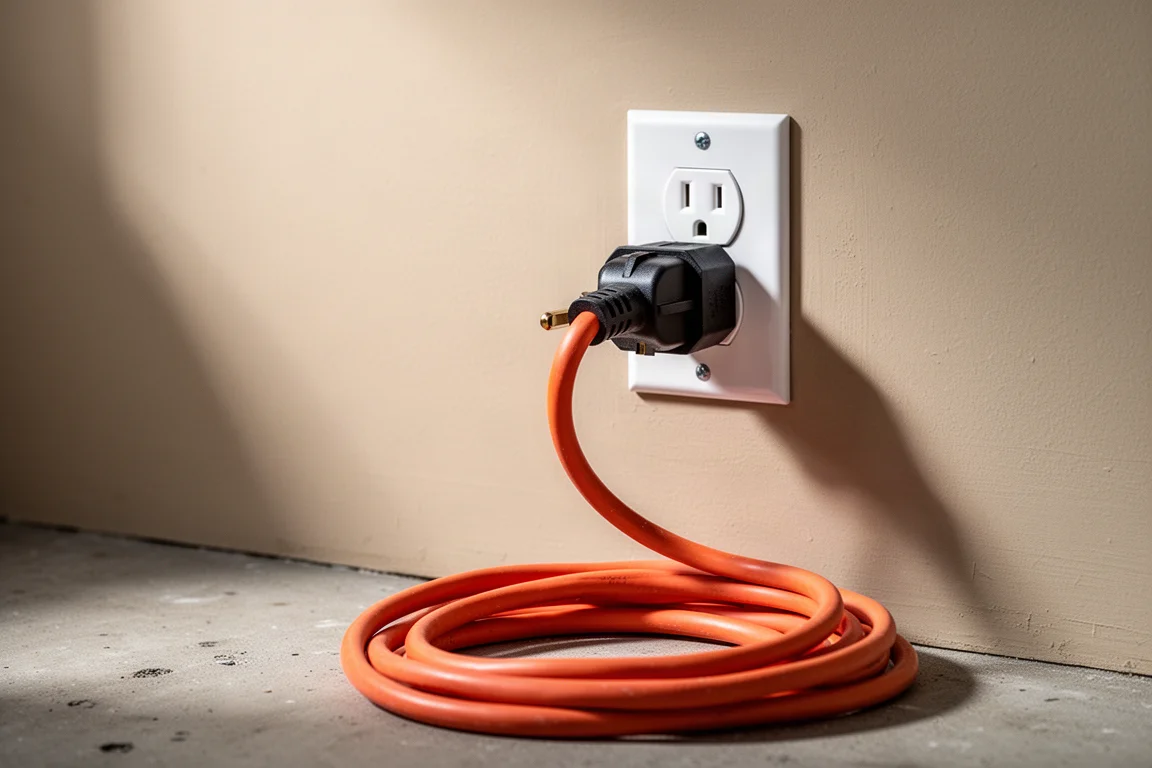
The math behind the plug explains why. The unit connects to a standard 15 amp, 120 volt receptacle, which caps total input at 1,800 watts. Even at perfect efficiency that is just over 2 horsepower, and with real-world losses it is less. Gas machines delivering 2,500 PSI at 2.5 GPM typically need a 5 horsepower motor, which is why no electric unit on a household outlet can honestly match those numbers. More pressure means less flow, the same way blowing through a straw raises pressure but reduces how much air moves.
The practical takeaway: if you genuinely need 2,500 PSI or more at around 2 GPM, you need a gas machine. If you are washing cars or handling light-duty jobs, an electric unit can still make sense.
What the Rock and Rocker Gets Right and Wrong
At $159, the Rock and Rocker delivers output roughly in line with anything else in its class. There are things to like, but also clear compromises to understand before buying.
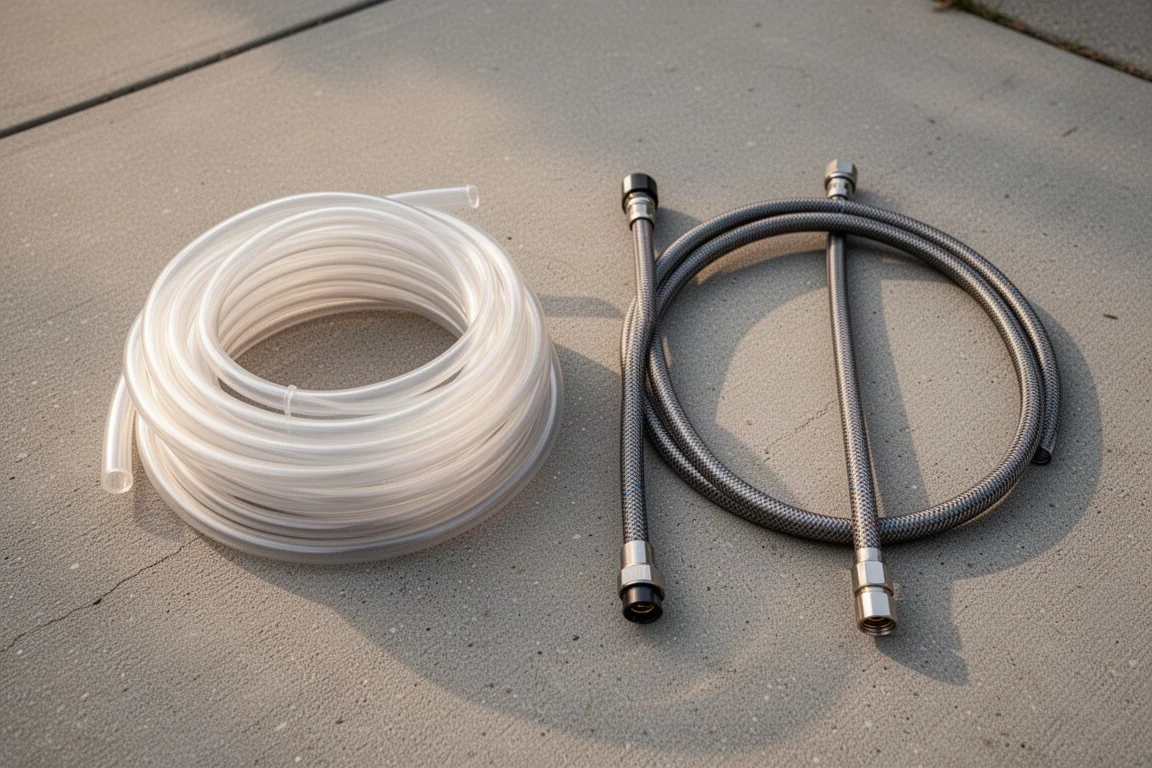
The biggest warning is the hose and fittings. The included hose is essentially PVC, stays wound in its coil under pressure, kinks easily, and cannot be replaced with a better one. The push-button fittings lock under pressure, stop swivelling, and tend to leak quickly. The pump connection is also proprietary, so you cannot swap in a standard hose. What you want instead is a standard quick-connect hose: it lies flat, resists kinking, works well under pressure, is replaceable, and longer versions are not expensive.
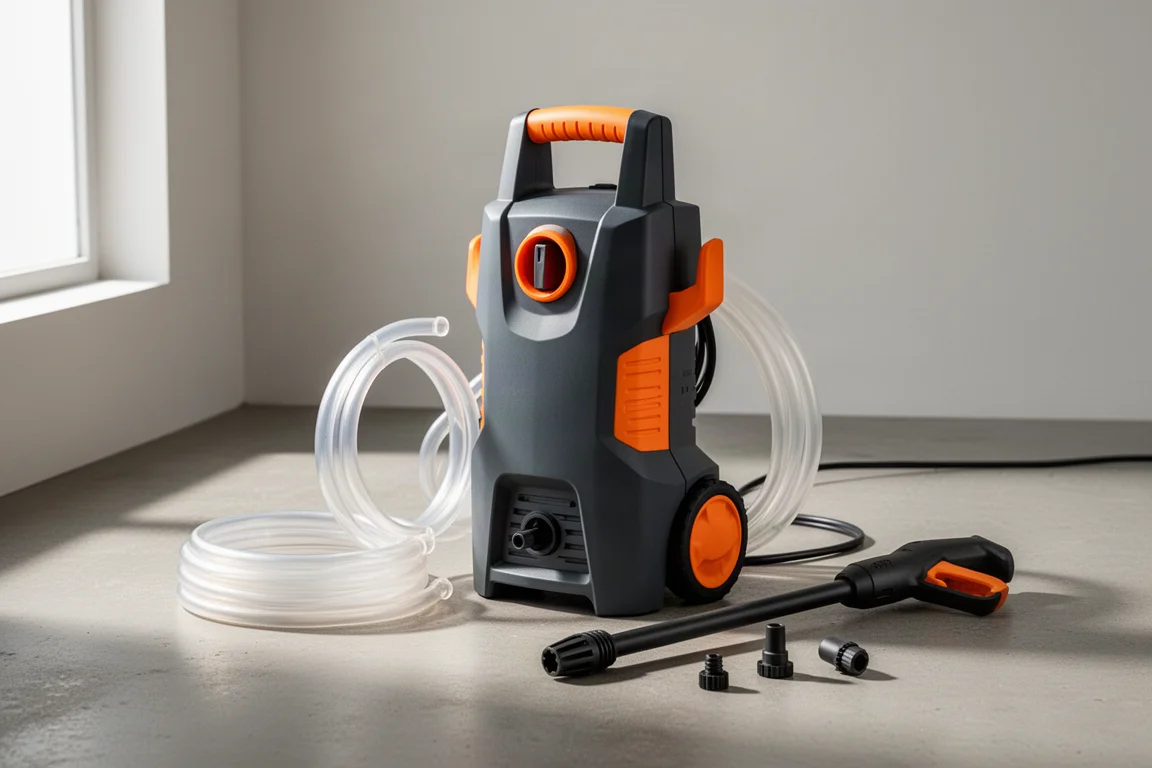
Other details matter too. Tip storage here is good, with multiple nozzles staying in place on the unit instead of walking off. The wand connection is a weaker point: it uses a push-in O-ring design that wears out and is harder to replace than a screw-on wand, and the soap nozzle mounts on a plastic piece rather than a quick connect, which costs you reach when applying detergent at low pressure.
Real-World Cleaning Performance
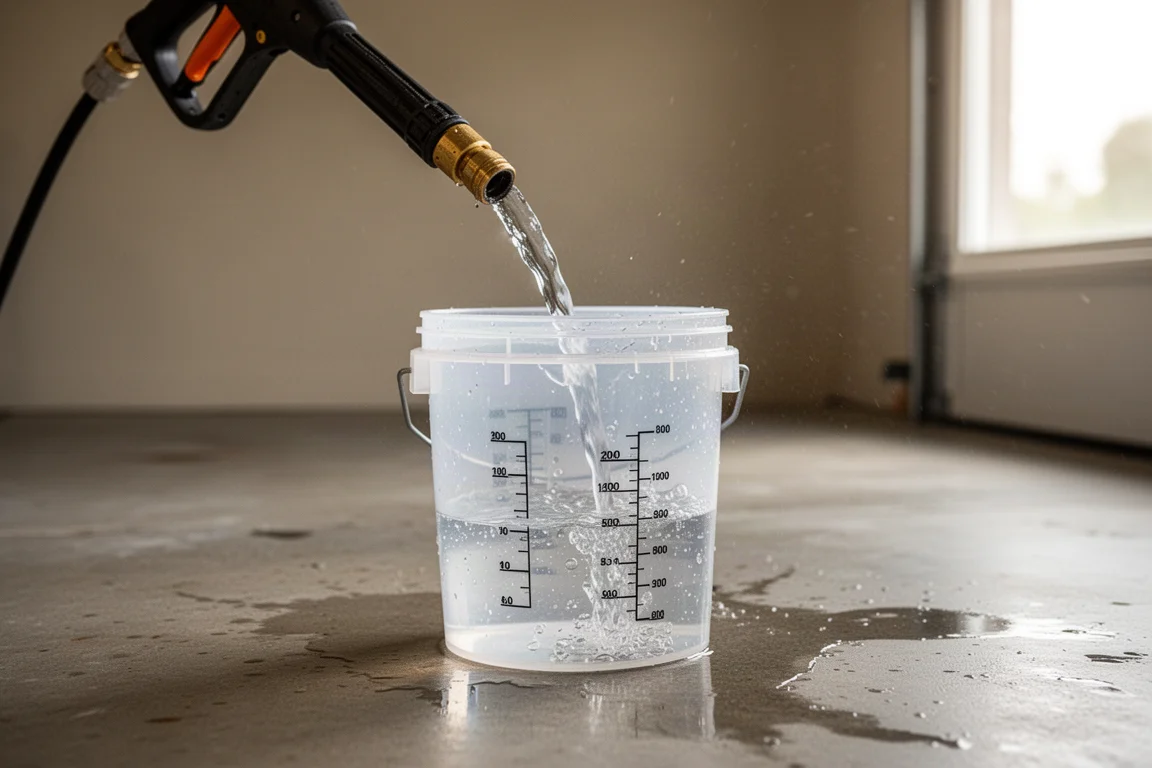
A simple timed bucket test tells the story. Running the unit with a zero-degree tip for 60 seconds filled the container just over one gallon, which works out to about 1.2 GPM. That matched three other units with essentially the same advertised specs, confirming that the 2.5 GPM claim is not achievable at working pressure.
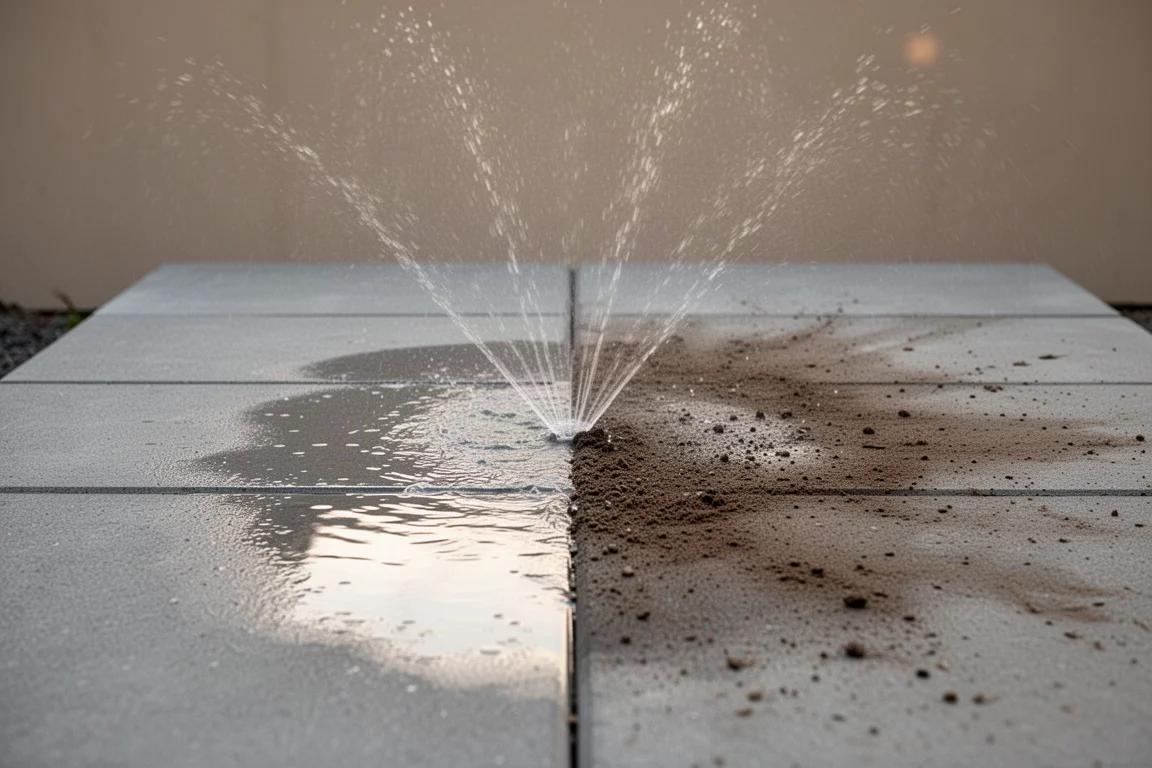
On the driveway, the 40-degree tip did almost nothing even inches away, and the 25-degree tip was still too weak. The 15-degree tip started peeling stickers from an inch away, and the zero-degree tip could strip the glossy layer off a sticker, but only slowly and at very close range. With more flow at the same pressure, all of this would go much faster, which is exactly where a gas unit pulls ahead in seconds.
Soap application is one area where the unit does surprisingly well: at about eight feet back, the fan spread roughly three and a half feet wide, though the soap tank emptied to half in very little use. On a lightly soiled concrete patch, cleaning was possible but required getting within about four inches, and some staining remained even after going over it. It works, just not as advertised, and without standard fittings there is no way to attach a pressure gauge to verify the true working pressure.
Should You Buy the Greenworks Instead
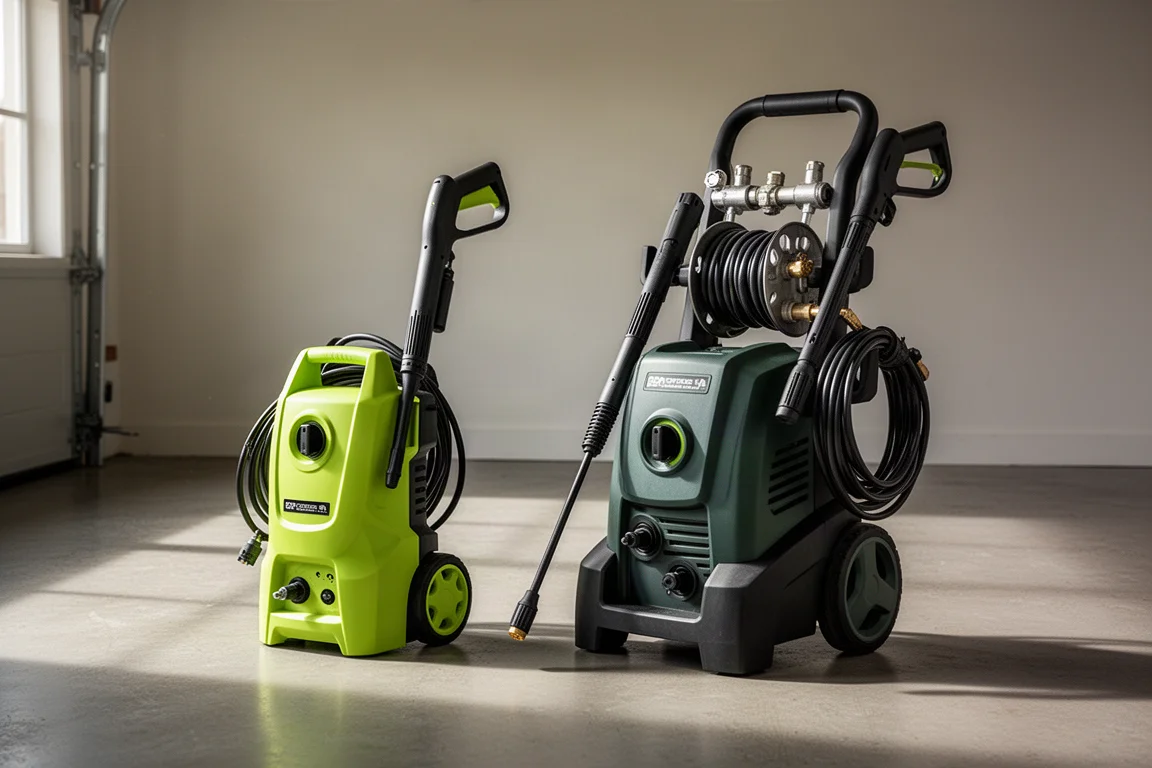
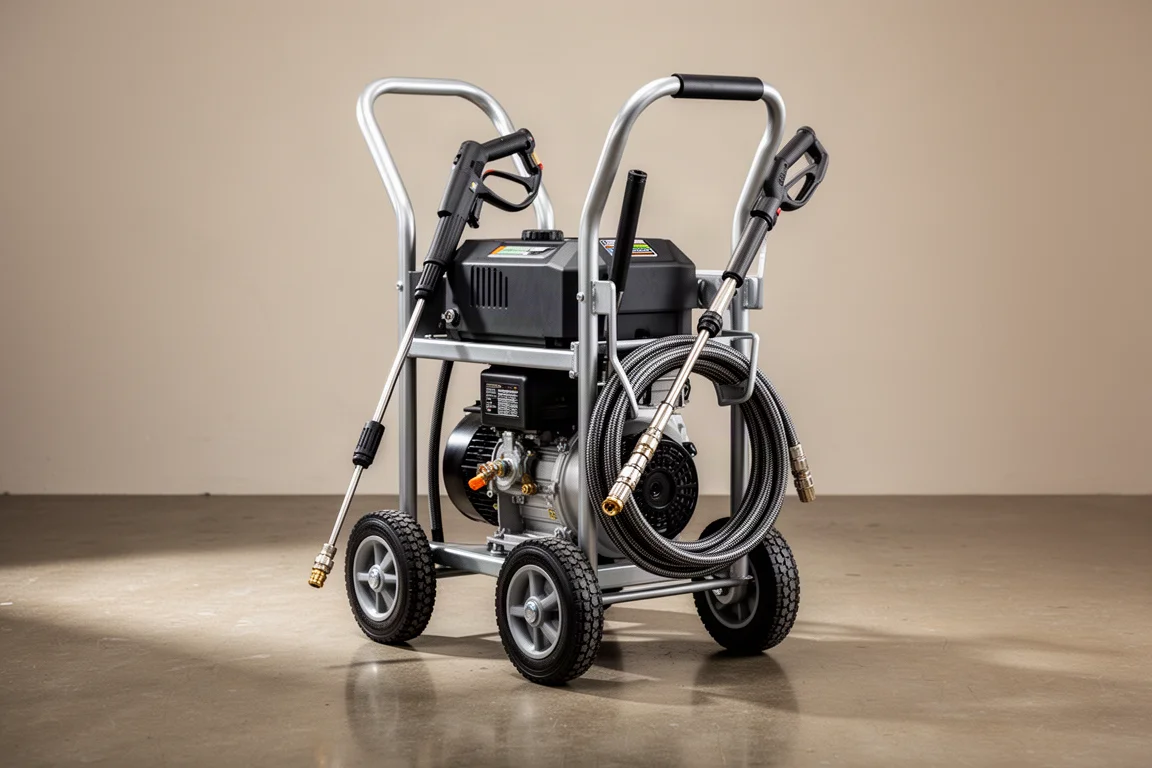
The Greenworks line advertises the same 3,000 PSI and 2.5 to 3 GPM figures, and once you put a zero-degree tip on it, the real output lines up closely with the Rock and Rocker. The difference is not performance, it is build quality and flexibility.
At a price that can reach around $400, the Greenworks gives you quick-connect fittings so you can attach a pressure gauge, a better hose, and likely a better motor with a bit more efficiency. You are paying for nicer parts, not for the missing performance. If the Rock and Rocker had standard fittings, this comparison would be much closer to a tie.
Buying Advice
Whatever electric unit you choose, buy it locally from a retailer with a good return policy such as Home Depot or Ace. These machines can break, even well-made ones are rarely multi-year units, and being able to walk in and exchange one is worth a lot. Avoid the cheapest listings from large marketplaces, which often die after three or four uses. A little pump saver after each use will help a good unit last considerably longer.
Conclusion
The Rock and Rocker is a legitimate budget choice if you accept that it will clean at roughly 1.2 GPM and a working pressure well below the advertised 3,000 PSI, and if you can live with its proprietary hose and fittings. The Greenworks costs more but gives you standard quick connects, a better hose, and likely better internals for the same real output. And if your projects genuinely need 2,500 PSI or higher at around 2 GPM, no electric unit on a standard outlet will get you there: gas is the only honest answer.
Further reading
Related Reviews

Outdoor Power Equipment
Best Cordless Chainsaws 2026: EGO, Milwaukee, and Stihl Compared
Three flagship battery-powered chainsaws from EGO, Milwaukee, and Stihl go head to head in cutting speed, power, weight, and price.

Outdoor Power Equipment
Best Cordless Leaf Blowers 2026: Nine Models Put to the Test
We tested nine leading cordless leaf blowers from Ryobi, STIHL, Toro, EGO, Husqvarna, DeWalt, Makita, Milwaukee, and Echo to find the best blowing force, run time, and value.
Outdoor Power Equipment
Amazon Big Spring Sale 2026: Best Outdoor Power Equipment and Backyard Deals
Cordless mowers, blowers, grills, and portable power on sale this spring, with practical advice on which packages are actually worth buying.