All-Mountain Skis
Elan Ripstick 96 and Ripstick 96 Black Edition Review: Two Builds, One Shape
Two builds of the same Elan all-mountain ski, compared on construction, weight, on-piste feel and soft-snow behaviour, with guidance on which version suits which skier.
Introduction
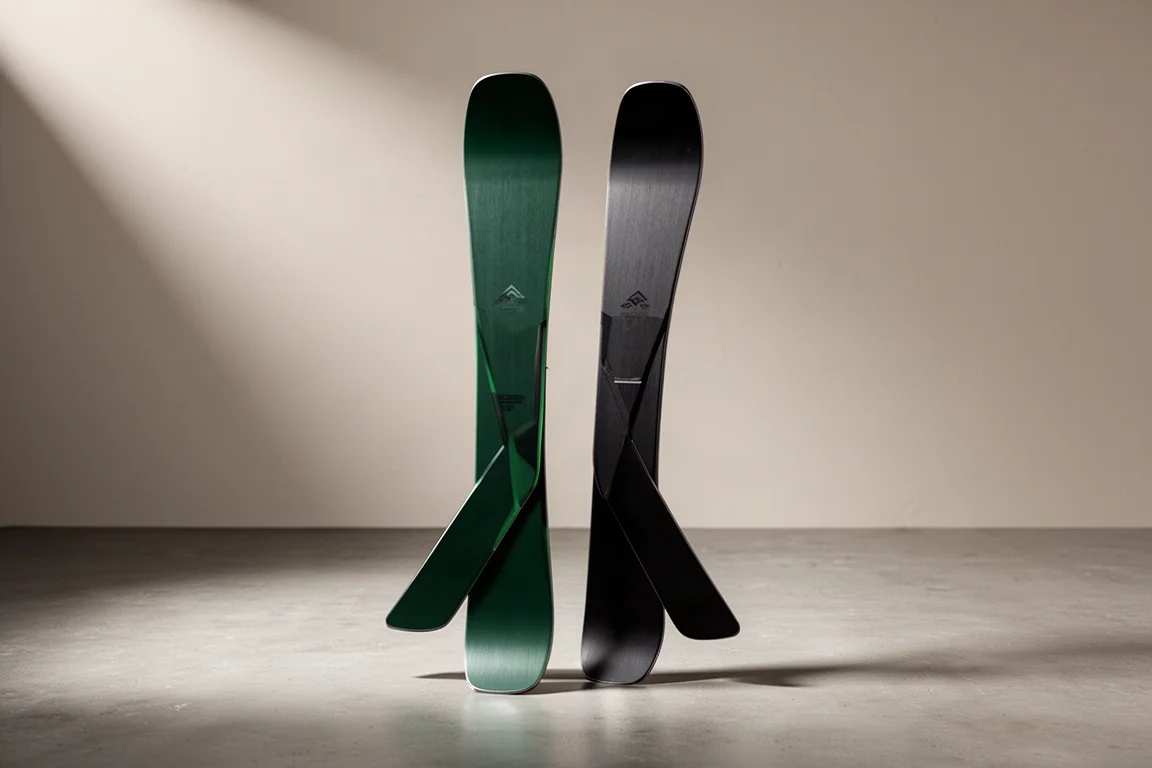
The Elan Ripstick 96 occupies one of the busiest slots in skiing: a directional all-mountain ski in the mid-90s underfoot. What separates it from most of the field is not the shape but the construction. Elan mills sections out of the wood core and replaces them with carbon rods, builds left and right specific skis around an asymmetrical profile, and offers the whole package in two versions, the standard Ripstick 96 and the Ripstick 96 Black Edition.
Both versions carry over unchanged from the previous season, and both share the same mold, the same shape and almost the same weight. The meaningful difference is damping. This guide covers what each build does well, where the design rewards one style of skier over another, and how to choose between the two.
What Sets the Ripstick 96 Apart in the All-Mountain Category
The standard build uses Elan’s carbon deck technology over a tube light wood core made from poplar and paulownia. Sections of the core are milled out and carbon rods are set into them, positioned close to the inside of the sidewall. Those rods are milled to mirror the side cut and are placed under pressure, so the ski carries built-in energy before it is ever flexed. The carbon runs through the ski in three dimensions rather than sitting in a single flat layer, and that 360-degree application is what gives the ski its distinctive response no matter which way it bends.
Two strips of unidirectional carbon sit on the base, and this is where the asymmetry comes in. On the inside edge of the downhill ski the strip is longer, putting more emphasis on edge hold, while on the outside edge it is shorter, which lets that side feel a little more drifty. Elan builds left and right specific skis, and the shape is asymmetrical too, so the construction and the profile work together. A flax laminate in the forebody has replaced the older vapor tips, which allowed Elan to thin the core profile in the front of the ski and make that area more flexible.
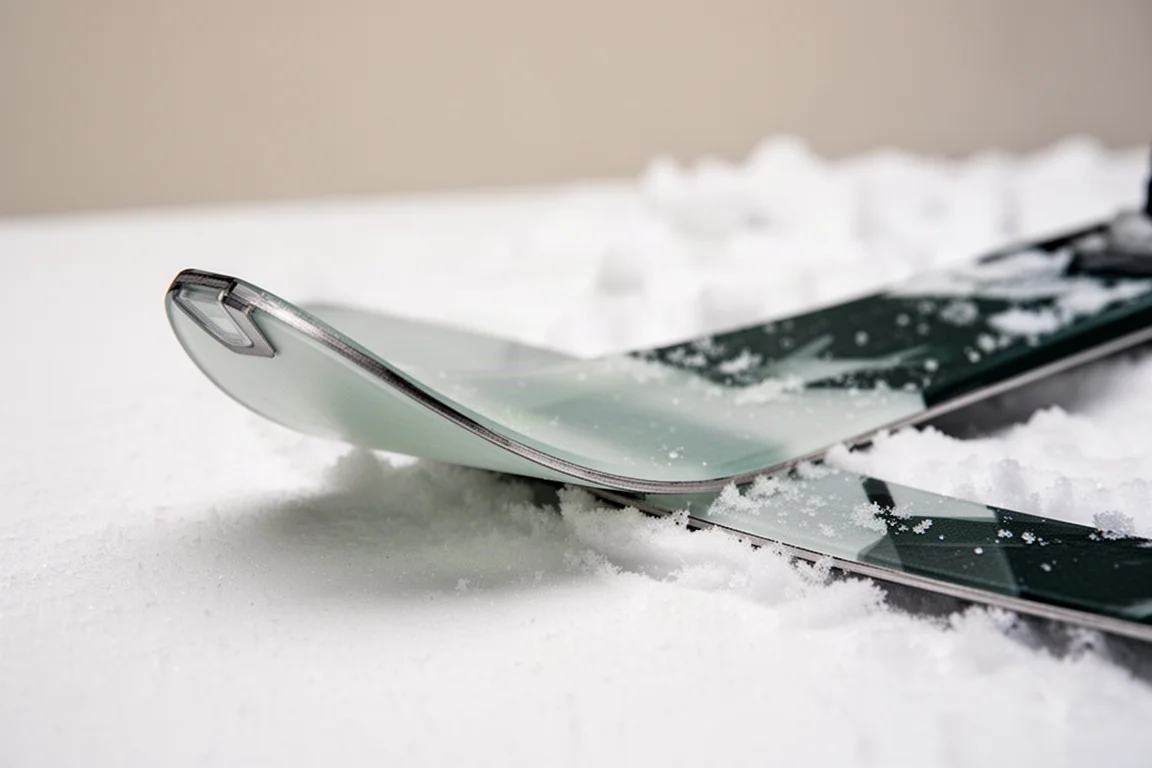
The amphibio profile is harder to see than to feel. The inside edge of each ski has more camber and less rocker than the outside edge, which is what helps the skis stay parallel and feel cohesive underfoot. Otherwise the shape is a modern, straightforward take on the category: a good amount of tip rocker without extreme splay, generous early taper, a relatively spoony tip, and a tail with a similar treatment. The widest point of the ski sits well back from the tip. At 182 cm the turn radius is 17.8 m, and the mount point range is unusually wide for a directional ski.
Elan Ripstick 96: The Standard Build
Flex on the standard Ripstick 96 is soft from the numbers forward, so the shovel is easy to bend, while the mid-body, underfoot and tail are noticeably stiffer. At 182 cm the two skis came in around 1,686 g and 1,710 g, a pair closely matched in weight.
That combination produces a ski that is very easy to bend into a turn. Torsional stiffness is good through the belly of the turn, which is the part of the ski that matters once the turn is established, even though the tip flutters at speed. The energy is easy to access: short and medium radius turns at slow to moderate speeds feel round and rhythmic, and the 17.8 m radius is simple to hit. Skiers who weigh around 160 lb can let the shovel dance without consequence, because the middle of the ski does the work.
Elan Ripstick 96 Black Edition: Extra Damping, Same Shape
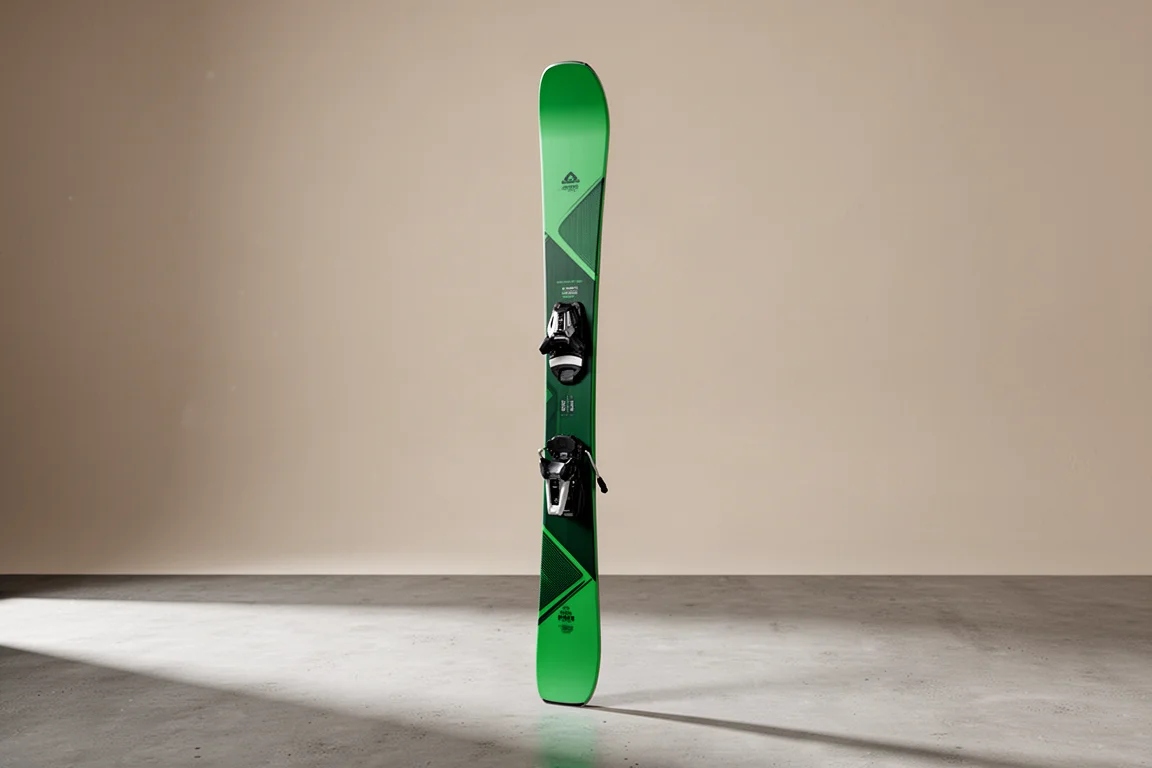
The Black Edition starts from the same build and adds to it. Two more carbon rods run through the centre of the ski, one in the forebody and one in the tail, for quad rod technology, and a C ply laminate sits on top of the core. That laminate mirrors the unidirectional strips below by favouring the inside edge of the downhill ski. In total, three extra carbon applications, all of them asymmetric.
Because Elan replaces milled wood with carbon, the extra rods add very little weight. At 182 cm the Black Edition came in around 1,713 g and 1,732 g, so the two versions are close enough that weight is not the deciding factor. Flex is slightly firmer, but not dramatically so. The real difference is damping: carbon used in a three-dimensional format through the centre of the core smooths the ride in a way that a flat carbon layer does not, giving a feel closer to a metal plate underfoot.
That difference is smaller than it once was. In earlier generations the Black Edition felt like a distinctly stronger ski. Today the two are closer in performance, and the premium buys a more refined, quieter ride rather than more capability. The Black Edition costs about $150 more than the standard version, and the gap is most noticeable on groomers, where the ski takes the volume down a notch without changing edge grip or energy in any obvious way.
On-Piste Performance and Turn Feel
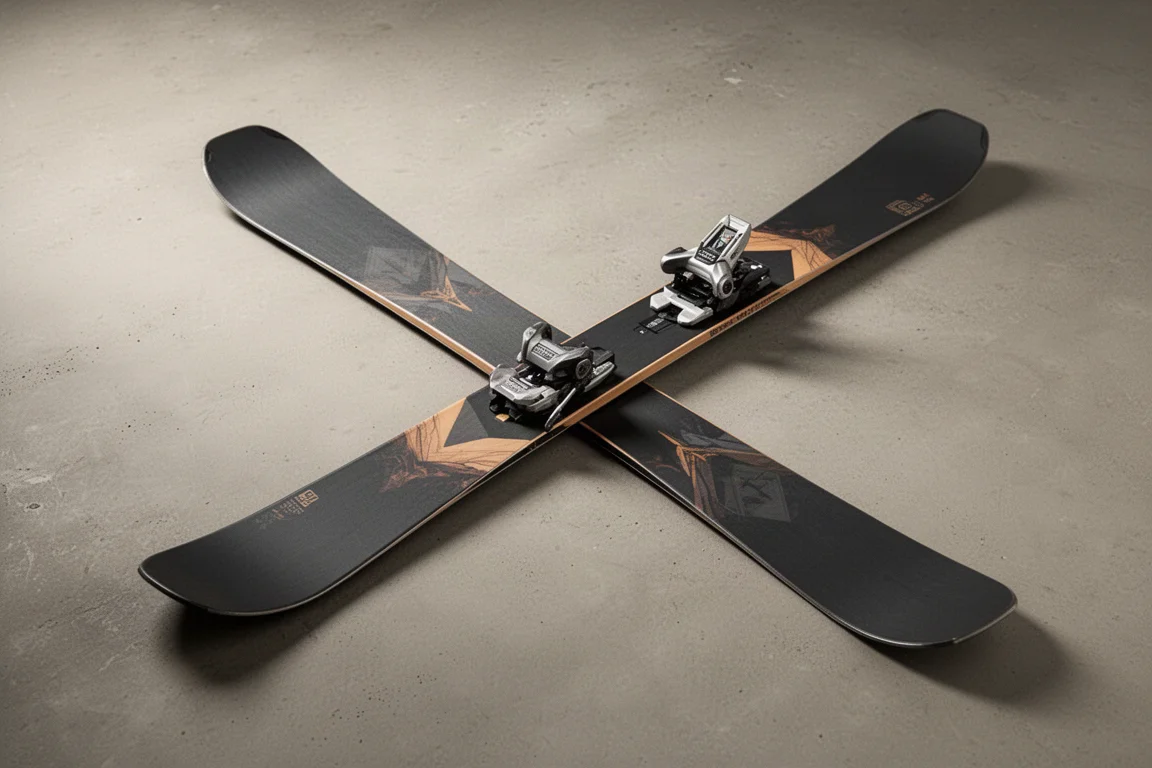
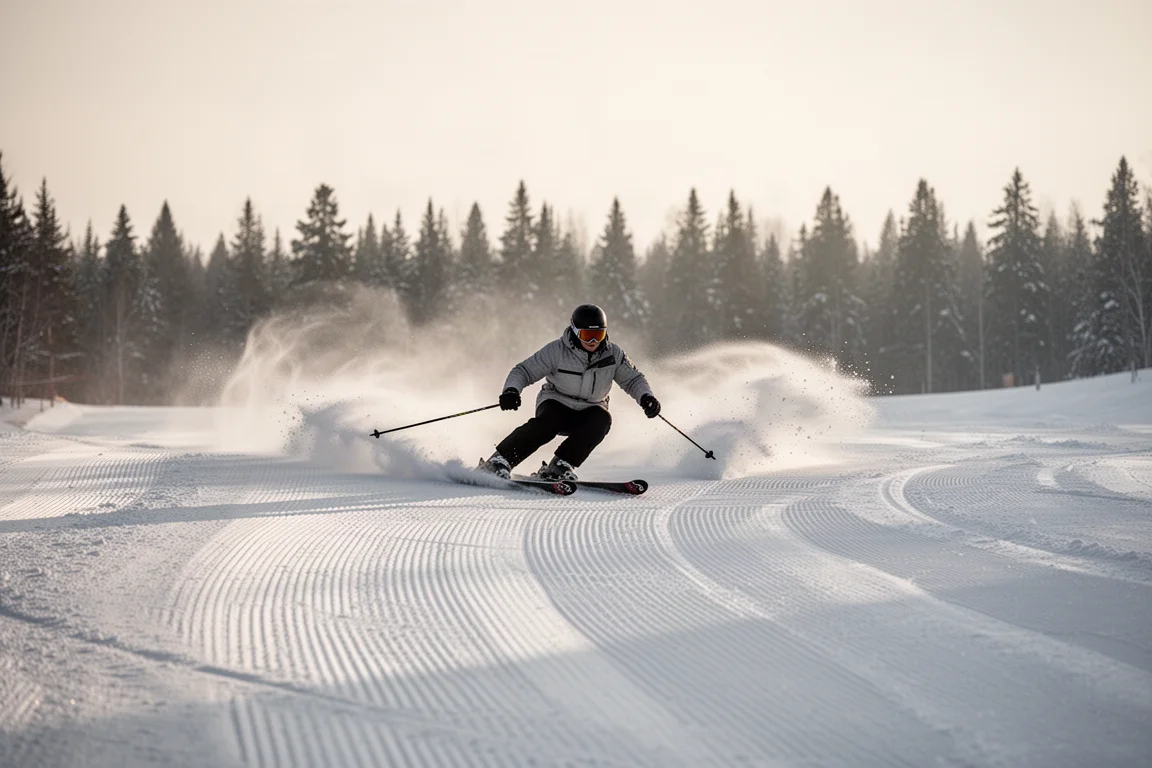
On groomed terrain the Ripstick 96 is at its most intuitive. The soft forebody bends early and pulls the ski into the turn, the stiffer middle third holds through the belly, and the tail releases cleanly. Skiers who live in the middle of the ski describe a very high return on energy: a small input produces an easy, round carved turn, and linked turns settle into a rhythm quickly.
The same softness explains the criticism the ski attracts. Heavier skiers who drive the shovel hard can push straight through the forebody and lose support, particularly in the initiation phase of the turn. Skiers who are used to a stiff, GS-like feel may find the front of the ski imprecise, and anyone who likes a ski that demands to be skied hard will want something with more backbone. None of this is a defect in the design so much as a mismatch in style: the Ripstick 96 rewards finesse and a light touch more than force.
Stretching to the 189 cm length shifts the trade-off rather than removing it. Longer-turn stability improves, but the agility that defines the ski fades, because there is simply more ski in front of and behind the foot. Skiers who find the standard length unsupportive are usually better served by a different model than by a longer Ripstick.
Off-Piste and Variable Snow Performance
In soft snow the Ripstick 96 is excellent. The soft tip never feels over-engaged, so it can be flicked sideways to dump speed, and the directional shape keeps the tips from diving in the way a dedicated freestyle ski might. At the same time the ski feels creative rather than locked in, with the mobility and quickness of a much more playful design. It is extremely agile and mobile, and the asymmetric profile contributes a smooth, cohesive feel that makes it easy to keep both skis parallel.
Heavier, forward-driving skiers run into a different experience in bumps and broken snow. When the ski flexes up over a bump, the tips can deflect in the opposite direction, leaving the skier without support at the start of the next turn. Maintaining fore-aft balance takes constant attention in those conditions. This is the clearest dividing line between the skiers who love the design and the skiers who do not.
Who Will Get the Most Out of These Skis
The sweet spot is an intermediate skier around 160 to 180 lb who wants an easy, fun, forgiving all-mountain ski that is light on the feet. Skiers working on keeping their skis parallel tend to benefit as well, because the amphibio profile makes it simpler to stay matched. Experts are not excluded: a strong skier with a light, centred style can get a great deal out of either version, and the low weight and easy energy are genuinely enjoyable.
The ski does split opinion more than most. A large share of skiers find something memorable about it, whether that is the weight, the mobility, the agility, the unusual energy or the amphibio profile, while a smaller group finds it unsupportive and wants something stiffer and heavier. If you normally ski a demanding, metal-laden all-mountain ski, the Ripstick 96 will feel like a very different animal, and that is worth knowing before you commit.
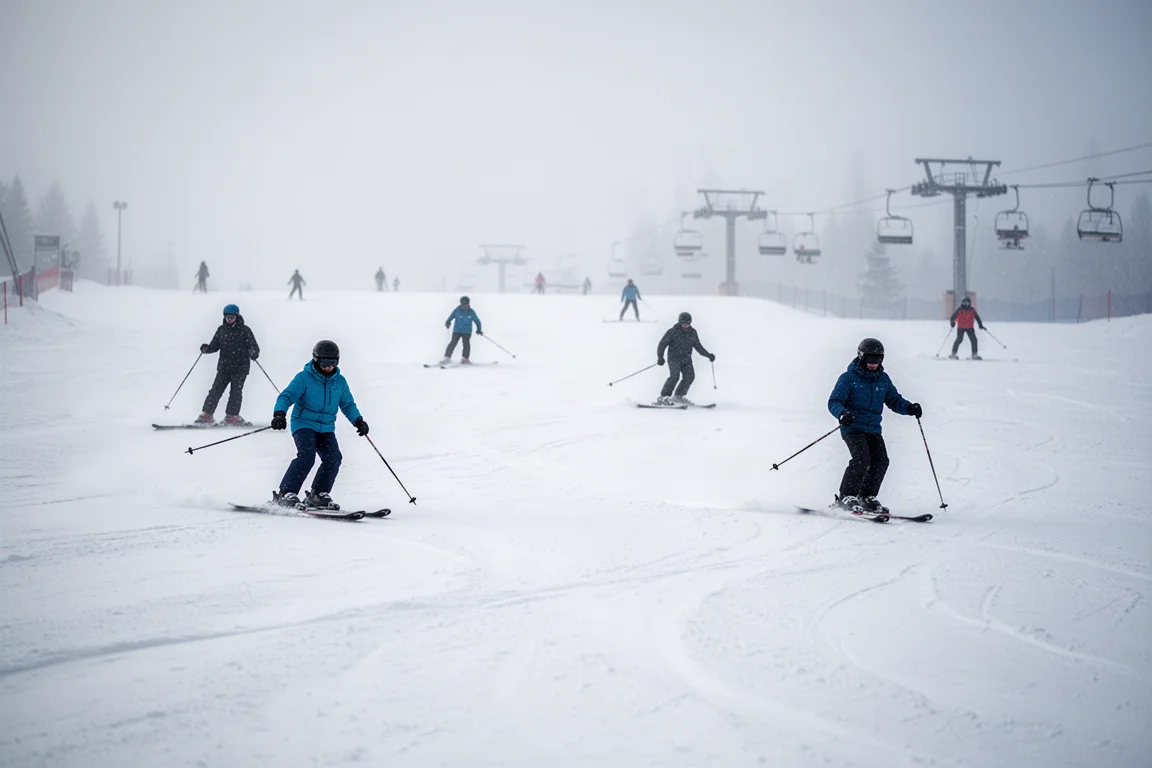
The response is fairly predictable once weight and style are taken into account. Lighter skiers, and skiers who work the middle of the ski rather than loading the front, tend to click with it immediately. Heavier skiers who drive forward through the shovel are the ones most likely to come away underwhelmed.
Sizing and Mount Point
At 182 cm the Ripstick 96 measures a 17.8 m turn radius, which is on the shorter side for a directional mid-90s ski and part of why it turns so easily. The mount point range is unusually wide for this category, but the recommended line sits where the camber is highest, and moving forward is unlikely to improve the feel. A move of about 2 cm back is a reasonable option for skiers who want a little more tip float, while going plus is hard to justify.
Length choice matters more than mount point. The 182 cm version keeps the agility and mobility that make the ski distinctive. The 189 cm version adds stability in longer turns but gives up much of that quickness, so it is a different proposition rather than a fix for skiers who find the shorter length unsupportive.
Which Version Should You Buy?
Same shape, same mold, nearly the same weight, very similar flex: the choice between the two comes down to how much you value a smoother ride. The standard Ripstick 96 is the more accessible of the pair and the natural pick for skiers who want the lightest, easiest version of the design. The Black Edition adds damping for about $150 more, and that damping shows up mainly on groomers at speed, where the ski feels a little smoother and a little quieter.
Neither version is a firm-snow carving tool. This is a lightweight mid-90s all-mountain ski built for soft snow, mixed conditions and skiers who prefer an easy, energetic feel over a demanding one. Judged on that brief, both versions deliver, and the premium version refines rather than transforms the experience.
If budget is not a constraint and you spend most of your time on groomed runs, the Black Edition is the more polished choice. If you split your time between groomers and soft snow, the standard version captures nearly all of the same character for less.
Conclusion
The Elan Ripstick 96 is one of the more distinctive skis in the all-mountain category, and the reason is construction rather than cosmetics. Carbon rods milled into the core, an asymmetrical shape and the amphibio profile combine into a ski that is light, quick and unusually easy to bend. Skiers around 160 to 180 lb with an intermediate to advanced skill level and a centred style are the most likely to enjoy it, and the Black Edition adds a noticeable layer of damping for a modest premium.
The flip side is real: heavier skiers who drive the front of the ski, and anyone who wants a stiff, demanding ride, are likely to find it underpowered in the conditions they care about most. Match the ski to your weight and your style and the Ripstick 96 is one of the more rewarding mid-90s options for that kind of skier. Mismatch it and no change of length or mount point will fix the feeling.
Further reading
Related Reviews
All-Mountain Skis
100mm All-Mountain Skis Compared: 23 Versatile Models Worth Knowing
A practical walkthrough of 23 all-mountain skis around 100mm underfoot, covering weight, rocker, metal construction, and the rider each model suits best.
All-Mountain Skis
2026 Black Crows Camox Review: A More Stable, More Versatile All-Mountain Twin Tip
The 2026 Black Crows Camox adds an ash layer underfoot, wider tips and tails, and a revised rocker profile. Here is what those changes mean on snow.
All-Mountain Skis
Armada Antimatter 88 Review: A Light, Lively All-Mountain Ski That Rewards Any Style
The Antimatter 88 pairs a poplar core with carbon stringers for a surprisingly energetic ride that suits intermediates and experts alike.