Reef Aquarium Equipment
EcoTech Marine Vortech MP60 Review: A Cleaner Way to Move Water in a Reef Tank
A practical look at the EcoTech Marine Vortech MP60, covering invisible magnet mounting, fast wet-side cleaning, driver routing, spacers, noise, and battery backup.
Introduction
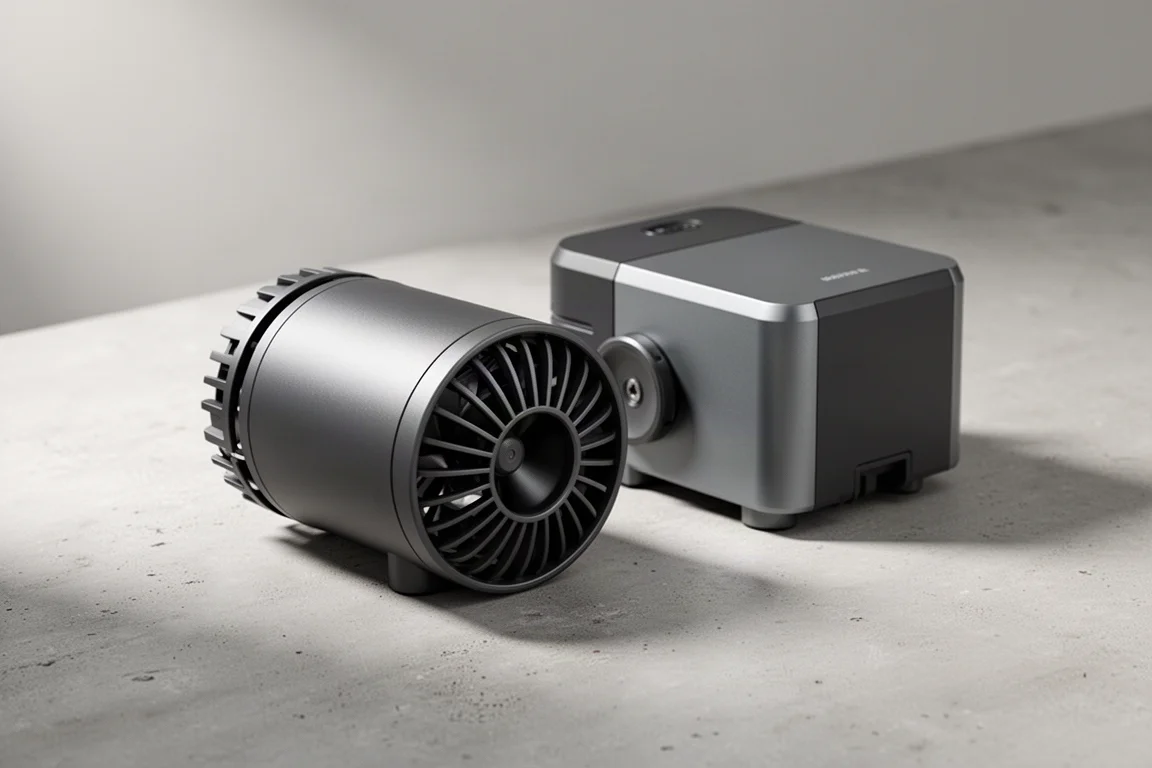
The EcoTech Marine Vortech MP60 is built around a single design decision: the motor stays outside the aquarium, and the wet side is held against the glass by magnets. There is no cord running through the tank, and from the front of the display there is very little to see at all.
That approach changes how the pump is installed and maintained. Placement takes a little more thought than dropping a powerhead into a corner, and a handful of setup details have a direct effect on how quiet, how clean, and how long-lived the pump turns out to be.
This guide walks through what the MP60 does well, the mistakes that are easy to make with it, and the accessories that make the most sense to buy alongside the pump.
Who This Product Is For
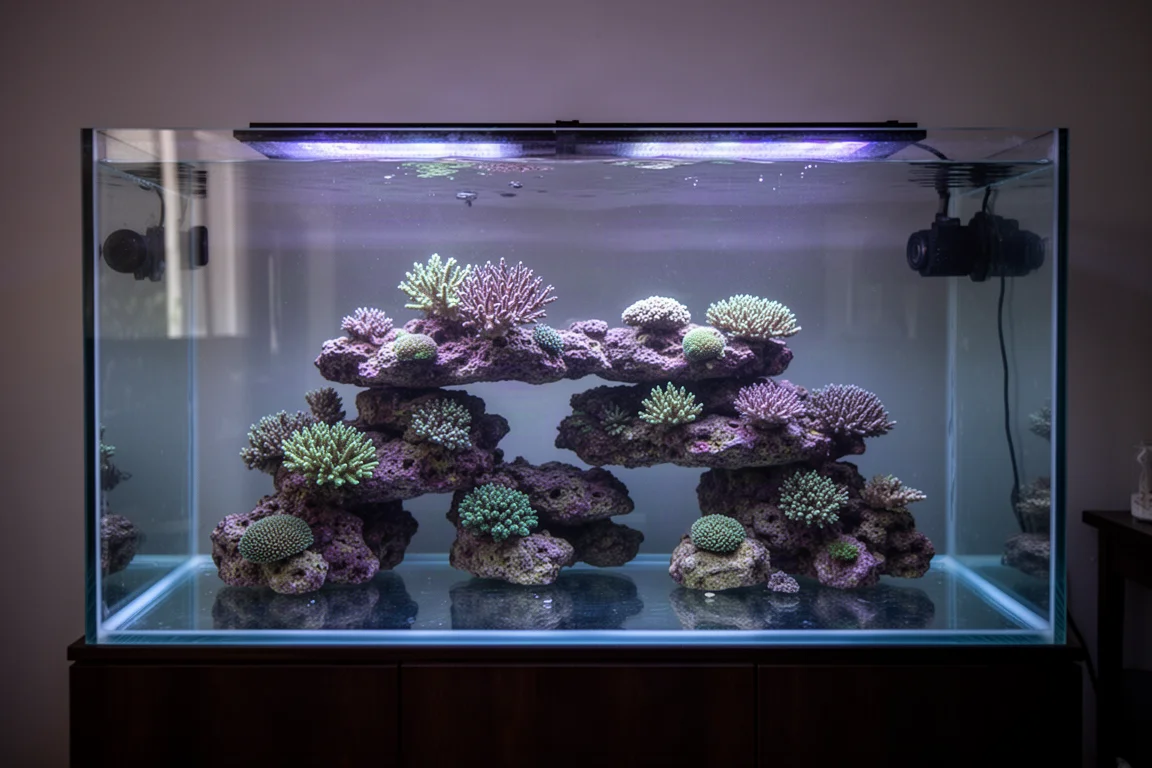
This pump suits reef keepers who want strong, controllable flow inside a display tank without seeing cords or a motor housing through the glass. It is especially relevant for bare bottom and crushed coral tanks, where pumps mounted low on the glass keep detritus suspended so it can be captured by fleece or filter socks. A crushed coral bed can stay in place even when heavy flow is directed along the bottom.
It also suits tanks that sit on one side of a wall with the sump on the other. The driver can be taken apart, and the cord can be routed through a one inch opening instead of the much larger hole the assembled control box would require.
Owners who are willing to measure glass thickness, fit the correct spacer, and clean the wet side on a schedule will get the most from it. Anyone hoping to set a pump up and forget it for a year may find the routine less appealing, although the cleaning itself is quick.
Main Strengths
Clean, Nearly Invisible Mounting
Magnet mounting leaves no cord inside or outside the aquarium, and the pumps are effectively invisible in the display. On a tank with a black painted back panel, the dry side all but disappears.
Because the pump sits on the glass, several units can be arranged across the top and bottom of the tank to create different flow patterns. In a bare bottom tank, that combination produces turbulent flow from multiple directions and keeps the bottom clear.
Cleaning Takes Minutes, Not Hours
The wet side comes away from the glass easily, so cleaning is a short job: remove it, drop it into a citric acid bath, fit a spare wet side, and leave the dirty one to soak overnight. Because the swap takes seconds, a monthly clean is a realistic habit rather than a chore.
That ease matters because saltwater pumps wear out largely through neglect. Coralline algae and calcium carbonate build up on the wet side, and that buildup is what shortens service life in a reef tank.

Buying a spare wet side at the same time as the pump is a small extra cost that removes downtime almost entirely.
Flexible Driver Placement and Cord Routing
The driver comes apart for tighter installations. The cable between the pump and the driver uses a quick snap in snap out clip, and three screws on the back of the driver let it separate further. What arrives as a large box becomes roughly an inch of hardware, which means the cord can pass through a one inch hole.
For a tank on one side of a wall with the sump on the other, that is the difference between drilling a large opening and drilling a small one.
Quiet Operation and Fine Flow Control
Most DC pumps, this one included, will produce some noise at maximum output. Backing the pump down to around 80 percent resulted in silence in a quiet room. If the final 20 percent of flow is not critical, reducing speed is the simplest fix.
Vibration against the glass is usually an alignment issue rather than a fault. Moving the wet side inside the aquarium until it lines up with the dry side generally removes the noise completely. Glass distorts the view enough that correct alignment can still look slightly off, and in some cases the pump shifts into the right position on its own after a few days of running.
Feed Mode and Bottom Flow
When the pumps share an account in the Mobius app, feed mode drops their output for about ten minutes with a single tap. In a bare bottom tank with heavy flow, a cube of food otherwise disperses before the fish can take it. Feed mode lets it settle and get eaten.
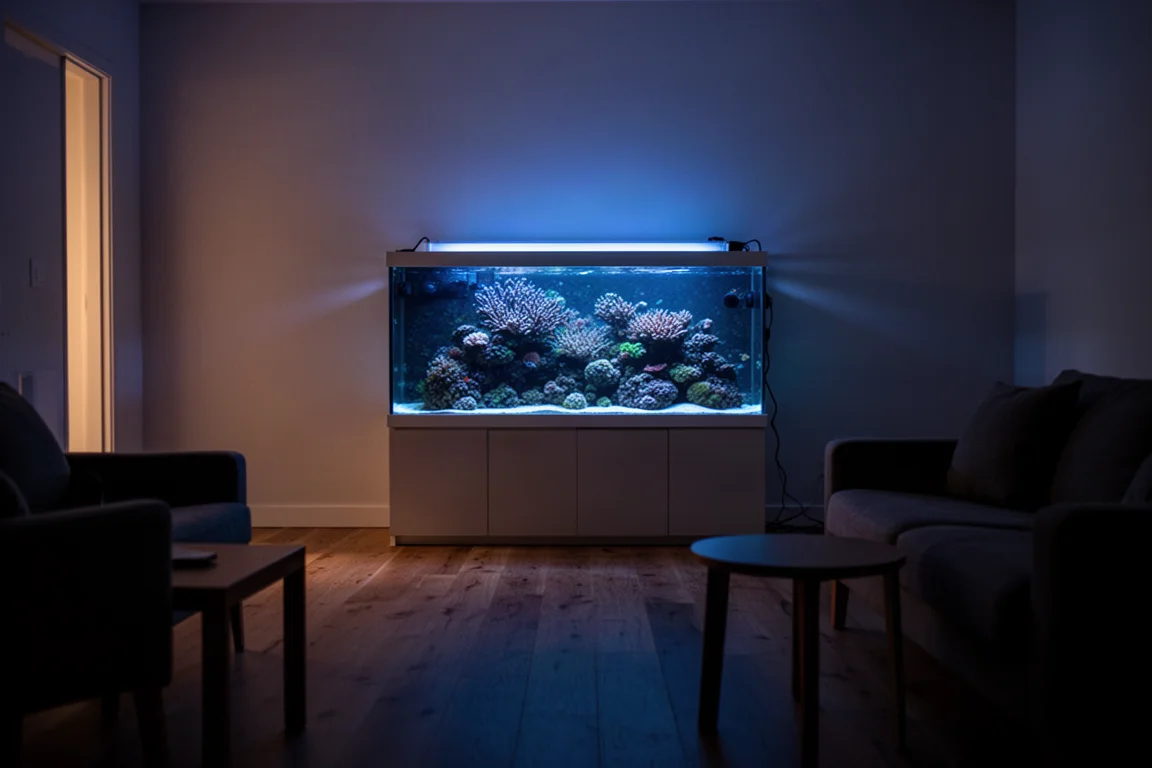
Mounted low, the pump keeps waste and uneaten food suspended so it travels to the fleece or filter socks instead of settling in corners. The flow pattern created by pumps working along the bottom is different from side or upper mounting, and for bare bottom tanks it is a strong argument for this design.
Battery Backup and Installation Details
Battery backup is the step most often skipped and the one with the biggest consequence. A DC battery backup changes runtime during a power outage from hours to days, and it costs little relative to the price of the pump. Flow is what maintains oxygen levels and gas exchange during the first eight hours without power. For keepers in areas where outages are frequent or long, a generator may make more sense, but for a typical multi hour outage, battery backup covers it.
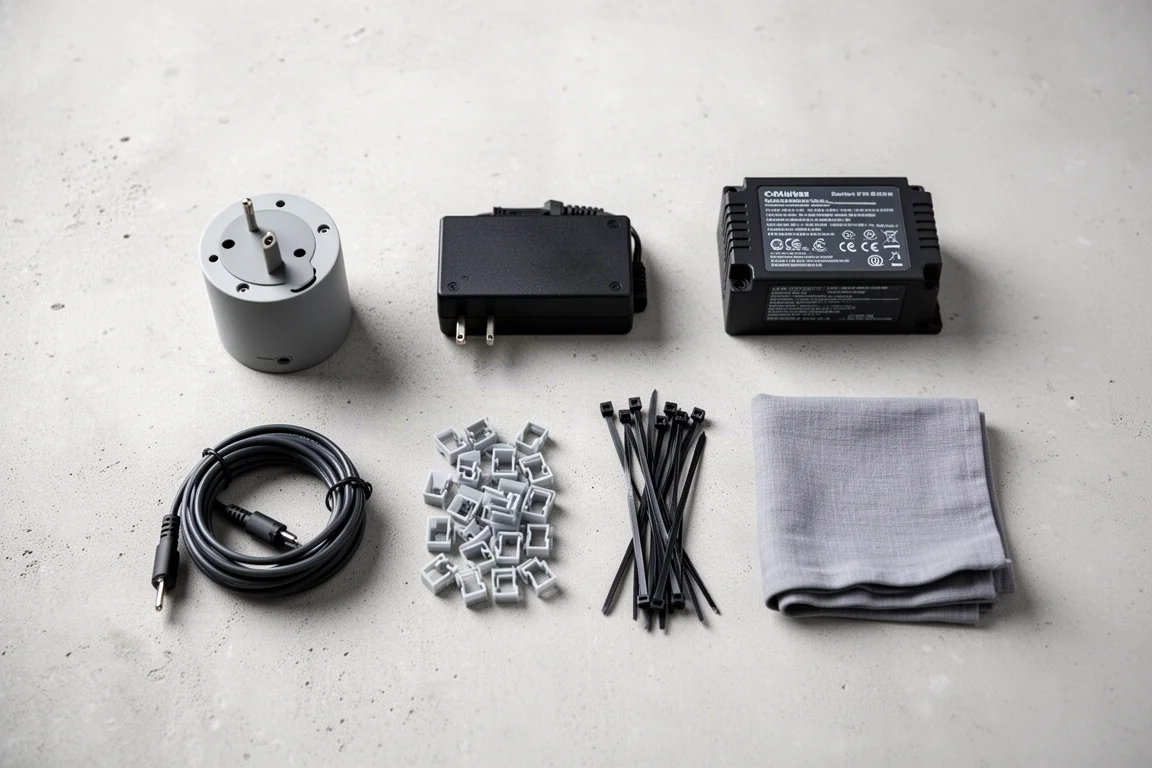
Spacers are included and labeled by the glass thickness they suit. Measure the glass and use the matching spacer: the rubber face helps the dry side grip the glass, and the magnetic coupling depends on the correct gap to hold the wet side firmly.
Cable management hardware is included for a reason. The clips and ties keep the dry side from dropping to the floor, and the tabs on the MP60 hook onto the tank to hold the pump in place. A pump that falls onto a hard floor can crack, and these are not inexpensive components. Routing the cord up to the water line and across hides it from a front view, while running it along the bottom leaves the clips to limit any fall to about an inch.
Things to Consider Before Buying
Two items are worth budgeting for from the start: a spare wet side and a battery backup. Beyond those, the driver and power supply mounts are optional extras that tidy up an installation.
The supplied mounting tape for the driver is white and can be visible through the side glass. It rolls off with a fingertip and can be replaced with clear double sided tape for a cleaner result.
Mounts for the power supply brick are the accessory most often overlooked. The brick slides into the mount, which is screwed to the wall, keeping several bricks parallel and neat instead of sagging under the weight of the cords. The mount works with any power supply regardless of brand, and installation is straightforward: apply the two supplied stickers to the power supply, peel them, press the mount where it should sit, then remove the brick and drive the screws.
One packaging note: the power supply sits beneath the plastic insert inside the box and is marked by a sticker. It is easy to assume it is missing when it is not.
Aftermarket flow directors are another option to consider. These lock onto the pump and change the flow pattern, and the lower profile designs are friendlier to fish. More of these are likely to appear as 3D printing makes custom flow patterns easier to produce.
Buying Advice
Start with one pump and a spare wet side, and add battery backup at the same time rather than after the first outage. Measure glass thickness before installing so the correct spacer goes on the first attempt.
If the goal is a display tank with nothing visible through the glass, plan the cord route before mounting. Following the water line or running the cord along the stand hides it best, and the clips hold the cord in place when the pump is removed for cleaning. If the goal is bottom flow in a bare bottom or crushed coral tank, several pumps placed low on the glass will do more for tank cleanliness than one pump pushed to maximum output.
Buyers planning to run the driver on the far side of a wall should factor in the disassembly step, since it allows a much smaller hole and a shorter, tidier cable run.
Conclusion
The MP60 solves a specific problem well: strong, controllable flow with no equipment visible in the display. Cleaning is quick enough to become routine, the driver can be routed through surprisingly tight spaces, and feed mode makes mealtimes easier in a high flow tank.
The trade off is attention to detail. Correct spacers, secured cables, occasional deep cleans, and battery backup all matter more here than with a simple powerhead dropped into a corner. Handled properly, it produces one of the cleanest looking reef tanks available.
Product link
View more details for EcoTech Marine Vortech MP60
This product is mentioned in the review. Check the specifications, options, and compatibility before buying.
View more details for EcoTech Marine Vortech MP60Further reading
Related Reviews

Reef Aquarium Equipment
Best Budget Protein Skimmers for Reef Tanks: Seven Reliable In-Sump Picks
Seven in-sump protein skimmers that deliver a dependable skim without scraping the bottom of the barrel, plus what to check before you buy.
Reef Aquarium Equipment
Best PAR Meters for Reef Tanks 2026: Four Options Ranked by Accuracy and Convenience
Four reef aquarium PAR meters compared on accuracy, convenience, and cost, from the community favorite to the budget-friendly alternatives.

Reef Aquarium Equipment
KZ Aragonite Calcium Reactor Media Review: Low Phosphate, High dKH Reef Media
KZ Aragonite Calcium Reactor Media pairs very low effluent phosphate with a high dKH effluent, while KZ ZEOmag covers magnesium inside the same reactor.