Backpacking Tents
Durston X-Mid Pro 1 vs X-Mid 1P: Which Backpacking Tent Should You Buy?
A practical comparison of the Durston X-Mid Pro 1 and the standard X-Mid 1P, covering weight, weather performance, packing, and the trips each tent suits best.
Introduction
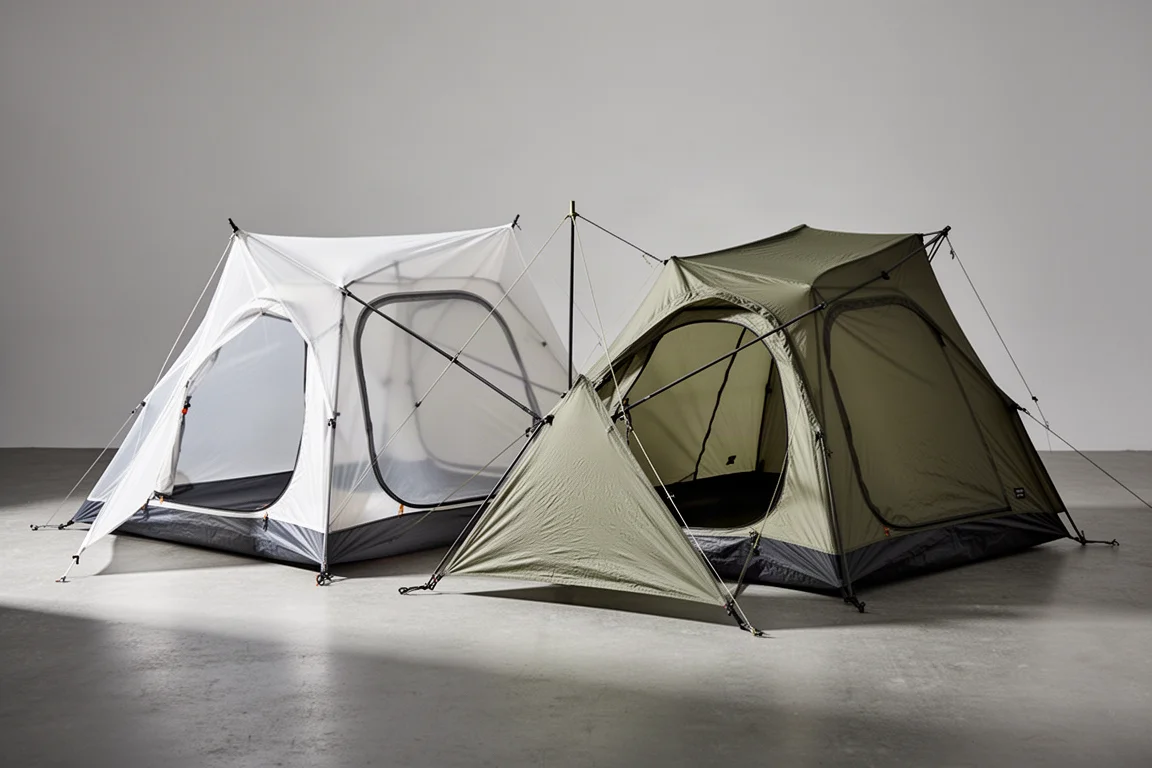
The Durston X-Mid Pro 1 takes a proven backpacking tent platform and rebuilds the fly and the floor in Dyneema. The result is a double-wall, freestanding shelter that comes in roughly 200 g lighter than the standard Durston X-Mid 1P and lands in the 700 g range, which is very light for a tent this roomy.
That saving comes with real trade-offs. Dyneema changes how the tent pitches, how it sounds in wind and rain, how it packs in the morning, and how it behaves when temperatures drop below freezing. This comparison covers what both versions share, where they differ, and which one suits a given trip.
What the Durston X-Mid Pro 1 and X-Mid 1P Have in Common
Both tents are double-wall designs: a mesh inner sits beneath a separate outer fly, with an external pole structure holding the shape. That may surprise anyone expecting the Pro to drop the inner for a single-wall build, but the mesh inner stays. On the newest version, Durston added a solid wall across the door, which improves wind protection at the entry.
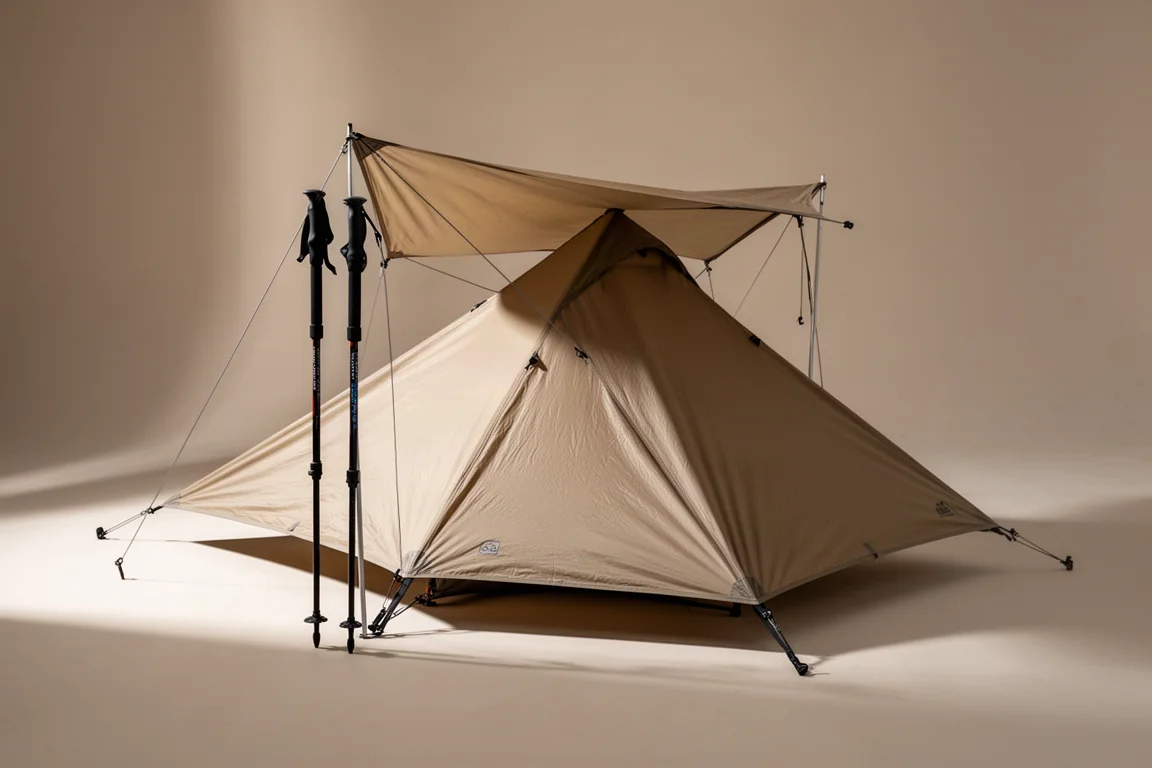
Because the poles sit outside, the tent can be pitched in more than one order. You can set the fly and poles first and clip the inner in afterwards, which is the practical sequence in rain, or leave the inner at home entirely and use the fly on its own to save a significant amount of weight. Clips are included for pitching the inner first if you prefer that approach, so the system is genuinely modular.
Both versions also share the same anchoring hardware. There are 19 stakeout points in total: the four corners, two additional guy-out points at each corner, points at each end, and points on the broader sides. Optional points on the peaks and hubs add further options. Four corner stakes are the minimum needed, and the tent can even be set up with no stakes at all while remaining fully structured, which is what makes it genuinely freestanding rather than a shelter that still needs its vestibule pegged out. Trekking poles can be attached to the broad sides for extra stability.
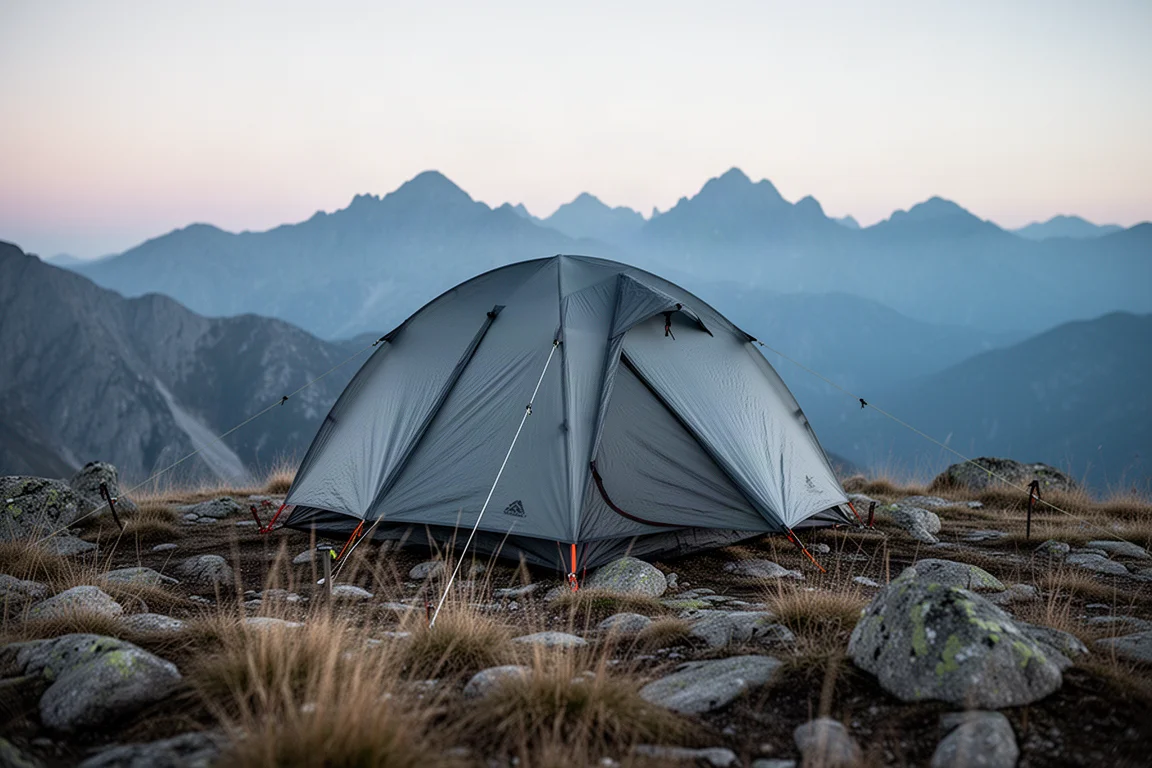
Wind performance is a stated strength of the platform, with wind-tunnel testing cited at speeds up to around 100 km/h. Once it is guyed out properly, the tent holds its shape and does not wander.
The doors are wide and mirrored. Both sides of the front roll back for a large opening, and the inner has a matching centre zipper so either half can be opened independently. If weather is coming in, the smaller flap can stay closed while you get in and out, which keeps more protection over the sleeping area.
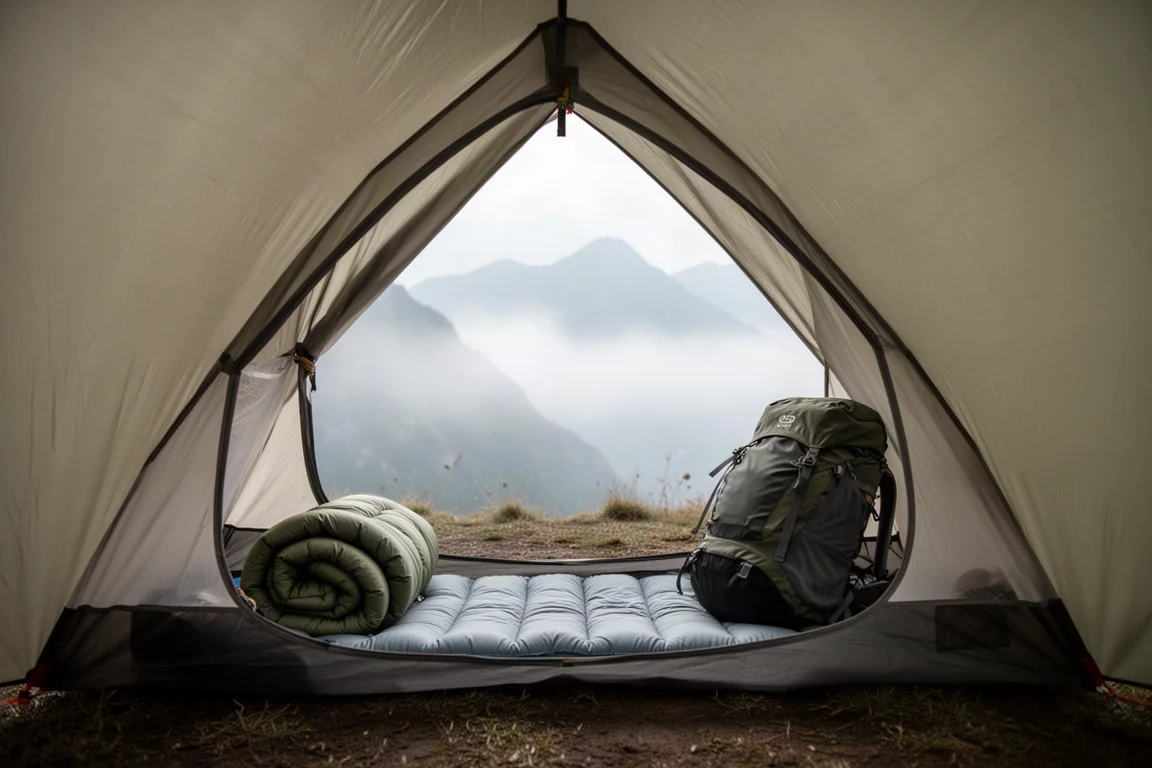
Inside, there are two pockets: a large one at the head end along the top and a smaller one at the side corner. The floor plan is asymmetrical, wider at one end and narrower at the other. The short end measures 85 inches across, and rotating a sleeping pad to use its long edge gives 90 inches of length, enough for a long pad. The narrower foot end is about 29 to 30 inches wide, which accommodates a long, wide pad. The tent is still on the short side for very tall users: above roughly 6 ft 2 in, with a long wide pad and a bulky sleep system, you may press against the mesh inner and possibly touch the fly.
The vestibule is very large, big enough to keep a full camping chair inside overnight without collapsing it. Interior height is generous too, which makes entry and exit easier, makes changing clothes inside more practical, and gives condensation more volume to spread into so it is easier to manage with any cross breeze.
Durston X-Mid Pro 1: Dyneema Fly and Floor
The defining change is material. The Pro uses Dyneema for both the fly and the floor, and that is where the 200 g saving over the standard version comes from. For a double-wall freestanding tent with this much interior space, a weight in the 700 g range is notably low.
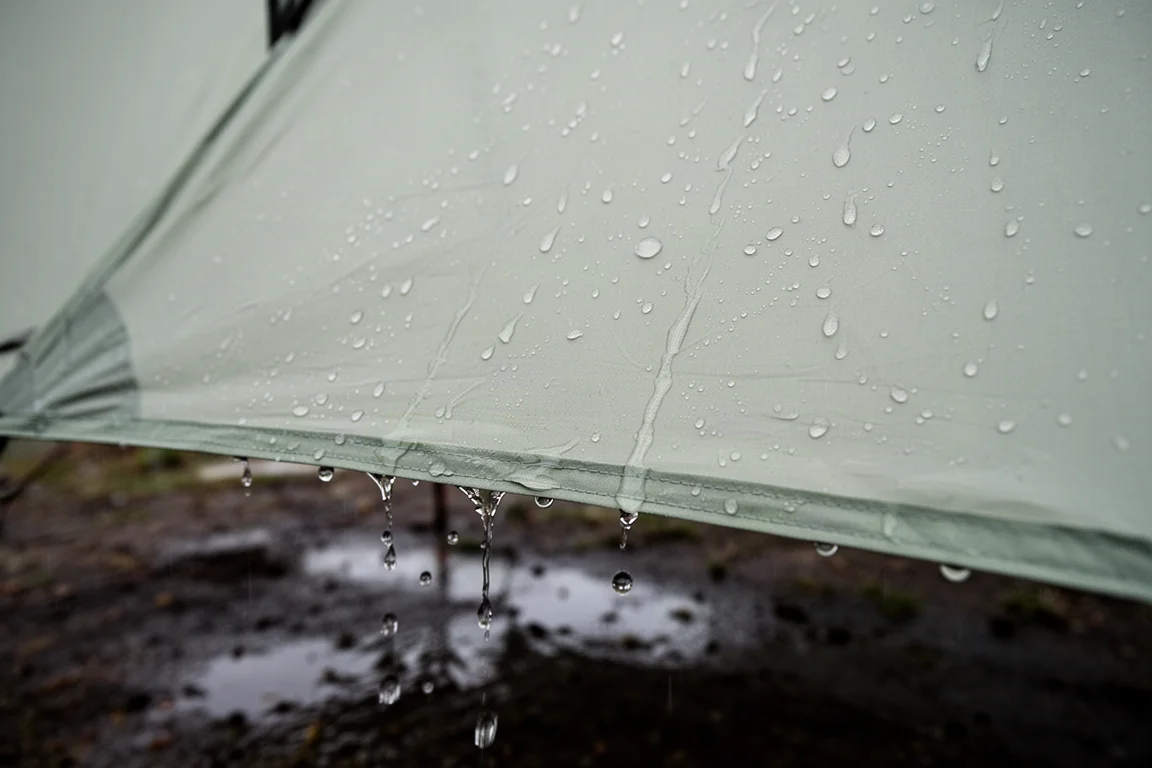
Dyneema behaves differently from woven fabrics. In rain, water can be wiped off with a cloth rather than being carried along the trail, and the same applies to condensation on the inside: wipe it down, wring out the cloth, and the tent ends up close to dry. The fabric also holds its shape, so a well-pitched tent stays put, and it is very strong for its weight.
The pole structure has been updated as well. Instead of aluminium ferrules, the connectors inside the poles are carbon fibre, which should be stronger, lighter, and far less prone to loosening over time. The inner also uses a lighter YKK number 3 ultralight mesh zipper, which trims weight without a meaningful durability penalty.
The Dyneema floor is fitted mainly to save weight. It is likely less abrasion-resistant than a nylon floor, since Dyneema does not handle abrasion especially well, though this has not been a practical problem in other tents using the same material.
The Pro is an expensive tent, priced above $800, and availability has been limited because of constraints in Dyneema manufacturing. Durston has indicated that parts will eventually be sold separately, and the Pro and standard versions are interchangeable: the Dyneema fly can be used with the standard inner, older pole sets can be used with the Pro, and the short pole from the standard version fits the Pro as well. That opens up the option of buying the regular tent and adding the Dyneema fly later.
Durston X-Mid 1P: The Standard Version, and Why It Still Makes Sense
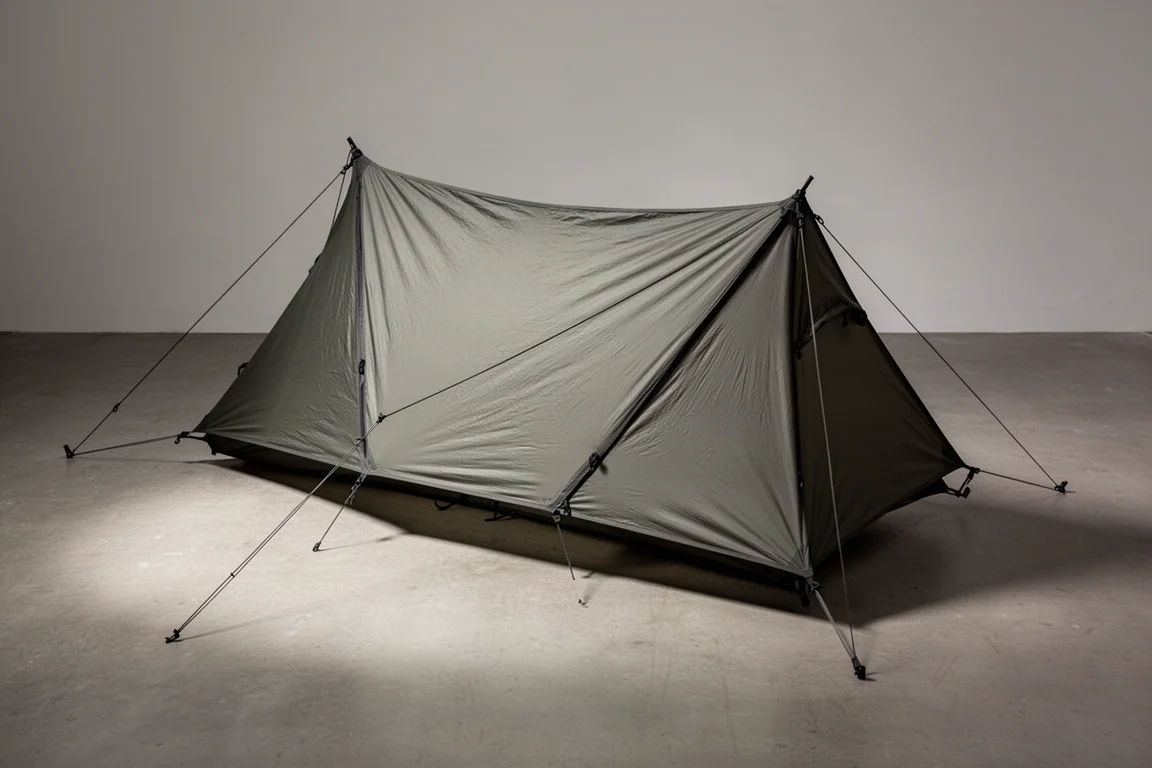
The standard X-Mid 1P keeps a silpoly fly and is the more versatile of the two. Silpoly is easier to pitch because it has some give, so the tent is more forgiving when you are setting up in a hurry or on uneven ground. It is also quieter: silpoly panels do not flap as loudly in wind, and rain does not drum on them the way it does on Dyneema.
Packing is simpler too. The standard version can be stuffed into its stuff sack rather than folded and rolled, which speeds up breaking camp. It also handles cold far better, since silpoly does not stiffen the way Dyneema does in freezing temperatures.
The shared architecture means the standard version gives up very little in the ways that matter day to day. It uses the same inner, the same twin doors, the same pocket layout, the same asymmetrical floor plan, and the same 19 stakeout points, and it can still be pitched fly-only when you want to travel light.
Weight, Packability, and Cold-Weather Trade-offs
Dyneema’s drawbacks are worth weighing carefully. Because the fabric has no give, pitching takes slightly more precision, although it is not difficult in practice and a clean pitch is achievable on the first attempt. When the tent is not pitched perfectly and wind gets under the panels, the flapping is louder than silpoly or nylon. Rain is louder as well, particularly with large raindrops.
Packing is the bigger day-to-day difference. Dyneema cannot simply be stuffed; it has to be folded and rolled, which takes longer and is more fiddly in poor conditions. Cold makes this worse, because Dyneema stiffens when frozen and becomes hard to roll, at which point packed size can roughly double or even triple. For that reason, the Pro is not a good winter choice, and the standard version remains the better cold-weather tent.
There is also the question of value. The Pro is lighter and sheds water more easily, but the standard X-Mid 1P is likely good enough for most backpackers, and its versatility may make it the better tent overall for general use. A lighter single-wall shelter such as the Zpacks Plex Solo comes in at roughly half the weight, though without the double-wall structure or the interior space.
Who the X-Mid Pro 1 Is For
Two kinds of buyers get the most from the Pro. The first is a long-distance hiker spending many nights in wet or unsettled weather. Dyneema’s ability to be wiped dry matters most on rainy routes, and a 200 g saving accumulates over a long trail. A roomy interior that lets you hunker down comfortably through a wet day is a genuine advantage on trails known for rain.
The second is the gear-focused buyer who wants the lighter fabric, the shape retention, and the carbon fibre pole connectors, and who is not especially price-sensitive. The Pro is a compelling tent in its own right, and for some buyers that is reason enough.
Who the X-Mid 1P Is For
The standard version suits most backpackers, particularly anyone who wants a single tent that works across a wide range of seasons and conditions. It is the better pick for cold-weather trips, for anyone who values fast packing in the morning, and for anyone who wants a quieter night when wind and rain arrive.
It is also the sensible starting point for buyers who are curious about Dyneema but not ready to commit to the Pro’s price. Because the parts are interchangeable, the Dyneema fly can be added later and paired with the standard inner, so the decision does not have to be permanent.
Buying Advice
The choice comes down to conditions and priorities rather than which tent is objectively better. If most of your nights are in wet weather, or you are heading out on a long trail where every 200 g counts, the X-Mid Pro 1 earns its price. If you want one tent for a broad range of trips, including cold ones, the standard X-Mid 1P is easier to live with and likely the better all-round choice.
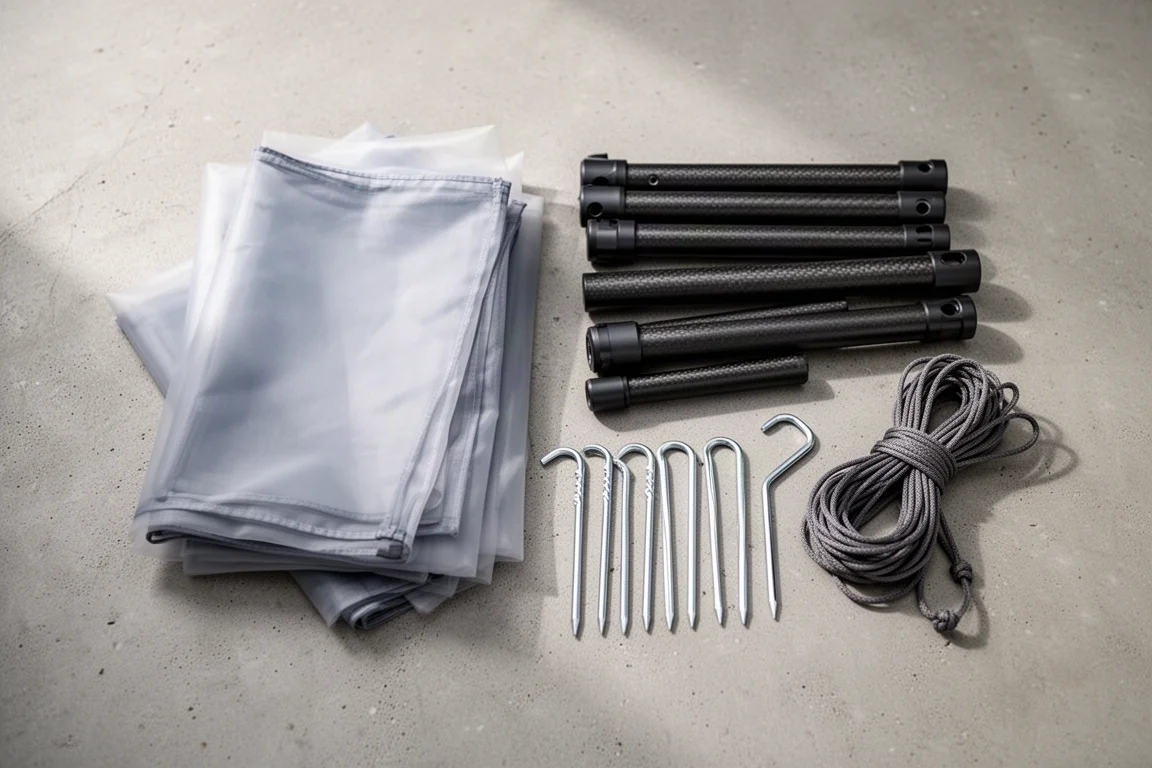
Buyers who already own the standard version have a middle path: the Dyneema fly is compatible with the standard inner, so you can add the lighter fly for wet-weather trips and keep the standard fly for everything else. Because the parts are interchangeable and will be sold separately over time, there is less pressure to make the decision once and live with it forever.
Conclusion
Both tents share the same well-designed core: a roomy double-wall interior, a genuinely freestanding structure, a large vestibule, and 19 stakeout points for locking everything down. The Pro adds Dyneema, a 200 g weight saving, and carbon fibre pole connectors, but it is louder in wind and rain, fussier to pack, and poorly suited to freezing conditions. The standard X-Mid 1P remains the more versatile tent and the safer recommendation for most buyers. The Pro makes sense when wet weather and low weight matter more than anything else.
Further reading
Related Reviews
Backpacking Tents
3F UL Lanchan Pro 1 Review: A 1 lb 8 oz Single-Wall Trekking Pole Tent
A practical look at the 3F UL Lanchan Pro 1, a single-wall trekking pole shelter with a 1 lb 8 oz weight, 20D silnylon fabrics, and a roomy 90 x 31 x 49 inch interior.
Backpacking Tents
3F UL Taiji 2-Person Tent: A Convertible Backpacking Shelter Worth a Closer Look
A practical look at the 3F UL Taiji two-person tent, covering its materials, true two-person interior, fly-first pitching, and the seasonal inner swap that lets one shelter cover more of the year.
Backpacking Tents
3FUL Lanshan Twoerson Pro Review: A Light Trekking Pole Shelter That Struggled in Rain
A two-person trekking pole shelter with a 2026 redesign, pitched with sticks and put through a night of steady rain. Here is what worked, what did not, and what to check before buying.