Backpacking Tents
Durston X-Mid Pro 1 vs X-Mid 1 Solid: Choosing an Ultralight Trekking Pole Tent
Two one-person trekking pole shelters from the same design family, separated by a big weight gap and a bigger price gap. Here is how to decide between them.
Introduction
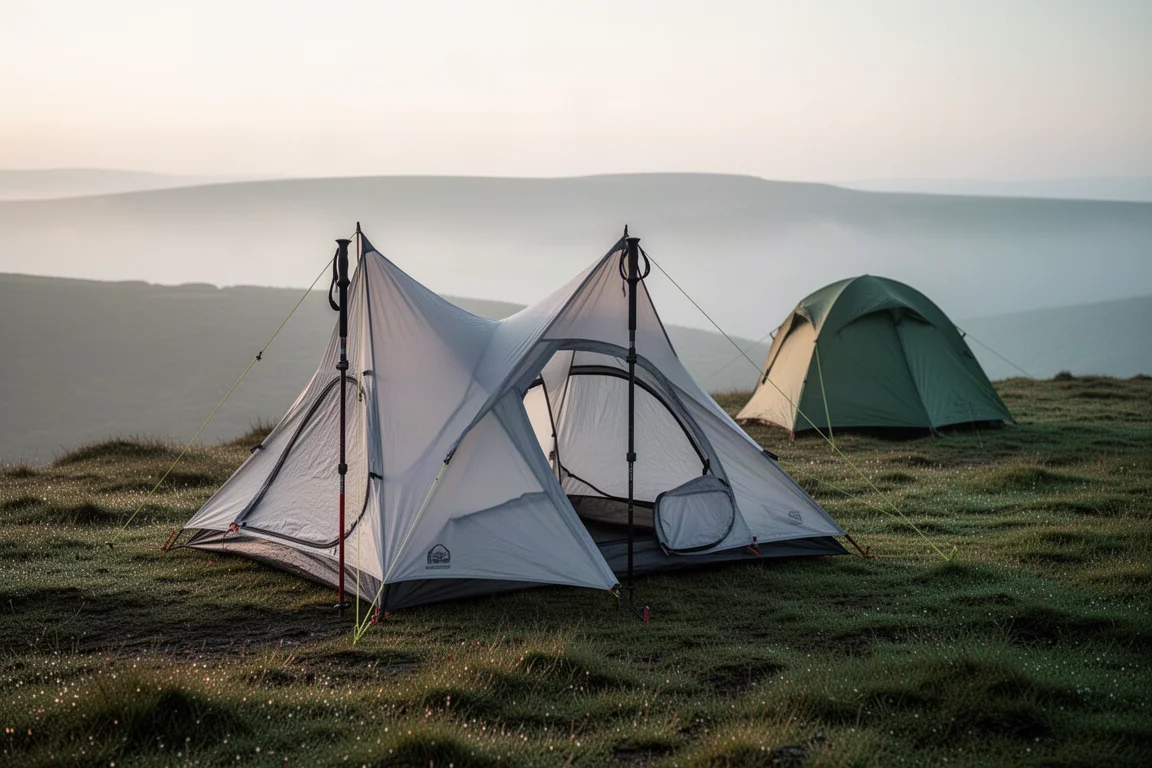
Two one-person trekking pole shelters sit at opposite ends of the same design idea. The Durston X-Mid Pro 1 is built from Dyneema composite fabric and carries a stated weight of 499 grams. The Durston X-Mid 1 Solid uses more conventional tent fabric and weighs 948 grams, which is still comfortably under a kilo.
That weight gap tells most of the story in a single line, but it is not the whole decision. Both shelters share the same footprint and the same interior dimensions, and both are pitched with trekking poles rather than a dedicated frame. What separates them is fabric, price, and the kind of trip you have in mind.
This guide walks through what each tent does well, where the compromises sit, and which one makes more sense for a given trip.
What Matters in an Ultralight Trekking Pole Tent
Packed weight is the headline number, but packed volume, fabric behaviour and weather resistance matter just as much once you are actually out on a trail. The X-Mid Pro 1 packs down to roughly 32 centimetres by 14 centimetres, which is small enough to disappear into a pack.
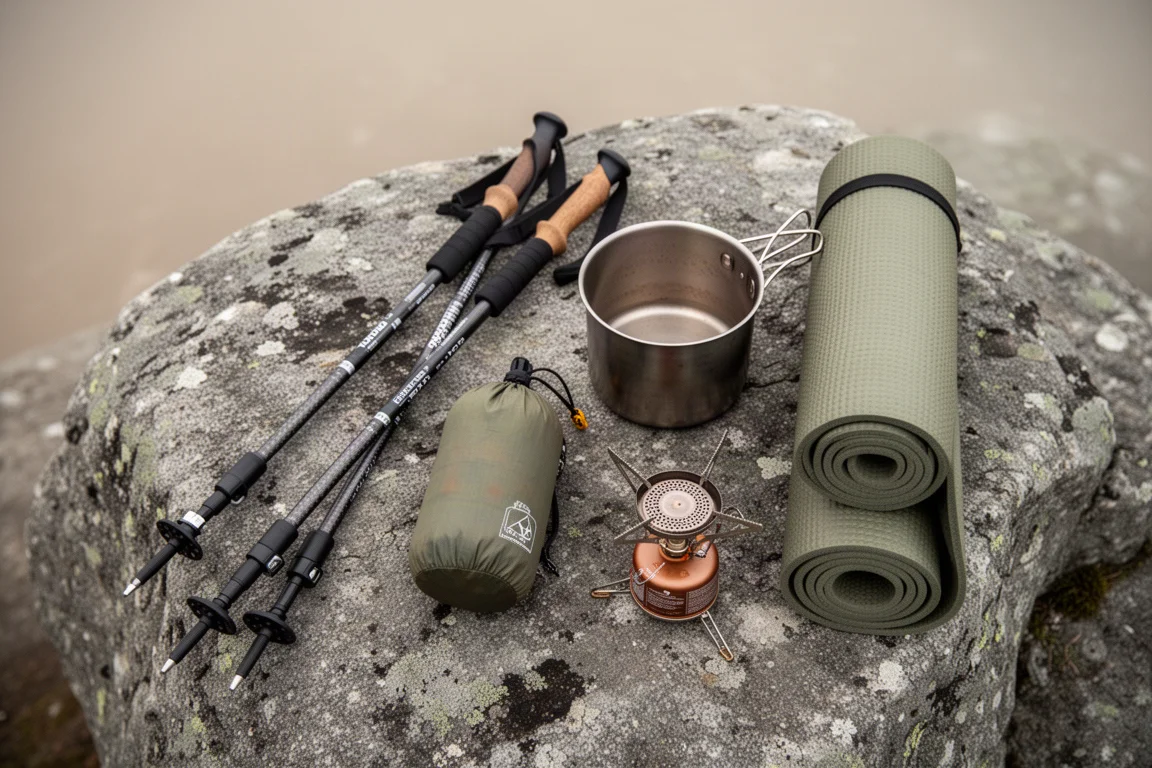
Fabric choice drives most of the difference between these two shelters. Dyneema composite fabric offers an extremely high strength-to-weight ratio and does not stretch, so a well-pitched shelter stays taut. Conventional tent fabrics behave differently and are easier to tension across uneven ground, which is worth thinking about if your campsites are rarely flat.
The other variables are seam construction, ventilation and door layout. Fully taped seams, taped zips and a vent beside each trekking pole all point to a shelter built for real weather rather than for a low number on the scales.
Durston X-Mid Pro 1: The DCF Ultralight Shelter
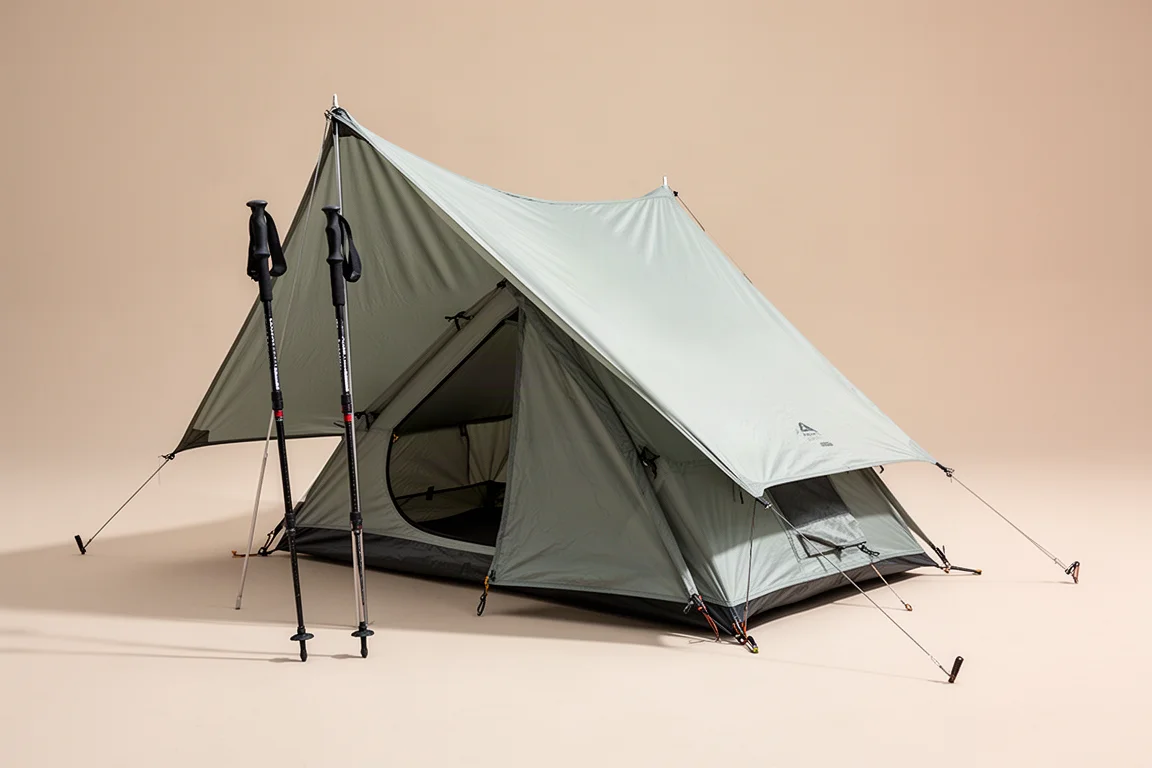
The Pro 1 is the lighter option here by a wide margin. It uses Dyneema composite fabric for the canopy and a 15D fabric for the floor, and it is fully taped throughout, including the zips.
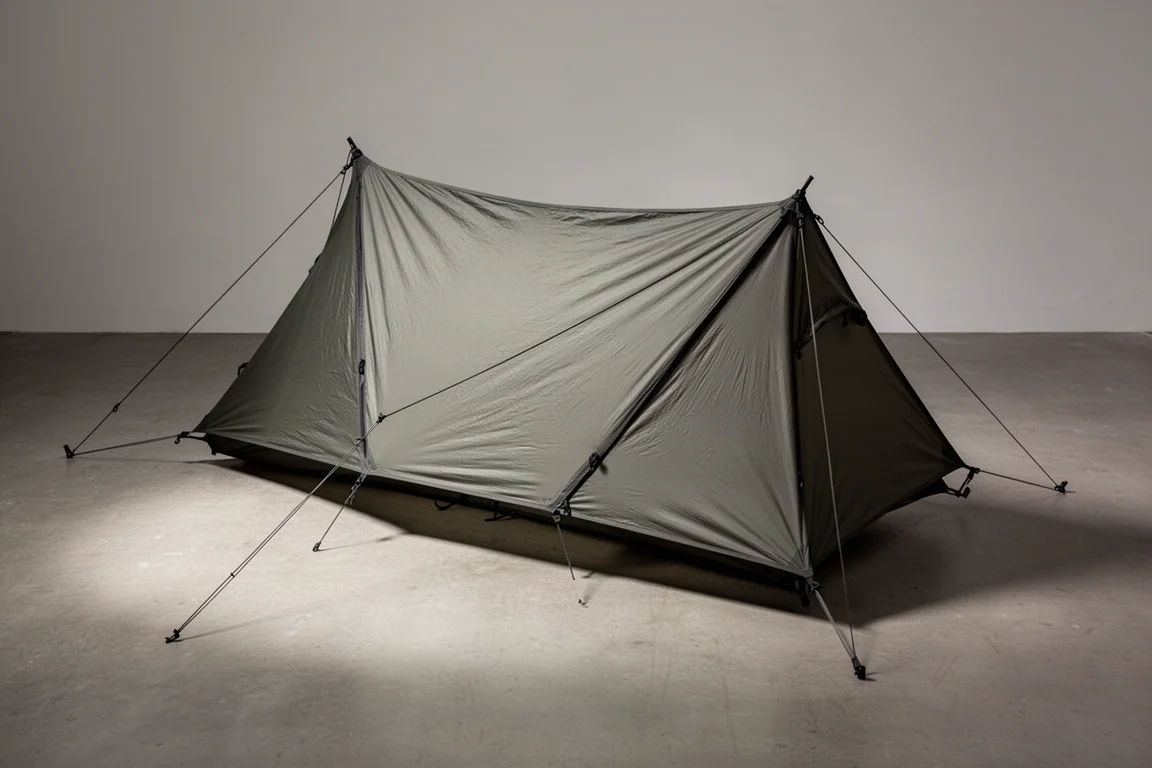
The shape is distinctive: a low, twin-peak profile supported by two trekking poles set at around 115 centimetres, with a vent beside each pole. There are two doors and two vestibules, so wet gear can live on one side while the other stays clear for cooking, and a change in wind direction simply means using the opposite door. A small magnet holds the door open when you want it out of the way.
The inner is mesh, which is a large part of how the weight stays so low. That makes it a shelter best suited to warmer conditions, and it is worth being honest about that before committing to a shoulder-season trip.
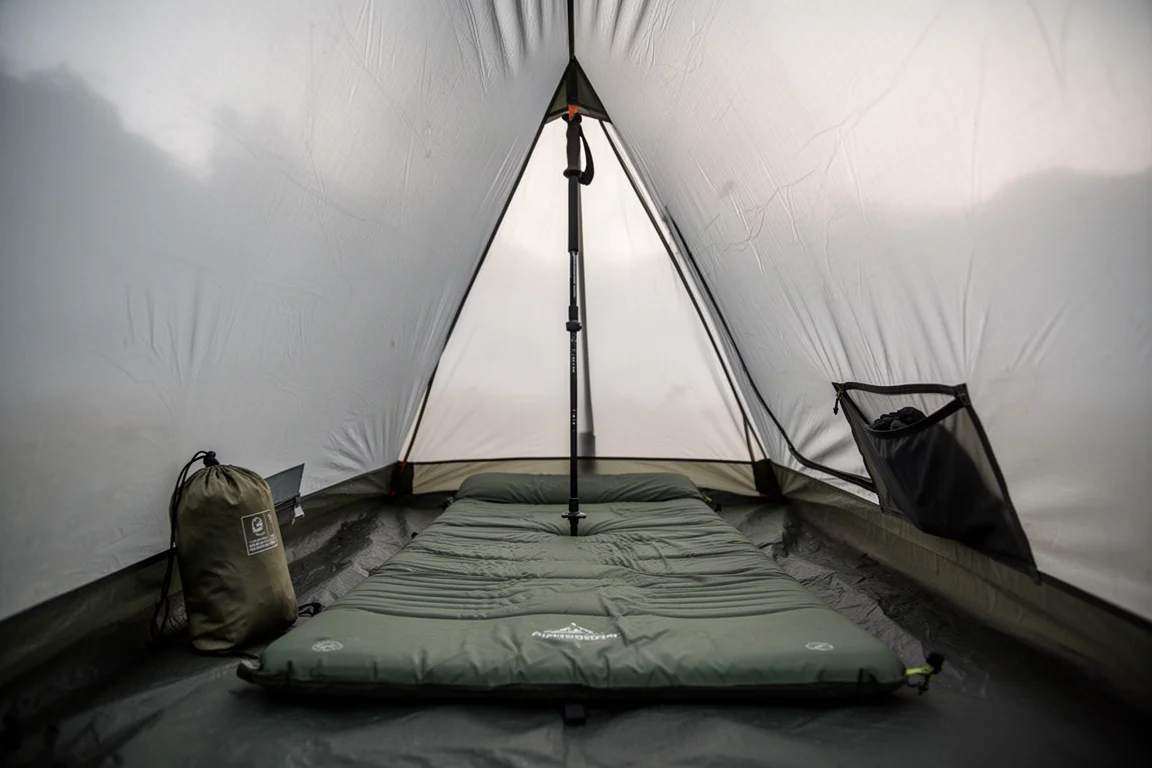
Inside, the floor measures around 228 centimetres by 81 centimetres, and the end walls rise close to vertical, so tall sleepers get usable length rather than a narrow taper. Headroom is generous when you sit up beside one of the poles. Two pockets, one on each side, keep small items off the floor. Durston rates the canopy as storm resistant.
Space, Ventilation and Pitching in Practice
The interior dimensions are shared across both shelters, and they are generous for a one-person tent. A wide, long sleeping mat fits with room to spare, and the near-vertical ends mean your head and feet are not pressed into damp fabric overnight.
Two vestibules do more for liveability than the headline weight suggests. One side can take a wet pack and muddy boots while the other stays clean enough for a stove, and if the weather swings round, the second door gives you an exit that is not straight into the wind.
Pitch height is worth experimenting with. Poles set at around 115 centimetres give a good balance of headroom and a wind-shedding profile, and some users prefer 120 centimetres for extra interior height. In a steady wind, the Pro 1 holds its shape well, which is not always a given for a shelter this light.
Durston X-Mid 1 Solid: The Value Alternative
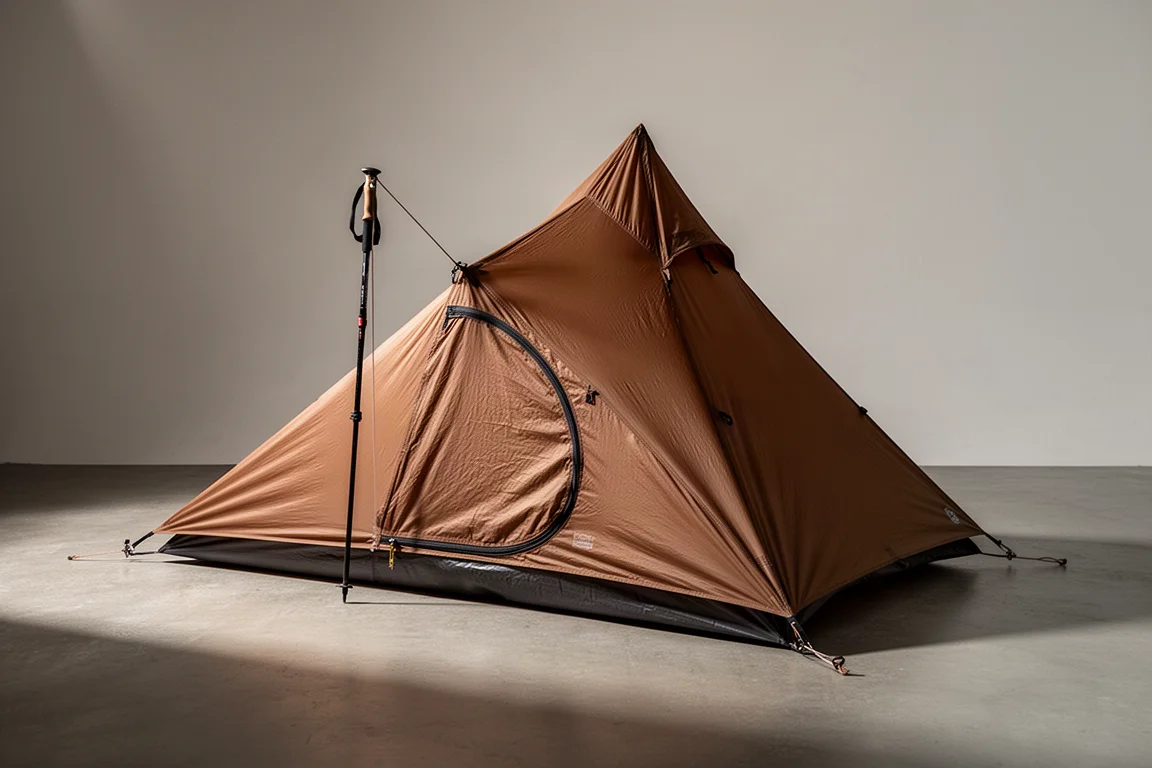
The X-Mid 1 Solid is the conventional-fabric version of the same idea. It weighs 948 grams, still under a kilo and still remarkably light for a one-person backpacking tent, but it is roughly twice the weight of the Pro 1.
The interior is exactly the same size, so nothing is given up in living space. What you give up is the DCF canopy, and what you gain is a much lower price: around 250 US dollars against 599 for the Pro 1, which works out at roughly half.
For anyone who is not counting every gram, that is a compelling trade. A sub-kilo trekking pole tent with the same footprint and the same interior dimensions covers a lot of backpacking trips, and the saving can go towards a better sleeping mat or quilt, which will often do more for comfort than a few hundred grams off the shelter.
Fabric, Weather Resistance and Long-Term Wear
Dyneema composite fabric is the reason the Pro 1 exists at this weight. It is remarkably strong for how thin it is, and Durston describes it as storm resistant. It also does not stretch, which keeps a pitched shelter taut and quiet on level ground.
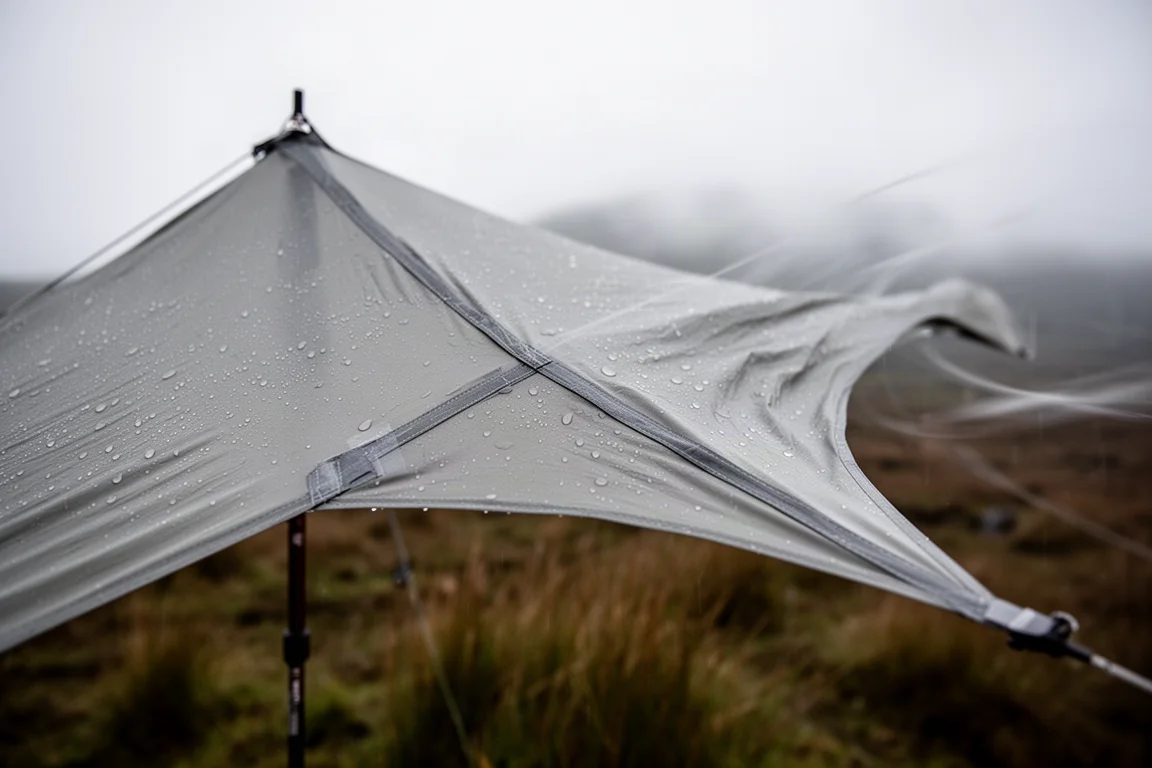
The trade-off is that a fabric with no stretch has less give on awkward, uneven pitches, where conventional tent fabrics can be tensioned more forgivingly. That is a practical consideration rather than a flaw, and it is the main reason a heavier, conventional-fabric shelter still has a clear place for mountain use.
Construction looks strong on both. The Pro 1 uses thick taped zips, fully taped seams and two vent ports, and the panels are held under tension by the trekking poles rather than by a lot of extra hardware. Fewer moving parts generally means fewer things to break on a long trip.
Cost, Availability and Value
The Pro 1 is listed at 599 US dollars, which was around 530 pounds at the time of writing. Buyers outside the United States need to add VAT, import duty and shipping, which pushes the landed cost in the UK to roughly 700 pounds.
That is a serious amount for a one-person tent, and it is the single biggest reason to think carefully before choosing it. The X-Mid 1 Solid, at around 250 dollars and roughly 350 pounds including taxes for UK buyers, delivers the same interior space for about half the money.
Neither tent is a budget purchase in the ordinary sense. Both are specialist shelters, and the question is not whether they are cheap but whether the weight saving on the Pro 1 is worth the premium for the trips you actually take.
Buying Advice: Matching the Tent to the Trip
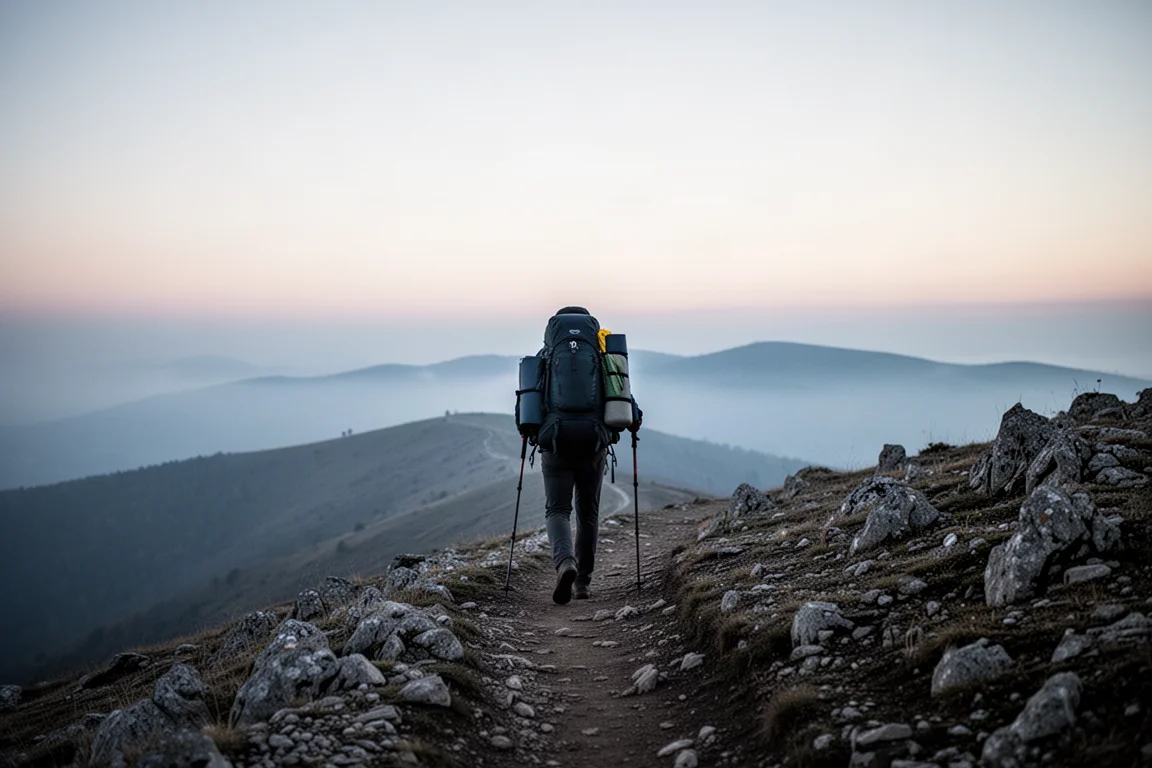
The Pro 1 makes sense for long-distance backpacking where weight is the priority across the whole kit, not just the shelter. If you are covering big miles day after day, the difference between 499 grams and 948 grams is one you feel, and the DCF canopy also packs down small enough to leave room for everything else.
The X-Mid 1 Solid makes sense for almost everyone else. It keeps the same floor plan and the same generous interior while staying under a kilo, and it costs about half as much. For three-season trips where the shelter is one part of a balanced kit, that is the more sensible buy.
Either way, both are trekking pole shelters, so they assume you are already carrying poles. That is part of why the weights are achievable, and it is worth factoring into your overall setup rather than looking at the tent in isolation.
Conclusion
The Durston X-Mid Pro 1 is an exceptional piece of ultralight design: a fully taped, twin-door, twin-vestibule shelter with a stated weight of 499 grams that holds up well in wind. It is a specialist purchase at a specialist price, and the landed cost outside the United States makes it a decision worth taking seriously.
The Durston X-Mid 1 Solid is the practical counterpoint. It weighs 948 grams, shares the same interior dimensions, and costs roughly half as much. For most backpackers, that is the version that will see more nights out.
Further reading
Related Reviews
Backpacking Tents
3F UL Lanchan Pro 1 Review: A 1 lb 8 oz Single-Wall Trekking Pole Tent
A practical look at the 3F UL Lanchan Pro 1, a single-wall trekking pole shelter with a 1 lb 8 oz weight, 20D silnylon fabrics, and a roomy 90 x 31 x 49 inch interior.
Backpacking Tents
3F UL Taiji 2-Person Tent: A Convertible Backpacking Shelter Worth a Closer Look
A practical look at the 3F UL Taiji two-person tent, covering its materials, true two-person interior, fly-first pitching, and the seasonal inner swap that lets one shelter cover more of the year.
Backpacking Tents
3FUL Lanshan Twoerson Pro Review: A Light Trekking Pole Shelter That Struggled in Rain
A two-person trekking pole shelter with a 2026 redesign, pitched with sticks and put through a night of steady rain. Here is what worked, what did not, and what to check before buying.