Camping Tents
Durston X-Dome 1 Review: A Freestanding Ultralight Tent With Carbon Fiber Poles
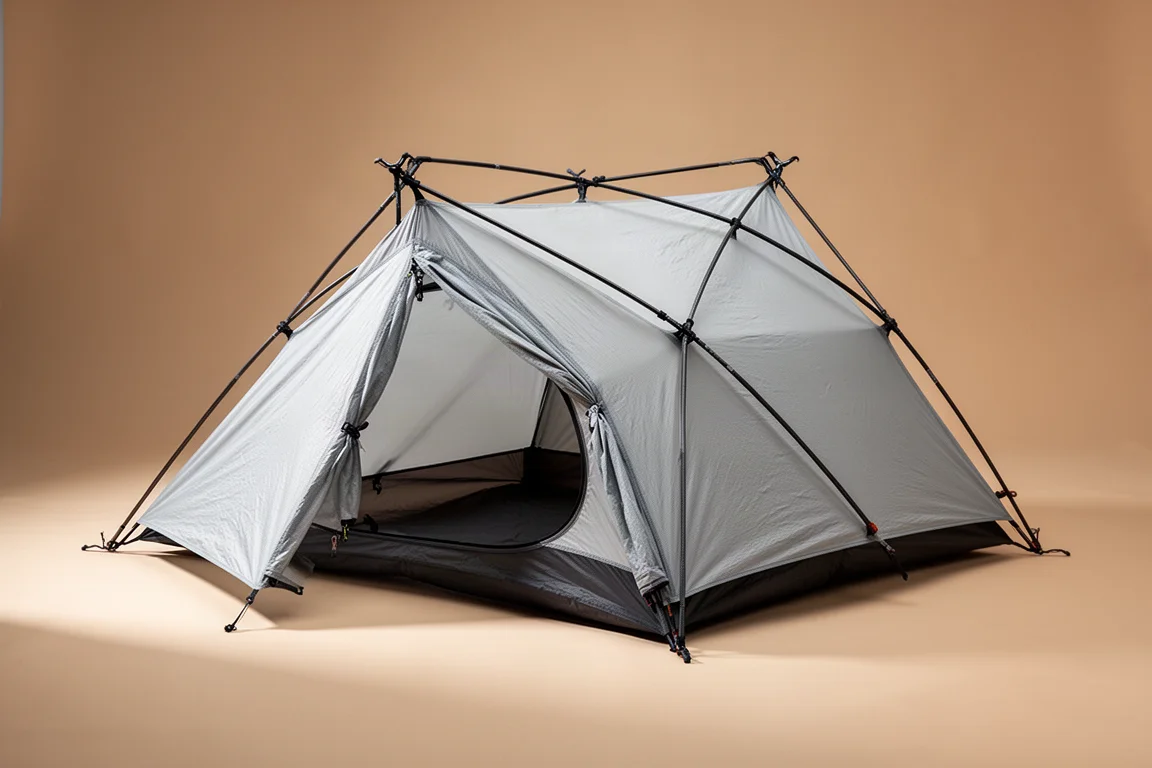
The Durston X-Dome 1 pairs a freestanding one-person layout with standard carbon fiber poles, fly-first pitching, and a listed 2.36 lb packed weight.
Introduction
Ultralight shelters usually force a choice. You either carry the extra weight of a self-supporting structure, or you commit to a trekking pole tent that depends on a careful pitch and a reliable set of stakes. The Durston X-Dome 1 is built to sit between those two options: a three-season, one-person freestanding tent that includes carbon fiber poles as standard equipment and can be pitched with as few as four stakes.
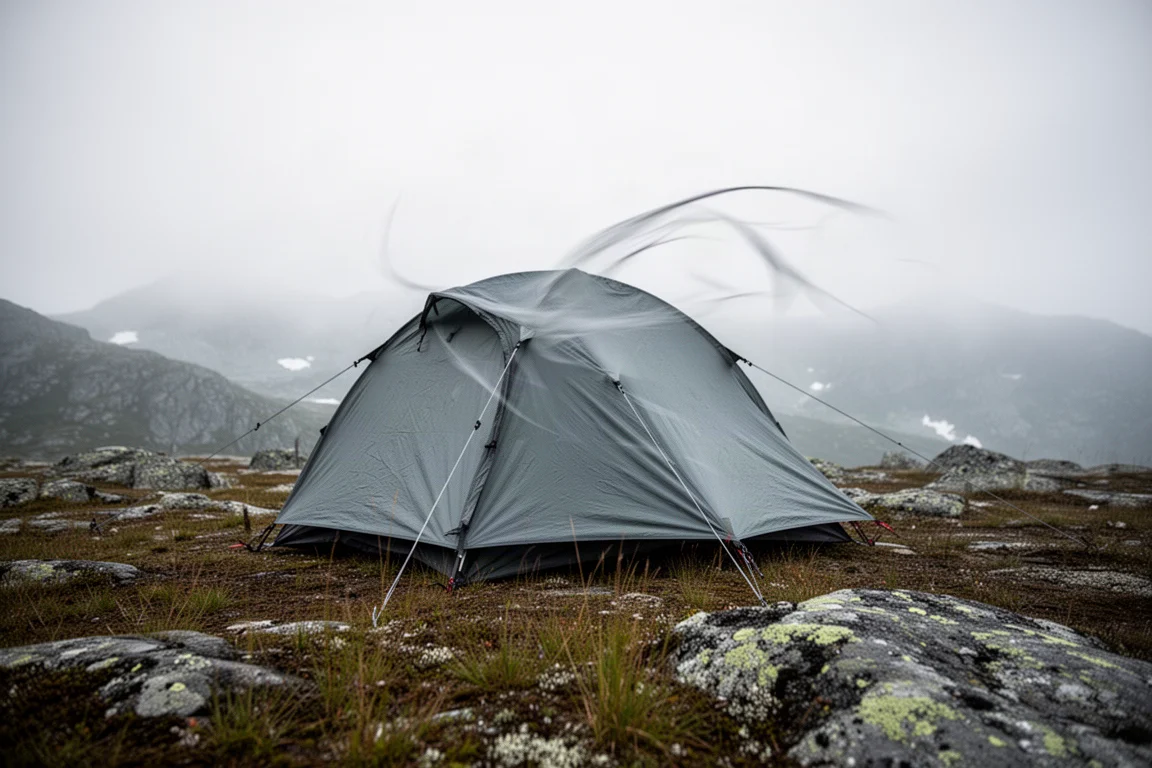
The layout is what makes that possible. A rectangular floor plan and a built-in vestibule remove the need to stake out a separate vestibule before the shelter stands up, so the tent holds its shape on its own. Durston lists the packed weight at 2.36 lbs including four stakes, poles, fly, inner tent, and stuff sack, and positions the X-Dome 1 as the lightest fully freestanding tent on the market. It also pitches fly first without a footprint, which is the detail most likely to matter during a wet, windy arrival at camp.
At a listed $369, it undercuts several comparable freestanding options, including the Copper Spur and the Nemo Dragonfly, by roughly $50.
Who this product is for
Long-distance backpackers who want freestanding convenience without a weight penalty are the clearest fit. A packed weight of 2.36 lbs with carbon fiber poles and four stakes is unusual for a self-supporting one-person tent, and it keeps the shelter competitive with designs that rely on trekking poles.
A second group benefits just as much: campers who regularly pitch on hard, rocky, or compacted ground where driving stakes is difficult. A tent that stands with no stakes at all, and holds steady with four, solves a problem that pole-supported shelters handle poorly.
Taller and longer campers should also take note. The floor is wedge shaped with one corner cut away to make room for the vestibule, and the single-door layout frees up interior volume. Durston’s earlier X-Mid 1 uses two doors, and the walls can feel close as a result. The X-Dome 1 feels noticeably roomier, and longer campers can turn their sleeping position sideways to gain extra length.
Anyone shopping for a genuine four-season shelter, or a two-door layout, should look elsewhere.
Main strengths
The headline strength is the freestanding structure. It stands on its own with no stakes at all, and it pitches properly with as few as four. That is a rare combination in a shelter this light, and it turns a fussy campsite into a simple one.
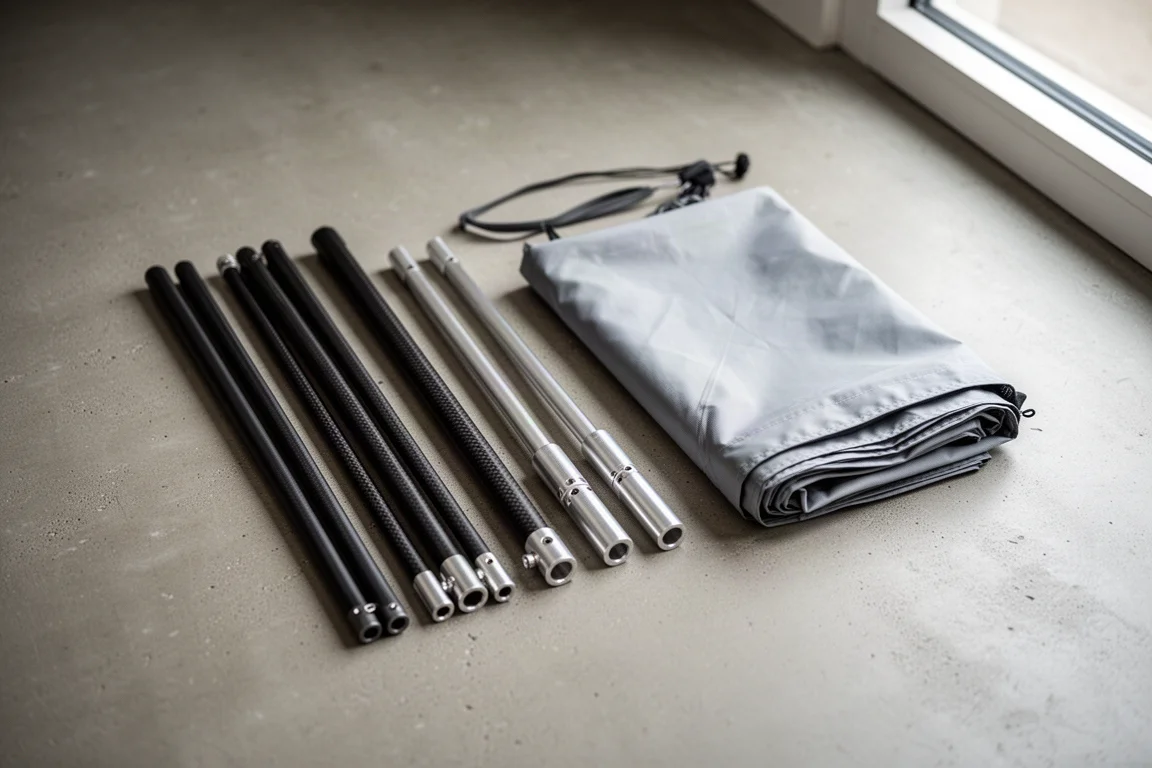
Carbon fiber poles are the second major advantage, and they are standard rather than an optional upgrade. On many other tents, carbon fiber is a premium add-on that pushes the price up considerably. The X-Dome 1 includes it and still lands below several well-known freestanding competitors. Carbon fiber also flexes more readily than aluminum in wind, which helps the structure absorb gusts instead of resisting them.
Pitching options that suit bad weather
The poles on the X-Dome 1 sit outside the fly rather than between the fly and the inner tent, which is unusual for a double-wall design. That single decision opens up several pitching sequences: lay the fly out, attach the four corners, clip the inner in place, or pitch the fly alone as quick cover. Fly first, fly and inner together, and fly only are all possible without a footprint.
There is also a nod to the trekking pole shelters in the same line. A trekking pole can be attached to the center crossbar to add strength. For most trips that is overkill, but if strong wind or an early snowfall is in the forecast, the extra rigidity is worth the minute it takes to set up.
Interior space and the wide single door
There is one door, and it is very wide. Once the panels are tied back with the magnetic tiebacks, it effectively removes a wall from the tent, which is a detail rarely seen on a freestanding shelter. Combined with the wedge-shaped floor and the vestibule cut-out, the interior feels considerably larger than the footprint suggests.
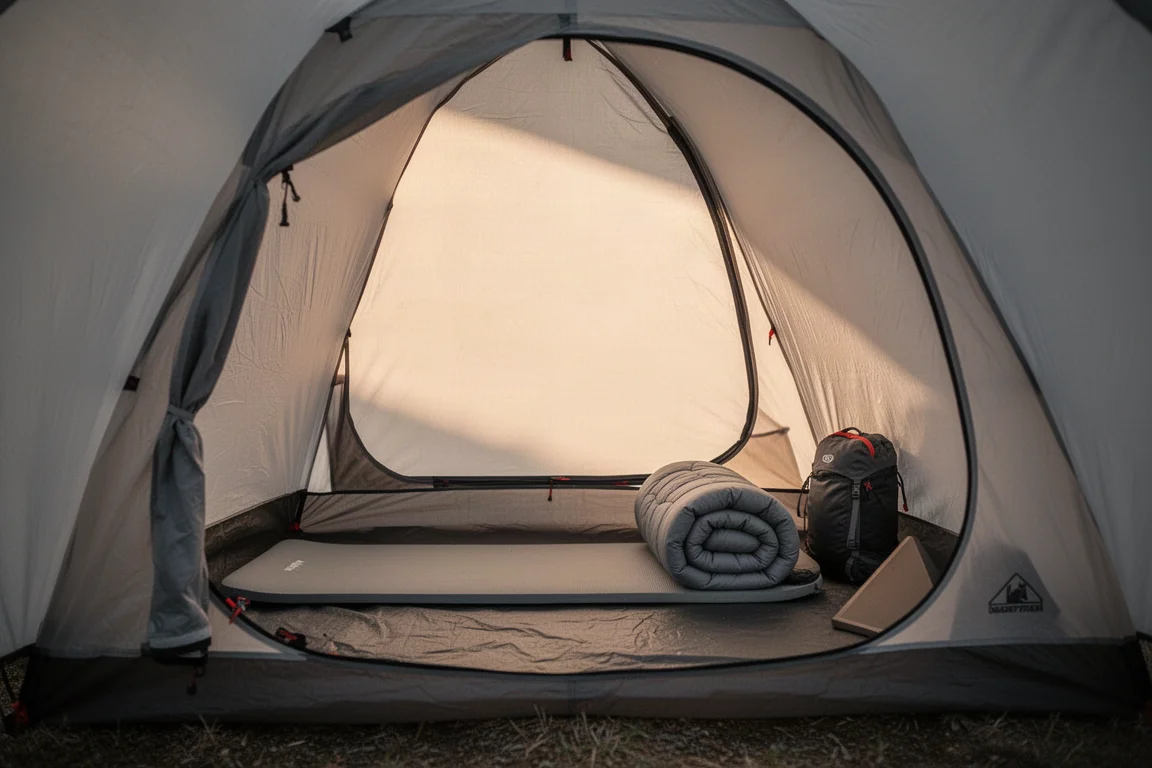
The trade-off is deliberate. Two doors on a one-person tent add weight and split the usable volume, and this design avoids both. The result is a shelter that feels open at the entrance and gives longer campers the option of sleeping sideways across the floor.
Things to consider before buying
The pole set used for this early prototype was hand assembled, and the small aluminum sleeve that joins two pole sections came loose. A loose-fitting pole splice was used to keep the tent standing, and the pole later snapped when a stake pulled free in gusty conditions and the splice concentrated stress on the tube. Durston states that production poles are properly glued, and the prototype was assembled by hand rather than on a production line.
Even so, the episode raises a fair question about field repairs. Carbon fiber flexes more than aluminum in wind, which is part of why it performs well, but it tolerates point loads less gracefully. A loose joint or an oversized splice can concentrate stress in a way a comparable aluminum pole might survive. If a sleeve ever works loose on a trip, splicing it cleanly in the field is not guaranteed.
Two smaller points are worth planning around. First, the tent stands without stakes, but any real breeze will move it, so treat four stakes as the practical minimum. Second, the single-door layout is a considered choice rather than an oversight, and anyone who values a second exit should weigh that before ordering.
Buying advice
If freestanding pitching is a genuine priority, the X-Dome 1 makes a strong case. It delivers a self-supporting structure, carbon fiber poles, and fly-first pitching without a footprint at a listed $369, which is roughly $50 less than comparable freestanding tents such as the Copper Spur and the Nemo Dragonfly.

The decision usually comes down to how you camp. On soft ground, with trekking poles already in your pack, a trekking pole shelter remains lighter and often cheaper. On rock, compacted soil, or exposed platforms, the ability to stand the tent up and hold it with four stakes is worth real money and real time.
Before a first trip, check the pole joints and sleeve fittings, and consider carrying a small repair kit sized for the poles. Treat the trekking pole crossbar as an option for exposed or shoulder-season nights rather than an everyday necessity.
Conclusion
The Durston X-Dome 1 takes the freestanding ultralight tent in a direction few others have attempted: carbon fiber poles as standard, a true self-supporting pitch, fly-first setup without a footprint, and a roomy single-door interior at a price below several established competitors. The prototype pole failure is a reminder to inspect joints and to think about field repairs, but it does not point to a design flaw in the tent itself. For backpackers who want freestanding reliability without carrying a heavy shelter, it is one of the most interesting options available.
Product link
View more details for Durston X-Dome 1
This product is mentioned in the review. Check the specifications, options, and compatibility before buying.
View more details for Durston X-Dome 1Further reading
Related Reviews
Camping Tents
3F UL Gear Taiji Two-Person Tent Review: Field Waterproofing Results and Buying Advice
The Taiji pairs an attached fly with a removable inner, but sustained rain exposed untaped vent seams that need sealing before this shelter can be trusted.
Camping Tents
3FUL Gear Lanshan 2 Pro 4-Season Review: A Sub-$200 Single-Wall Trekking Pole Tent
An early look at the 3FUL Gear Lanshan 2 Pro 4-Season, covering its straightforward pitch, generous interior space, and the condensation and seam-sealing questions that come with any single-wall shelter.
Camping Tents
Alps Mountaineering Lynx 1-Person Tent Review: Big Value in a Small Budget Tent
A close look at the Alps Mountaineering Lynx 1-Person Tent, covering real interior dimensions, materials, setup time, ventilation limits, and who should buy it.