Backpacks
Durston Gear Kakwa 40 Review: An Ultralight Pack That Holds Its Shape
A 1 lb 13 oz ultralight backpack with a crossbeam frame and frame-anchored load lifters, plus the volume and availability caveats worth checking first.
Introduction
Backpacks tend to fail in one of two directions. Ultralight packs are light because the structure has been stripped out, and once they are loaded they round out into a cylinder. That shape pulls the shoulder straps away from the back and concentrates contact into a small, uncomfortable patch. Traditional packs avoid the problem with large rigid frames, but they pay for it in weight, and they usually keep adding pockets, zippers, compartments and loops until the pack is heavier than the trip requires.
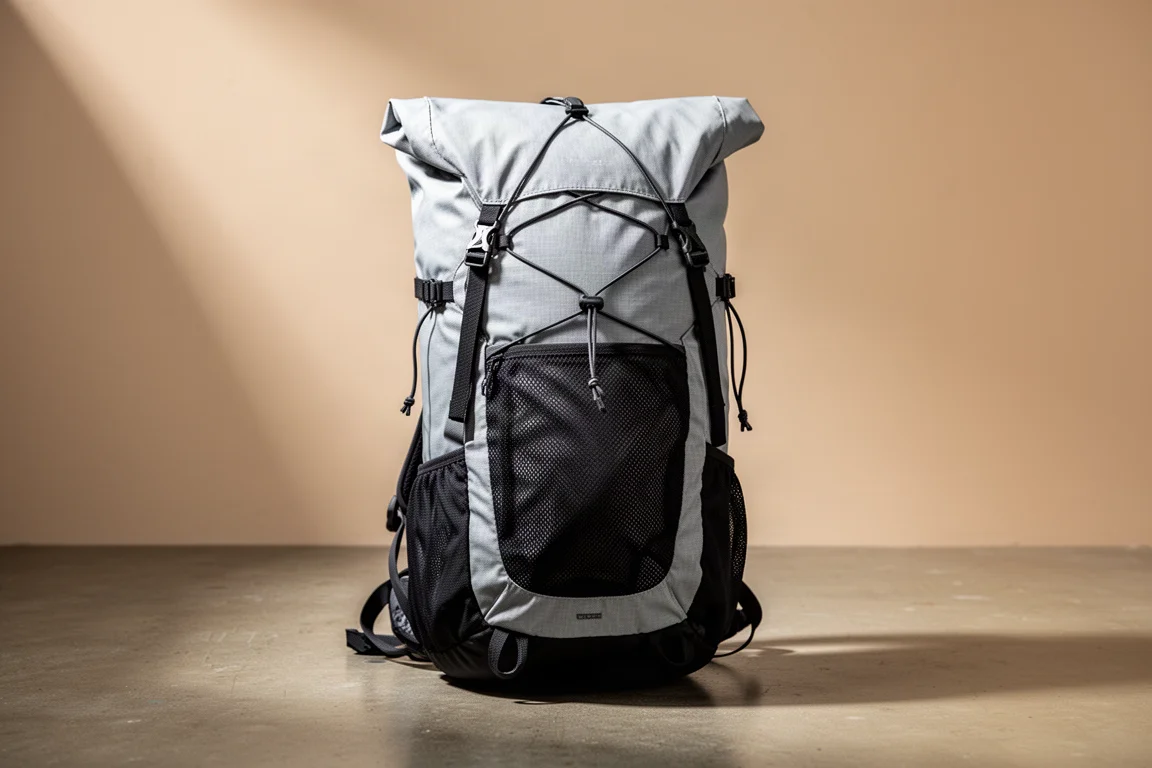
The Durston Gear Kakwa 40 sits between those two approaches without giving up its ultralight credentials. It is a genuine ultralight pack at 1 lb 13 oz, comfortably under the 2 lb mark, and it retains a framed structure that keeps its shape under load.

The result is a pack that carries more like a framed traditional pack than its weight suggests, while keeping the roll-top closure and mesh-pocket layout that ultralight hikers expect. It is not a universal answer for every trip, and the volume limits are real, but the design decisions behind it are unusually deliberate.
Who This Pack Is For
The Kakwa 40 is aimed at hikers who count grams but dislike the way stay-only ultralight packs carry once they are fully loaded. The frame and load lifters give it a suspension that can potentially handle heavier loads than a typical ultralight pack, which makes it a sensible option for anyone easing into ultralight while gradually upgrading the rest of their kit.
The catch is capacity. At 40 L, the pack rewards a compact and well-tuned gear list. Hikers whose trips involve bulky insulation, a bear canister, or a lot of spare gear will find the volume restrictive long before they find the weight restrictive.
Main Strengths
The Kakwa 40’s advantages come down to three things: the frame, the load lifters, and a feature set that stays practical without adding bulk.
A Frame That Keeps Its Shape
Most ultralight packs do not have a frame in the traditional sense. They use two straight aluminium stays that transfer weight to the hips but offer no horizontal structure, so the fabric between the stays simply takes on whatever shape the gear inside dictates. Traditional packs solve that with large rigid frames, at a considerable weight cost.
The Kakwa 40 takes a third route. Its frame provides the lateral support needed to move weight to the hips and adds a horizontal crossbeam that stops the pack from rounding out into a cylinder. The stays are not straight either. They narrow at the bottom to match the small of the back and spread at the top to make solid contact with the shoulders, following the ergonomic curve of the spine.
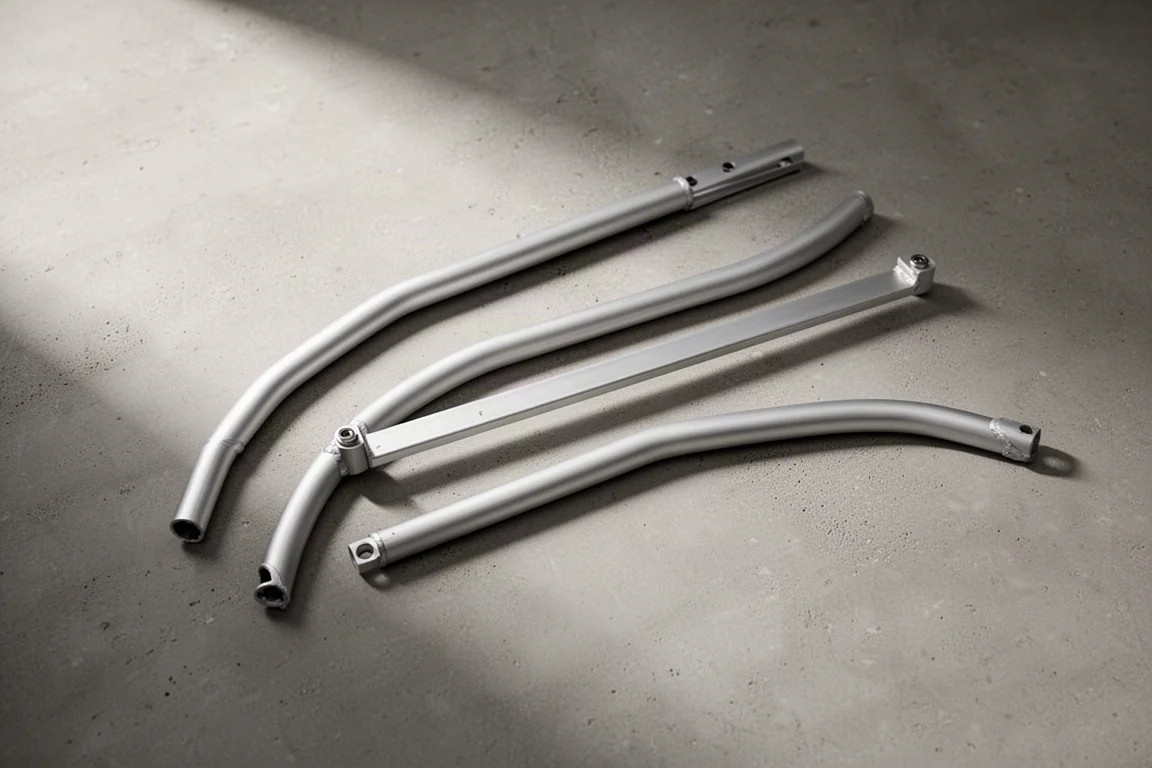
The tubing is 8 mm hollow aluminium, chosen because it offers more strength for less weight than a solid bar. That matters beyond the specification. Stays that can be bent by hand to match a spine can also be bent back by a loaded pack, which undoes the fit. A stiffer structure holds the shape the design intends, so the gear inside cannot quietly deform the frame.
Load Lifters That Actually Do Something
Load lifters have a reputation for making a noticeable difference on a loaded pack, and the Kakwa 40 gives them something solid to pull against. They are anchored directly to the cross-section of the frame, so they stabilize the load, draw it in close to the back, and help lift weight off the shoulders and onto the hips through the frame itself. It is a simple system, and it noticeably improves how the pack suspends a load.
Ultralight Features That Work on the Trail
The rest of the pack follows familiar ultralight conventions: a roll-top closure, a Y-strap compression strap, two side water pockets, and a centre mesh pocket. The right-hand side pocket has a low cut that makes it easy to reach a water bottle without stopping. The left side carries a double pocket that turns out to be more useful than it looks, providing a quick and secure place to stash items such as trouser legs removed mid-hike, without taking the pack off to hunt for a pocket.
The main fabric is Ultra 200, a relatively new material that behaves like a hybrid of Dyneema and nylon. It is manufactured with some of the same components as Dyneema composite fabric, and it is five times stronger and five times more abrasion and puncture resistant than Dyneema. The trade-off is colour. Ultra 200 is only produced in greys and whites, so the Kakwa 40 arrives in a grey and black scheme rather than the more distinctive finishes used on Durston Gear’s earlier packs.
Things to Consider Before Buying
The centre mesh pocket is on the small side for a 40 L pack. On a pack like this, the mesh pocket usually swallows quick-access items such as rain gear, a rain cover and a first aid kit, plus anything that will not fit in the main compartment. A tighter stash pocket, combined with the overall volume, means the kit has to be dialled in before departure. There is no room for bulky or spare gear.
Volume is the bigger consideration. Cold-weather trips with bulky insulation, or routes that require a bear canister, can push a 40 L pack past its limits, and the suspension’s ability to carry more weight than a typical ultralight pack does not help when the gear simply will not fit. Hikers who regularly carry a canister or heavy winter layers will likely need a larger pack.
Colour is a matter of taste rather than performance. The Ultra 200 fabric restricts the palette to greys and whites, and the resulting grey and black scheme will not appeal to everyone.
Availability is worth checking early. Durston Gear products have a recurring record of limited stock, so it is sensible to confirm that the pack is in stock before building a trip around it.
Buying Advice
The Kakwa 40 makes the most sense for hikers with a compact, well-tuned ultralight kit who want a framed carry without the weight of a traditional pack. The crossbeam frame, the curved stays and the frame-anchored load lifters are the reasons to choose it over a stay-only ultralight pack, and at 1 lb 13 oz there is no meaningful weight penalty for that structure.
It is a less obvious fit for anyone whose trips involve bulky insulation, a bear canister, or a generous amount of extra gear. In those cases, additional capacity will matter more than the weight saving, and a larger pack is the more practical purchase. It is also worth confirming stock before planning around it, since availability has been the recurring constraint on Durston Gear packs.
Conclusion
The Kakwa 40 earns its place by solving the shape problem that undermines most ultralight packs. A crossbeam frame, ergonomically curved stays and frame-anchored load lifters let it carry a load close to the back at a genuine ultralight weight of 1 lb 13 oz, while Ultra 200 fabric adds strength and abrasion resistance that should hold up over time. The caveats are honest ones: a small centre mesh pocket, a 40 L volume that will not stretch to bulky gear or a bear canister, a colour range limited to greys and whites, and stock that has historically been hard to pin down. For a hiker with a dialled-in kit, those trade-offs are easy to accept.
Product link
View more details for Durston Gear Kakwa 40
This product is mentioned in the review. Check the specifications, options, and compatibility before buying.
View more details for Durston Gear Kakwa 40Further reading
Related Reviews

Backpacks
Best Backpacks 2026: Laptop Protection, Durability, and Comfort Compared
We tested 12 backpacks from $18 to $350 for laptop protection, durability, back padding, comfort, zipper smoothness, and water resistance.
Backpacks
Best Backpacks Under ₹500 in India: Five Practical Options Compared
Five backpacks tested side by side, from budget-friendly to premium Indian brands. Real strengths, trade-offs, and honest buying advice for daily use.
Backpacks
Decathlon Trek 100 70L Backpack Review: Serious Value for Backpacking
A 70-litre backpacking pack with a torso system you can adjust while wearing it, a rigid frame, and a 10-year warranty for $120.