Outdoor Power Equipment
DR Pilot XTP Lawn and Leaf Vacuum Review: Self-Propelled Leaf Cleanup That Fills Bags for You
A hands-on look at the DR Pilot XTP self-propelled lawn and leaf vacuum: what it does well, where it needs attention, and who it makes the most sense for.
Introduction
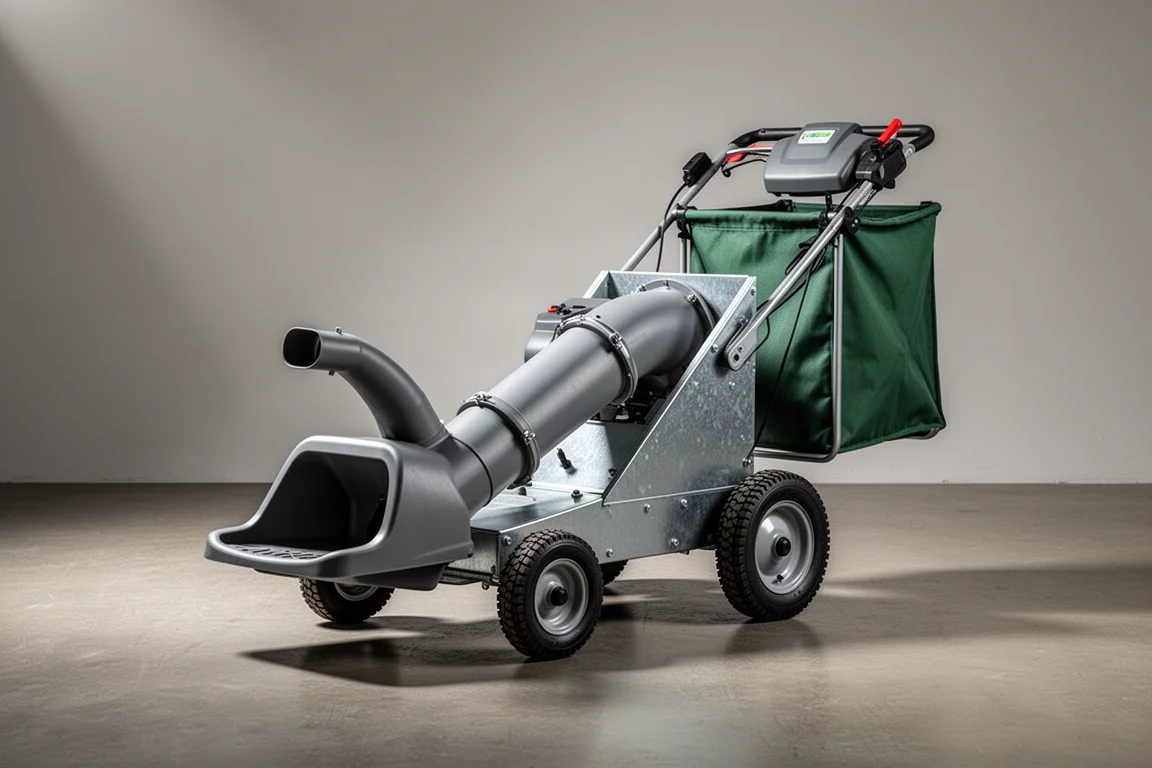
Raking leaves into small piles, stuffing them into paper bags, and hauling them to the curb is one of the least enjoyable parts of fall yard care. The DR Pilot XTP lawn and leaf vacuum is built to take most of that work off your hands. It is a self-propelled machine that vacuums leaves off the ground, shreds them, and packs them directly into a bag, so the bulk of the labor is reduced to walking behind it and swapping bags when they fill.
This review walks through how the machine is set up, how it performs on different parts of a yard, what to watch out for, and whether it is worth the space it takes up in your garage.
How the DR Pilot XTP Is Set Up
The Pilot XTP is powered by a DR 173cc engine, a little over four horsepower. There is an electric start, and if that ever fails, a pull start on the opposite side serves as a backup. Before first use, you need to add a little over half a quart of oil and check the level, and the gas fill sits at the top of the machine.
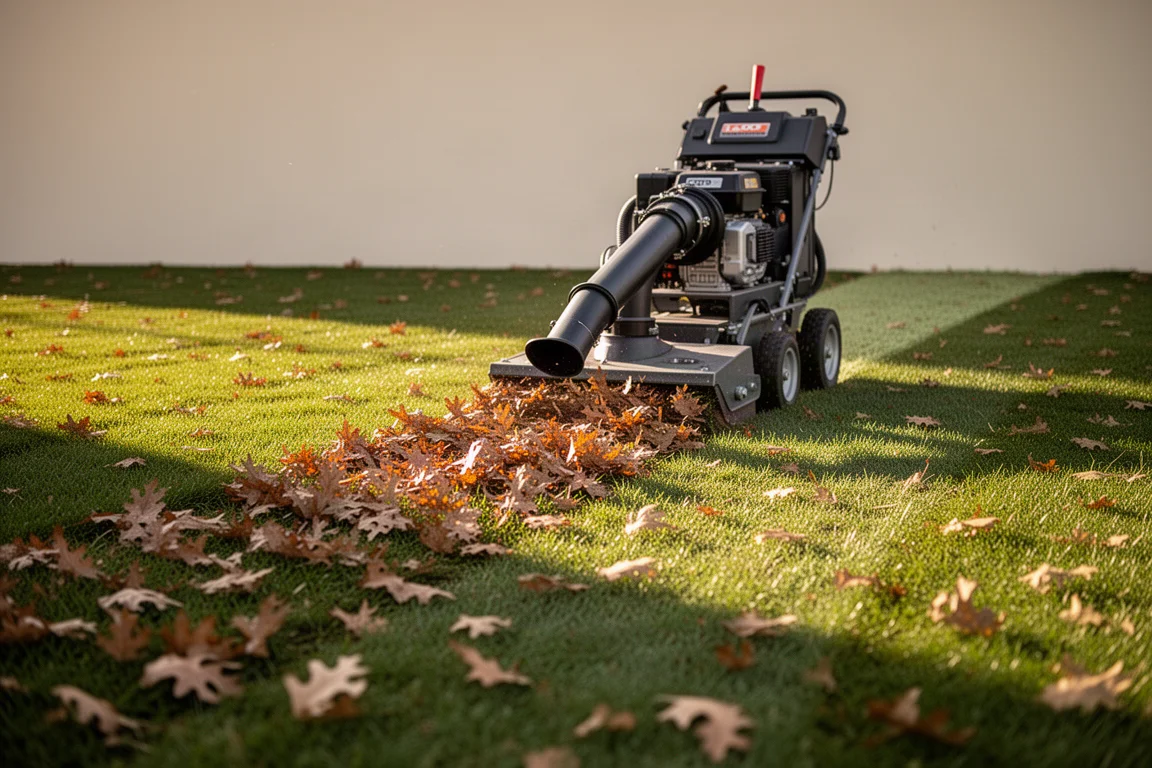
The vacuum intake at the front is plastic, so it can bounce off trees and obstacles without damage. The intake height adjusts from its lowest setting to its highest, letting you match the machine to your yard and the depth of the leaf cover. Other controls include a choke, an on/off switch with the center position being on, and an air filter that deserves regular attention since chewing up leaves makes a mess of it over time. Checking it at least annually is a sensible habit.
One detail worth knowing: the shredder side of the machine can handle sticks up to 1.5 inches in diameter, though it does not pull wood in the way a dedicated shredder would.
Working Through Heavier Leaf Cover
On a lightly covered hillside, the Pilot XTP made quick work of a thin leaf layer and shredded it thoroughly, leaving a visibly clean strip next to untouched grass. The real test came in a denser area with heavier oak leaf cover. The machine picked up the first rows impressively, then seemed to stall, but the bag had simply packed full to the top.
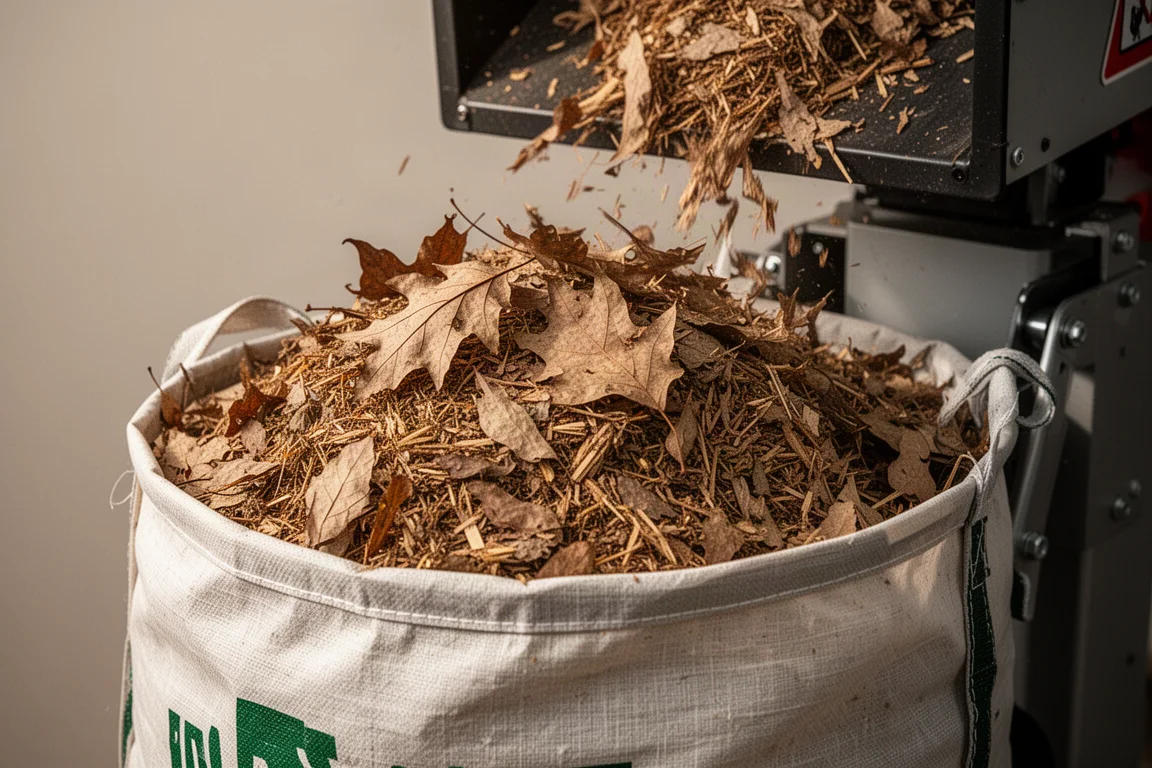
That is not a serious problem. With the engine off, you can pull the bag out, empty it, clear leaves from the top of the intake by hand, and restart. Knocking on the tube helps clear leftover leaves, and the machine picks up where it left off. In that same area it had enough suction to lift acorns off the ground along with the oak leaves, and it cleaned the area up well.
The bag system takes 30-gallon bags, holds up to 50 pounds of leaves, and the side holder can store up to 10 bags at once. Loading a bag is straightforward: bring it up and around, pull it over the top, and close the holder. One practical tip: stop the engine occasionally and push the leaves down in the bag. The machine compacts well, and you can fit noticeably more in each bag before swapping. Dry larger leaves sometimes escape full shredding, but overall the mulching performance is solid.
Using It on Hard Surfaces
A genuinely useful capability is that the Pilot XTP works on hardscape. It rolled along asphalt and picked leaves off the driveway and sidewalk, which means it can effectively replace a blower for many people. If your routine is blowing leaves off the sidewalk and driveway edges, this machine lets you vacuum them straight into a bag and carry them right to the curb.
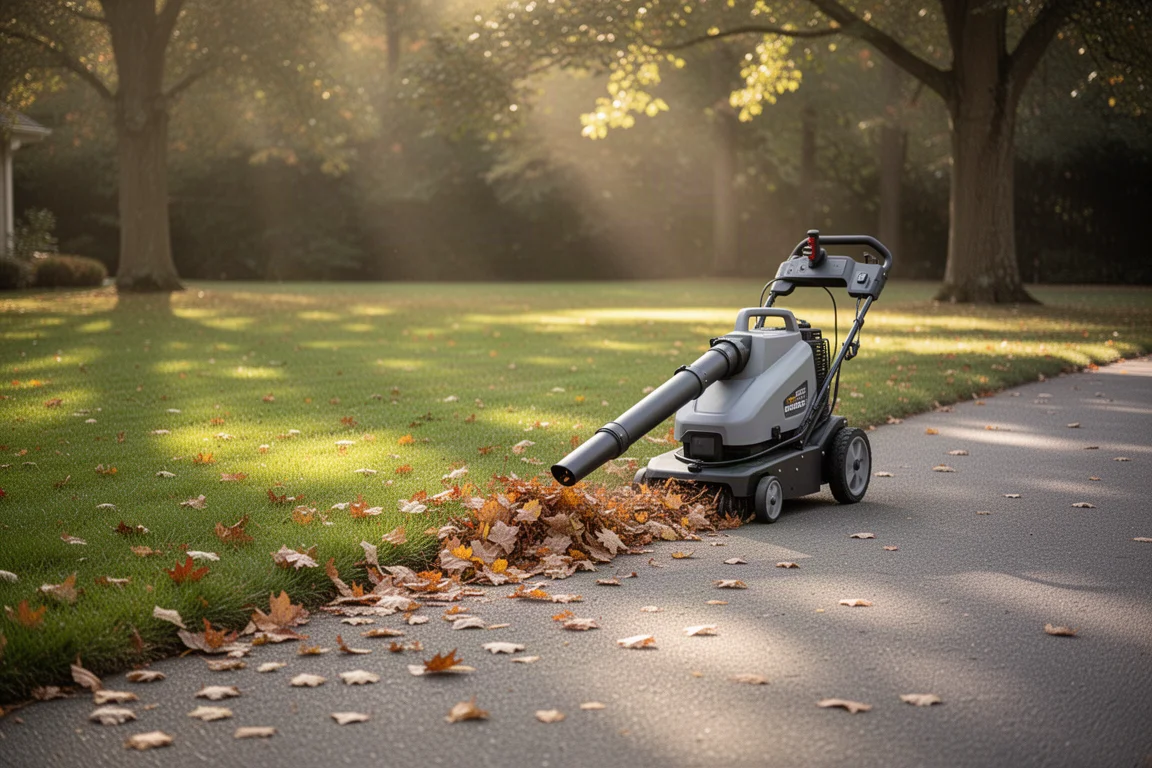
For anyone who currently uses rakes, claws, or a blower plus manual bagging, the appeal is clear: the machine fills the bags for you and saves a lot of bending over. Just be realistic about bag capacity, since a thick layer of leaves fills a bag faster than you expect, and an overfull bag is harder to pull off the holder.
Storage and Seasonal Maintenance
For a machine with this footprint, storage is better than expected. The plate at the bottom that holds the bag pushes up out of the way, and the side knobs let you adjust the handle height for comfort. Loosening them further lets the handles angle forward so the bagger attachment lifts and the whole unit stands nearly vertical. The bag holder can even hold other lawn tools like brooms if you want to squeeze more value out of that footprint.
At the end of the season, clean the machine thoroughly, remove leaves stuck to it, and store it properly. The manual recommends fuel with E10 or 10% ethanol or less; using a stabilized fuel with a fuel stabilizer additive helps prevent the fuel from going stale or collecting water over the winter. Following the storage tips in the owner’s manual makes next-season starting trouble-free.
A word on safety: wear hearing protection, eye protection, and gloves, especially when feeding wood into the shredder. You do not want a stick pulled out of your hand or kicked back at you.
Conclusion
For anyone whose main fall chore is filling bags of leaves and getting them to the curb, the DR Pilot XTP is a genuinely practical machine. It vacuums, shreds, and bags leaves with little effort, handles sticks up to 1.5 inches, works on both grass and hard surfaces, and can take the place of a blower in many yards. Storage is manageable, and the price is reasonable for what it does. If bagging leaves is the job you dread most, this is the kind of machine that turns it into a much shorter afternoon.
Product link
View more details for DR Pilot XTP Lawn and Leaf Vacuum
This product is mentioned in the review. Check the specifications, options, and compatibility before buying.
View more details for DR Pilot XTP Lawn and Leaf VacuumFurther reading
Related Reviews

Outdoor Power Equipment
Best Cordless Chainsaws 2026: EGO, Milwaukee, and Stihl Compared
Three flagship battery-powered chainsaws from EGO, Milwaukee, and Stihl go head to head in cutting speed, power, weight, and price.

Outdoor Power Equipment
Best Cordless Leaf Blowers 2026: Nine Models Put to the Test
We tested nine leading cordless leaf blowers from Ryobi, STIHL, Toro, EGO, Husqvarna, DeWalt, Makita, Milwaukee, and Echo to find the best blowing force, run time, and value.
Outdoor Power Equipment
Amazon Big Spring Sale 2026: Best Outdoor Power Equipment and Backyard Deals
Cordless mowers, blowers, grills, and portable power on sale this spring, with practical advice on which packages are actually worth buying.