Multitools
DL30 Multitool Review: A Leatherman Surge Alternative That Costs a Fraction of the Price
The DL30 borrows the Surge's proven layout, adds a smarter bit system, and lands at around $37 to $40. Here is how it compares, and where it still needs to prove itself.
Introduction
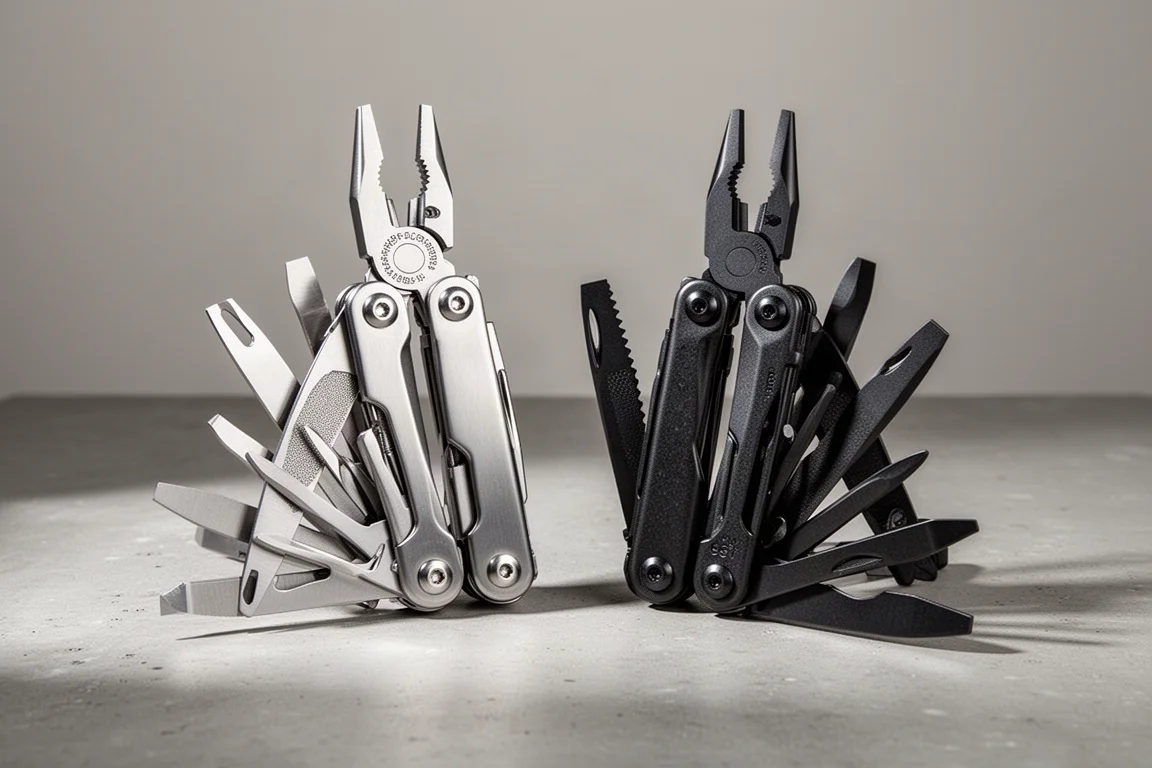
The multitool market has been flooded with clones of the Leatherman Wave over the past couple of years, and none of them have made much of a dent in Leatherman’s popularity. That is not surprising. Leatherman’s build quality is genuinely good. But the DL30 is a different kind of clone, and one that could actually shake things up. Instead of copying the Wave, it takes aim at the Leatherman Surge, a large-format multitool that has been around for more than two decades.
Because the Surge’s patents have long since expired, it is completely legal for another company to produce a tool in this format. The DL30 takes advantage of that, and on paper the proposition is hard to ignore: a similar tool at roughly a quarter of the price, with a bit system that is arguably easier to live with.
This is an initial, surface-level review rather than a comprehensive one. Not enough people have used this tool long enough to know how the heat treatment and internal components will hold up over years of use. That caveat matters, and it shapes the verdict below.
What You Get in the Box
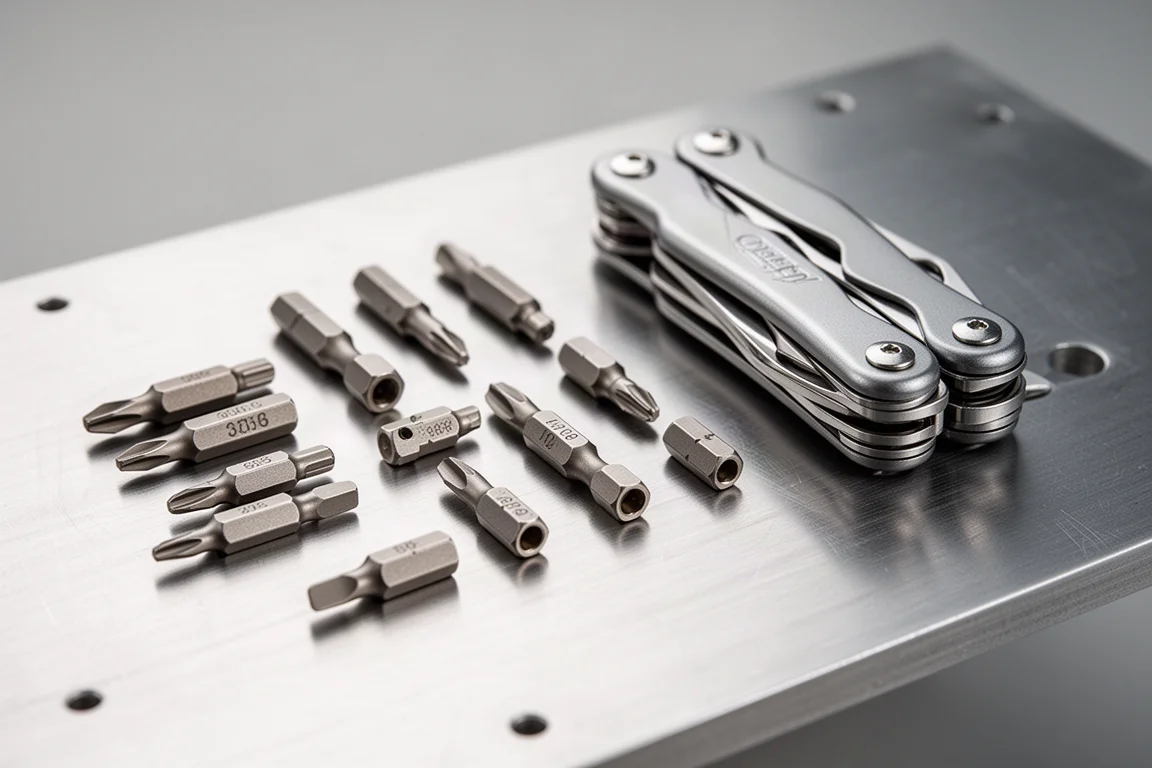
The DL30 arrives with more accessories than most multitools ship with. Alongside the tool itself you get a sheath with side pouches, a simple loop and button closure, and an elastic front pocket for storing bits. In those pouches you get two saw blades and a full bit kit. The bit selection is genuinely useful: Torx security bits including what appears to be T10, T15, T20, and T25, a variety of flathead bits, hex drivers, and one security-type bit for certain panels.
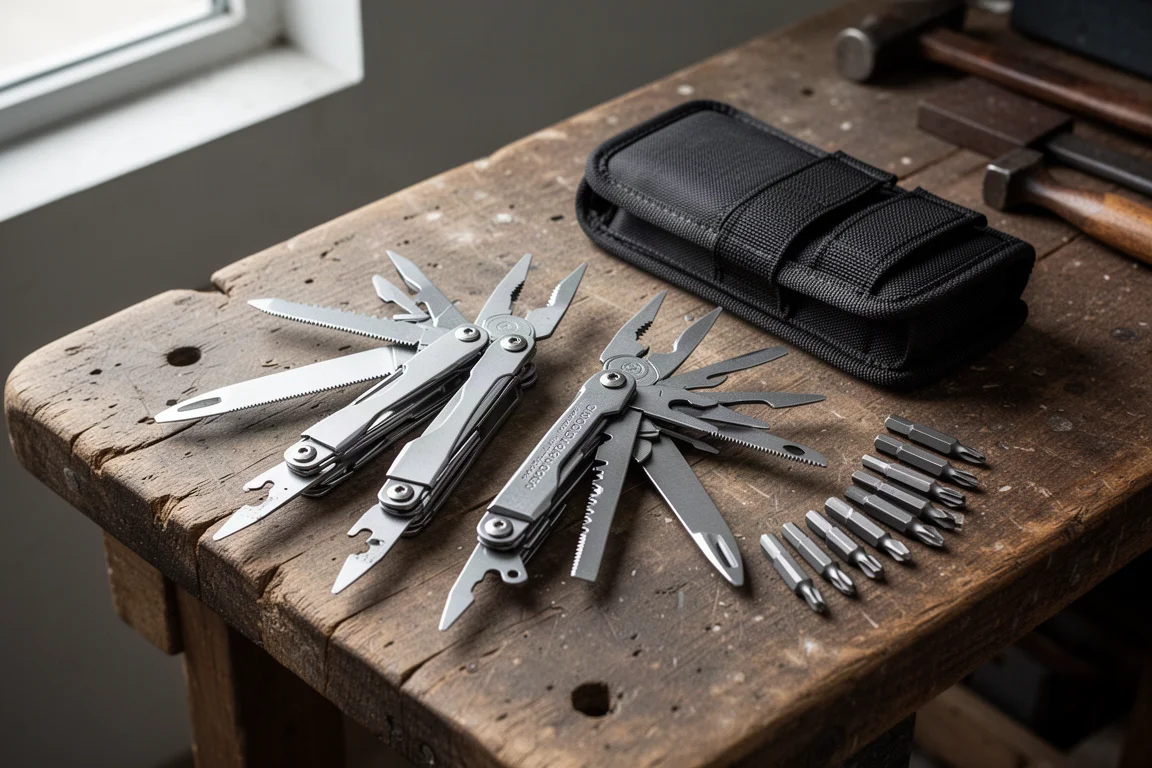
The sheath design is not perfect. The bits catch slightly as you slide them into the front pocket, but it works and keeps everything in one place.
The other side of the sheath holds something genuinely appreciated: a spare set of replaceable wire cutters along with shims, spare screws, and the small tool needed to swap them. Those cutters appear to be identical to the ones used on several other multitool brands, which makes sourcing replacements far easier than it used to be. The package contents easily justify a chunk of the asking price.
Weight and Build: How Close Is It to the Surge?
Measured side by side, the DL30 comes in at 324 grams versus about 341 for the Surge, a difference of roughly 17 grams. In inches, that is about 11.4 versus 12. Those are close numbers, and part of the gap may come from the Surge’s listed weight including add-ons. In the hand, the two tools feel like they belong to the same size class.
There is a small amount of up-and-down blade play on both tools, slightly less on the Leatherman in this particular comparison. Neither shows any side-to-side play, which is the kind that actually matters for cutting. This kind of variance can differ from unit to unit, so treat it as a sample of one rather than a firm verdict.
Blades, Scissors, and File
The straight blade on the DL30 uses 7Cr series steel, while the Surge uses 420HC, which is widely considered one of the best balanced steels for multitool blades. It offers very high toughness with decent edge retention and corrosion resistance, and it remains superior to the 3Cr, 5Cr, or 7Cr steels used in clones. The practical consequence is straightforward: the DL30’s blade will dull faster.
The scissors comparison is where things get interesting. A brand new Surge with a black oxide finish was tested against the DL30, and the black oxide Surge performed noticeably worse than stainless steel Surge variants, with more blade flex and real difficulty cutting through thick paracord with an embedded copper wire strand.
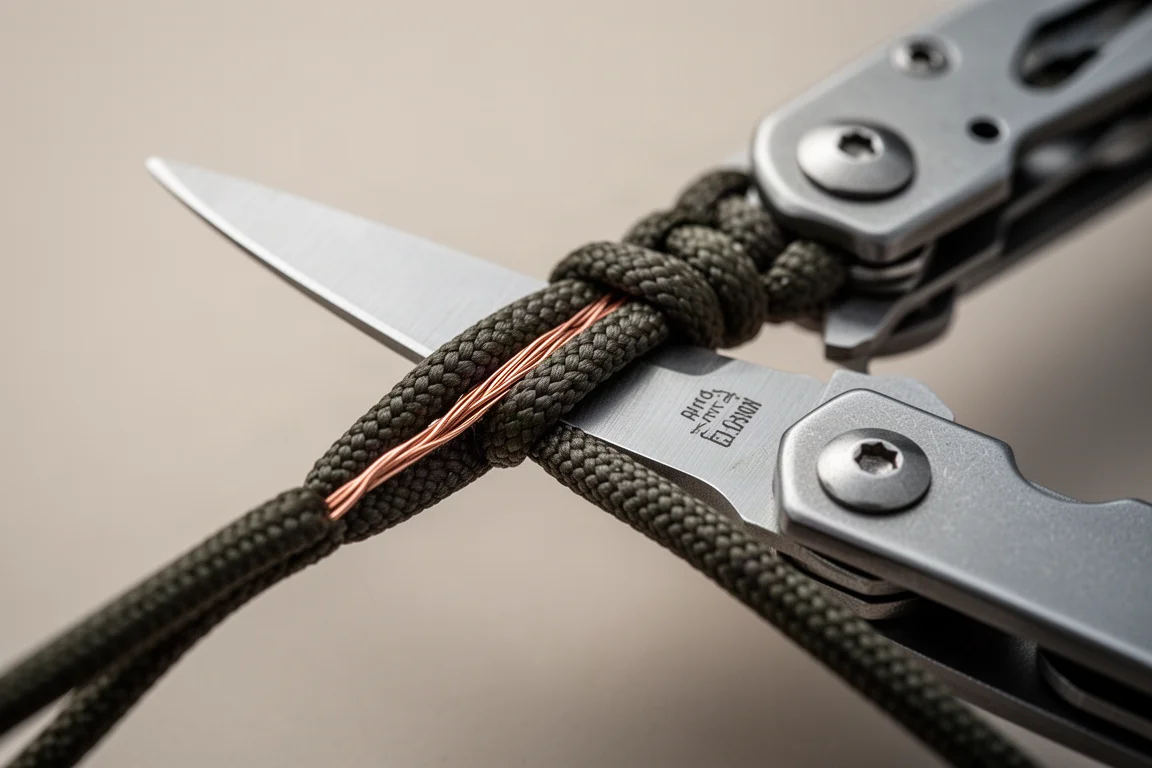
The DL30’s scissors cut paracord cleanly along the entire length of the blade, all the way to the tip, which is an unusually strong result for a multitool this size. With a softer steel, the expectation is that they will dull faster over time.
The serrated blade is nearly identical in design to the Surge’s, with a slightly different cutout shape and some minor burring that is easy to knock off. Sharpness is comparable. The file setup is where the DL30 shows real thought: in addition to two saws, it includes a diamond file with a crosscut pattern that is pleasantly aggressive. On older clones, the diamond coating was often thicker at the edge than in the middle, making the file nearly useless. The DL30’s diamond coating is flat and even, a clear improvement.
The T-shank saw holder uses a different design from Leatherman’s. Leatherman’s holder locks everything more securely, while the DL30’s is easier to manipulate and has about the same amount of play. One important compatibility note: the DL30 accepts any standard T-shank blade but will not accept Leatherman’s own thicker blades, and vice versa. With modification you could make them cross-compatible, but given that a Leatherman diamond file kit costs about $10 and the DL30 itself was purchased for about $37, there is little reason to bother.
Inside Tools and Small Details
On the inside tools, the frame width of the DL30 is slightly wider to accommodate four small tools where the Surge carries three, plus the bit holder and the can and bottle opener combo. The DL30 includes a large flathead, a small flathead, and a reamer. The reamer performs about the same as the Surge’s. The flatheads, however, are thinner than they should be relative to their width, particularly the large one, to the point where grinding them thicker would be a reasonable modification.
The most notable miss is the wire stripping section. The Surge’s V-cutter is much wider and accommodates a broader range of wire sizes, and it has a reputation as a very good wire stripper. The DL30’s version is clearly the lesser of the two here.
The Bit System: Where It Pulls Ahead
This should have been a blowout in favor of the Surge. Leatherman’s flat proprietary bits are a sound design in principle. The problem is availability. The Leatherman bit kit, which costs about $30, has been sold out on Leatherman’s website for two months with no restock date in sight, and secondary market prices have reached as high as $90. Individual bits cannot be bought separately, so breaking one small Torx bit means buying an entire kit. Stock has been pulled from nearly every retailer in recent years, with limited availability elsewhere.
The DL30 uses standard ball detent double-ended bits instead. These are available everywhere: hardware stores, online retailers, any hardware aisle in the United States. They include bit types Leatherman simply does not offer, including a full tamperproof set, and magnetic driver handles that take the same bits are inexpensive and widely available.
A small neodymium disc magnet (1mm x 6mm flat disc) placed in the bottom of the DL30’s bit holder adds magnetic retention while still allowing the ball detent to function, and it also enables the holder to grip standard hex bits.
The math is stark. Around $37 to $40 for the DL30 plus a $27 tamperproof bit set puts you under the cost of the Leatherman bit kit alone at secondary market prices. With the Surge currently listed at $150 and its bit kit and bit extender frequently out of stock, a full working Surge setup can run closer to $180. The DL30 is not necessarily a better tool, but as a complete working system, the economics are overwhelming.
Long-Term Durability Is Still an Open Question
The honest limitation of this review is longevity. It is possible that after two or three years the DL30’s plier heads or internal components fail and the tool becomes little more than a paperweight. Heat treatment quality, pivot wear, and cutter life are unknown quantities that only extended use across many owners can answer. Early community feedback on this generation of clones has been mostly positive, but that is not the same as proven durability.
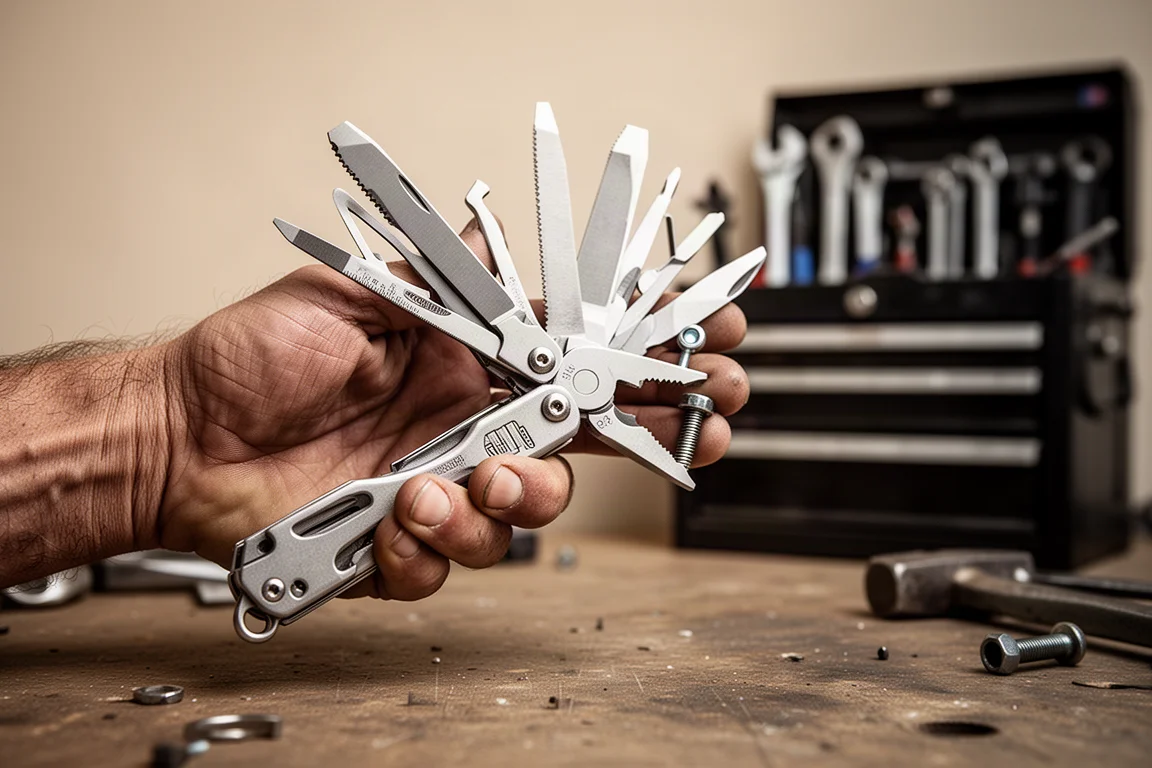
Until long-term reports come in, the fairest framing is this: the DL30 makes an excellent backup or car-kit multitool today, where the availability of standard bits and spare cutters matters more than premium steel. Whether it can replace the Surge as a primary everyday tool is a question that needs another couple of years to answer.
Buying Advice
If you already own a Surge and its ecosystem works for you, there is no urgent reason to switch. The Surge is a phenomenal tool with superior blade steel, a better wire stripper, and a more secure saw holder. The frustration is entirely about the add-ons: with the bit kit and bit extender both hard to find, a new Surge purchase is currently a purchase of a tool whose full function depends on parts you may struggle to source.
If you are starting fresh, or want a capable large multitool for a car or toolbox where replacements are easy to find, the DL30 at around $37 is a remarkably complete package. The sheath, spare cutters, saw blades, and generous bit kit mean it works out of the box, and standard ball detent bits are available anywhere.
Conclusion
The DL30 is the most compelling challenger to Leatherman’s dominance that the clone market has produced. It matches the Surge’s size and layout closely, its scissors and file punch above their price, and its standard-bit system sidesteps the supply problem that currently plagues Leatherman’s own accessories. What it cannot yet claim is proven long-term durability, and its 7Cr blade steel will dull sooner than 420HC. As a low-risk backup tool, it is easy to recommend. As a Surge replacement, the jury is still out, and it will stay out until real-world users have put real years on these tools.
Product link
View more details for DL30 Multitool
This product is mentioned in the review. Check the specifications, options, and compatibility before buying.
View more details for DL30 MultitoolFurther reading
Related Reviews
Multitools
Victorinox Huntsman Swiss Army Knife Review: 15 Functions for Camp and Everyday Carry
A long-term look at the Victorinox Huntsman, covering what each of its 15 functions does, how the blades and saw perform, and the trade-offs to know before buying.
Multitools
Multitool Cutter Test: Leatherman Arc, Surge, Super Tool 300 and Gerber Center Drive Put to Work
We stress-tested four popular multitools on coat hangers, nails and screws, and found where replacement high-hardness cutters genuinely pay off.
Multitools
Harbor Freight 20-in-1 Multitool vs Leatherman Wave: A $40 Wave Clone Worth a Look
Harbor Freight's new 20-in-1 multitool copies the Leatherman Wave formula closely, and in some areas it improves on it. Here is how the two compare.