Car Care
DIY Detail Envy Glass Sealant Review: Simple Rain Protection for Every Glass Surface
A dedicated glass sealant that makes water fly off windshields faster, cleans glass, and stays easy to apply even in direct sunlight.
Introduction
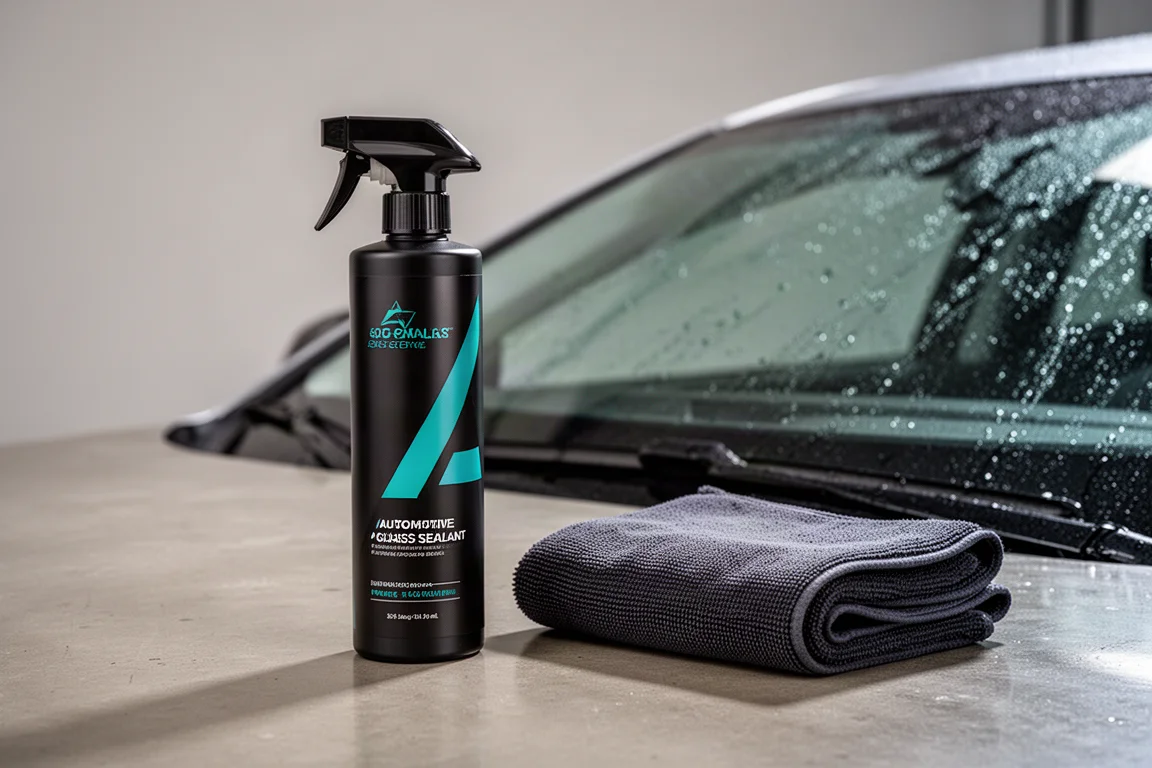
Windshield visibility in rain is one of those things that quietly affects driving safety. When water lingers on glass, it catches headlights, smears wiper streaks, and forces you to concentrate harder than you should. The DIY Detail Envy Glass Sealant is built to change that by making water move off glass as fast as possible.
This is a dedicated glass sealant from DIY Detail, the same brand behind the popular Envy Ceramic Detail Spray. While the ceramic spray can be used on glass and gives excellent beading, the glass sealant takes a different approach. Instead of holding water in tight beads, it encourages water to sheet off the surface quickly, which translates to better visibility at speed.
The product is designed to be simple. There is no curing time, no complicated prep, and it works on any exterior glass surface. For anyone who has ever struggled with rain on the windshield, this is a practical upgrade worth understanding.
What Is the DIY Detail Envy Glass Sealant?
The Envy Glass Sealant is a hydrophobic sealant made specifically for glass. It is not a ceramic coating, and it is not meant to replace one. It is a sealant, which means it sits on top of the glass and provides protection that can be reapplied as often as you like.
The key difference from the Envy Ceramic Detail Spray comes down to water behavior. On glass, the ceramic spray produces strong beading, but those beads tend to stay put. The glass sealant, on the other hand, is engineered to get water moving as fast as possible. When rain hits a treated windshield, it sheets off quickly instead of pooling.
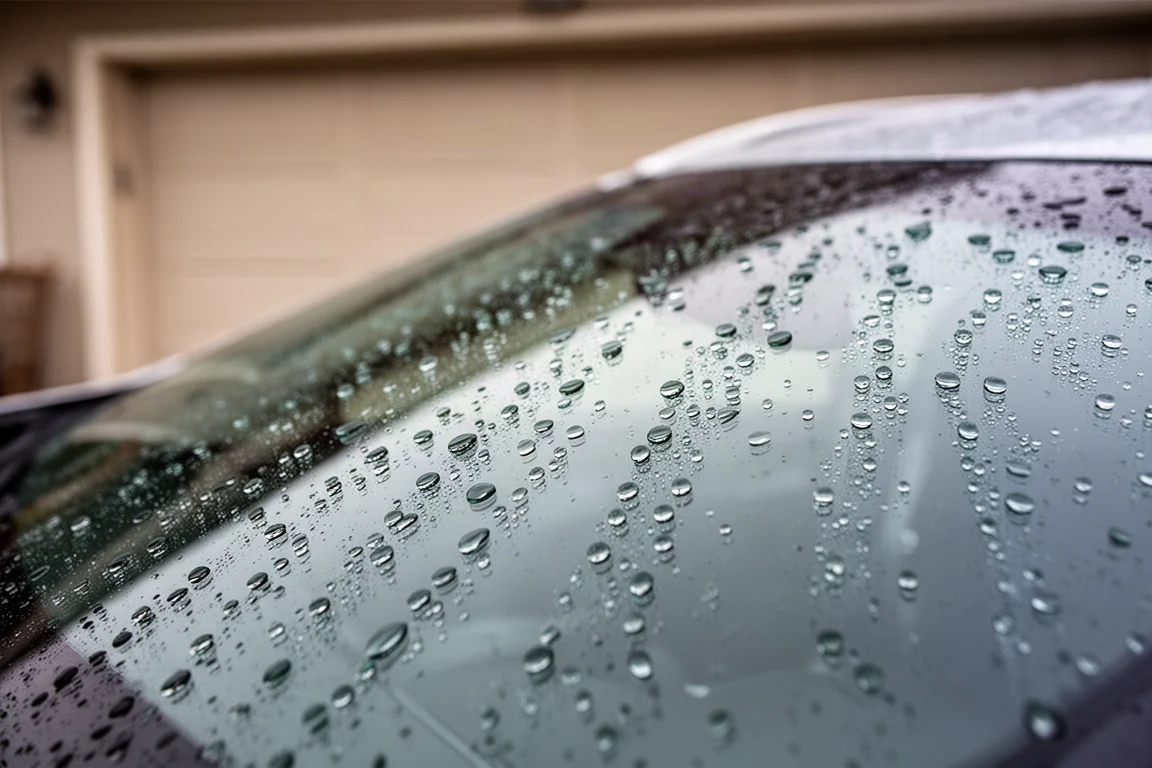
This matters because glass is a very different substrate from paint or trim. Paint is essentially a plastic surface, while glass is much harder and smoother. A product that works beautifully on paint may not behave the same way on glass. The glass sealant is formulated specifically for that surface.
The product also works as a glass cleaner. If you have bugs or grime on the windshield, you can spray it on and wipe it off. It cleans and protects in one step, which makes it a practical addition to a regular wash routine.
How Easy Is It to Apply?
Application is about as straightforward as it gets. On a windshield, one spray per side is all you need. Spread it with a short-nap microfiber towel, flip the towel to a dry side, buff it off, and you are done.
There is no curing time. The product flashes off quickly, which means you can see it disappear as you work it into the glass. After about a minute, it is ready to go. You can even spray water on it immediately to test the hydrophobic effect.
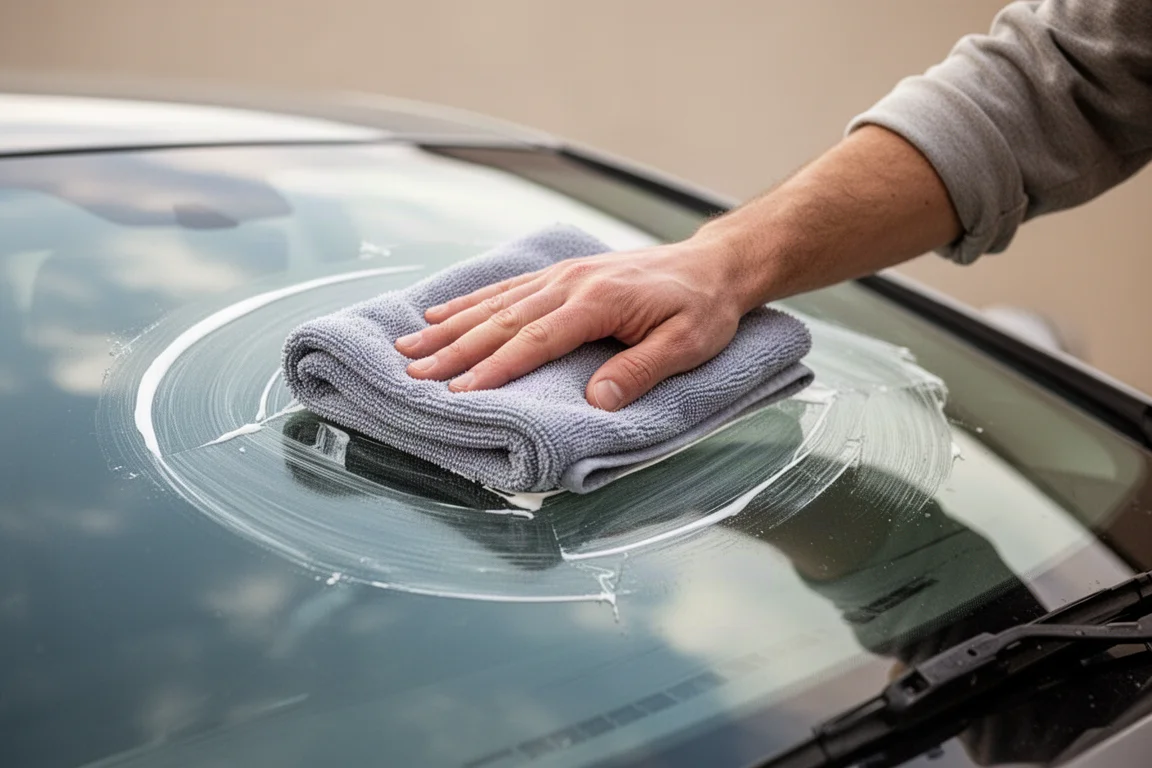
One important note: this is not a drying aid. Some people might assume they can use it to dry their windshield after a wash, but the glass should be dry before you apply the sealant. Once the glass is dry, the application takes less than a minute per window.
The product is also forgiving in direct sunlight. Mobile detailers who work outside do not need to hunt for shade. The sealant still buffs off easily even on a warm surface, which makes it a practical option for professional use.
The Hydrophobic Test: Water Behavior on Glass
To demonstrate the difference, a windshield was split in half. One side was treated with the glass sealant, and the other side was left untreated. Both sides were washed and polished beforehand to ensure a clean surface.
When water was sprayed on, the difference was immediate. The untreated side held water in large pools that stayed stuck to the glass. The treated side showed tight beading and rapid sheeting, with water evacuating quickly even under heavy flow.
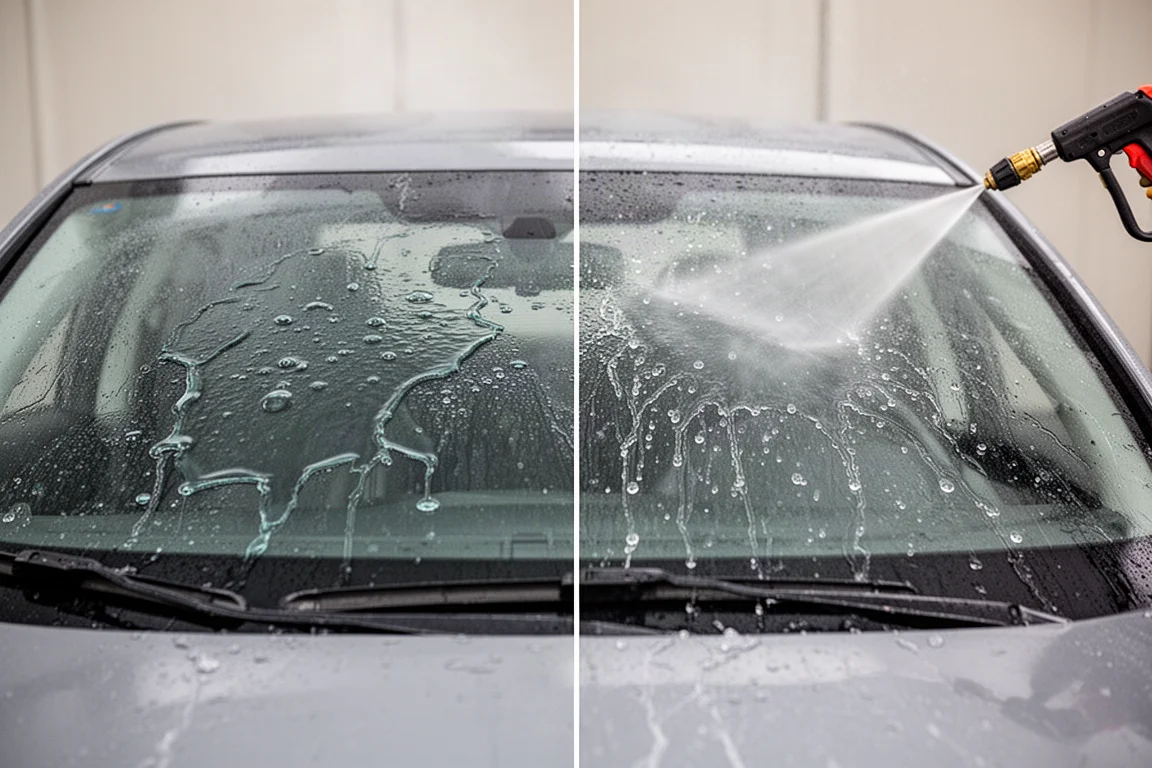
The effect was even more visible with a blower. On the untreated side, water remained clinging to the surface after multiple passes. On the treated side, the majority of the water was gone almost instantly. At driving speeds, that difference becomes even more pronounced.
This is the core value of the product. Water that moves off the glass quickly means better visibility in rain, fewer wiper streaks, and less glare from oncoming headlights. It is a safety benefit as much as a convenience.
How Long Does the Protection Last?
The honest answer is that it depends. The manufacturer does not give a specific durability claim because so much depends on usage. Do you use your wipers often? Is the car stored in a garage? Do you wash weekly or run through a car wash five times a week? All of these factors affect how long the sealant lasts.
The product is designed to be reapplied frequently. If you wash every week, you can apply it every week. The more you apply it, the better the protection gets. It layers on itself, so regular use builds up the hydrophobic effect.
If you need a product that lasts a year or more, a ceramic coating is the better choice. The glass sealant is not meant to replace a coating. It is meant to be an easy, repeatable layer of protection that you can refresh whenever you like.
Where Else Can You Use It?
The glass sealant is not limited to windshields. It works on all exterior glass surfaces, including side windows, rear windows, and mirrors. It can also be used on glass showers and exterior home windows.
There is one place you should never use it: the inside of your car. Hydrophobic products on interior glass can promote fogging. Water vapor condenses into droplets that cling to the treated surface, which can reduce visibility and create a mess on interior trim.
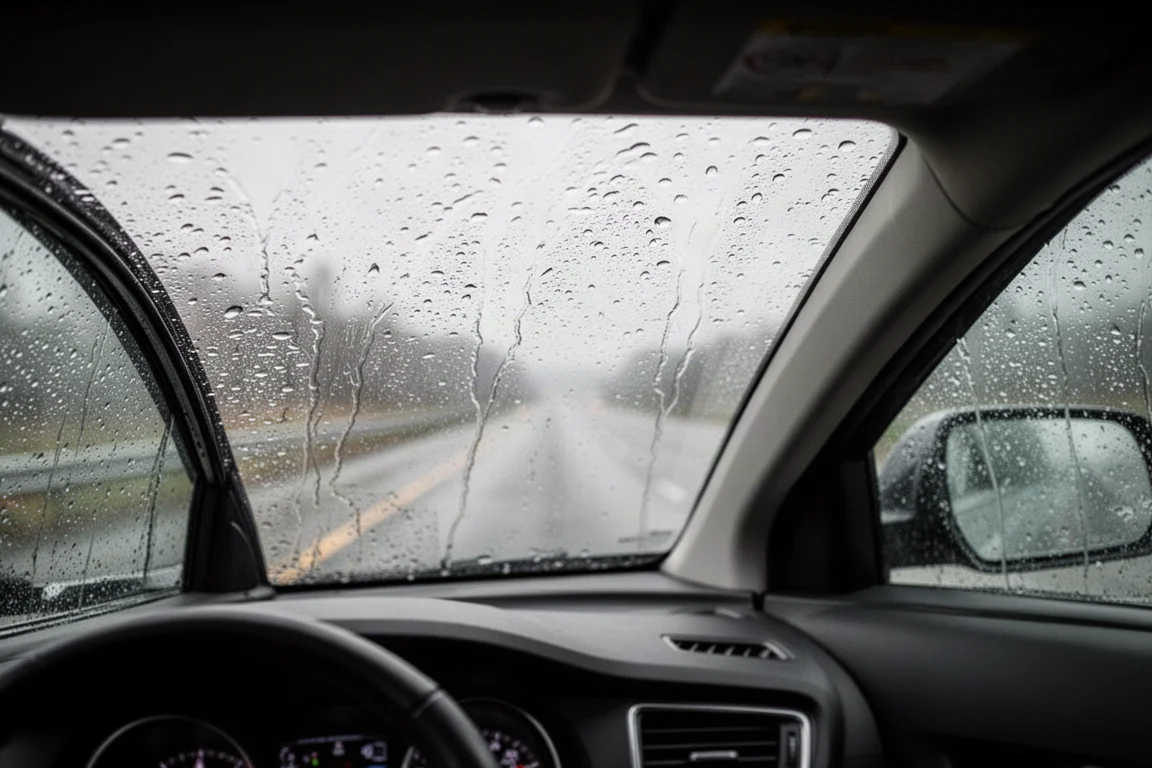
For exterior home windows, the product works the same way as it does on a car. Rain sheets off more quickly, and bugs do not stick as easily. It is a versatile product that earns its place in a detailing kit.
Buying Advice
The DIY Detail Envy Glass Sealant is a good fit for anyone who wants better rain visibility without the commitment of a ceramic coating. It is especially useful for people who wash their car regularly and want a quick layer of protection they can refresh weekly.
It is also a strong option for mobile detailers. The ability to apply it in direct sunlight, the fast flash time, and the streak-free finish make it practical for outdoor work. The fact that it doubles as a glass cleaner adds to its value.
If you are looking for a product that lasts a year or more, consider a ceramic coating instead. But if you want something simple, effective, and easy to reapply, this sealant delivers exactly what it promises.
Conclusion
The DIY Detail Envy Glass Sealant solves a real problem: water that lingers on glass and hurts visibility. It is easy to apply, works in direct sunlight, and can be reapplied as often as you like. The hydrophobic effect is noticeable immediately, and regular use builds on itself.
For drivers who want safer rain visibility and detailers who want a reliable glass product, this sealant is a practical choice. It is not a coating, and it is not meant to be. It is a simple, effective sealant that makes glass behave the way you want it to.
Product link
View more details for DIY Detail Envy Glass Sealant
This product is mentioned in the review. Check the specifications, options, and compatibility before buying.
View more details for DIY Detail Envy Glass SealantFurther reading
Related Reviews
Car Care
Best Ceramic Coatings 2026: Seven Options Tested for Durability and Shine
We tested seven ceramic coatings from budget sprays to premium hand-applied formulas to see which ones truly protect your paint.
Car Care
Best Windshield Water Repellents 2026: Top Picks for Rainy Driving
We tested ten windshield water repellents for water beading, bug removal, and chemical resistance to find the best options for clear visibility in the rain.
Car Care
Car Wax Comparison 2026: Seven Waxes Tested From Budget to Ultra Premium
A blind test of seven car waxes from $26 to nearly $2,000 reveals which ones deliver the best gloss, filling, slickness, and hydrophobics.