Automotive Tools
DeWalt Jump Starters with Air Compressors: 1600 Amp vs 2000 Amp Compared
Two DeWalt battery jump starters with built-in air compressors tested on real engines, including a heavy-duty diesel. Here is how they differ and who each one suits.
Introduction
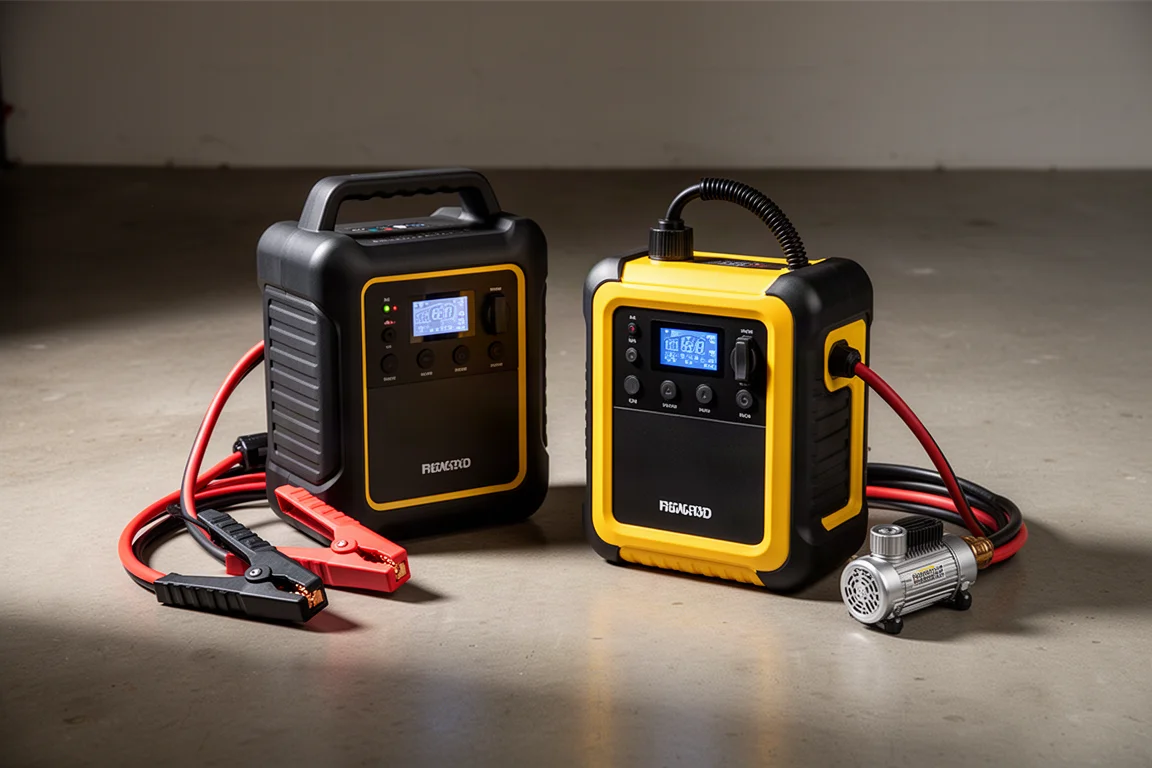
DeWalt makes a small family of portable jump starters that double as air compressors, and two of them are worth comparing side by side. Both are battery-based emergency units designed to sit in a truck bed or garage shelf until the day your vehicle will not crank. In this comparison we look at how each one is built, how the compressors behave in real use, and how they handled an unusually demanding jump start test on a large diesel engine.
What These Two DeWalt Units Have in Common
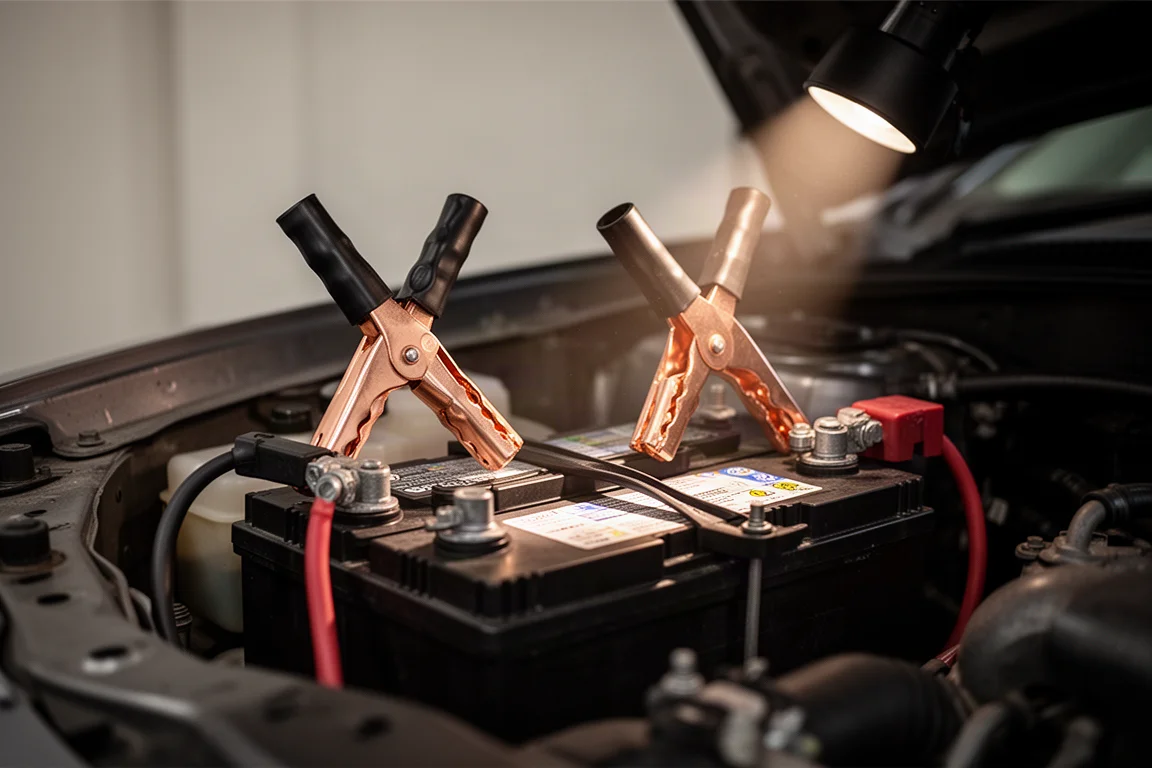
Both units follow the same recipe: a portable battery pack, jumper clamps, and an integrated air compressor rated at 120 PSI. Both display a “hooked up and ready” indicator sequence before you trigger the jump, which is a useful safety confirmation that the clamps are seated correctly on the terminals.
During testing, one battery in a dual-battery setup read as low as 11.7 volts, and both units went through a cautious detection phase before declaring the connection valid. On the unit that succeeded, the dome light came on as soon as power started flowing, confirming the pack was feeding the vehicle before the jump button was even pressed.
DeWalt DXAEJ14: 1600 Peak Amps with Compressor
The smaller of the two is rated for 1600 peak jump amps and includes the same 120 PSI compressor. It is the simpler package: no inverter, no AC outlets, just the core jump-starting and inflation duties.
In real-world testing, this unit handled a heavily discharged dual-battery diesel truck only after some encouragement, but it did get the engine running, and it coped fine once electrical load was added afterward. For a single-battery V8 gasoline engine, this kind of unit is generally regarded as sufficient, and many owners of trucks and Jeeps with those engines report being satisfied with it.
DeWalt 2000 Amp Jump Starter with Compressor and Inverter
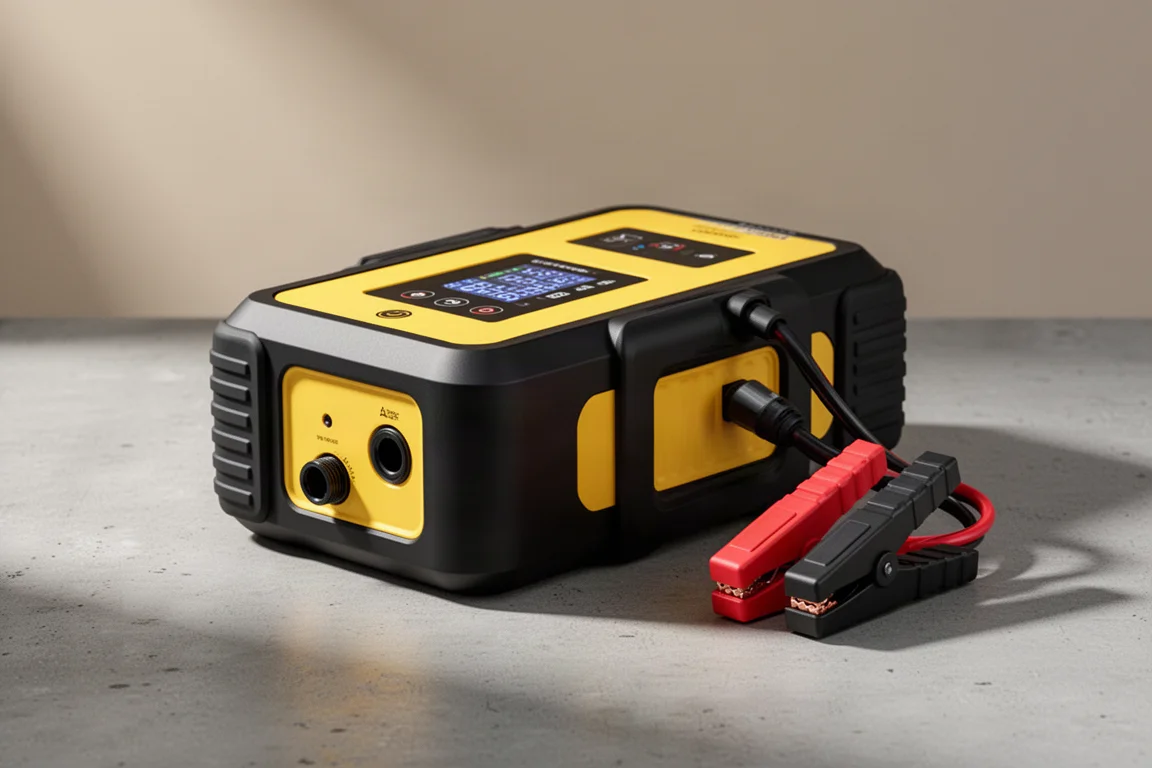
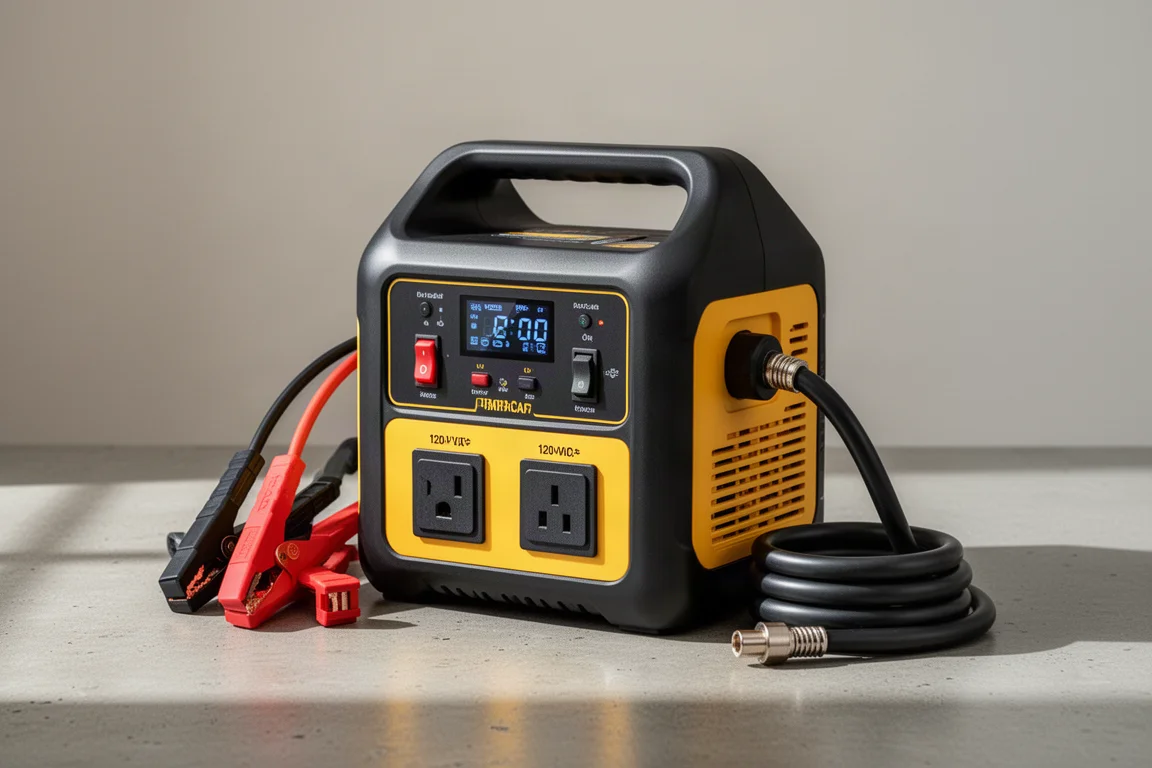
The larger unit doubles the peak jump rating to 2000 amps and adds a 500-watt power inverter with two 120-volt AC outlets. The inverter is quiet in operation, with just a soft fan running when AC power is switched on.
It is worth being realistic about what 500 watts can power. A 120-volt, 6-amp angle grinder immediately tripped the inverter into fault mode during testing, so this is a feature for small loads, not power tools. The extra 400 peak amps, however, give this model a stronger argument for larger engines and colder mornings.
Compressor Performance: Manage Your Expectations
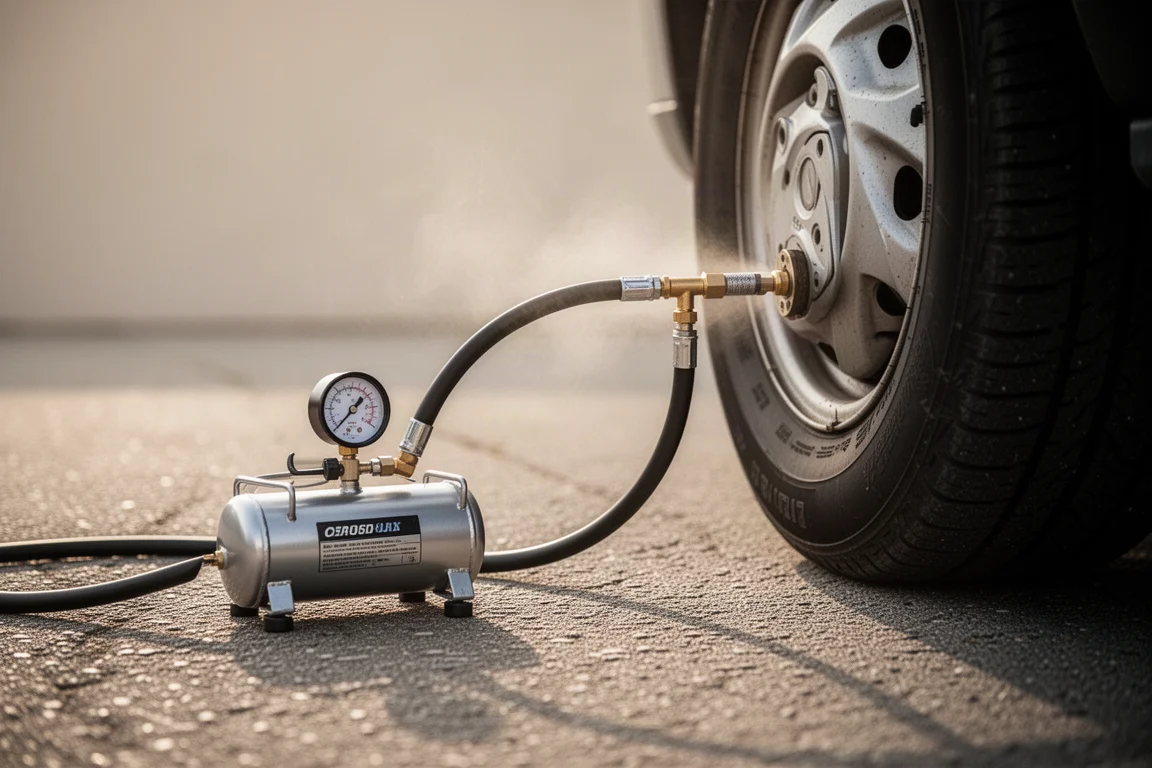
Both units share the same basic compressor behavior, and this is where expectations matter most. In testing, a short inflation run produced around 18 PSI of added pressure, and average output settled at roughly 20 PSI per run. The practical pattern is about 10 minutes of continuous use followed by a 10 to 30 minute rest period to let the compressor cool.
One minor quirk: the plastic housing makes it hard to get a reliable heat reading on the compressor while it runs, and a unit that had been preset to 70 PSI from a previous session produced some brief smoke smell during a long run. That is consistent with the duty-cycle guidance rather than a defect, but it underlines that these compressors are for topping up and slow recovery, not for rapid inflation of large tires.
The 2000 Amp Model’s Built-In Inverter
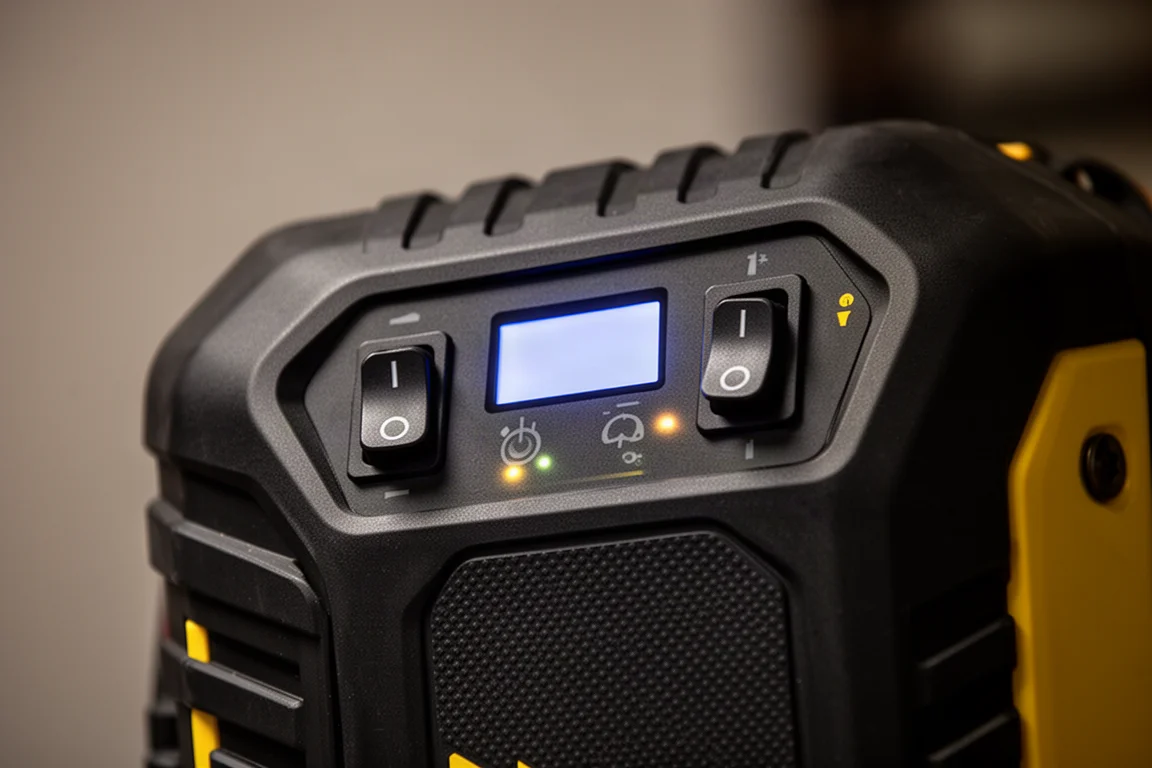
The inverter on the larger unit is the feature that separates the two models in daily usefulness. It can run small electronics from the jump starter’s internal battery through a standard extension cord, which is convenient because the cord is not proprietary. The smaller model instead relies on a separate regular AC adapter that you have to keep track of.
Neither approach is elegant, but the built-in outlets mean one less accessory to lose in a glovebox.
Buying Advice: Which One Fits Your Vehicle
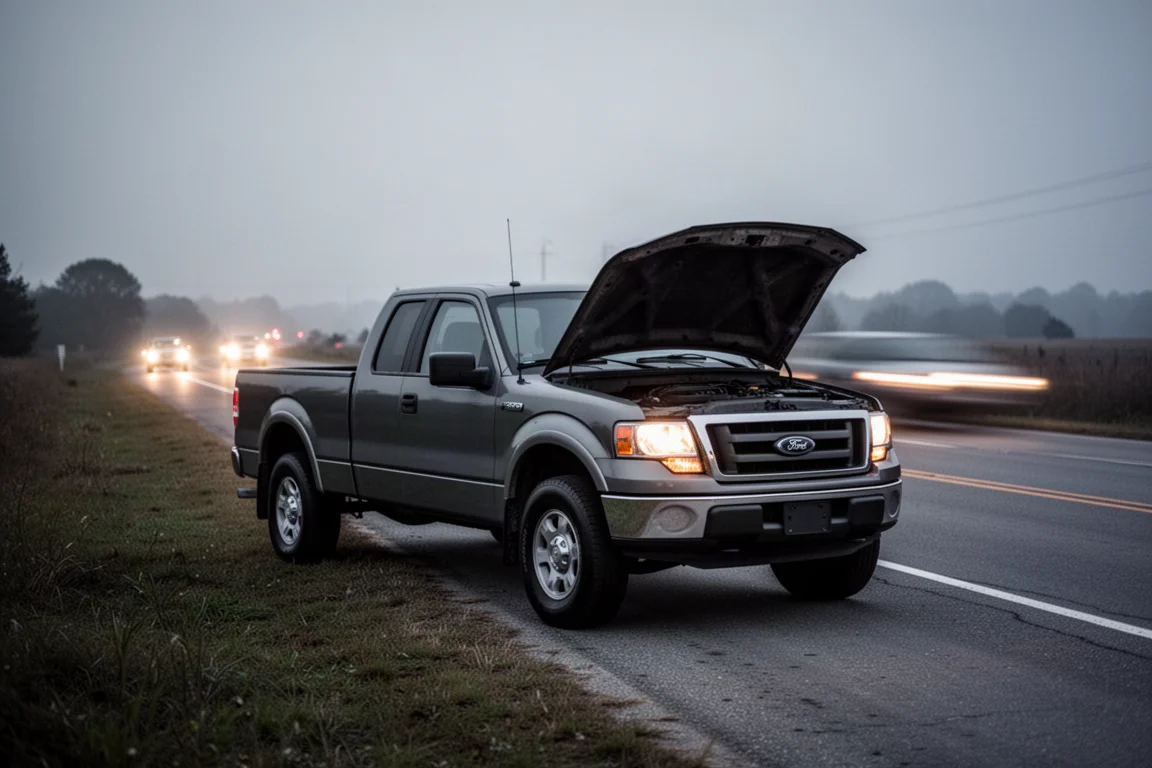
The honest takeaway from extended testing is this: both units are well suited to single-battery V8 gasoline engines, where either model should have plenty of headroom. Neither is a confident recommendation for large diesel trucks. On a 6.7-liter six-cylinder Cummins turbo diesel running two batteries, the units hesitated, showed hookup alerts, and only got the engine going under specific conditions after load and cranking attempts. If your vehicle is a heavy diesel, a dedicated higher-capacity jump starter is the safer purchase.
Conclusion
Both DeWalt units are practical emergency companions for gasoline vehicles, combining jump starting with a slow-but-steady tire compressor. Choose the 1600 amp model if you want the simplest package for a standard V8, and the 2000 amp model if you want extra cranking headroom and the flexibility of built-in 120-volt outlets for small devices. Diesel owners should look elsewhere.
Further reading
Related Reviews
Automotive Tools
ALAIAL 1/2" Digital Torque Adapter Review: Turn Any Ratchet Into a Precision Tool
A practical look at the ALAIAL 1/2" digital torque adapter, an affordable way to add torque measurement to your existing ratchet.
Automotive Tools
ALAIAL 3/8" Digital Torque Wrench Review: Accurate Fastening Made Simple
A practical look at the ALAIAL 3/8" digital torque wrench, covering its features, ease of use, and real-world performance for vehicle maintenance.
Automotive Tools
Best Gear Pullers 2026: 2-Ton and 5-Ton Options Compared
We compared nine gear pullers across 2-ton and 5-ton classes to see how design, build quality, and price affect real-world pulling performance.