Outdoor Power Equipment
DeWalt DCBL772 vs DCBL777: Which Cordless Backpack Blower Makes More Sense?
A close comparison of DeWalt's two cordless backpack blowers, covering airflow, runtime, noise, and the control differences that matter in daily use.
Introduction
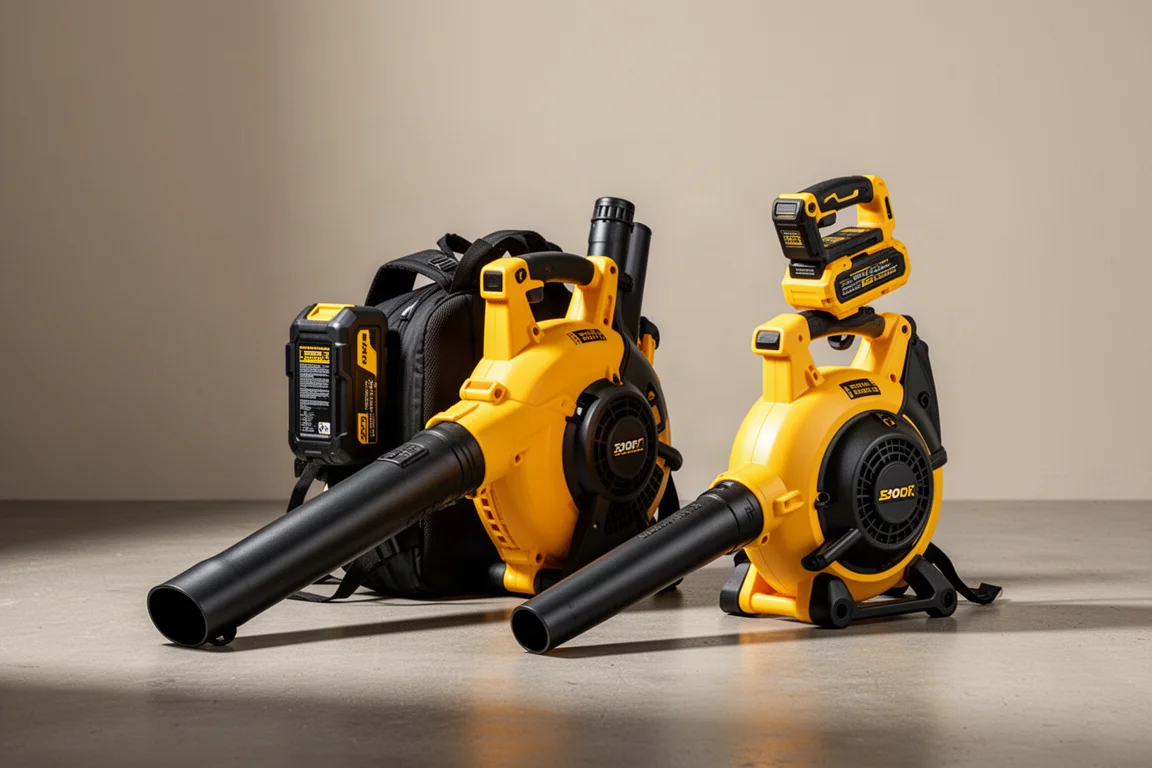
DeWalt’s cordless backpack blower lineup currently includes two very different takes on the same job: the DCBL772 and the newer DCBL777. Both run on the same tool battery platform, both move an impressive amount of air, and both have quirks worth knowing before you pick one. After putting the two side by side, the differences come down to design, controls, noise, and how you manage battery life.
The Case for the DeWalt DCBL772
The DCBL772 takes a unique approach with the battery mounted at the back of the unit. That placement comes with a guard that protects the air inlet, so airflow does not catch against your body as you move around. It delivers 600 CFM at 125 mph of air leaving the tube.
Runtime with DeWalt’s 9 amp hour battery (which functions as a 3 amp hour pack in its 60 volt form) came in at 14 minutes 11 seconds, which works out to just under 5 minutes per amp hour. Larger batteries extend runtime, at the cost of extra weight.
There is no turbo button here. Everything runs through the variable speed trigger, including a cruise control you can set anywhere along its range. The trade-off is noise: the 772 is quite loud, with a high-pitched whine that is noticeably more irritating than the 777. If you use it for a full yard, expect to reach for earplugs, and know that your neighbours will hear it too.
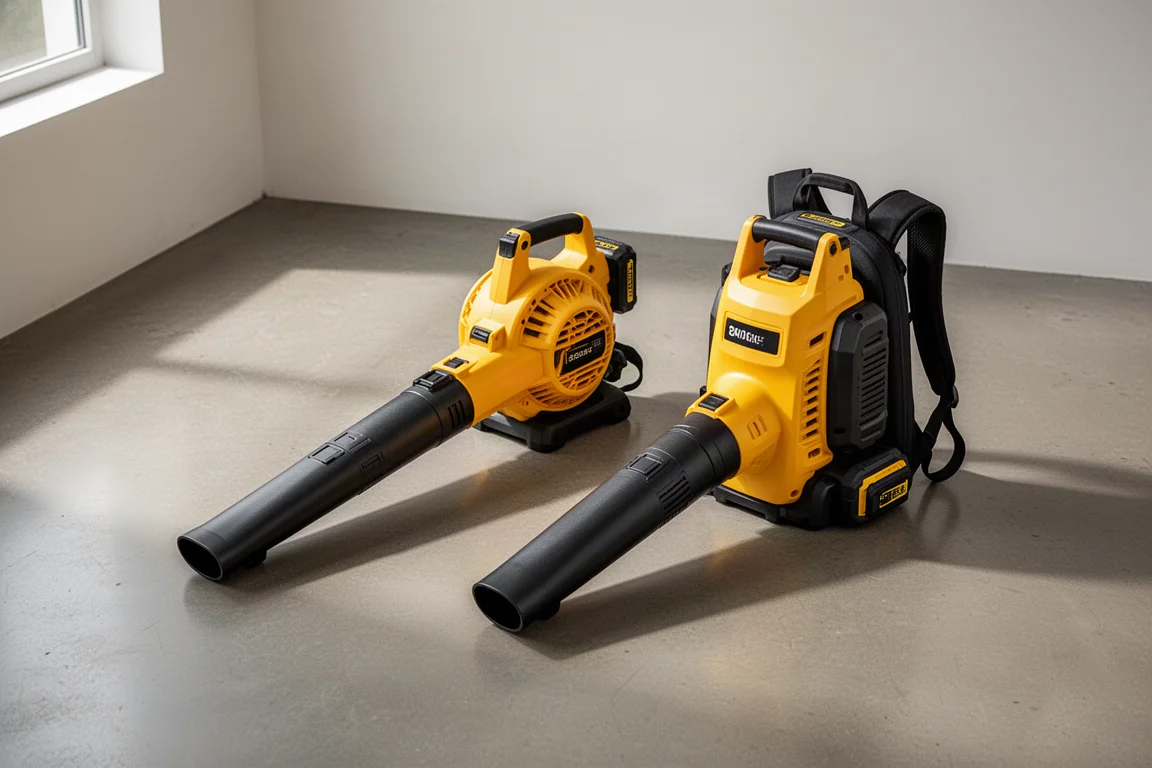
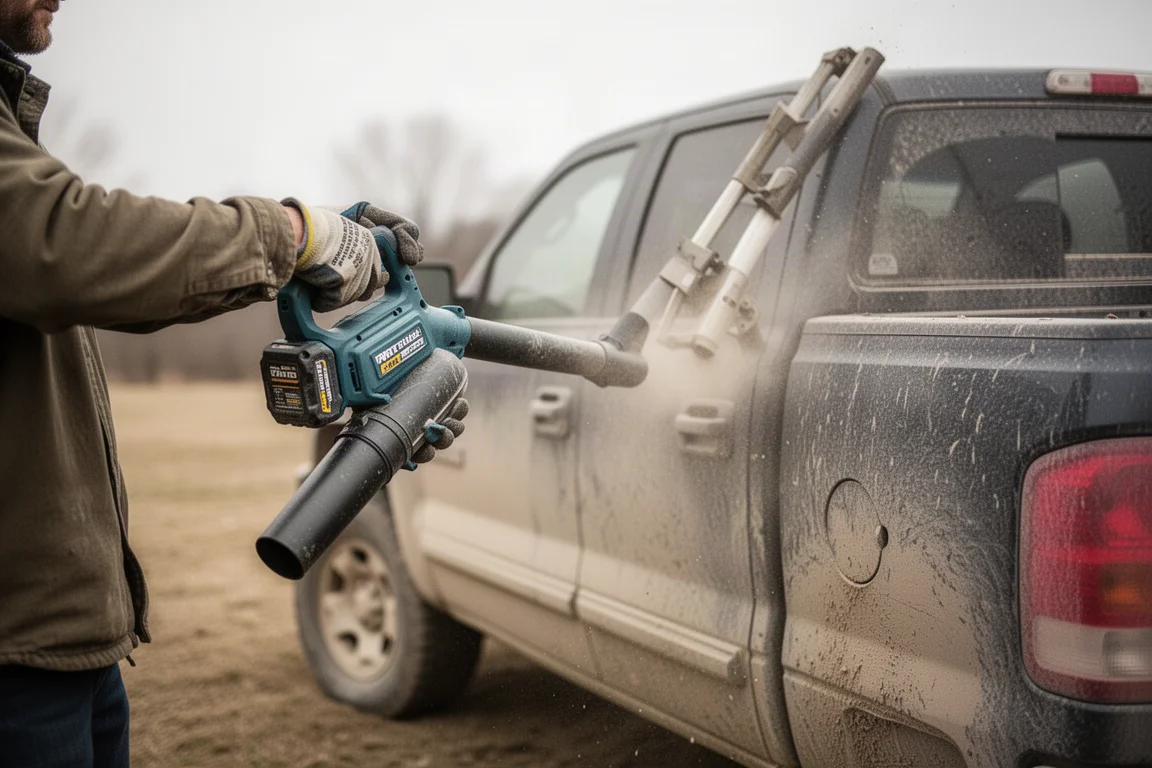
One ergonomic note in its favour: because the fan sits further forward, the 772 has a shorter tube in front of the handle. That puts your hand about 6 inches closer to the work, and it can genuinely feel like the machine has as much power as its newer sibling simply because of where the tube sits relative to your grip. That top handle also works well when you flip the unit upside down to blow off a car or a dusty tractor, where the extra control is welcome.
DeWalt DCBL777: Compact, Feature-Packed, and Quieter
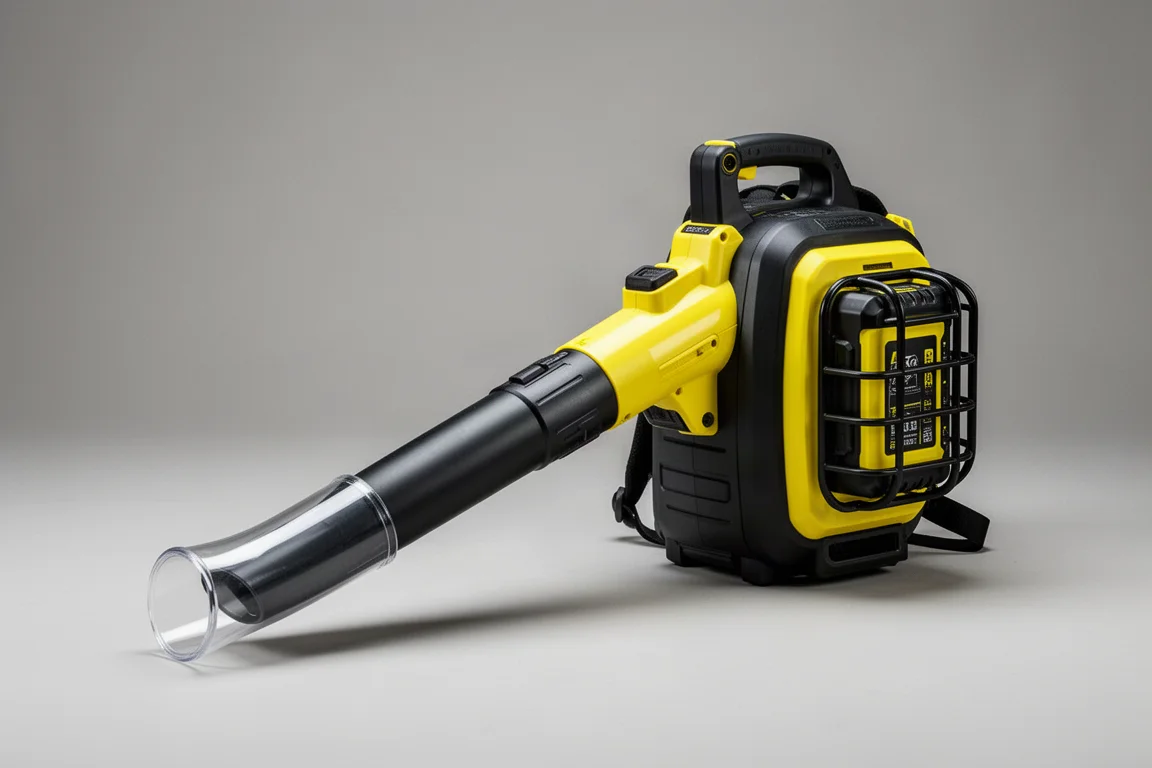
The DCBL777 is a much more compact unit that feels more thoroughly engineered, and it brings a longer feature list. The battery has moved from the back up toward the handle. On your right side that gives you extra clearance; on the left it sticks out a bit, though the inlet base is still larger than the battery, so it does not obstruct airflow. Shoulder strap mounts are provided on either side.
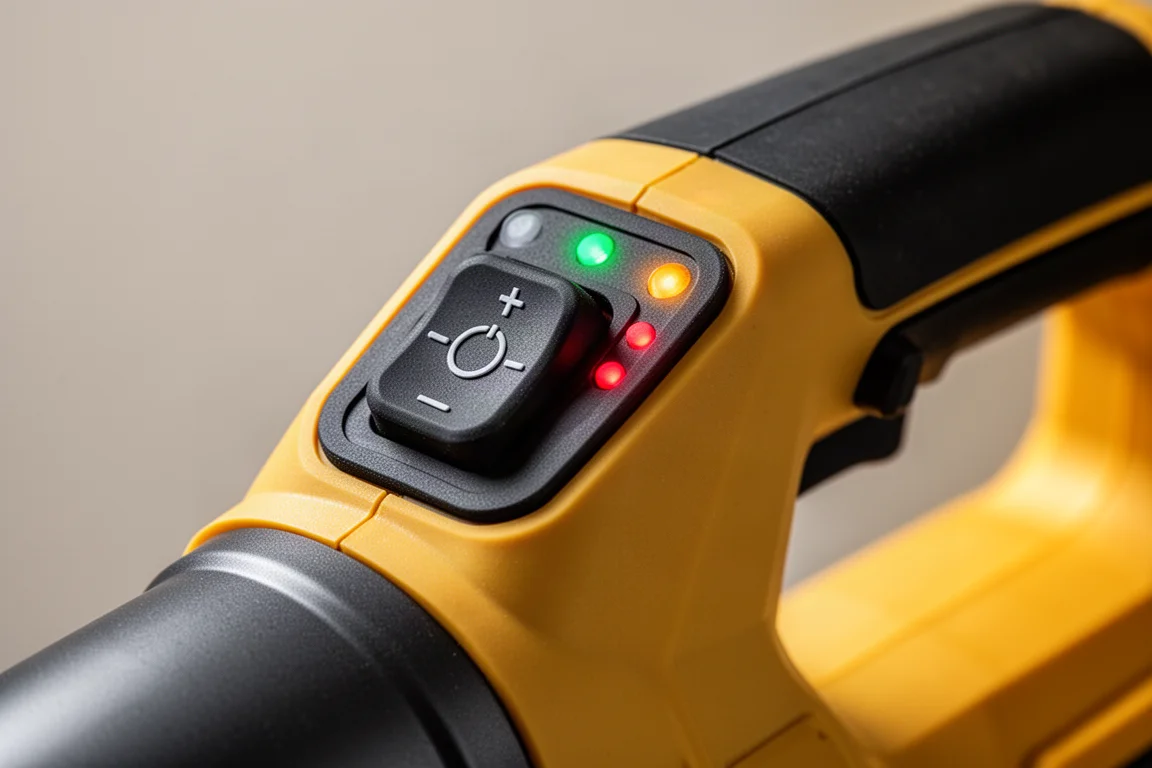
Controls have changed significantly. A quick blip of the throttle wakes the unit, shows the battery meter, and indicates the current power setting. It always starts in eco mode. Blipping through the modes takes you to orange for standard mode (significantly more power) and red for turbo mode, where it reaches 760 CFM at 160 mph. Mode changes require pressing a rubber-coated button rather than working through the trigger alone, which some riders and operators may find tedious. There is also a lock-on for full power.
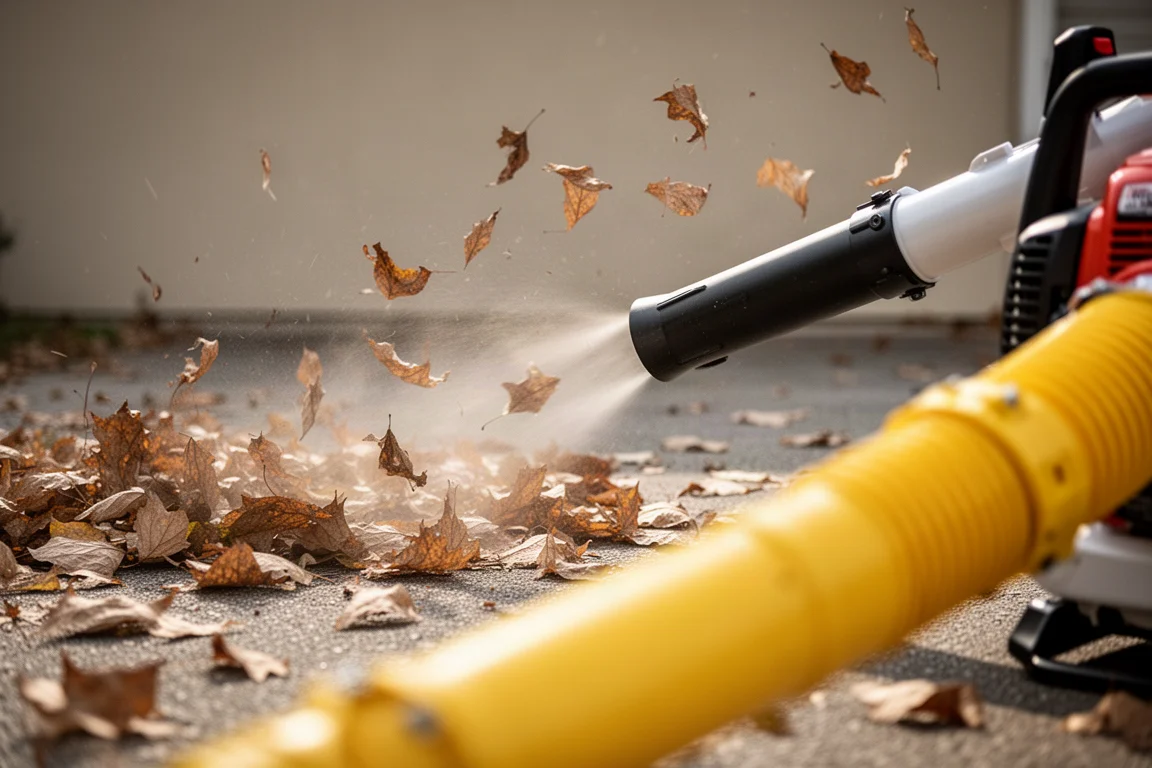
Attachments included with the 777 let you narrow the tube end, held in place by a pin that locks them on tight and releases easily when you pull the tab. One open question: DeWalt does not specify whether the claimed 160 mph figure was measured with the tube reduced or not.
On noise, DeWalt rates the 777 at 63 dB at 50 feet, which is effectively a rating for your neighbour rather than for you. At 3 feet in turbo mode it measured around 77 dB. The 772, measured the same way, bounced between 77 and 79 dB, so it is a bit louder, and its whine is significantly higher and more annoying in character.

Runtime and Battery Behaviour
This is where the two diverge sharply. On the same fully charged 9 amp hour battery, the 777 ran for 11 minutes 52 seconds in turbo mode, a bit under 4 minutes per amp hour. That is a significant reduction compared to the 772’s 14 minutes 11 seconds, and DeWalt’s own instructions warn that turbo use cuts battery life.
There is also a subtle behaviour worth knowing about. When the battery gets low, somewhere between the second bar and the last bar of the meter, the 777 silently limits turbo mode. The indicator still shows red, the motor ramps up into turbo and then drops back to standard, and nothing on the display tells you that you no longer have full turbo power. In practical terms, the full 760 CFM and 160 mph output only lasts through roughly the top two thirds of the charge. A clearer indication when turbo is no longer available would be a welcome fix.
On the upside, staying out of turbo pays off: expect upwards of 18 minutes in eco mode and around 16 minutes in standard mode. If you have an itchy trigger finger, the button-based mode switching actually helps keep you in standard mode and stretches runtime to the point where it outlasts the 772 without issue.
Power Compared to Gas
DeWalt claims both units outperform most gas blowers, and against a comparable Stihl gas backpack blower, that tracks. Both DeWalt units make the gas machine feel underpowered, moving far more air in far less time. The real limitation is endurance: these cordless units simply do not run long enough for extended cleanup unless you carry multiple large batteries, and that is the fundamental trade versus gas.
Which One Should You Buy?
If you value a quieter, more compact, feature-rich machine and do not mind pressing a button to change modes, the DCBL777 is the stronger all-round pick, especially since disciplined mode use dramatically extends runtime. If you prefer a simple variable-speed trigger with cruise control, a shorter tube that keeps your hand closer to the work, and slightly longer turbo-era runtime, the DCBL772 still holds up, provided you can tolerate the whine.
There is also the platform argument: tool-battery outdoor equipment lets you swap the same packs across construction tools, cleanup jobs, and everything else year-round, which is exactly why many buyers choose this route over dedicated battery OPE platforms.
Conclusion
Both blowers are well built and genuinely powerful, more so than most gas units in their class. The 777 wins on features, compactness, and noise, with the caveat of a silently limited turbo on low batteries. The 772 wins on simplicity and tube length, at the cost of a harsher pitch. Choose based on which set of trade-offs fits your cleanup routine.
Further reading
Related Reviews

Outdoor Power Equipment
Best Cordless Chainsaws 2026: EGO, Milwaukee, and Stihl Compared
Three flagship battery-powered chainsaws from EGO, Milwaukee, and Stihl go head to head in cutting speed, power, weight, and price.

Outdoor Power Equipment
Best Cordless Leaf Blowers 2026: Nine Models Put to the Test
We tested nine leading cordless leaf blowers from Ryobi, STIHL, Toro, EGO, Husqvarna, DeWalt, Makita, Milwaukee, and Echo to find the best blowing force, run time, and value.
Outdoor Power Equipment
Amazon Big Spring Sale 2026: Best Outdoor Power Equipment and Backyard Deals
Cordless mowers, blowers, grills, and portable power on sale this spring, with practical advice on which packages are actually worth buying.