Fountain Pens
Desiderata Dauma Fountain Pen Review: Handmade Character and Clever Craft
A closer look at the Desiderata Dauma, a one-man-shop piston filler with quick-release threads, striking resins, and a smaller Soubri sibling for compact tastes.
Introduction
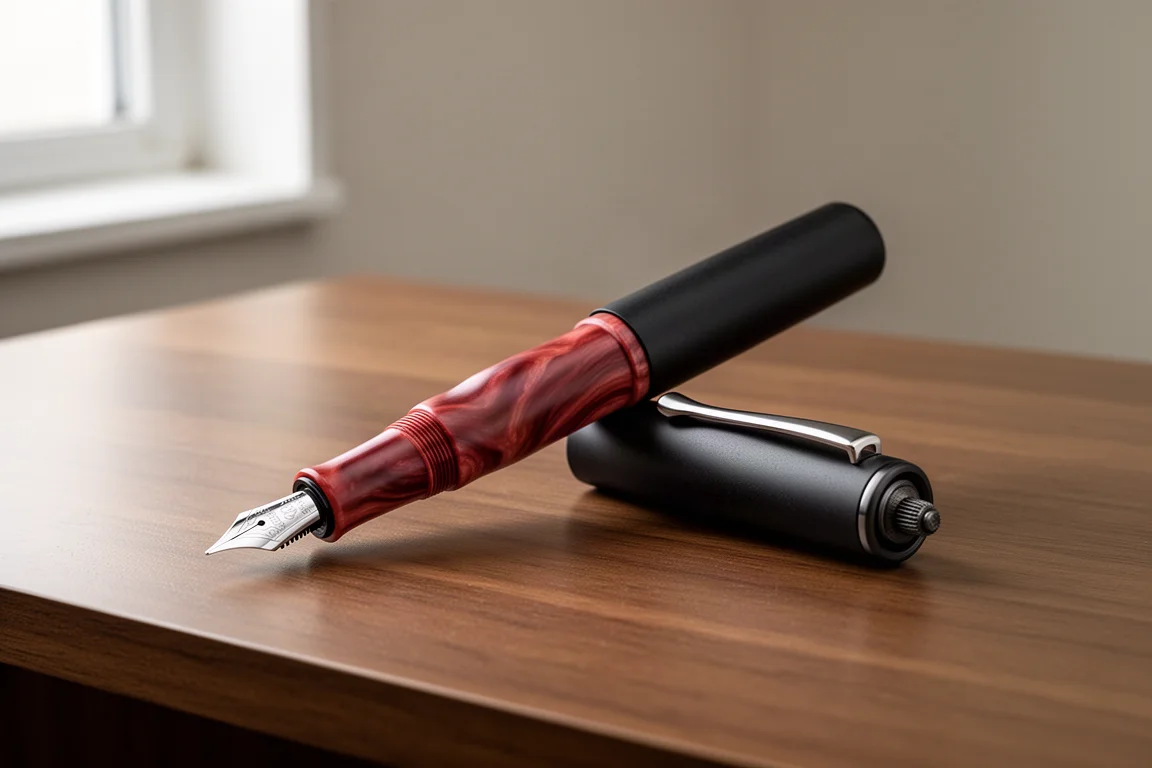
The Desiderata Dauma is a fountain pen built almost entirely in one workshop. Desiderata Pens makes nearly every part in-house, including the clip, and even shapes its own nib grinds by hand. The Dauma is essentially a thicker version of the company’s Soubri model, with a slightly girthier section and a larger overall footprint, released in small batches with year-stamped blind engravings.
The review units here came in three different materials, and each one turned out to be a genuinely lovely writer. Here is what the pen does well, where it falls short, and who it makes sense for.
Design and Materials
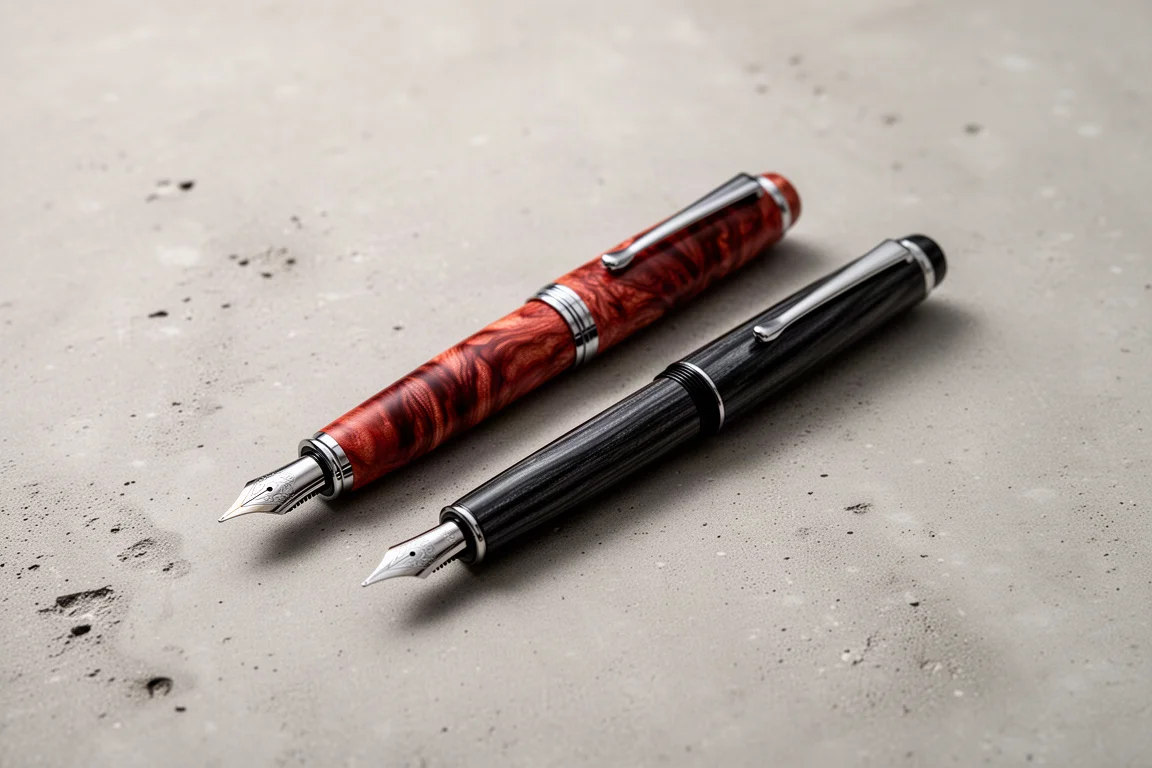
The Dauma ships in several striking materials. The samples included a Jasper hard rubber with a subtle reddish tone, a Briar ebonite, and a matte black ebonite. The swirled materials are the standout: the wavy patterns differ from pen to pen, sometimes dramatically, because the stock works out differently with each cut.
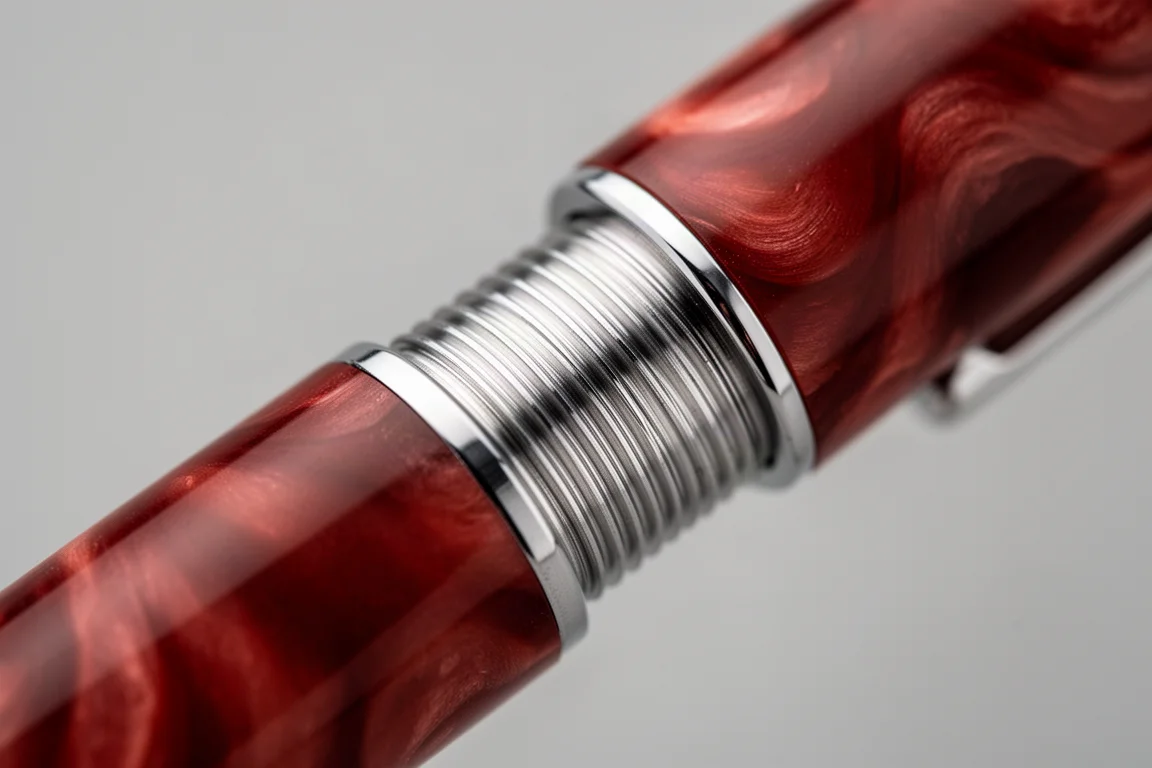
The cap finial is a solid piece of the same material as the rest of the cap, with a simple in-house made clip that has a nice bowl and just enough springiness to work well with pen cases without being too soft. Nothing on the pen catches the finger: there is no sharp corner or edge anywhere, and the threads are rounded off so thoroughly you barely feel them.
One caveat worth knowing: because these are made in limited material batches, each pen looks quite different. The maker posts photos so buyers can pick a specific unit, since the swirls come out differently in every one.
Nib Options and Writing Performance
The Dauma is available with Zebra G steel nibs or steel JoWo nibs. The JoWo option here carries the maker’s own logo and a hand-ground fine italic grind. That grind produces a noticeable amount of natural line variation without any pressure, and with a light touch of pressure the variation increases further. It is not a flex nib, but it rewards a careful hand and does genuine wonders for handwriting.
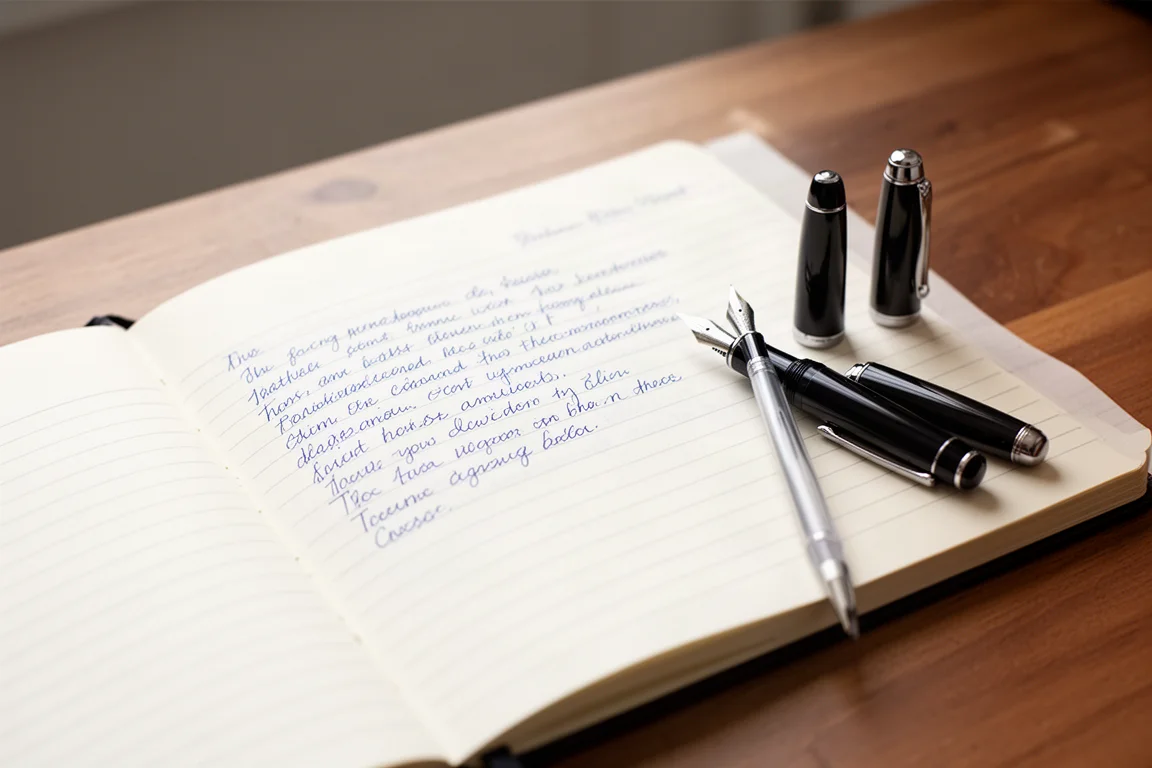
In testing with Waterman Serenity ink, the pen wrote smoothly and pleasantly wet, with no complaints at fast writing speed. The reverse writing also works: the grinds are learned from study under a respected nib grinder, and the pen writes decently upside down, though with an italic grind you get another italic-ish stroke in return. The feed is a standard plastic unit and keeps up without trouble.
Piston Filler and Rapid Release Threads
The Dauma is a true piston filler, and the piston mechanism is made in-house. The turning knob is a small piece of engineering: when closed, the seam between knob and barrel disappears completely, with the material lines aligning so well you cannot even see that it is a piston filler.
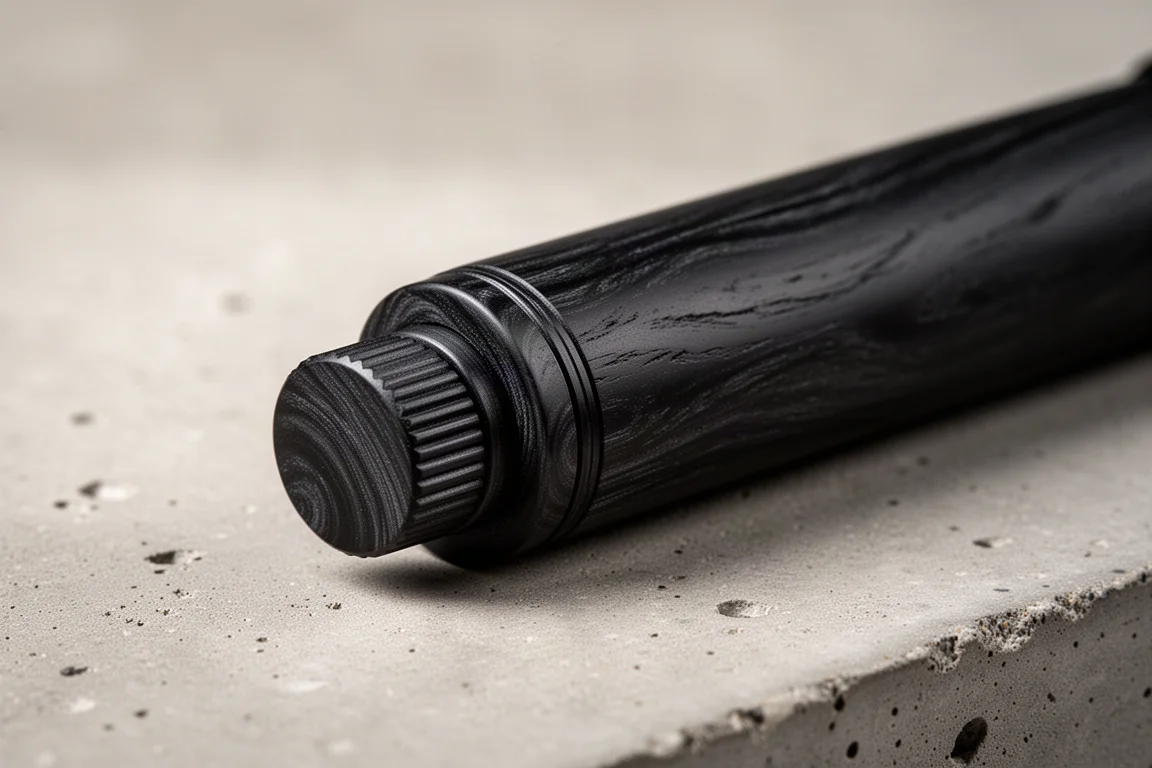
The other clever feature is the rapid release thread system. It takes only about a quarter turn to uncap the pen, so you can go from capped to writing almost instantly, even single-handed. For anyone who dislikes long cap threads, this is the kind of detail that makes daily use noticeably better.
One honest weakness: the cap does not really post. You can set it on the back of the barrel, but it does not snap into place and will slide off, so posted writing is not practical. Given the pen’s size, that is a minor issue rather than a dealbreaker.
Comfort and Everyday Handling
The section tapers down and flares out slightly, and it is very comfortably rounded. The pen is larger than the Soubri but not oversized, so a wide range of hand sizes should find it usable. Compared against a Metropolitan, the Dauma is clearly girthier.
Dauma or Soubri: Which Size Fits You
The Soubri is the same philosophy in a slimmer package, with a narrower section and a slightly smaller overall body. The difference is mainly diameter rather than length, but it is enough to matter. If you want a bit more girth, the Dauma is the better fit; if you prefer something a touch slimmer, the Soubri serves that need well. Both share the same quick-uncapping threads and the same handmade approach, and a side-by-side comparison makes the differences easy to see.
Buying Advice
At roughly $325 to $350 depending on material, with the black ebonite at about $300, the Dauma is not inexpensive, and it is fair to hesitate at that figure. The justification lies in what the price buys: a one-man operation where every part except the nib and feed is made in-house, tight tolerances throughout, a genuine handmade piston filler, and a quick-release cap system that works exactly as promised. If handmade US manufacturing matters to you, or simply matters less than fit and finish that visibly comes from a single craftsman, the value case holds up. If you prefer factory-made pens at lower prices, plenty of alternatives exist, and the Soubri offers the same character in a smaller, likely more approachable package.
Conclusion
The Desiderata Dauma is a well-made, comfortable, genuinely handmade piston filler with clever touches like the quarter-turn uncap and the seamless piston knob. Its limited materials make each pen unique, and its italic grinds add real line variation. Choose the Soubri if you want the same experience slimmer, and the Dauma if you want the fuller-bodied version. Either way, this is small-batch pen making that justifies its price for buyers who value the craft behind it.
Product link
View more details for Desiderata Dauma
This product is mentioned in the review. Check the specifications, options, and compatibility before buying.
View more details for Desiderata DaumaFurther reading
Related Reviews
Fountain Pens
Best Budget Fountain Pens Tested: 9 Pens, One Clear Winner
A hands-on comparison of nine affordable fountain pens for everyday writing, calligraphy, and sketching, with a clear standout for flexible nib fans.
Fountain Pens
Aurora Optima Review: An Italian Piston Filler That Punches Above Its Price
A 14k gold nib, ebonite feed, and a beautifully deep oraloid body make the Aurora Optima one of the most rewarding piston fillers around.
Fountain Pens
Cross Bailey Light Review: The Entry-Level Fountain Pen Worth Keeping at the Office
A plastic-bodied Cross with a metal clip, snap cap, and famously smooth extra fine steel nib. Around $15, available almost everywhere, and easy to recommend.