Snowboard Boots
Deluxe Demon Pro Review: A Stiffer, Sharper Flagship Freeride Boot
A closer look at Deluxe's beefed-up flagship freeride boot, from its dual Boa setup and rubber urethane backspine to the heat-moldable Stage 3 liner.
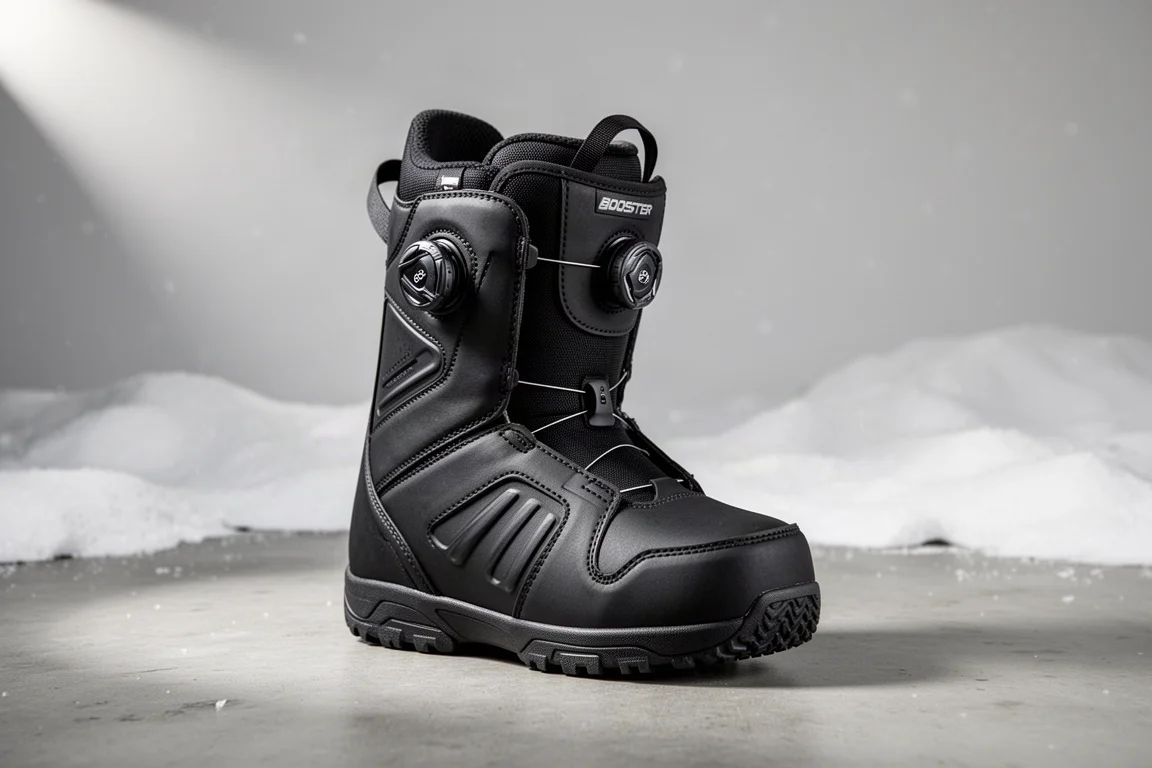
Introduction
The Demon Pro is Deluxe’s beefed-up version of its flagship freeride boot, and it is clear the brand has put real thought into how the pieces fit together. Deluxe was long known for bulky, dated boots, and the Demon Pro represents a shift toward something more sleek and performance-based, with visible attention to detail throughout. This breakdown covers what the boot actually offers so you can decide whether it matches your foot and your riding.
As always, the best boot is the one that fits your foot and fits your needs, so get sized properly before committing to anything.
Who This Boot Is For
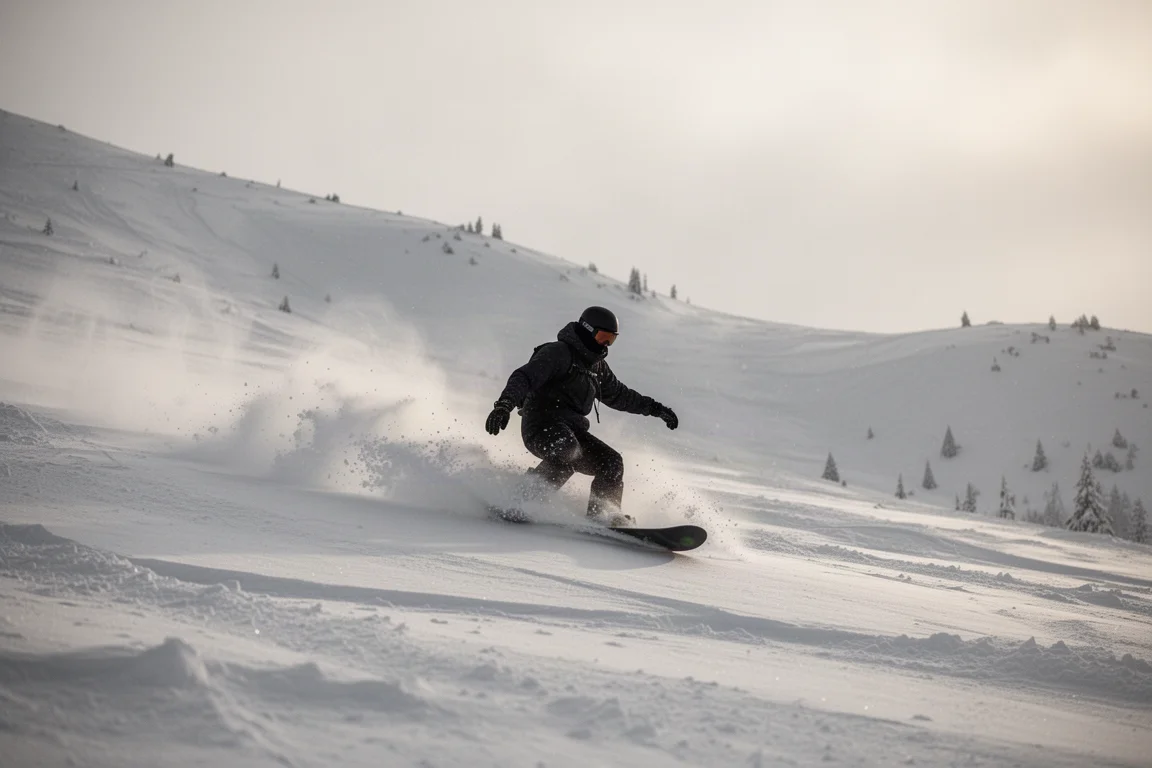
The Demon Pro sits on the stiffer side of Deluxe’s lineup, though it is not crazy stiff, and the liner foam will pack out a fair amount over time. That makes it a good match for riders who want to ride the whole mountain and do a little bit of everything, while still having some rebound and the ability to put real force into the boot.
The fit is best guessed at a regular width foot with a regular width ankle. The heel pocket inside the liner is neither super tight nor super wide, so riders who are not extremely narrow or extremely wide-legged are the most natural target here. Keep in mind that body size matters too: someone who is six feet tall and 200 pounds in a size 10 will flex this boot very differently from someone who is 5’6” and 160 pounds in the same size.
Shell and Backspine Construction
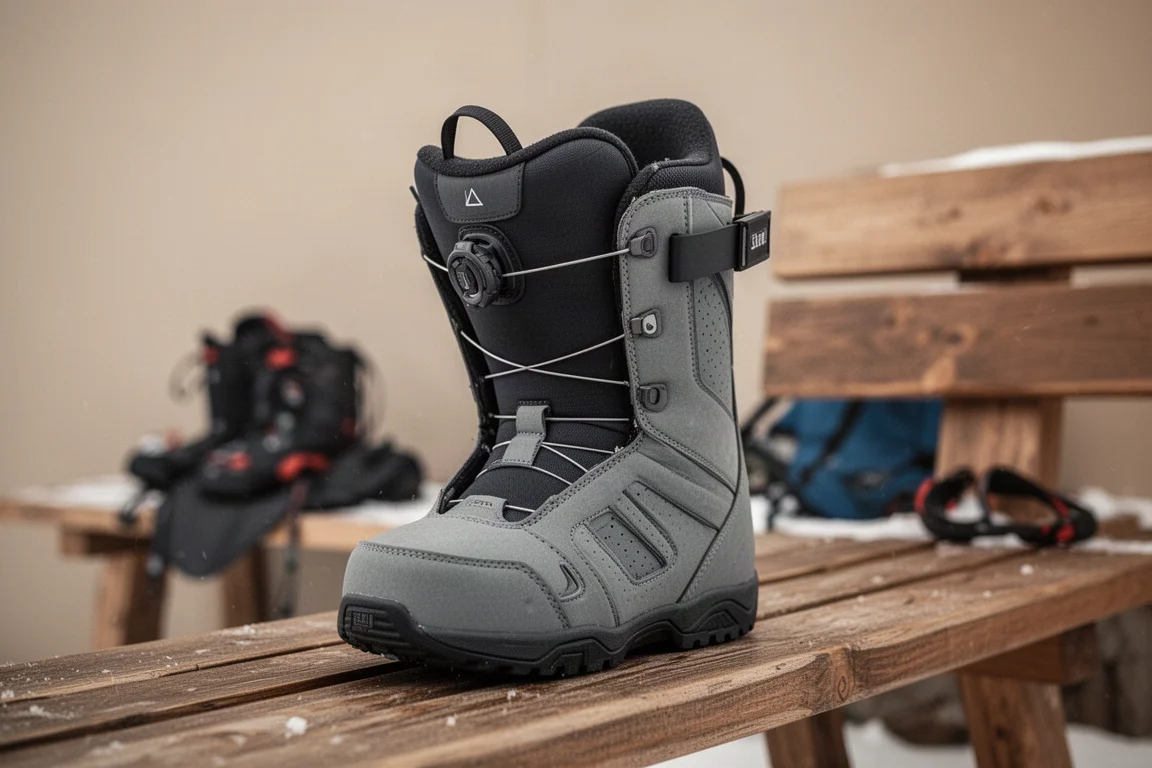
Around the toe, the shell has a double stitch seam on the black material that wraps to where it overlaps, and it does not extend as far back as on some boots. If you are the type who gets lace-click syndrome with your toe area, you may feel some pressure points there. At the end of the tongue there is another double stitch seam, which could fray over time if you habitually rest your board edge against the boot.
The back of the boot is where the performance story lives. The rear spine uses a rubber urethane TPU panel that provides rebound into the boot and resists breakdown over time, with a second piece underneath it adding rigidity for a more powerful feel. The integration where the backspine meets the sole is designed to help with natural flex, and the area is slightly softer at the top, progressively stiffening as it goes down.
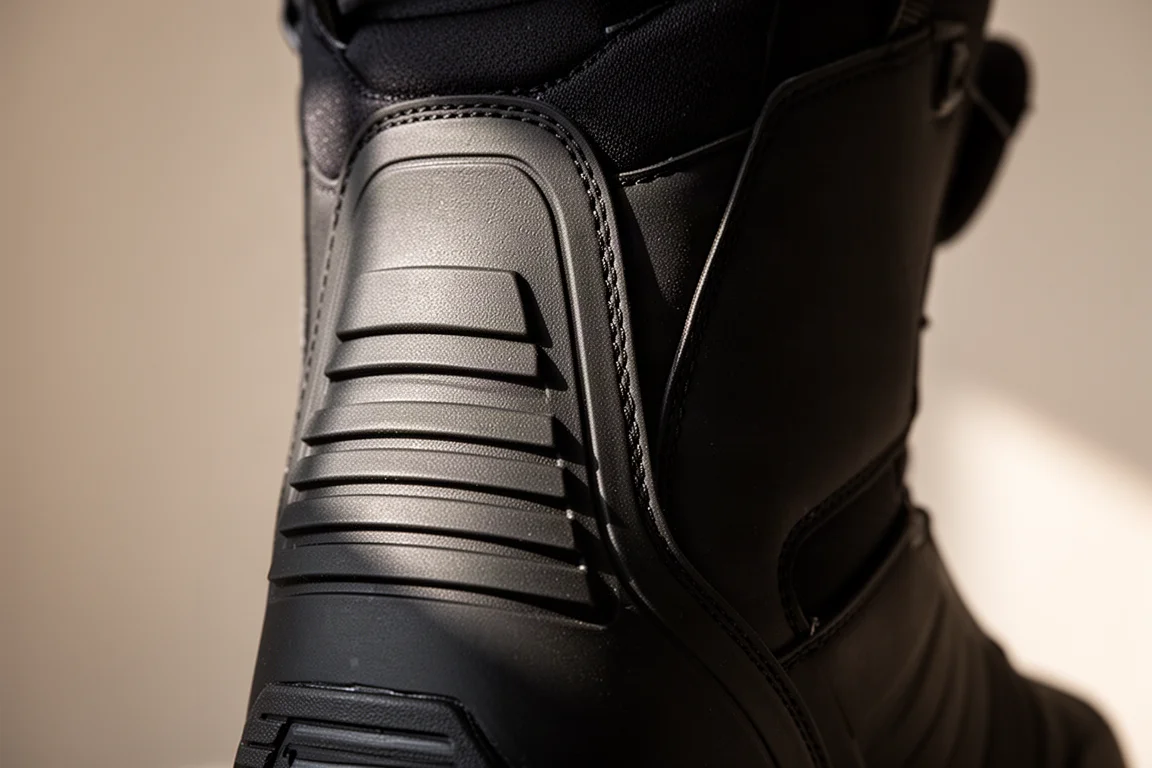
There is also a generous cutout at the top of the back, so riders with big calves will notice it bulge a bit more. On the ankle articulation side, flexing into the boot engages a well-shaped pocket, so you get rigidity from the heel hold and shell, but the boot breaks in enough to let you drive into it. If the flex feels too soft out of the box, Deluxe sells a flex booster that slips between the liner and shell to stiffen things up.
Sole and Underfoot Feel
The boot uses Deluxe’s Quantum sole, which is not super thick, so you sit closer to the binding. It dampens to a point, but there is noticeable play under the toe, meaning you will feel more vibration under the toe than at the heel thanks to a dampening pad at the back. The tread pattern is solid and should grip across a multitude of snow varieties.
Lacing System: Dual Boa and Booster Strap
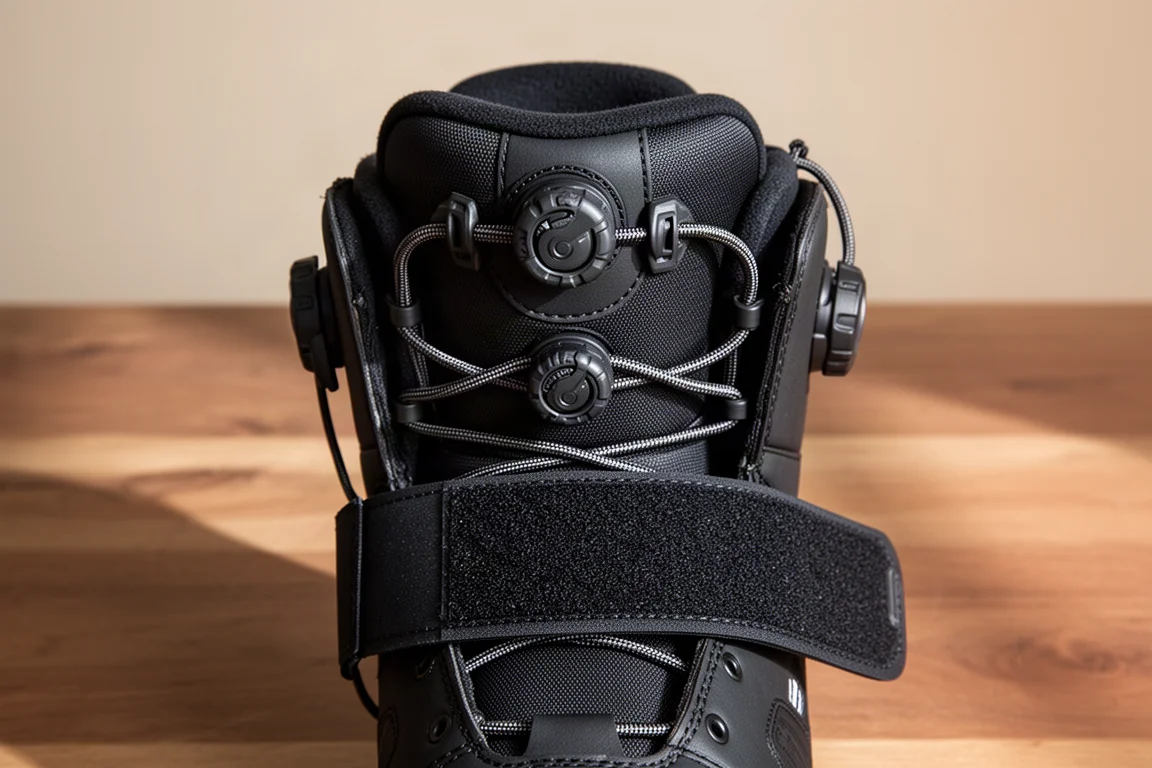
This is a dual Boa boot with a booster strap. The top Boa on the front handles the top of the boot, while the side Boa manages the lower zone, so you can customize tension however you like. The booster strap cranks over the top for extra response, but it is removable: just unvelcro it and slide it out.
The honest take on the booster strap is that it is better suited to boots at the end of their life than to a brand-new pair. If your Boa is not getting tight enough, the answer is usually to crank it more, not to lean on the strap. That said, the strap does add response to the tongue, reducing give when you drive into the boot.
Liner, Fit and the Stock Footbed
Out of the box the Demon Pro comes with the Stage 3 liner, and Deluxe offers a thermal custom fit liner as a replacement if you have unusual bone protrusions or other fit quirks. The Stage 3 is heat moldable and has an old-school character: not the most rigid, not the softest, with multiple foam densities. A firmer section at the back pushes out a bit more, an external J-bar adds heel hold, and softer foam at the toe gives more easily. There is a prominent seam inside that some riders will feel and others will not.
The internal lacing is a free-floating design, meaning the harness is not sewn into the shell. Velcro at the back lets it attach to the shell if you want, or you can remove it entirely for more ankle play. An elastic piece on the tongue lets you feed the guide cable through to change the tightening dynamics, and locking eyelets at the top help cinch the liner around, which is worth considering for riders with smaller calves.
Measurements on the sample give a useful sense of proportions: at a size 27.5 Mondo (US 9.5), the shell measures just over 10 inches at the heel without the liner, about 10.34 inches at the tongue, roughly 4.5 inches wide at the forefoot, and just past 12 inches in sole length. The liner measures about 5 inches across at the forefoot, around 4 inches at the widest point.
The stock footbed is the weak point. It is flat, provides no arch support, and reads as an afterthought. Unless you ride only a few days a year, swapping it for an aftermarket footbed with real posting, arch support, and ankle stability is the sensible move.
Buying Advice
If the flex feels too soft for your taste, the optional flex booster is a legitimate path to a stiffer feel without buying a different boot. If you are shopping, sizing properly matters more than any feature list: try before you buy if you can, and remember that fit to your own foot trumps everything written here.
Conclusion
The Demon Pro makes a strong case for Deluxe’s new direction: less bulk, more performance, and thoughtful details like the removable booster strap, layered backspine, and customizable liner lacing. It is a decent boot overall, best suited to all-mountain riders with regular-width feet who want something with rebound and the ability to drive force into it. Get it sized right, budget for a better footbed, and it should serve you well across the whole mountain.
Product link
View more details for Deluxe Demon Pro
This product is mentioned in the review. Check the specifications, options, and compatibility before buying.
View more details for Deluxe Demon ProFurther reading
Related Reviews
Snowboard Boots
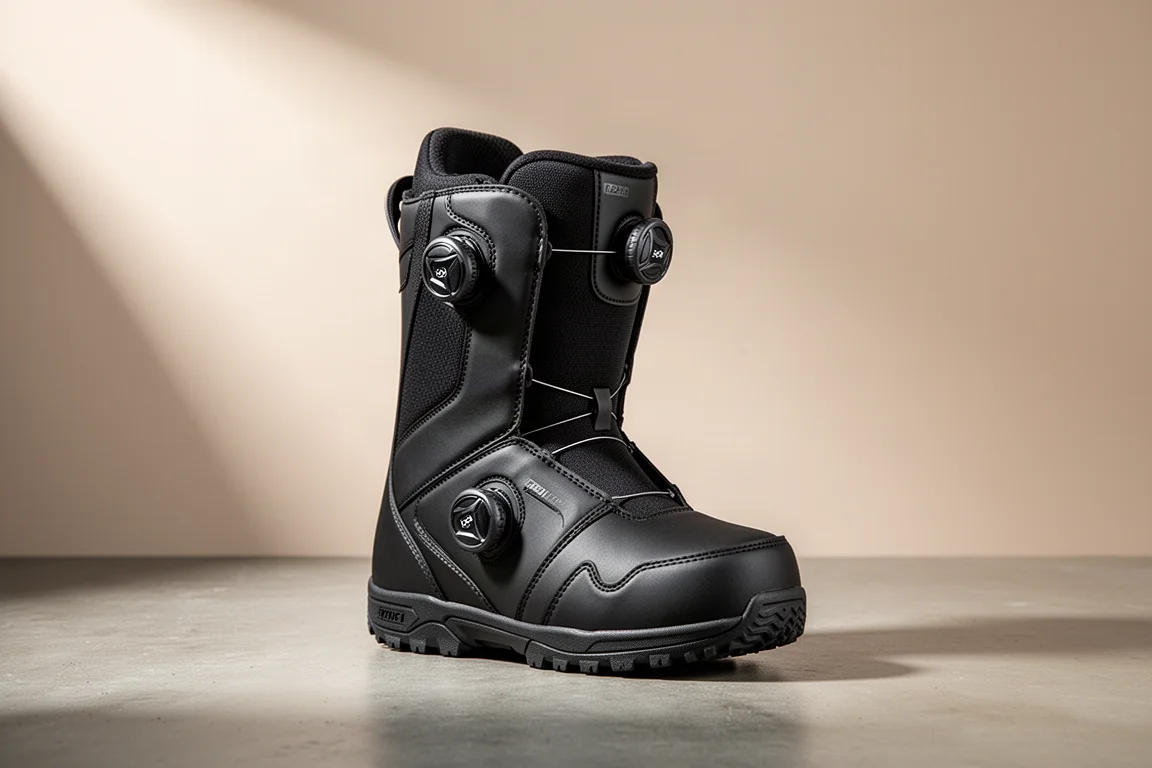
32 Team Two Double Boa Review: 32's Highest-End Women's Snowboard Boot
A closer look at 32's top-tier women's snowboard boot, from the 3D molded toe box and double Boa lacing to the Performance Fit liner and heat-reflective footbed.
Snowboard Boots
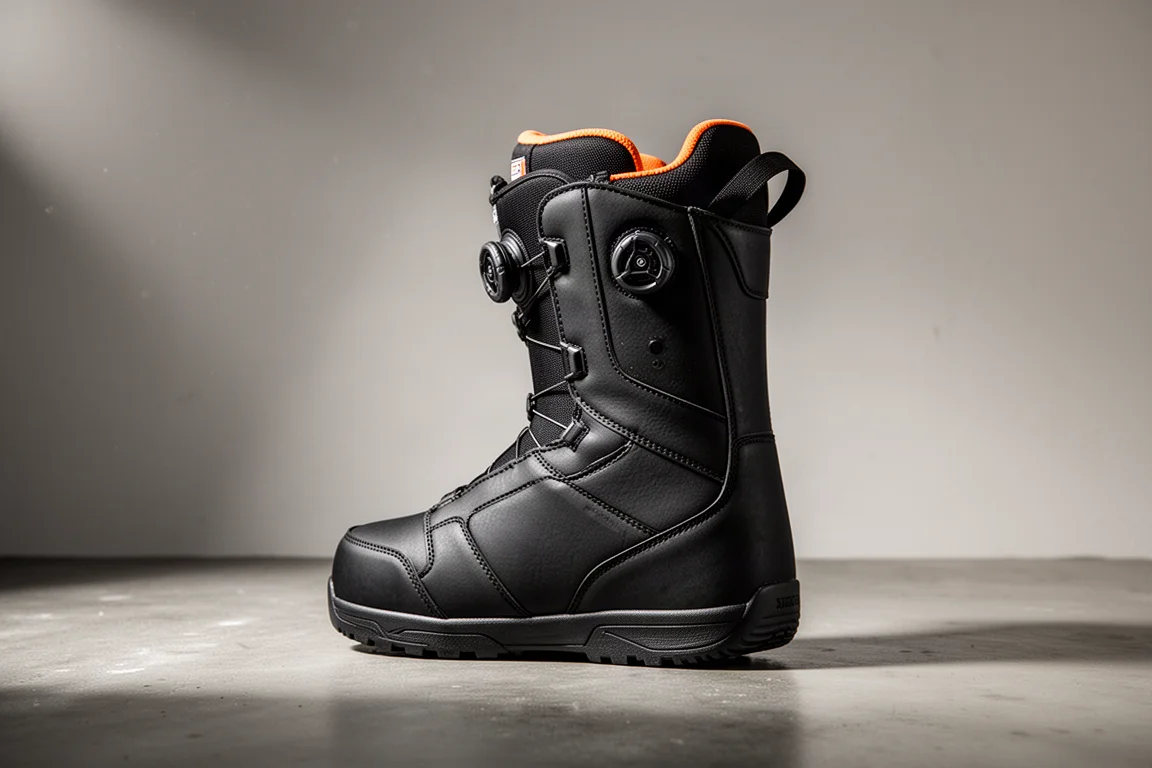
Bataleon Acid BOA Snowboard Boot Review: A Serious First Entry from a Board Brand
Bataleon's first snowboard boot, designed by a former Burton boot designer, brings a stiff flex, dual BOA closure, and a heel hold system worth a closer look.
Snowboard Boots
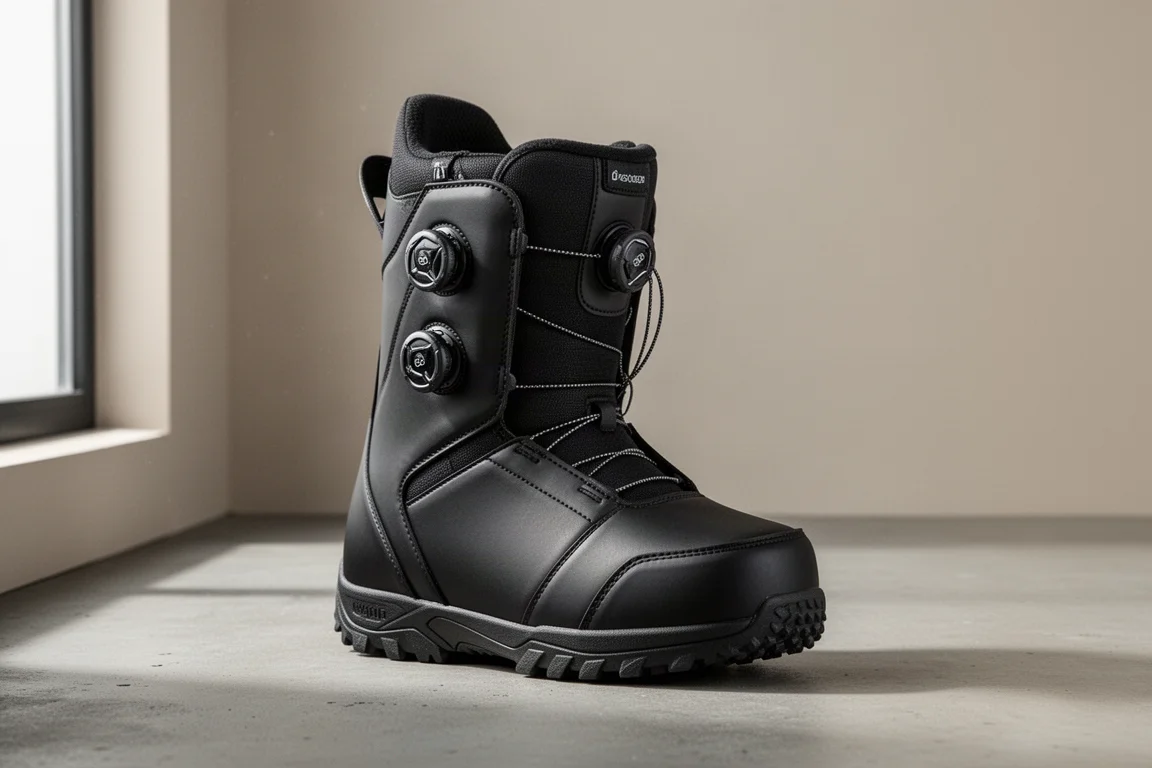
Battalion Acid Boot Review: A Stiff, Aggressive Boot Built to Last
The Battalion Acid Boot is the brand's highest-end offering, built with seamless construction, TPU reinforcement, dual BOA lacing, and a heat-moldable liner. Here is what to know before buying.