Audio
Dayton Audio HTA 100 Review: A $230 Hybrid Integrated Amplifier With Real Character
A hybrid integrated amplifier that pairs a tube preamp stage with a Class AB power stage, wide connectivity and a five-year warranty for $230.
Introduction
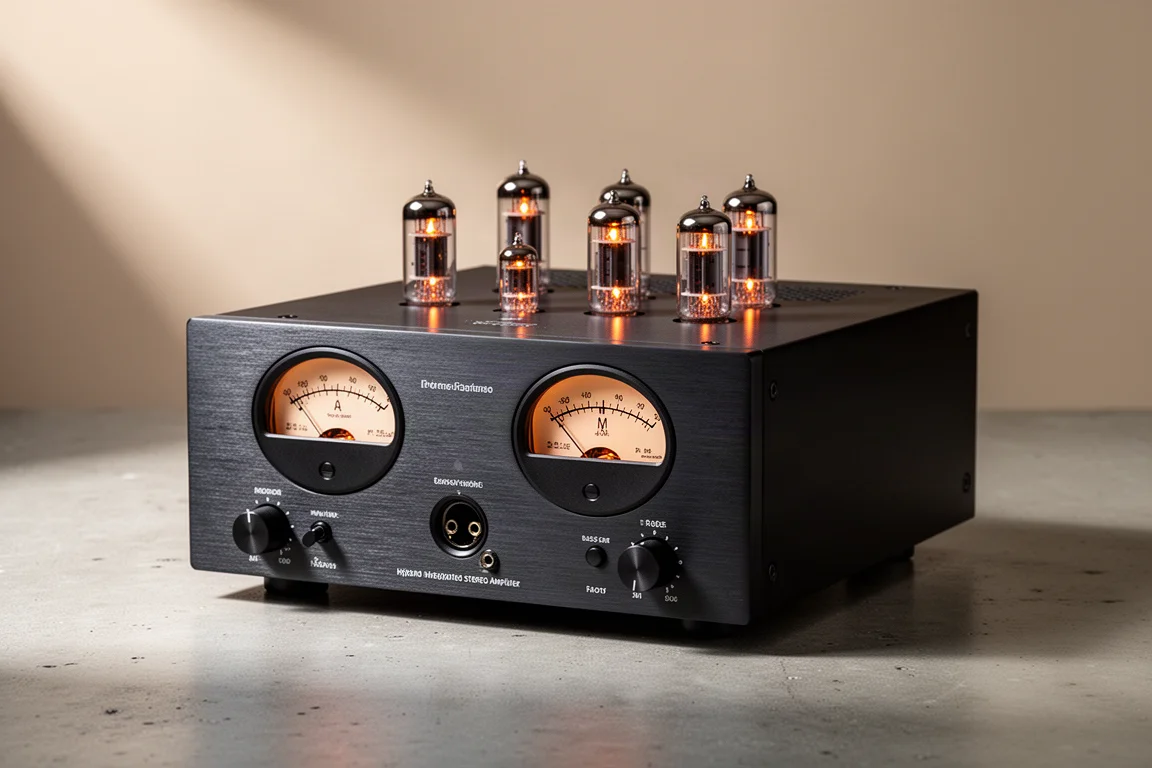
The Dayton Audio HTA 100 is a hybrid integrated amplifier priced at $230, and it makes a case that few components at this level can match. Rather than the switching power stage used in most affordable integrated amps, it combines a tube preamplifier section with a Class AB solid-state power amplifier. The chassis looks and feels more substantial than the price suggests, and the feature set reaches well beyond what the money would normally buy.
One clarification before going further: the HTA 100 is not the HTA 100 BT. Those are separate models, and everything below refers to the HTA 100.
Who this product is for
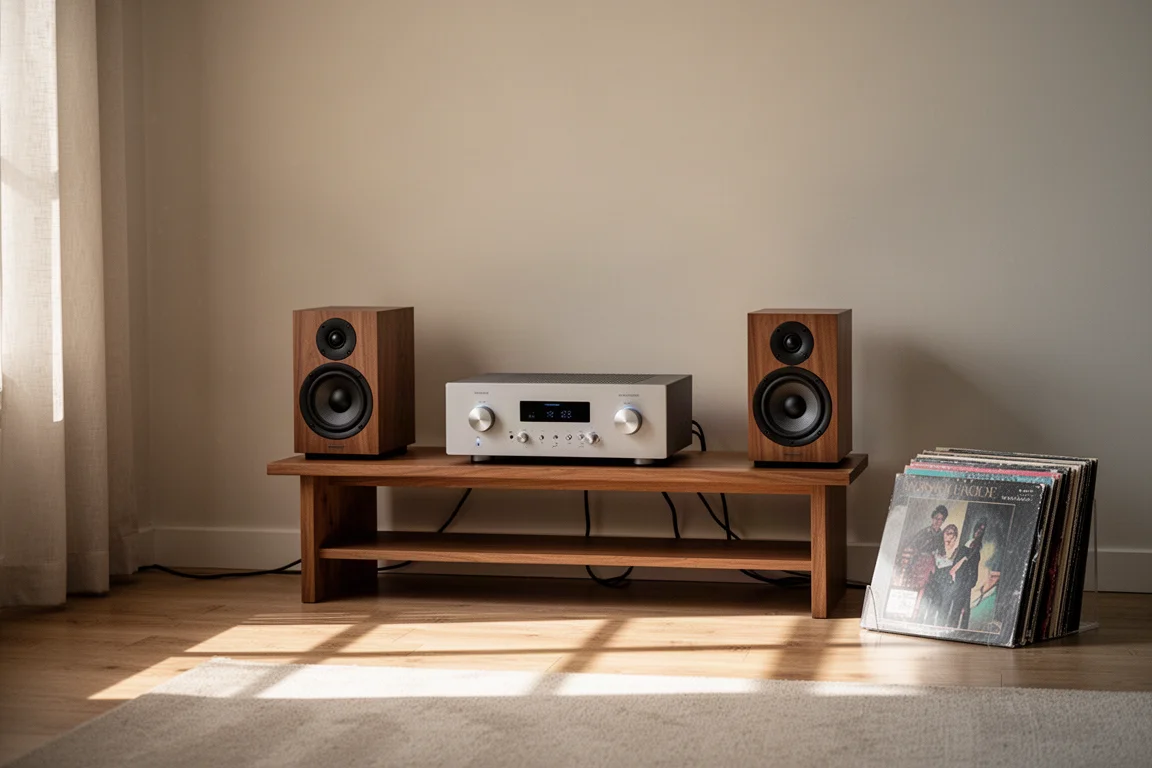
The HTA 100 is at its best with speakers that are easy to drive. Small stand-mount models and more compact floorstanding towers are the natural match, and the amplifier has enough character to make them sound lively rather than thin.
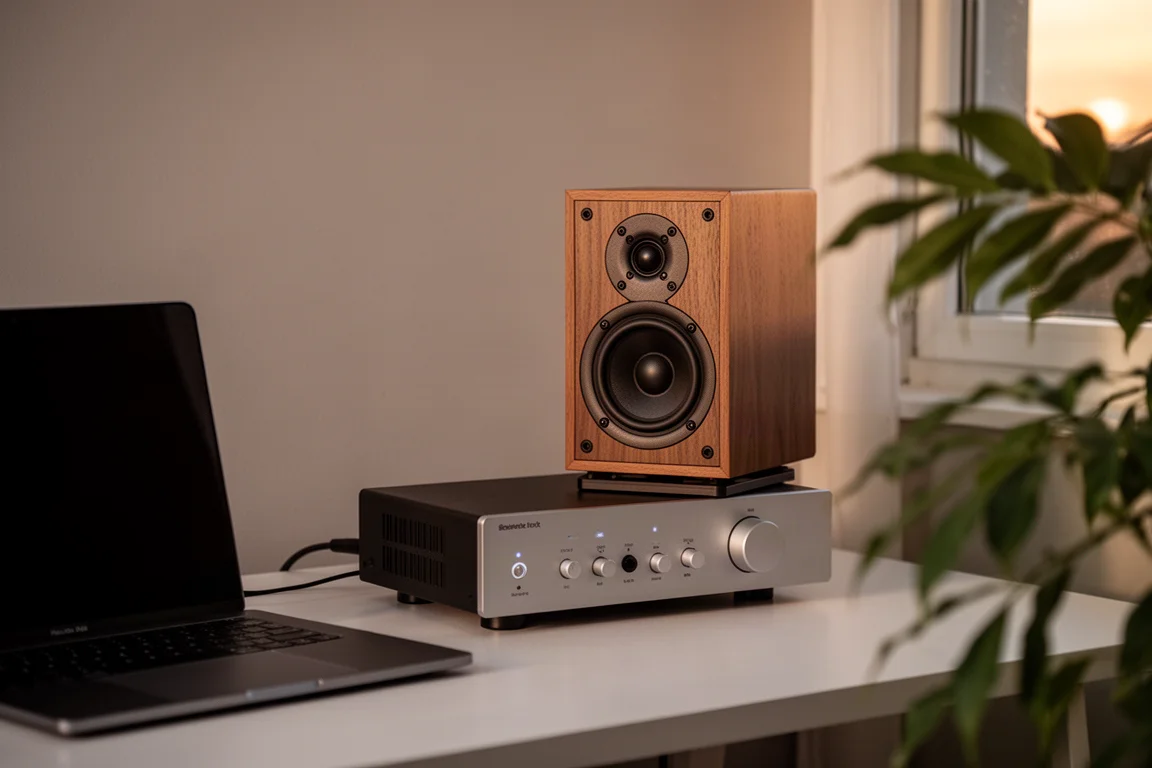
It also makes sense as a desktop amplifier. The footprint is small enough to sit within arm’s reach, which matters because there is no remote control. If the amp is right in front of you, the volume knob and the tone controls are close at hand, and the knob feel is good for the money.
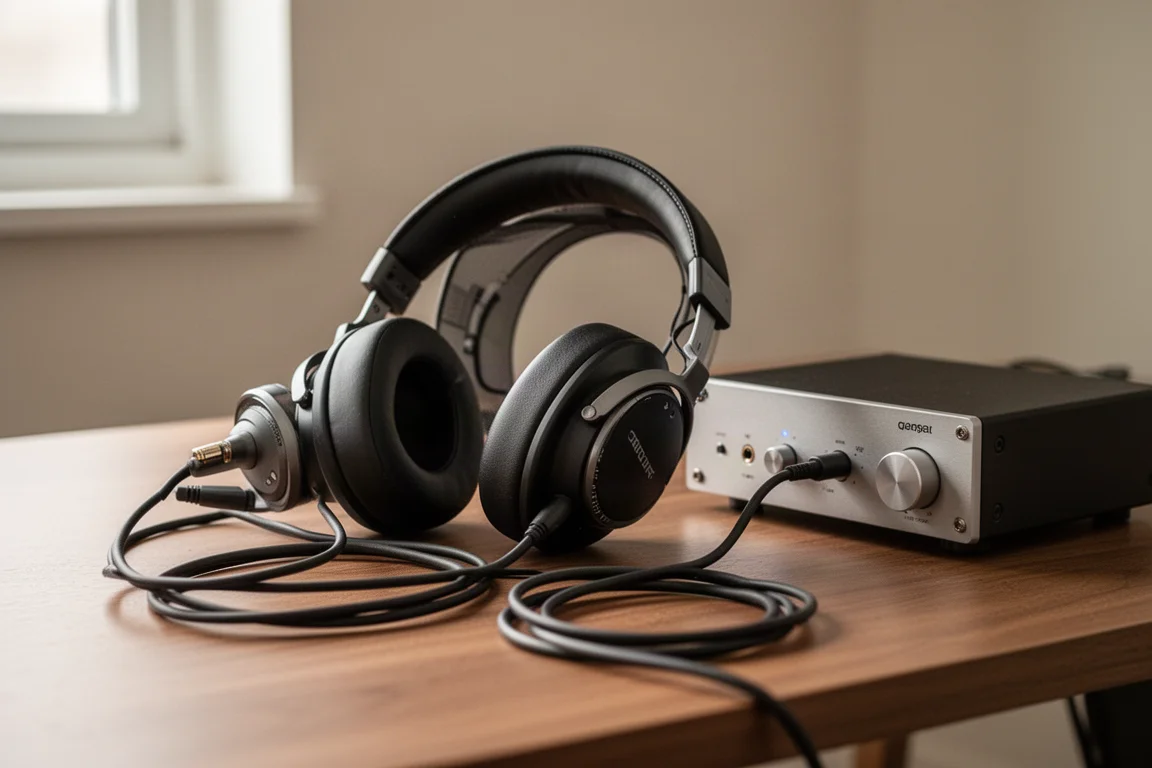
Headphone listeners get a genuinely useful option as well. The front-panel 6.3 mm output drives higher-impedance headphones without strain, so the HTA 100 can double as a dedicated headphone amplifier.
Design and build quality
The preamp stage runs on four tubes, a mix of 6F2 and 6U1 types. Neither is exotic or costly, and both are easy to find when replacements are needed. The power stage is Class AB rather than Class D, which is part of why the amp behaves so differently from most budget integrateds.
Dayton Audio rates the HTA 100 at 50 watts per channel into 4 ohms. No 8-ohm figure is published, though a rough calculation would put it somewhere around 25 to 30 watts per channel into 8 ohms. Driving a 4-ohm load safely is rare at this price.
Around the back you get a moving magnet phono input, an auxiliary input, Bluetooth 5.0, and digital inputs on coaxial, optical and USB, plus a subwoofer output. The speaker terminals are proper binding posts, which is not a given at this price point, since spring clips are far more common and far less pleasant to use. A cooling fan sits on the rear panel and stayed quiet throughout use.
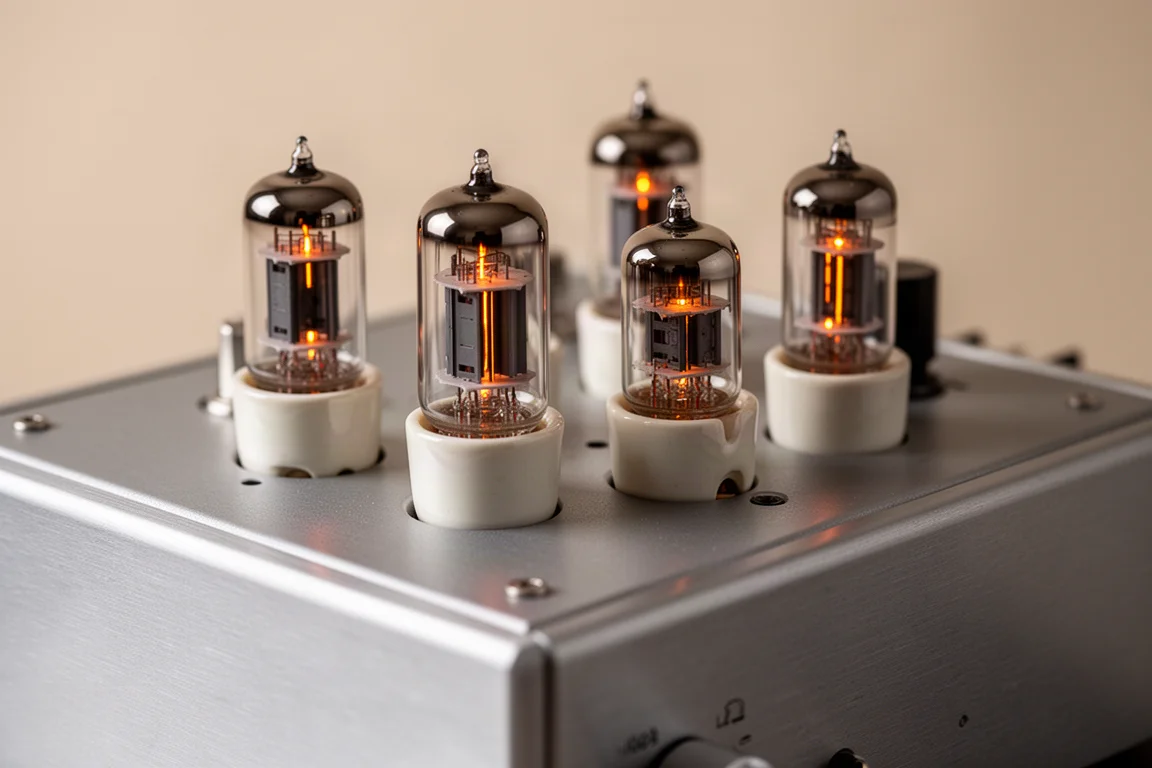
The front panel carries a 6.3 mm headphone jack, bass and treble controls, and a pair of analog meters that serve no functional purpose but look good. The warranty runs to five years, which is unusually long for a product in this price bracket.
Main strengths
Value is the headline. For $230 you get a hybrid tube and solid-state design, a full set of analog and digital inputs, Bluetooth, a subwoofer output and a five-year warranty.
Sound quality with appropriate speakers is the second strength. Paired with Klipsch RP-600M Mark II speakers, the amplifier sounded energetic, textured and detailed, with enough drive to play loud without falling apart. With Bowers & Wilkins 607 S2 stand-mounts, the presentation was notably tall, building a wall of sound rather than a flat image between the speakers.
The tone controls earn their place here. If a speaker leans bright, nudging the treble down takes the edge off. Doing so costs a little detail and clarity, but the option is there and it is meant to be used.
Headphone performance holds up too. With Sennheiser HD 58X headphones the HTA 100 drove them easily, which is a meaningful bonus at this price.
How it sounds
The character of the HTA 100 is sweet and warm rather than clinical. It is an easy amplifier to listen to for long stretches, and it flatters small speakers rather than exposing them.
That warmth is a deliberate trade-off. A solid-state amplifier such as the Emotiva BasX A100 sounds more detailed, clearer and more dynamic, with tighter and more impactful bass control, while the HTA 100 dials the vividness back and trades some resolution for a prettier, gentler presentation. If resolution and clarity are the priority, a solid-state design is the better fit.
Where the amp struggles is with hard-to-drive speakers. Connected to Magnepan LRS Plus ribbon speakers, which are low sensitivity and low impedance, the HTA 100 managed quiet acoustic music at moderate levels in a small room, but it could not keep up with dense, loud material. That pairing is a stopgap at best.
Things to consider before buying
There is no remote control. For a desktop setup that is a minor inconvenience; for a main system where you sit across the room, it is a real limitation and worth deciding on before you buy.
The moving magnet phono input is the weakest part of the package. Vinyl through it sounded thin, and it is best treated as a fallback rather than a primary phono stage. Vinyl listeners will get better results from a separate phono preamp.
Digital listening was done entirely through the internal DAC over the optical and coaxial inputs, and that section performed well, so an external DAC is not a requirement.
It is also worth planning around the speaker match. If your speakers are low sensitivity or dip to low impedance, this is not the amplifier to build a system around.
Buying advice
Buy the HTA 100 if you want tube character, a broad feature set and a five-year warranty at a genuinely low price, and if your speakers are small stand-mounts or modest floorstanders. It also works well as a desktop amplifier or a dedicated headphone amp.
Ownership costs stay low. Replacement tubes run a few dollars each, and they should last thousands of hours, so the hybrid design does not carry the upkeep that tube gear sometimes implies.
Skip it if you need a remote, rely on vinyl as your main source, or own demanding low-impedance speakers that need serious current. In those cases, put the budget toward a solid-state integrated instead.
Conclusion
The Dayton Audio HTA 100 delivers far more than its $230 price suggests: a hybrid tube and Class AB design, wide connectivity, headphone-friendly output, a five-year warranty and a warm, engaging sound with the right speakers. Its limits are clear and specific, but for listeners with suitable speakers and no need for a remote, it is an easy recommendation.
Product link
View more details for Dayton Audio HTA 100
This product is mentioned in the review. Check the specifications, options, and compatibility before buying.
View more details for Dayton Audio HTA 100Further reading
Related Reviews

Audio
Apos x Geshelli Merlin DAC Review: A Natural Match for the Gremlin Amp
The Apos x Geshelli Merlin DAC pairs balanced and single-ended outputs with a smooth, natural sound that complements the Gremlin tube amp.
Audio
Audio Gear That Beats Pricier Rivals: Nine Value Picks for 2026
Nine turntables, streamers, speakers, and amplifiers that deliver far more than their price suggests, plus the trade-offs worth checking before you buy.
Audio
Best Amplifiers Under $200: Four Compact Stereo Amps Worth Considering
Four compact amplifiers under $200, from a class AB design with a headphone section to a DAC-equipped integrated amp and a low-cost pick from a US-based brand.